Key takeaways
- Peec AI is a dedicated AI visibility tool built from scratch for LLM monitoring -- it tracks up to 10 models and offers unlimited countries and languages at no extra cost
- Nightwatch is a traditional rank tracker that added AI monitoring as a paid add-on ($99/mo on top of its base plan), covering 4 AI models
- Neither tool offers content generation, crawler logs, or traffic attribution -- they're both monitoring-only platforms
- Peec AI's Pro plan caps at 100 prompts and 9,000 AI answers per month; Nightwatch's AI add-on has its own prompt limits separate from its SEO tracking
- If you need to act on the data -- not just see it -- you'll need a platform that goes beyond monitoring
Two tools. Two very different origin stories. Peec AI was built specifically for AI search visibility from day one. Nightwatch has been a rank tracker since 2017 and bolted on AI monitoring as the category got too big to ignore.
Both are legitimate options depending on what you need. But the differences matter more than the surface-level feature lists suggest. This guide breaks down exactly how they compare -- and where both fall short.
Background: where each tool comes from
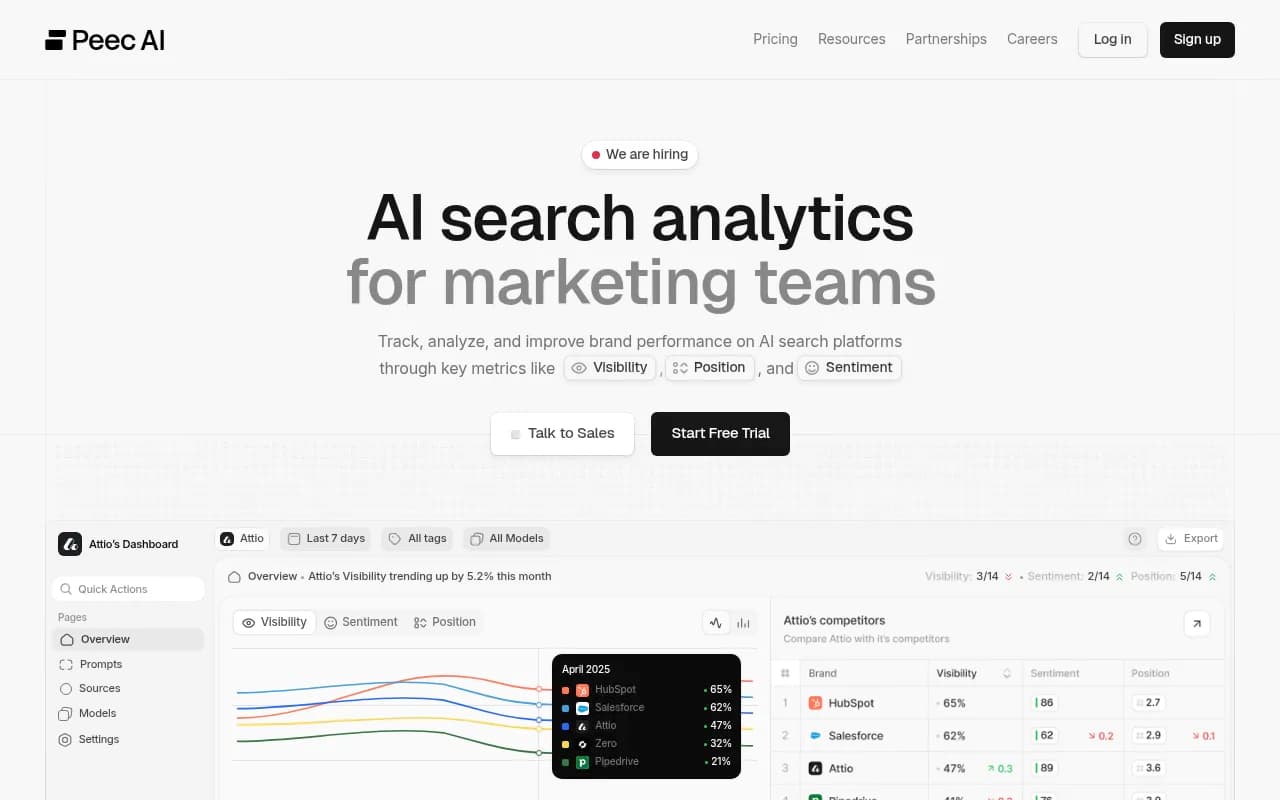
Peec AI
Peec AI launched as a purpose-built AI visibility platform. The whole product is designed around one question: how does your brand appear in AI-generated responses? It tracks mentions, citations, share of voice, and sentiment across LLMs, and it's built the infrastructure specifically for that use case.
That focus shows in the feature set. Peec supports up to 10 AI models (though the full list requires Enterprise pricing), offers unlimited countries and languages, and gives you clean dashboards for monitoring brand presence across ChatGPT, Perplexity, Google AI Overviews, DeepSeek, and more.
Nightwatch
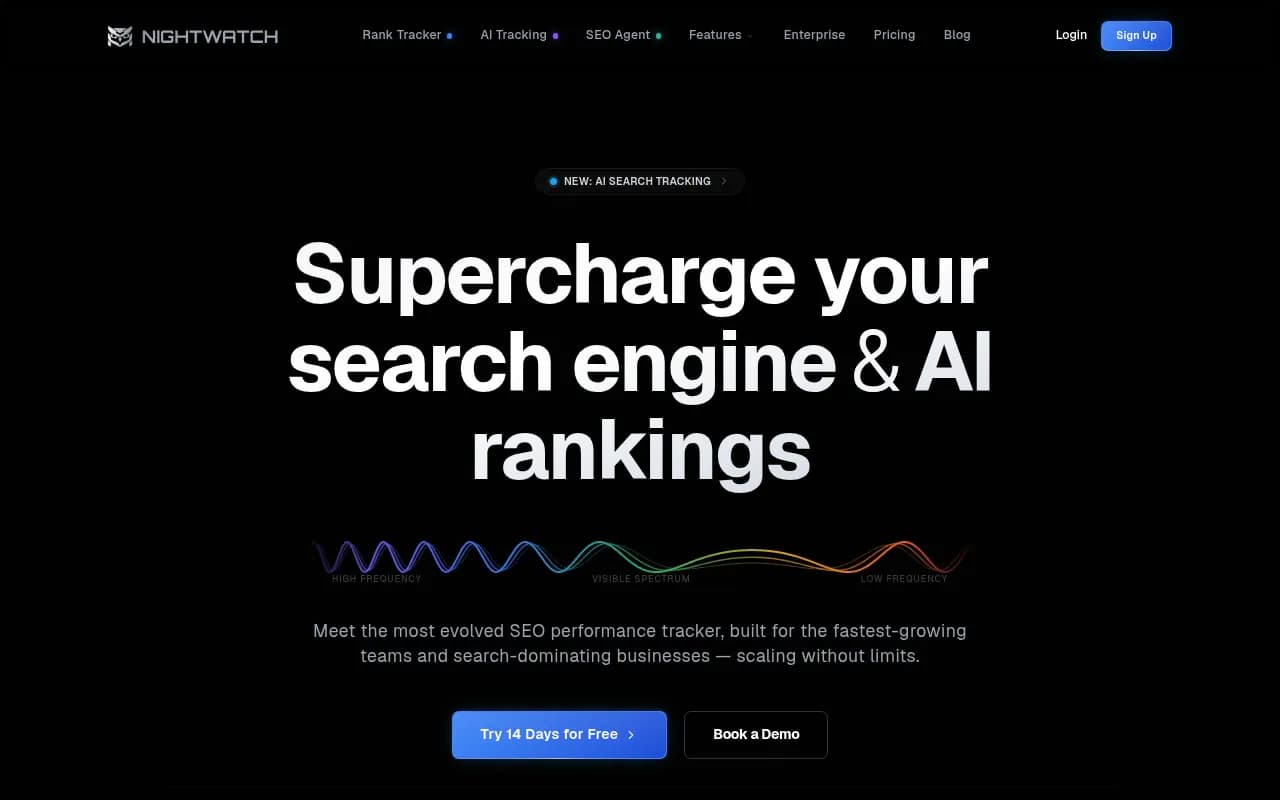
Nightwatch is a rank tracker that's been around since the early days of position monitoring. It's well-regarded for accurate daily rank tracking, white-label reporting for agencies, and a clean interface. In 2025, it added an AI Search Monitoring add-on -- a separate module you pay extra for -- that tracks brand visibility across 4 AI models.
The AI add-on is genuinely useful if you're already a Nightwatch customer and want a single dashboard for both traditional SEO rankings and AI visibility. But it's clearly an extension of an SEO tool, not a native AI monitoring product.
Feature comparison
Here's how the two tools stack up across the dimensions that matter most:
| Feature | Peec AI | Nightwatch |
|---|---|---|
| AI models tracked | Up to 10 (4 on Pro, more on Enterprise) | 4 (via AI add-on) |
| Traditional rank tracking | No | Yes (core product) |
| Starting price | €85/mo | $32/mo base + $99/mo AI add-on |
| Prompt limit (entry) | 100 prompts/mo | Varies by plan |
| Countries/languages | Unlimited | Limited |
| Content generation | No | No |
| Crawler logs / AI indexing data | No | No |
| Traffic attribution | No | No |
| Share of voice tracking | Yes | Basic |
| Citation tracking | Yes | Limited |
| Sentiment analysis | Yes | Basic |
| White-label reporting | No | Yes |
| Agency features | Limited | Yes |
Pricing breakdown
Peec AI pricing
Peec AI's Pro plan starts at €199/mo and covers four base AI engines (ChatGPT, Perplexity, Google AI Overviews, DeepSeek). Claude, Gemini, and Google AI Mode are Enterprise add-ons with custom pricing. You're capped at 100 prompts and 9,000 AI answers per month on Pro.
There's also a lower entry tier at €85/mo, but that's more limited on models and prompt volume. Enterprise pricing is custom.
Nightwatch pricing
Nightwatch's base plans start at $32/mo for traditional rank tracking. The AI Search Monitoring add-on costs an additional $99/mo. So if you want both, you're looking at $131/mo minimum -- and that's before you scale up keyword or prompt volumes.
For existing Nightwatch users, the add-on is a reasonable way to dip into AI visibility without switching platforms. For new users evaluating both tools, the combined cost is worth factoring in.
Model coverage: a real difference
Four models versus up to ten is a meaningful gap, not just a spec sheet difference. The AI search landscape in 2026 is fragmented. ChatGPT and Perplexity dominate, but Gemini, Claude, DeepSeek, and Grok each have meaningful user bases in specific markets and demographics.
Peec AI's broader model coverage is a genuine advantage if you're tracking visibility across multiple regions or buyer segments. Nightwatch's four-model coverage is adequate for teams that primarily care about ChatGPT, Perplexity, and Google AI Overviews -- which, honestly, covers most of the traffic for most brands.
The caveat: Peec's full 10-model coverage requires Enterprise pricing. The Pro plan's four base engines aren't dramatically different from Nightwatch's coverage in practice.
What both tools do well
Peec AI's unlimited countries and languages is a real differentiator. Most tools charge extra for multi-region tracking or limit you to a handful of markets. If you're monitoring a brand across Europe, APAC, or Latin America, that matters.
Nightwatch's traditional rank tracking is genuinely good. If you're an SEO team that needs accurate daily position data alongside AI visibility, having both in one tool reduces dashboard fatigue. The white-label reporting is also strong -- agencies running client reports will appreciate it.
Where both tools fall short
Here's the honest part: both Peec AI and Nightwatch are monitoring tools. They show you data. They don't help you do much with it.
Neither tool offers:
- Content generation based on AI visibility gaps
- Answer gap analysis (which prompts are competitors visible for that you're not?)
- AI crawler logs (which pages are AI bots actually reading on your site?)
- Traffic attribution (how much revenue is coming from AI search?)
- Prompt volume or difficulty scoring
This is the ceiling that monitoring-only tools hit. You can see that your brand mentions dropped 12% this month. You can see that a competitor is getting cited more often for a specific topic. But the tool won't tell you what content to create, what's missing from your site, or how to fix it.
For teams that want to close that loop -- find gaps, create content, track results -- you need something more than a monitoring dashboard.
Promptwatch is built specifically around that action cycle. It tracks AI visibility across 10+ models, but it also shows you exactly which prompts competitors are visible for that you're missing, generates content briefs and articles grounded in real prompt data, and tracks how new content moves from crawl to citation over time.

Who should use Peec AI
Peec AI makes sense if:
- You want a purpose-built AI visibility tool with clean dashboards
- Multi-region and multi-language monitoring is important to your use case
- You don't need traditional rank tracking -- you're focused entirely on LLM visibility
- You're comfortable with a monitoring-only workflow and have separate tools for content creation
It's a solid, focused product. The prompt caps on lower tiers can be limiting for teams running large-scale monitoring, and the Enterprise add-on pricing for additional models adds up. But for straightforward AI visibility monitoring, it does the job.
Who should use Nightwatch
Nightwatch makes sense if:
- You're already a Nightwatch customer and want to add AI monitoring without switching tools
- Your primary need is traditional rank tracking, with AI visibility as a secondary concern
- You run an agency and need white-label reporting across both SEO and AI search metrics
- You're monitoring a smaller set of prompts and don't need broad model coverage
The AI add-on is a reasonable bolt-on, not a full-featured AI visibility platform. Treat it as that and you won't be disappointed.
How the broader landscape fits in
Peec AI and Nightwatch aren't the only options in this space. The AI visibility category has expanded significantly in 2026, and there are tools at different price points and capability levels worth knowing about.
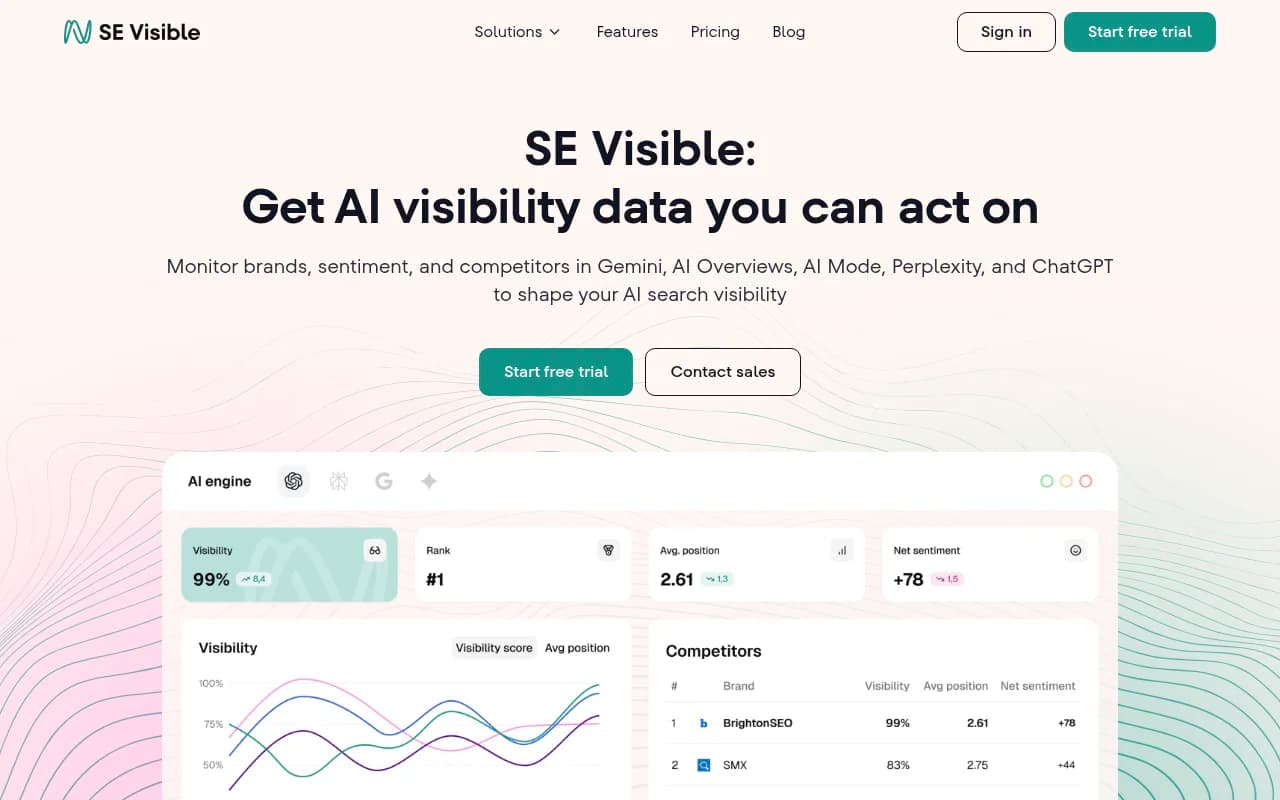
For teams that want monitoring without content tools, Otterly.AI is cheaper than both at $29/mo. SE Ranking's AI visibility module (SE Visible) covers 5 models and bundles with a full SEO suite. Profound is stronger for enterprise prompt research but costs more.
For teams that want to go beyond monitoring, the options narrow. Most tools in this category are still dashboards. The platforms that actually help you create and optimize content for AI search -- not just track it -- are fewer.
Here's a quick look at how several tools compare across the monitoring-vs-optimization spectrum:
| Tool | Monitoring | Content generation | Crawler logs | Traffic attribution | Starting price |
|---|---|---|---|---|---|
| Peec AI | Strong | No | No | No | €85/mo |
| Nightwatch (+ AI add-on) | Basic | No | No | No | $131/mo |
| Otterly.AI | Basic | No | No | No | $29/mo |
| SE Visible | Good | No | No | No | $99/mo |
| Promptwatch | Strong | Yes | Yes | Yes | $99/mo |
| Profound | Strong | No | No | No | $99/mo |

The monitoring ceiling
Both Peec AI and Nightwatch are useful tools for what they are. The question is whether "what they are" is enough for your team.
If you're just getting started with AI visibility and want to understand where your brand stands across LLMs, either tool will give you that baseline. Peec AI is the better choice if AI monitoring is your primary focus. Nightwatch is the better choice if you want to keep your SEO and AI data in one place.
But if you're past the "what's our visibility score?" stage and asking "how do we improve it?" -- neither tool has a good answer. That's not a knock on them specifically. It's just where the monitoring-only category ends.
The teams getting real traction from AI search in 2026 aren't just tracking their visibility scores. They're identifying the specific content gaps that AI models are exposing, creating content that fills those gaps, and watching their citation rates improve as a result. That requires a different kind of tool.
Peec AI and Nightwatch can tell you where you stand. Getting from there to somewhere better is a separate problem.