Key takeaways
- Most GEO platforms are designed for single-brand use. The features that matter for agencies -- multi-client management, white-label reporting, scalable pricing, fast onboarding -- are rarely prioritized.
- Monitoring alone isn't enough. Agencies need to show clients results, which means the platform has to help create and optimize content, not just track visibility scores.
- The gap between "tracks AI mentions" and "helps you improve AI mentions" is where most tools fall short.
- A handful of platforms are starting to build agency-specific infrastructure, but the market is still catching up to what agencies actually need.
- Pricing models that work for one brand often become untenable at scale -- this is one of the most overlooked evaluation criteria.
The GEO tool market has exploded. There are now dozens of platforms promising to help you track, improve, and report on AI search visibility. Most of them are fine -- if you're an in-house marketer managing one brand across ChatGPT, Perplexity, and Google AI Overviews.
Agencies are a different story.
When you're managing 15 clients, or 40, or 200, the problems multiply fast. Pricing that looks reasonable for one domain becomes a budget conversation you don't want to have. Reporting that works for an internal Slack update falls apart when you need to put your logo on it and present it in a quarterly business review. And onboarding a new client shouldn't require a 45-minute setup call every time.
Alex Birkett, who runs Omniscient Digital and has evaluated most of the major GEO platforms, put it plainly in his agency-focused review: "The tool that's 'best' for an in-house marketer... is often not the best tool for an agency managing eight, fifteen, forty, or four hundred client accounts simultaneously."
This guide is about that gap.
The five things agencies actually need
Before getting into specific platforms, it's worth being explicit about what "agency-ready" actually means. These five criteria separate tools built for agencies from tools that agencies can technically use.
Multi-client management
Can you manage 30 brands from one workspace without logging in and out of separate accounts? This sounds like a basic requirement. Most tools still don't do it well. You end up with separate logins, separate dashboards, and no way to get a cross-client view of what's performing and what isn't.
White-label reporting
Can you put your agency's branding on reports and send them directly to clients? Or are you screenshotting dashboards and pasting them into Google Slides? In 2026, clients expect polished, branded deliverables. A tool that forces you to manually assemble reports is a time sink.
Prospecting and pitch tools
Can you run a quick GEO audit for a prospect without buying a full license? Agencies live on new business. The best tools help you sell, not just deliver. A fast visibility snapshot that you can show a prospect in a pitch meeting is genuinely valuable.
Pricing that scales
Does the math still work at 15 clients? At 40? Per-client pricing models that look reasonable at one or two brands often go parabolic as you scale. Flat-rate or tiered agency pricing is worth paying a premium for.
Fast time-to-value per client
How quickly can you onboard a new client and start showing them data? If the answer is "two weeks after implementation," that's a problem. Agencies need to demonstrate value quickly, especially with new clients who are still deciding whether GEO is worth the investment.
Why most GEO tools fail agencies
The honest answer is that most GEO platforms were built for brands, not agencies. They're designed around a single-domain use case, and agency features were bolted on later -- if at all.
This creates a few recurring problems.
They're monitoring-only
The majority of GEO tools on the market today do one thing: they show you where your brand appears (or doesn't appear) in AI-generated responses. That's useful data. But it doesn't help you do anything about it.
For an agency, "here's your visibility score" is not a deliverable. Clients want to know what you're doing to improve it. A tool that only monitors puts the entire burden of strategy and execution on your team, with no infrastructure to support it.
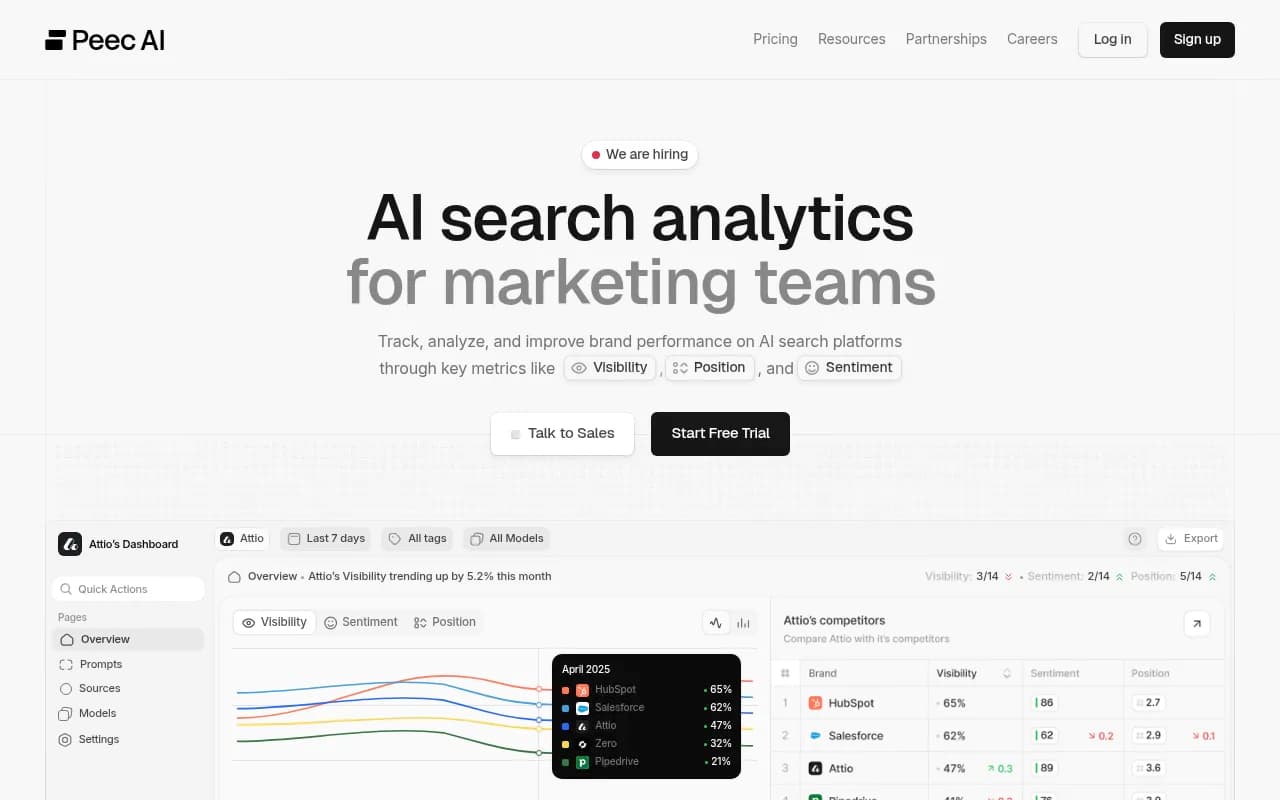
Tools like Otterly.AI and Peec.ai fall into this category. They're affordable and easy to use, but they stop at the monitoring layer. There's no content gap analysis, no content generation, no optimization workflow. You get the data; you're on your own for everything else.

They're priced for brands, not agencies
Per-domain pricing sounds reasonable until you do the math. If a tool charges $200/month per domain and you have 20 clients, that's $4,000/month before you've made a dollar of margin. Most agencies can't absorb that, and most clients won't pay for it directly.
The tools that work for agencies either have flat-rate agency plans, volume discounts, or a pricing model that decouples the number of clients from the cost curve.
They lack the reporting layer
Client reporting is one of the most time-consuming parts of agency work. A GEO tool that doesn't have white-label reporting, scheduled exports, or at minimum a clean shareable view forces you to do that work manually. At scale, that's hours per week.
They can't prove ROI
This is the one that kills agency relationships. If you can't connect AI visibility improvements to actual traffic, leads, or revenue, you're asking clients to trust a metric they don't fully understand. The best platforms have traffic attribution built in -- showing not just that your visibility improved, but that the improvement drove real outcomes.
What the market looks like right now
The GEO tool landscape in 2026 is roughly split into three tiers.
Monitoring-only tools
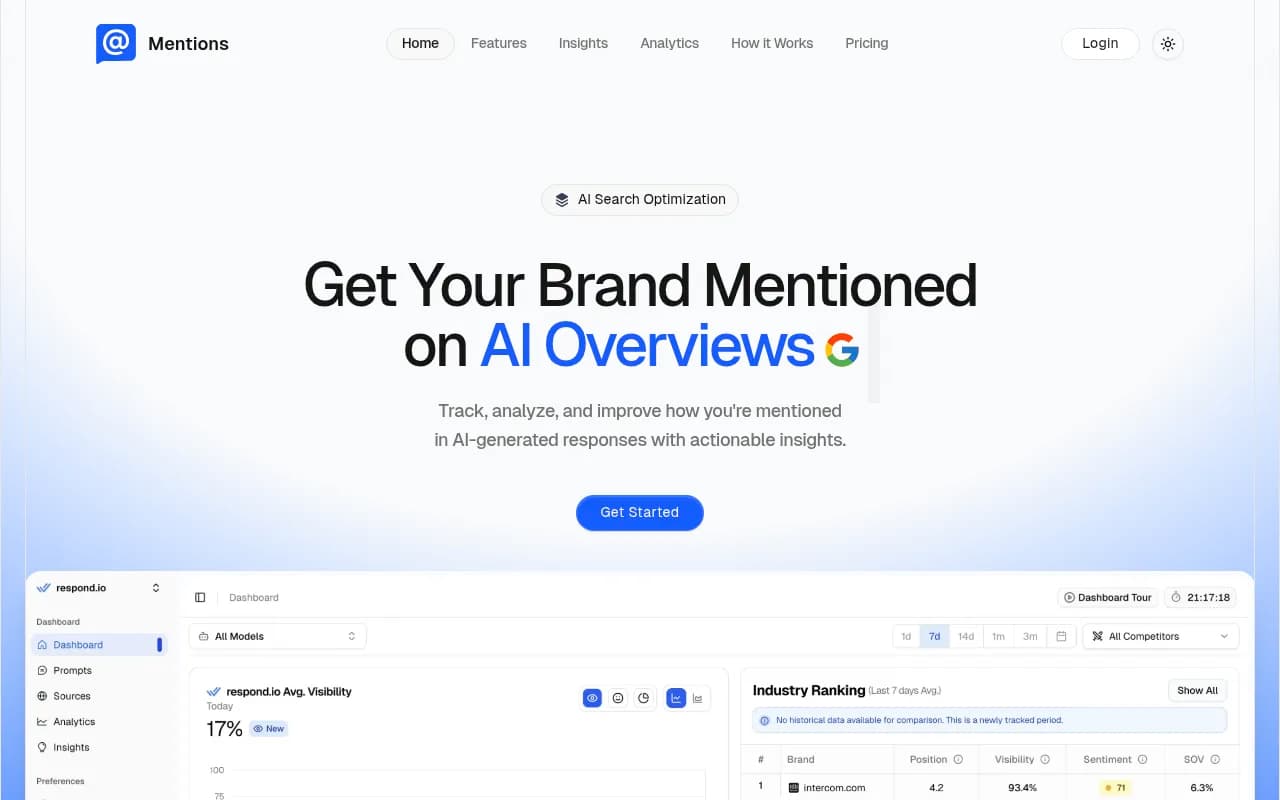
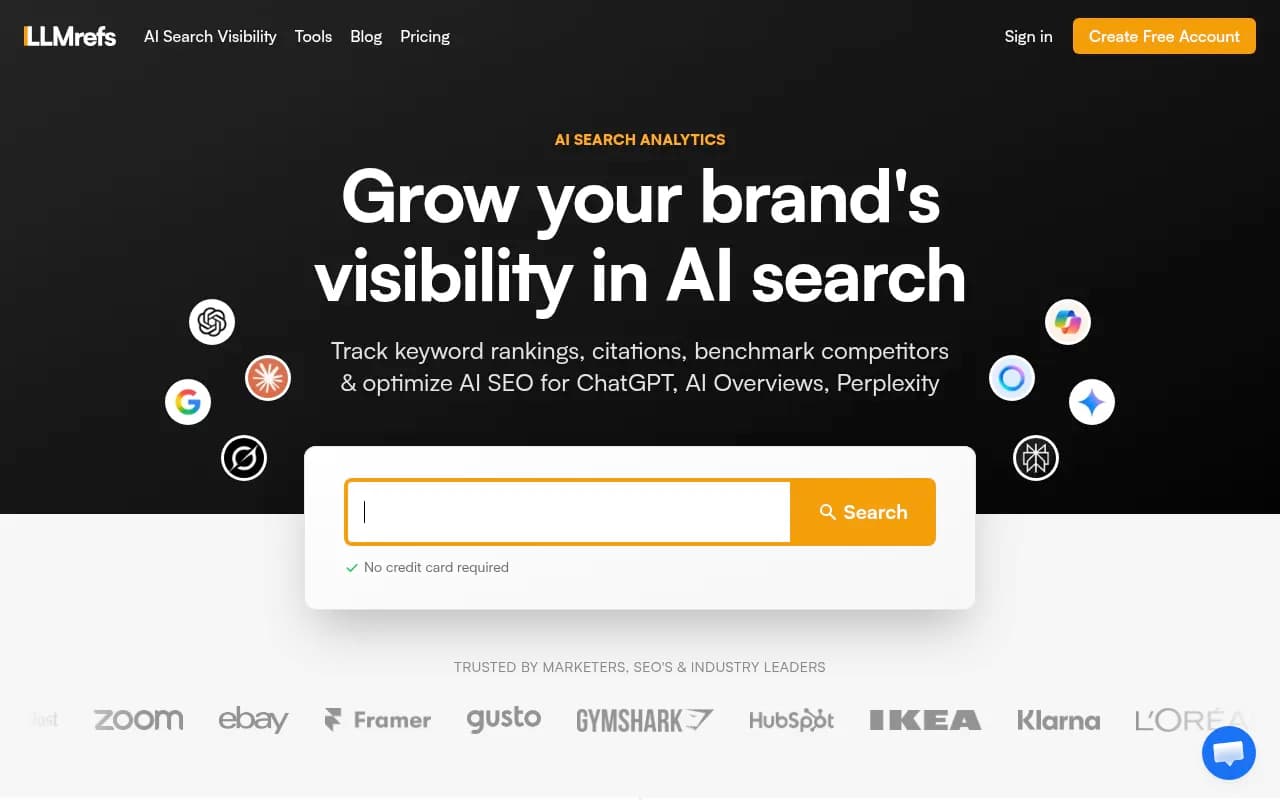
These track AI mentions and visibility scores. They're useful for baseline reporting but don't help you optimize. Examples include Otterly.AI, Peec.ai, Mentions.so, and LLMrefs. Fine for brands that want a dashboard; not enough for agencies that need to show progress.
Monitoring plus some optimization
These tools go further -- they surface content gaps, provide recommendations, and sometimes generate briefs or content. Scrunch, AthenaHQ, and Profound sit in this tier. They're more capable, but they tend to be priced for enterprise brands rather than agencies, and the agency-specific features (white-label reporting, multi-client management) are inconsistent.
Full-cycle platforms
These handle the complete loop: find gaps, create content, track results. This is where Promptwatch sits. It's the only platform in the current market that combines answer gap analysis, AI content generation, crawler logs, and traffic attribution in one place -- and it's built to work across multiple sites and clients.

The action loop: why it matters for agencies
The most important thing a GEO platform can do for an agency is close the loop between data and results. Here's what that looks like in practice:
- You identify which prompts your client's competitors are visible for but your client isn't. These are the gaps.
- You generate content specifically designed to fill those gaps -- articles, comparisons, FAQs, listicles -- grounded in real prompt data and citation patterns.
- You track whether that content gets crawled, cited, and whether citations translate to traffic.
- You show the client a timeline: here's when we published, here's when AI models started crawling it, here's when citations appeared, here's the traffic impact.
Most tools handle step one. A few handle steps one and two. Very few handle all four -- and the ones that do are almost always the ones agencies end up sticking with.
Promptwatch's Content Agents, for example, generate articles and briefs grounded in real prompt volumes, citation data, competitor analysis, and brand guidance. That's not generic AI writing -- it's content engineered to answer the specific gaps AI models are already exposing. And the crawler log feature shows exactly when AI bots hit your client's pages, which pages they read, and when those pages move from crawl to citation.
That's the kind of evidence that justifies a retainer.
A comparison of agency-relevant GEO platforms
| Platform | Multi-client | White-label reporting | Content generation | Crawler logs | Traffic attribution | Agency pricing |
|---|---|---|---|---|---|---|
| Promptwatch | Yes | Yes | Yes (Content Agents) | Yes | Yes | Yes |
| Scrunch | Yes | Partial | No | No | No | Yes |
| AthenaHQ | Limited | No | No | No | No | No |
| Profound | Limited | Partial | No | No | No | Enterprise |
| Otterly.AI | No | No | No | No | No | No |
| Peec.ai | No | No | No | No | No | No |
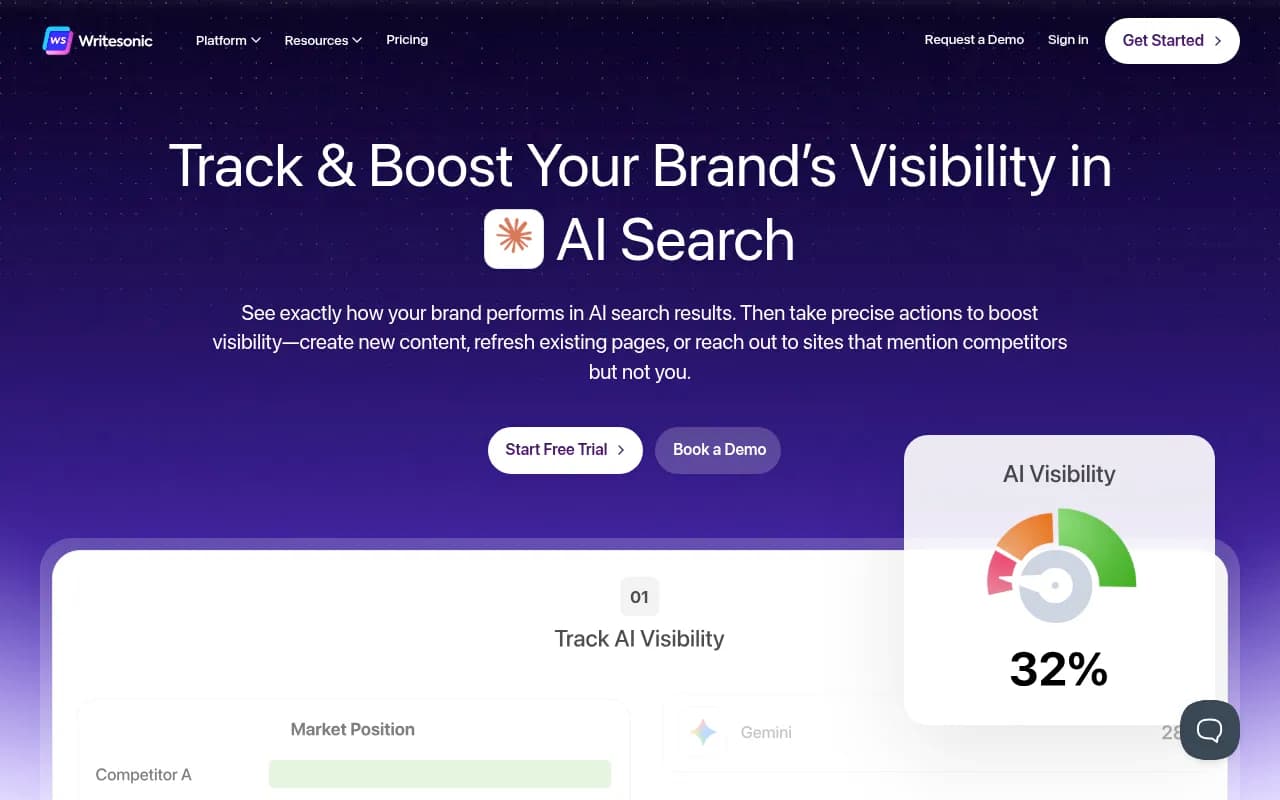
| Writesonic GEO | Limited | No | Yes | No | No | No |
| Search Party | Yes | Partial | No | No | No | Yes |
A few notes on this table. "Partial" for white-label reporting usually means you can export data but can't fully brand the output. "Limited" for multi-client usually means it's technically possible but clunky -- separate logins, no unified view. The gaps in crawler logs and traffic attribution are particularly significant for agencies, because those are the features that let you prove your work.
Search Party
What good agency reporting looks like in 2026
Client reporting for GEO has evolved quickly. A year ago, showing a client their "AI visibility score" was novel enough to be impressive. Now clients want more.
The questions agencies are getting asked in 2026:
- Which AI models are citing us, and for which queries?
- How does our visibility compare to our top three competitors?
- Which pages on our site are being cited, and which aren't?
- What content did we publish, when did AI models crawl it, and when did citations start appearing?
- Is any of this driving actual traffic or leads?
A GEO platform that can't answer at least four of those five questions is going to create friction in your client relationships. The fifth -- traffic and revenue attribution -- is the hardest to answer, but it's increasingly what separates agencies that can justify their GEO retainers from those that can't.
The prompt intelligence problem
One thing that rarely gets discussed in GEO tool comparisons is prompt intelligence -- specifically, which prompts are worth targeting.
Not all prompts are equal. Some are high-volume, high-intent queries where AI visibility translates directly to brand consideration. Others are niche, low-volume, or so competitive that even perfect content won't get you cited. Agencies need to prioritize, and prioritization requires data.
The best platforms provide volume estimates and difficulty scores for each prompt, plus what Promptwatch calls "query fan-outs" -- showing how one prompt branches into sub-queries that AI models use when generating a response. That kind of data lets you make strategic decisions about where to invest content effort, rather than just chasing every gap you find.
This matters especially for agencies, where content production capacity is finite and you're making prioritization decisions across multiple clients simultaneously.
Reddit, YouTube, and the off-site citation problem
Here's something most agencies don't think about until a client asks: AI models don't just cite your client's website. They cite Reddit threads, YouTube videos, review sites, industry publications, and third-party listicles.
If a competitor is getting cited because they have a strong presence on a relevant Reddit subreddit, or because a YouTube review keeps appearing in AI responses, your on-site content strategy won't fix that. You need to know about it.
Most GEO tools ignore off-site citations entirely. They track your domain and maybe a few competitors, but they don't surface the Reddit threads or YouTube videos that are actually driving AI recommendations in your client's category.
This is a real gap. Agencies that understand the full citation picture -- on-site and off-site -- can build more complete strategies. Those that only look at their client's domain are missing a significant part of the story.
Practical recommendations for agencies evaluating GEO tools
If you're an agency currently evaluating GEO platforms, here's how to approach it:
Start with the pricing model. Before you evaluate features, figure out whether the pricing works at your typical client count. A tool that costs $249/month for unlimited clients is a fundamentally different proposition from one that charges per domain.
Test the reporting workflow. Don't just look at the dashboard -- actually try to produce a client-ready report. How long does it take? Can you add your logo? Can you schedule it? This is where a lot of tools fall apart.
Ask about crawler logs. This is a proxy for technical depth. If a platform can tell you when AI bots are crawling your client's pages and which pages they're reading, it's built on real infrastructure. If it can't, it's probably just querying AI APIs and calling it monitoring.
Check what happens after the gap analysis. Any decent GEO tool will show you content gaps. The question is what it does next. Does it help you create content to fill those gaps? Does it track whether that content gets cited? Or does it just hand you a list and wish you luck?
Look for traffic attribution. This is the hardest feature to build, which is why most tools don't have it. But it's also the most important for justifying GEO spend to clients. If a platform can connect AI citations to actual website traffic, that's a meaningful differentiator.
The broader context: why this matters now
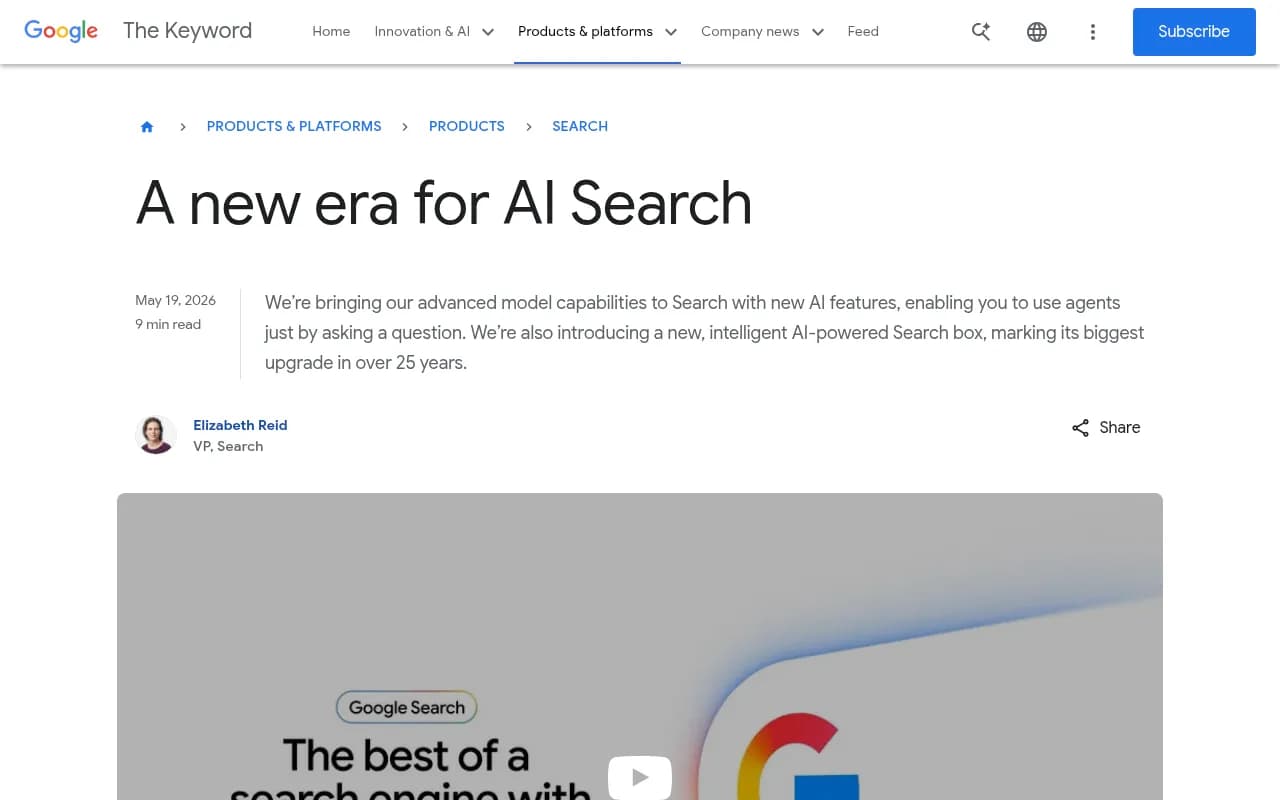
Google's I/O 2026 announcements made clear that AI-native search isn't a future trend -- it's the current reality. Google's VP of Search Elizabeth Reid described the shift as "the best of a search engine with the best of AI," with AI Mode now handling a substantial portion of queries that would have gone to traditional search a year ago.
For agencies, this means GEO is no longer a nice-to-have service offering. Clients whose traffic depends on search visibility are already feeling the impact of AI Overviews and AI Mode. The agencies that can credibly offer GEO services -- with the tools and processes to back it up -- are the ones that will retain and grow those relationships.
The challenge is that the GEO tool market is still maturing. Most platforms were built quickly to capture a new category, and the agency-specific features are often an afterthought. That's changing, but it's changing slowly.
The agencies that are winning right now are the ones that have figured out which tools actually close the loop -- from gap identification to content creation to citation tracking to traffic attribution -- and built their service delivery around that workflow.
That's the bar. Most tools don't clear it yet.