Key takeaways
- Peec AI is an AI visibility monitoring platform -- it tracks how your clients' brands appear in ChatGPT, Perplexity, Gemini, and other AI search engines.
- Search Party is an AI implementation and automation partner -- it builds custom systems to eliminate manual agency workflows, not a SaaS monitoring dashboard.
- These tools don't really compete. They solve different problems, and many agencies could justify using both.
- If your agency needs to report on AI search visibility for clients, Peec AI is worth evaluating. If you need to automate internal operations, Search Party is the conversation to have.
- For agencies that want AI visibility monitoring plus the ability to act on what they find (content generation, gap analysis, crawler logs), there are stronger alternatives worth knowing about.
Comparing Peec AI and Search Party feels a bit like comparing a rank tracker to a project management consultant. They both serve agencies. They both involve AI. But they're solving fundamentally different problems, and conflating them leads to bad buying decisions.
So let's be precise about what each one actually does, where each one falls short for agency work specifically, and what you should probably be using instead if neither quite fits.
What Peec AI actually is
Peec AI is an AI visibility tracking platform. You set up prompts -- questions your target customers might ask an AI search engine -- and Peec AI monitors how often your brand (or your clients' brands) appear in the responses across models like ChatGPT, Perplexity, Claude, and Gemini.
The pitch for agencies is reasonable: unlimited user seats across plans, agency-specific pricing starting at $245/month, CSV exports, Looker Studio integration, and API access for custom reporting. You can track multiple brands, benchmark against competitors, and see which citation sources AI models are pulling from.
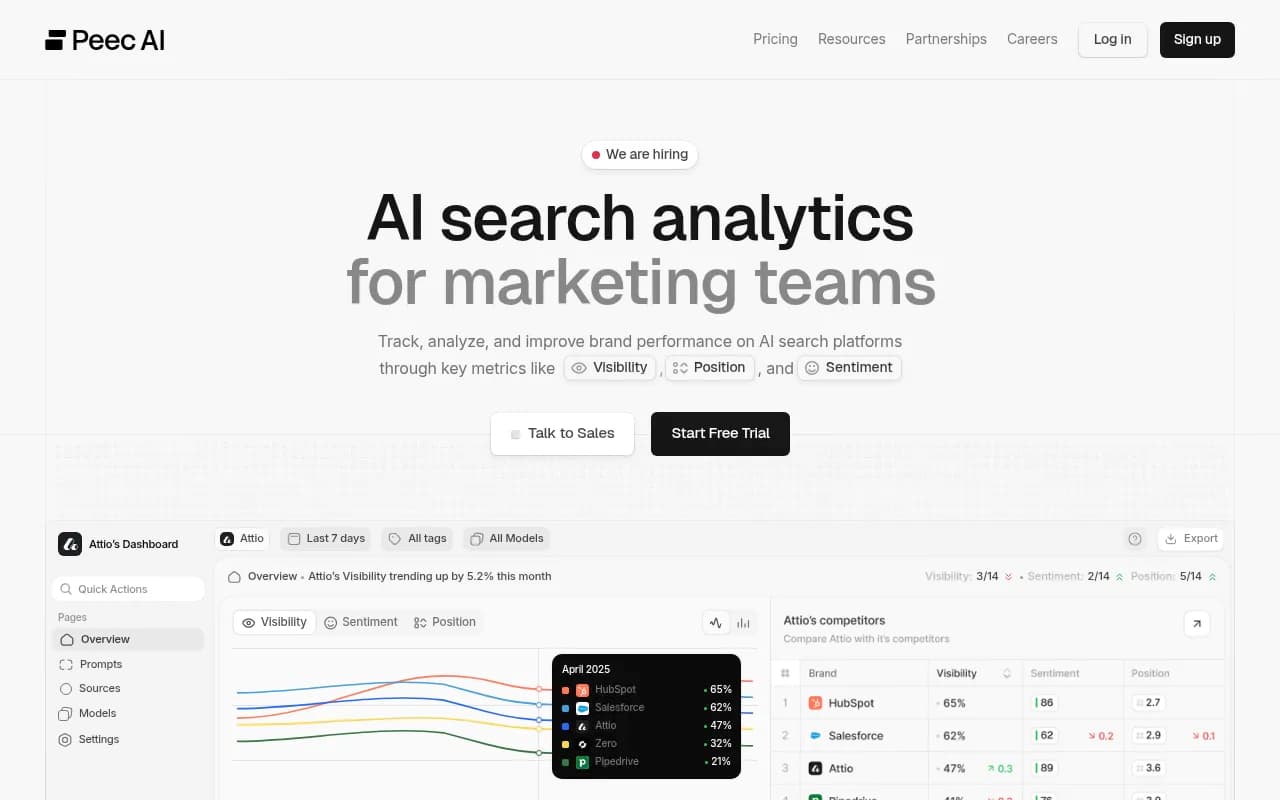
The UX is genuinely clean. Multiple independent reviews in 2026 call it one of the easiest GEO tools to get into, with a setup time measured in minutes rather than hours. For an agency onboarding a new client onto AI visibility reporting, that matters.
Where it gets complicated is the depth. Peec AI is a monitoring tool. It shows you data. It doesn't tell you what to do with it, doesn't generate content to close the gaps it surfaces, and doesn't give you crawler-level data showing which of your client's pages AI bots are actually reading. For agencies that want to sell AI visibility as a managed service -- not just a reporting add-on -- that ceiling becomes a real constraint.
What agencies actually get from Peec AI
- Prompt tracking across major AI models
- Competitor benchmarking and share-of-voice metrics
- Citation source analysis (which pages, domains, Reddit threads AI models are citing)
- Sentiment tracking per brand
- Looker Studio connector and API for white-label reporting
- Unlimited seats (no per-user fees)
Where it falls short for agency work
- No content generation or optimization tools -- you see the gap but have to fix it elsewhere
- No AI crawler logs -- you can't see which client pages AI bots are visiting or ignoring
- Limited prompt volume data -- hard to prioritize which gaps are worth fixing first
- No traffic attribution -- you can't connect AI visibility improvements to actual client revenue
- Onboarding is self-serve; there's no agency success team
What Search Party actually is
Search Party is a different animal entirely. It's not a SaaS platform you log into to pull reports. It's an AI implementation partner that builds custom automation systems for agencies -- think workflow automation, internal tooling, and AI-powered processes that replace manual work.
Search Party
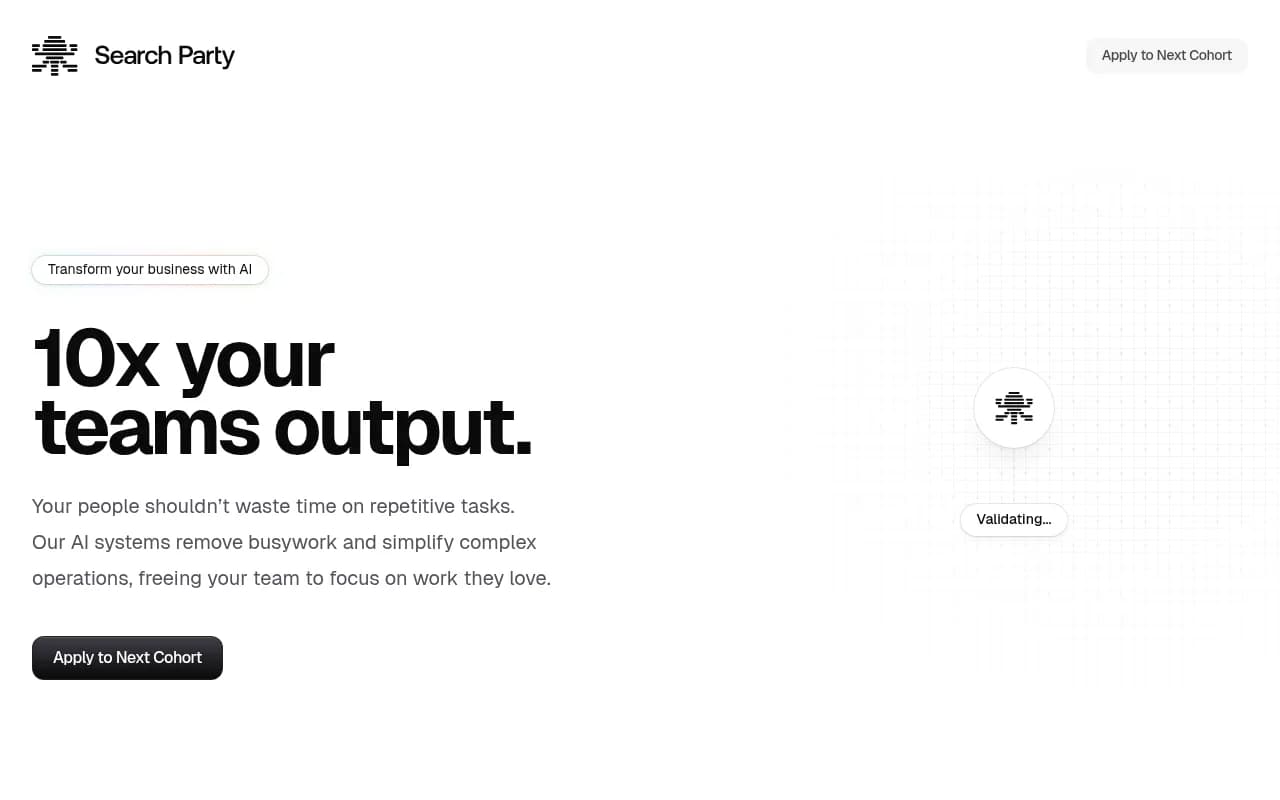
If your agency is drowning in repetitive tasks -- manual reporting, client onboarding flows, content production pipelines, proposal generation -- Search Party's model is to audit those workflows and build AI systems that handle them. The output is custom automation, not a dashboard subscription.
This makes a direct feature comparison with Peec AI almost meaningless. They're not in the same category.
Side-by-side: what you're actually buying
| Dimension | Peec AI | Search Party |
|---|---|---|
| Product type | SaaS monitoring platform | AI implementation/automation partner |
| Primary use case | Track client brand visibility in AI search | Automate agency operations and workflows |
| Pricing model | Subscription ($245/mo agency tier) | Custom (project or retainer based) |
| Setup time | ~3 minutes, self-serve | Weeks (custom build) |
| AI models tracked | ChatGPT, Perplexity, Gemini, Claude, others | N/A -- not a monitoring tool |
| Content generation | No | Depends on what's built |
| Crawler logs | No | No |
| White-label reporting | Yes (Looker Studio) | Depends on build |
| Unlimited seats | Yes | N/A |
| Best for | Agencies reporting on AI visibility | Agencies automating internal operations |
The honest answer is that most agencies asking "Peec AI vs Search Party" are probably trying to solve an AI visibility problem, and Search Party just showed up in the same search results because it has "AI" and "agency" in its positioning. If that's you, the comparison you actually want is Peec AI vs other AI visibility platforms.
The real agency comparison: Peec AI vs the alternatives
If you're an agency evaluating AI visibility tools, here's where Peec AI sits relative to the broader field.
Peec AI vs Otterly.AI
Otterly is similarly positioned as an accessible, affordable monitoring tool. Both are clean, easy to set up, and focused on tracking rather than optimization. Otterly has a lower entry price point; Peec AI has stronger reporting integrations and more explicit agency pricing. Neither generates content or provides crawler data.

Peec AI vs Profound
Profound goes deeper on data -- real user prompt data, enterprise-grade analytics, and more robust competitive intelligence. The tradeoff is price and complexity. Profound is built for enterprise brands and larger agencies with dedicated analysts. Peec AI is more accessible for mid-market agencies that want clean reporting without a steep learning curve.
Peec AI vs Promptwatch
This is where the gap becomes most visible for agencies that want to do more than report.
Promptwatch covers the monitoring side (prompt tracking, competitor benchmarking, citation analysis across 10+ AI models) but then keeps going. It has Answer Gap Analysis that shows exactly which prompts competitors rank for that your client doesn't. It has Content Agents that generate articles, listicles, and briefs grounded in real prompt and citation data. And it has AI crawler logs -- real-time data showing which pages AI bots are visiting on your client's site, which pages are being cited, and how long it takes from crawl to citation.
For agencies trying to sell AI visibility as an ongoing managed service -- not just a monthly report -- that full loop matters. You can find the gap, create the content, and show the client their visibility improving over time. Peec AI stops at step one.

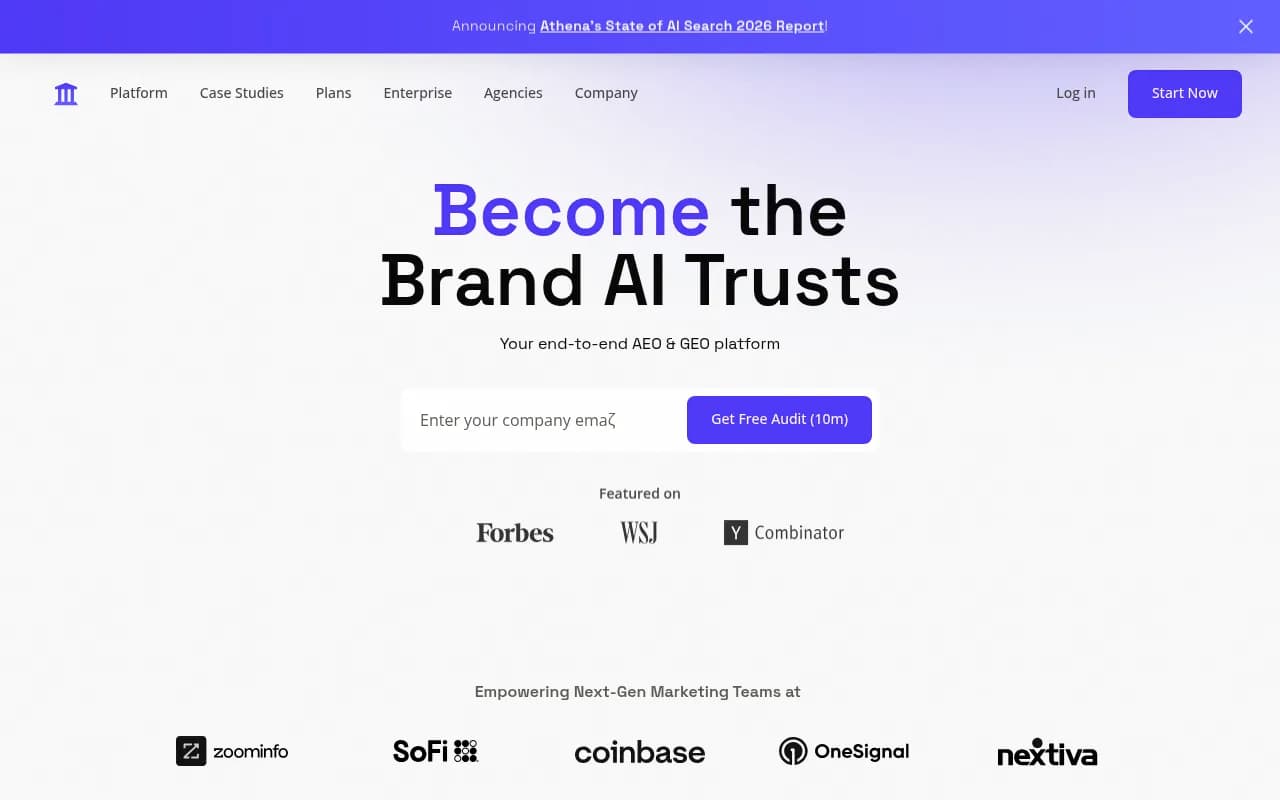
Peec AI vs Athena HQ
AthenaHQ is another monitoring-focused platform. Solid data, good model coverage, but similarly limited on the optimization and content side. If you're comparing these two specifically, the decision usually comes down to UX preference and which reporting integrations your agency already uses.
Feature comparison: agency-critical capabilities
| Capability | Peec AI | Otterly.AI | Profound | Promptwatch |
|---|---|---|---|---|
| Prompt tracking | Yes | Yes | Yes | Yes |
| Competitor benchmarking | Yes | Yes | Yes | Yes |
| Citation source analysis | Yes | Basic | Yes | Yes |
| Content generation | No | No | No | Yes |
| Answer gap analysis | Limited | No | Partial | Yes |
| AI crawler logs | No | No | No | Yes |
| Traffic attribution | No | No | Limited | Yes |
| Reddit/YouTube tracking | No | No | No | Yes |
| Looker Studio integration | Yes | No | Yes | Yes |
| Unlimited seats | Yes | No | No | No (per plan) |
| Agency pricing | Yes ($245/mo) | Yes | Custom | Yes ($249/mo+) |
| White-label reporting | Partial | No | Yes | Yes |
When Peec AI is the right call
Peec AI makes sense for agencies in a few specific situations:
You're adding AI visibility as a reporting module to an existing SEO retainer, and you need something clients can understand quickly. The clean UX and Looker Studio connector make it easy to drop into a monthly report without a lot of explanation.
You're managing a high volume of smaller clients and need unlimited seats without per-user costs eating into margin. Peec AI's seat model is genuinely agency-friendly here.
You want a fast, low-friction way to show clients their current AI visibility baseline before proposing a larger engagement. The 3-minute setup and 7-day free trial make it easy to run a quick audit.
When you should look elsewhere
If your agency is trying to build a repeatable AI visibility service -- not just report on it but actually improve it -- Peec AI's monitoring-only model will frustrate you within a few months. You'll be exporting data and then jumping to separate tools to figure out what content to create, which prompts to target, and whether the work is moving the needle.
That's where a platform with a full optimization loop becomes worth the extra cost. The ability to go from "here's the gap" to "here's the content that closes it" to "here's the traffic it's driving" is what turns AI visibility from a reporting line item into a billable service with demonstrable ROI.
When Search Party is the right call
Search Party makes sense when your agency's problem is operational, not analytical. If you're spending 20 hours a week on manual tasks that could be automated -- client onboarding, reporting assembly, content production workflows, internal approvals -- then talking to an AI implementation partner like Search Party is a legitimate move.
It's not a substitute for an AI visibility platform. It's a substitute for the manual labor that's eating your margin.
The honest verdict
Peec AI and Search Party aren't really competing for the same budget. If you're choosing between them, you've probably framed the question wrong.
For AI visibility monitoring specifically, Peec AI is a solid, accessible option with genuine agency-friendly features. Its limitations are real -- no content generation, no crawler logs, no traffic attribution -- but for agencies that just need clean reporting, those limitations may not matter yet.
For agencies that want to build a full AI visibility practice, not just report on it, the monitoring-only model runs out of road faster than you'd expect. The tools that close the loop between insight and action are worth the evaluation time.
And if your real problem is operational efficiency rather than AI visibility, Search Party is a completely different conversation -- one that has nothing to do with which LLMs are citing your clients' content.