Key takeaways
- Traditional AI writers (Jasper, Copy.ai, Rytr, Writer) speed up drafting, but a human still plans, briefs, publishes and measures every piece. Output scales with headcount.
- Agentic content platforms plan topics, write, publish to your CMS and check results on a schedule. Output scales with budget and review capacity.
- The bottleneck moves. With agents, it is the editor's approval queue and the accuracy of your brand facts, not drafting speed.
- Volume alone does not win. Promptwatch Data shows news-style content decays fastest in ChatGPT, while maintained landing pages, docs and comparisons last.
- For most teams, a hybrid works: agents for the repeatable 70%, humans for original data, opinion and product claims.
What we mean by each category
The terms get blurry because every vendor now says "agentic". So let me draw a line.
A traditional AI writer is a tool you operate. You open it, pick a template or write a prompt, get a draft, edit it, paste it into your CMS. Even the good ones with brand voice and SEO scoring are fundamentally one task at a time. You are the orchestrator.
An agentic content platform is closer to a junior content team. MIT Sloan's explainer describes agents as systems that "execute multi-step plans, use external tools, and interact with digital environments" within larger workflows. Applied to content, that means the system decides what to write, researches it, drafts it, publishes it, and then looks at whether the page performed.

Domo's buyer's guide puts the test plainly: a chatbot that answers questions isn't agentic, and neither is a script-following bot. A platform qualifies when it plans, acts and corrects its own errors. Most content tools with an "AI agent" label on the pricing page do not pass that test.
A quick checklist
Ask four questions of any tool:
- Does it choose what to write, or wait for you to tell it?
- Does it publish directly to your CMS on a schedule?
- Does it look at results (crawls, citations, traffic) and feed them back into the next task?
- Is there an approval gate before anything goes live?
If the answer is no to the first three, you are buying a traditional writer, however good it is. If there is no gate at all, be careful.
How traditional AI writers scale
Traditional writers are excellent at what they do. The problem is what scaling looks like.
Say one editor can brief, edit and publish eight good articles a week with a writer's help. To reach 40, you hire or contract four more people. The AI made each person faster, but the process is still linear. Cost, coordination and QA grow with the number of humans.
The Activepieces roundup of 2026 writing tools frames the category well: tools are now defined by workflow integration, meaning how directly they push content into a CMS. Their sample pricing for teams (Jasper around $345 for five users, Writer around $195, Copy.ai at $29, Grammarly at $15 per user) shows how wide the range is. I would verify those numbers on vendor pages before budgeting; the Copy.ai and Jasper figures in particular look unusual and plans change often.
Where traditional writers are the better choice
- Brand voice at the sentence level. Jasper and Writer are built around style guides and approvals.
- Regulated content. Writer's pitch is enterprise data security, which matters for legal and compliance teams.
- One-off assets such as ad copy, email variants and landing page headlines.
- Small budgets. Rytr and similar tools cost very little, and nothing runs unattended.
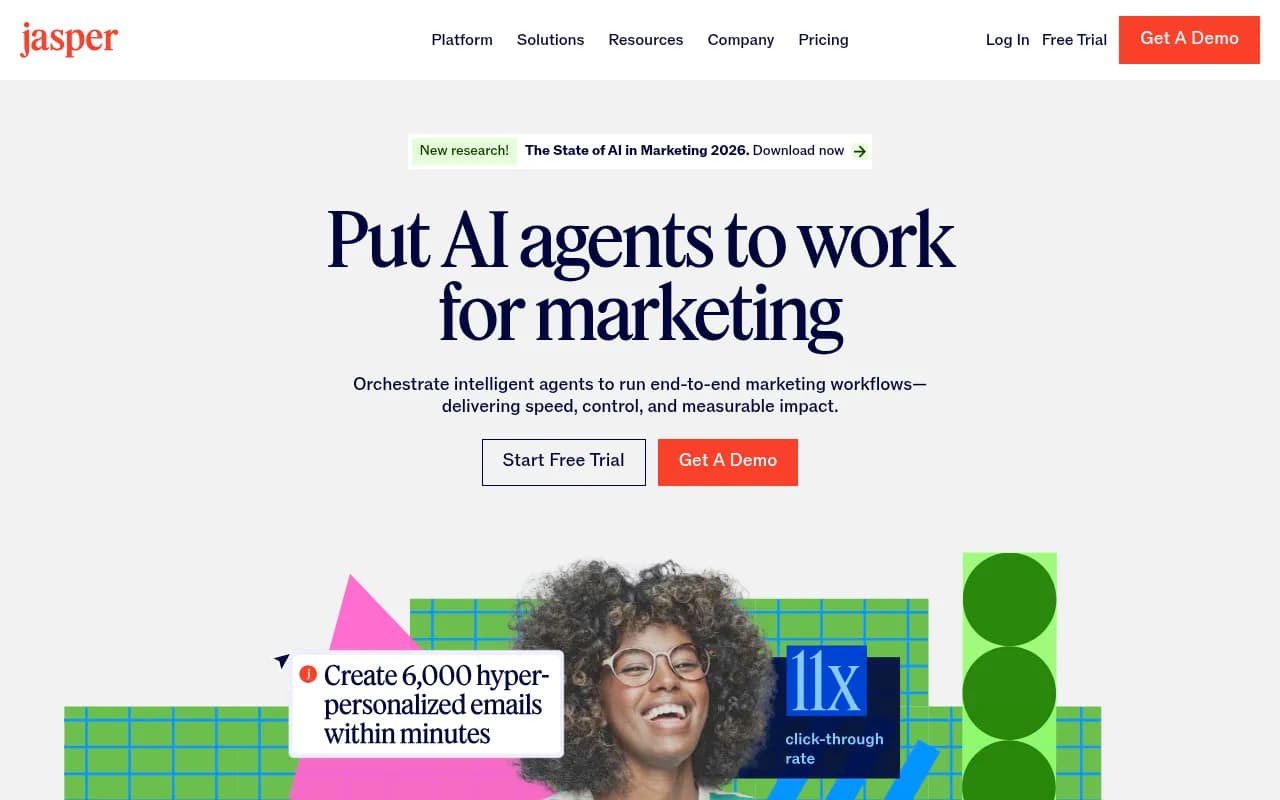
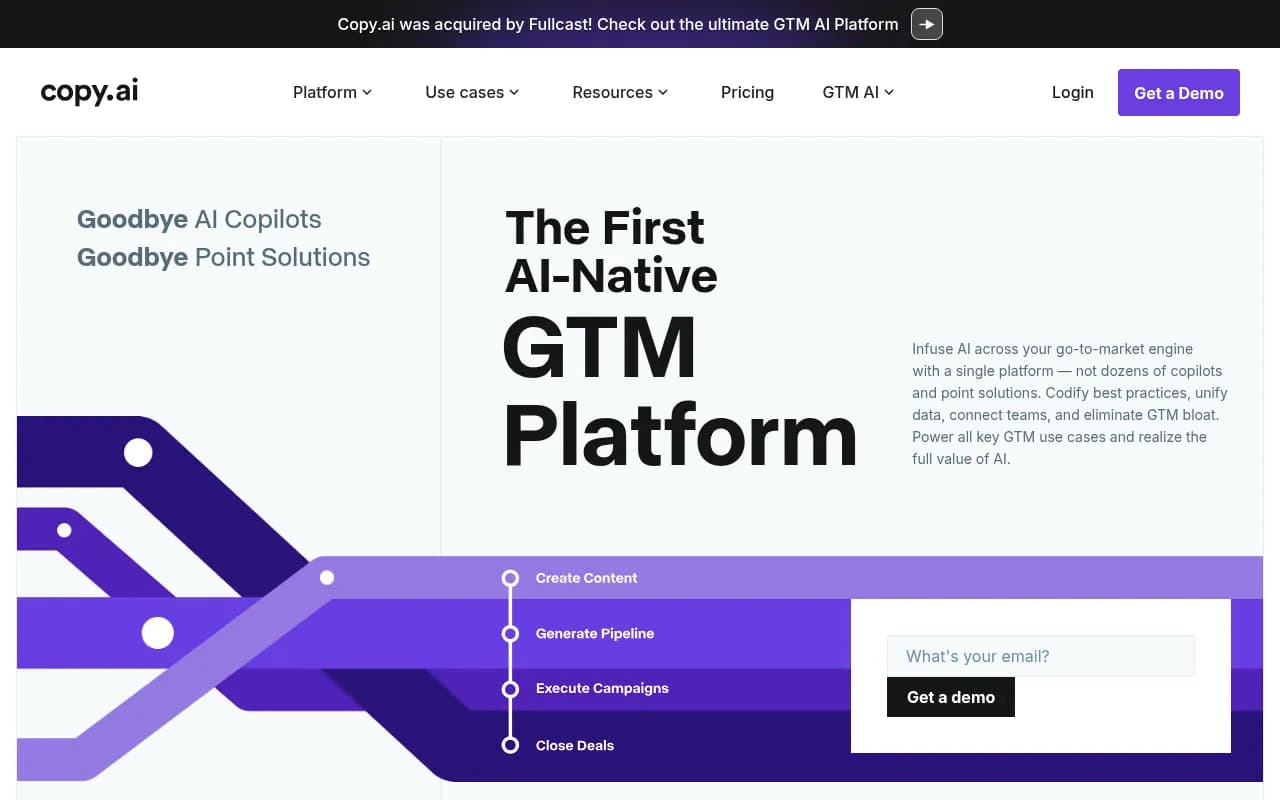
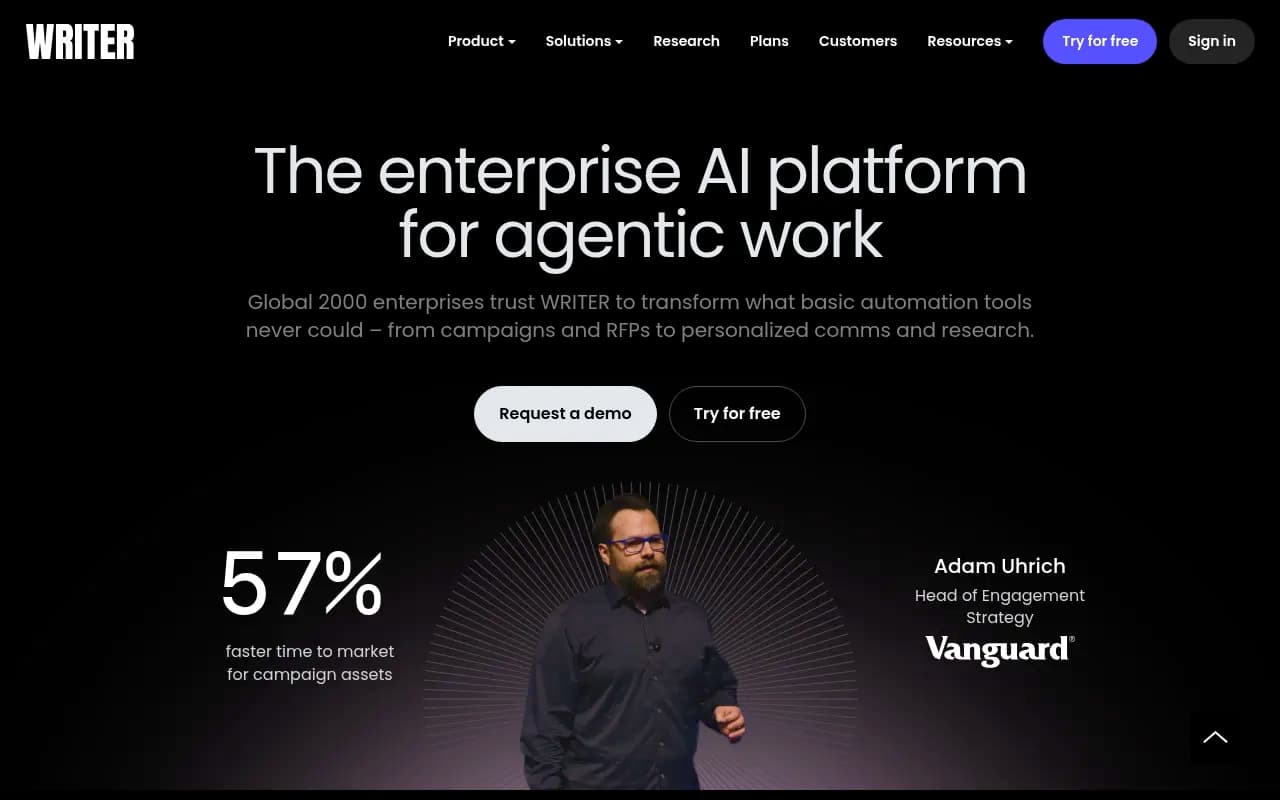

The honest weakness is everything around the draft. Topic selection, internal linking, publishing, refreshing old pages and measuring citations all remain manual. That is where the hours go.
How agentic content platforms scale
Agentic platforms attack exactly that surrounding work. Instead of a template, you give them a plan: a monthly budget, a publishing calendar, brand facts, and a review rule. They pick targets, generate, publish and monitor.
The scaling math is different. Output is limited by budget and by how fast humans can review, not by how many writers you employ. The Activepieces piece makes the same point about pipelines: the bottleneck shifts from technical latency to the speed at which editors approve the incoming queue.
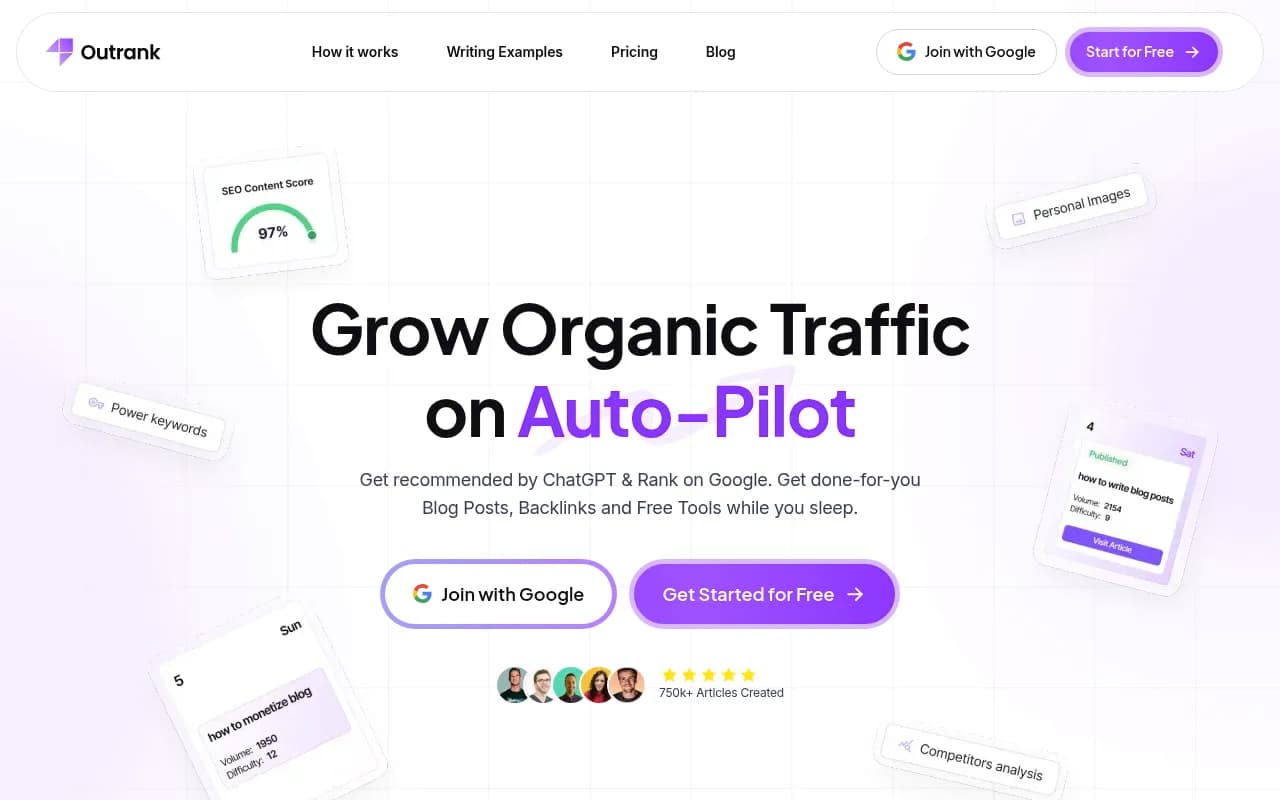
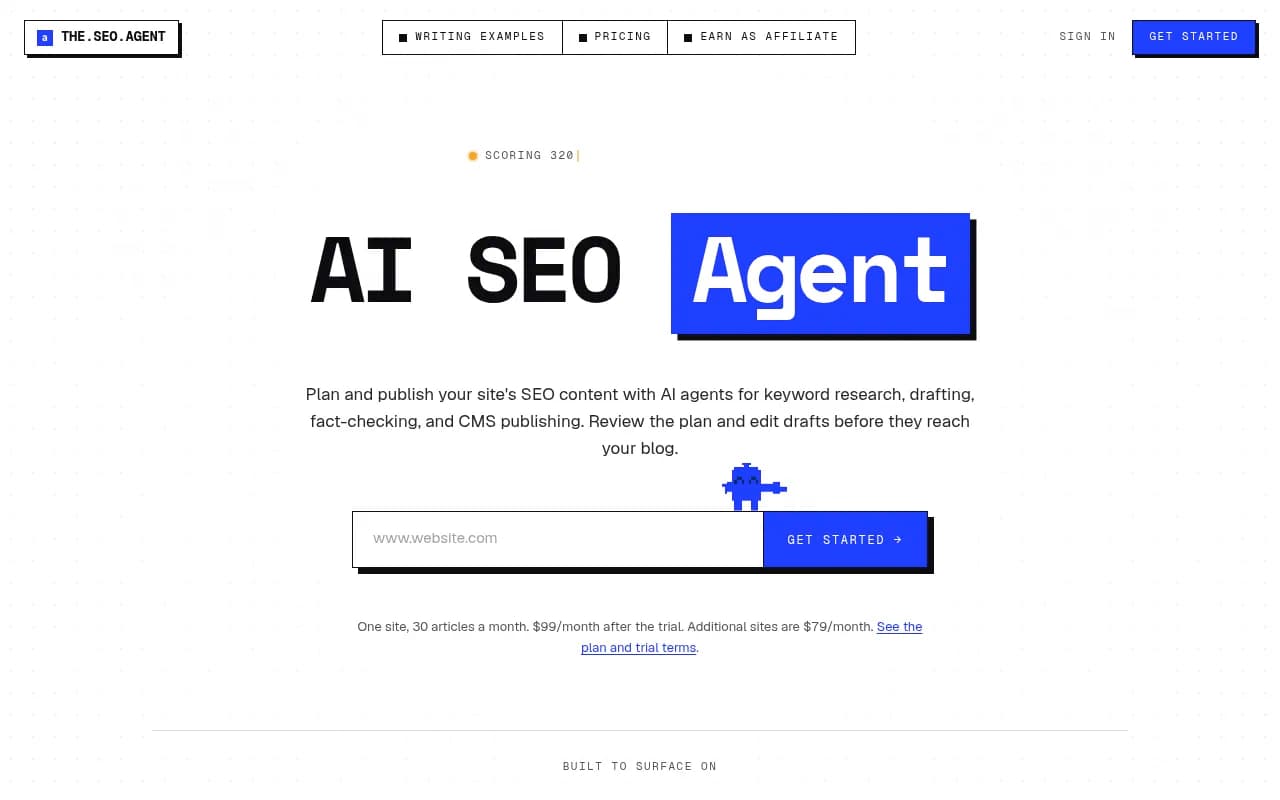
Category examples from our catalog include Gentura, Outrank, Skribra, TheSEOAgent, RankSpot, Arvow and Gushwork. They vary a lot in how much they do after publishing.

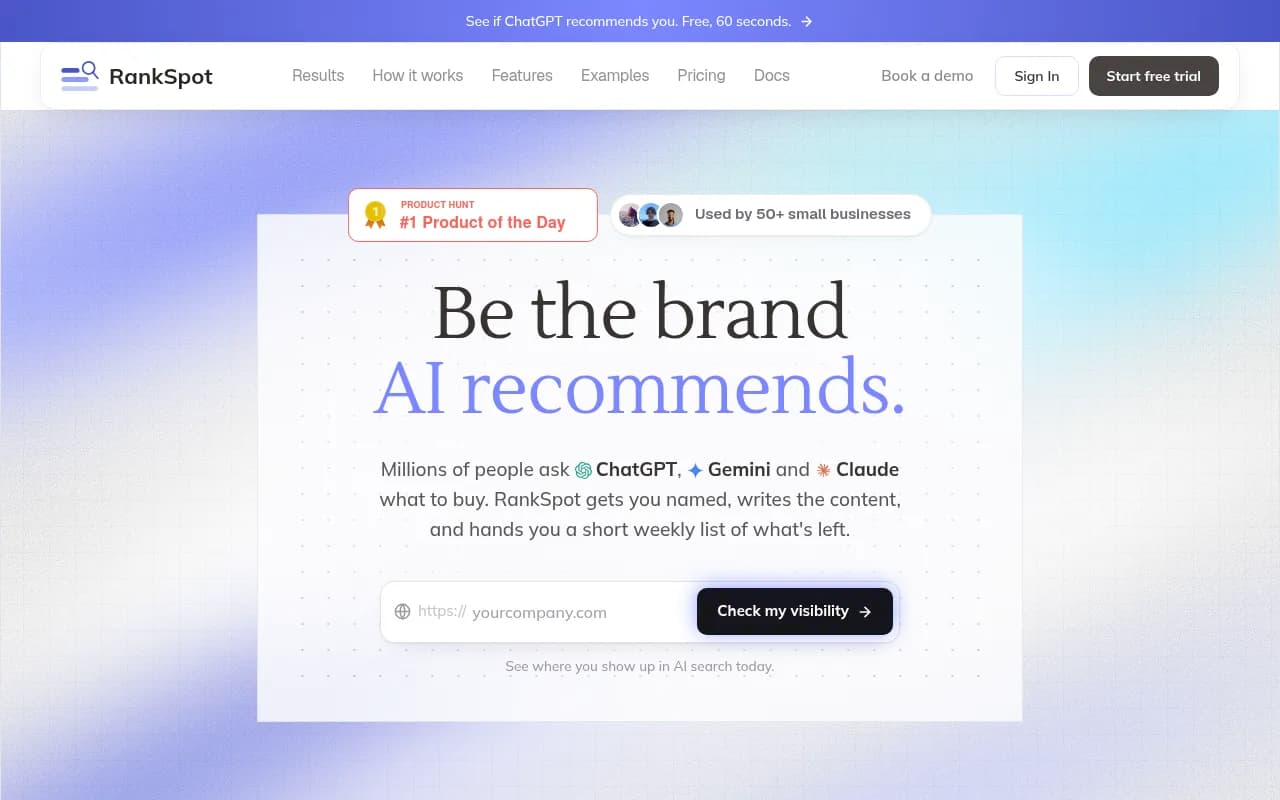
Gushwork
There is also a separate group aimed at AI search specifically. Promptwatch is the one I would point to here, because it starts from visibility data rather than from a keyword list. Its Content Agent plans and writes against gaps it finds in AI answers, publishes to Webflow, Framer or WordPress on a schedule, and then tracks whether the published page is crawled, cited and clicked. Underperformers come back as actions. Crisp used it to scale to 5-10 articles per day, and reported 2x higher conversion rates from AI traffic than from traditional channels.

Enterprise agent platforms are a different thing
The Kore.ai, Glean, Sierra, Moveworks and Aisera lists you will find in "best agentic platforms" articles are mostly about customer service, employee support and internal workflows. They are not content tools. The Kore.ai guide does make one useful point: building one prototype agent is easy, but governing thousands in production is where teams stall. Gartner's prediction, cited there, is that over 40% of enterprise apps will embed task-specific agents by 2026, up from under 5% in 2025. Content teams should borrow the governance lessons (approval gates, audit trails, success rate tracking) without buying a service desk product.

Head-to-head comparison
| Dimension | Traditional AI writer | Agentic content platform |
|---|---|---|
| Who decides what to write | You | The agent, from gaps and data |
| Unit of work | One draft | A plan, a queue, a calendar |
| Publishing | Copy and paste, or manual integration | Direct to CMS, scheduled |
| Feedback loop | None built in | Crawls, citations, traffic feed next tasks |
| Scaling constraint | Headcount | Budget and review capacity |
| Main risk | Slow, expensive at volume | Bulk low-quality or inaccurate pages |
| Typical cost shape | Per seat | Per article or per budget |
| Best for | Voice-critical, one-off, regulated work | Repeatable programs and gap-filling |
The catch: volume does not equal results
Here is where I get skeptical about the whole "scale" framing. Anyone can publish 500 articles now. The Quora thread on whether content marketing still works with AI tools everywhere has the right answer: yes, but the bar is higher, because abundance makes depth and clarity the differentiators.
Promptwatch's own data backs this up. In Promptwatch's content half-life data, which tracked every page ChatGPT cited on July 6, 2026 for 90 days, the pattern was clear:
- Landing pages: 78% still cited after 30 days, 69% after 60.
- Docs: 76% after 30 days, 67% after 60.
- Comparisons: 72% after 30 days, 63% after 60.
- Product pages, reviews and how-tos: about 55% after 60 days, with half-lives of 74 to 77 days.
- News: half the pages gone after 36 days, and almost a quarter never cited again after the first day.
So generic, news-style content burns out fastest, and maintained landing pages, docs and comparisons last. A platform that pumps out thin posts will look productive for a month and then leave you refreshing or deleting them.
What gets cited at all also matters. According to Promptwatch's ChatGPT content type data (Sep 28 to Oct 4, 2026), product pages take 22.4% of citations and landing pages 16.8%, so about 39% go to pages describing what a company sells. Listicles are 13.6%, how-tos 8.7%, comparisons 5.9%. For commercial prompts, product pages, landing pages, listicles and comparisons make up almost 70% of citations.
The practical read: a good agentic setup should not spend its budget on blog filler. It should produce comparisons, how-tos and docs-style pages, and it should keep your product and landing page facts accurate. A traditional writer can do that too, but you have to remember to ask.
What to look for before you buy
Domo's guide lists production-grade controls that apply neatly to content: tool orchestration, human-in-the-loop approvals, audit trails, and task success rate. Translated for content teams:
- A review inbox, with the option to go hands-off later once you trust the output.
- A knowledge base or brand book, so the agent has facts and tone instead of guessing.
- Real research inputs (search results, your internal links, existing pages), not just a prompt.
- Measurement after publishing. If the tool cannot tell you whether a page got crawled or cited, it is a writer with a scheduler.
- Refresh capability. Content that is never updated decays.

Pair writers with an optimization layer
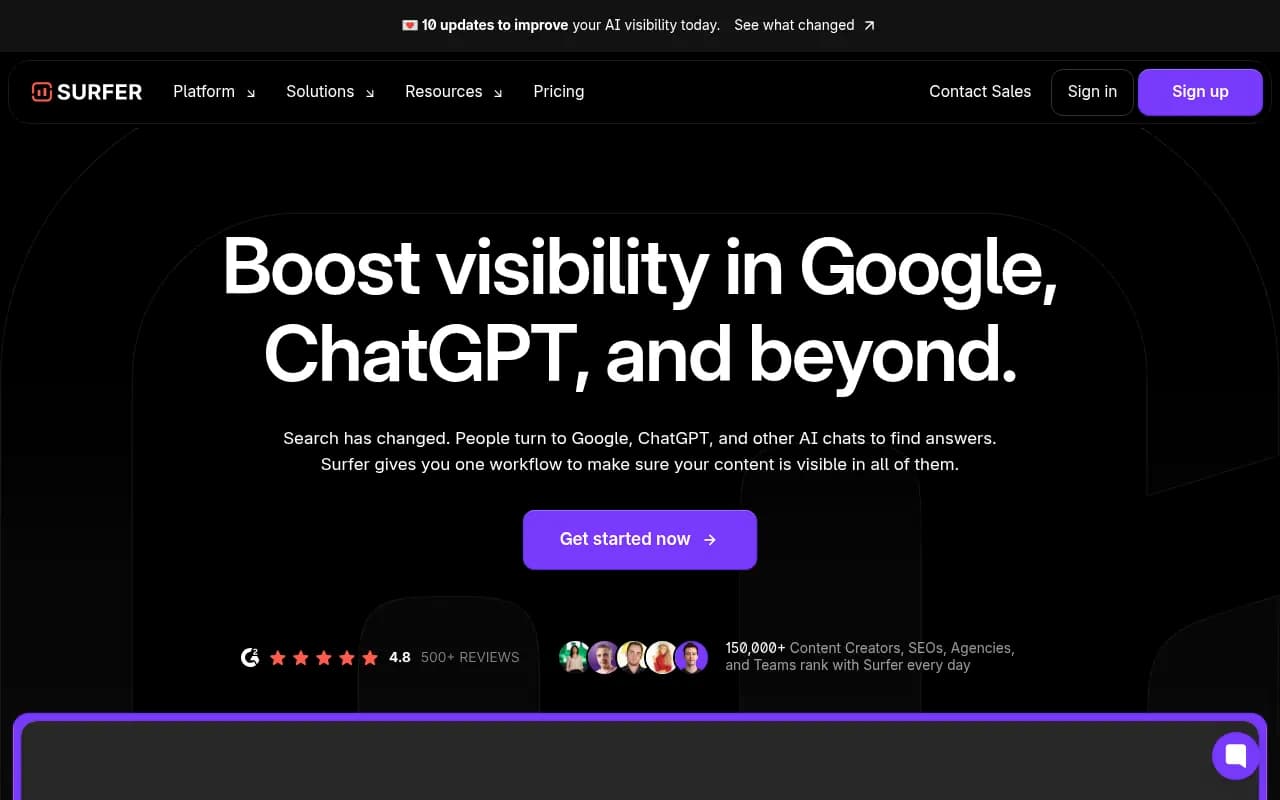
If you stay with a traditional writer, add a scoring or research layer so drafts are not blind. Surfer SEO, Clearscope, Frase and MarketMuse are the usual picks.

For AI-search-specific research, a visibility platform tells you which prompts you are missing from before you write anything. The GEO software directory lists the options if you want to compare.
A practical decision framework
Choose a traditional AI writer if
- You publish fewer than about 10 pieces a month and care about each one.
- Your content needs legal or brand review on every line.
- You do not have a CMS integration or a reviewer with time to approve a queue.
- You want the lowest cost and zero automation risk.
Choose an agentic platform if
- You have clear gaps (topics, prompts, pages) and not enough people to fill them.
- You can maintain a brand knowledge base and approve drafts quickly.
- You care about outcomes after publishing, such as citations and AI-driven traffic, not just output.
- You already publish to Webflow, Framer or WordPress.
Go hybrid if you are in the middle
This is what I would do. Let the agent handle comparison pages, how-tos, FAQs and refreshes. Keep humans on thought leadership, original data and anything with product claims. Review the first 20 or so agent drafts closely, note the recurring errors, and fix them in the brand book rather than in each draft.
Rolling it out without making a mess
- Start with a gap list, not a keyword dump. Pick 20 to 30 prompts or topics where competitors are visible and you are not.
- Load your facts first. Pricing, features, positioning, tone, forbidden claims.
- Run in review mode for a month. Track edit rate, meaning how much a human changes per draft.
- Measure at the page level. Crawled? Cited? Clicked? Convert?
- Prune and refresh. Anything that is not crawled or cited after a few weeks gets rewritten or removed.
- Raise the cap only when the edit rate drops.
If you want a hand setting this up as a program rather than a tool purchase, an agency like 1001 SEO Media runs content and GEO work with Promptwatch behind it. That is optional, and the framework above works in-house.
Verdict
Agentic content platforms scale better in the literal sense. They remove the human-per-article ceiling, publish on their own, and learn from results. Traditional writers scale poorly because the work around the draft is still manual.
But scaling a bad process just produces more bad pages faster. Based on the half-life data, the teams that win will be the ones that point agents at durable page types, keep facts accurate, and measure what happens after publishing. Pick the tool category by your bottleneck: if it is drafting speed, buy a writer; if it is planning, publishing and feedback, buy an agentic platform and keep a human on the approve button. Check current plans on each vendor's pricing page before you commit, since both categories are changing monthly.