Key takeaways
- InLinks is the better fit if you want entity-driven internal linking, content briefs, and schema in one workspace, deployed through a JavaScript snippet on any CMS.
- WordLift is the better fit if you want a real, private knowledge graph (RDF, reconciled against Wikidata and others) and run a publisher or content-heavy site, especially on WordPress.
- Price is the biggest practical gap. InLinks starts around $49/month. WordLift's current plans are reported at roughly EUR 160 to EUR 799/month and up, so verify on its pricing page.
- Neither tool has independent test data proving ranking or citation gains. Treat both as automation for work you would otherwise do by hand.
- If your goal is AI visibility specifically, you will probably want a separate tracker alongside either tool.
Why compare these two at all
InLinks and WordLift get lumped together because both say "entity-based SEO" on the box. That is where the similarity mostly ends. They start from different philosophies, and picking the wrong one means either overpaying or ending up with a tool that does not match how your team works.
The short version: InLinks is an SEO workflow tool that happens to use entities. WordLift is a knowledge graph tool that happens to help with SEO. I think that framing explains almost every difference below.
Entities matter more now because AI answer engines match concepts, not strings. Product pages, landing pages, and FAQ-style content earn most ChatGPT citations. In Promptwatch Data's report on ChatGPT citations by content type (Sep 28 to Oct 4, 2026), product pages took 22.4% of citations and landing pages 16.8%. The report doesn't say schema causes citations. But clean entity, schema, and linking work on exactly those page types is a reasonable bet.
What each tool actually is
InLinks
InLinks is an entity SEO platform that identifies the topics on each page, maps them to entities in its own proprietary knowledge graph, and then automates three things: internal links, schema markup, and content briefs. It was founded by Fred Laurent and Dixon Jones (formerly of Majestic). You paste a JavaScript snippet into your site and it injects links and JSON-LD without a developer ticket.
Its own help center has a WordLift comparison, which you should read with the obvious bias in mind.
WordLift
WordLift came out of a research project at insideout10 and became a standalone startup in 2016, founded by Andrea Volpini and David Riccitelli. It analyzes your content with NLP, extracts entities, lets editors curate them, and publishes structured data plus a knowledge graph you own. The graph is RDF-based and reconciled against Wikidata, DBpedia, and Google's Knowledge Graph. It runs as a WordPress plugin, supports headless CMSs, and has language models for 32 languages according to InLinks' review.
The output is closer to what a linked-data engineer would build than what a typical SEO plugin produces. That is either exactly what you want or complete overkill.
Head-to-head comparison
| Area | InLinks | WordLift |
|---|---|---|
| Core idea | Entity-driven SEO workflow | Private knowledge graph per site |
| Knowledge graph | Proprietary; references Wikidata and Google | RDF graph reconciled with Wikidata, DBpedia, Google KG |
| Internal linking | Automated, entity co-occurrence, anchor variation | Context cards and related links from the graph |
| Schema | Auto-generated and injected via JS | Generated from the graph, published as linked data |
| Content briefs | Built in, with required entities and questions | Less central; editor-focused enrichment |
| Deployment | JS snippet, CMS-agnostic, plus plugin and API | WordPress plugin, headless CMS, API, Cloudflare Worker |
| Technical skill needed | Low | Low to moderate; higher for advanced graph use |
| Known weakness | Graph is shallower for non-English entities | Cost, and a steeper conceptual learning curve |
| Typical entry price | Free tier; paid from about $49/month | Reported from about EUR 160/month; Business+ about EUR 799/month |
Pricing is the one row I would not trust from any third party, including me. More on that below.
Entity extraction and the knowledge graph
This is the real philosophical split.
InLinks uses its own semantic analyzer and graph. It analyzes your pages, finds entities, and builds an entity-relationship map across your site. It is practical, fast, and tuned for SEO tasks like finding coverage gaps against competitors.
WordLift builds an actual graph database for your domain, where entities have types, properties, and relationships. An article, an author, a product, and an event all become first-class nodes. If you care about outputting a clean, crawlable graph that machines can traverse, this is the more serious approach. Third-party reviews describe it as built on open-source and linked-data tooling, which also means your graph is less of a black box.
The tradeoff: InLinks tells you what to do. WordLift gives you a structure and expects you to decide what to do with it.
Internal linking
If internal linking is your main pain point, InLinks wins and it is not very close. It automates links based on entity co-occurrence across your pages, varies anchor text, and keeps links reinforcing topical clusters rather than scattering random anchors. Filip Konecny's review calls InLinks the stronger fit for internal linking and content work, and I agree with that read.
WordLift does internal linking differently, through its graph and features like context cards that appear on hover. It is more reader-facing than SEO-facing. Useful, but a different job.
Schema markup
Both tools generate schema without hand-coding. Where they differ is the philosophy.
- InLinks generates JSON-LD and injects it through the script. Quick, no dev time, easy to roll back.
- WordLift generates structured data as an output of the graph, so the markup stays consistent because it comes from the same curated entities.
If you only need valid schema on a few hundred pages, the InLinks route is faster. If you need schema that stays coherent across thousands of articles, authors, and products, the WordLift route pays off. Either way, run the output through a validator before trusting it. For a dedicated enterprise schema platform, Schema App is the other name that usually comes up.
Content workflow
InLinks includes content briefs listing required entities and questions, plus topic clustering tied to entity coverage. It sits closer to tools like Clearscope or MarketMuse, except entity-first.
WordLift is less of a brief generator. It leans on enrichment inside the editor, automatic summaries, and entity curation. That suits editorial teams who already know what to write and want the markup and graph handled as they go.
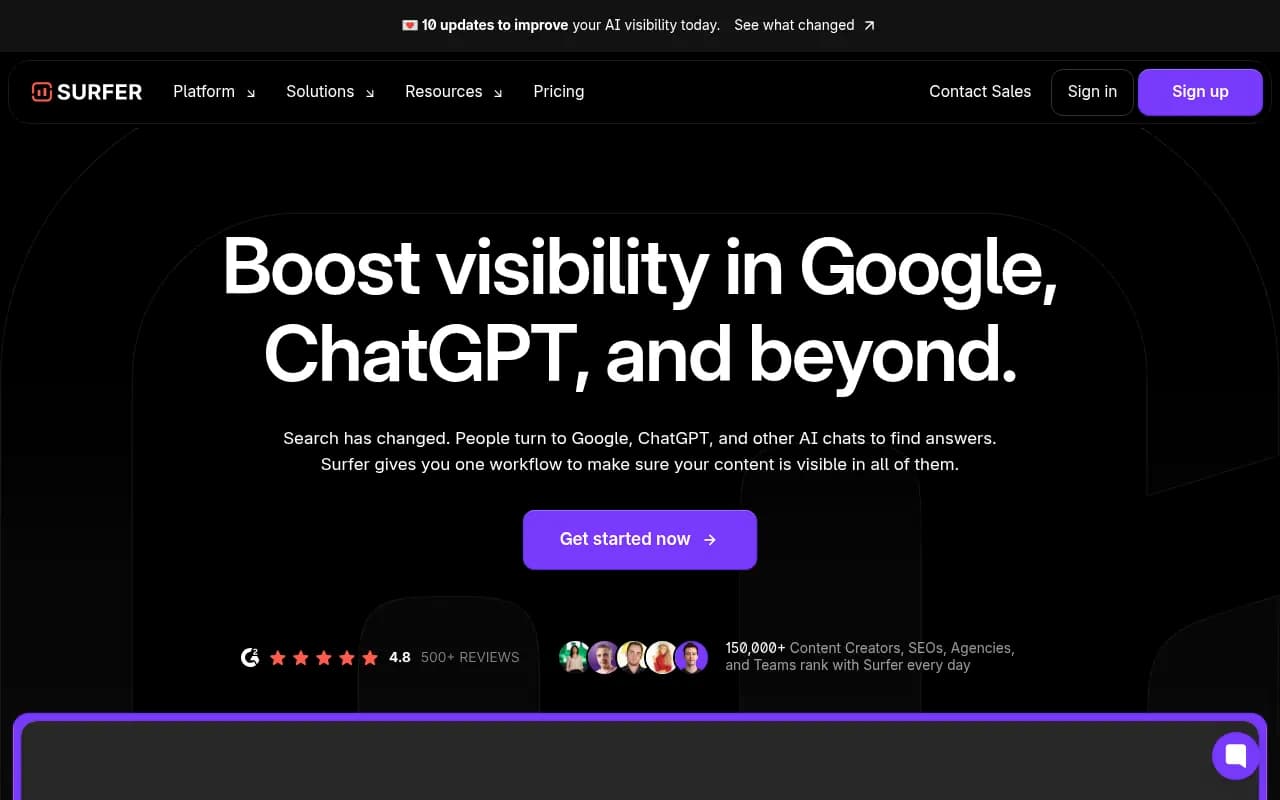
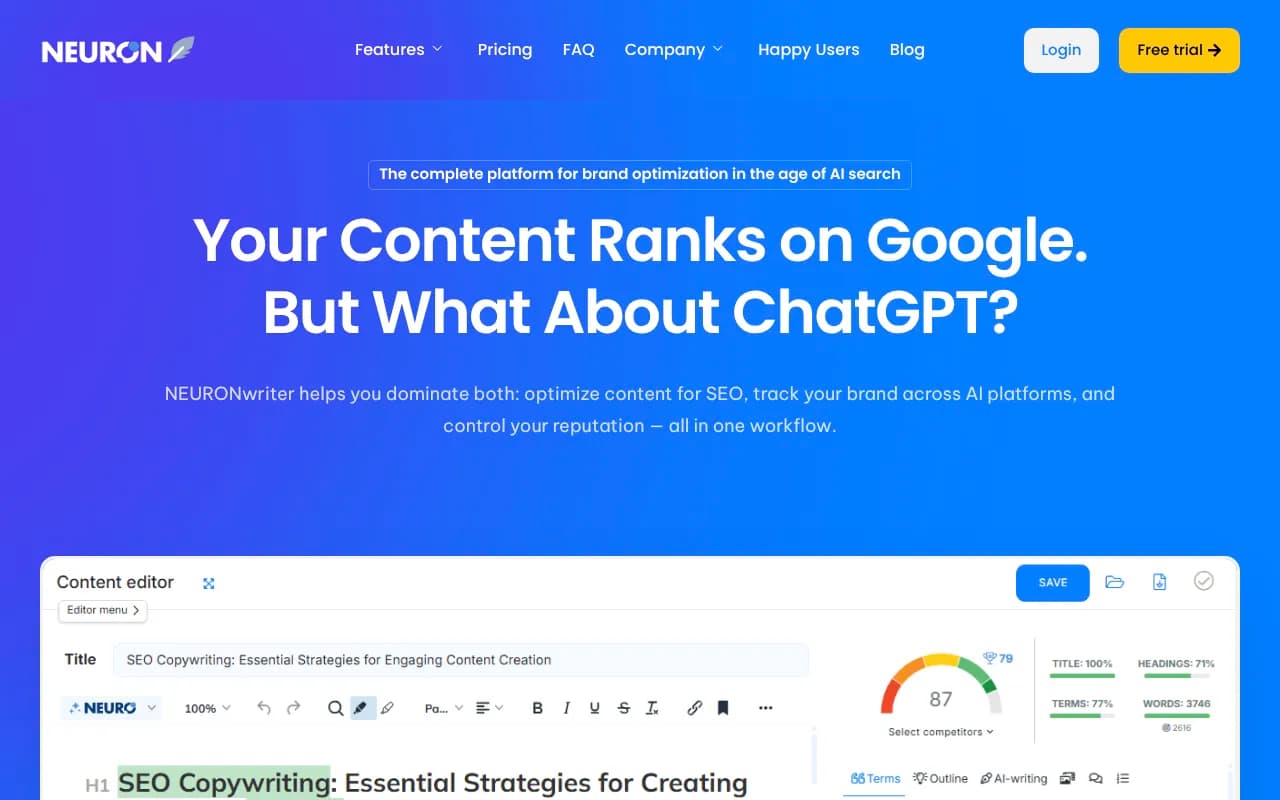
If briefs are your only need and you do not care about the graph, a content optimizer like Surfer SEO or NeuronWriter may cover it for less.
Pricing
Here is where I have to be careful, because the sources disagree and I could not verify live pricing. inlinks.com/pricing returned a 404 during research, and WordLift's plan details did not render.
What third parties report:
| Plan | InLinks (reported) | WordLift (reported) |
|---|---|---|
| Free | $0, 2 content runs/month, internal linking on 25 pages | None confirmed |
| Entry | Freelancer from $49/month, about 100 pages | Agent around EUR 160/month (G2) |
| Mid | Agency from $196/month, about 430 pages, API, unlimited projects | Business+ around EUR 799/month, billed yearly |
| Top | Enterprise about $2,000/month, 100,000+ URLs | Enterprise, contact sales |
WordLift's own pricing snippet has shown figures like $879 and $1,100 per month, and an older page advertised EUR 49/month after a trial that looks stale. Filip Konecny describes WordLift as a "completely different budget category" from InLinks' $49 plan. Check both pricing pages directly before you decide, because these numbers move.
Who should pick which
Pick InLinks if
- You want internal linking, schema, and briefs handled in one place.
- You do not have developer time and your CMS is not WordPress.
- You are a freelancer, small agency, or in-house team with a modest budget.
- Your content is mostly English.
Watch out for the specialization. If entity SEO is a small slice of your needs, a broader suite may be better value. The AY Rank roundup also flags that InLinks' graph is not as deep as Diffbot's for non-English entities.
Pick WordLift if
- You are a publisher or run a content-heavy WordPress or headless site.
- You want to own a knowledge graph and expose it as an endpoint.
- You have the budget and someone who enjoys linked data.
- Explicit entity modeling matters more to you than turnkey linking.
Pick neither if
Your real goal is knowing whether AI engines mention and cite you. Neither tool measures that. Both build the inputs, not the outcome.
Testing before you commit
One tip from the Best Semantic SEO Tools roundup I would repeat: do not buy on feature lists. Run the same 500-word paragraph through each candidate and through Google's Cloud NLP API, then compare which entities are extracted and how sensibly they are disambiguated. If a tool cannot extract an entity, map a relationship, or validate a node, it is not doing semantic SEO.
A simple trial plan:
- Pick 20 to 30 representative pages, including product, landing, and FAQ pages.
- Run extraction on both tools and note wrong or missing entities.
- Check the generated schema in a validator.
- Compare how many sensible internal links each proposes.
- Track the pages in Google Search Console for a couple of months.
Expect noise. There is no independent test data showing schema or ranking impact for either tool, so your own before-and-after is the only real evidence.
Measuring whether any of it reaches AI answers
Entity work is upstream. To see whether it changes anything in ChatGPT, Perplexity, or AI Overviews, you need to track citations and AI crawler activity separately. Tools like Promptwatch can show which of your pages get cited and whether AI crawlers can read them.

For more options, the GEO software directory at bestgeosoftware.com lists alternatives. Also keep expectations grounded: Promptwatch's content half-life data shows landing pages and docs stay cited longest while news loses half its pages within about 36 days, so entity work on evergreen pages tends to last longer.
Where I land
For most teams reading this, InLinks is the easier yes. It is cheaper, faster to deploy, and solves problems you can name today: weak internal links, missing schema, vague briefs. WordLift is the more ambitious product and the better one if a knowledge graph is the actual deliverable for a large publisher. If you are unsure, start with InLinks' free tier, run the extraction test above, and only move to WordLift when you hit a wall that needs a real graph.