Key takeaways
- Publishing more AI content faster doesn't automatically mean more traffic, trust, or revenue — volume without quality control actively damages brand credibility and search visibility.
- The most common failure modes are factual errors, brand voice drift, repetitive structure, and content that answers no real question anyone is actually asking.
- AI content tools work best as force multipliers for skilled humans, not as replacements for editorial judgment.
- The gap between "AI wrote it" and "AI helped write it" is enormous — and readers, search engines, and AI models can increasingly tell the difference.
- A sustainable AI content operation needs clear quality gates, real prompt data, and a feedback loop that connects content output to actual visibility results.
There's a version of the AI content pitch that sounds completely reasonable. You have a backlog of 200 topics. Your team can write maybe 8 articles a month. AI can help you publish 80. Why wouldn't you do that?
The answer is that "publish 80 articles" and "publish 80 articles that work" are very different things. And the gap between those two outcomes is where a lot of marketing teams are quietly losing ground right now.
This isn't an argument against using AI for content. It's an argument against using it badly — which, based on what's showing up in search results and AI-generated answers, is happening at enormous scale.
What "AI content at scale" actually looks like in practice
Most scaled AI content pipelines follow a similar pattern. Someone exports a keyword list, feeds it into a content generation tool, sets a word count target, and hits publish after a light editorial pass. The output looks like content. It has headings, paragraphs, a conclusion. It mentions the right keywords.
But there are a few things it usually lacks:
- A specific, defensible point of view
- Original research, data, or examples
- Anything a competitor couldn't generate in the same 45 seconds
- A reason for a reader to trust the author or the brand
The result is what some SEOs are calling "content landfill" — pages that technically exist but add no real signal to the web. They don't get cited. They don't get linked. They don't get read past the first paragraph.
Tools like Jasper, Copy.ai, and Rytr are genuinely useful when used with intention. The problem isn't the tools themselves.

The problem is the workflow they're often dropped into: generate, publish, repeat, and hope the volume pays off.
The specific ways scaled AI content goes wrong
Factual errors compound at scale
AI models hallucinate. That's not a bug that will be fully patched — it's a structural feature of how large language models work. They generate plausible-sounding text, and sometimes plausible-sounding text is wrong.
At low volume, a human editor catches most of this. At high volume, with tight turnaround times and thin editorial teams, errors slip through. A statistic gets cited that doesn't exist. A product feature gets described incorrectly. A competitor gets misrepresented.
Each individual error might seem minor. But at scale, they accumulate into a reputation problem. Readers who catch one error don't assume it's isolated — they assume the whole site is unreliable.
Brand voice disappears into generic prose
Every AI writing tool has a default register. It tends to be confident, slightly formal, and structured in a way that feels vaguely like a business school textbook. Left unchecked, it flattens everything into the same tone.
If your brand has a distinctive voice — direct, irreverent, technical, warm, whatever it is — that voice erodes when you're publishing 80 AI-generated articles a month. The content starts to feel like it was written by no one in particular, for no one in particular.
This matters more than it used to. Readers have gotten better at detecting generic AI prose, and so have AI search engines. When a model like ChatGPT or Perplexity decides which sources to cite, it's not just matching keywords — it's evaluating whether a source seems authoritative and specific. Generic content doesn't pass that test.
You end up answering questions nobody asked
One of the most common failure modes in scaled AI content is topical drift. You start with a reasonable keyword list, generate articles for each term, and end up with a site full of content that addresses search queries but not actual user intent.
There's a difference between "someone typed these words into a search box" and "someone has a real problem this article could solve." AI content generators are good at the former and often bad at the latter.
The result is content that ranks briefly, gets a high bounce rate, and then drops — because the signal it sends to search engines and AI models is "people clicked and immediately left."
Duplicate structure creates a sameness problem
Ask most AI writing tools to produce 50 articles on related topics and you'll notice something: they all have the same skeleton. Introduction that restates the question. Three to five H2 sections. A "key takeaways" box. A conclusion that says "in summary."
This isn't just aesthetically boring. It's a signal problem. When AI models are deciding which sources to cite, they're looking for content that offers something distinctive — a specific angle, a concrete example, a piece of data that isn't available everywhere else. Content that's structurally identical to everything else on the web doesn't stand out.
The hidden costs that don't show up in the content budget
When teams calculate the ROI of AI content at scale, they usually count the cost of the tools and the time saved on writing. They rarely count:
- The editorial time required to actually fix AI output to a publishable standard
- The cost of publishing errors and the trust damage they cause
- The opportunity cost of ranking for low-value queries instead of high-value ones
- The technical debt of having hundreds of thin pages that need to be pruned later
That last one is particularly underestimated. A site with 2,000 thin AI-generated pages isn't just a neutral asset — it's an active liability. Those pages dilute the overall quality signal of the domain, consume crawl budget, and can trigger manual review from search engines.
Cleaning up a scaled AI content operation after the fact is expensive and slow. It's much cheaper to build quality gates into the process from the start.
What the research actually says about automation and quality
MIT economists David Autor and Neil Thompson published research in 2026 examining how automation changes the value of labor across different occupations. Their finding is counterintuitive but important: when automation removes the simpler parts of a job, the remaining work becomes more valuable and better compensated. When automation targets the expert tasks, it commoditizes the role and drives wages down.
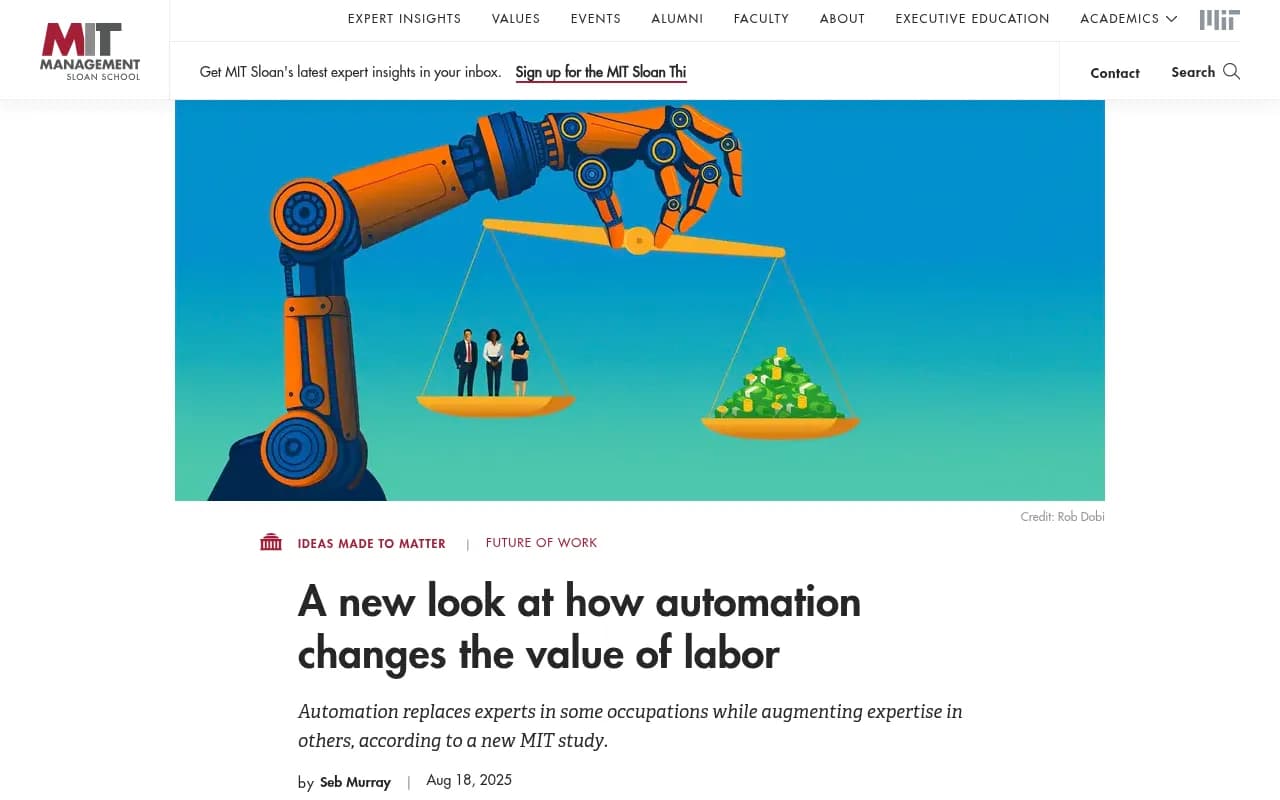
The parallel for content is direct. If AI handles the mechanical parts of writing — formatting, basic research, first drafts — and humans focus on the expert parts (original insight, editorial judgment, strategic positioning), the output is better and the human contribution is more valuable. If AI handles everything and humans just hit publish, you've commoditized your content operation into something that produces no competitive advantage.
The AI visibility problem nobody talks about
Here's a dimension that most discussions of AI content quality miss entirely: how AI search engines evaluate your content.
When someone asks ChatGPT, Perplexity, or Google's AI Mode a question, those models don't just retrieve pages — they evaluate sources. They look at whether a page actually answers the question, whether it's specific, whether it's been cited by other sources, and whether the domain has a track record of reliable information.
Scaled AI content that's thin, generic, or factually questionable doesn't just underperform in traditional search. It gets ignored by AI models entirely. Worse, if AI models do cite your content and it's wrong, you've now spread an error through every conversation that references it.
The brands that are winning in AI search right now are the ones publishing content that's genuinely hard to replicate — specific data, original research, expert perspectives, concrete examples. That kind of content takes more effort to produce, but it's the kind that gets cited.
Tools like Promptwatch can show you which of your pages are actually being cited by AI models and which are being ignored, which is a useful reality check on whether your content operation is producing anything that matters in this environment.

Building a scaled AI content operation that actually works
None of this means you shouldn't use AI for content. It means you need to be deliberate about where in the process AI adds value and where it doesn't.
Start with real prompt data, not keyword lists
The difference between content that gets cited and content that doesn't often comes down to whether you're answering a question people are actually asking. Keyword lists tell you what terms exist. Prompt data tells you what questions real users are typing into AI search engines — which is increasingly where your audience is.
Build your content calendar around specific, answerable questions rather than broad topic clusters.
Use AI for the right parts of the process
AI is genuinely good at:
- Generating first drafts that a human then rewrites substantially
- Producing structural outlines that a writer can react to
- Summarizing research so a writer can engage with it faster
- Generating variations of headlines or meta descriptions
AI is not good at:
- Producing a defensible point of view
- Generating original examples or data
- Matching a specific brand voice without extensive fine-tuning
- Knowing what your audience actually cares about
The most effective content teams use AI to compress the mechanical work and free up human time for the parts that require judgment.
Build quality gates before publication
At minimum, every AI-assisted article should go through:
- A factual accuracy check (especially for statistics, quotes, and product claims)
- A brand voice review (does this sound like us?)
- An intent check (does this actually answer the question it claims to answer?)
- A uniqueness check (is there anything here that couldn't be generated by anyone else in 30 seconds?)
These gates slow down the pipeline. That's the point. Publishing 30 good articles is better than publishing 80 mediocre ones.
Track what's actually working
Volume metrics — articles published, words generated, pages indexed — are easy to measure and largely meaningless. The metrics that matter are:
- Which pages are driving organic traffic?
- Which pages are being cited by AI models?
- Which pages are generating leads or conversions?
- Which pages have a bounce rate that suggests the content isn't delivering on its promise?
Tools like Clearscope and Surfer SEO can help with on-page optimization. For the AI visibility side — understanding which content is actually being cited by ChatGPT, Perplexity, and other models — you need something more specific.


Prune aggressively
If you've already published a lot of thin AI content, the answer isn't to leave it and hope it improves. Audit your existing content, identify pages with low traffic, high bounce rates, and no backlinks, and either substantially improve them or consolidate them into stronger pages.
A smaller site with consistently high-quality content outperforms a large site with mixed quality. Search engines and AI models both reward consistency.
A comparison of AI content approaches
| Approach | Volume | Quality ceiling | AI citation potential | Editorial cost |
|---|---|---|---|---|
| Full automation, minimal editing | Very high | Low | Very low | Low upfront, high cleanup |
| AI drafts + light human edit | High | Medium | Low-medium | Moderate |
| AI research + human writing | Medium | High | High | Moderate-high |
| AI structure + human expertise | Medium | Very high | Very high | High |
| Fully human | Low | Very high | Very high | Very high |
The middle two rows are where most teams should be operating. Full automation produces content that doesn't work. Fully human production doesn't scale. The sweet spot is using AI to compress the mechanical work while preserving human judgment on the parts that actually determine quality.
The tools worth using carefully
A few tools are worth mentioning for teams trying to build a more disciplined AI content operation:
For content optimization and ensuring your content actually covers what it needs to cover:

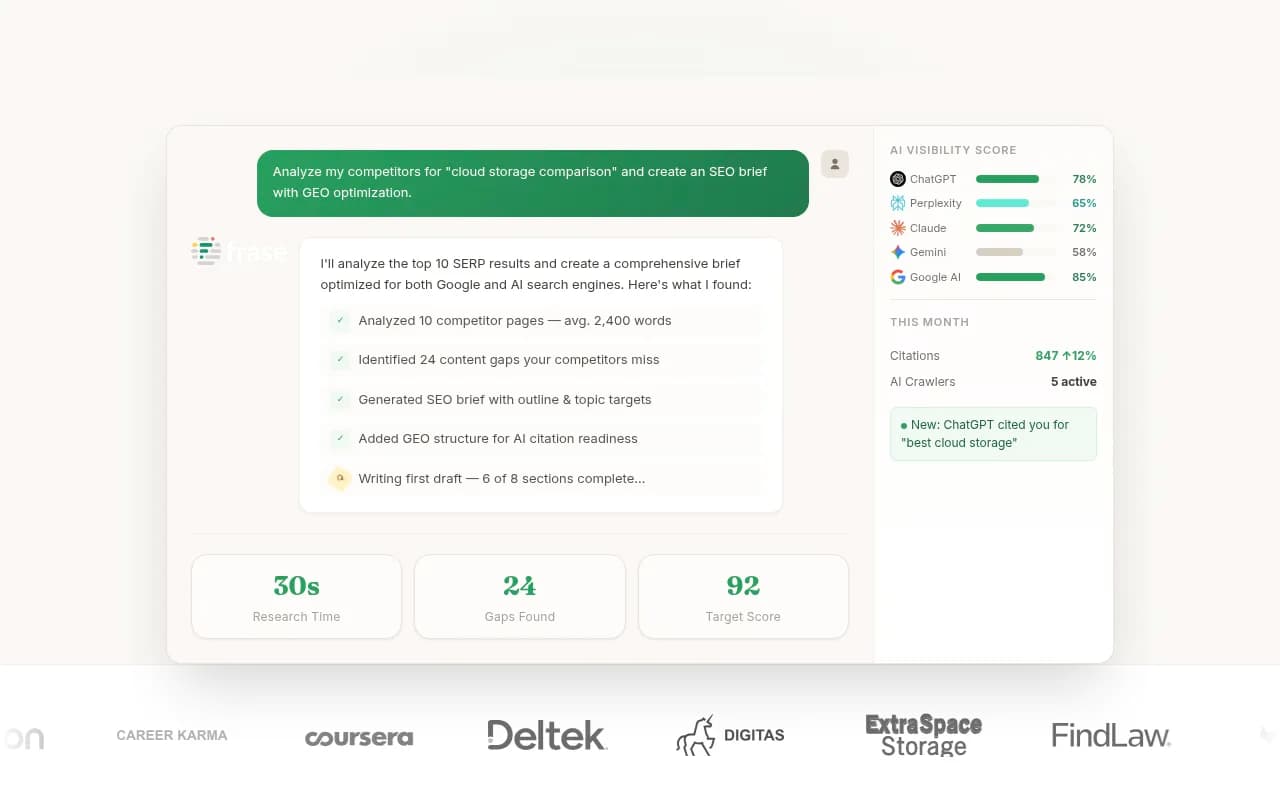
For SEO content briefs that ground AI writing in real data:
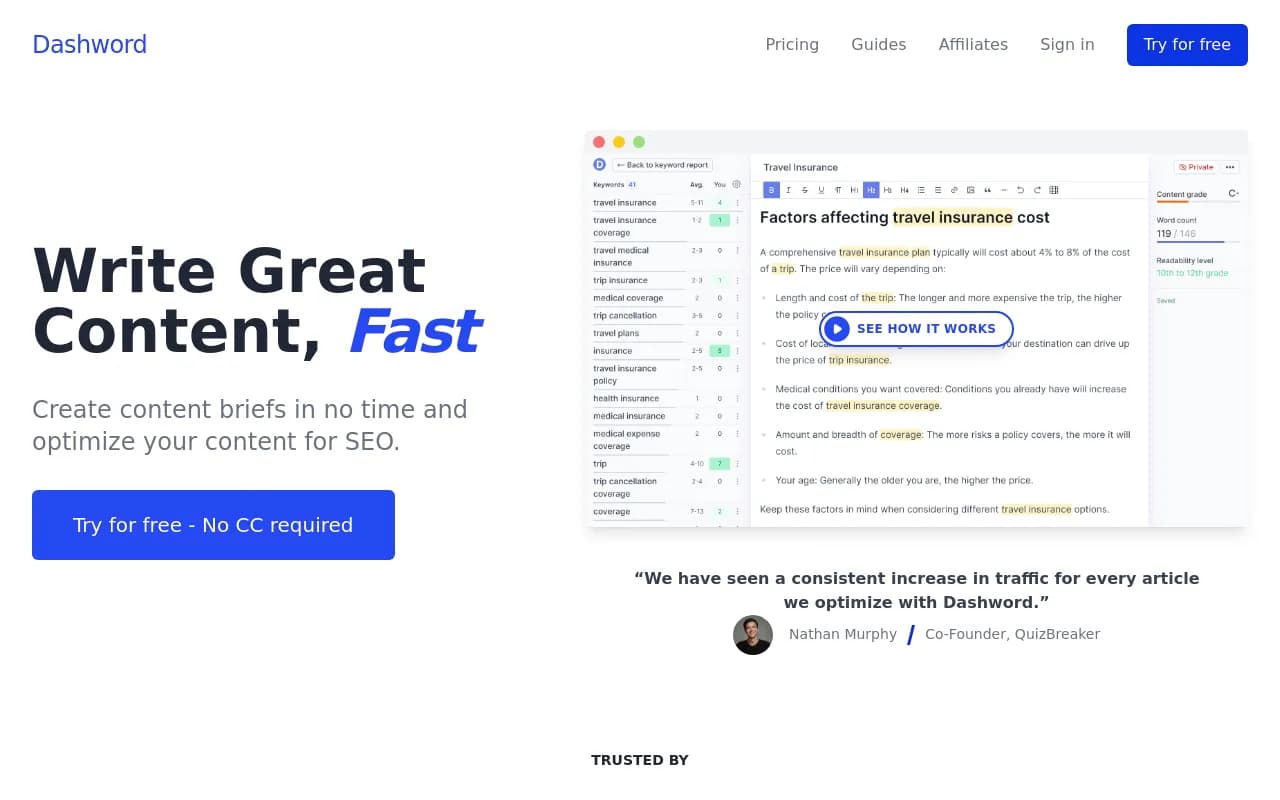
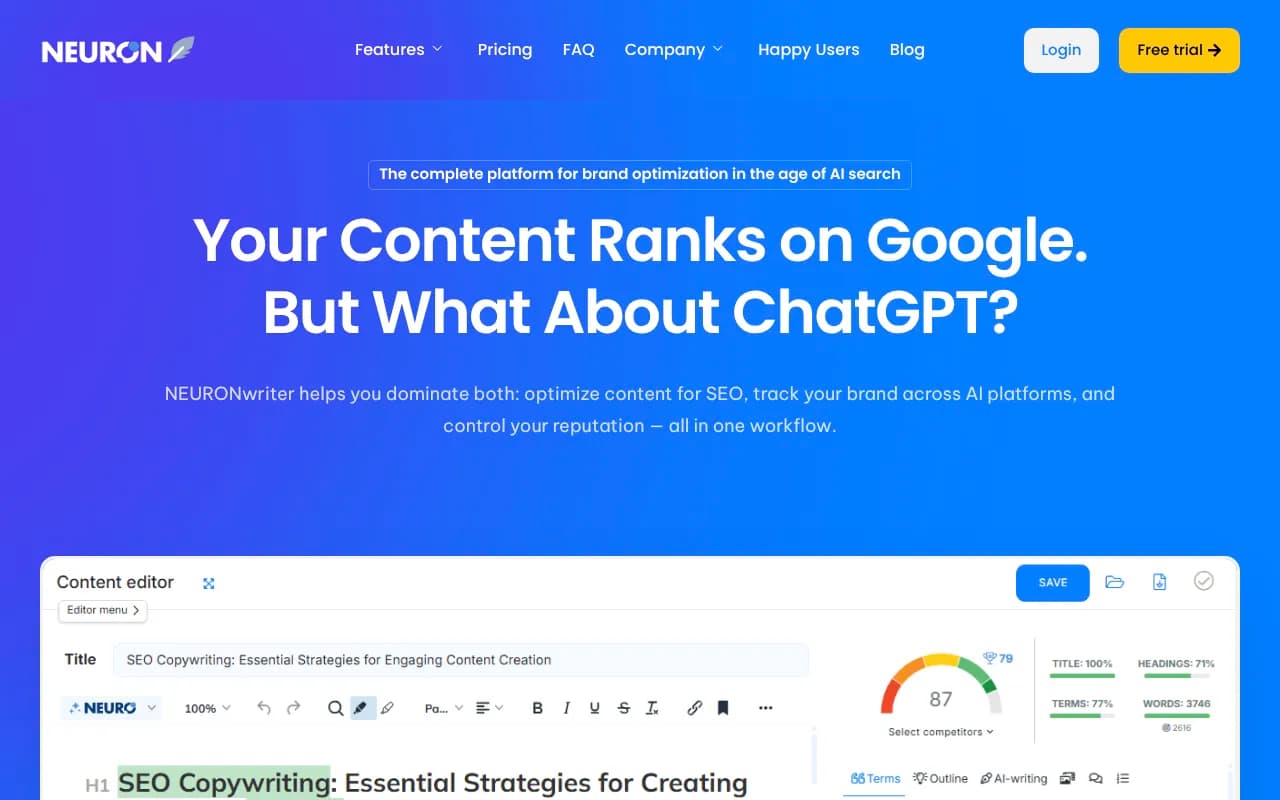
For quality checking before publication:

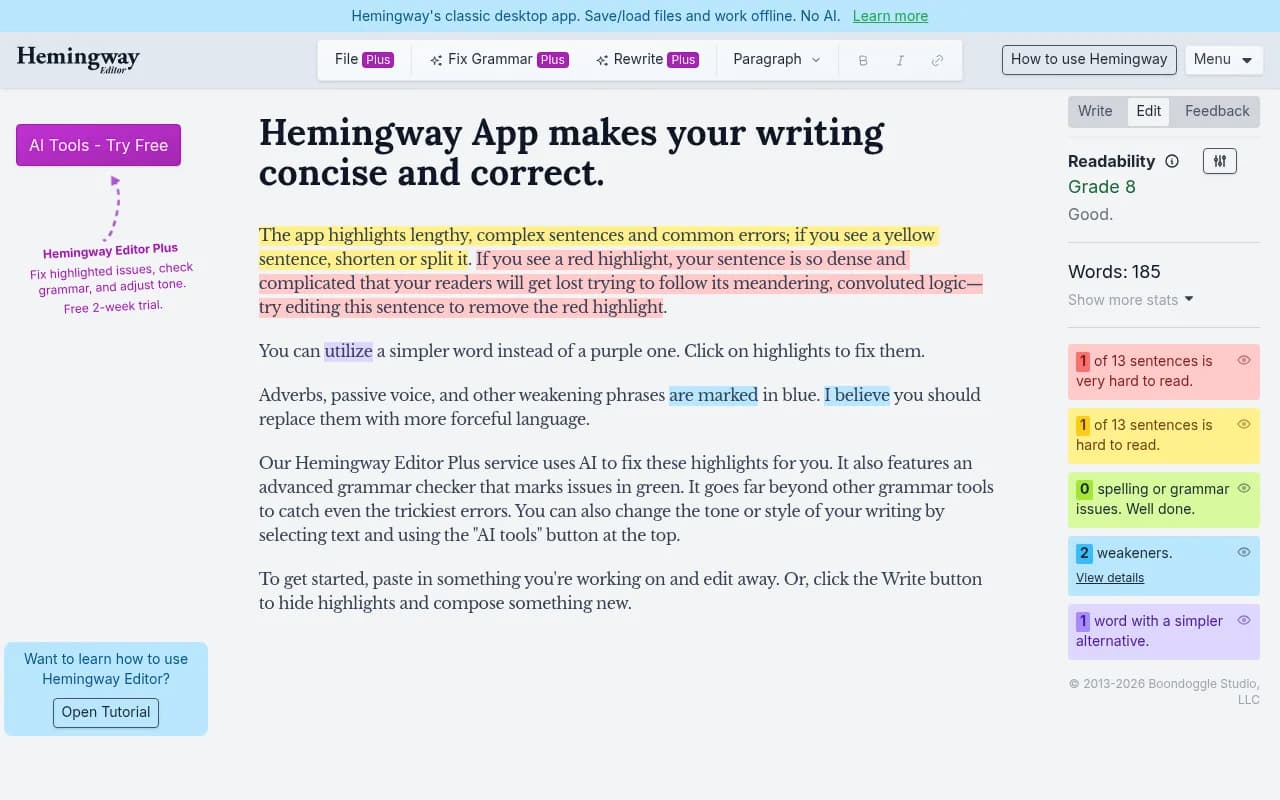
The common thread in all of these: they're tools that support human judgment rather than replace it. They tell you what your content is missing, how readable it is, whether it's optimized — but the decisions about what to actually say are still yours.
The honest bottom line
AI content at scale is a bet that volume will compensate for quality. Sometimes it pays off in the short term. It rarely pays off over 12 to 18 months, and it almost never pays off in an environment where AI search engines are increasingly the gatekeepers deciding which sources get cited and which get ignored.
The teams that are building durable content operations in 2026 are the ones treating AI as a production tool, not a strategy. They're using it to go faster on the parts that don't require expertise, and investing that saved time into the parts that do.
That's not a limitation of AI — it's just an accurate understanding of what it's good at.