Key takeaways
- A GEO content calendar starts with prompt research, not keyword research. The questions people ask AI models are your real content opportunities.
- Answer gap analysis is the fastest way to find what your competitors are getting cited for that you're not.
- AI writing tools can handle the scaffolding, but the content still needs to be specific, authoritative, and genuinely useful to get cited.
- Tracking which pages AI models actually cite closes the loop and tells you what to produce next.
- The whole system works as a repeating cycle: find gaps, create content, measure citations, repeat.
Most content calendars are built backwards. You pick topics based on search volume, assign dates, hand them to writers, and hope the traffic follows. That process made sense in 2022. In 2026, it leaves a massive channel completely unaddressed.
AI search engines -- ChatGPT, Perplexity, Claude, Gemini, Google AI Overviews -- now answer millions of questions every day. They pull from a specific set of sources. If your content isn't in that set, you're invisible to a growing share of your audience. And the brands that figured this out early are compounding their advantage while everyone else is still optimizing title tags.
This guide walks through how to build a content calendar specifically designed for GEO (Generative Engine Optimization) -- one that starts with prompt research, uses gap analysis to prioritize topics, generates content engineered to be cited, and tracks results at the page level.
What makes a GEO content calendar different
A traditional SEO calendar is organized around keywords and search intent. A GEO calendar is organized around prompts -- the actual questions people type into AI models.
The difference matters because AI models don't rank pages. They cite sources. The question isn't "does my page rank for this keyword?" It's "when someone asks ChatGPT this question, does it reference my site?"
That shift changes everything about how you plan content:
- Topics come from prompt research, not just keyword tools
- Priority is determined by which prompts competitors are winning that you're not
- Content structure needs to match how AI models extract and summarize information
- Success is measured in citations and AI-driven traffic, not just organic rankings
A good GEO calendar has all the same bones as a traditional one -- dates, owners, stages, publishing workflow -- but the input data is completely different.
Step 1: Build your prompt universe
Before you can plan content, you need to know what prompts exist in your space. This is the equivalent of keyword research, but for AI search.
Start by thinking about the questions your customers actually ask. Not the polished, keyword-stuffed phrases that show up in search tools -- the real conversational questions they'd type into ChatGPT. Things like:
- "What's the best project management tool for a remote team of 10?"
- "How do I reduce churn for a B2B SaaS product?"
- "What should I look for in a cybersecurity vendor?"
Then expand from there. Think about comparison prompts ("X vs Y"), how-to prompts, recommendation prompts ("best X for Y"), and problem-framing prompts ("why is my X not working").
Tools like Perplexity are useful here -- you can see how AI models currently answer questions in your space and which sources they pull from.
Perplexity
For a more systematic approach, platforms like Promptwatch track prompt volumes and difficulty scores across AI models, so you can see which prompts get asked frequently and which ones are actually winnable given your current authority.

Aim to build a list of 50-200 prompts across your core topics. You won't create content for all of them immediately, but having the full universe mapped out lets you prioritize intelligently.
Step 2: Run an answer gap analysis
This is the most important step and the one most teams skip entirely.
An answer gap analysis compares your AI visibility against competitors. For each prompt in your universe, it shows you: who is currently being cited, and whether you are. The gaps -- prompts where competitors appear but you don't -- are your highest-priority content opportunities.
Why? Because a competitor being cited means AI models already consider that topic relevant and trustworthy. You're not trying to create demand from scratch. You're trying to get into a conversation that's already happening.
The output of a good gap analysis looks something like this:
| Prompt | Competitor A cited | Competitor B cited | You cited |
|---|---|---|---|
| "best CRM for small business" | Yes | Yes | No |
| "how to reduce sales cycle length" | Yes | No | No |
| "CRM vs spreadsheet for startups" | No | Yes | No |
| "what is a sales pipeline" | Yes | Yes | Yes |
The first three rows are your content gaps. The last row is a win to protect and build on.
Promptwatch's Answer Gap Analysis does this automatically across 10 AI models, which saves the hours you'd otherwise spend manually querying each one. But even a manual version -- spending an afternoon testing prompts in ChatGPT and Perplexity and noting who gets cited -- is better than nothing.
Step 3: Prioritize your content backlog
You now have a list of gaps. Not all of them are worth filling immediately. Prioritize based on:
- Prompt volume: How often is this question actually being asked? High-volume prompts have more upside.
- Competitive difficulty: If five authoritative sources are already being cited, breaking in is harder. Find prompts where only one or two competitors appear.
- Business relevance: A prompt that drives awareness of your product category is more valuable than one that's tangentially related.
- Content feasibility: Some gaps require deep expertise or original research to fill credibly. Others can be addressed with a well-structured article.
A simple scoring system works fine here. Give each gap a score from 1-3 on each dimension, add them up, and sort. The top 20-30 become your first content sprint.
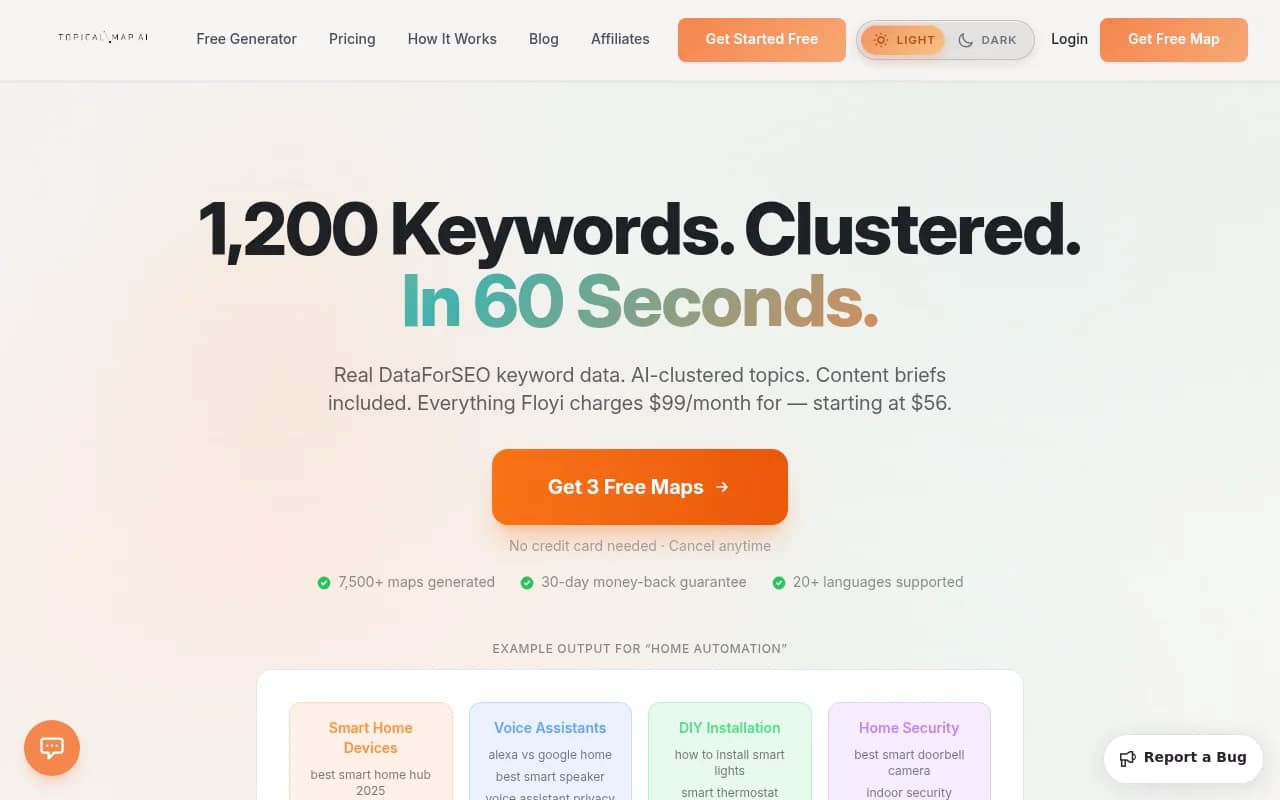
Tools like Topical Map AI can help you see how topics cluster and which areas of your content architecture are thin.
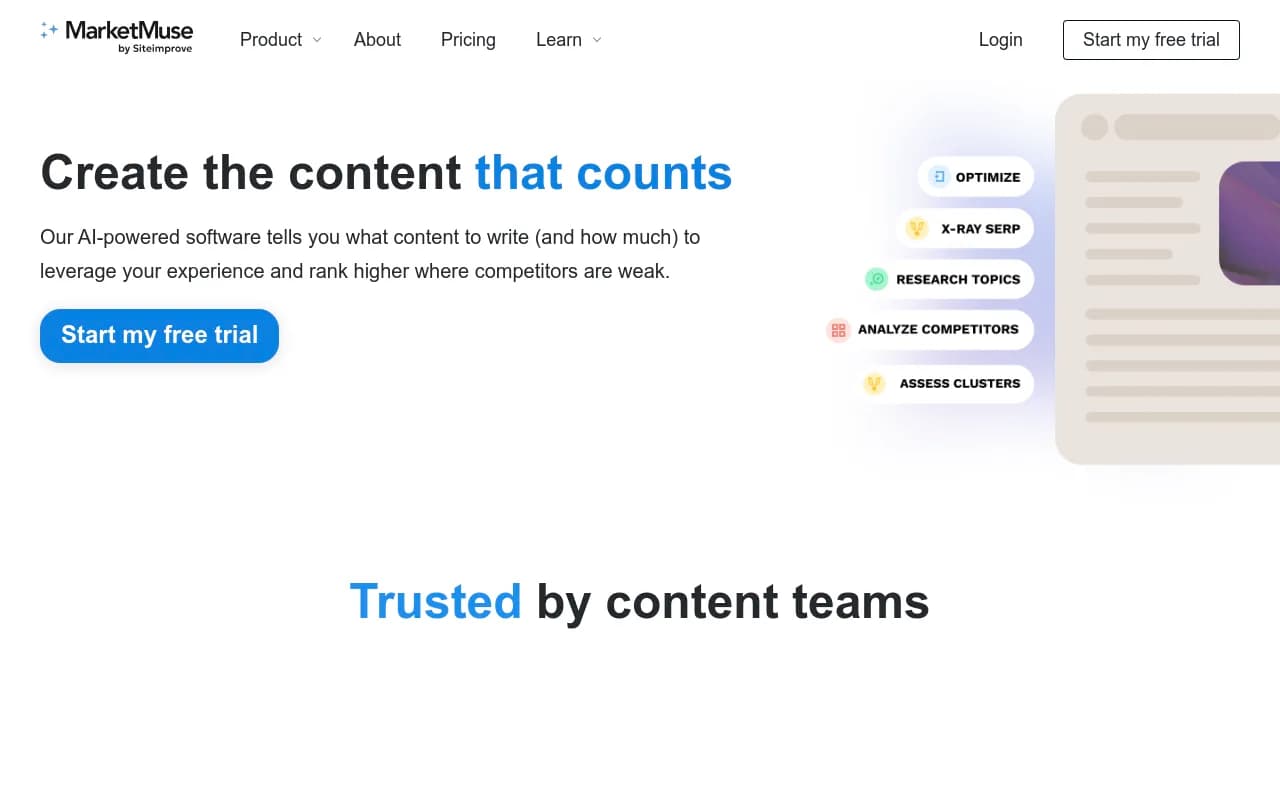
MarketMuse is another option for understanding which topics you have authority in versus where you're starting from zero.
Step 4: Structure your calendar
With a prioritized backlog, you can now build the actual calendar. The structure doesn't need to be complicated. What it does need is:
- A publishing cadence you can actually sustain
- Clear ownership for each piece
- Defined stages from brief to published
- Enough lead time that content doesn't get rushed
A realistic cadence for a team of two or three people is 4-6 GEO-focused articles per month. That's enough to make meaningful progress without burning out.
Here's a simple calendar structure that works:
| Week | Article | Prompt target | Owner | Stage | Publish date |
|---|---|---|---|---|---|
| Week 1 | Best CRM for small business 2026 | "best CRM for small business" | Sarah | Drafting | Apr 7 |
| Week 1 | CRM vs spreadsheet for startups | "CRM vs spreadsheet for startups" | James | Brief | Apr 10 |
| Week 2 | How to reduce sales cycle length | "how to reduce sales cycle length" | Sarah | Scheduled | Apr 14 |
| Week 3 | Sales pipeline explained | "what is a sales pipeline" | James | Brief | Apr 21 |
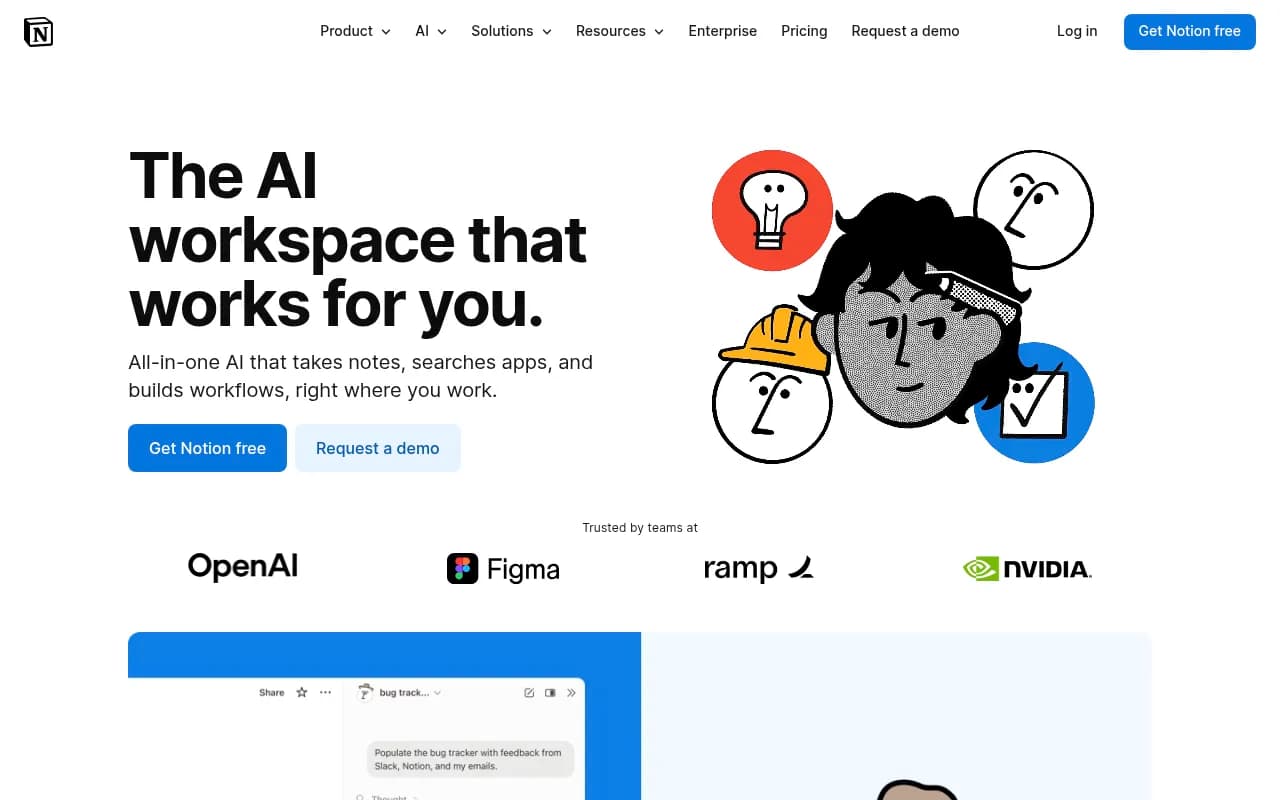
Notion AI works well for managing this kind of calendar if you want something flexible and collaborative.
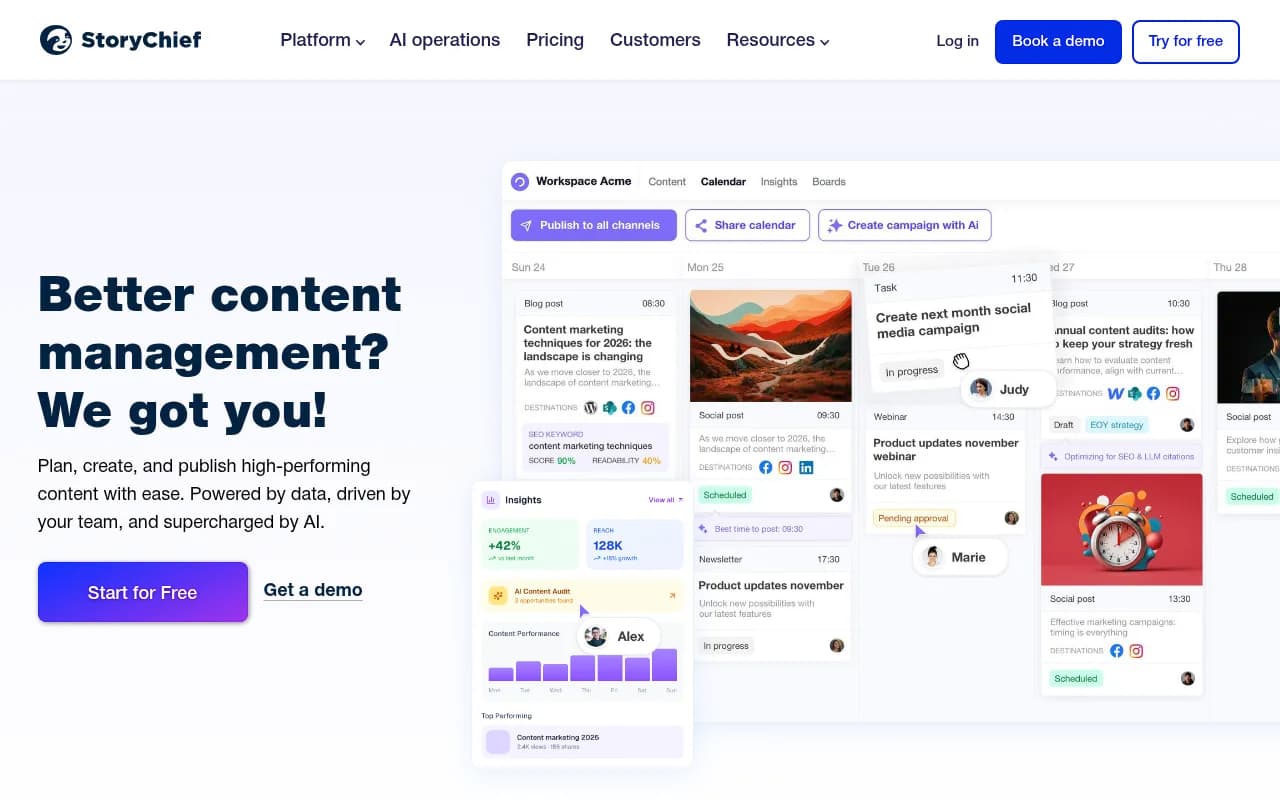
StoryChief is worth looking at if you want a purpose-built content calendar that handles planning, writing, and distribution in one place.
Step 5: Write content that AI models actually cite
This is where most GEO efforts fall apart. Teams do the research, identify the gaps, and then produce generic articles that read like every other piece on the topic. AI models don't cite generic content. They cite specific, authoritative, well-structured sources.
A few things that consistently improve citation rates:
Answer the prompt directly and early. If the prompt is "best CRM for small business," the first 100 words should contain a clear, specific answer. AI models extract answers from the beginning of content. Burying your main point in paragraph six means it often gets ignored.
Use structured formats. Headers, numbered lists, comparison tables, and clear definitions all help AI models parse and extract your content. A wall of prose is harder to cite from than a well-organized article with clear sections.
Include specifics. Prices, statistics, named examples, and concrete recommendations are far more citable than vague generalizations. "Most CRMs cost between $15 and $50 per user per month" is more useful to an AI model than "CRM pricing varies."
Cover the topic completely. AI models tend to cite sources that address a topic comprehensively. If your article answers the main question but ignores obvious follow-up questions, a more complete competitor will get cited instead.
For the actual writing, tools like Jasper AI and Clearscope can help with both generation and optimization.

Surfer SEO is useful for making sure your content covers the semantic territory AI models expect for a given topic.
If you want a tool that generates content specifically grounded in citation data and prompt research, Promptwatch's built-in AI writing agent does this -- it generates articles based on what's actually being cited across 880M+ analyzed citations, which is a different starting point than generic SEO content tools.
Step 6: Optimize for AI crawlability
Writing good content is necessary but not sufficient. AI models need to be able to find and read your pages. This is a technical layer that most content teams ignore.
A few things to check:
- Make sure your pages aren't blocked by robots.txt for AI crawlers. Some sites accidentally block Perplexity or other AI bots.
- Use clean, semantic HTML. AI crawlers parse structured markup more reliably than JavaScript-heavy pages.
- Ensure your pages load quickly and don't require interaction to reveal content.
- Check that your internal linking connects related articles -- AI models often follow citation chains.
Prerender.io handles the technical side of making JavaScript-rendered content visible to crawlers, including AI ones.
If you want to see exactly which AI crawlers are hitting your site, which pages they're reading, and what errors they're encountering, crawler log analysis is the tool for this. Promptwatch's AI Crawler Logs feature does this in real time -- it's one of the few platforms that shows you GPTBot, ClaudeBot, PerplexityBot, and others all in one place.
Step 7: Publish and distribute
Once an article is published, don't just wait for AI models to find it. Give it a push.
- Submit the URL to Google Search Console for indexing
- Share it on LinkedIn and any relevant communities where your audience is active
- Link to it from existing high-traffic pages on your site
- Consider syndicating to platforms that AI models frequently cite (industry publications, relevant subreddits, etc.)
The faster your content gets indexed and linked to, the sooner AI models will start encountering it.
Buffer or SocialPilot work fine for scheduling social distribution without overcomplicating things.
Step 8: Track citations and close the loop
Publishing is not the end of the process. It's the beginning of the measurement phase.
For each article you publish, you want to know:
- Is it being cited by AI models? Which ones?
- Which prompts is it appearing for?
- Is it driving traffic? (AI-referred traffic shows up in your analytics as direct or referral from ai.com, perplexity.ai, etc.)
- How does its citation rate compare to competitors for the same prompts?
This data tells you two things: whether the content is working, and what to create next. If an article is getting cited for three prompts but you identified ten related gaps, that's a signal to go deeper on the topic.
Page-level citation tracking is the specific feature to look for here. Promptwatch tracks exactly which pages are being cited, how often, and by which AI models -- and connects that back to traffic through GSC integration or server log analysis.
Most teams don't close this loop. They publish content and move on. The ones who track citations and feed that data back into their planning are the ones who compound their GEO advantage over time.
Putting it all together: the repeating cycle
The GEO content calendar isn't a one-time project. It's a cycle:
- Research prompts and identify gaps
- Prioritize gaps by volume, difficulty, and business relevance
- Schedule content in your calendar with clear ownership and dates
- Write and publish articles optimized for AI citation
- Track which pages get cited and for which prompts
- Use that data to find the next round of gaps
Each cycle compounds. As you accumulate cited pages, your overall AI visibility score improves. AI models start treating your domain as a trusted source, which makes new content easier to get cited. The brands that started this process in 2024 and 2025 are already seeing this compounding effect. Starting now means catching up, but the mechanics still work.

Tools summary
Here's a quick reference for the tools mentioned in this guide and where they fit in the workflow:
| Stage | Tool | What it does |
|---|---|---|
| Prompt research | Perplexity | See how AI models currently answer questions in your space |
| Prompt research + gap analysis | Promptwatch | Prompt volumes, difficulty scores, answer gap analysis |
| Topic clustering | Topical Map AI | Map content architecture and find thin areas |
| Topic authority | MarketMuse | Understand where you have authority vs. where you're starting cold |
| Calendar management | Notion AI | Flexible collaborative planning workspace |
| Calendar + distribution | StoryChief | Purpose-built content calendar with publishing workflow |
| AI writing | Jasper AI | Long-form content generation |
| Content optimization | Clearscope | Semantic coverage and keyword optimization |
| Content optimization | Surfer SEO | NLP-based content scoring |
| Technical crawlability | Prerender.io | Make JS-rendered content visible to AI crawlers |
| Social distribution | Buffer / SocialPilot | Schedule and publish across social channels |
| Citation tracking | Promptwatch | Page-level citation tracking across 10 AI models |
The most important thing is to actually start. Pick five prompts where competitors are being cited and you're not. Write one article targeting each. Track what happens. That's a GEO content calendar in its simplest form -- and it's more than most teams are doing right now.