Key takeaways
- Tracking software is the cheap part. Entry tools start around $29 to $99 a month, serious mid-market plans run $95 to $400, and enterprise contracts reach $3,000+ a month.
- Agency retainers for AI visibility commonly start at $2,500 to $5,000 a month and can pass $15,000 a month once publisher partnerships and technical work are included.
- Content has a maintenance cost. Promptwatch Data shows landing pages and docs stay cited longest, while news and product pages decay fast.
- Advertised prices rarely include everything. Per-engine fees, extra seats, and credit limits can push real cost to 2-3x the headline number.
- A realistic small-brand budget is roughly $150 to $1,500 a month. Mid-market brands land between $3,000 and $15,000 a month. Enterprise programs go well beyond that.
Why this question is hard to answer
Ask five vendors what AI visibility costs and you get five answers, because they are selling different things. One sells a dashboard that tells you whether ChatGPT mentioned you. Another sells content production. A third sells a team of humans who chase down the third-party pages AI engines cite. Those are three separate budget lines, and most brands need some mix of all of them.
So here is how I would split it up: measurement (tools), creation and upkeep (content and technical work), and execution help (agencies and consultants). Then a few worked budgets at the end so you can see what a real plan looks like.
One caveat. The pricing data below comes from public pages and third-party roundups gathered in October 2026. Vendors change plans constantly, and some of the numbers conflict between sources. Treat everything as a range and confirm on the vendor's pricing page before you commit.
Line 1: Tracking tools
Tracking tools run a set of prompts against ChatGPT, Gemini, Perplexity, AI Overviews and others, then report how often you are mentioned or cited. The market has split into three price bands.
Entry tier: $29 to $99 a month
These plans typically cover 1 to 4 engines, somewhere between 15 and 50 prompts, and one seat. Otterly's Lite plan is about $29 a month for 15 daily prompts across four engines. Geoptie and Orchly sit around $49. Frase starts at $49 with 50 prompts, and Semrush's AI Visibility Toolkit starts at $99 per domain with 25 tracked prompts.

This tier is fine if you only need to know where you stand. It is not enough for a brand with several product lines, several countries, or real competitors to benchmark against. 25 prompts is a sample, not a picture.
Mid tier: $95 to $400 a month
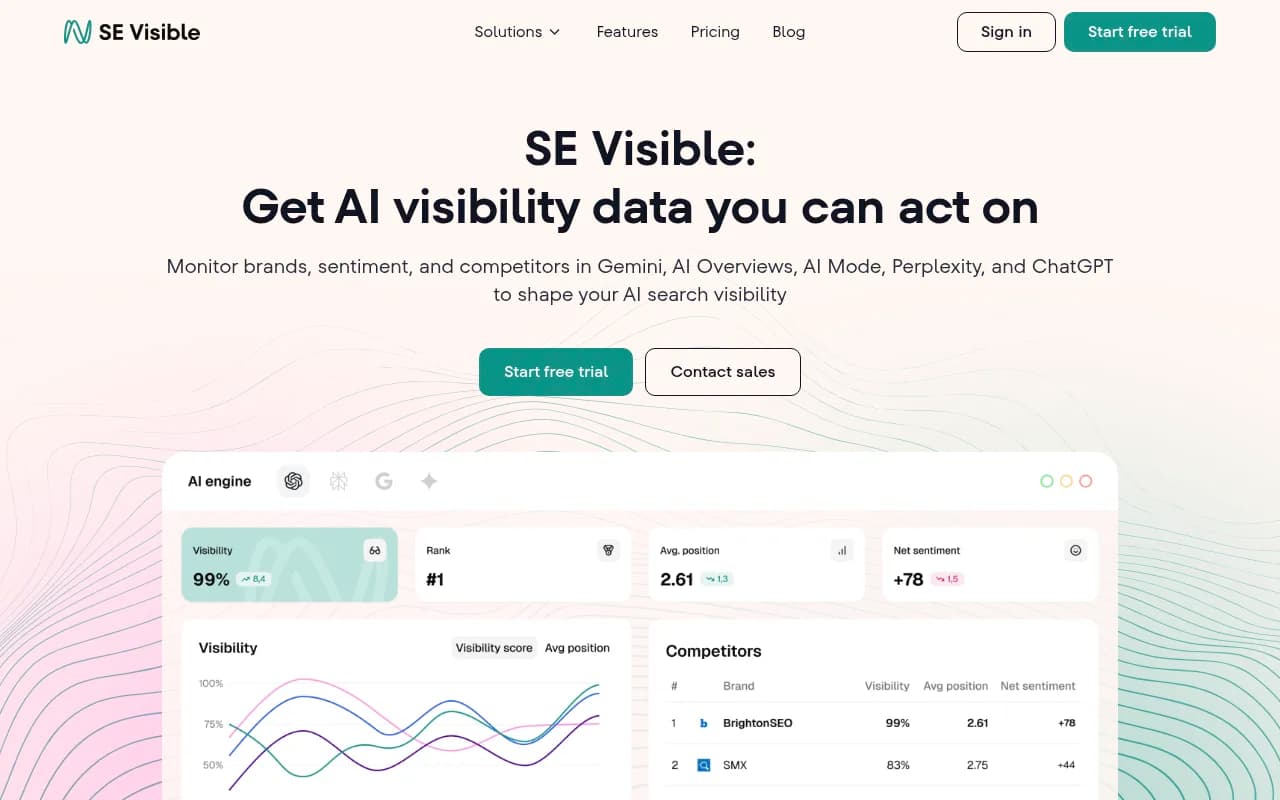
Here you get more prompts (50 to 350), more engines, competitor benchmarking, and often some analytics beyond raw mentions. Peec AI starts around $95 to $205 depending on the plan and source. SE Visible is $99 for 200 prompts across five engines. Searchable is $125 for 100 prompts. Scrunch starts at $300 for 350 custom prompts, and AthenaHQ at $295.

Promptwatch sits in this band too. Essential is $95 a month for 50 prompts and all AI models, Professional is $245 for 150 prompts, and Business is $579 for 350 prompts. The difference from pure trackers is what comes bundled: AI crawler logs, visitor analytics, a site audit, and content gap analysis, so you are not buying three extra products to act on the data. Confirm current plans at promptwatch.com/pricing.

Enterprise tier: $300 to $3,000+ a month
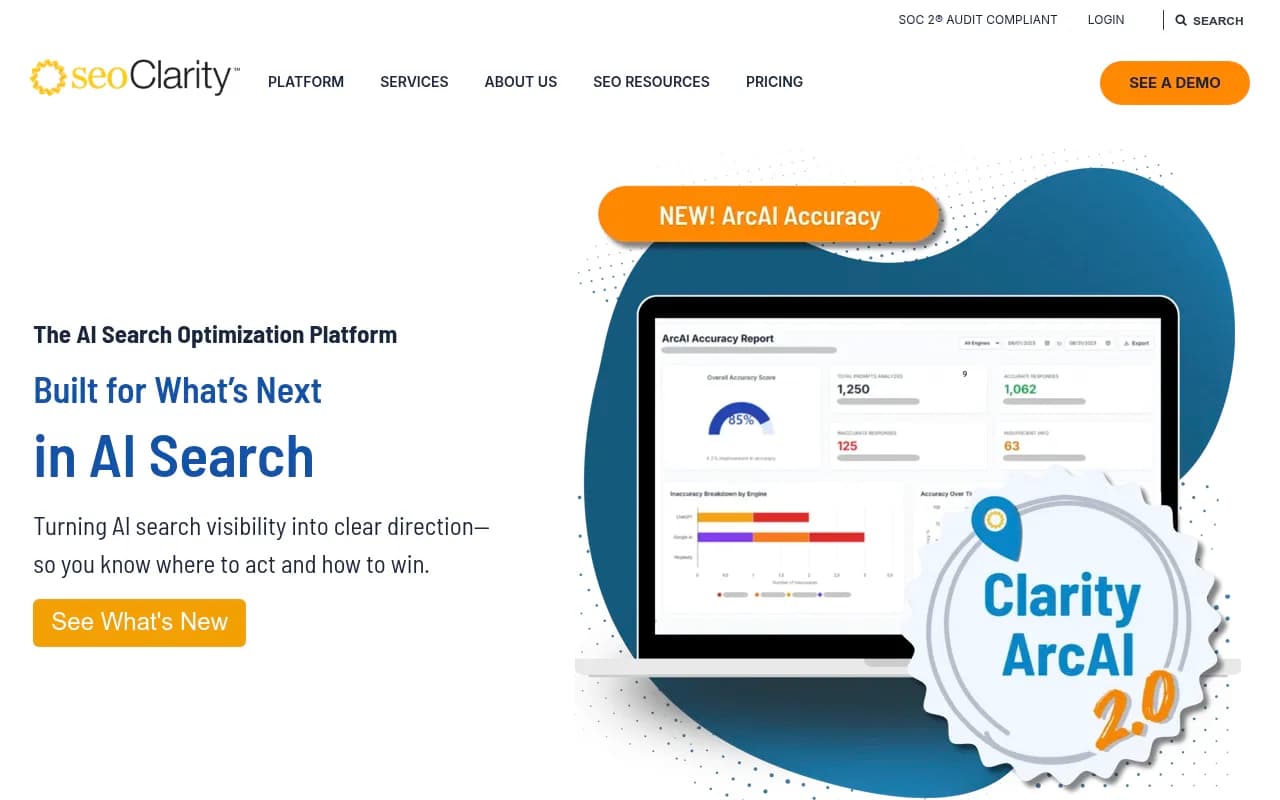
Unlimited or very high prompt counts, API access, white-label reporting, SSO, and a human account manager. Profound, seoClarity ArcAI, Conductor, Ahrefs Enterprise and Semrush One Advanced live here, mostly on custom quotes. Am I Cited puts ArcAI-style deployments at $2,500 to $4,500+ a month.

Comparison table
| Tier | Typical monthly cost | Prompts | Engines | Best for |
|---|---|---|---|---|
| Entry | $29-$99 | 15-50 | 1-4 | Solo founders, first baseline |
| Mid | $95-$400 | 50-350 | 4-11 | SMBs, in-house SEO teams |
| Enterprise | $300-$3,000+ | Custom | All major | Large brands, multi-market |
| Agency | $199-$800 (Promptwatch Kick-off to Scale) or $399/client workspace (Profound) | Varies | All | Agencies with several clients |
The hidden costs of tools
The headline price is a starting point. Am I Cited's analysis suggests expecting 2-3x the base price once you add things like:
- Extra seats, often $10 to $50 a month each.
- Per-engine fees. Some tools gate engines by tier. Profound's $99 Starter plan reportedly only tracks ChatGPT, and you need a $399 plan for Perplexity and AI Overviews.
- Credits instead of prompts. Several plans give you monthly credits, and 1,000 credits is not 1,000 recurring daily prompts.
- Refresh frequency. A cheaper plan may only check weekly or twice a week.
- Onboarding. Enterprise migrations can add $10,000 to $20,000 to year-one cost.
The cheapest plan that tracks the wrong engines is not cheap. Before you buy, write down the five to ten prompts your buyers actually use and check which engines the plan covers for them.
For a wider shortlist, the GEO software directory at bestgeosoftware.com lists dozens of trackers with pricing context.
Line 2: Content and technical work
Tracking tells you the problem. Fixing it costs real money, and this is where most budgets get underestimated.
What AI engines actually cite
Promptwatch's data on which content types ChatGPT cites most (Sep 28 to Oct 4, 2026) gives a useful map for spending. Product pages earned 22.4% of citations and landing pages 16.8%. Listicles were 13.6%, documentation 7.5%, how-tos 8.7%, and comparisons 5.9%. For commercial prompts, product pages, landing pages, listicles and comparisons made up almost 70% of citations.
The budget lesson: the pages that describe what you sell matter more than a pile of blog posts. If your product and landing pages are thin, fix those first, before paying for 40 articles.
Content has a maintenance cost
This is the part people forget. Promptwatch Data tracked every page ChatGPT cited on July 6, 2026 for 90 days. See the content half-life report:
- Landing pages: 78% still cited after 30 days, 69% after 60.
- Docs: 76% after 30 days, 67% after 60.
- Comparisons: 72% after 30 days, 63% after 60.
- Product pages, reviews and how-tos: about 55% still cited after 60 days, with a half-life of 74 to 77 days.
- News: half the pages were gone after 36 days.
So budget differently by type. Landing pages, docs and pricing pages are long-term assets worth keeping accurate. Product pages and how-tos need periodic refreshes. News and PR are short bursts and should not be your main spend.
Typical content costs
The research I have does not include a reliable benchmark for per-article agency pricing, so I will not invent one. What you can do is price it from your own inputs:
- Software for optimization: Clearscope runs about $129 a month standard, Surfer and Frase start around $49 to $99, Scalenut around $59.
- AI-assisted drafting tools cost $20 to $100 a month per seat, but editing and fact-checking time is the real expense.
- Freelance or in-house writer time, which is whatever you already pay. Multiply by the number of pages you need to build and refresh.

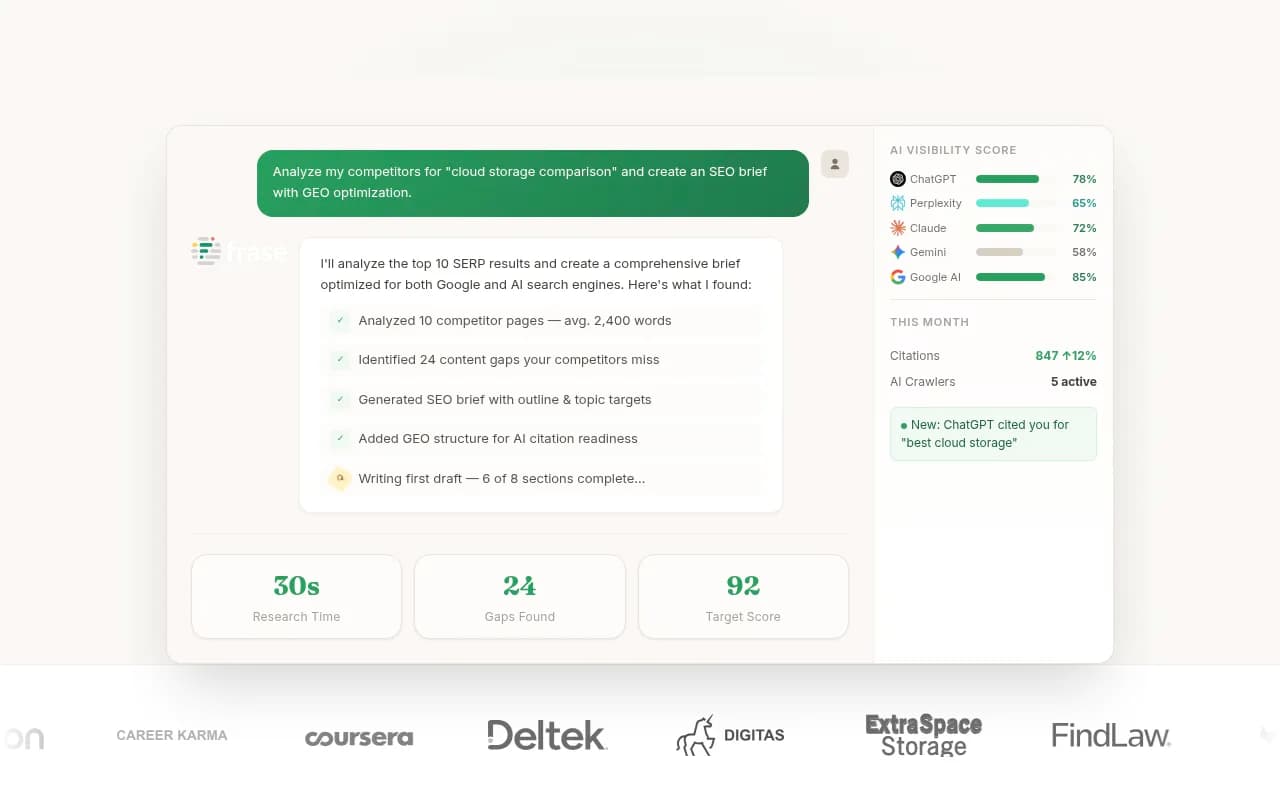
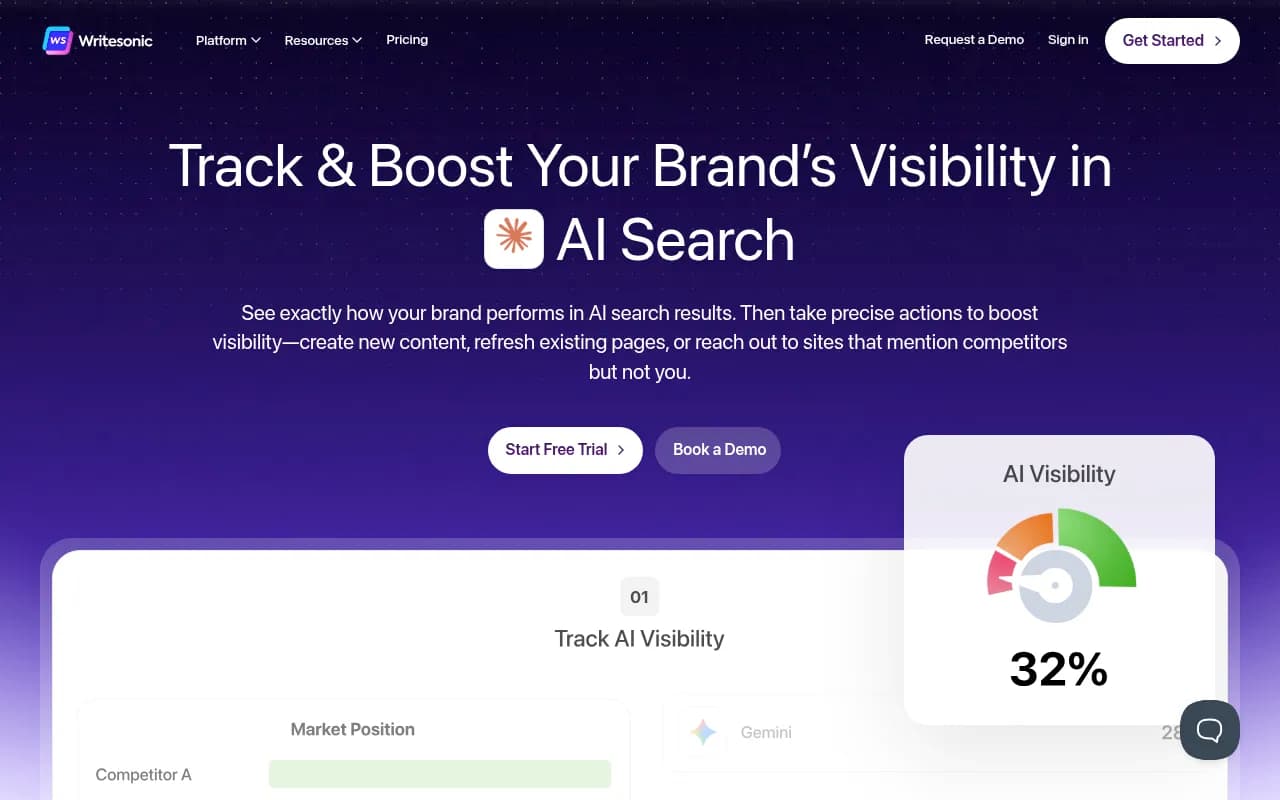
Some platforms now bundle content generation with visibility data. Promptwatch's Content Agent (Business plan and up) plans, writes and publishes against visibility gaps, with a review inbox so a human can approve each piece. Writesonic and AirOps sit in the same space, aimed more at content volume. Compare the cost of the bundle against separate tracker plus writer plus optimizer subscriptions.
Technical fixes
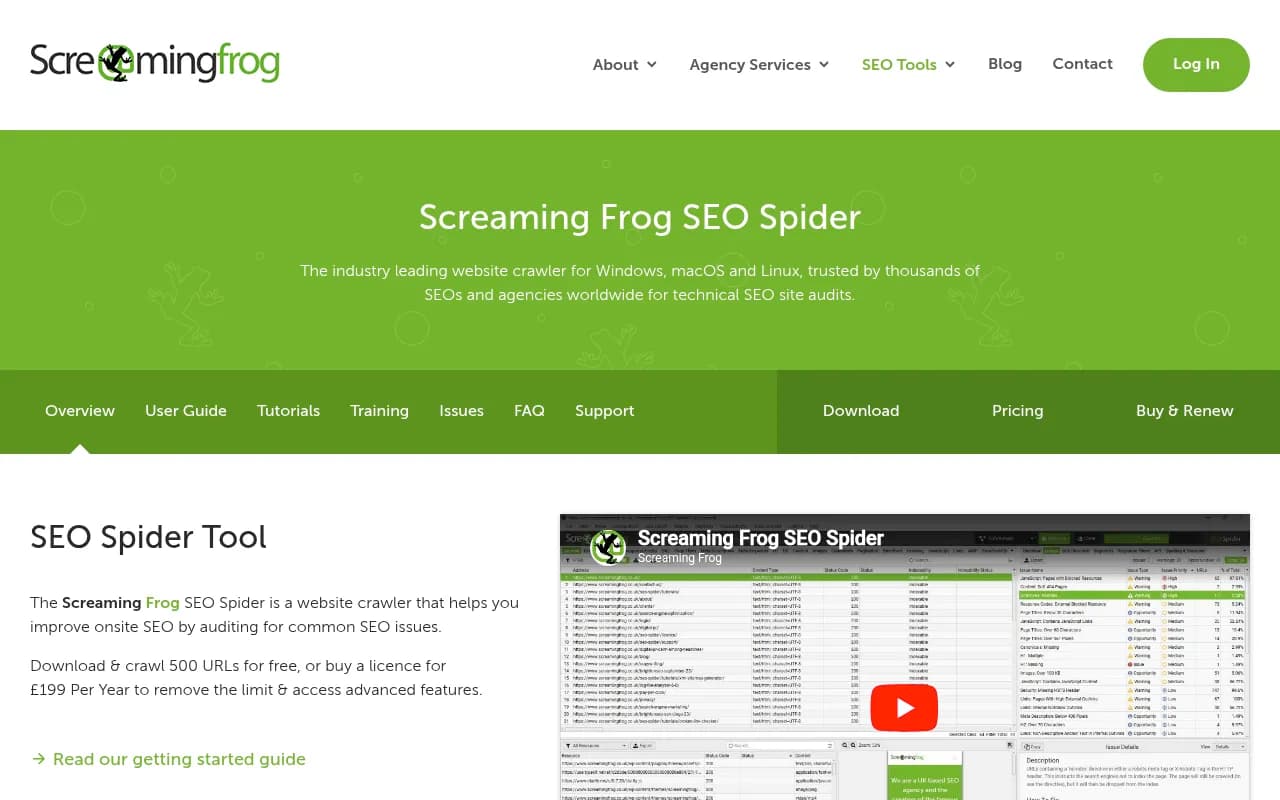
Before content, check that AI crawlers can read your site at all. Blocked bots, JavaScript-only rendering, and broken pages quietly kill citations. This is often the cheapest win: a few hours of developer time and a crawler-log or audit tool. Promptwatch's free Agentic Readiness Check and AI Crawler URL Inspector cover the basics, and Screaming Frog is a one-time license for deeper crawls.
Line 3: Agencies and consultants
If nobody on your team has time to execute, you hire it out. This is the biggest swing factor in the whole budget.
| Agency tier | Typical price | What you get |
|---|---|---|
| Entry | From about $2,500 to $5,000 a month | Monitoring, content-led AEO, ongoing retainer (Omniscient, Minuttia, Siege Media per Hamster Garage) |
| Mid | $10,000 to $49,000 per project | Prompt mapping, strategy, scoped execution |
| Enterprise | $50,000 to $150,000+ | Technical architecture, relevance engineering, publisher partnerships |
| Full-scale execution | $15,000+ a month | Publisher partnerships, technical audits, ongoing content |
Those figures come from Hamster Garage's 2026 agency comparison, which is itself an agency's marketing page, so read the ranges as indicative. Pilot projects can start near $5,000.
For general AI consultants, one broader 2026 guide puts rates at $75 to $350 an hour for independents and $150 to $450 for boutiques, with retainers of $2,000 to $50,000 a month.
What an agency should actually do
Monitoring is the commodity part. One agency-focused review makes the point bluntly: the reporting layer can be bought directly for around $99. What you are paying an agency for is work on pages you do not own: getting listed in roundups, earning reviews on trusted category sites, fixing entity information, and building the relationships that put your brand into the sources AI cites.
If you want a partner that covers technical SEO, content, digital PR and GEO together, 1001 SEO Media is a full-service option with no long-term contracts and monthly reporting. Whoever you pick, ask what they deliver each month that a $99 tool could not.
Tools versus agency: how to choose
Buy tools alone when you have a team that can execute and you mainly need monitoring and reporting. Hire an agency when the bottleneck is off-site work, technical architecture, or capacity. Many brands do both: a $95 to $579 platform for the data, and a retainer for the execution.
Agencies have their own math. Profound's agency setup is reported at $399 per client workspace per month, and Semrush's per-domain basis works out to roughly $1,485 a month at 15 clients before any work is done. Brandlight's agency guide suggests Peec AI at $205 with unlimited seats for 10 to 50 clients. If your agency passes tool costs through, ask which basis they are on.
Three realistic budgets
These are my own blended estimates built from the ranges above, not quotes.
Small business or startup: about $150 to $1,500 a month
- Tracker: $29 to $100 a month.
- Content optimization tool: $50 to $130.
- Writer time or freelancer for refreshing 2 to 4 core pages a month.
- A one-off crawler and technical check.
Most of the spend is your own time. Start with a free baseline, such as Promptwatch's Free AI Visibility Report or the HubSpot AI Search Grader, before paying for anything.
Mid-market brand: about $3,000 to $15,000 a month
- Mid-tier or Business-level platform: $250 to $600.
- One or two full-time content and SEO staff or a retainer at $2,500 to $10,000.
- Digital PR or listing and review work for off-site mentions.
- Quarterly refreshes of landing, product and comparison pages.
Enterprise: $15,000+ a month, often six figures a year
- Enterprise platform with API, SSO and multi-market tracking: $1,000 to $3,000+ a month.
- Agency or internal team handling publisher partnerships and technical work.
- Add roughly 25% contingency. A broader 2026 AI budgeting guide recommends 25 to 50% for AI projects in general, because vendor quotes cover only a fraction of true cost.
Where to put the first dollar
- Get a free baseline. See what ChatGPT, Gemini and Perplexity say about you now.
- Fix crawl access and obvious technical blocks.
- Rewrite or build product, landing and comparison pages, the types AI cites most.
- Buy a tracker sized to your real prompt list, not the cheapest one.
- Only then add content volume or an agency retainer, and hold it to monthly outcomes: citations gained, AI-referred traffic, conversions.
On that last point, measure revenue and not only mentions. Platforms with visitor analytics, such as Promptwatch, let you tie AI-referred traffic to conversions. Without that, you are budgeting on faith.
When not to spend yet
If your product pages are thin, your site blocks AI crawlers, or you have no one to act on the data, a $500 dashboard will just show you red numbers. Spend on the fundamentals first. The cheapest tracker is also a fine choice for the first 60 days while you work out what you need.
Bottom line
A workable AI visibility program costs somewhere between about $150 a month for a lean DIY setup and more than $15,000 a month with an agency doing the heavy lifting. Tools are the smallest line. Content upkeep and execution are the biggest. Pick the tool tier that covers the engines and prompts your buyers actually use, plan for maintenance on pages that decay, and make any retainer prove what it does beyond reporting. For more AI search research to ground your decisions, see the Promptwatch Data hub.