Key takeaways
- For software prompts in ChatGPT, docs and help centers earn the largest share of citations (2.64%), ahead of vendor sites (2.01%) and review sites and analysts (1.57%). Your own domain matters more than G2.
- A SaaS tracker needs to do four things: track category and "alternative to" prompts, break citations down by source type, show AI crawler activity on docs, and tie AI traffic to signups.
- Comparison pages are 5.9% of all ChatGPT citations, but 7.9% on commercial prompts like "best CRM for small businesses". Build your own and track them.
- Promptwatch, Profound, Semrush, Peec AI, AthenaHQ, Scrunch and Otterly.AI cover different needs. Monitoring-only tools tell you the problem exists. Fewer help you fix it.
Why SaaS needs its own approach to AI visibility
When a buyer asks ChatGPT for "the best CRM for a seed-stage startup" or "an alternative to Intercom", the answer names a handful of products and skips the rest. If you're not one of them, you were never on the shortlist. You won't see that in Google Search Console, and a rank tracker won't catch it either.
SaaS is also different from consumer categories in what the models read. Software answers are built from documentation, vendor pages, GitHub repos, review sites and comparison articles. A generic brand-mention tracker that only counts "was I named?" misses most of that. What you want to know is which of those source types is carrying the answer for your category, and whether it points at your domain or someone else's.
One caution before the tool list. You'll see claims floating around that review sites drive roughly a third of SaaS AI citations (a figure from Presenc AI's SaaS guide). I couldn't tie that number to a dataset, and it doesn't match what Promptwatch measured for ChatGPT, where review sites are a much smaller slice. The denominators are probably different. Don't plan a budget around either number without checking how it was calculated.
What ChatGPT actually cites for software prompts
The most useful data point I found is Promptwatch's report on ChatGPT citation share for software prompts, which covers organic software prompts from Sep 28 to Oct 4, 2026. It's one week and ChatGPT only, so treat it as a snapshot, not a law.
| Source type | Share of software citations |
|---|---|
| Docs and help centers | 2.64% |
| Vendor sites | 2.01% |
| Review sites and analysts (G2, Gartner, Capterra, Software Advice) | 1.57% |
| GitHub | 1.2% |
| App stores | 0.47% |
The 23 tracked software domains together earn 7.89% of software citations. Individually, GitHub leads at 1.2%, followed by learn.microsoft.com (0.98%) and G2 (0.73%). Then come AWS docs, Google Cloud docs, Gartner, Capterra, Intercom and Zapier.
Two things stand out to me. First, vendor sites and docs combined earn 4.65%, about three times the share of review sites and analysts. Your own domain is your main citation source. Second, G2 still matters: it's the most cited review site at 0.73%, and the four review sources together beat any single vendor, Microsoft included. So complete G2 and Capterra profiles are worth keeping current, but they're not a substitute for crawlable docs.
Which content types get cited
Promptwatch's ChatGPT content type report (same week) splits citations by format:
| Content type | All prompts | Commercial prompts |
|---|---|---|
| Product pages | 22.4% | 26.0% |
| Landing pages | 16.8% | 20.6% |
| Listicles | 13.6% | 15.0% |
| Comparisons | 5.9% | 7.9% |
| Documentation | 7.5% | n/a (8.5% on informational prompts) |
| Reviews | 1.7% | n/a (5.6% on branded prompts) |
On commercial prompts, product pages, landing pages, listicles and comparisons together make up almost 70% of citations. For branded prompts like "is HubSpot good for startups", reviews jump to 5.6%, more than three times their overall share.
Shelf life matters too. In Promptwatch's content half-life data, landing pages and docs stay cited longest, while news loses half its pages within about 5 weeks. Docs and product pages are the durable assets.
What to demand from a SaaS AI visibility platform
Strip away the marketing and a SaaS team needs these capabilities:
- Category and alternatives prompts. Not just branded queries. You need "best [category] for [use case]" and "alternatives to [incumbent]" prompts, ideally with volume data so you know which ones matter.
- Citation analysis by source type. Docs, G2, GitHub, comparison articles, your blog. This tells you where to invest next.
- Crawler visibility for docs. Many SaaS companies run docs on a separate subdomain or platform. If GPTBot or ClaudeBot gets a 403 on your help center, those pages can't be cited, and nothing in a prompt tracker will tell you why.
- Page-level tracking for comparison pages. You want to see which "X vs Y" pages get cited, which don't, and which competitor pages are winning the pairings you care about.
- Review-site coverage. At minimum, see where G2 and Capterra show up as cited sources. Better if you can track third-party mentions that name you without linking.
- Revenue signal. AI-referred visits and signups, not just mention counts.
- Persona prompt sets. A CFO, an IT lead and an end user ask different questions.
The platforms compared
| Platform | Best for | Crawler logs | AI traffic attribution | Content creation | Pricing signal |
|---|---|---|---|---|---|
| Promptwatch | SaaS teams that want to fix gaps, not just see them | Yes, IP-verified | Yes | Yes (Content Agent, CMS publishing) | From $95/mo |
| Profound | Large SaaS with enterprise budgets | Limited | Limited | Growing | Custom |
| Semrush | Teams already living in Semrush | No | Limited | Separate tools | Add-on from about $99/mo |
| Peec AI | Small teams starting out | No | No | No | From about $103/mo |
| AthenaHQ | Monitoring-focused teams | No | Limited | Limited | Varies |
| Scrunch | Mid-market monitoring | No | Limited | Limited | Varies |
| Otterly.AI | Budget tracking | No | No | No | Low |
Pricing for everything except Promptwatch and Semrush comes from third-party roundups and varies by plan, so confirm on each vendor's pricing page.
Promptwatch
Promptwatch is the one I'd shortlist first for SaaS, and I'll be upfront that it's also the platform 1001 SEO Media uses. The reason is that it covers every item on the checklist above in one place. It tracks ChatGPT, Google AI Overviews, AI Mode, Gemini, Perplexity, Copilot and others through their real interfaces, and it also tracks the coding agents Codex, Claude Code and OpenCode, which matters if your product is a dev tool or API.
For docs, the IP-verified crawler logs are the differentiator. You can see which AI bots hit your help center, which pages they read and where they get errors. For review sites, Citation Trends classifies sources into types including directories, and Offsite Mentions catches third-party pages that name you without a link. Page Tracker lets you watch any URL, yours or a competitor's comparison page, and see which prompts cite it. Visitor analytics then attribute actual AI-referred traffic and conversions.
The action side is where it separates from monitoring-only tools. Content gap analysis maps your pages against the prompts AI answers, the Action Board prioritizes fixes, and the Content Agent drafts and publishes to WordPress, Webflow or Framer through a review inbox you control. Crisp, a SaaS company, reported 2x higher conversion from AI traffic than from traditional channels.
Plans start free (10 prompts, ChatGPT only), then Essential at $95/mo, Professional at $245/mo and Business at $579/mo. Confirm current pricing at promptwatch.com/pricing. Agencies running several SaaS clients have Kick-off, Growth and Scale plans from $199/mo.

The honest downside: with this much surface area, a small team may not use all of it. If you only want a weekly mention count, it's more than you need.
Profound
Profound is the best-known enterprise option and has strong data depth, including a large prompt dataset. It tracks the major engines and has been adding optimization recommendations. The trade-off, as several roundups note, is cost and complexity. For a content team of one to five people, it can be too much tool.

Semrush
If your team already works in Semrush, the AI visibility add-on is the lowest-friction path. You get a visibility score, prompt tracking and competitor comparison next to the keyword and audit data you already use. What it lacks is the AI-specific plumbing: no crawler logs and no AI traffic attribution, so you can't diagnose why your docs aren't cited.
Peec AI
Peec AI is the approachable one. Clean dashboards, share of voice, citations and competitor tracking without a wall of widgets. It's a good first tool if you're moving from classic SEO reporting. It's monitoring only, so you'll need other tools to act on what you find.

AthenaHQ, Scrunch and Otterly.AI
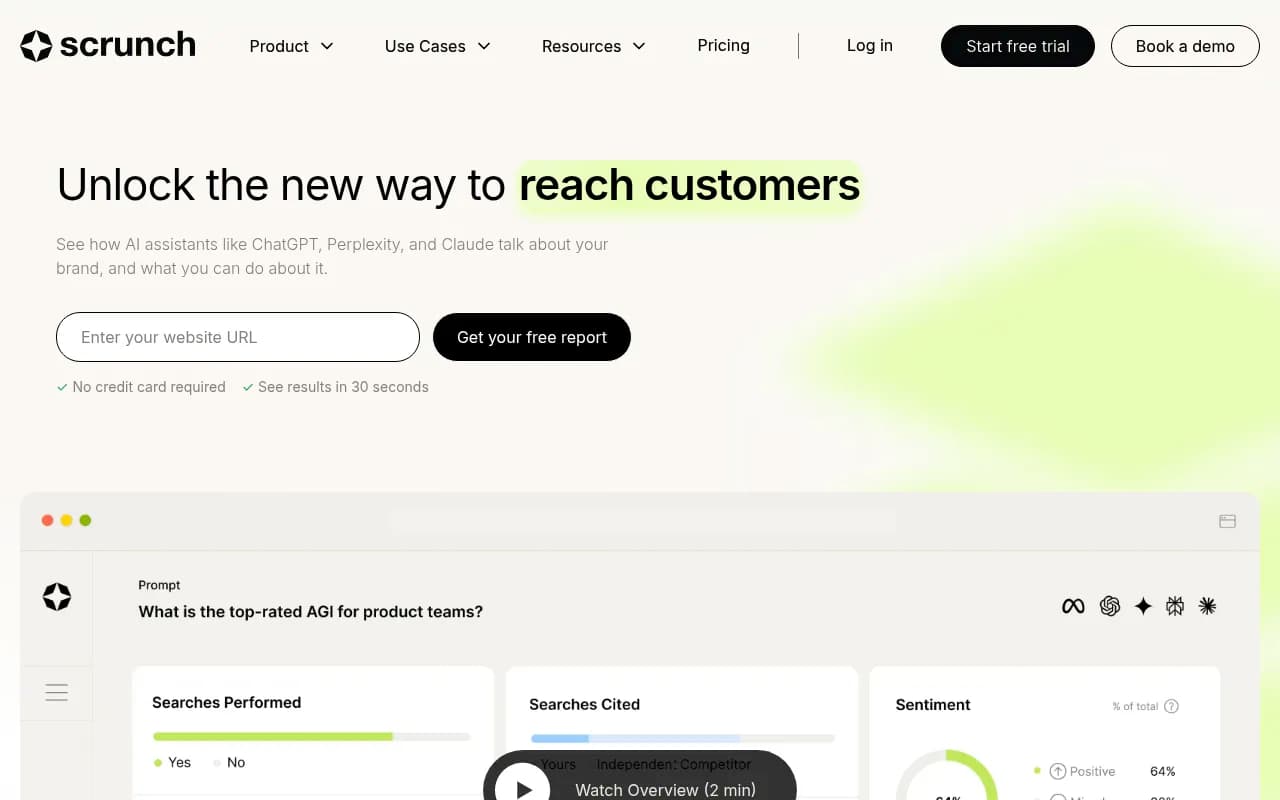
These three sit in the monitoring bracket. AthenaHQ and Scrunch add some analysis and optimization guidance, and Otterly.AI is a low-cost way to start tracking citations. None of them give you crawler logs or an agentic content workflow.

Others worth a look
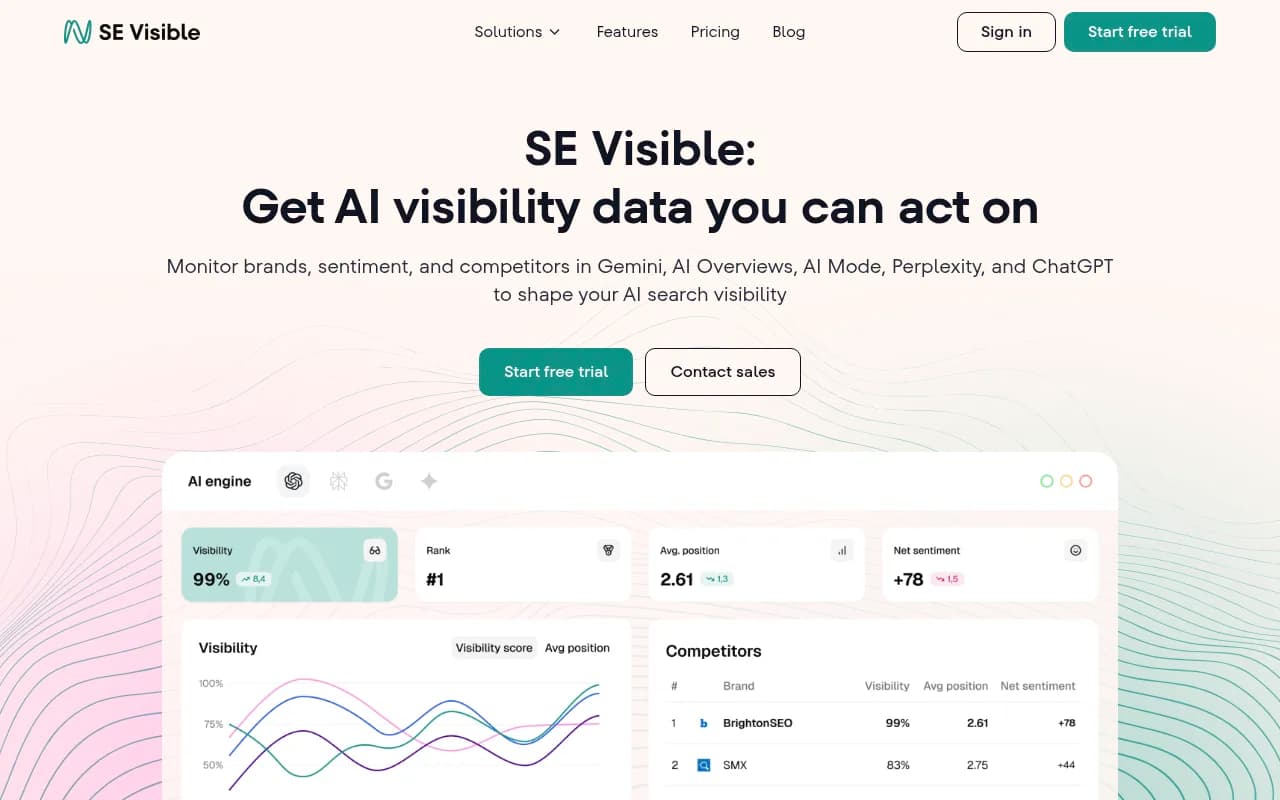
BrandViz.AI and Siftly position themselves specifically at B2B SaaS, and SE Visible from SE Ranking and Nightwatch suit teams that want AI tracking beside traditional rank tracking. I haven't tested these, so check the demos against the checklist above. For a wider scan of the category, the GEO software directory at bestgeosoftware.com lists far more options.


Tracking docs, G2 and comparison pages in practice
Docs
Start with access, not content. Check that GPTBot, OAI-SearchBot, ClaudeBot and PerplexityBot can reach your docs subdomain, and that the pages return 200s. Then confirm which doc pages are actually being cited, and for what questions. ChatGPT cites docs for how-it-works questions, not only for support, so a clear, public, well-structured docs site doubles as a sales asset. Keep a public GitHub presence if you sell to developers.
G2 and review sites
Treat G2 as a source to monitor, not a vanity metric. Check whether G2 and Capterra appear in the citation list for your category prompts, whether your profile is complete, and whether the description matches how you position yourself now. Stale feature lists on review sites get repeated back by the model. Also watch branded prompts, where reviews are cited at over three times their normal rate.
Comparison pages
Build a structured "you vs competitor" page for each meaningful pairing, with clear pricing, target customer and honest trade-offs. Then track two things: whether your page is cited for the comparison prompt, and which third-party listicles are cited instead. Getting included in the "best of" roundups the model already cites is often faster than waiting for your own page to earn trust. Add an FAQ section to the page too, since FAQ content is 3.3% of citations overall and 4.8% on branded prompts.
A simple rollout plan
- Build 30 to 50 prompts: category, alternatives, feature and branded, split by persona.
- Connect crawler logs and fix any blocked docs or help pages first.
- Pull the citation source breakdown and note whether docs, vendor pages, G2 or third-party articles win.
- List the comparison pairings where a competitor is cited and you aren't.
- Publish or refresh pages against those gaps, then check whether each one gets crawled, cited and clicked.
- Review monthly. The platforms keep changing how they search. For instance, Promptwatch's data shows ChatGPT began using the site: operator at scale on August 8, 2026, so fan-out behavior can shift overnight.
Which one should you pick?
- Want monitoring plus fixing, with crawler logs and traffic attribution: Promptwatch.
- Enterprise budget and need maximum data depth: Profound.
- Already deep in an SEO suite: Semrush.
- Starting small and just need a clean tracker: Peec AI or Otterly.AI.
Whatever you choose, run your own category prompts in a trial before paying. A tool that looks great on its sample dashboard can look thin on your actual market. And keep the caveat from the data in mind: it's ChatGPT-only and a single week. Check Promptwatch Data for newer cuts before you set priorities, and see how Google surfaces differ, since AI Overviews cites social platforms at 12.2% against ChatGPT's 0.46% in the October 2026 social citations report.