Key takeaways
- Brand-level tracking and product-level tracking are different things. Most tools sell the first and imply the second.
- Shopping carousels (ChatGPT) and Alexa product results are separate surfaces with separate tracking needs. Few platforms cover both.
- Catalog upload (Shopify domain, CSV or feed) is the feature that separates real ecommerce tracking from a prompt tracker with a retail landing page.
- Prompt budgets do not stretch across a catalog. Track categories and hero SKUs, not 12,000 products.
- Most "best of" lists are written by vendors who rank themselves first. Weigh them accordingly.
Why ecommerce breaks ordinary AI visibility tools
A general AI visibility tool answers one question: did the assistant say your brand name? That is close to useless if you sell thousands of SKUs and the shopper asked for a waterproof hiking boot under $150. What you need to know is which product showed up, at what price, from which merchant, and who filled the other slots in the carousel.
The demand side is real. Adobe, cited in the Rank Prompt comparison, reported that traffic from AI sources to US retail sites grew 393% year over year in Q1 2026, and that AI traffic converted 42% better than non-AI traffic in March 2026. Whatever you think of vendor-published stats, the direction is hard to argue with. Shoppers are asking assistants what to buy.
The tooling hasn't caught up evenly. Some platforms track products inside ChatGPT shopping results. Some focus on Amazon's assistant. Many do neither and just count mentions.
The surfaces you actually need to cover
Three surfaces matter most for retail brands right now.
ChatGPT shopping carousels
Product cards, recommendations and price comparisons appear in ChatGPT web-search responses. According to Promptwatch's ChatGPT shopping usage data, they show up in only a low single-digit share of web-search responses across all prompt types, but trigger far more often on commercial and transactional prompts. The rate also moves in steps rather than smoothly: it roughly doubled overnight in late May, then fell back weeks later. That looks like OpenAI tuning when cards appear, which means a single check tells you very little. Look at trends over days.
OpenAI says ChatGPT product results are selected independently and are not ads, and that Shopify merchants connect through Shopify Catalog. So your merchant feed and structured data matter more than your robots.txt here.
Alexa product results
Amazon's May 2026 announcement describes Alexa for Shopping as combining Rufus's product expertise with Alexa+. If you sell on Amazon, or your products show up there through resellers, this is where a lot of purchase-intent questions now land. Tracking it at category, brand and ASIN level is a different job from tracking ChatGPT.
Chat answers and citations
Even when no carousel appears, the written answer still names products and cites pages. Per Promptwatch's citation share by content type (Sep 28 to Oct 4, 2026), product pages are the most cited type in ChatGPT at 22.4% of citations, and landing pages follow at 16.8%. On commercial prompts, product pages rise to 26.0% and landing pages to 20.6%. Listicles take 13.6% overall, so "best of" roundups are a second route in.
What to look for in an ecommerce AI visibility platform
I'd score every candidate on the same short list.
- Catalog intake. Can you upload a Shopify domain, CSV or feed, and have the tool track named products? If the answer is "track prompts that mention your products," that is brand tracking in a nicer coat.
- Shopping surface coverage. ChatGPT shopping carousels, Alexa product results, and Google's AI shopping surfaces.
- Real interface data. Shopping cards and citations can differ between the actual app and API output.
- Price and availability accuracy. Does the tool show the price the assistant quoted against your real price?
- Competitor view. Who fills the carousel when you don't?
- Action layer. Does it tell you what to fix: feed issues, schema gaps, missing pages?
- Traffic attribution. Visits and conversions from AI platforms, because visibility is not revenue.
Platform comparison
This table reflects what the sources I reviewed say. Vendor pricing in this category changes constantly, so confirm on each pricing page before buying.
| Platform | Product-level tracking | Shopping and Alexa coverage | Catalog intake | Notes |
|---|---|---|---|---|
| Promptwatch | Yes, with catalog upload | ChatGPT shopping carousels and Alexa product results | Upload your catalog | Also crawler logs, AI traffic attribution, content tools |
| Peec AI | Yes, per product visibility, position, win rate, quoted price | AI shopping results | Shopify domain, CSV or Merchant Center feed | Cheapest self-serve SKU tracking per Rework |
| Profound | SKU-level inside ChatGPT Shopping | ChatGPT Shopping | Enterprise tier | Product tracking gated to Enterprise |
| Goodie | Amazon-focused | Alexa for Shopping | Seller Central integration listed | Pro tier is demo-gated |
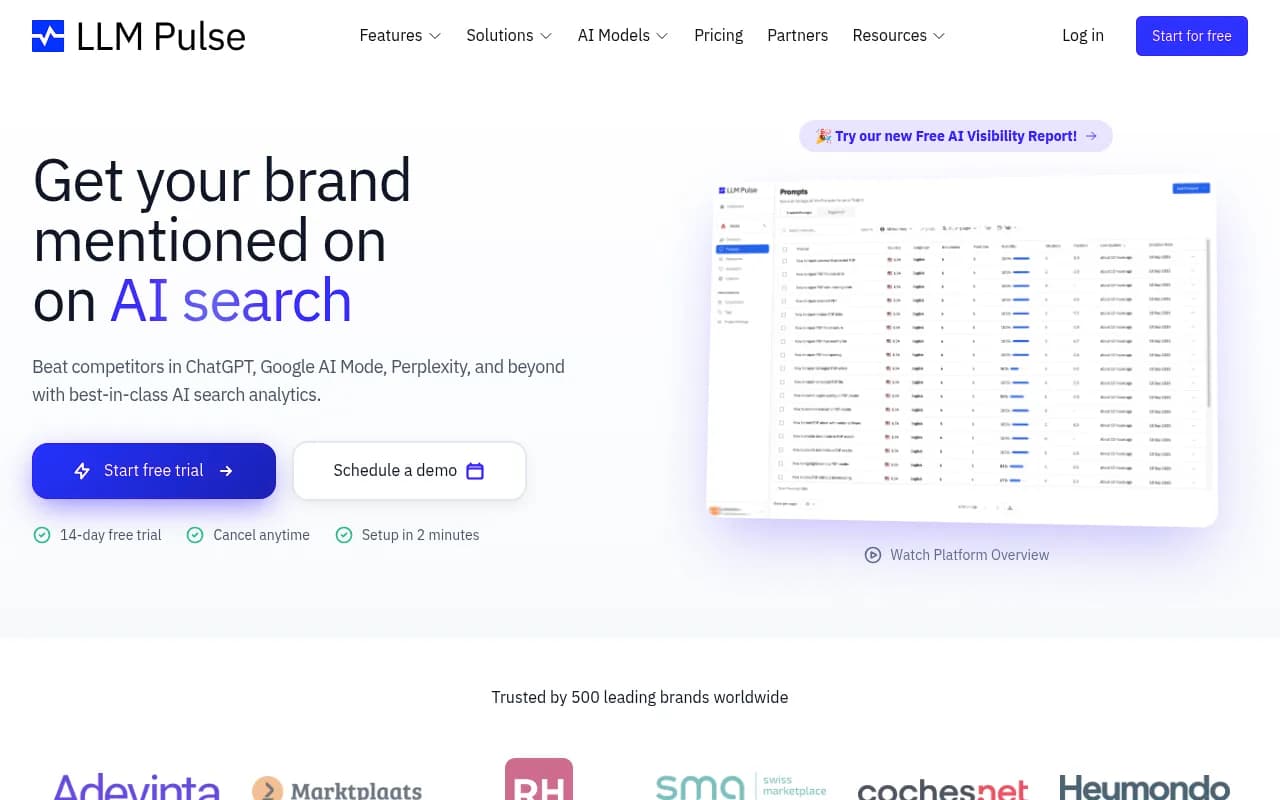
| LLM Pulse | ChatGPT Shopping tracking | ChatGPT; Alexa as add-on | Plan dependent | Self-serve purchase |
| Rankscale | SKU tracking beyond ChatGPT from $99 | Multi-engine | No intake route documented | Per Rework |
| Rank Prompt | Category and comparison queries, no feed ingestion | Not SKU-level | None | From $49/mo; vendor says it is not for SKU shelf tracking |
| Otterly.AI | Brand-level | Limited | None | Cheap entry point |
The platforms, one by one
Promptwatch
Promptwatch is the one I'd put first if you want tracking and fixing in the same place. Its AI Shopping tracking covers product visibility in ChatGPT shopping carousels and Amazon Alexa product results, and you can upload your own catalog to track your own products rather than guessing with prompts. It pairs that with an Ads Radar showing which advertisers bid on your prompts, which matters because Promptwatch Data found ads in an average of 20.1% of ChatGPT web-search responses between May 20 and August 17, 2026 (see ChatGPT ads over time).
The rest of the stack is what makes it useful for retail. IP-verified crawler logs show whether AI bots can actually read your product pages. Visitor analytics attribute AI-referred traffic and conversions. The Content Agent and content gap analysis help with the listicle and comparison pages that product pages alone can't win. Shopping Insights is on the Business plan ($579/mo) and up; confirm current plans at promptwatch.com/pricing. Agency plans don't include Shopping Insights.

Peec AI
Peec is a strong pick if you want cheap, self-serve SKU tracking. Per product it reports visibility, position and win rate, the price the assistant quoted against your catalog price, and the merchants behind each recommendation. Intake takes a Shopify domain, CSV or Merchant Center feed. It is a monitor, not an optimizer, so you'll need other tools to fix what it finds.

Profound
Profound is positioned as best for SKU-level tracking inside ChatGPT Shopping, but it is an Enterprise-tier feature. Good if you have the budget and a procurement process. Overkill otherwise.

Goodie
Goodie's pitch is Amazon-first: how Alexa for Shopping recommends your listings. It lists a Seller Central integration, though one source notes that how products get into Alexa results is not independently verified. The Pro tier, which includes Alexa coverage and feed fixes, is demo-gated.
LLM Pulse
LLM Pulse tracks ChatGPT Shopping from its Scale plan and offers Alexa for Shopping as an add-on. You can buy without a sales call, which is a point in its favor.
Rankscale
Rankscale does SKU tracking beyond ChatGPT from $99. One caveat from the Rework review: no catalog intake route is documented, so it fits stores that don't need to define and track a named catalog.
Otterly.AI
Otterly is the cheap first read, roughly $29 a month by one source. It is brand-level. Fine for checking whether you exist in AI answers, not for shelf-level work.

How the vendor roundups line up
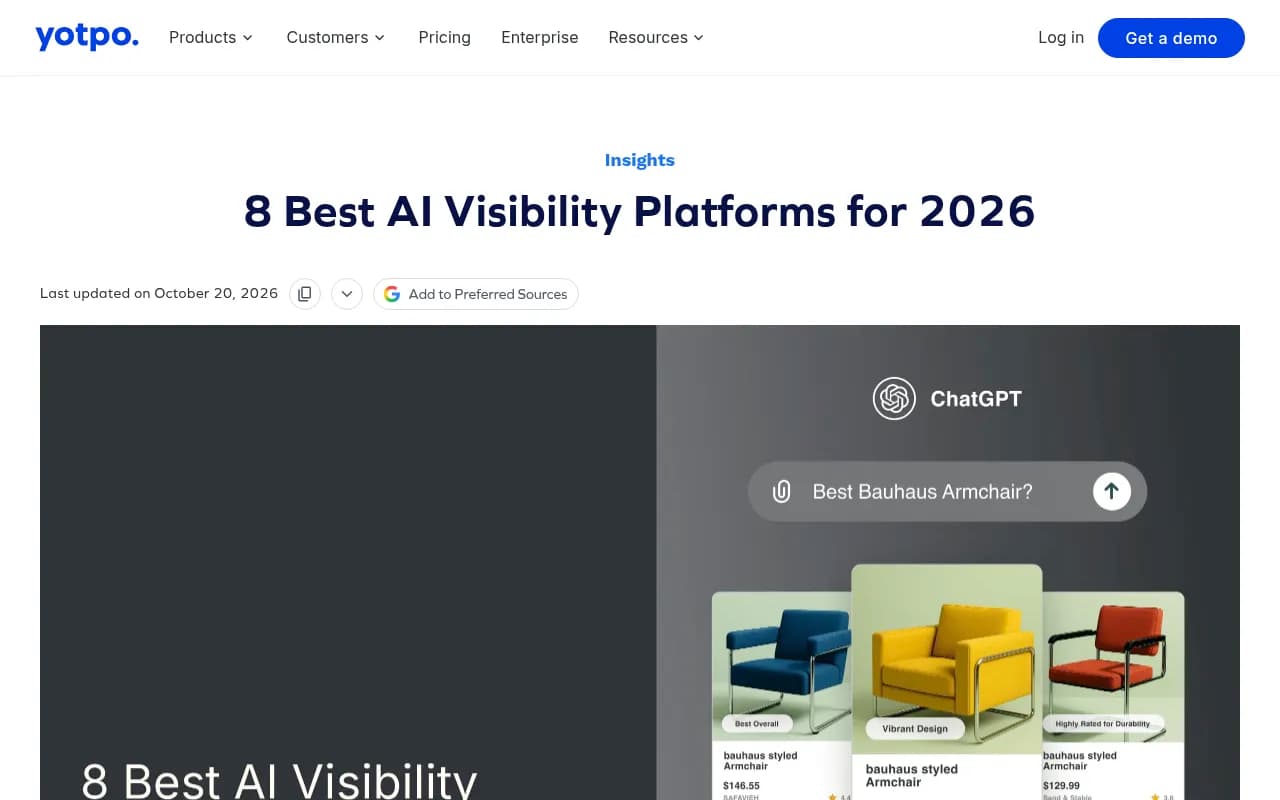
Here is the awkward part of researching this category. Yotpo ranks Yotpo Discover first. Rank Prompt ranks Rank Prompt first, and admits it doesn't ingest a product feed. AmICited ranks AmICited first, and admits it doesn't track individual SKUs. Brandlight ranks Brandlight first. That's normal for vendor content, but it means no single list settles the question. The useful parts of those pages are the evaluation criteria, not the rankings.
The most honest line I found is from Rank Prompt: almost every tool in this category measures brand mentions and sells it as product visibility. Triple Whale makes a similar point from the ecommerce analytics side, saying visibility is not revenue attribution, so pair any tool with your store analytics.
Budget reality: prompts versus catalogs
A plan with 50 to 350 tracked prompts covers categories and comparison queries. It does not cover thousands of SKUs. Plan around that:
- Track your top 20 to 50 hero products by name.
- Track category prompts ("best trail running shoes under $120") rather than every variant.
- Track competitor comparison prompts for your top rivals.
- Re-run across several days. Shopping features fire in steps, so one day's result misleads.
What to fix once you can see the data
Visibility data is only useful if it leads somewhere. The recurring fixes, which line up with Promptwatch Data's recommendations on shopping:
- Complete Product schema markup on every product page.
- Accurate prices and availability, matching your feed.
- A clean merchant feed. Feeds feed shopping surfaces, pages feed chat answers.
- Pages that are easy to compare, with clear specs and pricing.
- Presence in "best of" roundups, since listicles are 13.6% of ChatGPT citations.
- Reviews on trusted third-party sites for branded queries. Reviews are only 1.7% of citations overall but 5.6% of branded-prompt citations.
- Crawler access. If GPTBot or OAI-SearchBot hit errors on your product pages, nothing else matters.
Adobe's finding, via Rank Prompt, is that US retail product pages scored only 66% machine readable, the lowest of any page type it measured. Product pages are your most-cited asset and your least readable one. That's a gap worth closing first.
How to choose
| If you need | Start with |
|---|---|
| Tracking plus fixing, crawler logs and AI revenue attribution | Promptwatch |
| Cheapest self-serve SKU tracking from a Shopify store | Peec AI |
| Enterprise SKU tracking in ChatGPT Shopping | Profound |
| Amazon-first Alexa coverage with feed work | Goodie |
| ChatGPT Shopping with Alexa as an add-on | LLM Pulse |
| A cheap first look at brand mentions | Otterly.AI |
For wider shopping around, the GEO software directory at bestgeosoftware.com lists more platforms, and ai-rank-tools.com covers rank trackers specifically.
A simple rollout plan
- Week one: run a free baseline scan of how assistants describe your brand, and check that AI crawlers can read your product pages.
- Week two: upload your catalog or hero SKU list and set up 20 to 40 commercial prompts.
- Weeks three and four: compare carousel appearances against competitors across several days, and log which feed or schema problems explain the gaps.
- Month two onward: fix feeds and schema, publish comparison and roundup content, and tie AI-referred visits to conversions in your analytics.
The tool matters less than the habit. Product-level tracking only pays off if someone owns the fix list.