Key takeaways
- Published entry plans run from about $29 to $99 a month, but they cover 15 to 50 prompts. A workload of 100 prompts, 3 engines and daily checks (9,000 checks a month) usually lands between $97 and $190 on published plans.
- The billing unit matters more than the headline price. Prompts, credits, answers and checks are not interchangeable, and 3,600 credits are not 3,600 recurring daily prompts.
- Seats, extra engines, countries, projects and overages are where bills drift. One vendor-neutral estimate puts real spend at 2-3x the sticker price once these are added. Treat that as a warning, not a measured fact.
- Tracking alone is only part of the cost. If you need content, publishing and crawler data, price those separately or pick a platform that bundles them.
- Compare tools on cost per unit (prompt x engine x day), then add the staff time needed to act on the data.
Why sticker prices mislead
Most AI visibility pricing pages show one number and a short feature list. The number is real. It just describes a workload smaller than the one you will end up running.
A $29 plan with 15 prompts sounds cheap until you realise a serious brand tracks 100 to 300 prompts across several engines. Plans also do not scale linearly. Otterly Lite is $29 for 15 prompts, while its Standard plan is $189 for 100 prompts. Geoptie goes from $49 for 15 prompts to $99 for 100. The jump from entry plan to a usable plan is often 3-6x.
This guide walks through each cost lever, gives you a way to normalise prices, and ends with a worksheet you can use before asking a vendor for a quote. Pricing figures come from Rankability's October 2026 study, Agenzy's per-unit analysis and vendor pages as cited by those sources. Rankability sells a competing product and discloses it, so check current prices on vendor pages before buying.
The five cost levers
1. Prompts
The prompt count is the number everyone compares first. It is also the easiest to misread. Some tools count a prompt once regardless of how many engines run it. Others multiply. Some limit you by monthly answers, so a plan with 50 prompts and a 4,500 answer cap is really 50 prompts x 3 engines x 30 days.
2. Engines
Engine coverage varies a lot. Peec AI's Starter plan lets you pick 3 engines from 6. Otterly.AI includes 4 and charges extra for Claude, AI Mode and Gemini. AthenaHQ covers 11 models but bills in credits. Geoptie covers 4 selected models. If your buyers use Google AI Mode and Gemini, a plan that excludes them will cost more than it appears.
It is also worth asking whether every engine deserves its place on the bill. Promptwatch's data on average sources per response shows ChatGPT citing about 5 sources per web-search answer, while Google AI Overviews and Perplexity sit near 10. Copilot's average swung from under 2 to nearly 17 within weeks before settling low. Paying a premium for a volatile engine buys noisy data.
3. Check frequency
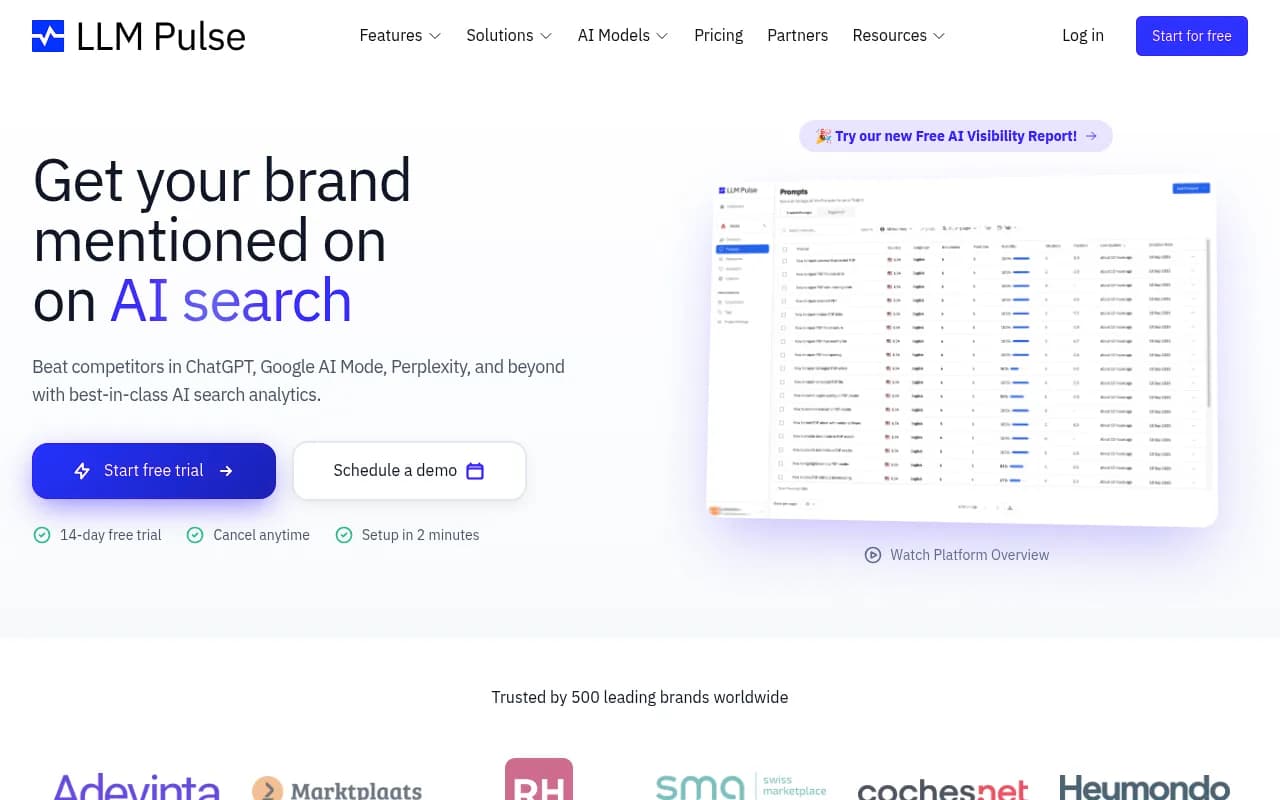
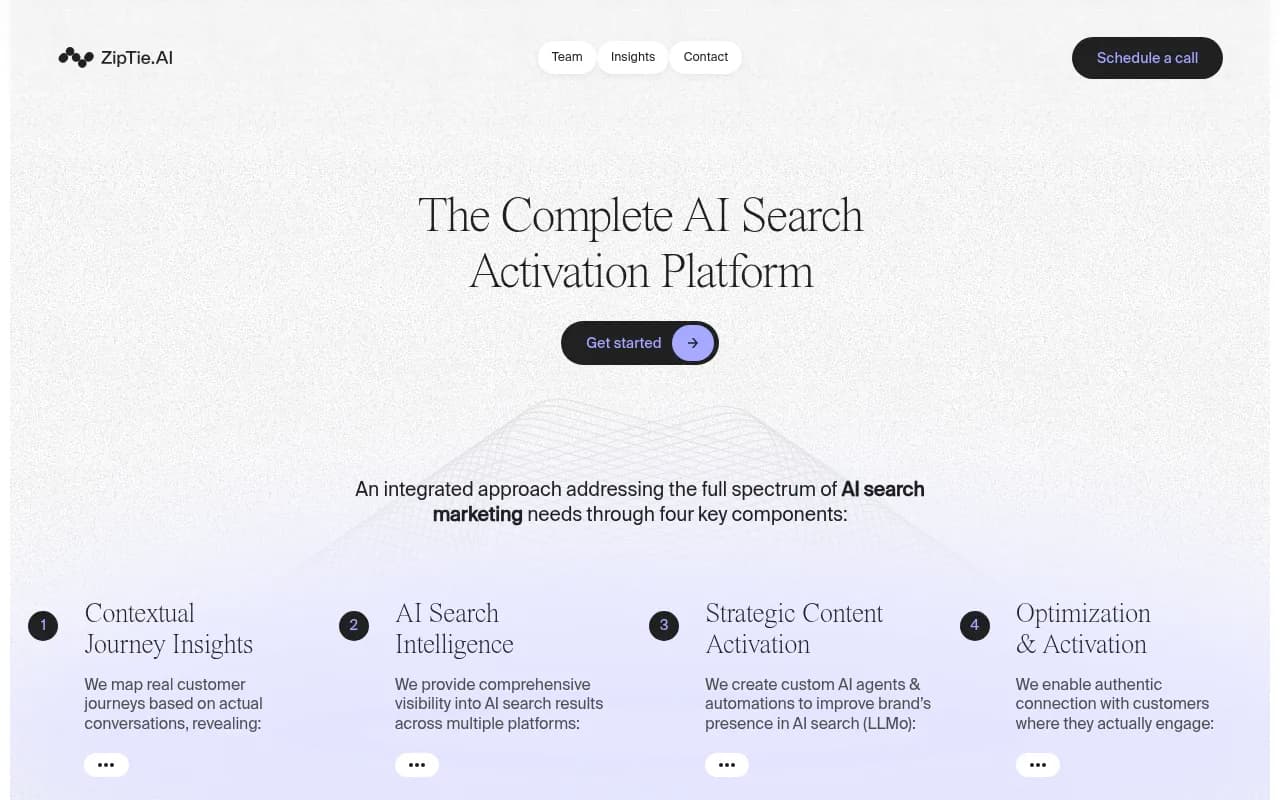
Daily checks cost roughly 4x a weekly cadence. LLM Pulse makes this explicit: 50 prompts is EUR 49 a month weekly or EUR 79 daily. ZipTie bills on prompts, engines and frequency together. Promptmonitor's starter card says twice weekly while its FAQ language conflicts, so confirm the cadence in writing.
AI answers are non-deterministic, so one weekly check is a thin sample. Daily checks smooth the noise, but you pay for that smoothing.
4. Seats and projects
Seat limits are where small teams get surprised. AmICited reports that most tools include 1 to 5 seats, with extra seats at $20-$50 per user per month. Its example: a $99 base plan plus four extra team members at $30 each is $219. I could not verify that against vendor pages, so treat the range as indicative.
Some tools sidestep the issue. Otterly.AI lists unlimited users on its plans. Agency plans from Peec AI cap client seats at 3, 5 or 7 and share credits across projects.
5. Add-ons and overages
This bucket includes extra engines, countries, prompt packs, API access, answer overages and white-label reporting. A Reddit thread comparing six tools claimed Scrunch came out near $417 a month and Ahrefs near $974 once add-ons were included, and that five platforms cost $699 before prompt packs. That is anecdotal and unverified, but the pattern is familiar: base price plus the things you actually needed.
Credits are not prompts
Credit systems are the hardest pricing model to compare. Peec AI defines a credit as 1 prompt x 1 model x 1 day. AthenaHQ defines 1 credit as 1 AI response. Geneo's Pro plan includes 1,000 monthly credits, which is not 1,000 recurring prompts. Rankshift's 150-prompt allowance is constrained by 9,500 monthly credits. Conductor's AI Search is credit-based with no prompt allowance at all.
Do the math before you buy. AthenaHQ's Starter plan at $295 includes 3,600 credits. Track 11 engines and 3,600 credits cover roughly 327 prompt-engine checks. Run those daily and you have under 11 prompts. Run them weekly and the picture improves, but you have cut your sample size.
One more detail from Promptwatch's ChatGPT query fanout data: ChatGPT averaged about 2.15 web searches per prompt in early December 2025, easing to about 1.84 by March 2026. A per-response or per-credit vendor charges for one answer, not for the searches behind it. That is fine for cost, but it means credit counts say nothing about how deep the measurement goes.
Normalise everything to cost per unit
Agenzy's method is the most useful one I have seen. Use one unit: prompts x engines x 30 days of daily tracking. Divide the monthly price by that figure.
| Plan | Monthly price | Prompts x engines | Checks per month | Cost per check |
|---|---|---|---|---|
| Otterly.AI Lite | $29 | 15 x 4 | 1,800 | $0.0161 |
| Otterly.AI Premium | $489 | 400 x 4 | 48,000 | $0.0102 |
| Peec AI Starter | $95 | 50 x 3 | 4,500 | $0.0211 |
| Peec AI Pro | $245 | 150 x 3 | 13,500 | $0.0181 |
| Peec AI Advanced | $495 | 350 x 3 | 31,500 | $0.0157 |
| Profound Starter | $99 (billed yearly) | 50 x 1 | 1,500 | $0.0660 |
| Profound Growth | $399 (billed yearly) | 100 x 3 | 9,000 | $0.0443 |
| Trendos Pro | $320 (yearly rate) | 1,050 prompts | 31,500 answers | $0.0102 |
A few things jump out. The cheapest sticker price is not the cheapest unit. Peec's Starter costs more per check than Otterly Lite. Profound's published tiers cost 2-4x more per check than the volume players, though Profound is built for enterprise buyers who pay for other things. And annual-only billing, as at Profound, means $1,188 up front for the Starter plan.
What a standard workload actually costs
Rankability defines a benchmark: one brand, one country and language, 100 prompts, and daily checks on ChatGPT, Perplexity and Google AI Overviews. That is 100 x 3 x 30 = 9,000 checks a month. Published plans that cover it:
| Plan | Price per month | Prompt capacity | Engines |
|---|---|---|---|
| Rankability Starter | $97 | 100 | 11 |
| SE Visible Basic | $99 | 200 | 5 |
| Geoptie Professional | $99 | 100 | 4 selected |
| Searchable Pro | $125 | 100 | 3 |
| Orchly Pro | $125 | 100 | 3 |
| Otterly AI Standard | $189 | 100 | 4 |
| LLM Pulse Daily Growth | EUR 149 | 150 | 5 |
So a realistic monitoring-only budget for a single brand is roughly $100 to $190 a month, not $29. That is the number to put in the spreadsheet. Semrush's AI Visibility Toolkit at $99 covers only 25 prompts and one domain, which works out to about $3.98 per prompt, the high end of the published range. LLM Pulse sits at the low end at EUR 0.66 per prompt on the weekly plan.
Beyond monitoring: what else lands on the bill
Monitoring tells you where you are invisible. Fixing it costs separately, and this is the part most TCO comparisons skip.
The extra spend usually comes from four places:
- Content production. Either writers and editors, or a tool that drafts and publishes. Writesonic bundles articles and site audits into plans starting at $79 billed annually. Clearscope at $129 and Scalenut at $59 add content optimization on top of limited prompt tracking.
- Crawler and traffic data. Knowing whether AI bots can read your pages and whether AI referrals convert. Many trackers do not include this at all, so you either buy a second tool or fly blind.
- Reporting and agency features. White-label PDFs, client seats and shared credits.
- Staff time. AmICited estimates ROI on visibility tools breaks even after 4-6 months, but only if someone has time to act on the findings. A $99 dashboard nobody acts on has an infinite cost per result.
Promptwatch's pricing is worth looking at on this axis. Promptwatch starts at $95 a month for 50 prompts and 6,000 responses across all models, and includes site audit, content gap analysis and API access at that tier. Higher tiers add Agent Credits, AEO articles, the Content Agent that publishes to Webflow, Framer or WordPress, and IP-verified AI crawler logs. Agency plans from $199 a month have unlimited projects and prompts with pooled response volumes. It is one of the few platforms where the execution layer sits inside the subscription rather than being a second invoice, though always confirm current pricing at promptwatch.com/pricing.

Platform by platform: where the extras hide
| Platform | Entry price | Billing unit | Watch out for |
|---|---|---|---|
| Peec AI | $95 | Prompts with answer cap | Only 3 engines on Starter; agency plans share credits |
| Otterly.AI | $29 | Prompts | Claude, AI Mode and Gemini cost extra |
| AthenaHQ | $295 | Credits (1 = 1 response) | Credits drain fast across 11 models |
| LLM Pulse | EUR 49 weekly / EUR 79 daily | Prompts by frequency | Euro billing; frequency changes the price |
| Writesonic | $79 (annual) | Prompts plus content | Only 3 engines until Enterprise |
| Semrush AI Toolkit | $99 | Tracked prompts | 25 prompts, 1 domain |
| Profound | $99 (yearly) | Prompts x engines | Starter is ChatGPT only; custom enterprise quotes |
| ZipTie | Configurable | Prompts, engines, frequency | No fixed preset to compare |
| Scrunch | $300 | Custom prompts | Confirm refresh frequency |
| Ahrefs Brand Radar | $699 | Index plus custom checks | $50 custom-prompt plans are not the same product |
Tools worth a look in this category, with their cards:






For a wider sweep of options, the GEO software directory at bestgeosoftware.com lists many more platforms with pricing notes.
Pricing traps worth naming
Promotional prices
Promptmonitor shows $29 a month as a promotional display. Scalenut's $24 display has annual or promotional conditions, while the standard price is $59. Clearscope has a temporary $99 offer next to a $129 standard price. Ask what the price is at month 13.
Annual lock-in
Peec offers about 15% off annually. Otterly drops from $29 to $25. Trendos shows yearly rates with a "save" badge that implies monthly billing is 20-25% higher. Annual billing lowers the cost per check, but you commit before knowing whether the tool fits.
Stale price comparisons
Rankability's historical table shows Semrush's AI Toolkit at $745 before and $99 now, and Rankscale at $20 before and $99 for Pro now. The study itself warns that these are different packages, not proven cuts or hikes. Do not build a business case on a screenshot from last year.
Enterprise opacity
Profound and Conductor use custom quotes. That is normal for enterprise, and it means you cannot compare them on a published sheet. Ask for a quote built on your actual prompt count, engines, countries and seats, and get it in writing.
A TCO worksheet you can copy
Fill these in before you request a demo:
- Prompts you need to track, split into branded, non-branded and competitor comparison.
- Engines that matter to your buyers (ChatGPT, AI Overviews, AI Mode, Perplexity, Gemini, Copilot, Claude).
- Countries and languages.
- Check frequency: daily, twice weekly or weekly.
- Seats, and whether agencies or clients need access.
- Required extras: crawler logs, visitor analytics, shopping tracking, content generation, API or MCP access.
- Monthly checks = prompts x engines x days checked.
- Cost per check = monthly price including add-ons / monthly checks.
- Annual cost including seats, add-ons and a 10-20% buffer for overages.
- Internal hours per month to act on findings, times your loaded hourly rate.
Step 10 is the one people skip. For many teams, it exceeds the software line.
Which model fits which team
A solo marketer or small business checking whether AI mentions the brand can start on an entry plan from Otterly.AI, Peec AI or LLM Pulse and stay under $100. Be honest that 15 to 50 prompts is a pilot, not a program.
A mid-market team with an editorial function should price the 100-150 prompt tier, and decide whether to buy content tooling separately or as part of one platform. Here the bundled options (Promptwatch, Writesonic) are worth comparing against a tracker plus a content tool.
Agencies should read the agency plans closely. Shared credit pools, client seat caps and project limits matter more than prompt counts. Peec's agency tiers run $245, $495 and $795 with 3, 5 and 7 client seats, while Promptwatch's agency plans start at $199 with 10 seats and unlimited projects.
Enterprises should expect custom quotes and negotiate on volume, SSO, audit logs and support. Security certifications such as ISO/IEC 27001 are worth asking about, since they shorten procurement.
For a broader view of rank-tracking tools, the directory at ai-rank-tools.com is a reasonable next stop. If you want help deciding how much of this to run in-house, an SEO and GEO agency such as 1001 SEO Media can scope it, though the worksheet above gets you most of the way.
The bottom line
Budget around $100 to $200 a month for a credible single-brand monitoring setup, more if you need multiple countries, extra engines or several seats. Normalise every quote to cost per check, read the credit definitions line by line, and add the execution cost, because tracking without action is the most expensive option of all. Then check current prices on the vendor pages, since most of these plans changed within the last year.
If you want to see how these workloads behave in practice, the Promptwatch Data hub publishes free research on citations, fanouts and crawlers that helps you decide which engines and prompt types are worth paying to track.