Key takeaways
- On August 8, 2026, ChatGPT began using the site: operator in about 1 in 6 fanout queries, up from roughly 1 in 280. Keyword and prompt mappings built before that date are stale.
- Reddit's share of ChatGPT citations fell from about 3.8% to about 0.5% by mid-August, per Promptwatch Data. AI Overviews and AI Mode declined only gradually.
- Pure mention trackers now look thin. Marketing teams need fanout data, crawler visibility, indexation checks and a way to act on findings.
- Continuous monitoring beats quarterly audits. Two weeks was enough to invalidate a lot of playbooks.
- Match the tool to the team: lightweight trackers for small budgets, enterprise suites for existing SEO stacks, and action-oriented platforms for teams that want to ship fixes.
What actually happened in August 2026
Two things moved within a week of each other, and both matter more than most GEO commentary has admitted.
First, the site: operator. Promptwatch Data shows that on August 8, 2026, the share of ChatGPT fanout queries using site: jumped from 0.37% to 16.8% in a day. Roughly 46x. Before that it was about 1 in 280 fanouts. After, about 1 in 6. Average fanout queries per response rose from around 1.08 to 1.83, which suggests site: searches are added on top of the generic searches rather than replacing them. A one-day jump like that looks like a model or system-prompt rollout on OpenAI's side, not organic behaviour change. There was also a dip to 0.15% on August 3 to 5, which hints at a staged rollout.
Second, Reddit. In Promptwatch's Reddit citation report (July 7 to August 17, 2026), reddit.com held a steady 3.83% average share of ChatGPT citations from July 18 to August 7. On August 8 it slid into the mid 2s, and on August 14 it fell below 1%. The August 14 to 17 average was 0.52%, an 86.4% relative drop. The same data shows Google behaving differently: AI Overviews slipped from 2.37% to 2.10% (an 11.3% relative decline), and AI Mode from 2.22% to 1.54% (30.5%). Gradual, not a cliff.
One honest caveat, and Promptwatch states it too: the size of the drop is provisional, a data-collection issue can't be ruled out, and the report doesn't establish why it happened. Treat the direction as solid and the exact figure as soft. The same pattern shows up in Promptwatch's social citations data: from September 28 to October 4, ChatGPT drew only 0.46% of its citations from social platforms, while Google AI Overviews drew 12.2%.
So the surfaces now behave differently from each other. That alone changes what you should demand from a GEO tool.
Why these two changes break old GEO playbooks
The site: operator turns your domain into a retrieval surface
When ChatGPT runs a site:yourdomain.com pricing style search, it is asking a search engine to look inside your site. A site: query can only surface what search engines have indexed. That has some uncomfortable consequences:
- Thin category pages, broken internal search and unindexed content now cost you answers directly.
- Pages you assumed were fine because nobody visited them may be the ones ChatGPT goes looking for.
- Comparison, pricing and alternatives pages matter more, because domain-scoped lookups tend to target exactly those angles.
- Prompt-to-keyword mappings built before August 8 describe a retrieval pattern that no longer exists.
This is, frankly, a technical SEO problem wearing a GEO costume. Which is a good thing, because technical SEO teams already know how to fix it.
The Reddit drop changes the "just seed Reddit" advice
For most of 2025 and early 2026, a common recommendation was to get your brand discussed on Reddit and wait for ChatGPT to pick it up. I never loved that advice, since it was easy to mistake a temporary retrieval habit for a durable strategy. The August data is a reminder. A source that held 3.8% for three weeks was down to about 0.5% within days.
The lesson is not "Reddit is dead." It still appears in Google's surfaces. The lesson is that any single-source tactic is a bet on a model behaviour you don't control. Your tool stack should tell you quickly when that behaviour moves, per model, so you aren't averaging ChatGPT and AI Overviews into one misleading number.
What marketing teams should now require from a GEO tool
A checklist, based on what broke in August:
- Per-surface tracking from real interfaces. ChatGPT, AI Overviews and AI Mode diverged within the same fortnight. API-only outputs can differ from what users see.
- Query fanout visibility. If you can't see the searches the model runs, you can't see that 17% of them started using
site:. - Citation source breakdowns. Source-type and domain shifts (Reddit, social, product pages) are how you spot the next change.
- Crawler and indexation signals. If retrieval runs through search engines, crawlability and indexation are now first-order concerns. IP-verified AI crawler logs and Search Console data help here.
- Daily cadence. A weekly snapshot would have smeared the August 8 and August 14 changes together.
- A path from insight to action. Knowing a gap exists is the cheap part.
- Traffic attribution. Citations without visits are a vanity metric. Tie AI referrals to conversions where you can.
The broader industry conversation reflects this. A r/b2bmarketing thread on AI visibility tools makes the point that most tools only track whether a brand is mentioned in ChatGPT, Perplexity, Gemini, Claude or AI Overviews, and that is no longer enough. Frase's own post on its category shift, Content optimization is dead, describes the same move toward dual scoring, AI visibility tracking and autonomous content fixes.
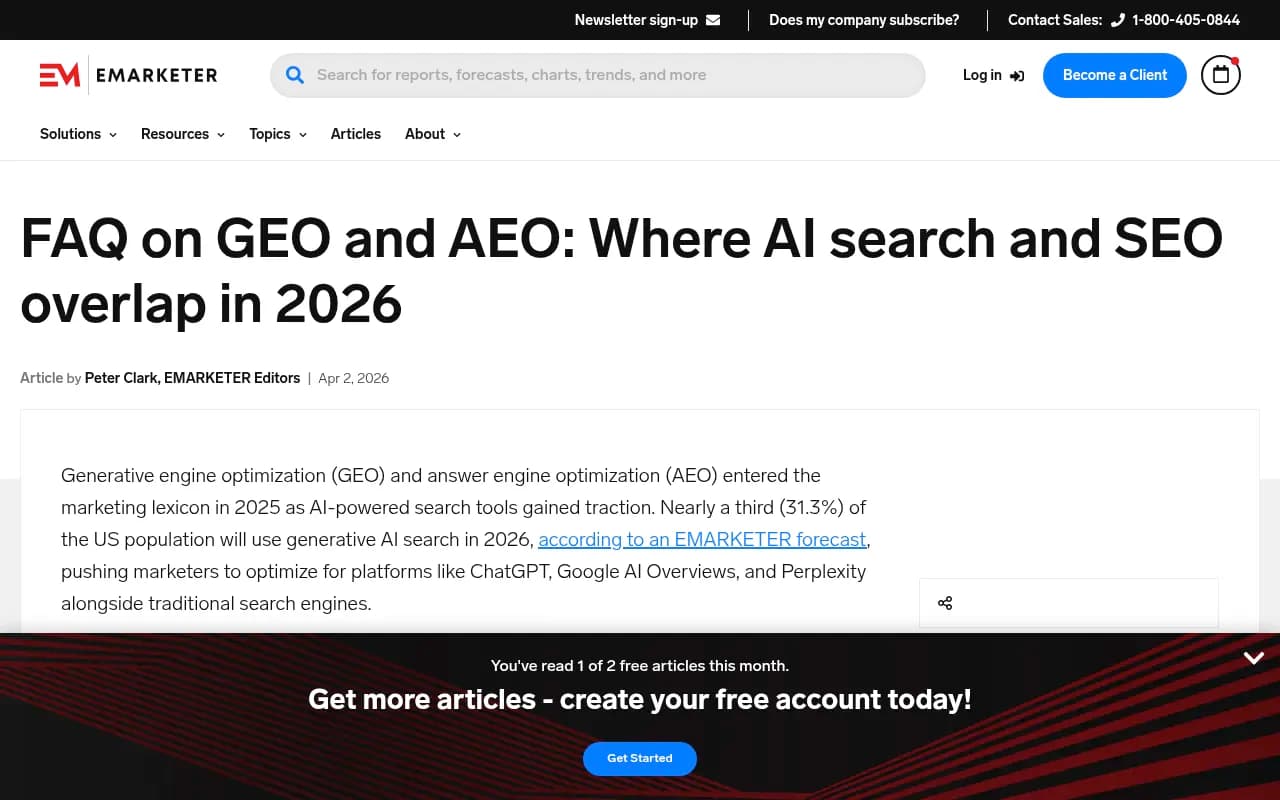
EMARKETER's FAQ on GEO and AEO is a decent primer if you need to explain to a CMO why GEO and SEO overlap rather than compete. Much of the overlap is exactly the indexation and crawlability work the site: change rewards.
The tool categories worth knowing
I'm grouping tools by what they do for a team, not by marketing claims. I haven't benchmarked pricing for every tool below, so verify current plans on each vendor's site.
Action-oriented GEO platforms
These track visibility and then help you change it. This is the category that matters most after August, because the response to a fanout shift is content and site work, not more charts.
Promptwatch is the one I'd put first for teams that want the whole loop. It monitors the real interfaces of ChatGPT, AI Overviews, AI Mode, Gemini, Perplexity, Copilot and others, shows query fanouts and prompt volumes, logs IP-verified AI crawler visits, tracks Reddit, YouTube and LinkedIn citations, and connects Search Console and Bing data to AI crawls and citations per page. That last piece is what answers a site: era question like "which pages rank in Google but never get cited?" Its Content Agent and Action Board turn gaps into drafted and published pages, and visitor analytics tie AI traffic to conversions. Plans start at $95/mo, with a free tier limited to ChatGPT; confirm at promptwatch.com/pricing.

Other tools in this execution-minded group worth a look:

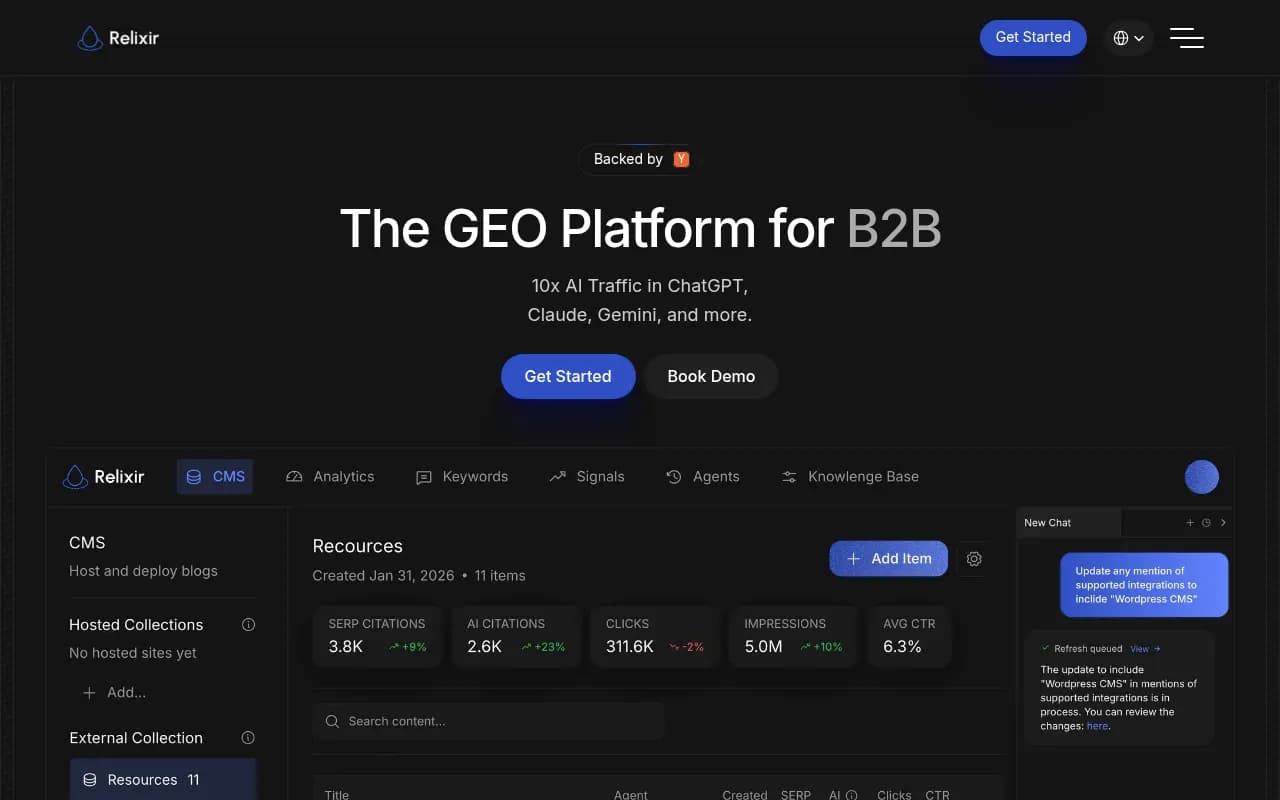
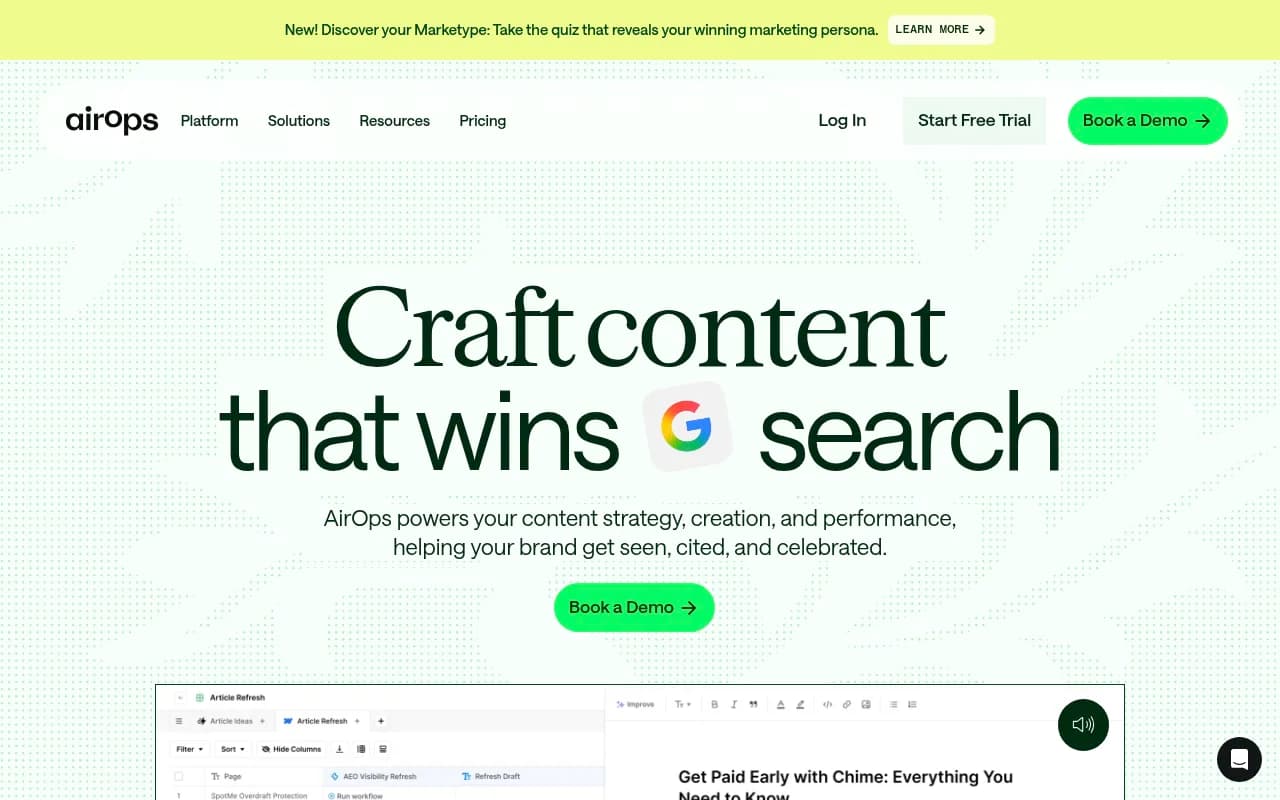
AirOps is strongest as workflow automation for content; it needs a separate source of visibility data to ground it.
Dedicated monitoring tools
If your team already has content and technical workflows and just needs measurement, these cover the tracking layer. They answer "were we mentioned?" well. They generally don't tell you why, or fix it.





Profound and Scrunch sit toward the enterprise end. Otterly.AI and Peec AI are cheaper and simpler. Whichever you pick, check that it distinguishes between ChatGPT, AI Overviews and AI Mode instead of blending them, and ask whether it exposes fanout queries.
Enterprise SEO suites with AI tracking
If procurement already runs through your SEO platform, the bolt-on may be good enough to start.


Botify is worth singling out for the site: era because its crawl and log analysis roots map directly onto indexation problems. The trade-off with suites generally is shallower AI-specific data and fixed prompt sets.
Technical foundations (the unglamorous bit that now matters)
Because site: retrieval depends on search engine indexes, the basic crawl and index tools got more relevant.
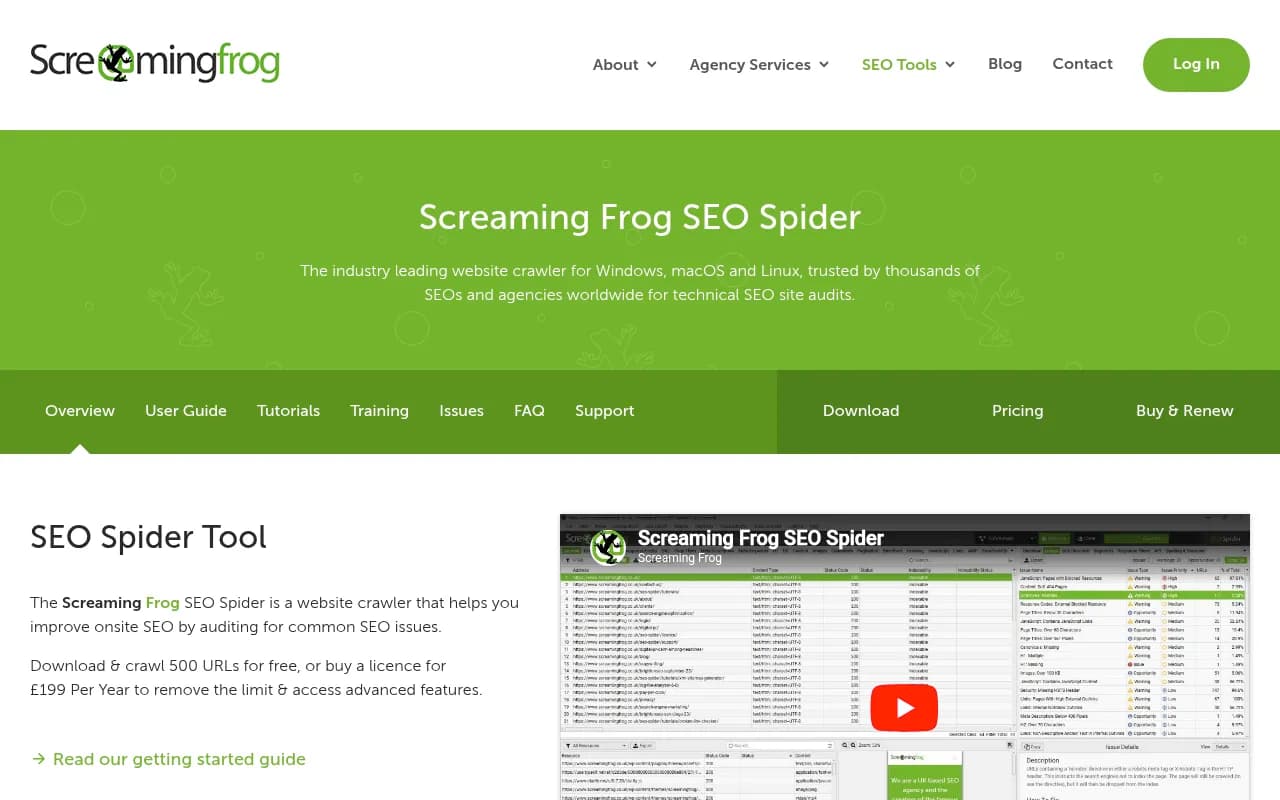
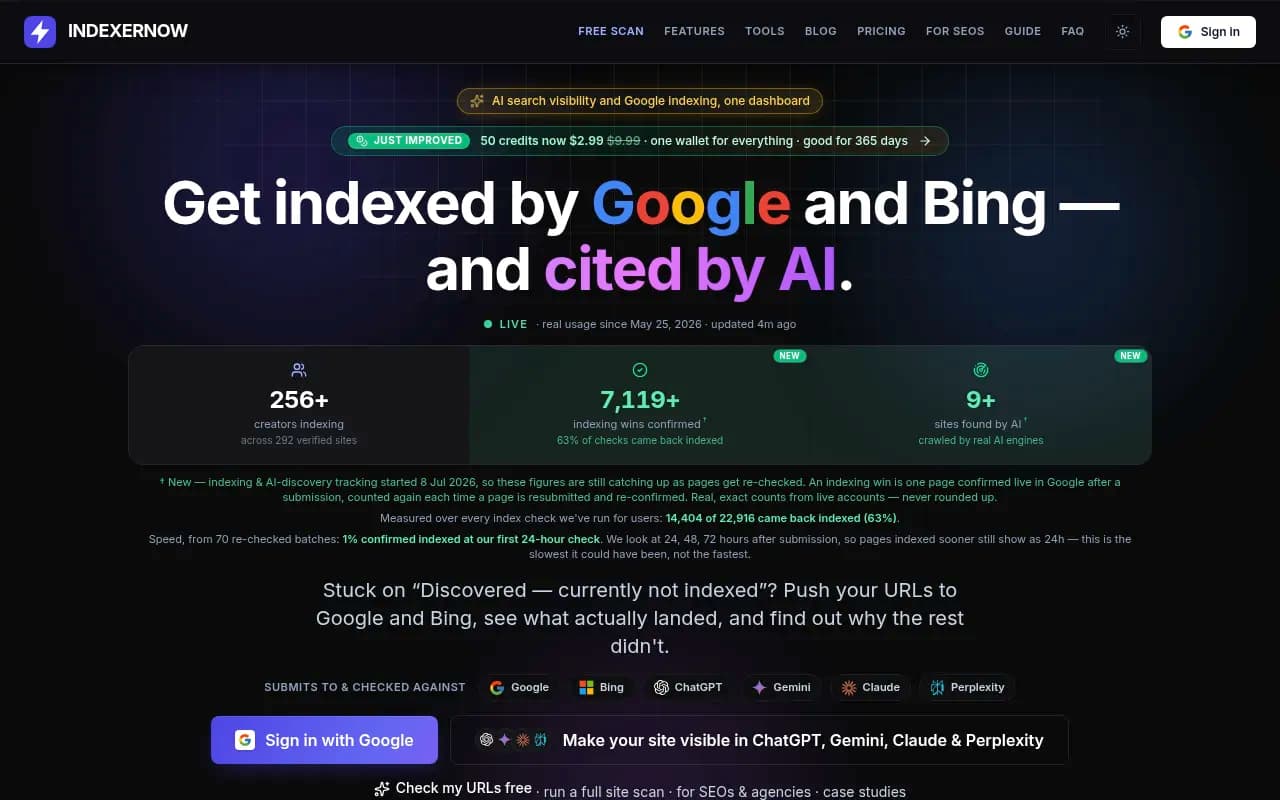
Use Search Console to confirm your key pages are indexed, Screaming Frog to find orphaned and thin category pages, and structured data to make page purpose unambiguous. Pushing new URLs through IndexNow helps Bing-side discovery, which matters for any model that leans on Bing results.
Free and low-cost starting points
If you are still deciding whether to budget for this, run a free check first.
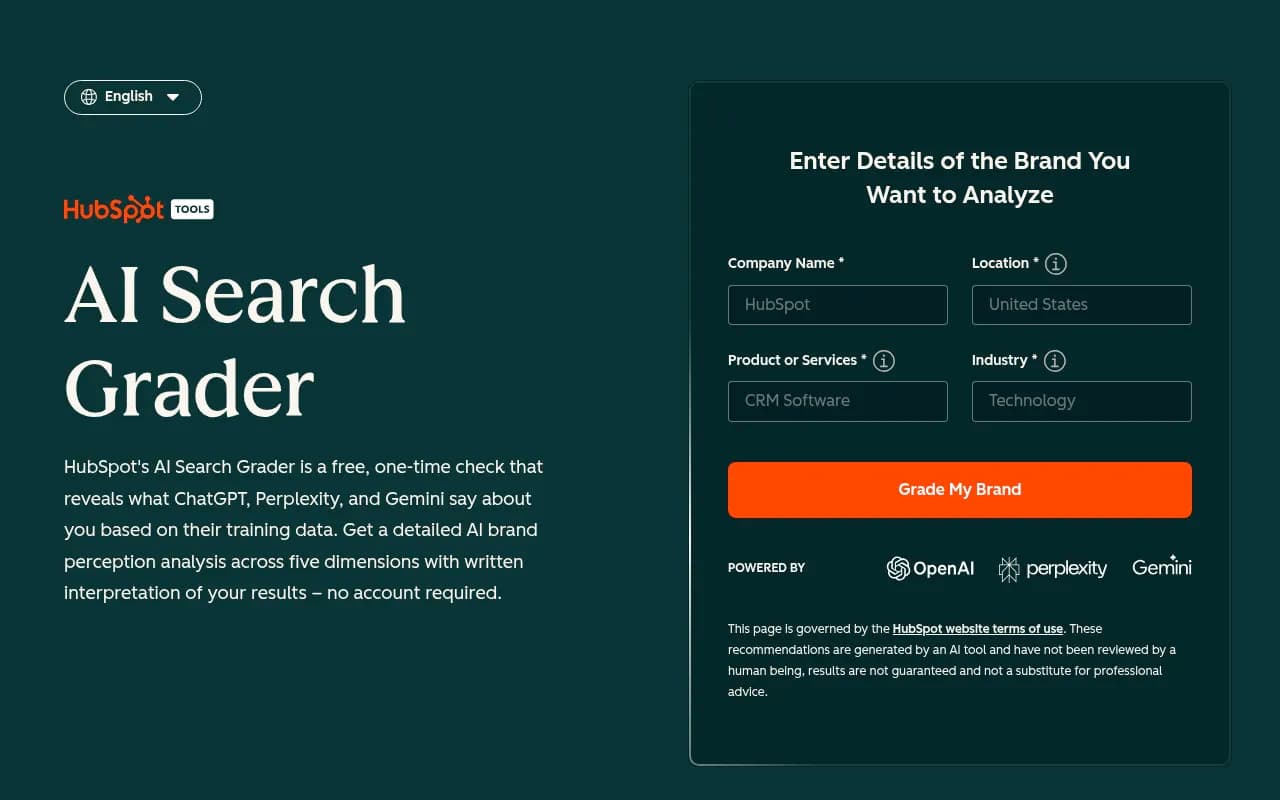


These are one-off diagnostics, not monitoring. Good for a baseline and a slide for your boss; not good for catching an August 8 type shift.
Comparison table
| Category | Examples | Sees fanouts? | Fixes issues? | Best for |
|---|---|---|---|---|
| Action-oriented GEO platform | Promptwatch, Gradial GEO | Promptwatch yes | Yes, via content and actions | Teams that want insight to publishing in one place |
| Monitoring-only trackers | Otterly.AI, Peec AI, Scrunch | Varies, verify | No | Teams with strong in-house execution |
| Enterprise SEO suites | Semrush, BrightEdge, Conductor | Rarely | Partly, via SEO workflows | Orgs consolidating vendors |
| Technical SEO tools | Search Console, Screaming Frog, Botify | No | Diagnose only | Indexation and crawl fixes |
| Free graders | HubSpot AI Search Grader, AnswerGist | No | Light suggestions | Baselines and buy-in |
If you want to browse beyond this list, the GEO software directory at bestgeosoftware.com catalogs far more options than any one article can.
A practical response plan for the next 30 days
Week 1: audit retrieval, not rankings
Pull every key page: pricing, features, comparisons, alternatives, docs. Confirm each is indexed in Google and Bing. Search site:yourdomain.com plus your top product terms yourself and see what comes back. If the results are thin, duplicate or missing, that is what ChatGPT now sees too.
Week 2: rebuild prompt mappings
Re-run fanout analysis on your tracked prompts. Anything mapped before August 8 is stale. Add the angles domain-scoped lookups tend to hit: comparisons, pricing, alternatives and specific feature questions.
Week 3: diversify sources, per model
Split your reporting by model. If a lot of your ChatGPT visibility was Reddit-derived, check whether it eroded, and compare which URLs were cited before and after August 14. Promptwatch's own suggested check is to see whether the loss was broad or limited to specific subreddits and topics. Don't abandon Reddit for Google surfaces, where it is still cited, but stop treating it as the primary ChatGPT lever. Product pages, landing pages and docs are what ChatGPT cites most, according to Promptwatch's content type data: product pages at 22.4% from September 28 to October 4, 2026.
Week 4: set up continuous monitoring
Pick a daily-cadence tool and set alerts on citation share by source and by model. The point of the August episode is that two behaviour changes arrived inside ten days. A quarterly audit would have found out in the next quarter.
Things I'd be cautious about
- Over-reading a provisional number. The Reddit figure may move once data-collection questions are resolved. Make decisions on direction, not the second decimal.
- Assuming the site: change is permanent. It looks like a rollout, and rollouts get reversed or tuned. Build for the durable part, which is that your own site should be easy to retrieve from.
- Content volume as a substitute for strategy. Automated publishing is useful, but only when it is aimed at verified gaps. Content freshness also matters: Promptwatch's content half-life data shows landing pages and docs staying cited longest, while news lost half its cited pages within 36 days.
- Buying a tracker and calling it a strategy. A dashboard doesn't publish anything.
Which tool should you pick?
- Small team, tight budget: start with a free grader, then an entry-level tracker such as Otterly.AI or Peec AI, and use Search Console for the technical side.
- Mid-size marketing team that wants to ship: an action-oriented platform like Promptwatch, since the August changes demand content and indexation fixes, not just reporting.
- Enterprise already on an SEO suite: trial the suite's AI module alongside a specialist, and compare fanout and crawler data depth directly.
- Agency: look for white-label reporting, multi-client workspaces and per-model breakdowns. Promptwatch's agency plans start at $199/mo.
If you want more on tracking specifically, the AI rank tracking directory at ai-rank-tools.com is a good next stop.
Bottom line
August 2026 showed that AI search behaviour can change in a day, and that the changes differ by surface. The sensible response is boring: make sure your own site is crawlable, indexed and rich in the pages domain-scoped searches look for, track each model separately every day, and pick tooling that connects what you see to what you publish. For ongoing numbers, keep an eye on the Promptwatch Data hub, since every figure above comes with a date range for a reason.