Key takeaways
- Profound no longer sells self-serve plans to brands. Per GEO Toolbox's tracking, as of mid-October 2026 you get a free 7-day trial or a custom Enterprise quote. Older pages still quoting $99 Starter and $399 Growth are out of date.
- PLG companies need a tool that ties AI visibility to signups and activation, not just mention counts. Crawler logs, AI referral analytics and content execution matter more than a pretty dashboard.
- Promptwatch is the strongest all-round pick if you want to fix visibility gaps, not just watch them. Omnia, AthenaHQ, Peec AI, Otterly and SE Ranking cover cheaper or narrower needs.
- Product pages, landing pages and docs are what ChatGPT cites for software prompts, so your own site is the main lever.
- Pricing data for several alternatives is vendor-reported. Confirm on each pricing page before you buy.
Why PLG SaaS teams are leaving Profound
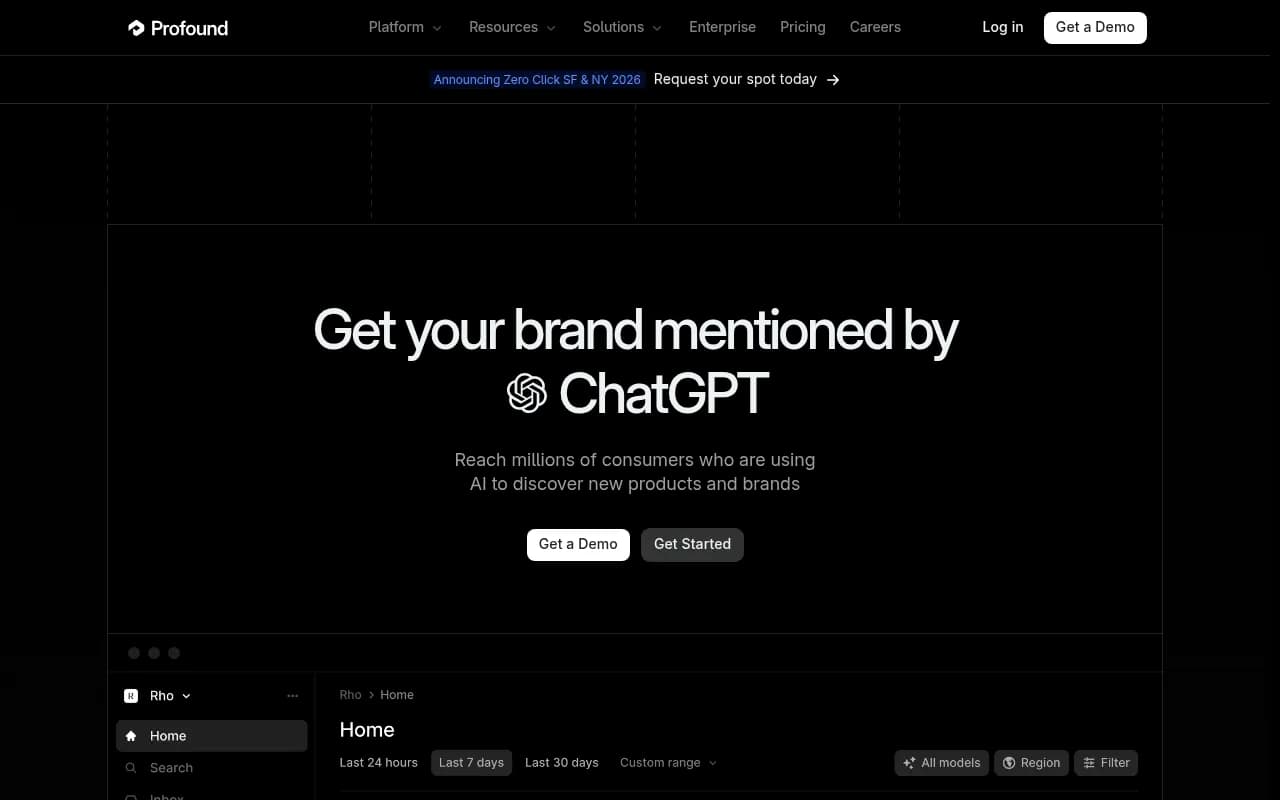
Profound is a serious product. It raised a $180M Series D at a $1.8B valuation on September 15, 2026 and repositioned around an "AI Marketer" agent. That is great for Fortune 500 brands with analyst teams. It is a awkward fit for a 12-person growth team that wants to try something on Tuesday and see results by Friday.
The pricing change makes it worse. The $99 Starter and $399 Growth plans were published on June 11, 2026, still showed up in a September 14 archive, and were withdrawn in mid-September (GEO Toolbox). Now brands get a 7-day trial (50 prompts a day on ChatGPT, Gemini and Google AI Overviews, with no history, exports or API) or a custom Enterprise quote. A competing vendor estimates Enterprise at $2,000 to $5,000+ a month. Treat that number as unverified, since the source sells a rival product.
Agencies still have a published route: $99/mo base plus $399/mo per client workspace, according to ZeroRank. That is no help to an in-house SaaS team.
If you want to look at Profound itself first, its listing is here:
What PLG teams actually need from an AI visibility tool
A product-led company does not sell through a sales call. People find you, try the product, hit an aha moment and upgrade. AI search fits into that funnel at the discovery step, and it behaves differently from classic search.
Promptwatch's data on ChatGPT software prompts (Sep 28 to Oct 4, 2026) shows where the citations go. GitHub gets 1.2% of software citations, learn.microsoft.com 0.98% and G2 0.73%. By source type, docs and help centers earn 2.64% and vendor sites 2.01%, while review sites and analysts get 1.57%. Vendor pages and docs together earn about 3x what review sites do. Details are in Promptwatch's ChatGPT software citation report.
The content-type split matters just as much. In the ChatGPT citation share by content type report, product pages take 22.4% of classified citations and landing pages 16.8%. For commercial prompts like "best X tools", product pages reach 26.0%, landing pages 20.6% and listicles 15.0%. PLG companies tend to have strong product pages, public docs, templates and pricing pages already. That is an advantage, if AI crawlers can actually read them.
So the checklist for a PLG team looks like this:
- Does it show which of your pages get cited, not just whether the brand name appeared?
- Can it prove AI crawlers reach your docs and pricing pages without errors?
- Does it measure signups and conversions from AI referrals?
- Does it help you produce or refresh the content that closes gaps?
- Is the entry price something a growth team can approve without procurement?
Profound alternatives compared
Prices below are vendor-published or competitor-reported, and I found no verified current pricing from the pricing pages of Peec AI, Otterly, AthenaHQ or Promptwatch. Check before you commit.
| Tool | Reported entry price | Strength | Weakness for PLG teams |
|---|---|---|---|
| Promptwatch | Free tier; paid from $95/mo (confirm at promptwatch.com/pricing) | Tracking plus content creation, crawler logs, AI traffic analytics | More to learn than a basic tracker |
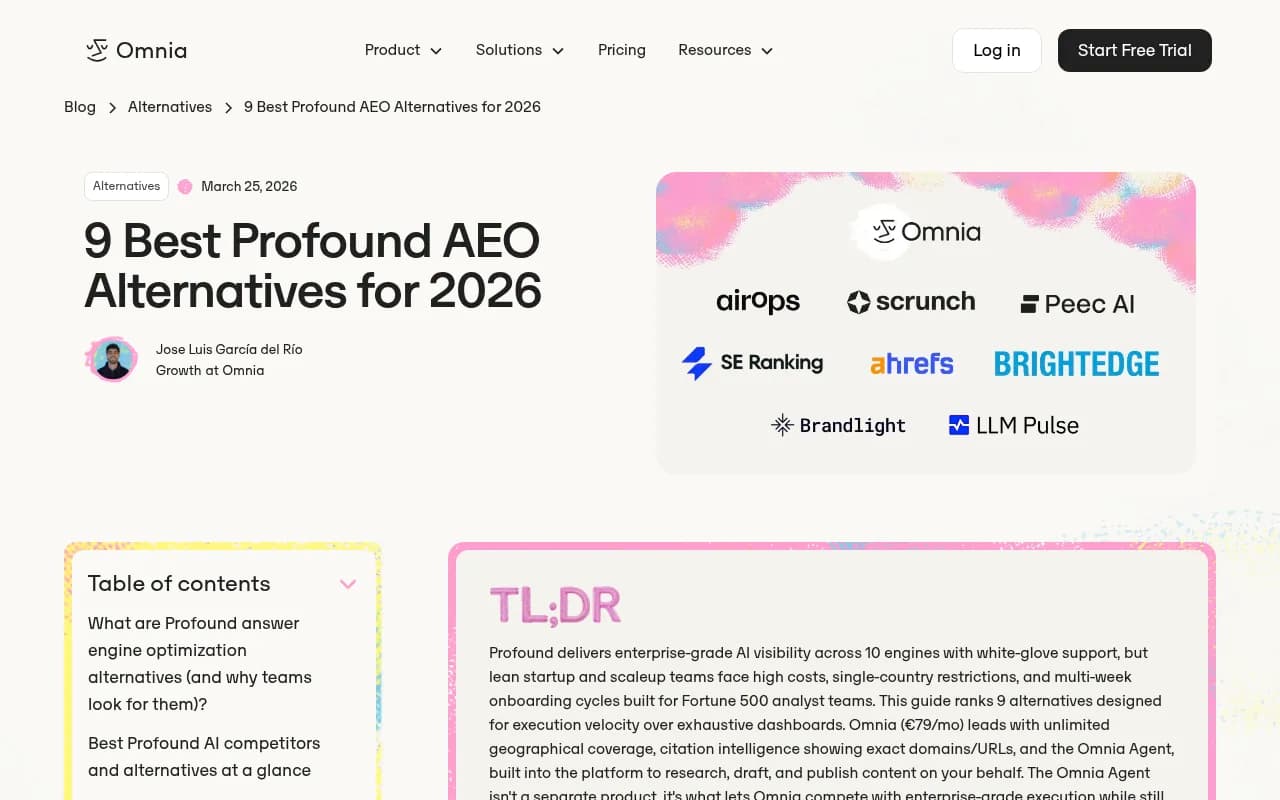
| Omnia | Growth EUR 79/mo | Unlimited geographic coverage, built-in agent | Newer, less proven |
| AthenaHQ | About $295/mo (Omnia) or $400/mo (Maintouch) | Deep reporting, closest to Profound | Sources disagree on price |
| SE Ranking | Growth $279/mo | Familiar SEO suite plus AI visibility | AI features sit beside classic SEO |
| Peec AI | Starter EUR 85/mo | Clean prompt tracking | Monitoring only |
| Otterly | Lite $29/mo | Cheapest way to start | Thin on execution |
| GEO Toolbox | $99/mo ($79 annual) | Simple, 7-day trial | Publisher's own claim |
The alternatives in more detail
Promptwatch
Promptwatch is where I would start for a PLG SaaS team, mostly because it covers the whole loop. It tracks real ChatGPT, Google AI Overviews, Gemini, Perplexity, Copilot and other interfaces, then goes further than a tracker. IP-verified AI crawler logs show whether GPTBot or ClaudeBot reached your docs, visitor analytics connect AI referrals to conversions, and content gap analysis shows which prompts you have no page for. The Content Agent can write and publish to Webflow, Framer or WordPress, then track whether the page got crawled and cited.
That matters for PLG because your growth team can ship a comparison page or use-case page, then see the traffic and signups it brings. Crisp reported 2x higher conversion rates from AI traffic than from traditional channels, and TreeHouse (Pararius) reached about 25% of organic conversions from AI search.
Plans: a free Explore tier (ChatGPT only, 10 prompts), Essential at $95/mo with a 7-day trial, Professional at $245/mo, Business at $579/mo, which adds the automated Content Agent. Confirm at promptwatch.com/pricing. It is also ISO/IEC 27001 certified, which helps when your enterprise customers or your own security team ask questions.

Omnia
Omnia positions itself directly against Profound for lean teams. Its pitch is unlimited geographic and language coverage (Profound's old Growth plan locked you to one country), citation intelligence showing exact domains and URLs, and an agent that drafts and publishes content. At EUR 79/mo it is cheap. The caveat is that I only have the vendor's own comparison article as a source, and it ranks itself first. Run a trial.
AthenaHQ
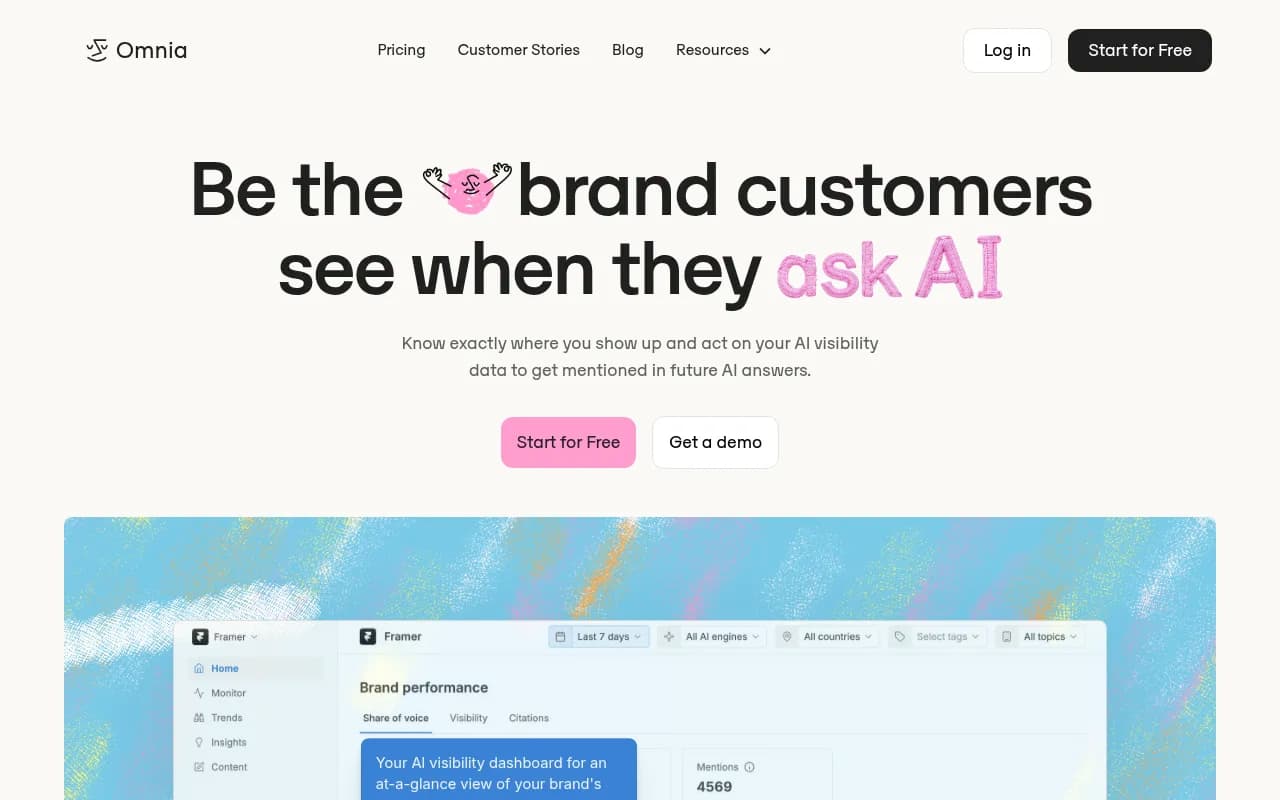
AthenaHQ is the closest analog to Profound's reporting depth without the enterprise sales process. Two sources disagree on price (about $295/mo versus about $400/mo), which tells you to ask for a written quote. Note the catalog has two similarly named entries, and the AI visibility product is the one at athenahq.ai.
SE Ranking and SE Visible
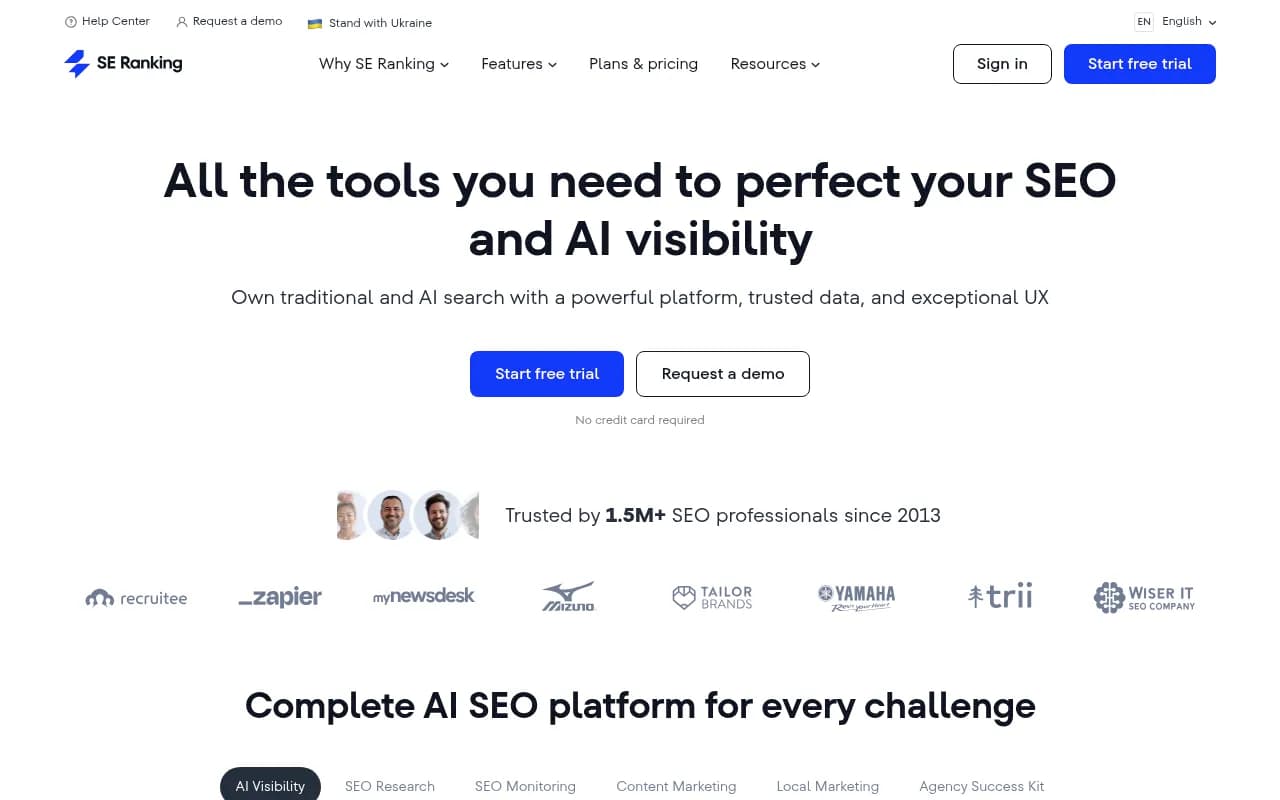
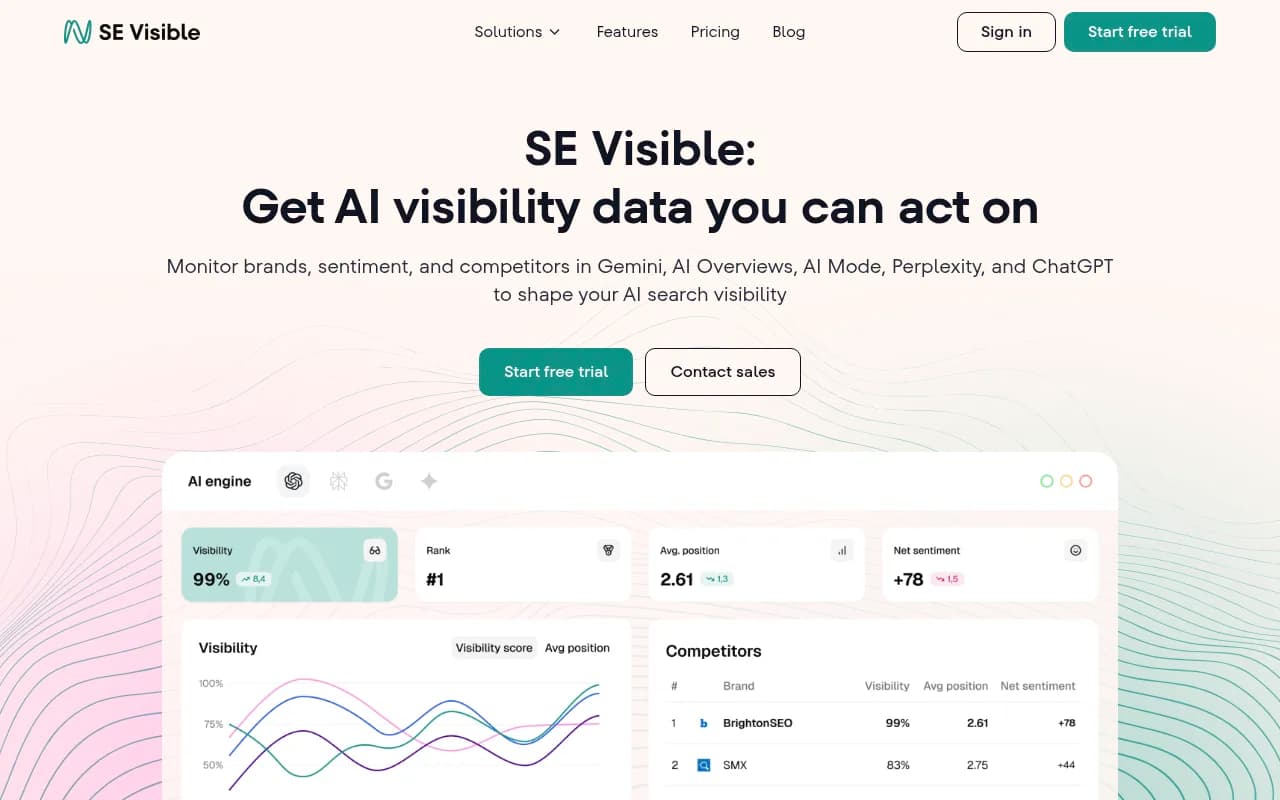
If your team already uses SE Ranking for classic SEO, adding AI visibility there avoids another login. The reported Growth plan is $279/mo. SE Visible is the standalone AI visibility product from the same company.
Peec AI and Otterly
Both are pure monitoring tools. Peec AI Starter is reported at EUR 85/mo and Otterly Lite at $29/mo (as of Sep 28, 2026). They answer "did we show up?" well. They do not write content, read crawler logs or connect AI referrals to signups. If your team has a strong content engine already and just needs a scoreboard, they are fine.


Others worth a look
Some niche options in our catalog are aimed specifically at SaaS: BrandViz.AI (built for B2B SaaS teams), Siftly (YC-backed, B2B SaaS) and AI Peekaboo. I have not verified their pricing or depth, so treat them as shortlist candidates rather than recommendations. For a wider scan, the GEO software directory lists many more.


A PLG-specific playbook
The research I gathered did not include PLG-specific AI visibility tactics, so this section is my own judgment, built on the citation data above.
Make docs and help pages crawlable
Docs and help centers are the top source type for software prompts. Many PLG companies host docs on a subdomain, behind a JavaScript shell or with a robots.txt written years ago. Check what GPTBot, OAI-SearchBot and ClaudeBot actually see. A tool with crawler logs makes this a five-minute check rather than a guess.
Treat pricing and product pages as SEO assets
Product pages (22.4%) and landing pages (16.8%) are the two biggest cited types. Put real specs, plan limits and use cases on them in plain text. Free plan details especially: PLG buyers ask AI assistants "which tools have a free plan?" constantly.
Build comparison and listicle coverage
Comparisons get 5.9% of citations overall and 7.9% on commercial prompts, and listicles 13.6%. Publish honest comparison pages for your category, and earn placement in third-party listicles. Keep G2 and Capterra profiles complete, since both appear in the software citation data.
Measure signups, not mentions
A mention count does not tell you whether AI is a channel. Track AI-referred sessions, signups and activation. Product analytics tools like Usermaven can sit alongside, but a visibility platform with built-in visitor analytics saves stitching.
Questions to ask before you sign
These come from ZeroRank's buying advice and Omnia's decision criteria:
- Which engines, countries, languages and prompts does the quote actually cover? Maximum platform coverage is not what you buy.
- Does the quote spell out credits, exports, integrations and security?
- Do you need SSO or SOC 2, or multiple client workspaces?
- Do you want gap reports, or a tool that produces the content for you?
- Does coverage expand to new markets without a price renegotiation?
Which one should you pick?
- You want to find gaps and fix them, with proof of traffic: Promptwatch.
- You are expanding into several countries on a tight budget: Omnia, after a trial.
- You want Profound-style reporting depth without an enterprise contract: AthenaHQ, with a written quote.
- You already live in an SEO suite: SE Ranking.
- You only need a cheap scoreboard: Otterly or Peec AI.
Start with a free scan or a 7-day trial on two tools, run the same 30 prompts through both, and compare what each tells you to do next. The tool that gives you a clear next action wins. For more category browsing, the AI rank tracking directory is a decent next stop.