Key takeaways
- "Content agent" covers three very different things: a writing assistant that hands you a draft, a workflow tool that routes drafts to your CMS after review, and an agent that plans, writes and publishes on a schedule.
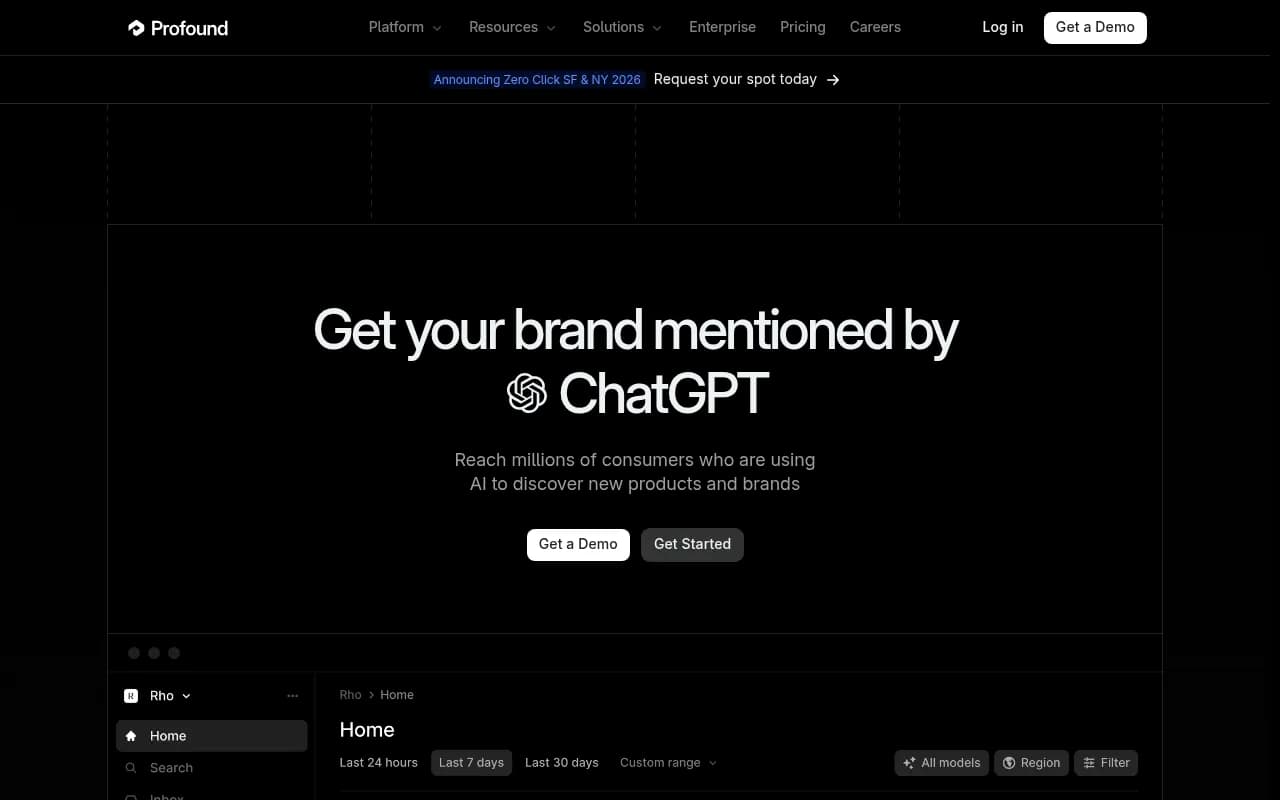
- Profound itself added agents (Aim and Agents, relaunched October 16, 2026), but its own article says a human approves before anything publishes. So "publishes for you" has limits even at the incumbent.
- Promptwatch, AirOps, Gradial GEO, Writesonic and a few smaller tools are the ones worth shortlisting if publishing matters more than dashboards.
- Monitoring-only tools like Peec AI and Otterly are cheaper, but you still do all the writing.
- Check pricing and CMS support on each vendor's own page before buying. Several of the claims floating around come from competitors' blogs.
Why this question exists
AI visibility tracking got commoditized fast. Plenty of tools will tell you that ChatGPT mentions a competitor and not you. Far fewer will do something about it.
That gap is what teams complain about when they look at Profound. One competitor write-up (Maintouch) puts it bluntly: Profound shows where you are invisible, then hands the fix back to you. Humanswith.ai, in an October 28, 2026 piece, frames the real question as "which one closes the loop from an insight to a cited, published page." Both are vendors with something to sell, so read them with that in mind. But the framing is right, and it is the one I use below.
Two caveats before we start. First, Profound is not static. It relaunched Agents on October 16, so older comparison posts (including a Demand-Genius one from April 2026) may describe a product that no longer exists. Second, I have not independently verified every competitor's pricing or CMS integrations, and I flag where that matters.
What "built-in content agent" should mean
I would judge any tool on five questions:
- Does it find the gap from real data (prompts, citations, crawler activity), or just from a keyword list?
- Does it write the page in your brand voice, with a knowledge base or brand kit behind it?
- Can it push to your CMS directly, or do you copy and paste?
- Can it run on a schedule without you prompting it each time?
- After publishing, does it check whether the page got crawled, cited and clicked, and feed that back into the plan?
Most tools nail the first two. Fewer manage the third. Almost none close the fifth step, which is where the actual learning happens.
A note on human approval
Do not treat approval steps as a flaw. Profound's own agents keep a human approval step before publishing, and AirOps routes drafts through human review to the CMS. For regulated or brand-sensitive content that is the right design. The useful distinction is whether approval is optional. A review inbox you can switch off for low-risk content is different from a hard gate on everything.
What the data says your agent should be writing
An agent that publishes the wrong content type at scale is worse than no agent. Two Promptwatch Data reports are useful here.
In Promptwatch's ChatGPT citation share by content type report (Sep 28 to Oct 4, 2026), product pages were the most cited type at 22.4% of classified citations, followed by landing pages at 16.8% and listicles at 13.6%. For commercial prompts, product pages, landing pages, listicles and comparisons add up to almost 70% of citations. Branded prompts lean on product and landing pages, and reviews earn 5.6%, more than three times their overall share.
In Promptwatch's content half-life report, which tracked every page ChatGPT cited on July 6, 2026 for 90 days, news decayed fastest. About half of news pages were gone after 36 days. Landing pages and docs held up best: ChatGPT still cited 78% of landing pages and 76% of docs after 30 days. Product pages, reviews and how-tos had a half-life of roughly 74 to 77 days.
What that means for choosing a tool:
- Be skeptical of agents whose main output is blog posts and news-style content. That format gives short bursts of visibility.
- Prefer agents that handle comparisons, listicles, how-tos and landing pages, and that can refresh existing pages. Refresh workflows matter because product pages and how-tos decay in a couple of months.
The contenders, sorted by how far they go
Tier 1: tracks the gap and runs the publishing loop
Promptwatch is the one I would put first if you want the whole chain in one place. Its Content Agent (Business and Enterprise plans) plans, writes and publishes against your visibility gaps. You set a publishing calendar, monthly budget and publish windows, then either review everything in an inbox (approve, edit, decline) or run it hands-off. It publishes to WordPress, Webflow or Framer, writes in the language of the prompt, and pulls on a Brand Book and Knowledge Base so output stays on-brand.
The part most tools skip is the follow-through. Published pages are tracked through IP-verified AI crawler logs, citations and AI-referred traffic, and underperformers come back as items on the Action Board. Prompt tracking runs on the real interfaces of ChatGPT, Google AI Overviews, AI Mode, Gemini, Perplexity, Copilot and others, not just API calls. Crisp, for example, reported 2x higher conversion from AI traffic than traditional channels and scaled to 5-10 articles a day.
The catch: the automated agent is not on the cheap tiers. Professional ($245/mo) includes 5 AEO articles, and the Content Agent starts at Business ($579/mo). Agency plans do not include it. Confirm at promptwatch.com/pricing.

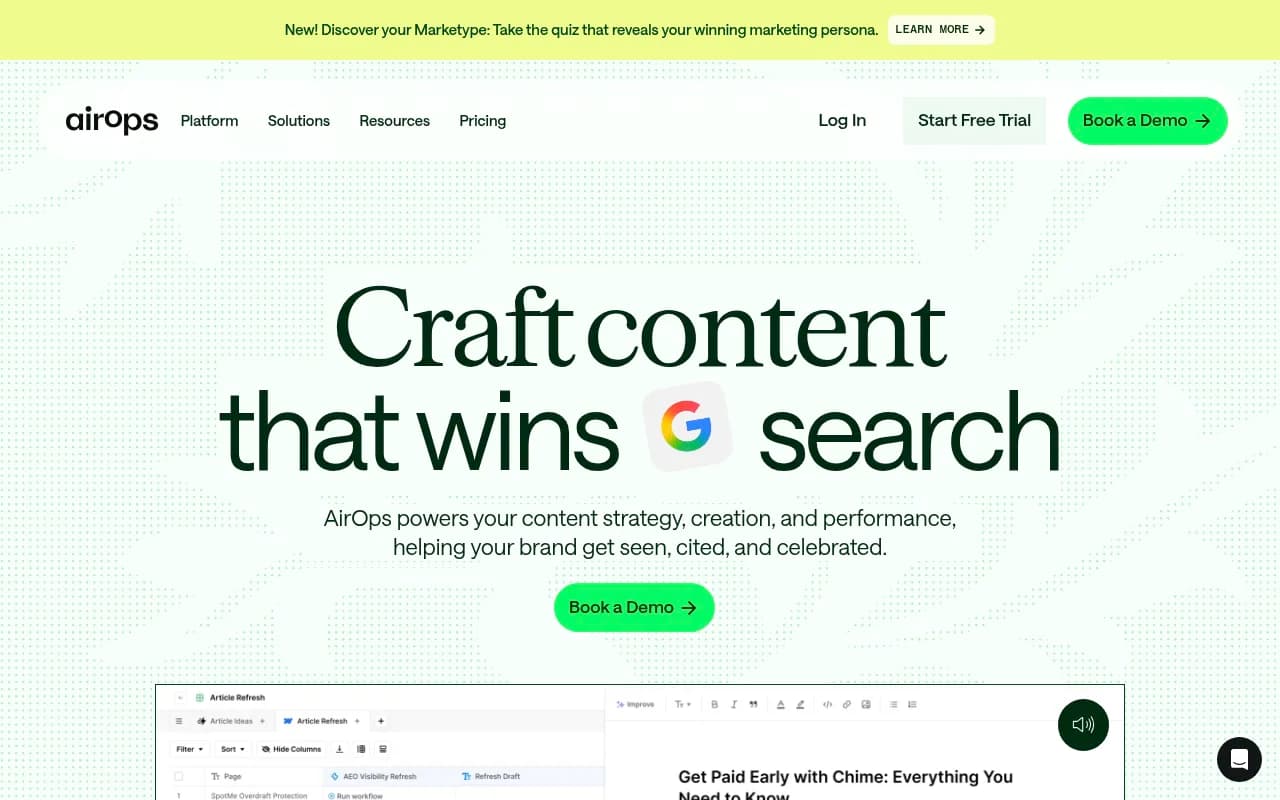
AirOps is the main workflow-first option. Per Profound's comparison, it pairs Quill, Power Agents and Playbooks to produce full drafts and refreshes, routed through human review to the CMS, and it draws on AI visibility, Search Console and engagement data. It suits agencies and enterprises that want governed, brand-controlled production at scale. Maintouch claims AirOps needs developer involvement when workflows change, and a Maintouch table lists its CMS push as agency-configured. Treat both as claims to test in a demo.

Gradial GEO describes itself as agentic GEO that detects visibility gaps and publishes the fix. It is a newer entrant, so ask for real customer examples and the publishing targets it supports.
Tier 2: strong writers, thinner measurement
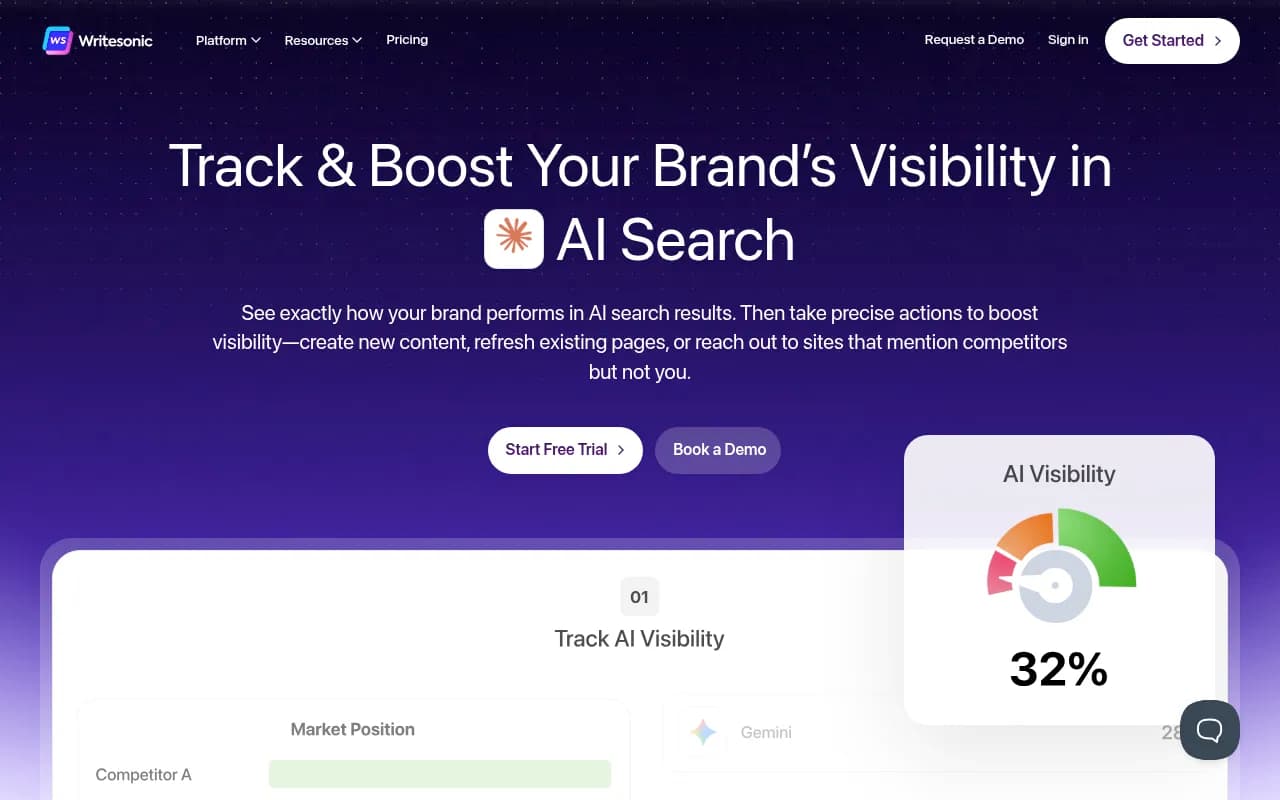
WriteSonic is the volume play. Tim Soulo's roundup calls it cheaper than Profound with significantly more content production capacity, and Profound's comparison describes articles from a 100+ step pipeline. It tracks ChatGPT, Perplexity, AI Overviews, Gemini and Claude. What I would check is how deep the crawler and traffic attribution goes after a page goes live.

AthenaHQ has an Action Center that produces gap analysis and drafts. Profound's table notes the drafts need editing, which matches how most tools in this tier behave. Good if you have editors, less so if you want hands-off.
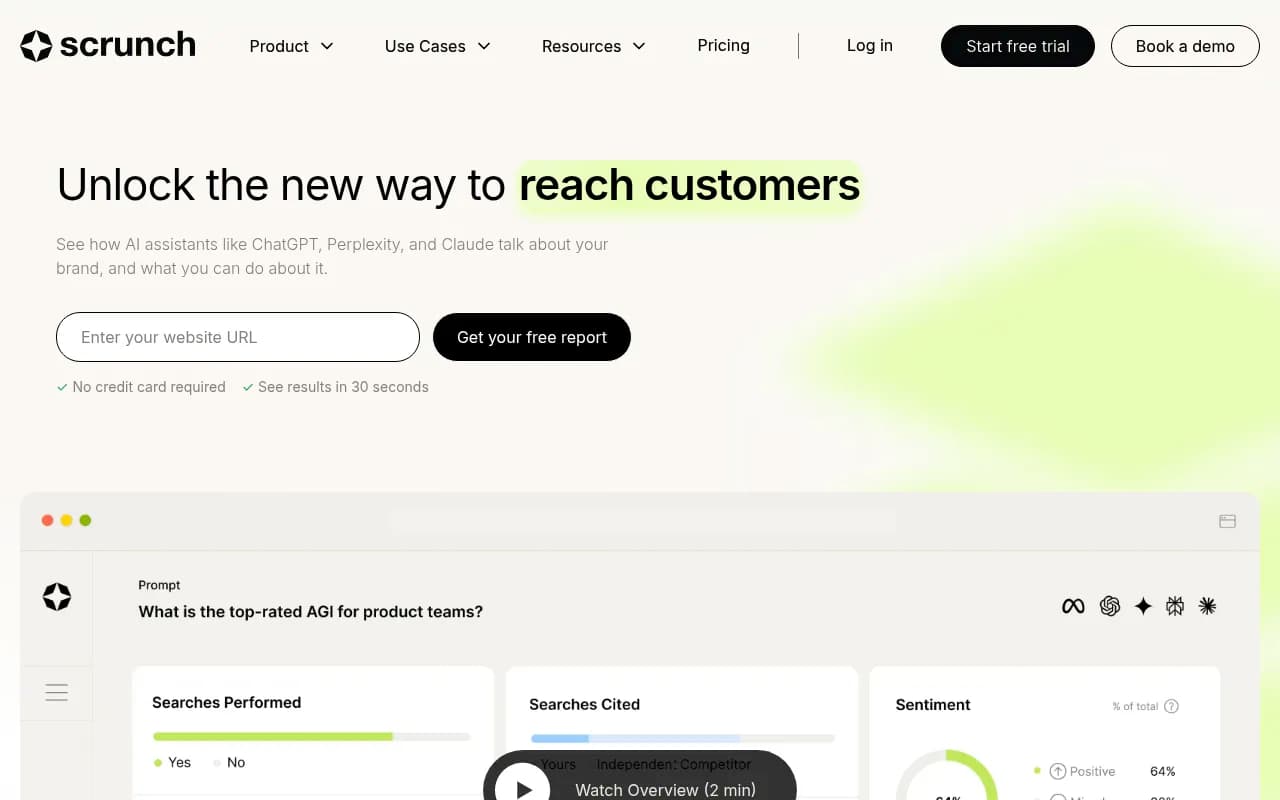
Scrunch is a strong monitoring product that appears in content-execution comparisons. Verify what it actually publishes before counting it as an agent.
Tier 3: SEO suites and agents bolted on
Semrush has an AI Marketing Agent and a Content Toolkit, but Profound's table describes them as two separate tools producing strategy docs and SEO articles. If your team already lives in Semrush, that is convenient. It is not a closed loop.

Ahrefs offers Agent A, which produces calendars, gap analyses and drafted pages delivered into Notion, Linear or Slack. Delivery to a project tool is not the same as publishing to your CMS.
Tier 4: monitoring only


Peec AI and Otterly are cheap and clean for tracking, with Peec listed from $95/month in one competitor's article. Neither writes or publishes. Pick them if you already have a content team and only need measurement.
Side-by-side comparison
| Tool | Finds the gap | Writes content | Publishes to CMS | Scheduled or hands-off | Tracks result after publishing |
|---|---|---|---|---|---|
| Promptwatch | Yes, real-UI prompts, crawler logs | Yes, Content Agent and Content Creation | WordPress, Webflow, Framer | Yes, optional review inbox | Yes, crawls, citations, AI traffic |
| Profound | Yes, Prompt Volumes, Answer Engine Insights | Yes, Aim and Agents | WordPress and Sanity per Maintouch (verify) | Triggers and schedules, human approval before publishing | Yes, Agent Analytics |
| AirOps | Yes | Yes, drafts and refreshes | Agency-configured, per Maintouch (verify) | Human review step | Partly, via Page360 data |
| Writesonic | Yes | Yes, high volume | Check on pricing page | Check | Check |
| AthenaHQ | Yes | Drafts needing edits | Check | No | Limited |
| Semrush | Partly | Yes, separate tools | No, per Maintouch | No | Separate tools |
| Ahrefs | Yes | Drafts via Agent A | Notion, Linear, Slack | No | Limited |
| Peec AI, Otterly | Yes | No | No | No | No |
The cells marked verify or check come from competitor blogs or my own gaps, not vendor confirmation.
About Profound's own agents
In fairness, Profound is not sitting still. After the October 16 relaunch you describe a job to Aim in plain English. Agents run on demand, on a schedule, or on a trigger such as a visibility drop on ChatGPT, a new top-cited page, a competitor post or a Slack message. They connect to Slack, Gmail and Google Drive through MCP connectors, query 16 reasoning models plus Profound's prompt data before drafting, and apply a brand kit. The data foundation (1.9B+ real user prompts) is impressive.
The case for staying is real if your team is enterprise, values the Prompt Volumes data, and is fine with a human approving every output. The case for leaving is pricing and access. Maintouch reports that Profound no longer has a Growth plan, with a 7-day trial limited to ChatGPT, Gemini and AI Overviews, and other engines gated to Enterprise. That is a competitor's claim, so check the pricing page yourself.
How to test an agent before you buy
Run this for a week per tool, using the same brand and the same five prompts:
- Ask it to find the three biggest gaps. Do the gaps come from real prompt data or generic keywords?
- Have it draft one comparison page and one how-to. Compare against the content types above.
- Connect your actual CMS. If the integration needs a developer or a custom build, note the hours.
- Publish one page and watch for AI crawler visits. Tools without crawler logs will make you guess.
- Check whether a weak page comes back as a suggested action, or whether you have to remember to look.
A useful side rule: keep one human in the loop for anything that makes factual claims about pricing, compliance or health. Agents hallucinate details, and a published error stays cited for weeks.
Which one should you pick?
- You want measurement plus publishing plus follow-up in one platform: Promptwatch.
- You are an agency or enterprise with strict brand governance and a content ops team: AirOps, or stay with Profound.
- You need raw article volume at a lower price and can tolerate thinner attribution: Writesonic.
- You have editors and want gap analysis feeding their work: AthenaHQ or Ahrefs.
- You only need tracking: Peec AI or Otterly.
For wider lists, the GEO software directory at bestgeosoftware.com covers more platforms, and agenticseotools.com is a good place to look at agent-first tools specifically.
Bottom line
Almost every platform now claims an agent. Ask three things: where does the page go live, who clicks approve, and what happens to it after it is live. The answers separate tools that publish for you from tools that write you a first draft and wish you luck.