Key takeaways
- Most teams running an AI visibility tracker and a separate writing tool pay for the same job twice: finding gaps in one place and filling them in another, with a human copying data between the two.
- License fees are the smallest part of the bill. Integration upkeep, admin time, training and duplicated data usually add more than the invoice does.
- Profound no longer lists self-serve brand plans on its pricing page (only a Trial and a custom Enterprise tier), so get a written quote before you build any comparison.
- A single platform that connects tracking, gap analysis, content creation and publishing can replace both line items. Promptwatch's published pricing makes that comparison easy: $245/mo on Professional, $579/mo on Business.
- Export your Profound history before you cancel. The Trial has no history or exports, so anything worth keeping has to come from a paid account.
Why this consolidation is worth doing
Here is the pattern I see a lot. A team buys an AI visibility tracker because someone asked "are we showing up in ChatGPT?" Then the tracker reveals gaps. So they buy a content tool to fill the gaps. Then someone has to read the tracker, export a list of prompts, paste it into the writing tool, edit the draft, push it to the CMS, and later go back to the tracker to see if anything changed.
That loop is the real cost. Two subscriptions are the visible part.
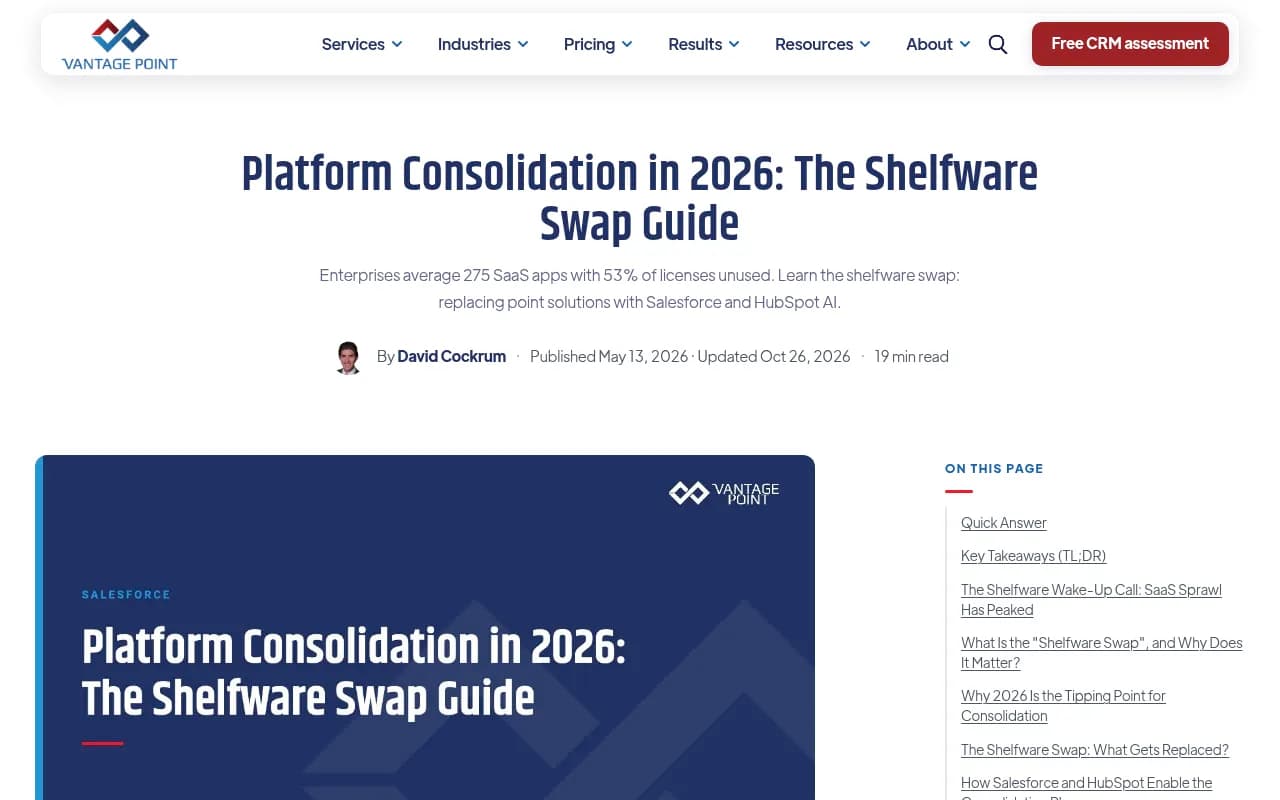
SaaS sprawl research backs this up. Vantage Point's 2026 consolidation guide says the average enterprise runs roughly 275 SaaS apps and 53% of licenses go unused in a typical month. Your two tools are a tiny slice of that, but they are the slice you can fix in an afternoon of spreadsheet work.
Citation slots make the case sharper. According to Promptwatch's average sources per response data (page dated September 2025, daily-updated), ChatGPT cites about 5 sources per web-search answer, while Google AI Overviews and Perplexity cite roughly 10. You are fighting for one of a handful of slots. A tool that only tells you that you lost the slot is half the job.
Step 1: Calculate the true cost of both tools
The formula from Vantage Point is simple enough to put in a spreadsheet:
True annual cost = license fees
                 + integration maintenance ($5K-$25K per app per year)
                 + admin time (hours x loaded rate)
                 + training (onboarding per user)
                 + security and compliance overhead
                 + data silo costs (duplicated, inconsistent data)
Their example: a $15K/year tool that needs $8K of integration upkeep, $5K of admin time and causes $10K of downstream errors really costs $38K a year. The license was 40% of the bill.
Apply it to each tool separately.
Your AI visibility tracker
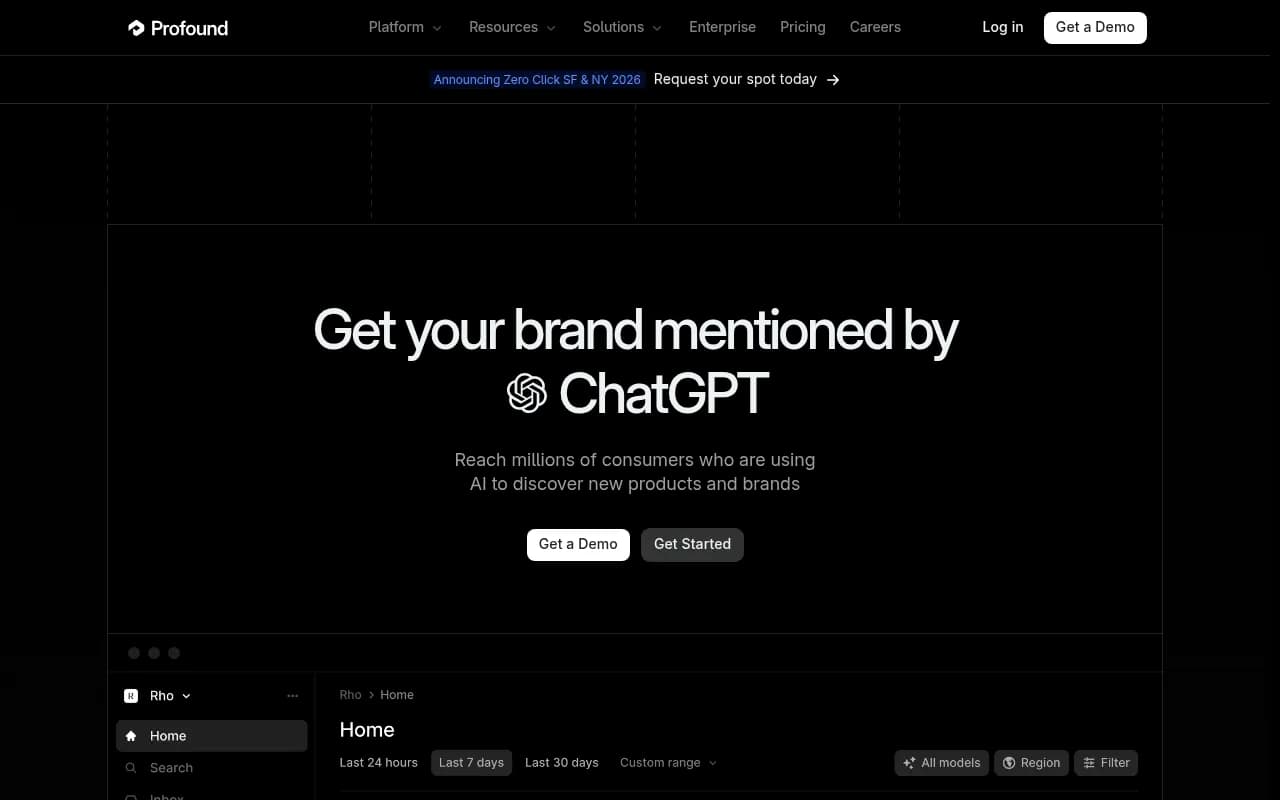
For Profound, the license line is the hard part. The official pricing page lists a free Trial and a custom-priced Enterprise plan. Nothing else. Some older write-ups and a Reddit thread still quote "Starter $99/mo" and "Growth $399/mo" tiers, but the official page no longer shows them, so treat those numbers as outdated.
What Enterprise includes, per the pricing page: daily tracking with a custom prompt count, up to nine answer engines, ChatGPT Shopping, CSV and JSON exports, API access, full history, SSO/SAML and SOC 2, and support from email up to a dedicated specialist with a 24-hour SLA. Agents run on credits, and extra credit thresholds need an Enterprise package.
The agency route is different. One third-party breakdown puts the Agency Growth plan at $99/month plus $399/month per client workspace, so $498/month for the base plus one full client. The $99 on its own only covers prospecting workspaces.
So: ask for a quote, get it in writing, and include credit overage terms.
Your content tool
I don't have a trustworthy benchmark for what a typical content tool costs, because it ranges from a few dozen dollars a month for a writing assistant to several hundred for an SEO content platform. Use your own invoice. Then add the hidden part: how many hours a month does someone spend moving prompt lists, gaps and briefs from the tracker into the writer?
Common candidates here are Jasper, Surfer SEO, Clearscope and Frase.

Note that Profound has started calling itself an "AI Marketer" platform with agents for research, writing and workflows. If you are already paying for those agent credits, you may be paying for content generation twice without knowing it. Check the usage.
Worked example
These numbers are illustrative only. Use yours.
| Line item | Tracker | Content tool | Combined |
|---|---|---|---|
| License (annual) | Quote required | Your invoice | Sum |
| Integration upkeep | Exports, API glue | CMS connectors | Often $5K+ |
| Admin time | Prompt list upkeep | Brief and draft handoffs | Hours x loaded rate |
| Training | Per new user | Per new user | Doubled |
| Data silo cost | Gaps in one tool, drafts in another | No link to citation results | Hard to see, real |
The last row is the sneaky one. When the writer has no view of which prompts you are losing, the content gets written from keyword instinct. That is the cost nobody puts on an invoice.
Step 2: Decide what a replacement must actually do
PDQ's consolidation guide makes a point worth stealing: "Can this platform technically do part of what that one does?" is the wrong question. The better one is whether it can replace the capability without creating a meaningful gap. If it would, keep the specialized tool.
For this swap, write down the jobs your two tools do today. Typically:
- Track brand mentions and citations across AI engines, daily
- Show which prompts you lose and to whom
- Show where AI finds content (which pages, Reddit, YouTube)
- Produce content aimed at those gaps
- Publish it
- Tell you whether it worked
Jobs 1 to 3 are where Profound is strong. Jobs 4 and 5 are your content tool. Job 6 is the one that falls between both tools and usually gets done by hand, or not at all.
Step 3: Compare the one-platform options
There are really three shapes of replacement.
| Option | Tracking depth | Content creation | Publishing and measurement loop | Fit |
|---|---|---|---|---|
| Promptwatch | Real-UI tracking of 10+ AI surfaces, prompt volumes, crawler logs, Reddit/YouTube/LinkedIn | Content Agent, content gap analysis, Content Refresh | CMS publishing to WordPress, Webflow, Framer; page-level crawl, citation and traffic tracking | One platform for monitor, write, publish, verify |
| Profound (Enterprise) | Up to 9 answer engines, ChatGPT Shopping, full history | Credit-based Agents | Custom; confirm in your quote | Enterprise buyers who want SOC 2 and a dedicated specialist |
| Tracker plus content tool (status quo) | Whatever the tracker covers | Whatever the writer does | Manual | Teams where the handoff is rare |
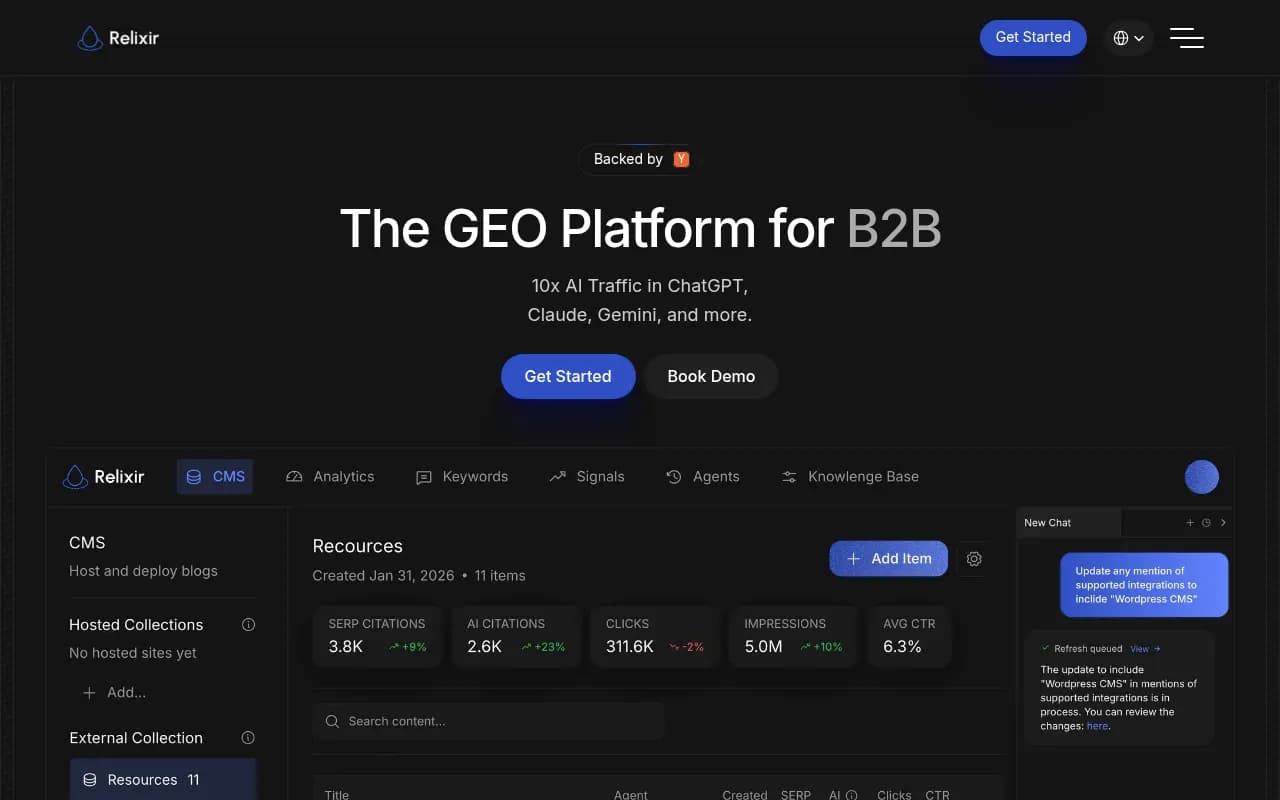
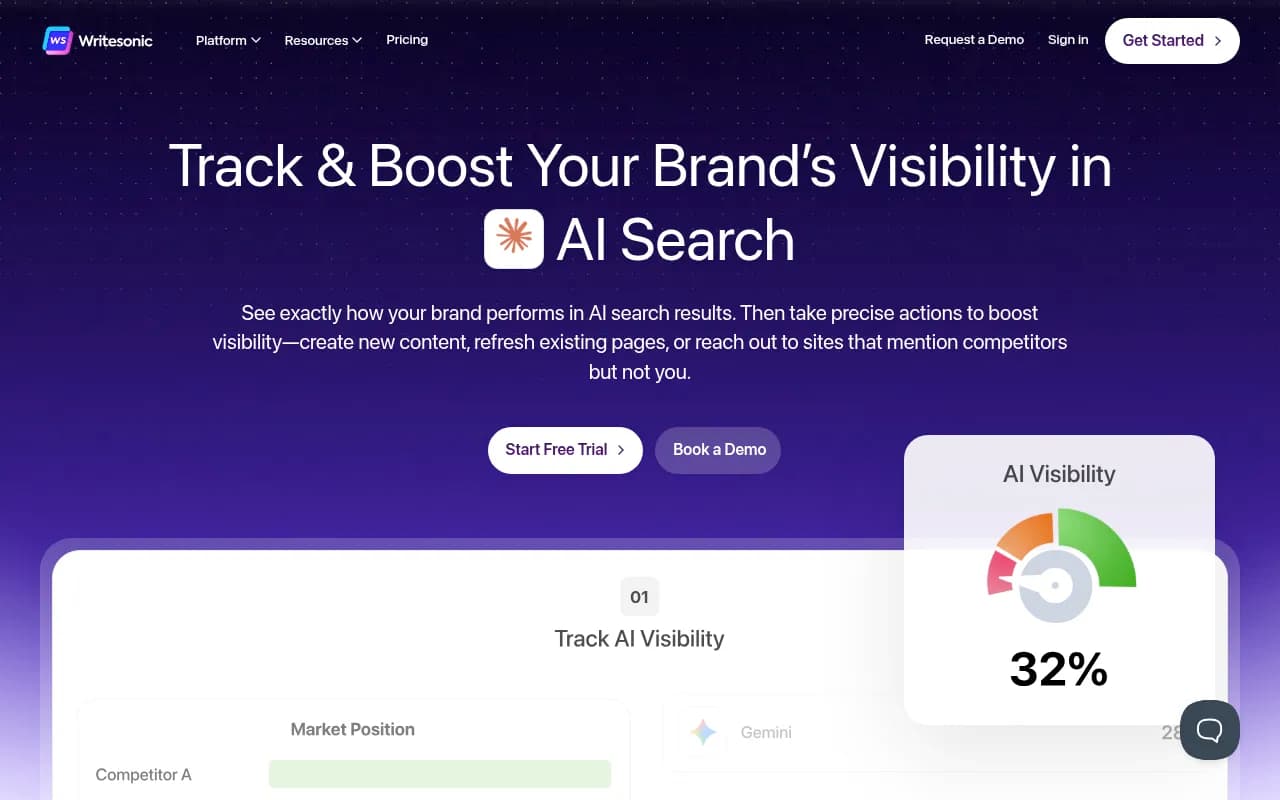
A few other all-in-one candidates in the directory are worth a look if Promptwatch does not fit: Relixir, Writesonic, Sight AI and Gradial GEO all pair visibility tracking with some form of content generation. The GEO software directory at bestgeosoftware.com lets you compare more of them side by side.
Why Promptwatch is the one I would test first
Promptwatch is the closest match to the "one platform" idea because it covers the whole loop, not only the tracking half. Its Content Agent plans, writes and publishes against your visibility gaps, with a review inbox if you want a human in the way, and then tracks each published page through crawls, citations and AI-referred traffic. Underperformers come back as items on the Action Board.

A few things that matter specifically for a Profound migration:
- It monitors the real user interfaces of ChatGPT, Google AI Overviews, AI Mode, Copilot, Gemini, Perplexity, Alexa and Meta AI per country and language, with API models like Claude, DeepSeek and Mistral tracked alongside.
- IP-verified AI crawler logs show which bots hit which pages and where they hit errors. That is the "why" behind the visibility score, and it is the piece most monitoring-only tools skip.
- It includes Reddit, YouTube and LinkedIn citation reports, ChatGPT Shopping and an Ads Radar for sponsored placements in AI answers.
- It is ISO/IEC 27001 certified and GDPR compliant, which matters if procurement is why you were on Profound Enterprise in the first place. Profound lists SOC 2; confirm which attestation your security team requires.
- Customers include Typeform, Yelp and Shutterstock, and it holds a 4.7/5 rating on G2.
One honest caveat: if you rely on Profound's dedicated specialist and a 24-hour SLA, check Promptwatch's Enterprise support terms before you assume parity. And Profound's up-to-nine answer engines largely overlaps what Promptwatch tracks, but run your own prompt set through a trial to confirm the engines you care about are covered.
Step 4: Price the swap
Promptwatch publishes its prices, so this half of the spreadsheet is easy. Confirm everything at promptwatch.com/pricing before you commit.
| Plan | Price | What is relevant to this swap |
|---|---|---|
| Essential | $95/mo | 1 project, 50 prompts, 6,000 responses, all models, Agent Chat, MCP and API. Tracking only, no article writing. |
| Professional | $245/mo | 2 projects, 150 prompts, 18,000 responses, content writing and refresh, Knowledge Base, 25M crawler logs |
| Business | $579/mo | 5 projects, 350 prompts, 42,000 responses, automated Content Agent, state and city tracking, Shopping Insights, Ads Radar, audit log |
| Enterprise | Custom | SSO, managed content workflows, dedicated success manager |
Annual billing gives 12 months for the price of 10. Essential and Professional have a 7-day free trial. Some third-party reviews list slightly different prices ($99, $249) and article allotments. I would use the official page and verify the article counts on your plan with sales, since I could not confirm them from the pricing page.
Now plug it in. For a team that needs tracking plus a steady stream of articles, the realistic comparison is Professional or Business against your Profound quote plus your content tool invoice plus the hours spent between them. Run it through the ROI formula:
Year 1 ROI = (eliminated licenses
            + eliminated integration costs
            + reduced admin time
            + productivity gains from unified data)
           / (migration costs + training)
Migration costs here are mostly one-off: rebuilding your prompt monitors, setting up crawler log integration and the CMS connection, and a few hours of training. They are small next to a recurring enterprise license, but count them anyway.
If you want to see what the writing side costs relative to its output, the Crisp case is a useful reference point: they reported 2x higher conversion rates from AI traffic than traditional channels and scaled to 5 to 10 articles a day on the platform. That is one customer's result, not a promise, but it shows what the content loop looks like when it is not a manual handoff.
Step 5: Migrate without losing your history
This is where consolidation projects quietly fail. Here is the order I would run it in.
Export first, cancel last
The Profound Trial has no history, exports or API. Only Enterprise gives you CSV and JSON exports, API access and full history. So before you give notice:
- Export every prompt, response, citation and competitor set you might want to refer back to.
- Save your monthly visibility and share-of-voice figures as a baseline. You will want them to prove the new setup is not worse.
- Note your credit usage and which Agents you actually ran.
I could not find documentation on how easy a Profound history migration is in practice, so ask your account rep what format the export comes in before you rely on it.
Run both for one cycle
Track the same prompt set in both for 30 days. Slight differences in scores are normal because platforms run prompts differently and models are not deterministic. What you want to see is the same direction and the same top competitors, not identical numbers.
Rebuild monitors and bring over the prompt list
Promptwatch's Prompt Explorer suggests prompts from Search Console, ranking keywords and People Also Ask, and gives monthly volumes and difficulty scores, so you can prune your old list rather than copy it blindly. Most prompt lists are bloated. A migration is a good excuse to cut the ones nobody looks at.
Connect the pieces that replace the old glue
- Crawler logs through Cloudflare, Vercel, Netlify, Fastly, CloudFront or the WordPress plugin
- Google Search Console and Bing Webmaster Tools for the per-page overlay
- CMS publishing to WordPress, Webflow or Framer
- Slack for the weekly briefing
Put your Brand Book and Knowledge Base in early. That is what keeps generated content on-brand, and it is the thing that replaces the style settings in your old writing tool.
Cancel the content tool in stages
Move one content type first, say refreshes of existing pages, then net-new articles. Keep the old subscription until a handful of published pieces have been crawled and cited. Tracking that through crawler logs and page-level citations is the whole point of having it in one place.
Step 6: Prove the savings
Zylo's consolidation guide lists "realized cost savings" as the first measure of success. Add three more for this specific swap:
- Hours per month spent moving data between tools (should drop close to zero)
- Time from spotting a gap to publishing a page (days becoming hours)
- Pages published that earned a citation within 30 and 60 days
The third one is the metric that justifies the whole thing. Promptwatch's data on content longevity shows why the measurement loop matters: in its ChatGPT content half-life report, of the pages cited on July 6, 2026, landing pages and docs stayed cited longest while news lost half its pages within 36 days. Different content types decay at different speeds, so you need to see which of your pages stick.
Also read the content type citation breakdown: product pages were the most cited type in ChatGPT at 22.4% of citations from September 28 to October 4, 2026. If your writing tool has been producing mostly blog listicles, that is worth knowing.
The Bloomz guide, written for school districts, has a tip that transfers well: present the result as recovered capacity ("this frees up a day a week") rather than an abstract percentage. Finance teams respond to that.
When you should not consolidate
I would not push every team to do this.
- If your content is produced by a large editorial team with its own strict workflow, the writing tool is not the problem, and a platform's built-in writer may feel like a downgrade. Keep the tracker-to-editorial handoff and just consolidate the tracking.
- If you have signed a multi-year Profound Enterprise contract, run the numbers on early termination before anything else.
- If your security review requires a specific attestation such as SOC 2, confirm before you switch.
- If you only track a few dozen prompts and publish four articles a quarter, the savings will be small. Keep it simple.
PDQ's rule applies here: if removing the specialized tool leaves a real gap, keep it.
A short decision checklist
- Get a written Profound quote including credit overage terms.
- Pull your content tool invoice and the hours spent bridging the two.
- Run the TCO formula for both and add them.
- Trial Promptwatch's Professional or Business plan against your real prompts.
- Export Profound history before cancelling.
- Run both for one 30-day cycle.
- Cancel the content tool first, then the tracker, once published pages are earning citations.
If you are also weighing a wider set of options, the AI rank tracking directory at ai-rank-tools.com is a quick way to see what else is out there. And if you would rather have someone else run the GEO program end to end, 1001 SEO Media is the agency that publishes this site and works with Promptwatch for AI visibility.
Start with the spreadsheet. If the true cost of the two-tool setup is not at least a few thousand dollars a year more than the single platform, stay where you are. In most cases I have seen, it is.