Key takeaways
- Most GEO platforms in 2026 are monitoring dashboards — they show you visibility scores but don't help you improve them.
- The meaningful divide is between "trackers" (tools that report on AI citations) and "optimizers" (tools that help you close the gaps with content, crawl data, and actionable workflows).
- Choosing the wrong category wastes budget: a tracker is fine for awareness, but if your goal is to actually rank in ChatGPT or Perplexity, you need a platform that goes further.
- Promptwatch is the only platform rated as a "Leader" across all evaluation categories in a 2026 comparison of 12 GEO tools, largely because it closes the loop from gap detection to content creation to result tracking.
- Platform selection should be driven by your team's actual workflow: monitoring-only tools work for brand teams that just need reporting; optimization platforms work for teams that need to move the needle.
The problem with most GEO tools right now
Here's something worth sitting with: the category of tools designed to help brands appear in AI search results is itself largely invisible to AI search engines. Ask ChatGPT or Perplexity to recommend GEO tools and you'll mostly get geographic information systems back. That's a real irony, and it tells you something about how early this market still is.
But the market is moving fast. In 2024, "GEO" (Generative Engine Optimization) barely existed as a recognized discipline. By mid-2026, there are dozens of platforms competing for the same budget line, and most of them look similar from the outside: dashboards, visibility scores, prompt tracking, competitor comparisons. The problem is that most of them stop there.
Monitoring is useful. Knowing that your competitor appears in 68% of ChatGPT responses about your category while you appear in 12% is genuinely valuable data. But data without a path to action is just expensive anxiety. And that's the core divide in this market right now: tools that tell you what's happening versus tools that help you change it.
This guide walks through both categories honestly, explains what to look for, and gives you a practical comparison of the major platforms.
What "tracking" actually means in GEO
Before comparing tools, it's worth being precise about what these platforms are actually measuring.
Traditional SEO rank tracking is relatively simple: your page either ranks in position 1-10 for a keyword or it doesn't. GEO tracking is messier. AI models don't have stable "positions." They generate answers dynamically, and whether your brand gets cited depends on a combination of factors: what content exists on your site, what third-party sources mention you, how well your content answers the specific question being asked, and even which model version is running.
So when a GEO platform reports your "visibility score," it's typically doing something like this:
- Running a set of prompts across one or more AI models
- Checking whether your brand appears in the response
- Calculating a percentage or score based on how often you appear
- Comparing that to competitors running the same prompts
That's useful as a baseline. But it leaves a lot of questions unanswered: Why aren't you appearing? Which specific pages are being cited (or not)? Are AI crawlers even visiting your site? What content would close the gap?
The platforms that answer those follow-up questions are the ones worth paying for.
The tracker vs. optimizer divide
Think of the market in two broad buckets.
Trackers give you visibility data. They run prompts, score your brand's presence, show you competitor comparisons, and let you export reports. They're fine for brand awareness monitoring and stakeholder reporting. They're not built to help you improve.
Optimizers do all of that, plus they help you understand why you're not appearing and what to do about it. That means content gap analysis, AI crawler logs, content generation tools, page-level citation tracking, and workflows that connect data to action.
Most platforms in 2026 are trackers. A smaller number are genuine optimizers. The price difference between them is real, but so is the ROI difference if your goal is actually improving AI search visibility rather than just measuring it.
Platform comparison: the major players
Here's how the main platforms stack up across the dimensions that actually matter for teams trying to improve AI visibility, not just report on it.
| Platform | Monitoring | Content gap analysis | Content generation | Crawler logs | Prompt volume data | Best for |
|---|---|---|---|---|---|---|
| Promptwatch | Yes | Yes | Yes (Content Agents) | Yes | Yes | Full optimization cycle |
| Profound | Yes | Partial | No | No | Limited | Enterprise monitoring |
| Scrunch | Yes | Partial | No | No | No | Enterprise reporting |
| AthenaHQ | Yes | No | No | No | No | Brand monitoring |
| Otterly.AI | Yes | No | No | No | No | Budget tracking |
| Peec.ai | Yes | No | No | No | No | Basic monitoring |
| Search Party | Yes | No | No | No | No | Agency reporting |
| Ahrefs Brand Radar | Partial | No | No | No | No | SEO teams |
| Semrush AI Visibility | Yes | No | Partial (ContentShake) | No | No | Existing Semrush users |
Let's go through the main contenders.
Promptwatch
Promptwatch is the most complete platform in this category right now, and the only one that genuinely closes the loop between finding gaps and fixing them.

The core workflow is: identify which prompts your competitors appear for but you don't (Answer Gap Analysis), generate content specifically engineered to fill those gaps (Content Agents), then track whether that content starts getting cited. That cycle -- find gaps, create content, measure results -- is what separates it from every monitoring-only tool in the market.
A few things stand out beyond the basics. The AI Crawler Logs feature shows you in real time which AI crawlers (ChatGPT, Claude, Perplexity, etc.) are hitting your site, which pages they're reading, what errors they encounter, and when a crawled page moves to an actual citation. Most competitors don't have this at all. It's the difference between guessing why you're not appearing and actually knowing.
The prompt intelligence layer is also genuinely useful: volume estimates and difficulty scores for each prompt, plus query fan-outs that show how one question branches into sub-queries. That lets you prioritize high-value, winnable prompts instead of spreading effort thin.
Promptwatch tracks 10 AI models (ChatGPT, Perplexity, Google AI Overviews, Google AI Mode, Claude, Gemini, Meta/Llama, DeepSeek, Grok, Mistral, Copilot), monitors Reddit and YouTube as citation sources, and includes ChatGPT Shopping tracking for brands selling products. The multi-language and multi-region support with customizable personas is also more developed than most competitors.
Pricing starts at $99/month (Essential: 1 site, 50 prompts, 5 articles), $249/month (Professional: 2 sites, 150 prompts, crawler logs), and $579/month (Business: 5 sites, 350 prompts). Agency and enterprise pricing is custom. There's a free trial.
Profound
Profound is a solid enterprise monitoring platform with genuine depth on the tracking side. It covers multiple AI models, has reasonable competitor comparison features, and is built for larger organizations that need structured reporting.
Where it falls short is the action side. There's no content generation, no AI crawler logs, and the content gap analysis is limited compared to what Promptwatch offers. It's a good choice for enterprise teams that primarily need visibility data and have separate content teams to act on it. If you need the full optimization loop in one platform, it's not the right fit.
Scrunch
Scrunch positions itself as the most complete AEO/GEO platform for enterprise, and it does have a reasonably strong feature set on the monitoring and auditing side.
The limitation is similar to Profound: strong on reporting, weaker on helping you actually improve. No content generation, no crawler logs, no prompt volume data. It's a credible choice for enterprise teams that want structured monitoring and can live without the optimization layer.
AthenaHQ
AthenaHQ is a monitoring-focused platform that tracks brand visibility across multiple AI search engines. It's clean and functional for what it does.
But it's firmly in the tracker category. No content gap analysis, no content generation, no crawler logs. If your only need is brand monitoring and competitive benchmarking, it works. If you want to actually move your visibility scores, you'll hit a wall quickly.
Otterly.AI
Otterly.AI is one of the more affordable options in the space, and it's fine as an entry-level tracker.

It covers basic AI visibility monitoring across a handful of models, but it lacks depth on almost every dimension that matters for optimization: no crawler logs, no visitor analytics, no content generation, no prompt volume data. It's a reasonable starting point for small teams that just want to know whether they're appearing in AI results, but it's not a platform you'd use to actually improve visibility.
Peec.ai
Similar story to Otterly. Peec.ai does basic monitoring without the optimization layer.

It's worth mentioning because it comes up frequently in comparison searches, but the feature set is limited. Monitoring-only, no content tools, no crawler data.
Semrush AI Visibility
Semrush has added AI visibility tracking to its existing platform, which is genuinely useful if you're already a Semrush customer.
The advantage is zero onboarding friction -- you're already in the platform, the data sits alongside your traditional SEO metrics, and ContentShake AI gives you some content generation capability. The limitation is that the GEO features feel like an add-on rather than a core product. Fixed prompts, no screenshot capture, no auto query generation, no crawler logs. For teams that live in Semrush and want basic AI visibility data without switching platforms, it's a reasonable option. For teams that want serious GEO optimization, it's not built for that.
Ahrefs Brand Radar
Ahrefs Brand Radar is the equivalent offering from Ahrefs -- AI visibility monitoring bolted onto an existing SEO platform.
The same tradeoffs apply: useful if you're already in Ahrefs, limited if you want optimization depth. Fixed prompts, no AI traffic attribution, no content generation. Good for SEO teams that want a basic read on AI visibility without adding another tool.
What to actually look for when evaluating a GEO platform
Beyond the feature checklist, here are the questions worth asking before signing up for anything.
Does it track real user interfaces or just APIs?
This matters more than most vendors admit. AI models can behave differently in their user-facing products versus their APIs. A platform that only queries APIs may miss citations, shopping recommendations, or answer formats that real users actually see. Promptwatch specifically tracks how AI search engines behave in real user interfaces, which is why its data can differ from API-only tools.
Can it tell you why you're not appearing?
Visibility scores are easy to generate. The harder question is causation. Is it a content gap? A crawling issue? A competitor outranking you on a specific topic? Platforms with crawler logs and content gap analysis can answer this. Monitoring-only platforms can't.
Does it connect visibility to revenue?
Traffic attribution -- connecting AI citations to actual site visits and conversions -- is still rare in this category. If you need to justify GEO investment to a CFO, you need this. Most trackers don't have it.
How many models does it cover, and how often does it update?
The AI search landscape is changing fast. A platform that only covers two or three models, or that updates visibility data weekly, will give you an incomplete and lagging picture. Look for broad model coverage and frequent data refresh.
What does the content generation actually produce?
Some platforms generate generic AI content. Others generate content grounded in real prompt data, citation analysis, competitor research, and brand guidelines. The difference in output quality is significant. Ask to see examples before committing.
The case for starting with a tracker (and when to upgrade)
Not every team needs a full optimization platform on day one. If you're in the early stages of understanding your AI search presence -- you don't know which prompts matter for your category, you haven't benchmarked against competitors, you don't have internal buy-in yet -- a lighter monitoring tool can help you build the case.
The moment to upgrade is when you have the data but no path to act on it. If you're looking at a dashboard that tells you your visibility score is 23% and your competitor's is 61%, and the platform has nothing to say about what to do next, you've outgrown it.
That's when the optimization layer -- content gap analysis, crawler logs, content generation, page-level tracking -- starts paying for itself.
Specialized tools worth knowing about
Beyond the main platforms, a few more focused tools are worth mentioning depending on your specific needs.
For teams that want lightweight AI visibility tracking without committing to a full platform:
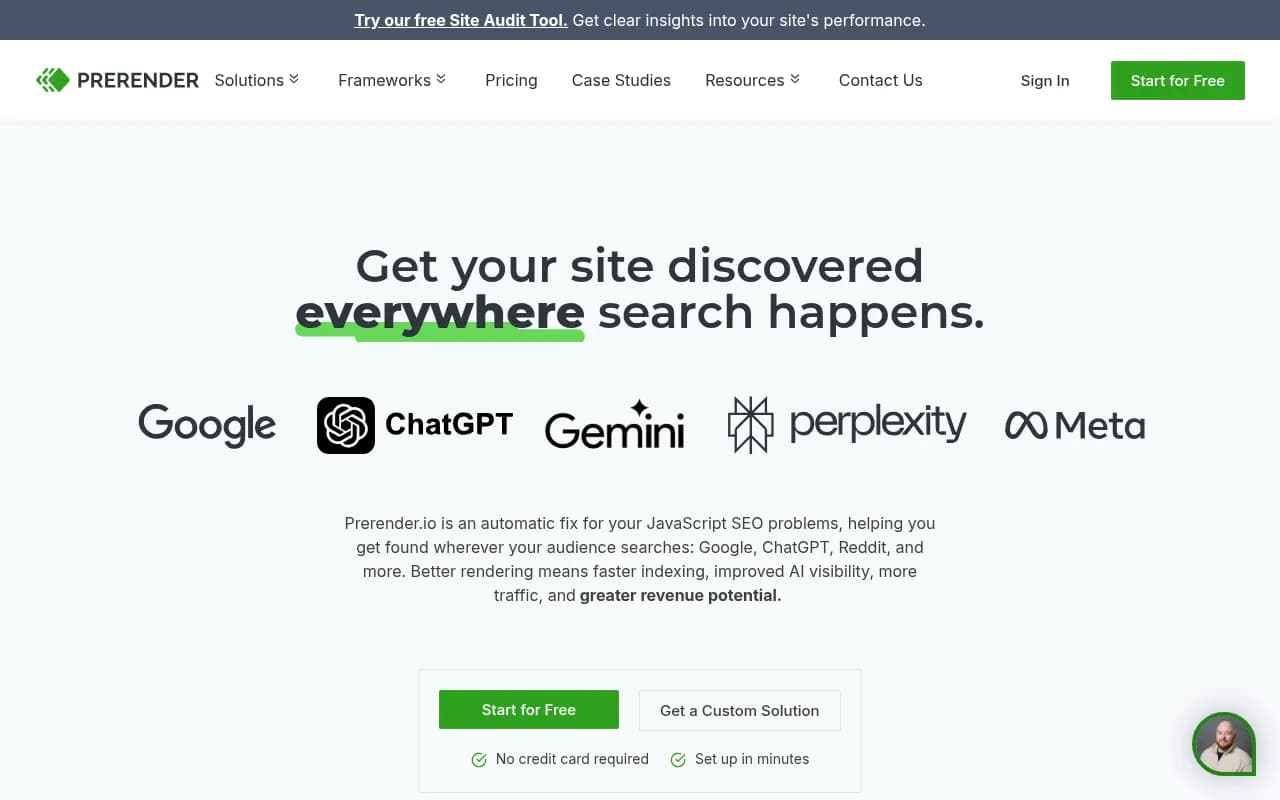
For teams focused on technical GEO -- making sure AI crawlers can actually access and index your content:
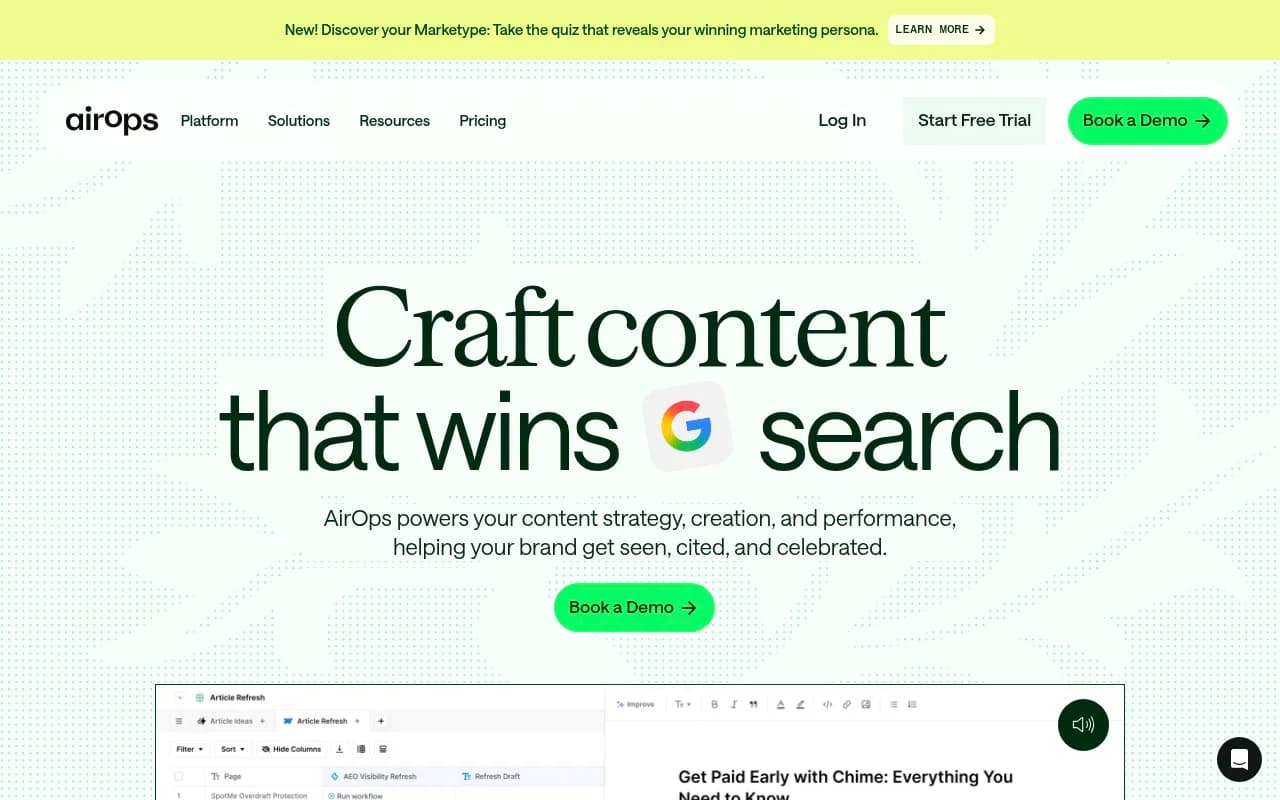
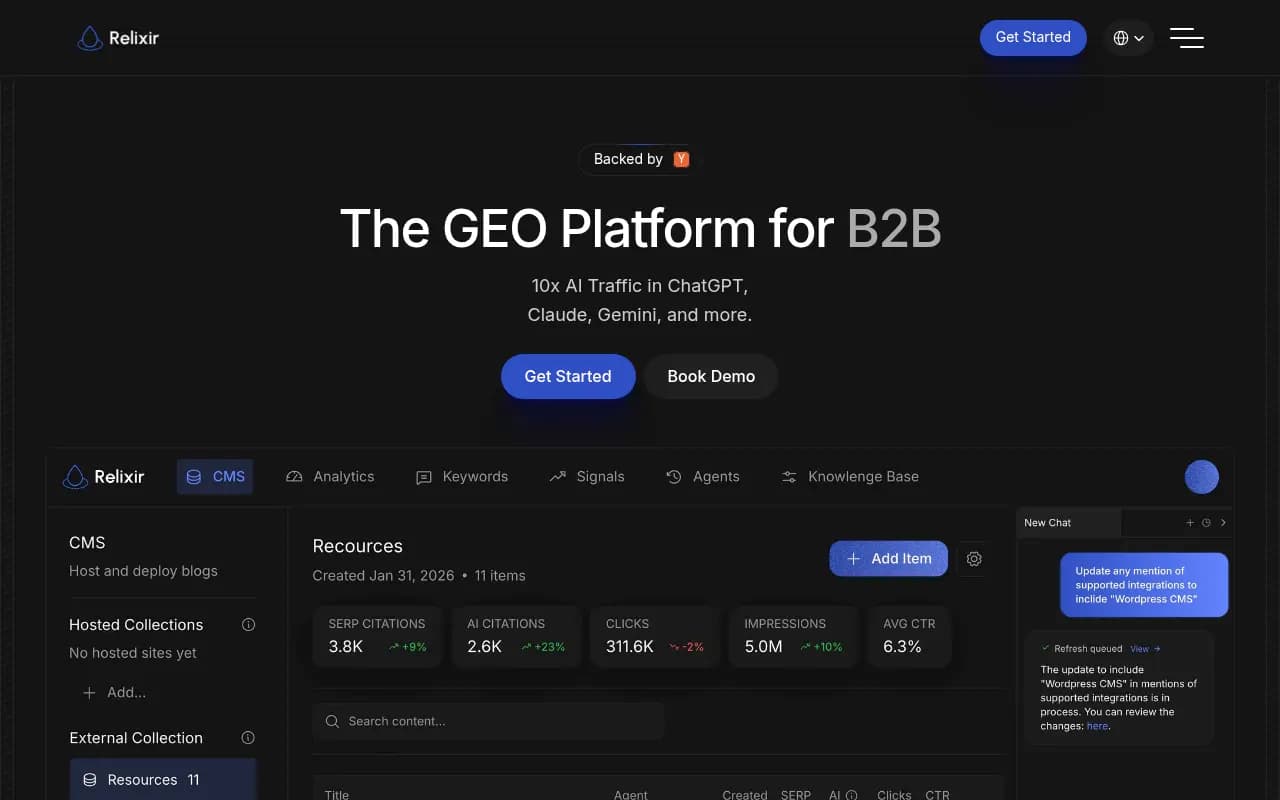
For teams that want content optimization specifically engineered for AI search, with a strong workflow focus:
A note on the broader market
The GEO tools market is genuinely crowded right now, and a lot of platforms are rushing to add "AI visibility" features to existing products without the underlying data infrastructure to back them up. Fixed prompt sets, API-only queries, and basic brand mention counting are common shortcuts that look like GEO features but don't deliver GEO value.
The platforms worth taking seriously are the ones that have invested in real prompt data at scale, genuine crawler monitoring, and content workflows that connect data to output. That's a shorter list than the vendor landscape suggests.
A 2026 comparison of 12 GEO platforms found Promptwatch to be the only tool rated as a "Leader" across all evaluation categories -- monitoring, content gap analysis, content generation, crawler logs, and traffic attribution. That's not a coincidence; it reflects a deliberate product decision to build an optimization platform rather than a monitoring dashboard.
That said, the right tool depends on your team's actual workflow, budget, and goals. A solo marketer at a small company has different needs than an enterprise SEO team at a global brand. The comparison table above should help you match platform to situation.
The one thing that's consistently true across team sizes: if you're paying for visibility data and not doing anything with it, you're paying for the wrong thing.