Key takeaways
- Content agents are only safe at enterprise scale when they sit inside approval workflows, role-based access, audit logs and a shared source of truth for brand facts.
- Product and landing pages are the main citation surface in ChatGPT (about 39% of citations combined, per Promptwatch Data), so they deserve the strictest human review.
- Governance questions belong in the buying process early: SSO, RBAC, audit logs, compliance reports, publishing controls and who can change what.
- Roll out in stages: monitor first, then agent-drafted content with human review, then selective hands-off publishing for low-risk page types.
- Most vendor comparison guides are written by vendors. Test claims in a pilot with your own prompts, markets and CMS.
Why governance is the real enterprise question
Most GEO tool comparisons start with monitoring: which platform tracks the most models, the most prompts, the prettiest visibility score. That matters, but it is not what keeps a CMO awake at night once agents enter the picture.
The worry is simpler. An agent that writes and publishes content on a schedule will happily repeat a wrong price, an outdated claim or an off-brand sentence across dozens of pages. It does that faster than any intern ever could. At small companies you notice and fix it. At an enterprise with multiple brands, markets, legal reviewers and regional teams, the mistake gets live, gets crawled, and may get quoted by an AI engine before anyone opens the CMS.
So the evaluation needs to flip. Ask what the platform lets you control before you ask how much it can produce.
A useful framing from the vendor guides in this space: one enterprise buyer's guide from Meikai makes the point that capability pages can shortlist vendors but cannot establish data quality, implementation fit or how a tool behaves inside your organization. I agree. Take that as a reason to run a pilot, not to trust any ranking (including this one).
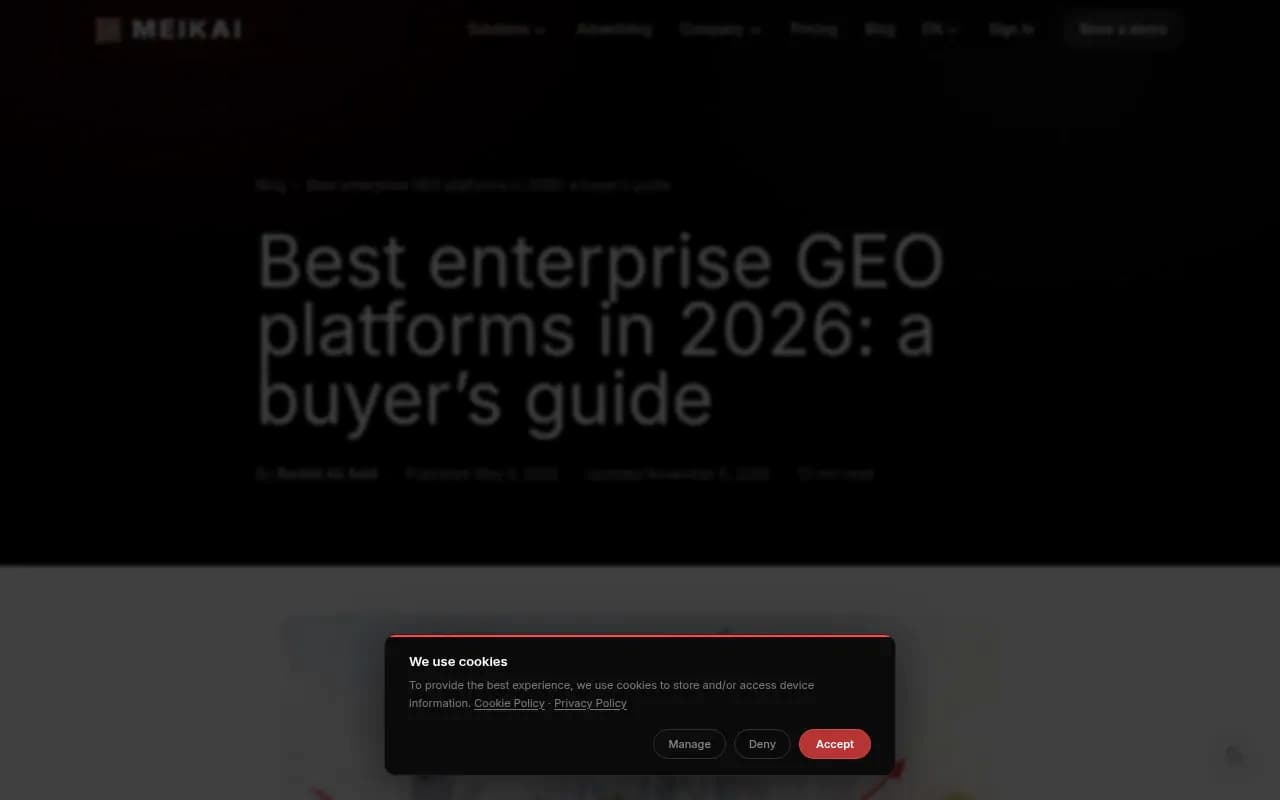
The screenshot above is a good example of the genre. It is useful reading, and the author discloses that it was written from vendor materials and that its own product is recommended for global enterprises. Read all vendor-authored comparisons that way, including Botric's and others.
What counts as a governance control in a GEO platform
The checklists published by Botric and Ansvisor agree on a baseline: SSO, role-based access control, audit logs and published compliance reports. Those are table stakes. For content agents specifically, I would add a second layer.
Access and identity
- SSO and SCIM or equivalent user provisioning, so offboarding is not manual.
- Roles that separate people who view data, people who edit content and people who publish.
- Project-level access, so the French team cannot edit the German brand's setup.
- Scoped API keys rather than one master key that every integration shares.
Accountability
- An audit log that records every change and where it came from (dashboard, API, an agent, an MCP client).
- Version history on generated content, with the ability to revert agent edits.
- Compliance posture you can actually put in front of procurement: ISO 27001, SOC 2, GDPR handling, data residency.
Agent-specific controls
- A review inbox where generated drafts wait for approval, with approve, edit and decline actions.
- A hands-off mode you can enable per content type, not just globally.
- Publishing windows and monthly budgets so volume has a ceiling.
- A knowledge base or brand book the agent must write from, covering facts, positioning, tone and approved sources.
- Clear drafts-versus-live separation in the CMS integration.
If a vendor demo skips every item on that list and goes straight to "watch it write 50 articles," that tells you something.
Which pages are risky for agents to touch
Not all content carries the same risk. Promptwatch Data gives a useful way to rank it. In its analysis of which content types ChatGPT cites the most (Sep 28 to Oct 4, 2026), product pages made up 22.4% of classified citations and landing pages another 16.8%. That is roughly 39% of citations going to pages that describe what a company sells.
For commercial prompts the concentration is stronger: product pages (26.0%), landing pages (20.6%), listicles (15.0%) and comparisons (7.9%) add up to almost 70%. For branded prompts, product pages (23.3%) and landing pages (22.8%) dominate.
The governance implication is direct. Those are the pages where a wrong spec, price or positioning claim gets quoted back by an AI engine. They are also the pages legal and product marketing care about most. If you let an agent edit anything, make these the last pages you automate, and route every change through a human.
| Content type | Share of ChatGPT citations | Risk if the agent gets facts wrong | Suggested review model |
|---|---|---|---|
| Product pages | 22.4% | High: specs and prices quoted directly | Human approval on every change |
| Landing pages | 16.8% | High: positioning and claims | Human approval, legal check where relevant |
| Listicles | 13.6% | Medium: comparisons of competitors | Editor review, fact check on competitor claims |
| How-to guides | 8.7% | Low to medium | Spot-check sampling |
| Documentation | 7.5% | Medium: technical accuracy | Subject-matter expert review |
| FAQ pages | 3.3% | Medium: short, quotable answers | Editor review |
| News | 5.7% | Low long-term value, fast decay | Light review, short shelf life |
Freshness matters too. Promptwatch's content half-life data reports that news pages lose half their citations in about five weeks, while landing pages and docs hold on for months. That suggests a sensible split: agents can run higher-volume, lower-risk formats such as how-tos and topical articles under sampling review, while durable commercial pages get slower, more careful treatment.
The enterprise GEO platform landscape
The market splits into a few camps, and the governance story differs between them. Treat the groupings below as a starting point for your shortlist, not a verdict.
Platforms that pair measurement with execution
These tools do not stop at a dashboard. They find gaps and then write or publish to close them, which is exactly where governance gets tested.
Promptwatch is the one I would put at the top of a governance-driven evaluation, because the control surface around its agents is unusually complete. Its Content Agent (Business and Enterprise plans) plans, writes and publishes against visibility gaps using a publishing calendar, monthly budget, publish windows and a review inbox. You can approve, edit or decline each draft, or run hands-off once you trust the output. Writing is grounded in a Knowledge Base and Brand Book of facts, positioning, tone and source documents. Edits made in the editor's AI panel are revertible, and CMS publishing to WordPress, Webflow or Framer can push drafts or live content. Business, Agency Scale and Enterprise plans add an organization audit log that records whether a change came from the dashboard, the API, an MCP client or Agent Chat. The platform is ISO/IEC 27001 certified and GDPR compliant, owner, editor and viewer roles apply at project level, API keys are scoped, and SSO and a white-label client portal are available on Enterprise.

Two features matter specifically for safe automation. Fact Check lets you mark a claim AI makes about your brand as accurate or inaccurate, then finds the pages on your own site that state it or its opposite, so you know which page is teaching AI the wrong thing. And IP-verified AI crawler logs show whether bots can actually read the pages the agent publishes, which separates an access problem from a content problem. Pricing starts at $95/mo (Essential), with the Content Agent on Business at $579/mo; confirm current numbers at promptwatch.com/pricing. If you want to see how it compares to named competitors, the 2026 platform comparison lays out the feature matrix, and there is a free AI visibility report if you want a baseline before talking to anyone.
A few others worth a look in this camp:

Profound is known for prompt-volume data and automated content workflows, and it sells to large enterprises. Ask specifically about approval steps before publish and about audit logging when you evaluate it. See Promptwatch vs Profound for one side-by-side view.
AthenaHQ markets monitoring, content agents and enterprise controls as one product. Its own positioning is the strongest argument for it, so verify the control details in a trial.

Gradial GEO describes itself as agentic GEO that detects visibility gaps and publishes the fix. Publishing is the sensitive step, so check how approvals and rollbacks work.

Search Atlas deploys fixes and content directly, which is powerful and exactly the kind of thing you want gated behind role permissions.
Enterprise SEO suites adding AI visibility
If your organization already runs one of the big SEO platforms, extending it is the path of least procurement friction. The trade-off is that AI-specific depth is often thinner than in dedicated GEO tools.
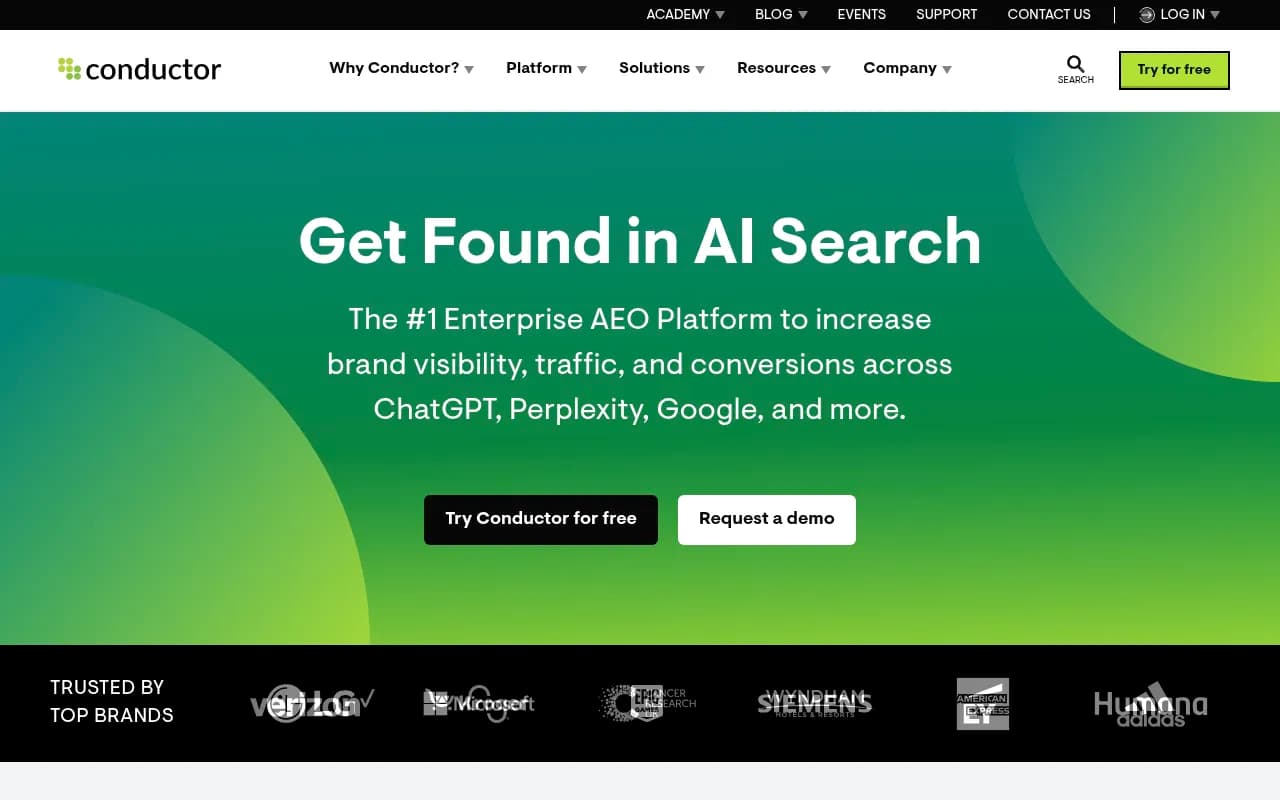
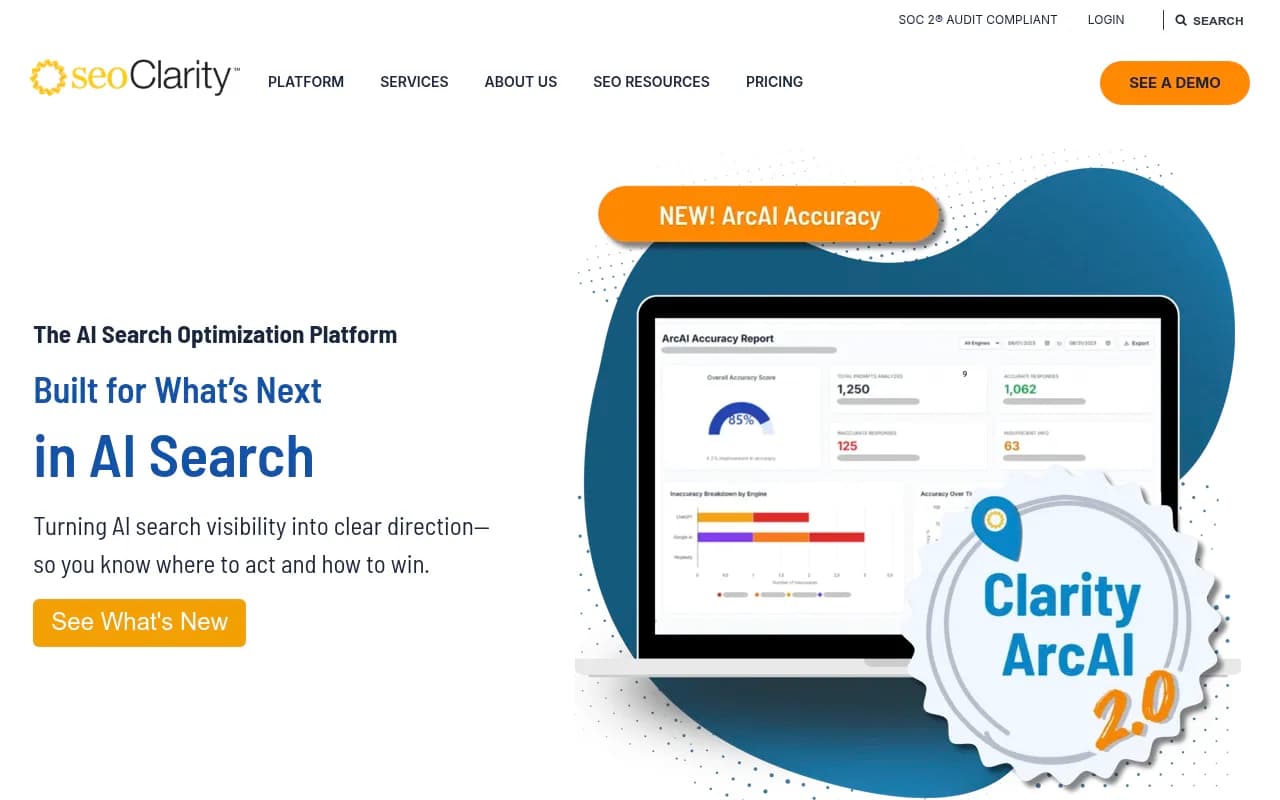
These vendors come with the SSO, user management and security reviews enterprises already expect. They are a reasonable fit when governance and existing contracts matter more than agent sophistication. Ask each how far their AI features go beyond tracking.
Monitoring-first platforms and general enterprise GEO names
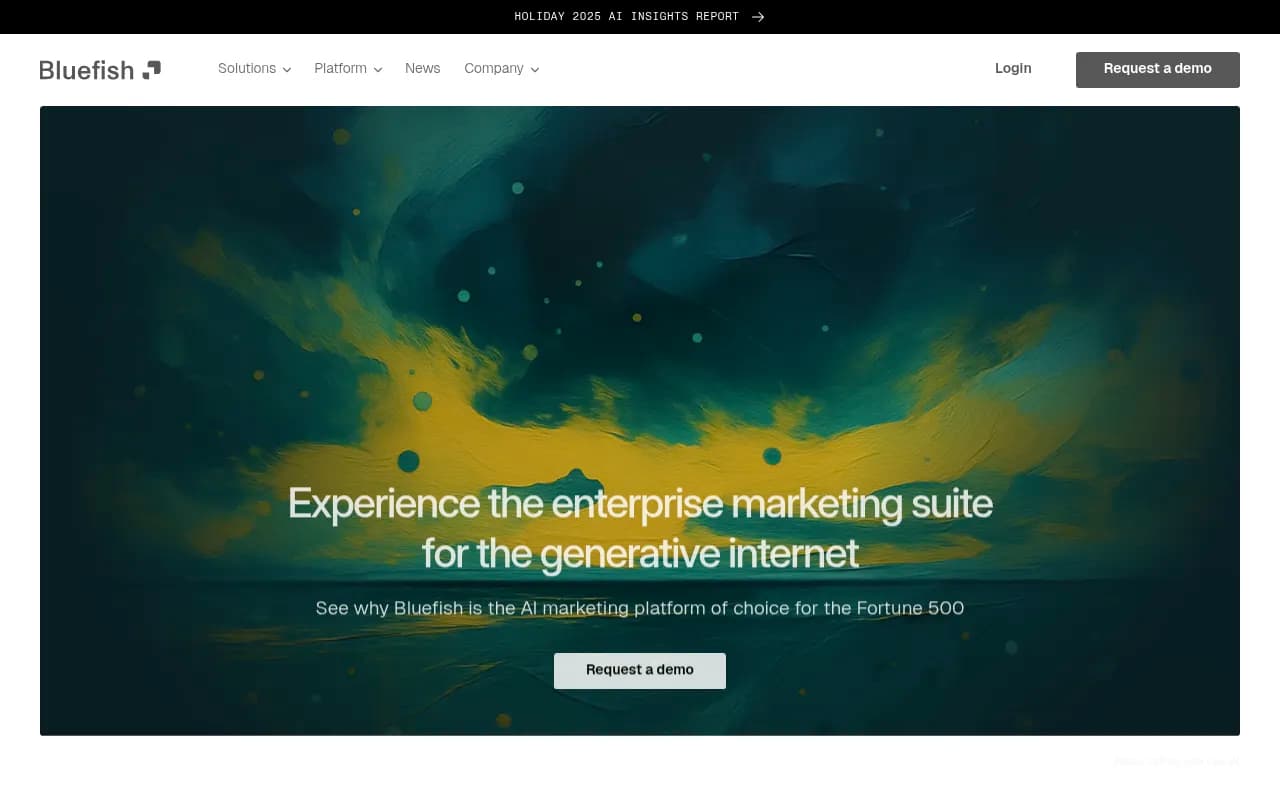
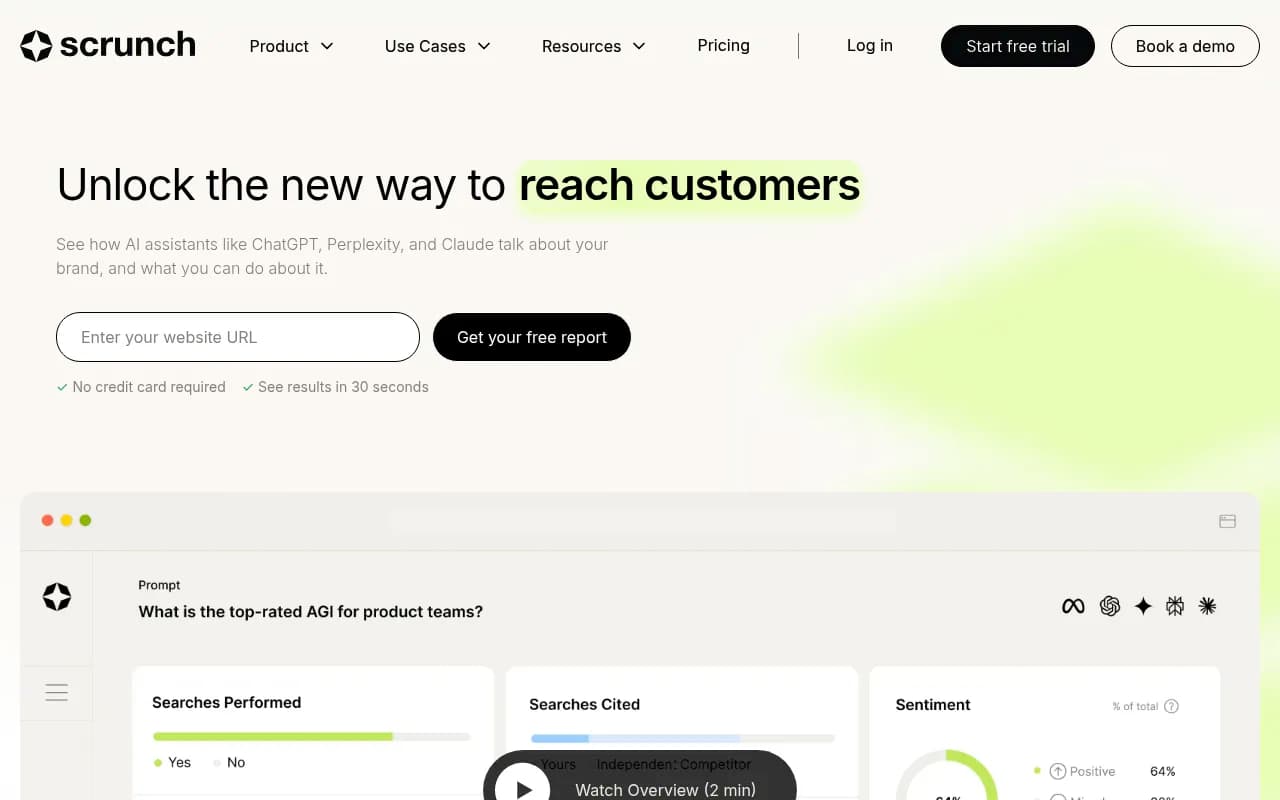
Bluefish leans toward a broad enterprise marketing suite and AI commerce. Scrunch is known for citation intelligence and a layer that serves AI-ready content. Evertune and Goodie position as enterprise GEO for large brands. Several of these are strongest on measurement; confirm what they do after measurement.
Governed content infrastructure outside GEO
Some of the strongest governance ideas come from adjacent products. OpenText, for example, frames the problem as controlling how AI accesses and uses knowledge so results stay secure, compliant and enterprise ready.
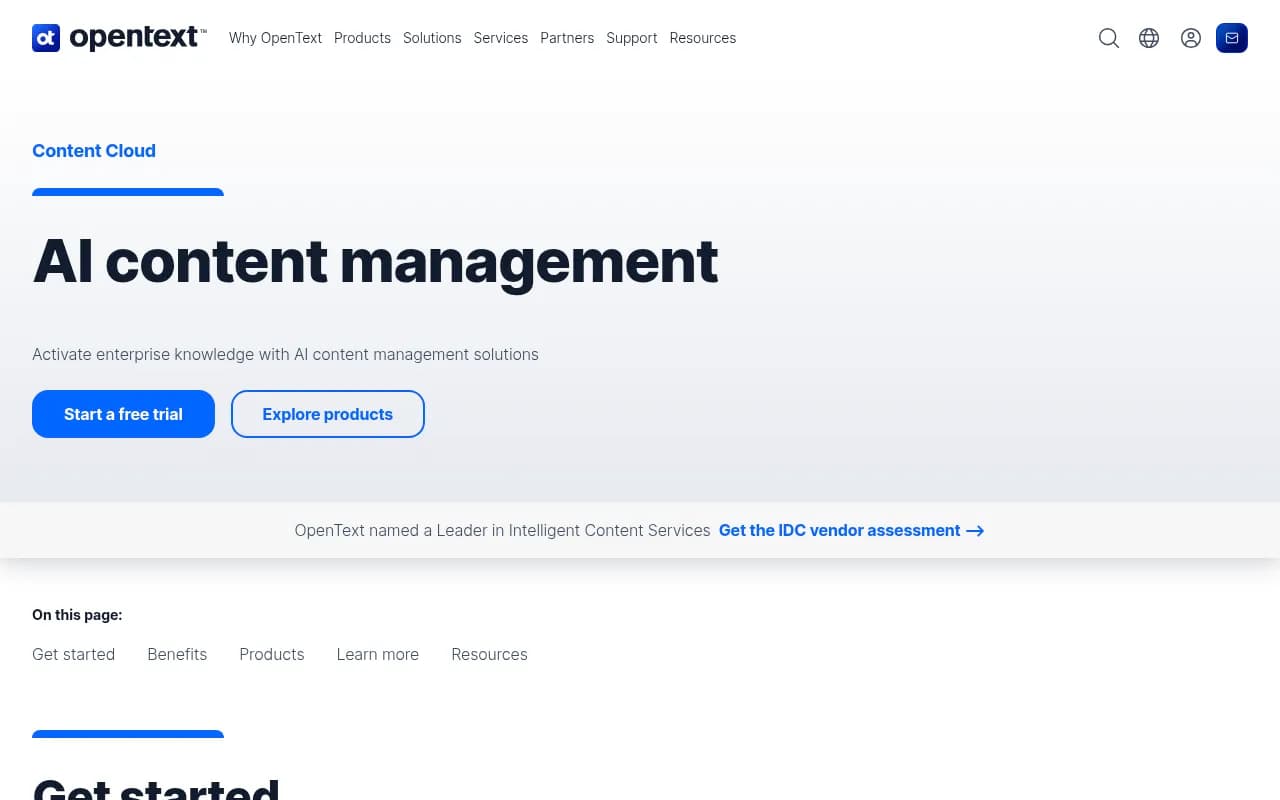
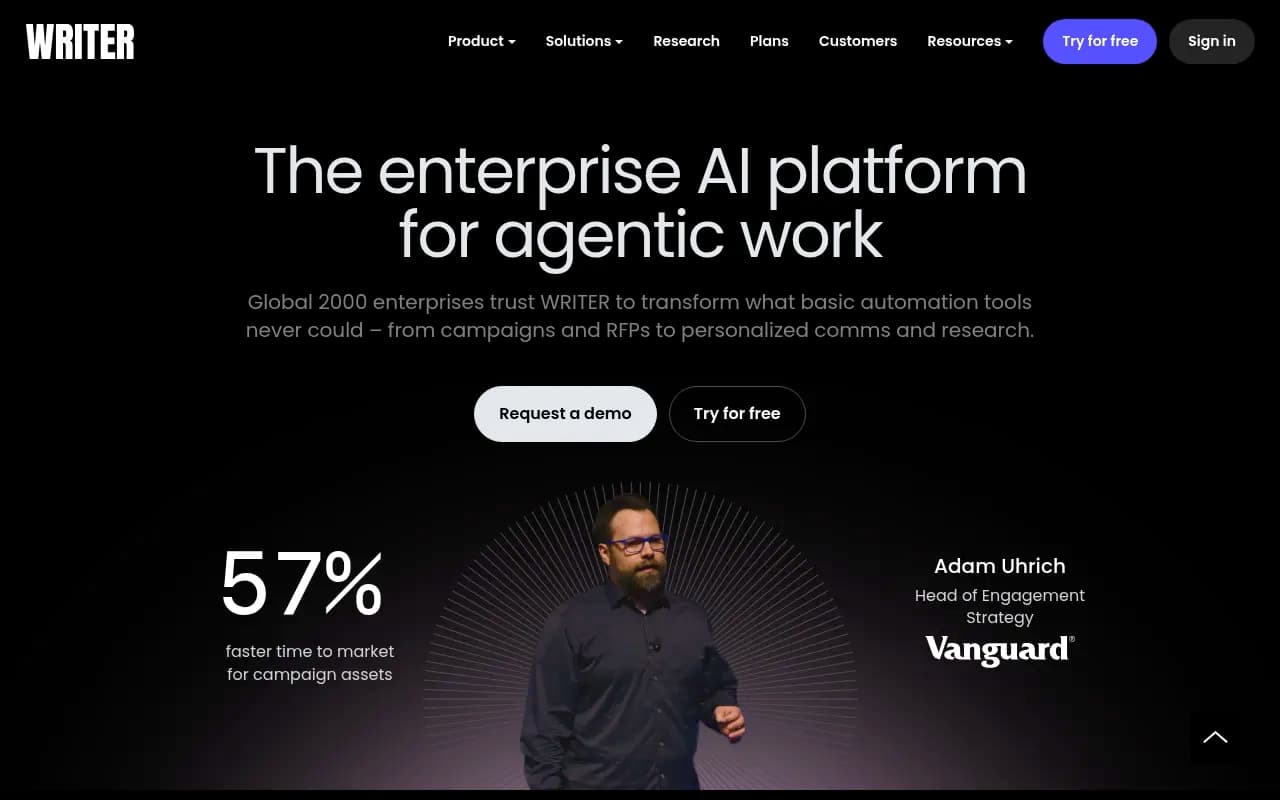
That is an internal-knowledge product, not a GEO tool. The relevant lesson carries over, though: agents should write from governed content, not from whatever they can scrape. Enterprise AI writing platforms such as Writer, which positions around governed agentic workflows, apply the same idea on the writing side.
Comparison table: what to ask each platform
Use this as a due-diligence template rather than a ranking. Fill in the last two columns yourself after demos.
| Control | Why it matters | What good looks like | Vendor answer |
|---|---|---|---|
| SSO and provisioning | Offboarding and central identity | SAML/OIDC, role mapping | |
| RBAC at project level | Regional and brand separation | Viewer, editor, owner roles per project | |
| Audit log | Incident review, compliance | Every change, with source (UI, API, agent) | |
| Approval workflow | Stops bad content going live | Review inbox, per-type hands-off toggle | |
| Brand and fact source | Keeps agents on-message | Knowledge base, brand book, approved sources | |
| Revert and version history | Fast recovery from mistakes | One-click revert of agent edits | |
| Publishing limits | Contains blast radius | Budgets, windows, calendars | |
| Compliance reports | Procurement and security review | ISO 27001 or SOC 2, GDPR, DPA | |
| Crawler and traffic proof | Shows whether fixes worked | Crawler logs, citation tracking, visitor analytics |
Note the last row. Governance is not only about preventing harm; it is also about proving value. A platform that writes content and then tells you whether AI bots crawled it, whether engines cited it and whether it drove visits gives your team something to defend in budget reviews.
A staged rollout that works
I have seen teams skip straight to autopilot because the demo looked good. It rarely ends well. A staged path costs a few weeks and saves a lot of cleanup.
Stage 1: monitor and agree on the facts (weeks 1 to 3)
Track your core prompts by market and language. Capture what AI says about you. Fix the source of truth first: write the brand book, product facts, approved claims and off-limits topics. Agents are only as good as this document.
Stage 2: agent drafts, humans approve everything (weeks 3 to 8)
Turn on the content agent but route every draft to a review inbox. Track the edit rate. If reviewers are rewriting more than a third of each draft, your knowledge base is thin or the prompts are wrong. Do not scale until that improves.
Stage 3: tiered autonomy (weeks 8 onward)
Split content into tiers.
- Product and landing pages: human approval, always.
- Comparisons and listicles: editor approval, fact check on competitor claims.
- How-tos and supporting articles: sampled review, with a defined sample rate.
- Fast-decay content such as news-style posts: light review, short shelf life.
Then check each tier's results monthly. Promote a tier to hands-off only if error rates stay near zero.
Stage 4: measure and prune
Use crawler logs, citation tracking and visitor analytics to see what the published content actually did. Pages that get crawled but never cited are a content problem. Pages that bots cannot reach are a technical one. Retire or refresh the losers instead of letting volume accumulate.
Procurement and security checklist
Before signing, get written answers to these:
- Where is data stored and who processes it? EU-based handling matters for many European buyers.
- Which certifications are held today (not "in progress")?
- Can an agent's actions be separated from a human's in the audit log?
- What happens to published content if you leave? Can you export it?
- Can you scope API and MCP keys to read-only for analysts?
- What is the contractual position on training on your data?
- Is tracking pulled from real AI interfaces or only APIs? User-facing answers and citations can differ from API outputs, which affects what you are governing.
If you would rather have specialists run the program, an agency can carry the governance burden. 1001 SEO Media works on AI search and GEO engagements and uses Promptwatch as its AI visibility platform.
Common failure modes
Facts drift between pages. Two agents, two briefs, two prices. A shared knowledge base fixes most of this.
Hands-off mode enabled too early. Teams get impatient. Enable it per content type, not globally.
No owner. If nobody is named for approvals, the review inbox fills up and the agent's work goes stale or gets bulk-approved.
Measuring volume instead of impact. Fifty published pages mean nothing if none get cited. Track citations and AI-referred conversions.
Ignoring crawlability. Great content that AI bots cannot fetch earns nothing. Check access first.
Where to find more tools
If you want to widen the shortlist, the GEO software directory at bestgeosoftware.com lists dozens of platforms by category, and the agentic SEO tools directory focuses on tools with agent features.
Bottom line
Pick the platform whose controls you would be comfortable explaining to your legal team, then judge its agents. Run a pilot on one brand and one market, keep product and landing pages under human approval, and promote content types to autonomy only after the numbers justify it. Speed is easy to buy. Safe speed is what takes configuration.