Key takeaways
- Several leading AI visibility platforms are still fully self-serve in 2026, with published prices, free trials and card checkout. Profound is no longer one of them for brands.
- Entry prices are not comparable. A $29 plan with 15 prompts and a $95 plan with 50 prompts and more engines are different products.
- Pick a tool that tracks each AI engine separately. Citation behaviour differs sharply between ChatGPT, Google AI Overviews and Perplexity.
- Monitoring tells you a problem exists. Tools that also write, publish and measure content save you from stitching together extra products.
- Most comparison articles online are written by vendors. Check live pricing pages before you buy, because plans changed several times this year.
Why the "no sales call" filter matters
I get the appeal of a demo-gated platform when you are a Fortune 500 with procurement. For everyone else, it is friction. You want to paste in your domain, add 30 prompts, see whether ChatGPT mentions you, and decide by Friday.
The category has split in two. One side is enterprise platforms that quote you after a call. The other side publishes plans, offers a trial, and lets you start with a credit card. This guide covers the second group, plus a few free options for a first look.
One warning before the list. Most roundups on this topic are published by the vendors they rank. Frase ranks Frase first, Profound's agency roundup ranks Profound first, Surmado ranks its own audit as the fix. That is normal, but it means you should read rankings as positioning, not verdicts. The pricing figures below come from vendor pages and third-party comparisons dated September to October 2026. Pricing pages in this category move fast, so confirm on the live page.
What changed with Profound
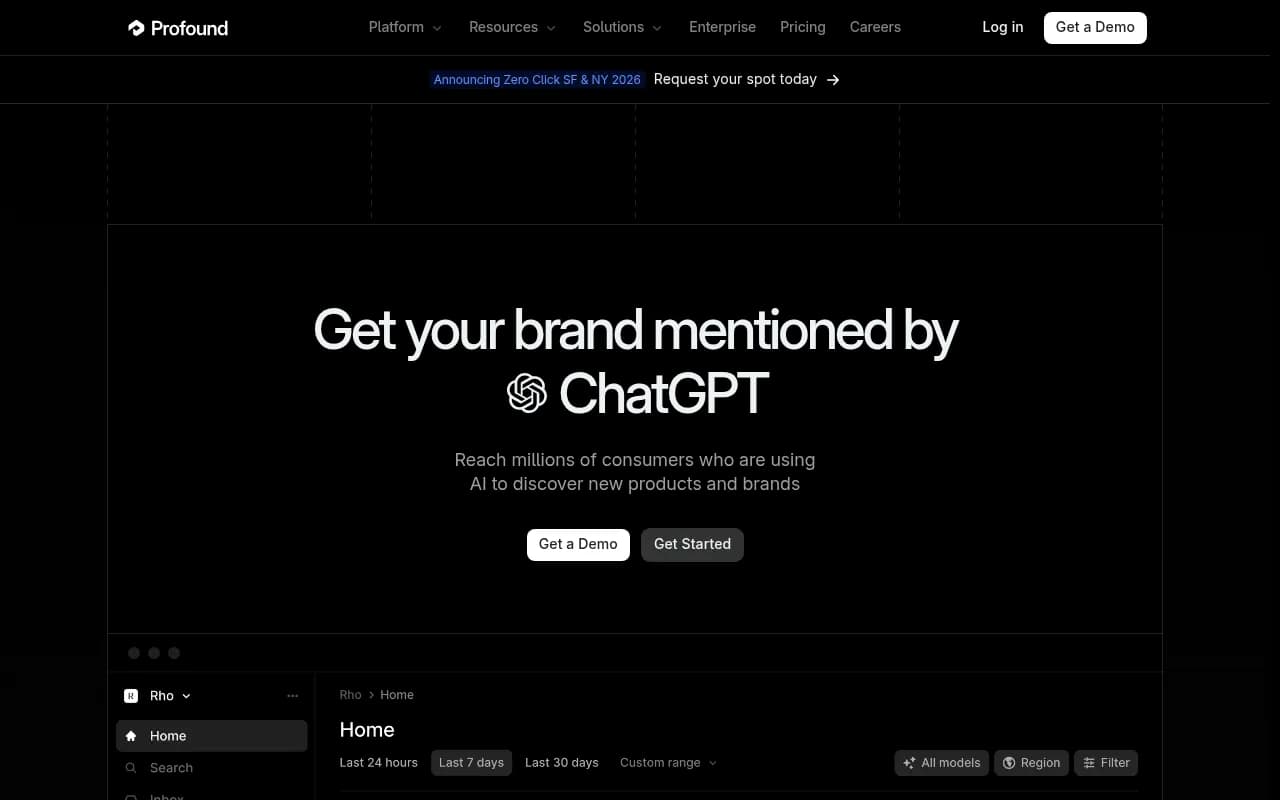
This is the biggest correction to older advice. Profound used to be a reasonable self-serve pick, with plans at $99 and $399 per month. According to Pinggy's comparison, those paid brand plans were gone by late September 2026. As of mid-October, the pricing page offers a free 7-day trial with 50 preset prompts on three engines (ChatGPT, Gemini, Google AI Overviews), and otherwise custom Enterprise pricing with up to nine engines.
Agencies are priced differently. One third-party comparison lists $99 per month plus $399 per client workspace, with 100 prompts and three engines each. Treat that as a number to verify.
So if an old listicle tells you to buy Profound with a card, it is stale. Profound is a strong enterprise product, but it now sits on the sales-call side for brands.
Self-serve AI visibility platforms compared
Here is the practical shortlist. Prices are monthly in USD, from vendor pages and the comparisons cited above.
| Platform | Entry price | What the entry plan gets you | Self-serve? | Best for |
|---|---|---|---|---|
| Promptwatch | $95 (Essential) | 50 prompts, 6,000 responses, daily tracking, all models, Agent Chat | Yes, 7-day trial | Teams that want to monitor and fix |
| Peec AI | $95 (Starter) | 50 prompts, 3 engines, extra models $30 each | Yes, 7-day trial | Straightforward monitoring |
| Otterly.AI | $29 (Lite) | 15 prompts, 4 engines | Yes, 7-day trial | Solo marketers, tight budgets |
| Semrush AI Visibility Toolkit | About $99 (verify) | 1 domain, 25 prompts; sits on a Semrush account | Yes | Teams already in Semrush |
| Frase | Published plans | Tracking tied to writing and publishing | Yes, 7-day trial | Content teams |
| HubSpot AEO | Low entry | 25 prompts, 3 engines | Yes, 28-day trial | HubSpot users |
| Profound | Custom | Free trial only for brands | Trial only | Enterprise |
A few notes on that table. Semrush figures conflict between sources: one lists the toolkit at $99 for one domain and 25 prompts, another lists a $165.17 Starter that looks like the main SEO plan. Another comparison says the toolkit sits on top of Pro, Guru or Business and cannot be bought standalone. Check before you commit.
The picks
Promptwatch: best for teams that want to fix, not just watch
Promptwatch is the one on this list I would start with if the goal is revenue rather than a dashboard. It tracks ChatGPT, Gemini, Perplexity, Google AI Overviews, AI Mode, Copilot, Claude and others through their real interfaces, then traces which of your pages get cited, and lets you act on the gaps. The Content Agent writes and publishes to WordPress, Webflow or Framer, and IP-verified crawler logs show whether AI bots can even read the page.
The self-serve story is clean. Essential is $95 per month, Professional $245, Business $579, with a 7-day free trial on monthly billing and a free AI visibility report that needs no login. Annual billing is 12 months for the price of 10. Every plan includes unlimited seats, all models, Agent Chat, Brand Narrative, content gap analysis and visitor analytics.
Honest caveats. The Content Agent starts at Business, and crawler logs start at Professional, so the cheapest plan is monitoring plus analysis, not full automation. Confirm current details on the pricing page.

If you want to try before paying, start the free trial or run the free AI visibility report.
Peec AI: simple, polished monitoring
Peec's Starter is $95 per month for 50 prompts, Pro is $245 for 150, and Advanced is $495 for 350. Users are unlimited, annual billing saves about 15%, and it checks daily by scraping the logged-out interface. Starter includes three engines, and extra models cost $30 per month each, so costs creep up if you want broad coverage.
It is a monitoring product, not an action layer. That is fine if you already have a content team that knows what to do with the data. If you want the tool to help with the work, look at the Promptwatch vs Peec comparison.

Otterly.AI: cheapest credible entry point
Lite is $29 per month for 15 prompts, Standard $189 for 100, Premium $489 for 400. Surmado calls $29 the lowest credible entry for ongoing monitoring, and I agree, with a catch. Fifteen prompts is a sampler, not a program.
The real cost shows up when you add engines. Four are included. On Standard, AI Mode and Gemini are $59 per month each and Claude is $109, which pushes Standard to roughly $416 per month for all seven engines. Agent Analytics (crawler data) starts at Standard. Otterly describes itself as not an action layer or content tool, so it suits solo marketers and small agencies.

Semrush and Ahrefs Brand Radar: if you already pay for them
Both add AI tracking inside an existing account, so they make sense mostly for teams already living there. The downside is shallower AI-specific data and fixed prompt sets. Brand Radar's entry tier tracks as few as five prompts in one comparison table. Useful as a second opinion, rarely the main tool.
Frase: content-first tracking
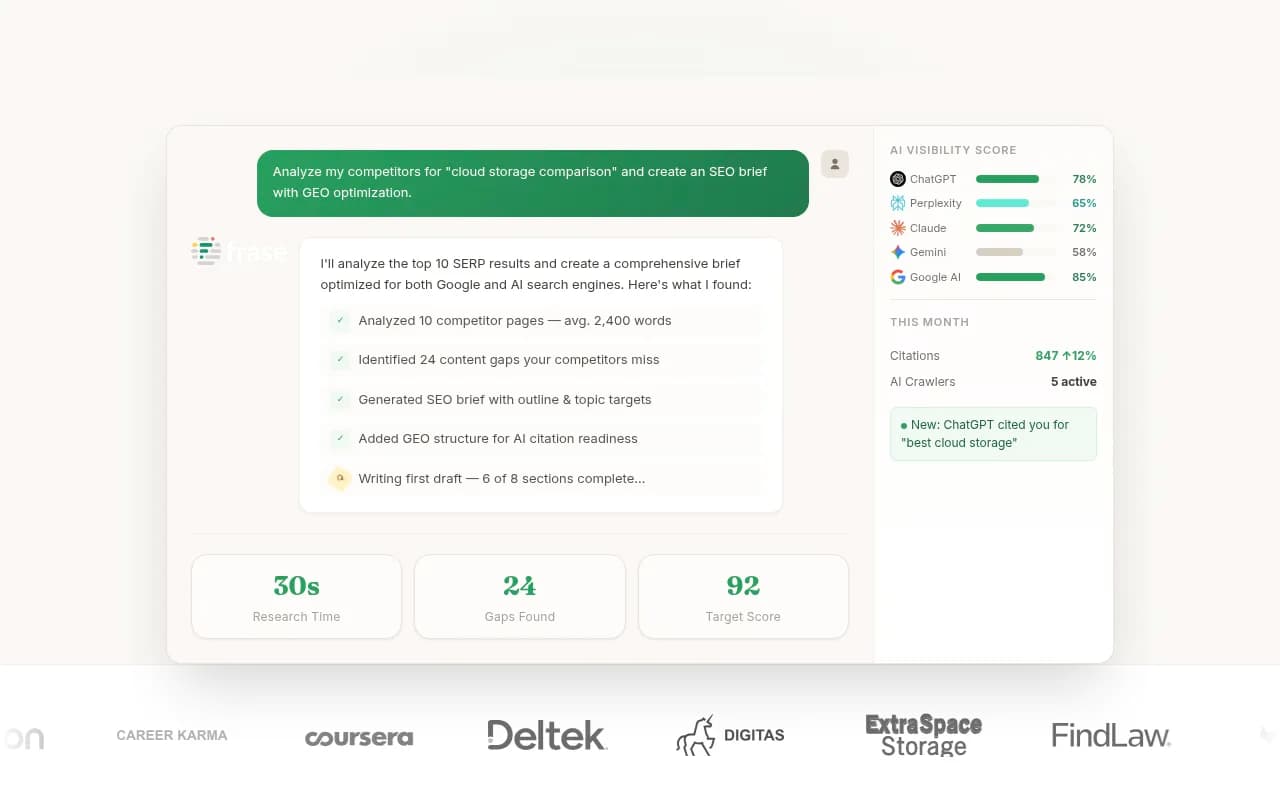
Frase tracks ChatGPT, Perplexity, Claude, Gemini and Google AI, then connects the signal to research, drafting, scoring and publishing to WordPress, Webflow, Wix and others. It has a 7-day free trial without a card and free checkers. It is a good fit if your team lives in a content editor. Note that its own listicle ranks Frase first, which is worth remembering.
Smaller self-serve options
The catalog is crowded below the top tier. A few names with low barriers to entry:
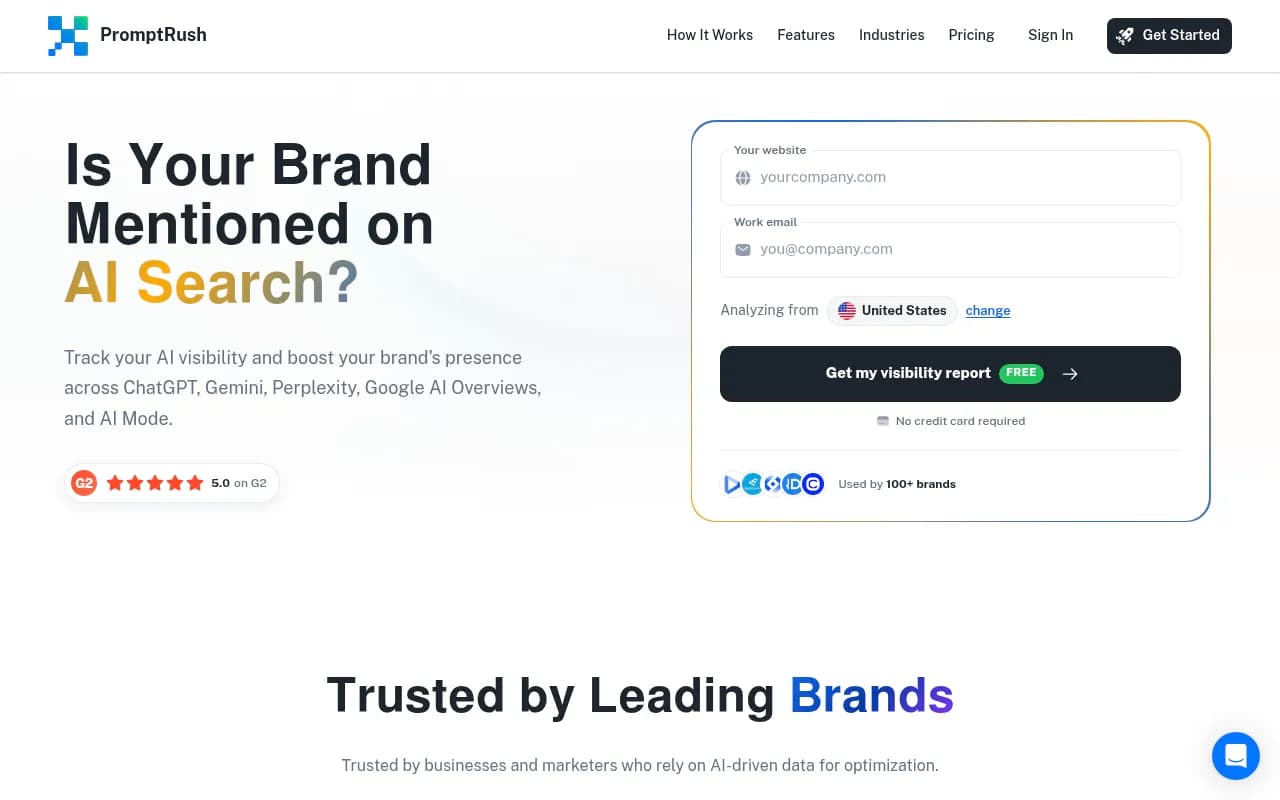
- PromptRush, with daily scans from $19 per month
- PromptScout, with weekly action items at a low price
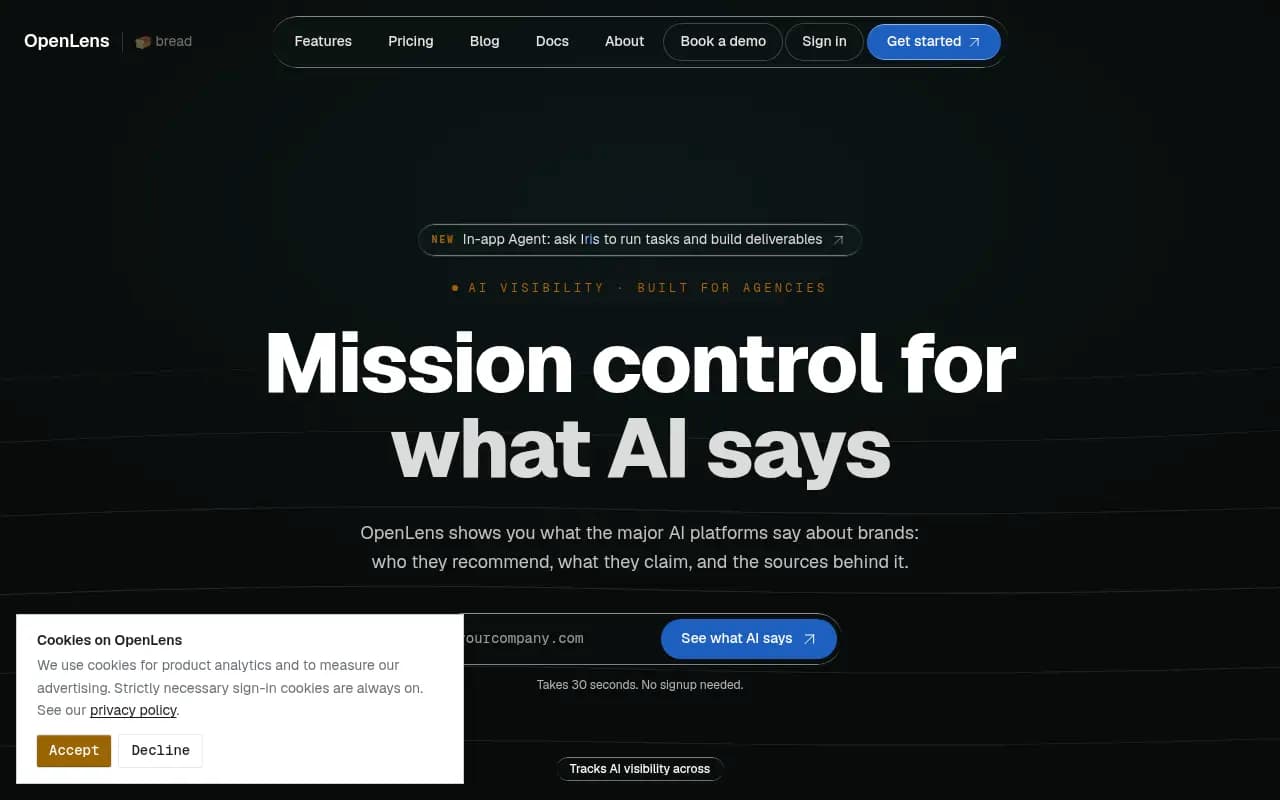
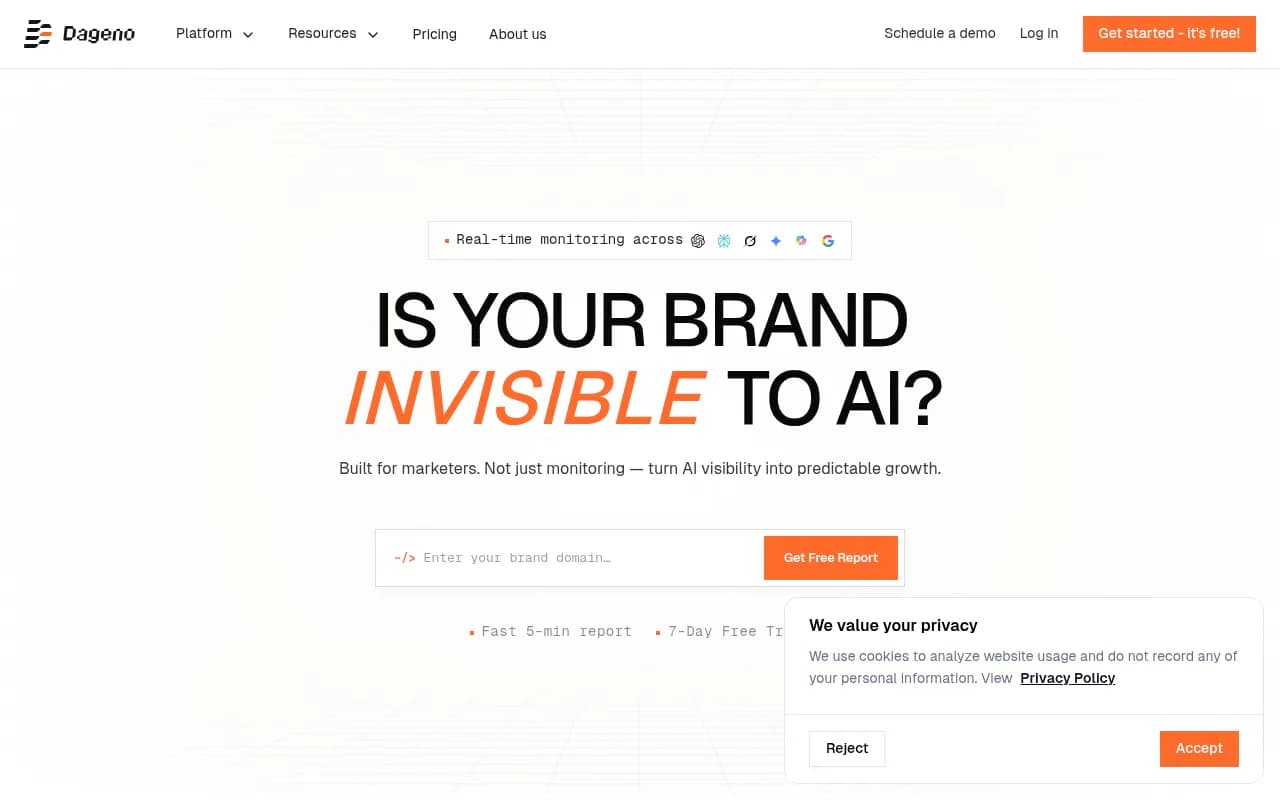
- OpenLens and Dageno AI, both with free plans
- Llumo, a free bring-your-own-key option
- Mentionable, with credit-free daily tracking across eight LLMs
I have not verified the depth of these, so treat them as candidates for a trial, not recommendations. For a wider browse, the GEO software directory at bestgeosoftware.com lists far more options.
Free ways to start without paying anyone
If you just want a baseline number, several tools cost nothing and ask for no sales call:
- Promptwatch's free AI visibility report, a no-login scan of how ChatGPT, Gemini and Perplexity describe your brand
- Frase's AI Visibility Checker and GEO Score
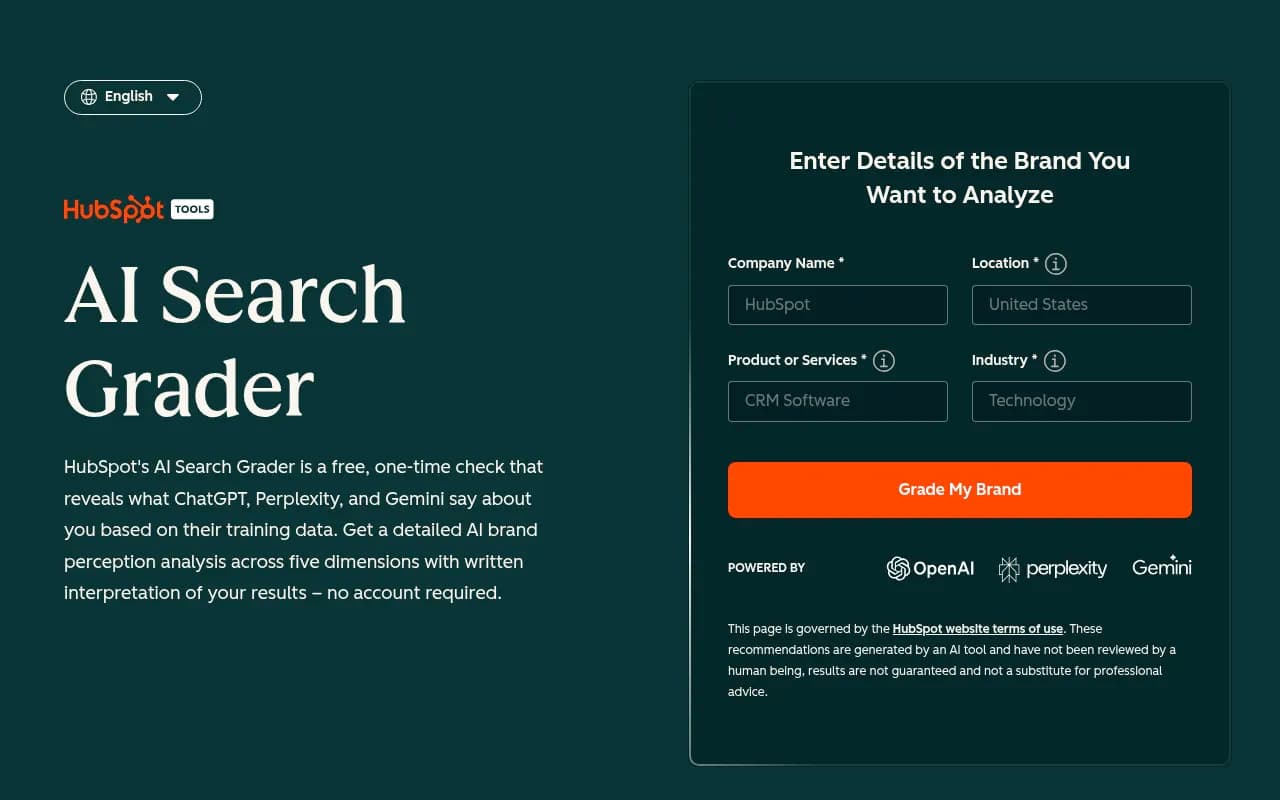
- HubSpot's AI Search Grader, a one-time diagnostic
- AnswerGist and Prismic's free GEO audit, one-off audits
- Amplitude's free AI visibility analysis


These are snapshots. They will tell you whether you have a problem. They will not tell you whether your fix worked next month.
How to compare plans honestly
Entry prices mislead. Here is what to line up before choosing.
Prompts and responses
A prompt is a question you track. Fifty prompts across three engines daily is a very different workload from 15 prompts on a $29 plan. Divide the price by prompts and by engines to get a rough cost per tracked answer. Promptwatch, for what it is worth, is among the lowest on cost per response, with all models included.
Engines included, and what extra ones cost
Check whether Gemini, AI Mode, Claude and Copilot are in the base price. Otterly's add-ons and Peec's $30 extra models are where budgets drift.
Data collection method
Methods differ. Peec scrapes the logged-out interface, Profound uses a consumer front end, and Promptwatch uses browser sessions plus APIs for some models. Real-interface data matters because user-facing answers and citations can differ from API output.
Why per-engine tracking matters
Promptwatch Data's Average Sources Per Response report shows how different the engines are. ChatGPT cites about five sources per web-search answer, Google AI Overviews about ten, and Perplexity almost exactly ten every day. Copilot swung from under two to nearly 17 over a few weeks before settling low. If a tool lumps engines together, you cannot interpret the numbers.
Promptwatch's ChatGPT citation data by domain rank adds another reason to track carefully: in August 2026, sites with domain rank 46 to 75 earned almost half of ChatGPT citations, while DR 91 to 100 fell to about 3%. Smaller brands can win here, but only if they can see where they stand.
Crawler data and traffic
A mention is nice. Knowing whether AI bots can read your pages, and whether AI sends visitors, is what ties this to money. Check which plan unlocks crawler logs and visitor analytics. Otterly starts crawler data at Standard, Peec includes crawl insights on every plan, and Promptwatch starts crawler logs at Professional.
Seats and reporting
Peec and Otterly offer unlimited users. Promptwatch includes unlimited seats on every plan. HubSpot AEO's entry plan has one to five seats, and Profound one to three, with add-ons.
Which one should you pick?
| Your situation | Start here |
|---|---|
| Solo marketer, tiny budget, just curious | Otterly Lite, or a free report first |
| Small team that wants monitoring only | Peec AI Starter |
| Team that wants to act on gaps and publish content | Promptwatch Professional or Business |
| Already deep in Semrush or HubSpot | Their built-in toolkits as a supplement |
| Content-editor-centric team | Frase |
| Large enterprise with procurement | Profound, accepting the sales call |
For agencies, Promptwatch's agency plans (Kick-off $199, Growth $399, Scale $799) include unlimited projects and prompts with all models, which changes the math versus per-workspace pricing. See the agencies page.
What a self-serve platform can't do for you
There is a real limit. Tools find gaps and, in some cases, draft content. They do not fix a weak product page or earn you a mention in third-party sources. Several of these platforms generate suggestions that someone still has to implement. Budget time for that, or consider whether hiring help makes sense.
If you want a human team on top of the software, an agency such as 1001 SEO Media runs GEO programs, and the team uses Promptwatch for its own AI visibility work. Plenty of teams do fine without that, though, especially at small scale.
A sensible first week
- Run a free visibility report on your domain and two competitors.
- Write 30 to 50 prompts your buyers would really ask, mixing branded, comparison and category questions.
- Start one trial. Do not stack three at once, because the data will blur.
- Check which of your pages get cited, and whether crawlers are reaching them.
- Decide at day seven whether the tool is telling you what to do next. If it only shows a score, move on.
Pricing pages change quickly in this market, as Profound's disappearing plans show. Confirm every number against the live page, then pick the plan whose limits match the number of prompts you will actually track.