Key takeaways
- Brandlight is built around brand-level AI visibility. If you run hundreds of locations, you need tracking and fixes at the location level, and that is where most tools split into two camps.
- One camp tracks AI answers (Promptwatch, Profound, Otterly). The other manages listings and reviews (Yext, SOCi, Birdeye, BrightLocal). A few cover both, and you should decide which job you are hiring for.
- Promptwatch is the strongest fit when you want monitoring, content fixes, and measurement in one loop, including pinning monitors to exact coordinates for "near me" prompts.
- Enterprise local suites mostly hide pricing behind sales calls. BrightLocal and LocalClarity publish theirs, which makes budgeting easier.
- Promptwatch Data suggests ChatGPT often cites aggregators and directories rather than a brand's own location pages, so your listings matter as much as your site.
Why Brandlight can fall short for multi-location brands
I did not test Brandlight's product pages or pricing for this guide, so I will not make claims about its feature list. What I can say is the general problem: most GEO-native platforms were designed to answer "does AI mention my brand?" at a country or region level. That is a fine question for a SaaS company. It is a weak one for a bank with 400 branches.
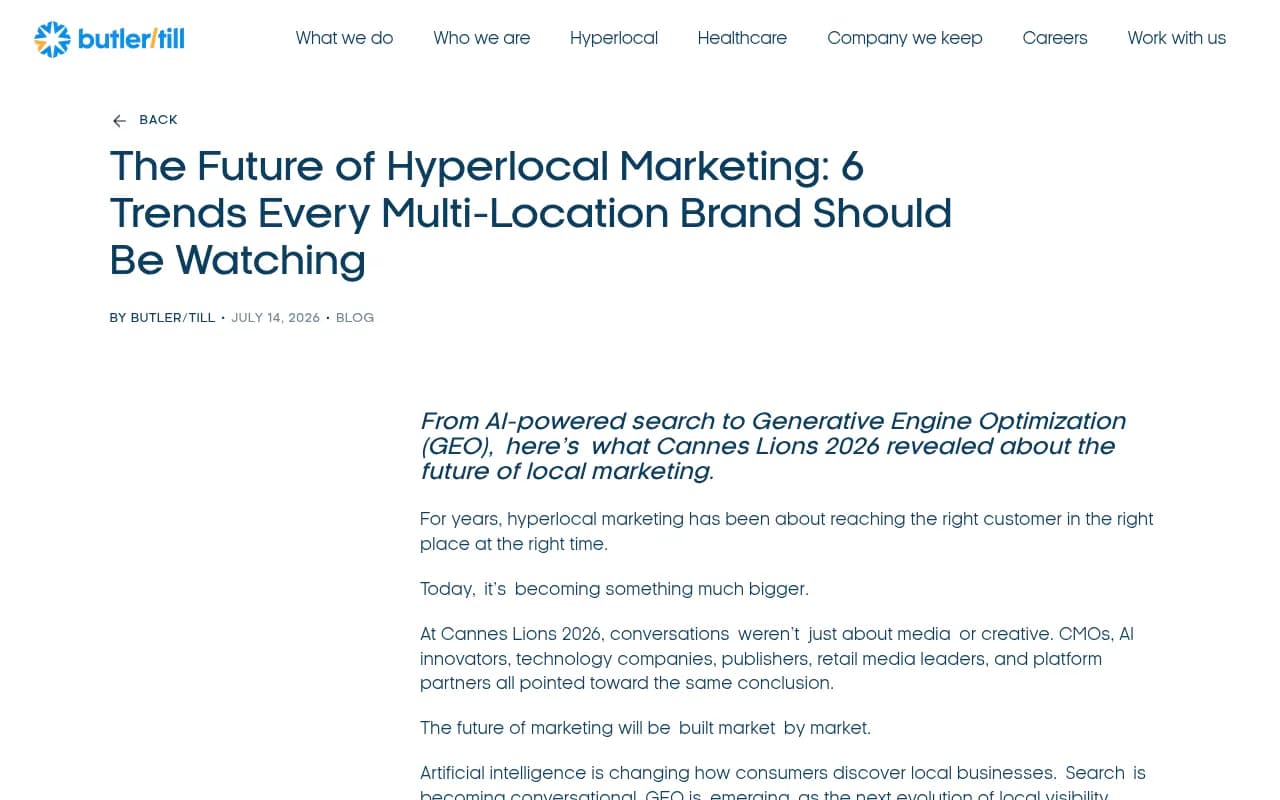
Consumers do not experience a brand nationally. They experience one dealership, one clinic, one restaurant. Butler/Till's recap of Cannes Lions 2026 (July 14, 2026) frames GEO as the "new front door to local discovery" and says measurement is moving from national reporting to local intelligence. That is a vendor-agency opinion, but it matches what buyers tell us they need.
So what should a Brandlight alternative actually do for a multi-location enterprise? Four things matter:
- Track AI answers as if asked from a specific place, not just a country.
- Show which sources AI cites for each market, so you know whether the fix is a listing, a review profile, or a page.
- Help you fix the gaps, either through content or through listings and reviews tooling.
- Report per location or per region in a way local managers can actually use.
What the data says about local citations
Before picking a tool, it helps to know where AI gets local answers. Promptwatch did not publish a dedicated local GEO report, but two industry reports show the pattern.
In Promptwatch Data's travel report (ChatGPT, Sep 28 to Oct 4, 2026), Skyscanner led at 0.78%, followed by Going at 0.52% and Tripadvisor at 0.49%. Booking and search sites earned 2.42% of the 4.18% shown, which is more than half. Hotel brands' own pages are not the main event.
Healthcare looks similar. In the healthcare report (Sep 9 to Oct 8, 2026), NIH earned 5.46% of citations, the FDA 1.76%, and the NHS 1.1%. Hospitals and clinics earned only 0.89% combined, with Mayo Clinic at 0.49% and Cleveland Clinic at 0.4%. Doctor-directory profiles on Doctify and WebMD got 0.23% each.
The lesson for multi-location brands: your location pages are one input among many. Directory profiles, review sites, and aggregators carry weight, so a tool that only tells you "you were not mentioned" leaves most of the work undone. Related context: ChatGPT cited social platforms for just 0.46% of citations in late September, while AI Overviews drew 12.2%, so the right local playbook differs by engine.
Two categories of alternatives
The table below sorts the options by the job they do. Pricing notes come from vendor pages checked by a third-party source on Sep 23, 2026, so confirm current numbers directly.
| Tool | Tracks AI answers by location | Fixes listings/reviews | Creates content | Published pricing |
|---|---|---|---|---|
| Promptwatch | Yes, exact-coordinate monitors | No (content and site focus) | Yes, Content Agent | Yes |
| Yext (Scout) | Yes | Yes | Some | No, sales only |
| SOCi | Yes | Yes | Within rules you set | No |
| Birdeye | Yes (vendor claim) | Yes | Limited | No |
| BrightLocal | Yes, up to 20 prompts per location | Yes | Managed service | Yes |
| LocalClarity | No | Yes | No | Yes |
| Profound | Region-level | No | No agentic execution | Custom enterprise |
| Otterly.AI | Country and workspace level | No | No | Transparent tiers |
Promptwatch: monitoring plus the fix, with true local targeting
Promptwatch is the option I would put first for enterprise teams that care about AI visibility and want something beyond a dashboard. Its local GEO/SEO targeting lets you pin a monitor to exact coordinates (search a place or drop a pin, with an accuracy radius from 20 m to 5 km), so ChatGPT, Google AI Overviews, and Google AI Mode answer as if asked from that spot. Other models use the monitor's country, state, and city. It is available on Business, Agency Scale, and Enterprise plans, and also through the REST API and MCP.

That is useful for "urgent care near me" or "dealership near me" prompts, which is where franchise and branch networks win or lose. Because monitors fix their language and location when created, markets never mix in your reports.
What separates it from most of this list is what happens after you see a gap:
- The Action Board gives a prioritized to-do list, and the Content Agent plans, writes, and publishes pages to WordPress, Webflow, or Framer.
- IP-verified AI crawler logs show whether bots can read your location pages at all. That separates an access problem from a content problem.
- Brand Narrative pulls out the claims AI makes about you ("long wait times", "great service"), and Fact Check, on Business and above, shows which page teaches AI the wrong thing.
- Citation Trends classify sources into types, including directories like G2, Capterra, and Trustpilot, so you can see whether listings sites are doing the talking.
- Visitor analytics measure the traffic and conversions AI actually sends.
Pricing, per promptwatch.com/pricing: Business is $579/month (5 projects, 350 prompts, state and city tracking, local targeting, hourly tracking options, Content Agent). Agencies managing local clients can look at Scale at $799/month, which also includes local targeting. Enterprise is custom, with SSO, audit logs, and a white-label client portal. Always confirm on the pricing page.
Honest limits: Promptwatch is not a listings syndication network. It will not push your hours to 200 publishers. Pair it with a listings tool if that is your gap. If you want to compare it with Brandlight directly, see Promptwatch vs Brandlight, or start with the 7-day free trial or the free AI visibility report.
Yext: the biggest listings network, now with AI tracking
Yext's network reaches 200+ publishers, and its reputation agent covers 80+ review platforms. Its Scout product tracks Google Search, Google Maps, AI Overviews, ChatGPT, Gemini, Claude, and Perplexity by location and competitor, and offers a free check. Scout's page says it now also helps create brand and third-party content.
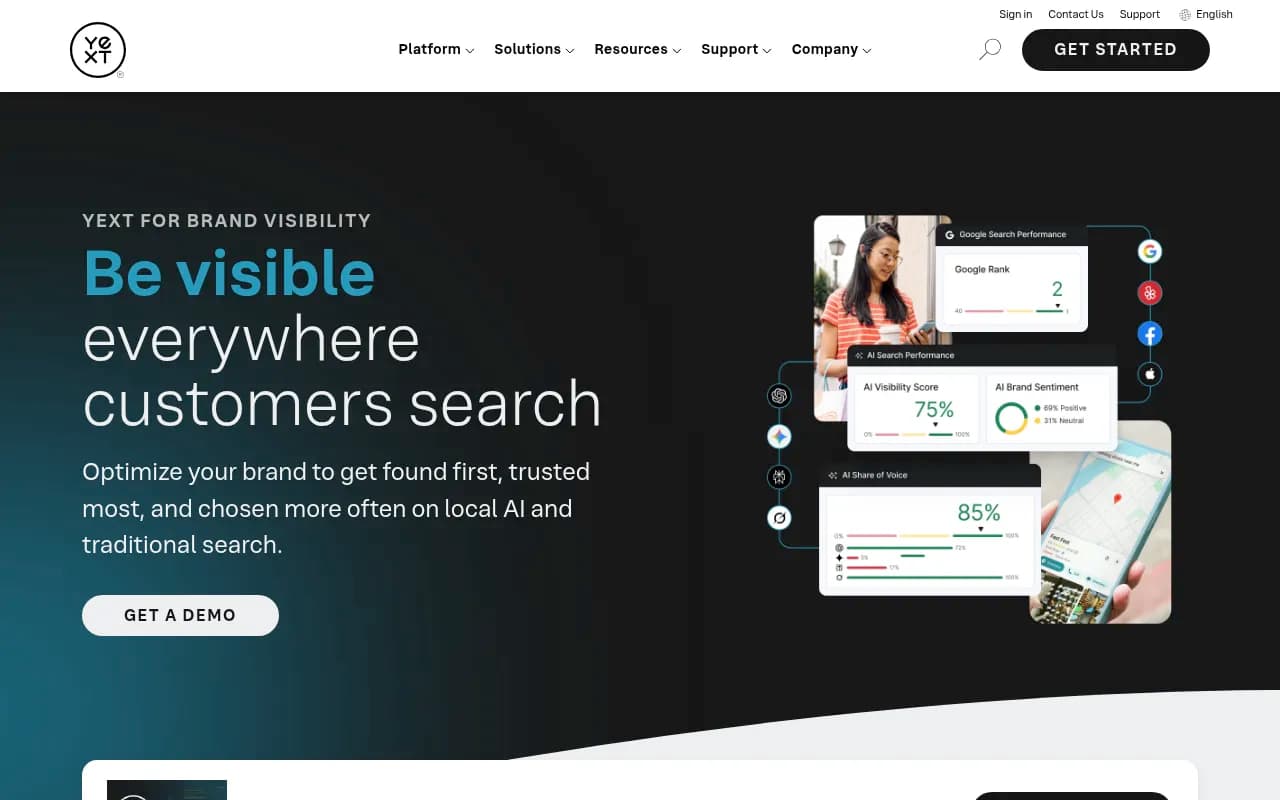
The catch is pricing. The pricing page returned a 404 when it was checked, and everything routes to sales. Expect an enterprise contract and a longer procurement cycle. If your problem is inconsistent listings across thousands of sites, Yext is the most obvious answer.
SOCi: location-by-location search agents
SOCi's Genius Local Search Agent tracks visibility across search, maps, and AI discovery for each location, then publishes optimizations within rules you set. A Reputation Agent replies to reviews and escalates sensitive ones. It has no published price.
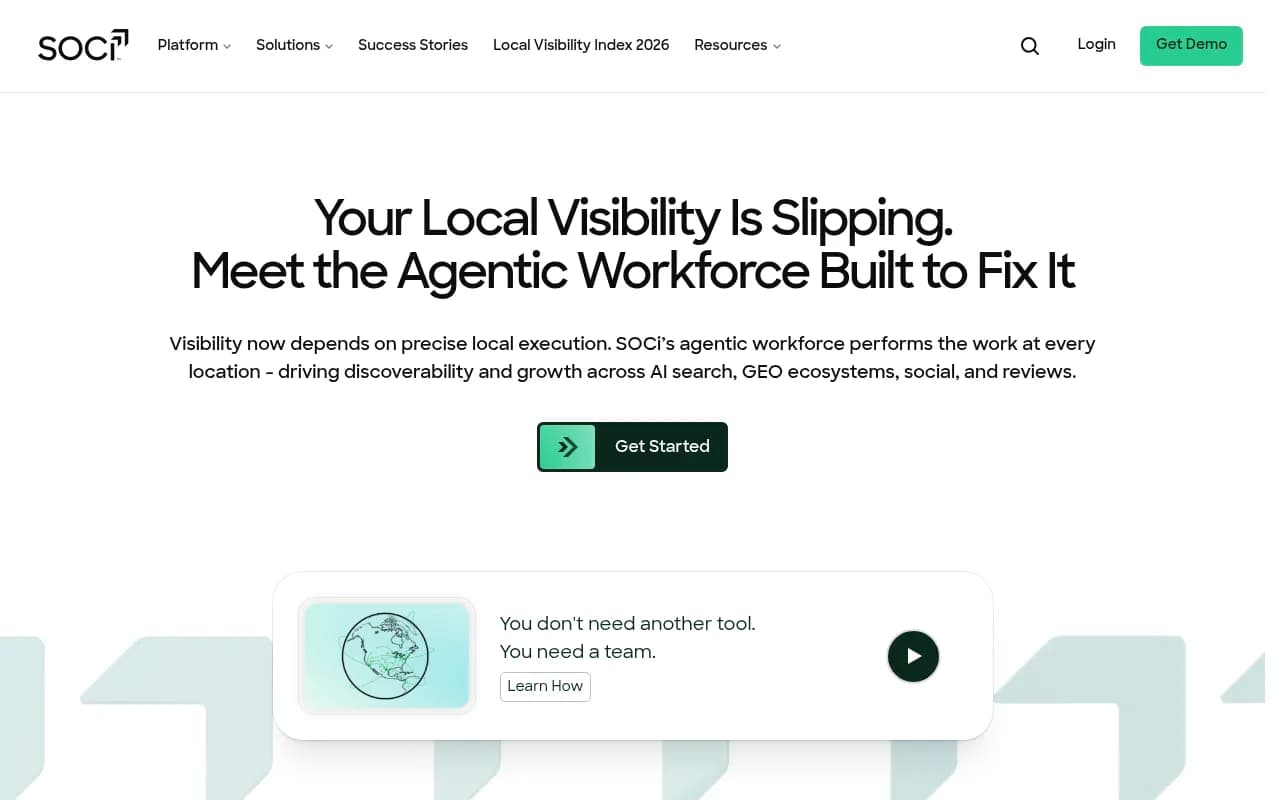
SOCi suits brands where franchisees or local managers need guardrails: central marketing sets the rules, locations get automation inside them. It leans social and reputation more than pure GEO analytics.
Birdeye: reviews first, AI search added
Birdeye's AI Search covers seven AI surfaces at the location level, and it routes findings through Reviews, Listings, Social, Messaging, and Reporting. Its claims about per-location rankings, sentiment, and action plans come from its own marketing pages, so ask for a live demo on your own locations. Pricing is not listed: the page asks for a location count and then a form.
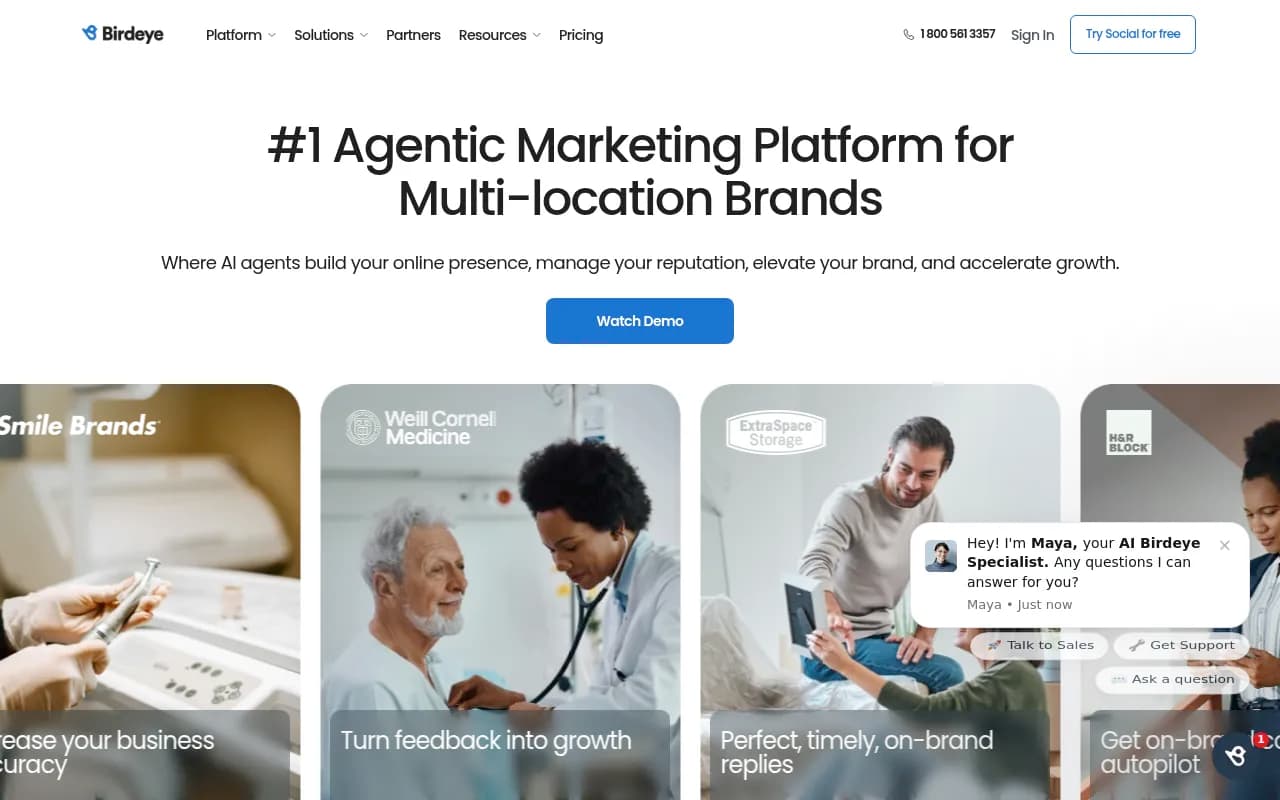
If reviews are already your biggest lever (clinics, home services, restaurants), Birdeye's bundle is attractive. If you want deep prompt analytics, you will likely want something else alongside it.
BrightLocal: the transparent-pricing option
BrightLocal publishes prices. The Grow plan is $49/month billed annually for one location, and $222/month billed annually for 21 to 30 locations ($296 on monthly billing). Every plan includes Local AI Visibility covering ChatGPT, AI Overviews, and AI Mode, with up to 20 prompts per location. A Managed SEO Service is $1,299/month.
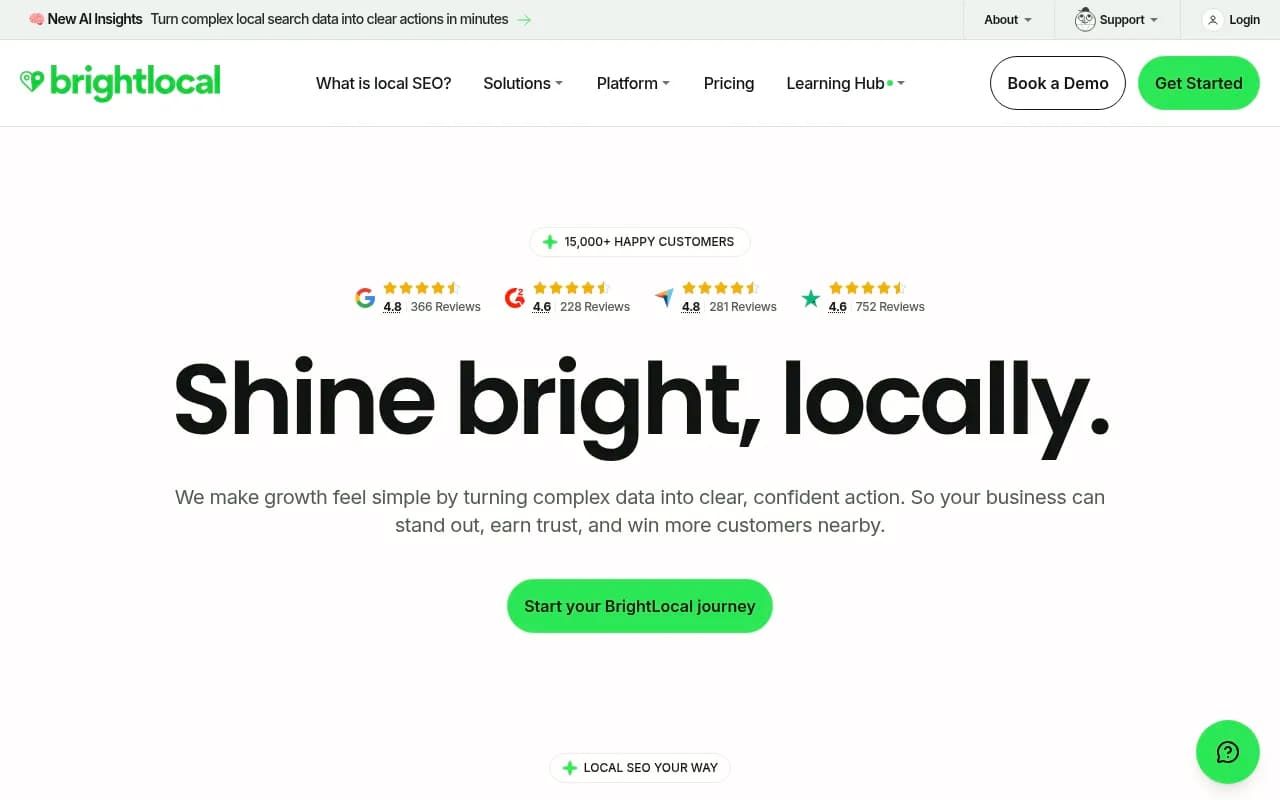
The 20-prompt cap per location is fine for a store-level pulse check but thin for an enterprise tracking dozens of intents. Think of it as a budget-friendly baseline rather than a full GEO program.
Other local options worth a look
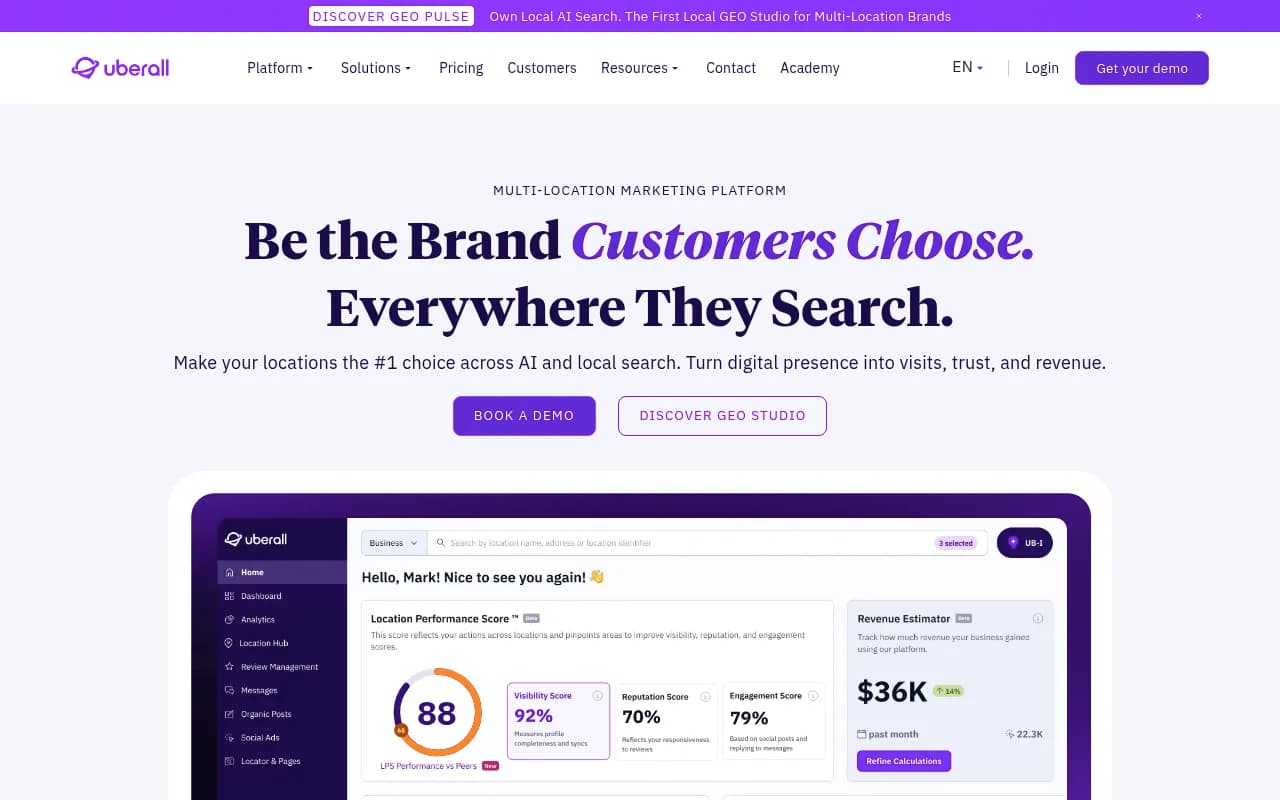
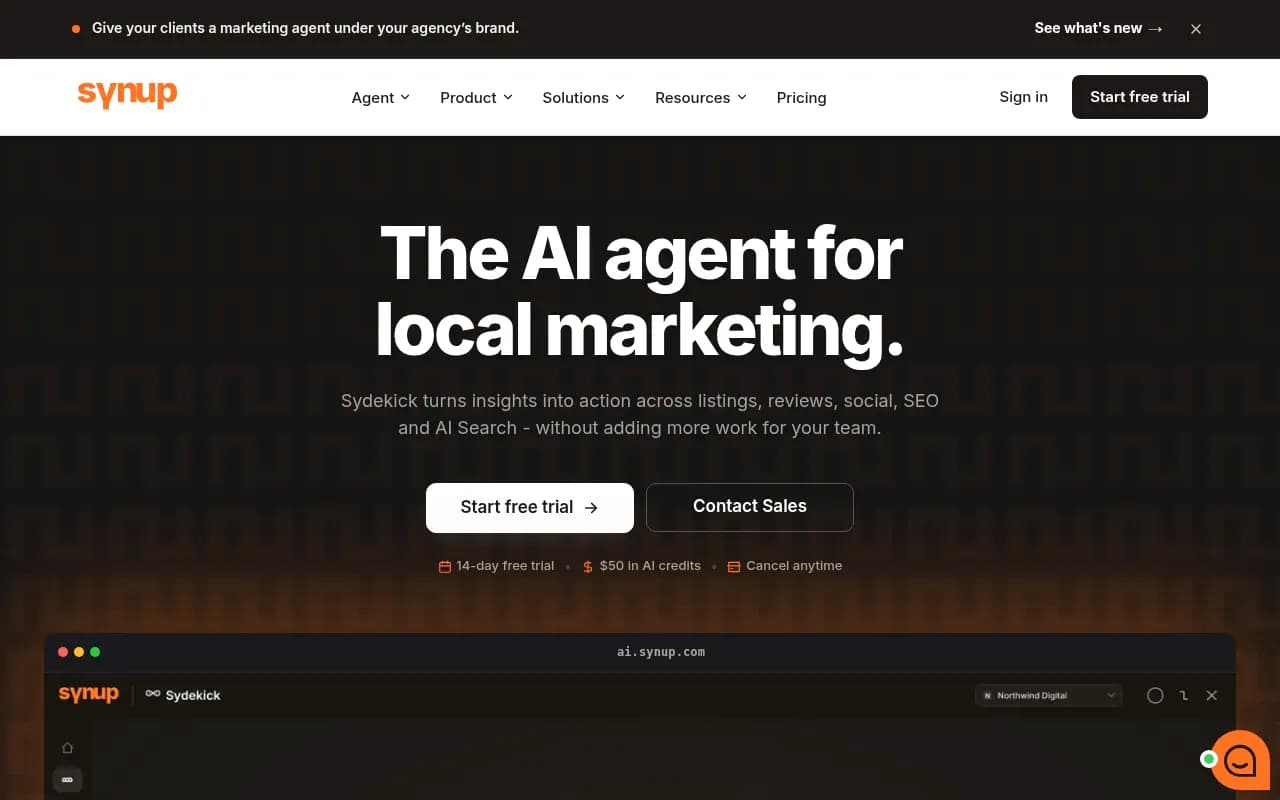
LocalClarity charges $16 per location per month ($12 billed yearly), which works out to about $400/month for 25 locations. It syncs listings and reviews from 50+ sources but has no AI answer tracking. Uberall, Synup, Moz Local, Chatmeter, and Reputation.com sit in the same listings-and-reputation space and are in the tools directory; I have not verified their current AI tracking claims.
Only a handful of vendors in one third-party review (Yext, SOCi, BrightLocal, and the vendor itself, Cheers) tracked AI answers by location, which tells you how thin the field still is. Treat that source with care because Cheers sells a competing product.
GEO-native Brandlight competitors: strong brand tracking, weaker on location
If you do not need store-level answers, the closest like-for-like alternatives are brand-level platforms.
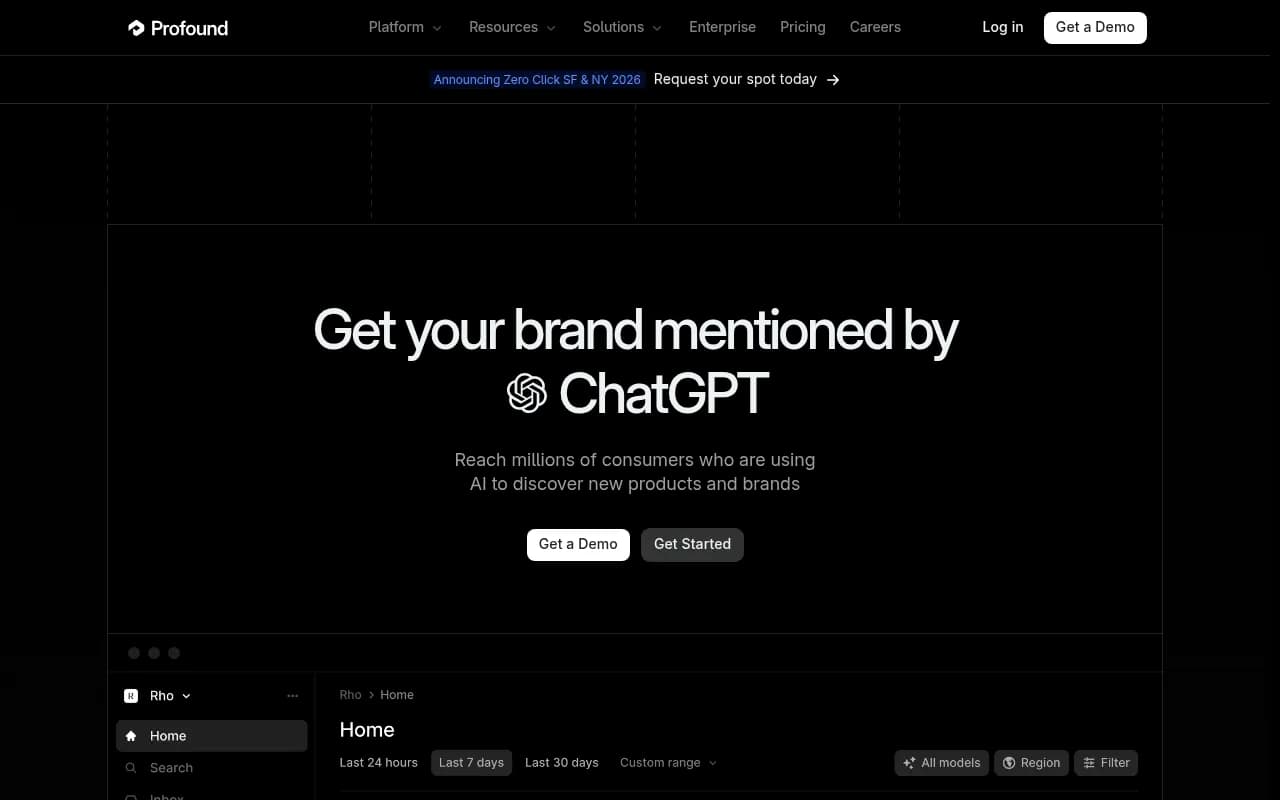
Profound is described by LLM Pulse (a competitor, so take it as opinion) as the closest direct Brandlight rival in the enterprise GEO category. It publishes region limits by plan, and pricing is custom. Compared with Promptwatch, it has no agentic execution and no Reddit tracking.
Otterly.AI offers transparent tiers and supports multiple countries and workspaces, which suits smaller regional teams but does not give location-level granularity.

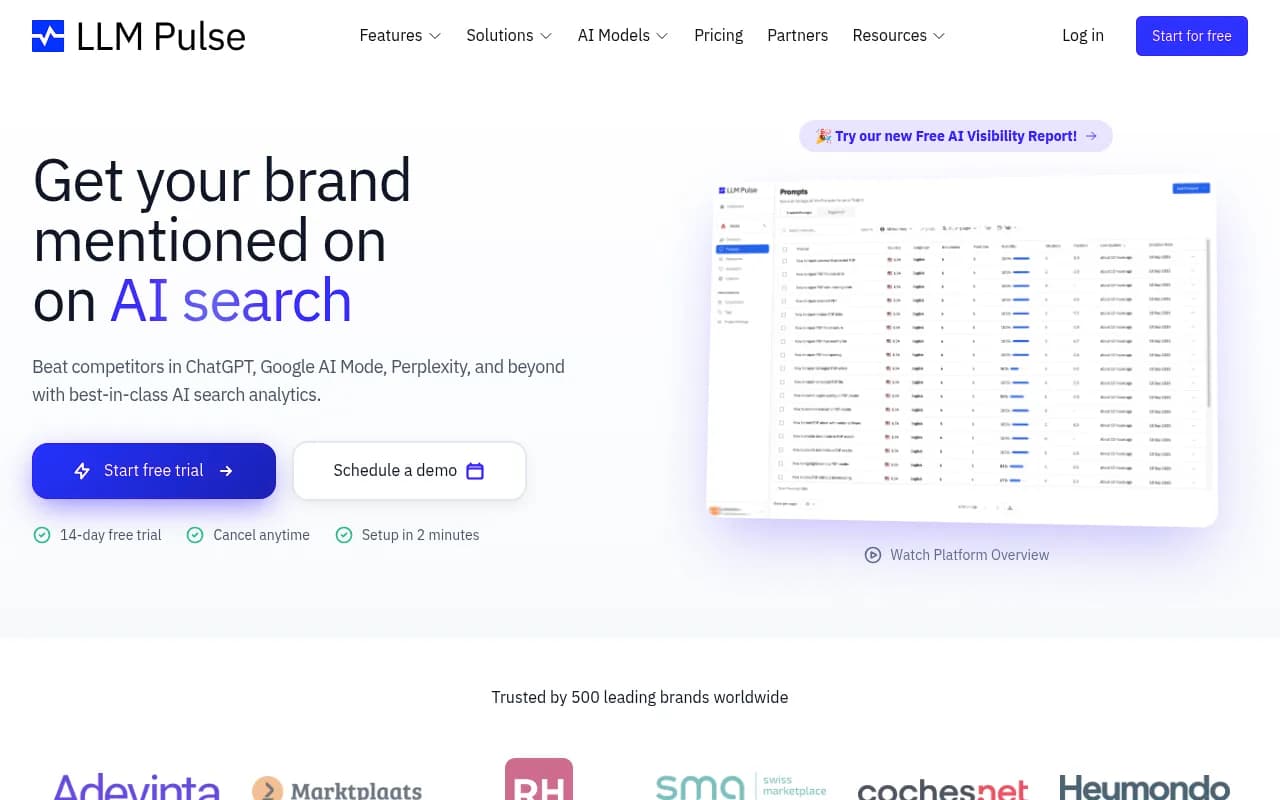
LLM Pulse positions itself as enterprise-grade tracking without enterprise-only pricing.
For a wider survey, the directories at bestgeosoftware.com and ai-rank-tools.com list many more.
How to choose
Start with the job, not the brand
Many tools track AI answers but cannot fix listings, and the reverse is also true. Write down whether you need monitoring, listings, reviews, content, or all of them. A typical enterprise stack pairs one AI visibility platform with one listings tool.
Check location granularity in the demo
Ask each vendor: can I track a prompt from a specific address or radius, or only from a country? Brand-level trackers often do the latter. Ask to see a single branch's report, not the national rollup.
Plan for the pricing gap
Yext, SOCi, and Birdeye are sales-led. BrightLocal and LocalClarity are not. Promptwatch publishes plan prices, with Enterprise being custom. Budget time for procurement if you go the sales-led route, and ask about ISO/IEC 27001 and GDPR documentation early (Promptwatch holds both).
Measure calls and visits, not just mentions
A mention in an AI answer does not fill a chair. Triadex argues multi-location brands should report AI search impact by calls and visits per location. Whatever tool you choose, connect it to visitor analytics and call tracking so local managers see outcomes.
A practical rollout for 100+ locations
- Pick 10 representative locations across your best, average, and weakest markets.
- Build a monitor for each market with local prompts ("best [service] near me", "[brand] vs [competitor] in [city]").
- Review which sources AI cites per market. If aggregators dominate, fix directory profiles first, as the travel and healthcare data suggest.
- Check crawler access on location pages. Many location pages are thin or blocked.
- Publish or refresh location content, then watch whether it gets crawled and cited.
- Expand to the full network only after you see movement.
If you would rather hand the program to specialists, an agency can run it end to end. 1001 SEO Media works on local SEO and generative engine optimization, and uses Promptwatch for AI visibility tracking. For agencies covering local clients, multi-location agency lists also circulate widely, though they focus more on paid media and classic local SEO.
Bottom line
There is no single tool that does everything for every location. If AI visibility is the priority, with exact-location prompts, content fixes, and crawler evidence, start with Promptwatch. If listings and reviews are the bigger fire, look at Yext, SOCi, or Birdeye, and budget for a sales cycle. If cost is the constraint, BrightLocal gives you AI tracking and listings at a published price. Whichever you pick, test it on ten real locations before signing for a thousand.