Key takeaways
- A visibility score tells you AI engines mention you. It does not tell you whether that attention made money. ROI needs four linked layers: visibility, demand, conversions, and revenue.
- Use gross profit, not revenue, in the formula: (profit from AI visibility minus AI visibility costs) divided by costs, times 100. Count tools, content, PR, technical work and team time.
- The hardest evidence is self-reported attribution in your CRM. The softest is AI referral sessions in GA4. Use both and label which is which.
- Citation gains decay and engines change what they cite without warning. Report on a rolling basis, annotate platform shifts, and budget for refreshes.
- Dashboard-only tools stop at the scoreboard. Enterprises should pick platforms that connect citations to crawler activity, traffic and content actions.
Why a visibility dashboard is not an ROI case
I have sat in enough budget reviews to know how this goes. Someone shows a slide with a visibility score going from 31 to 44. The CFO asks what that is worth. Silence.
Platforms like Brandlight do real work on the measurement side: per-engine scores, competitive benchmarking, citation analysis, and a human strategist who interprets the data. Their own enterprise page is refreshingly honest that attribution shows "what changed after your work and how closely it lines up, never presented as proof of cause." That honesty is the point of this guide. A score is a leading indicator. Finance wants a lagging one.
The Semrush guide to AI visibility ROI puts it well: mentions, citations and share of voice tell you AI systems are talking about your brand, not whether it is making you money. Most of the generic frameworks you will find (Partnerize, Percepture, GrowByData) agree on the structure and then stay vague on numbers. This guide fills in the numbers, the attribution mechanics and the pitfalls.
The four-layer measurement chain
Every credible ROI model I have seen stacks the same four layers. Skip one and the story breaks.
| Layer | Example metrics | Role | Typical source |
|---|---|---|---|
| Visibility | Mentions, citation rate, share of voice, position, sentiment | Leading indicator | AI visibility platform |
| Demand | AI referral sessions, branded search growth, direct visits | Leading to mid | GA4, Search Console, visitor analytics |
| Conversions | Leads, qualified leads, demos, sign-ups | Mid | CRM, forms, analytics |
| Revenue | Pipeline, closed revenue, gross profit, ROI | Lagging | CRM, finance |
Visibility moves first. Revenue confirms later. A good program improves the early layers and the later ones follow, usually with a lag of one or two sales cycles. That is why you report the whole chain rather than stopping at mentions.
Step 1: Baseline before you spend
You cannot show improvement without a starting point. Pick 50 to 100 buyer prompts, split by intent, and record for each engine whether you appear, where, in what tone, and which sources get cited.
If you have no tooling yet, run your ten most important buyer queries through ChatGPT and Perplexity by hand and write down the results. It is crude, but it is a baseline.
Segment the prompt set by intent from day one. Promptwatch Data's analysis of ChatGPT citations by content type (Sep 28 to Oct 4, 2026) shows why. Product pages earn 22.4% of citations overall, but on commercial prompts product and landing pages together reach about 46.6%, and the top four commercial types make up almost 70%. On branded prompts, reviews get 5.6%, more than three times their overall share. One blended number hides all of that.
A clean baseline also needs these fields:
- Prompt, intent type (commercial, informational, branded), persona and country
- Engine and date
- Brand mentioned, position, sentiment
- Cited URLs, and whether any are yours
- Competitors named
Step 2: Instrument attribution before you need it
Attribution is where most enterprise programs fall down, so build it early.
Self-reported attribution
Add AI platforms to your "how did you hear about us" fields on demo, contact and signup forms. Separate the options: ChatGPT, Google AI Mode, Gemini, Claude, Perplexity, and a catch-all for other AI tools. Push every response into the CRM so it attaches to the lead record and follows the deal to close.
This is the hardest data you will have. Multiply self-reported AI leads by your average close rate and deal size. The numbers are small and they undercount, but they survive scrutiny.
Referral and direct traffic
GA4 sessions from AI referral domains show direction. They will not show the whole picture, because plenty of AI-driven visits arrive as direct traffic or with no referrer at all. ChatGPT stopped sending a referrer on October 8, 2026, which makes the problem worse. If you tag your own links with utm_source=chatgpt.com wherever you control them, and count those visits as ChatGPT in your analytics, you recover some of the lost signal. Promptwatch's guide to attributing AI traffic walks through the practical options.
Branded search lift
Track branded query growth in Google Search Console alongside your AI exposure. Correlation is not causation, but when branded search climbs after citation gains on commercial prompts, and your sales team hears "ChatGPT recommended you," the triangulation becomes persuasive.
Crawler evidence
One more layer enterprises often skip: server-side proof that AI bots read the pages you are optimizing. Without it you cannot tell an access problem from a content problem. Tools like Promptwatch log IP-verified AI crawler hits and connect them to citations and visitor analytics, so the chain from bot read to cited page to visit is one view rather than three exports.

Step 3: Calculate ROI the way finance will accept
The formula is simple:
AI visibility ROI = (gross profit from AI visibility minus AI visibility costs) divided by AI visibility costs, times 100
Use gross profit, not revenue. Count everything: platform licenses, content creation and refreshes, digital PR, technical fixes, and internal or agency hours. Measure costs and returns over the same period.
A worked example, using the Semrush B2B numbers: $14,400 in modeled monthly revenue at an 80% gross margin is $11,520 in gross profit. Against $4,000 in monthly costs, ROI is (11,520 minus 4,000) divided by 4,000, which is 188%. An ecommerce example in the same source, $960 gross profit against $600 costs, gives 60%.
How do you get the modeled revenue? Stack your evidence:
- Self-reported AI leads times close rate times average deal size (floor estimate).
- AI referral sessions times conversion rate times average value (mid estimate).
- Assisted conversions where the journey included an AI-referred visit.
Present a range, not a point. A floor and a ceiling with the method written beside each is more believable than a single confident figure.
Step 4: Know the pitfalls that make dashboards lie
This is the section I wish more guides included. Your visibility number can move for reasons that have nothing to do with your work.
Engines change what they cite
In Promptwatch Data's Reddit citation report, reddit.com's share of ChatGPT citations fell from roughly 4% to 0.5% on August 14, 2026. The October 2026 social citation data (Sep 28 to Oct 4) shows ChatGPT drawing just 0.46% of citations from social platforms, while Google AI Overviews draws 12.2%. If your strategy leaned on Reddit seeding, your ChatGPT numbers would have dropped through no fault of your team. Annotate these shifts on every trend chart.
Platform behaviour changes
Average citations per response fell across models around the GPT-5.3 rollout on March 4, 2026, per Promptwatch's citation drop report. On August 8, 2026, ChatGPT began using the site: operator at scale, jumping from about 0.4% to about 17% of fan-out queries, per the site: operator report. Any of these can break a month-over-month comparison. Reset baselines when the platform changes, and say so in the report.
Citations decay
The content half-life data tracked pages ChatGPT cited on July 6, 2026 for 90 days. After 30 days, 78% of landing pages and 76% of docs were still cited. Product pages, reviews and how-tos sat at about 55% after 60 days, with half-lives of 74 to 77 days. News lost half its pages in 36 days. The ROI implication: a citation gain is not a permanent asset. Budget for refreshes and treat news and PR as short bursts, not durable returns.
Authority is not what you think
Promptwatch Data found that sites with domain rank 46 to 75 earned almost half of ChatGPT citations in August 2026, while DR 91 to 100 sites fell to about 3%. And almost half of ChatGPT responses cite 10 or more unique domains. Room exists for mid-authority enterprise brands, but your share of a crowded source list is also easy to overestimate.
Step 5: Build the reporting layer
Build one dashboard with the four layers stacked, then break each layer down by engine, prompt group, topic, page and funnel stage. Show trends over time. Weekly AI signals are volatile, so a single week proves nothing.
What the executive view needs:
- Visibility and share of voice by prompt intent, with platform-change annotations
- AI referral sessions, self-reported AI leads and branded search
- Pipeline and gross profit attributed, shown as a floor-to-ceiling range
- Total cost and ROI, with the formula visible
- A refresh queue showing which cited pages are decaying
Scheduled PDF reports to stakeholders matter more than a pretty live dashboard. Nobody in finance logs in. Send it.
Step 6: Pilot, prove, then scale
The GrowByData approach is sound here: start with one product line or region, isolate it, and learn quickly. Their example was a flow measurement segment where engineering leadership did not translate into AI visibility. A narrow pilot reveals which prompts trigger competitor recommendations and which publishers influence answers, and the gaps often repeat across adjacent categories.
A realistic enterprise rollout:
- Weeks 1 to 2: baseline one category, add CRM attribution fields, connect GA4 and Search Console.
- Weeks 3 to 8: fix technical access, publish or refresh content against the biggest prompt gaps, track changes.
- Weeks 9 to 12: compute the floor-to-ceiling ROI, present it, and request budget to expand.
Promptwatch's 90-day GEO program guide covers a similar cadence in more detail.
Choosing tooling that goes past the scoreboard
Tool choice should follow the question "what happens after the score?" Enterprise teams I talk to run six to eight visibility tools and still cannot answer the revenue question, which is the consolidation problem GrowByData also describes.
| Tool | Strength | Gap to check |
|---|---|---|
| Promptwatch | Monitoring plus crawler logs, visitor analytics, Content Agent, CMS publishing, Action Board | Content Agent starts at Business plan |
| Brandlight | Enterprise scoring, citation impact, strategist support | Confirm traffic and revenue linkage |
| Profound | Enterprise monitoring depth | Higher price points, no agentic execution |
| Semrush | AI toolkit inside an existing SEO suite | Fixed prompt sets, shallower AI-specific data |
| Peec AI | Simple prompt tracking | No crawler logs, visitor analytics or content generation |
| Otterly.AI | Affordable tracking | Monitoring only |


Promptwatch is the one I would shortlist for ROI work specifically, because it closes the loop. It tracks ChatGPT, AI Overviews, AI Mode, Gemini, Perplexity, Copilot and others through their real interfaces, then traces which pages get cited, shows whether AI bots read them via crawler logs, and measures AI-referred visits and conversions on your own site. The Content Agent writes and publishes to WordPress, Webflow or Framer, and the Action Board prioritizes what to fix. Metrics such as Visibility Score and Share of Voice are defined in the Academy, which helps when finance asks how they are calculated.
Pricing is public: Essential is $95/mo, Professional $245/mo, Business $579/mo, with agency plans from $199/mo. Confirm current numbers at promptwatch.com/pricing, and use the 7-day free trial or the free AI visibility report to baseline before committing. The head-to-head with Brandlight lays out the differences in detail, and the full 2026 GEO platform comparison covers the rest.
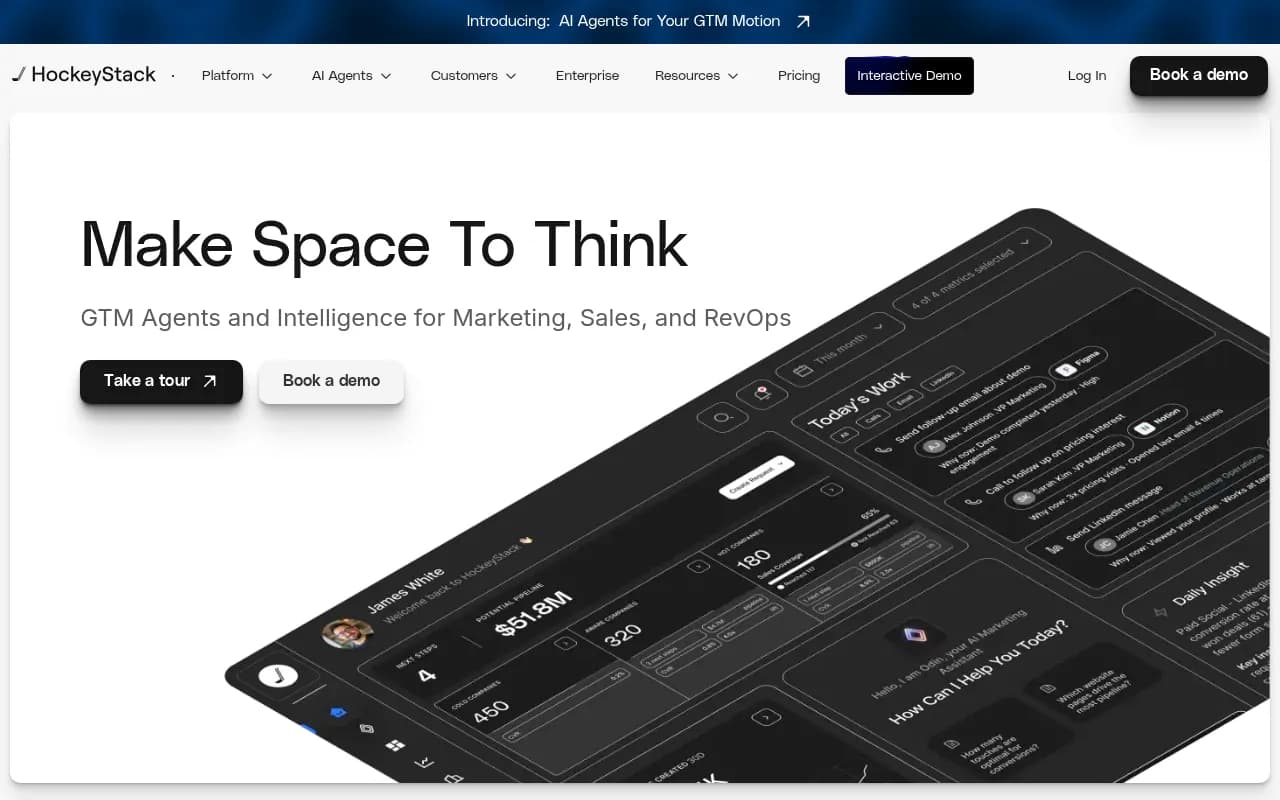
On the attribution side, enterprise teams already running a B2B attribution platform such as HockeyStack, or a CRM like Salesforce, can route AI-referral and self-reported fields into the same revenue reporting they already trust. If you want to browse more options, the GEO software directory at bestgeosoftware.com lists dozens of platforms.
A proof point worth knowing
Crisp, a Promptwatch customer, reported 2x higher conversion rates from AI traffic than from traditional channels and scaled to 5 to 10 articles a day (case study). TreeHouse, the company behind Pararius, grew AI search to roughly 25% of organic conversions, with 99% of that from ChatGPT (case study). Both are single-company results and your mileage will vary, but they show what a measured traffic-to-conversion chain looks like.
A checklist for the next board conversation
- Do we have a segmented prompt baseline from before the work started?
- Are AI options in every lead form, flowing into the CRM?
- Can we show crawler evidence that AI bots read the pages we optimized?
- Is ROI computed on gross profit with all costs counted, and shown as a range?
- Are platform shifts annotated on every trend line?
- Is there a refresh budget, given that citations decay?
If you cannot answer yes to most of these, you do not have an ROI case yet. You have a dashboard. Fix that first, and the budget conversation gets a lot shorter.