Key takeaways
- A citable paragraph covers one idea, opens with the answer, and still makes sense when lifted out of the page.
- Most sentence-level rules (about 20 words per sentence, one to four lines per paragraph) are third-party guidance, not measured laws. Use them as defaults, not dogma.
- Content type and freshness have hard data behind them. ChatGPT cites product and landing pages most, and news pages decay fastest.
- Headings should read like the search queries AI fans out into, and the first sentence under each heading should answer that query.
- You can check results. Track which pages get cited and rewrite the ones that don't.
Why sentence-level writing matters now
Most AI search advice stays at the page level: add schema, build topical authority, get backlinks. That matters. But when ChatGPT or Google AI Overviews assembles an answer, it is lifting a passage, not a page. Whether your passage gets lifted depends on how the paragraph is built.
I want to be upfront about the evidence here. The data on what content types get cited is solid, and I will quote it. The data on sentence length and paragraph length is mostly practitioner guidance. Nobody I found has published a clean controlled test of "20-word sentences get cited X% more." So treat those rules as sensible defaults that also make your writing better for humans, which is a decent reason to follow them anyway.
As Ann Wylie put it in a May 2026 PRsay article, write for a 10-year-old but provide data for a PhD. That line is a good summary of the whole guide.
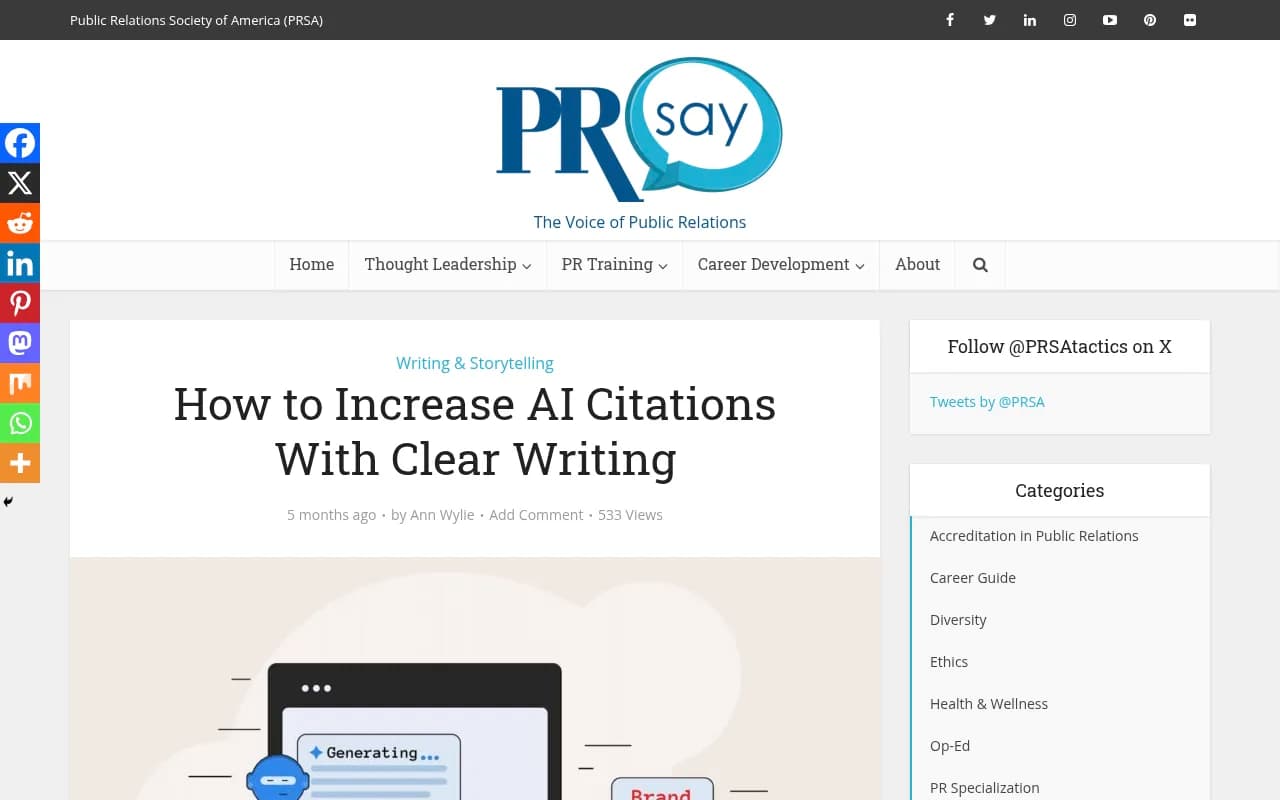
The three properties of a citable paragraph
PRsay's framework boils down to three properties. Every paragraph you want quoted should have all of them.
One idea, fully expressed
People call this atomic writing: the smallest indivisible unit of thought. If a paragraph covers pricing and then drifts into implementation, split it. A retrieval system choosing a passage to answer "how much does X cost?" doesn't want your onboarding notes attached.
Writesonic's structure guide puts the base unit at 2 to 4 lines with one idea. PRsay is stricter and suggests one to two sentences. Pick a range and be consistent. I'd go with two to three sentences for explanatory content and one or two for definitions.
The answer comes first
AI extraction favors the front of a page, a section and a paragraph. A Digital Applied roundup of 2026 citation research, citing a Wix/Evertune study, says 44.2% of AI citations come from the first 30% of a page. I haven't verified that figure independently, so read it as directional. It matches the common advice, though: a buried answer rarely gets cited.
In practice, the first sentence under a heading should work as the answer, and the rest should support it.
It stands alone
AI pulls passages out of context. If your paragraph says "This is why it matters" or "As mentioned above," it breaks the moment it leaves the page. Name the subject. Repeat the entity. Yes, it feels redundant to a human reading top to bottom. That redundancy is the price of being quotable.
Sentence-level rules that hold up
Here are the rules I'd actually apply when editing, with the reasoning for each.
- Aim for roughly 20 words per sentence. Mediaforta and Writesonic both use this guideline. It isn't magic, but sentences you can finish in one breath are easier to extract cleanly.
- Use active voice. "Google rewrites the query into sub-searches" beats "The query is rewritten into sub-searches by Google." It also forces you to name the actor.
- Put the subject in the sentence. Replace "it," "this" and "they" with the noun when a passage could be read alone.
- Make claims specific. "Product pages get 22.4% of classified ChatGPT citations" is quotable. "Product pages perform well" is not.
- Attach a source and a date to every number. A figure with a period and a link reads as trustworthy, to people and to models.
- Keep bullets to a full thought. Writesonic's advice is that each bullet should be one to two sentences, a rule you can quote, not a single word.
- Define terms in the sentence that introduces them. "Query fanout is the set of sub-searches an AI runs for a single prompt" can be lifted whole.
Before and after
Here is a typical paragraph that won't get cited.
When it comes to this, there are a lot of things to consider, and as we discussed earlier, it really depends on your goals. Many teams find that things work better when they approach it carefully and take a number of factors into account.
Nothing in it can be lifted. No subject, no claim, no number. Now a rewrite.
ChatGPT cites product pages more than any other content type: 22.4% of classified citations between Sep 28 and Oct 4, 2026, according to Promptwatch Data. Landing pages came second at 16.8%, so pages that describe what you sell earn about 39% of citations combined.
Two sentences, one idea, a named source, a date range, and it survives being copied into an AI answer with no surrounding text. That is the whole craft.
What the data says about what gets cited
Sentence structure gets a paragraph picked. Content type and freshness decide whether the page is in the running at all. Promptwatch Data has real numbers on both.
Content type
From Promptwatch's ChatGPT content type report (Sep 28 to Oct 4, 2026):
| Content type | Share of ChatGPT citations |
|---|---|
| Product pages | 22.4% |
| Landing pages | 16.8% |
| Listicles | 13.6% |
| How-to guides | 8.7% |
| Documentation | 7.5% |
| General articles | 6.1% |
| Comparisons | 5.9% |
| News | 5.7% |
| FAQ pages | 3.3% |
| Reviews | 1.7% |
The lesson for sentence-level writing: commercial pages are quoted directly. Promptwatch's advice is to keep specs, prices and positioning complete and factual on product and landing pages, because ChatGPT lifts them. Your spec table and your one-line positioning statement are citable paragraphs too. Give them the same care as a blog intro.
For informational prompts, how-tos (10.7%), docs (8.5%) and articles (7.7%) earn a bigger slice than they do overall. If you publish explanatory content, this is where your atomic paragraphs live.
Freshness
In Promptwatch's content half-life report, pages cited on July 6, 2026 were tracked until Oct 4. After 60 days, ChatGPT still cited 69% of landing pages and 67% of docs. Product pages, reviews and how-tos sat around 55%, with a half-life of 74 to 77 days. News was the fastest to fade: half of news pages were gone by day 36.
The practical read is that facts with a shelf life, such as prices and specs, need dated statements and regular refreshes. A paragraph that says "as of October 2026, the plan costs $X" can be verified and updated. One that says "currently" can't.
Headings and the first sentence under them
A paragraph rarely gets retrieved alone. It's retrieved because its heading matched a sub-query. Promptwatch's query fanout data shows ChatGPT averaged about 1.84 fanouts per response in early March 2026, with query length dropping to roughly 53 characters (six to eight words) once fanouts returned in April. That is short, keyword-like phrasing.
Two implications for how you write headings:
- Write headings that read like search queries, such as "Best CRM for small agencies 2026", rather than chatty questions.
- Put the entity and category at the start of titles and H2s.
Some sources, like Mediaforta, recommend question-style H2s instead. The two aren't irreconcilable. Use a query-shaped heading, then answer it directly in the first sentence. Whichever form you pick, the heading and its opening line should work as a pair: the heading names the query, the sentence answers it.
A pattern that works:
## Chatgpt query fanout length in 2026

ChatGPT query fanouts averaged about 53 characters (six to eight words) in April 2026, down from roughly 117 characters in December 2025. Shorter sub-queries mean your headings should match keyword-style phrasing.
It's also worth building focused pages rather than one giant page. Fanouts split a prompt into "X vs Y," pricing, alternatives and how-tos. A tight page per sub-question gives each one a clear match.
Section length: a number to verify before you repeat
PRsay says sections of 120 to 180 words get 70% more ChatGPT citations than sections under 50 words, attributing the figure to a 2025 SE Ranking study via Search Engine Journal. I couldn't confirm the original, so I wouldn't quote that percentage as fact. The underlying idea is still reasonable: a section long enough to answer a question completely and short enough to lift in one piece. Treat 120 to 180 words as a working target for a section under one H2, made of two to four short paragraphs.
Digital Applied's roundup also cites Ahrefs data suggesting the average cited page runs about 1,282 words with almost no correlation to rank. Length of the page isn't the lever. Length and shape of the passage is.
A checklist for editing a paragraph
Run each paragraph through this list before you publish.
- Can you state the single idea in one sentence? If not, split it.
- Is the answer in the first sentence?
- Replace every "it," "this," "they" and "the above" with the actual noun.
- Does each number have a source, a date and ideally a link?
- Are most sentences under about 20 words, in active voice?
- Could the paragraph be pasted into a chat reply and still make sense?
- Does a heading above it match how someone would search for this?
That last check is the one people skip. A perfect paragraph under a vague heading like "Overview" rarely matches any sub-query.
Tools that help you write and check
No tool will make a paragraph citable on its own, but several help with specific steps.
Readability and sentence editing
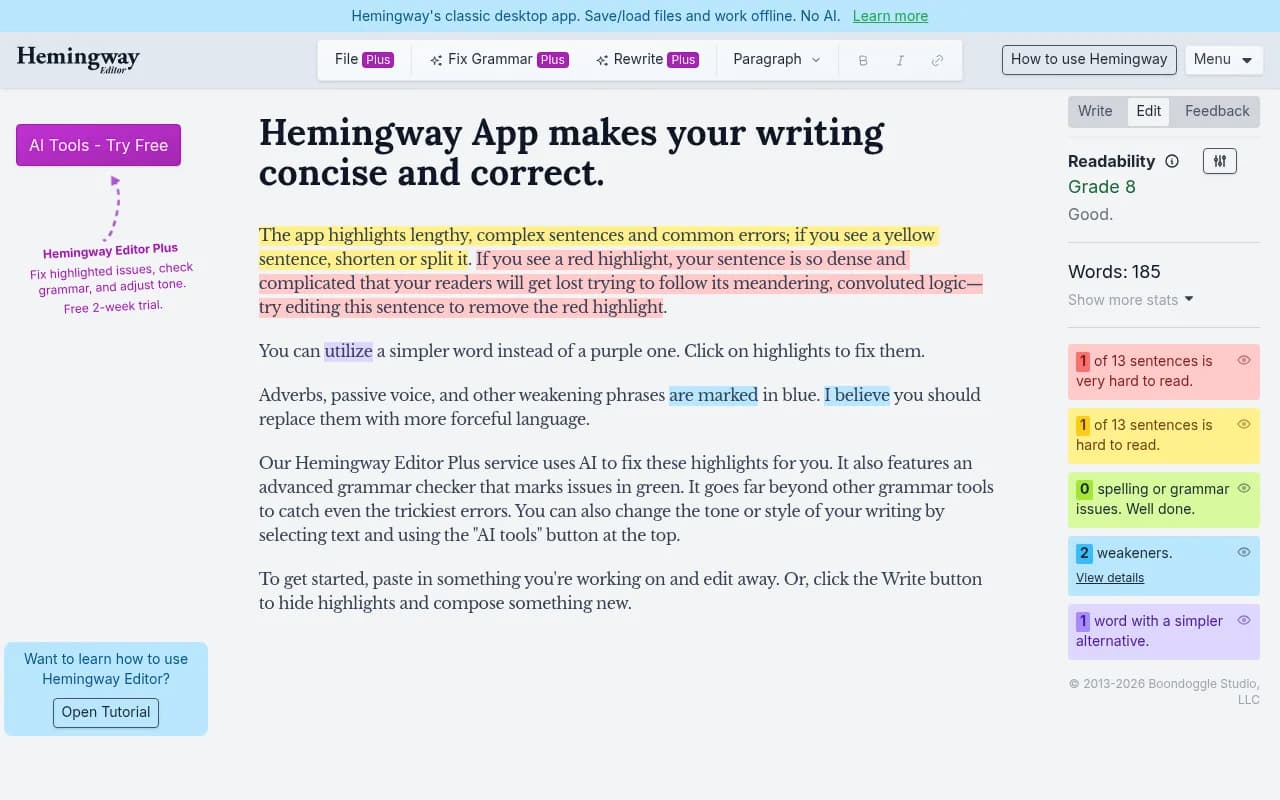
The Hemingway App flags long sentences and passive voice, which maps neatly onto the 20-word, active-voice rule.
Grammarly and LanguageTool catch clarity and grammar problems that make passages harder to parse.
Content briefs and optimization
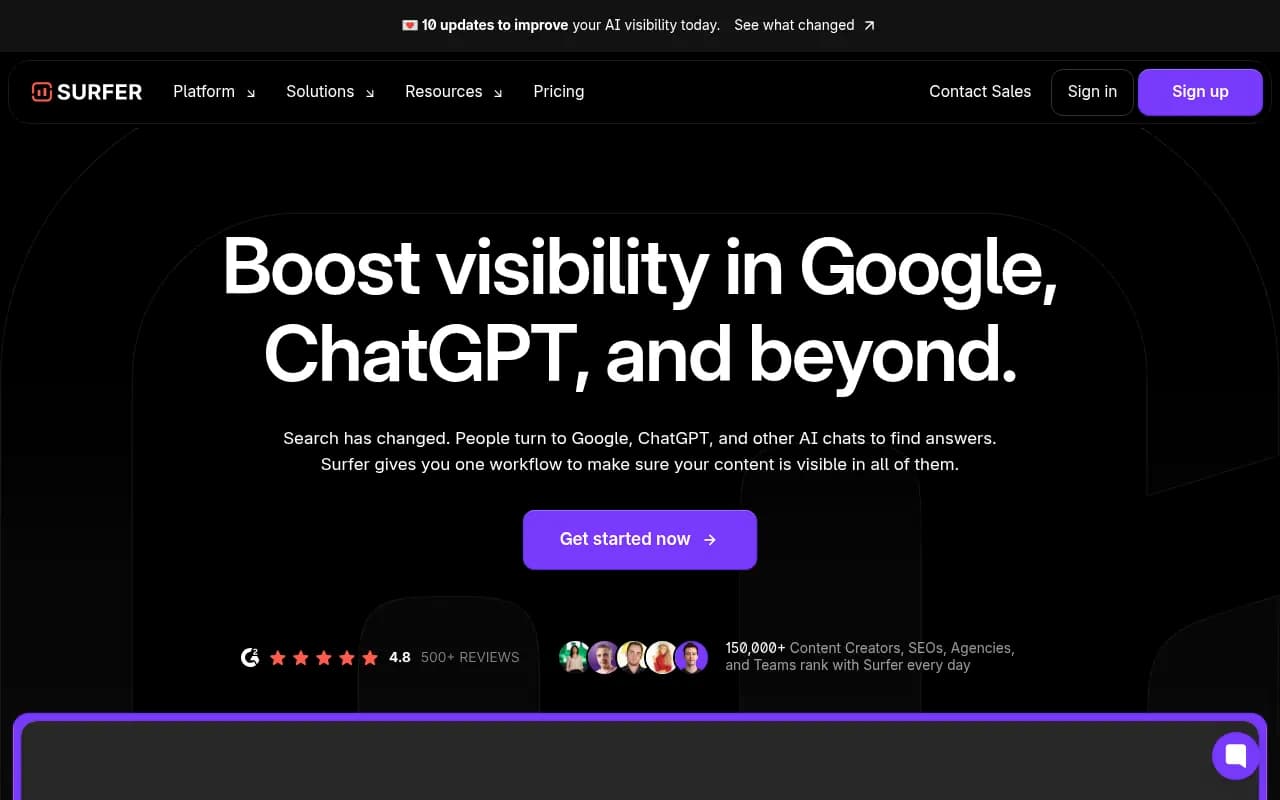
Surfer SEO covers outlining, entities and content scoring for Google and AI search. The workflow is shown in Surfer Academy's May 2026 video tutorial, which walks from search intent to publishing.
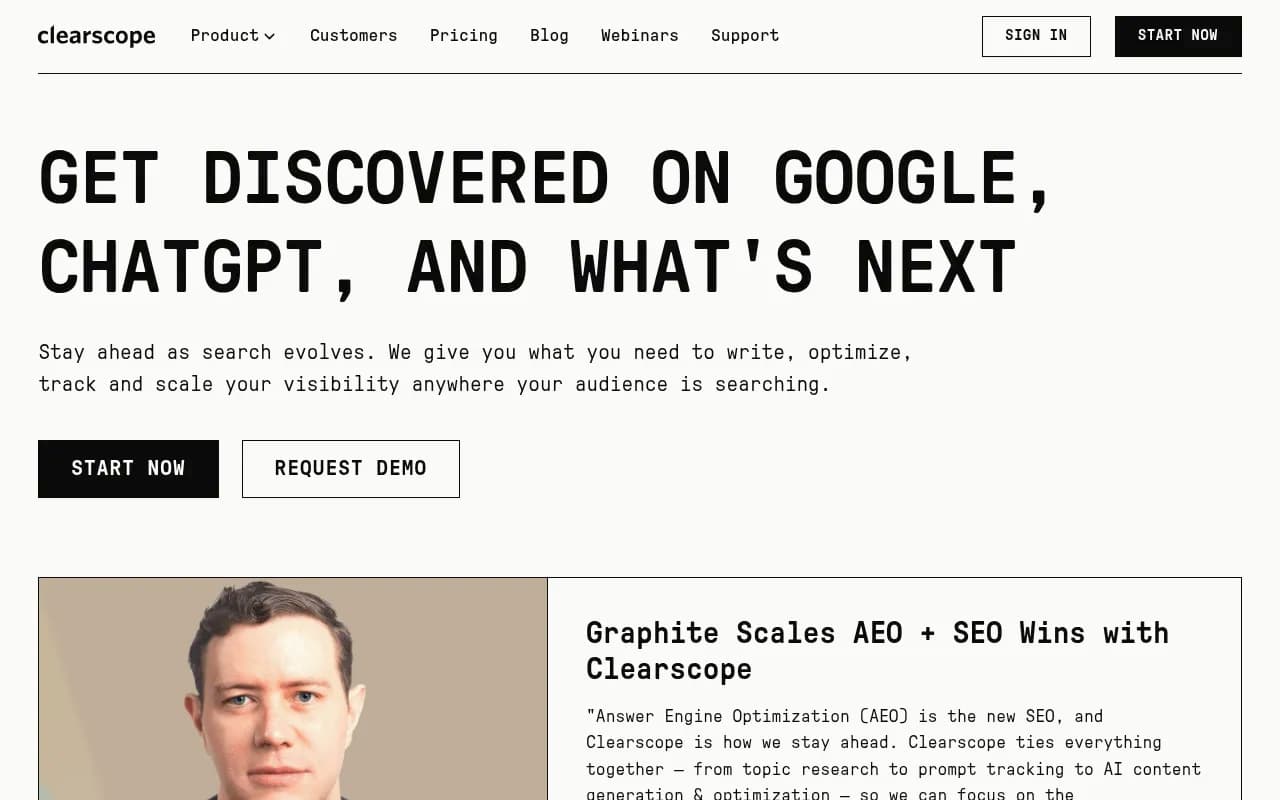
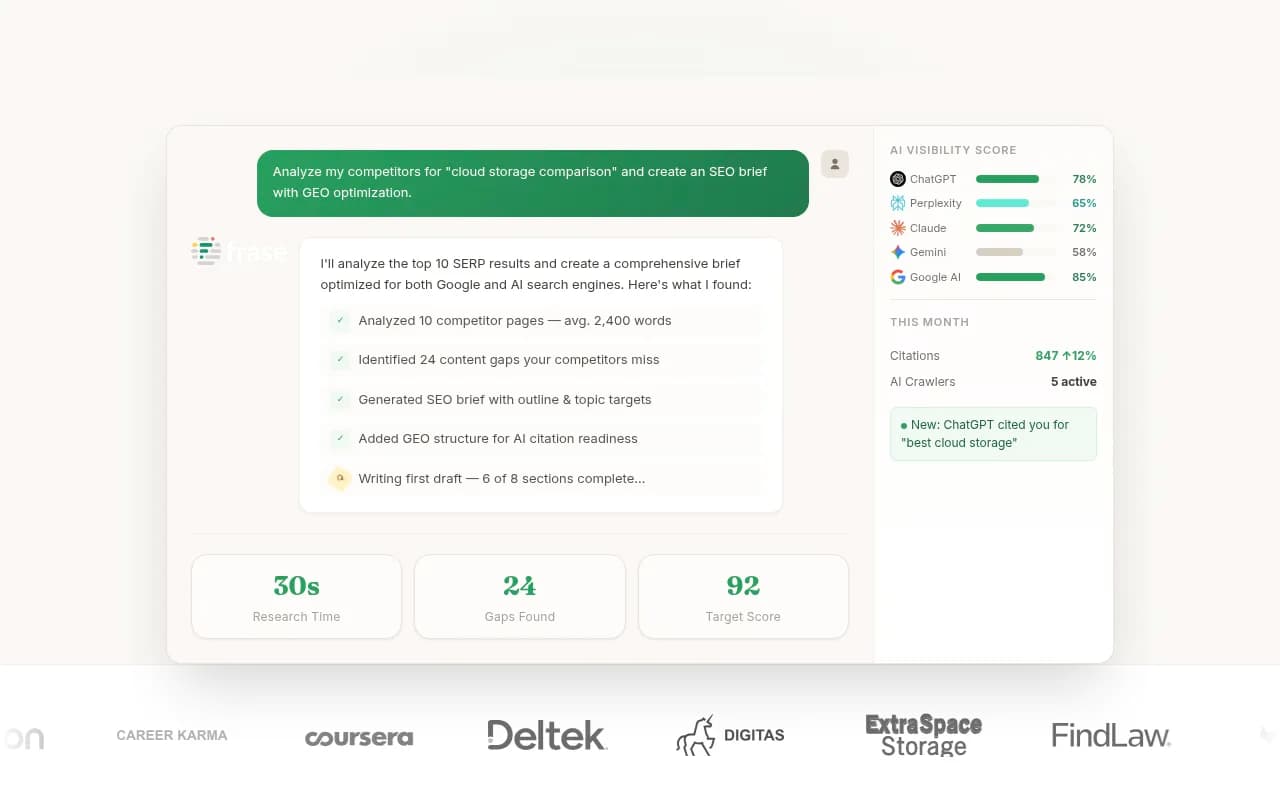
Clearscope and Frase are alternatives if you want research-based briefs.
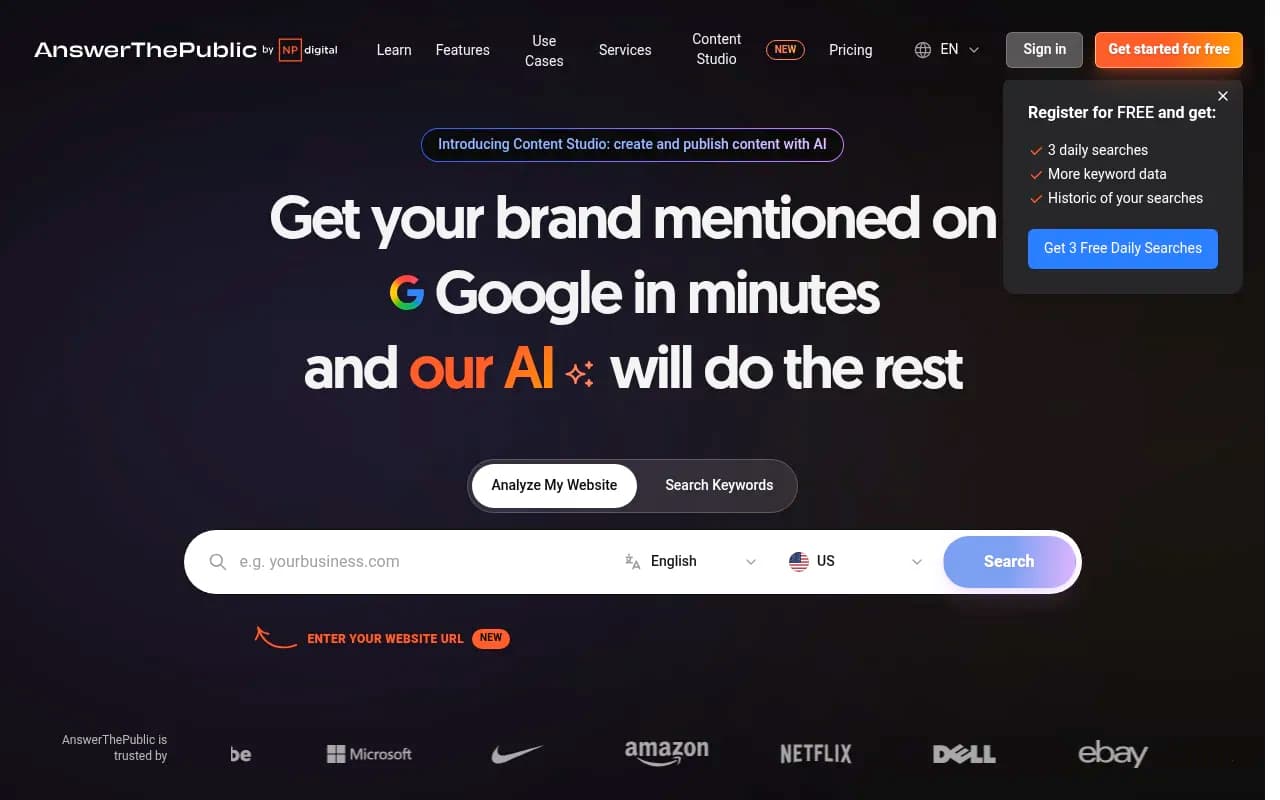
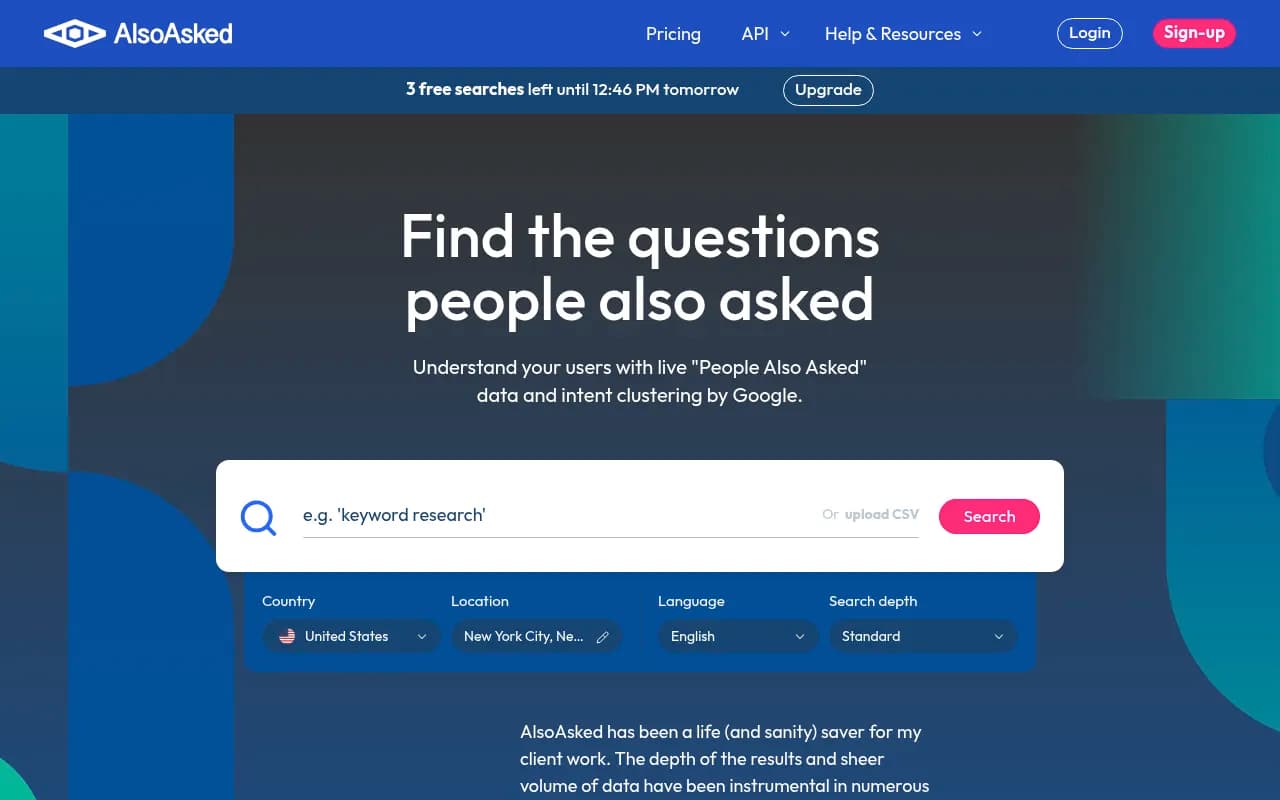
For question research that feeds your headings, AnswerThePublic and AlsoAsked show how people phrase queries.
Seeing whether the rewrite worked
Editing without measurement is guesswork. A tool like Promptwatch can show which of your pages AI platforms cite, which prompts trigger those citations, and which pages AI crawlers read but never cite. That last group is your rewrite list. Its content gap analysis and Content Agent can also draft pages against the gaps, but the sentence-level editing is still worth doing by hand first.

If you want to compare other trackers, the GEO software directory at bestgeosoftware.com lists many of them. Options in our catalog include Profound, Otterly.AI and Peec AI.



| Job | Tool types | Examples |
|---|---|---|
| Sentence clarity | Readability editors | Hemingway App, Grammarly, LanguageTool |
| Briefs and outlines | Content optimization | Surfer SEO, Clearscope, Frase |
| Query research | Question tools | AnswerThePublic, AlsoAsked |
| Citation tracking | AI visibility platforms | Promptwatch, Profound, Otterly.AI |
Common mistakes
- Clever intros. A paragraph that builds suspense before the answer gets skipped. Say it first.
- Pronoun chains. Three sentences in a row starting with "It" can't be lifted individually.
- Vague bullets. A single word like "Speed" isn't quotable. A full rule is.
- Undated claims. "Recent studies show" tells a model nothing. Name the study and the period.
- Burying facts in images. Models read text. Put the number in a sentence as well as the chart.
- Writing only for the machine. The Mediaforta FAQ gets this right: you are still writing for readers, just structuring so answers can be extracted.
A realistic workflow
Pick your ten most commercially important pages. For each, rewrite the first sentence under every H2 as a direct answer, then fix pronouns, add dates and sources, and shorten anything that runs past about 25 words without reason. Publish, then watch citations for a few weeks.
Then go one level up. Check whether your headings match the short, keyword-like sub-queries AI actually runs, and whether pages with volatile facts are refreshed on a schedule. If you want more research on how citations behave across platforms, the Promptwatch Data hub is a good place to start.
The sentence is the smallest unit you control. Get it right, and the rest of the page has something worth quoting.