Key takeaways
- AI search engines like ChatGPT, Claude, and Perplexity now influence purchasing decisions -- but most brands have no idea whether they're being cited or ignored
- Getting cited requires three things: knowing which prompts you're missing, creating content that AI models want to reference, and tracking whether it's working
- Most "AI visibility tools" only do step one -- monitoring. The ones that actually move the needle help you act on the data
- Your tool stack should cover: visibility tracking, content gap analysis, content creation, and traffic attribution
- A few platforms (notably Promptwatch) handle all four in one place; others require stitching together multiple tools
There's a question most marketing teams aren't asking yet, but should be: when someone asks ChatGPT to recommend a tool like yours, does your brand come up?
Not "does your website rank on Google." Not "do you have good reviews on G2." Specifically: when an AI model synthesizes an answer about your category, are you in it?
For most brands, the honest answer is "we have no idea." And that's the problem this guide is trying to solve.
AI search isn't a future trend anymore. Perplexity processes hundreds of millions of queries per month. ChatGPT has over 200 million weekly active users. Google AI Overviews now appear on the majority of informational searches. These systems are actively shaping what people buy, which tools they try, and which brands they trust -- and they're doing it without showing you a ranking report.
So let's talk about the actual tool stack you need to get cited, not just tracked.
Why "AI visibility" is harder than it sounds
Traditional SEO has a clear feedback loop. You publish content, Google crawls it, you check your rankings, you adjust. The whole system is built around measurable positions.
AI citation doesn't work like that. There's no "position 1" in a ChatGPT response. There's cited or not cited. Mentioned positively or mentioned negatively. Recommended or ignored. And the factors that determine which outcome you get are less transparent -- they depend on what content exists about your brand, how authoritative it looks to the model, what third-party sources (Reddit threads, review sites, YouTube videos) are saying about you, and whether the model has seen enough consistent signals to trust you as an answer.
This is why a lot of brands have tried to "do GEO" by publishing a few FAQ pages and calling it done. That approach rarely works because it misses the upstream problem: you don't know which specific questions AI models are being asked about your category, which competitors are being cited instead of you, or what content would actually change the outcome.
The tools that matter are the ones that close this loop.
The four layers of an effective AI brand mention stack
Think of your stack in four layers. Each one is necessary. Most tools only cover one or two.
Layer 1: Visibility tracking (knowing where you stand)
Before you can improve anything, you need to know your baseline. Which prompts is your brand appearing in? Which models cite you? What's the sentiment when you are cited? Who's beating you, and for which queries?
This is the layer most tools focus on, and there are now quite a few options.
Promptwatch monitors across 10 AI models -- ChatGPT, Claude, Perplexity, Gemini, Google AI Overviews, Google AI Mode, Grok, DeepSeek, Copilot, and Meta AI. It tracks which of your pages are being cited, how often, and by which model. The competitor heatmaps are particularly useful: you can see at a glance who's winning for each prompt and why.

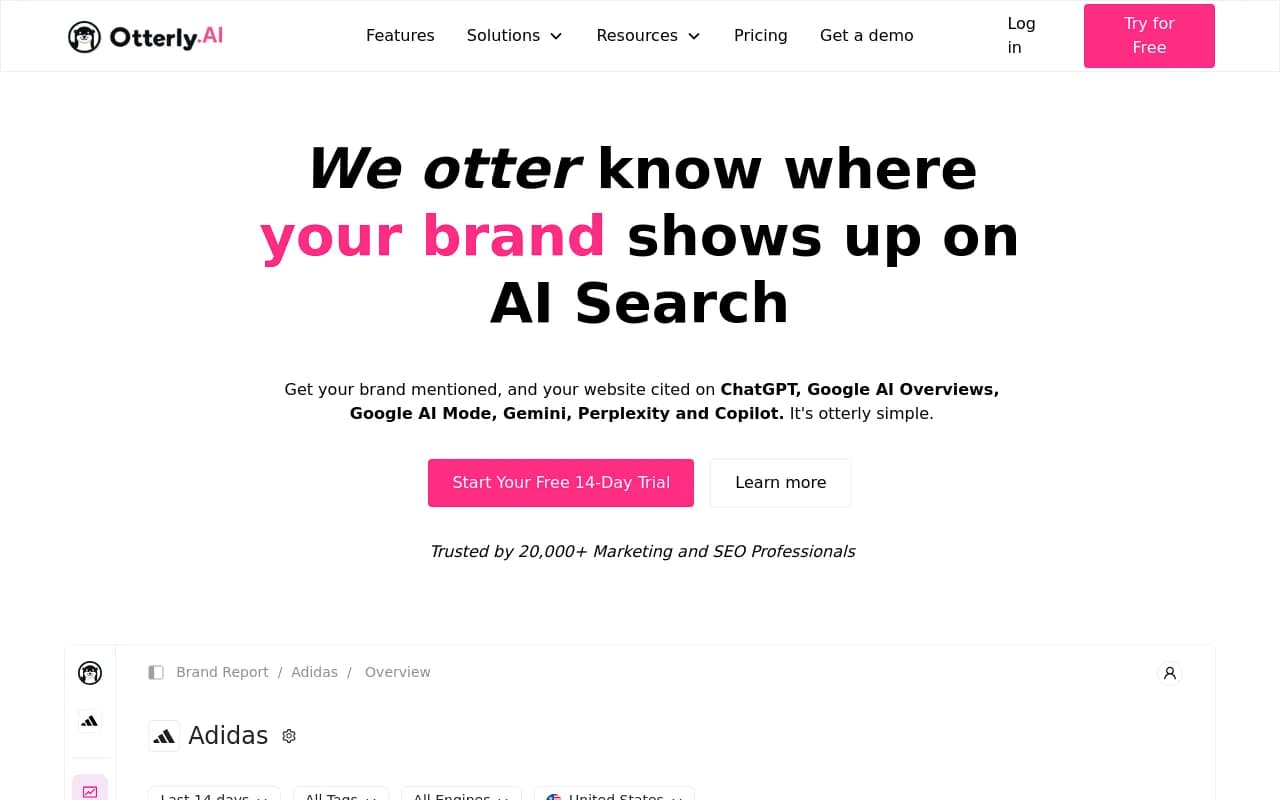
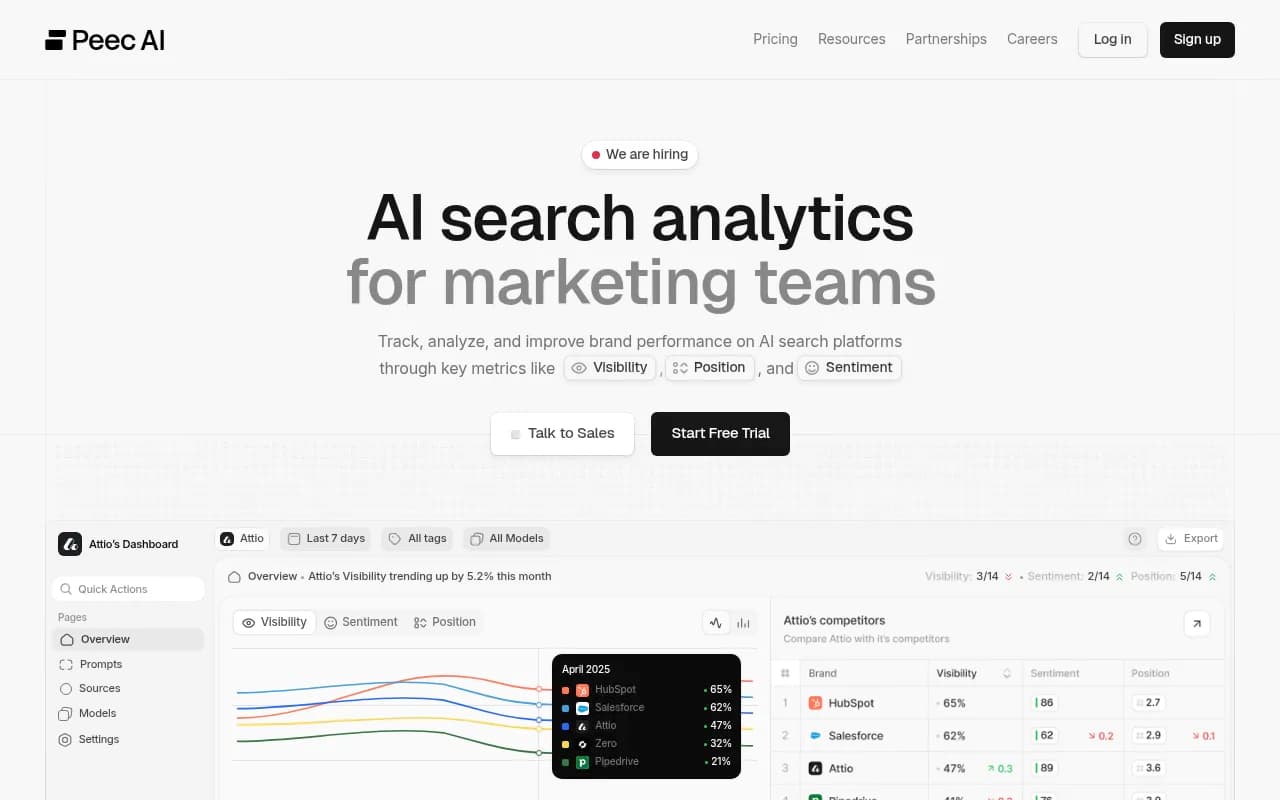
Otterly.AI and Peec AI are lighter-weight options that work well if you're just getting started and need basic mention tracking without a big investment.
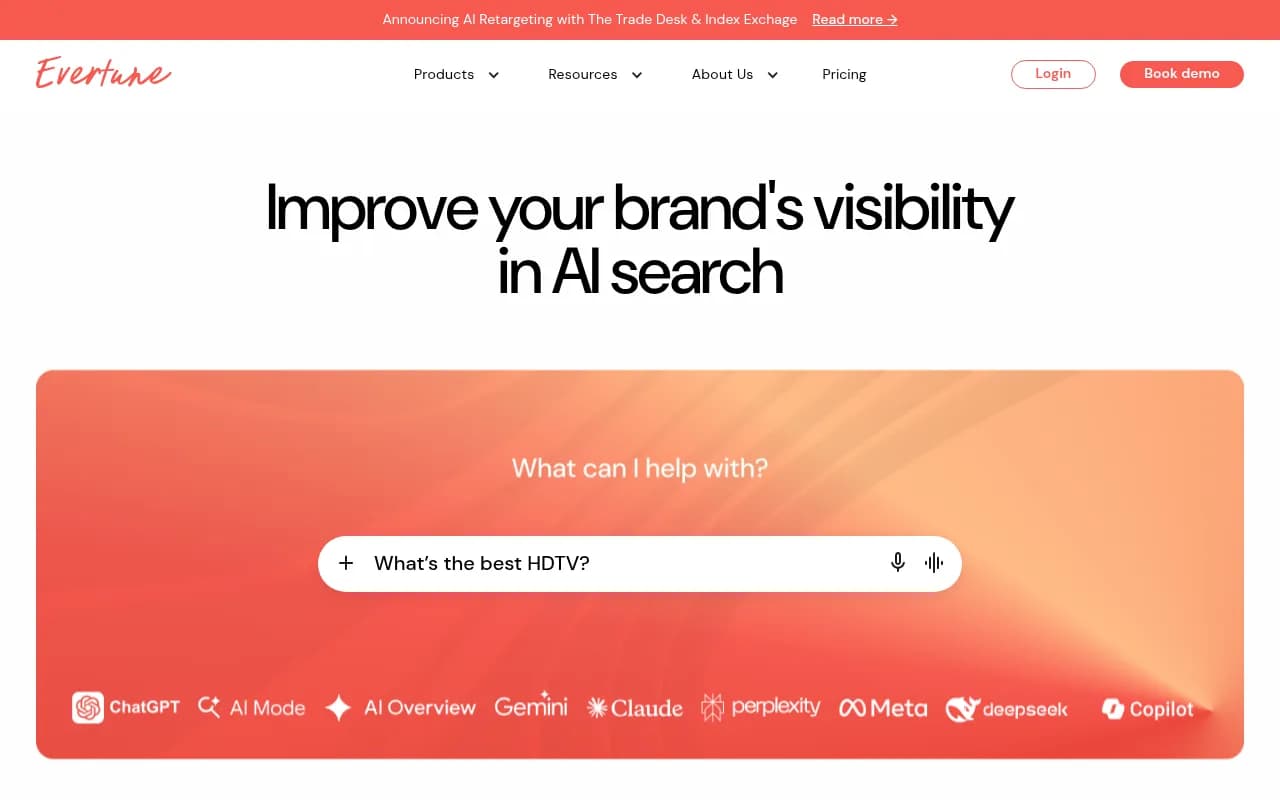
For enterprise teams with complex multi-brand or multi-region needs, Profound and Evertune both offer strong coverage, though they come at higher price points.
The key thing to look for at this layer: does the tool track prompt-level data, or just brand mentions? Prompt-level data tells you which specific questions your brand is or isn't answering. Brand mentions alone tell you very little about what to do next.
Layer 2: Gap analysis (finding what's missing)
This is where most tools stop being useful. You can see that you're not being cited for "best project management tool for remote teams" -- but why? What content would change that? Which competitors are being cited instead, and what do their pages have that yours doesn't?
Answer gap analysis is the bridge between monitoring and action. Without it, you're staring at a dashboard full of red metrics with no clear path forward.
Promptwatch's Answer Gap Analysis shows exactly which prompts competitors are visible for but you aren't, with the specific content gaps your site has. It also includes prompt volume estimates and difficulty scores, so you can prioritize the gaps that are actually worth closing rather than chasing every missing mention.
A few other tools worth knowing at this layer:
Athena HQ focuses on tracking and has some gap-analysis features, though it's primarily monitoring-oriented.
Scrunch AI offers competitive tracking that can surface some gap insights.
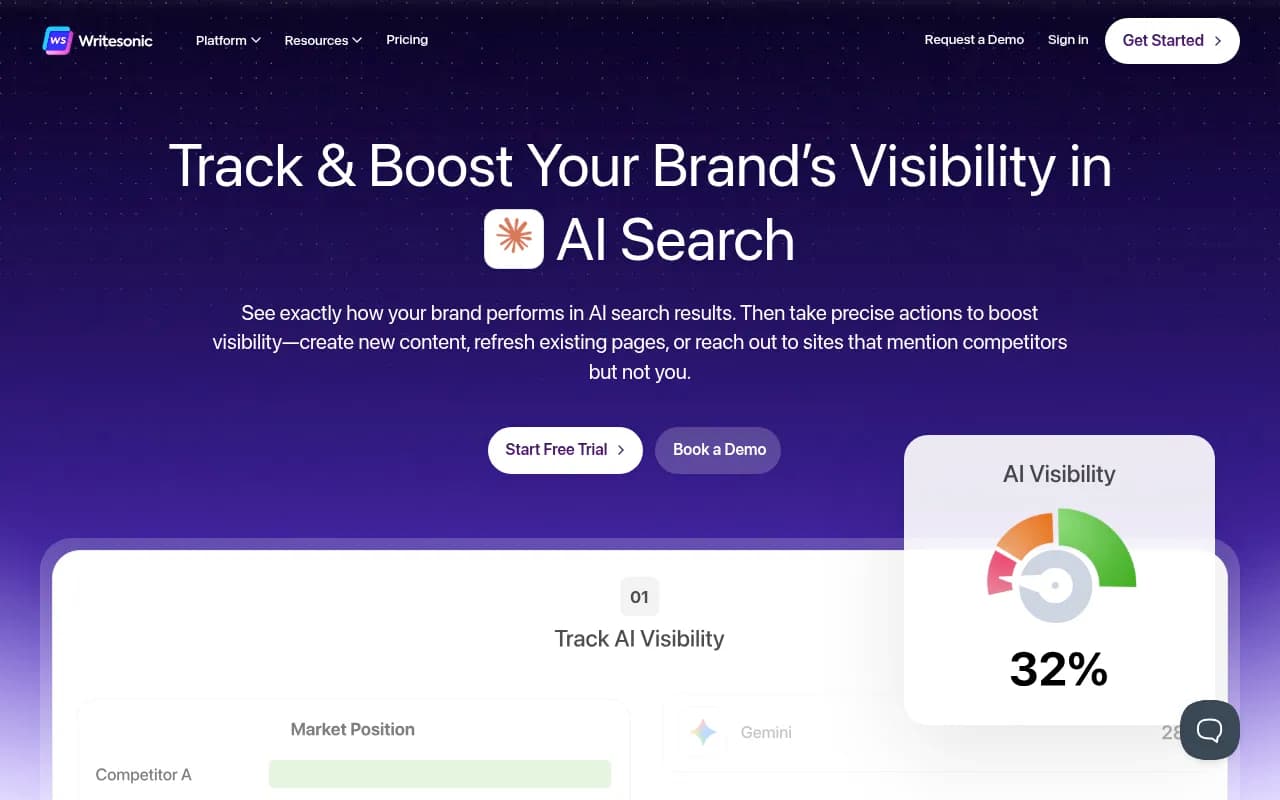
Writesonic has built AI visibility features into its content platform, including some tracking of where you stand versus competitors.
Layer 3: Content creation (fixing the gaps)
Here's where the stack gets thin fast. Most AI visibility tools will tell you what you're missing. Very few help you create the content that fills those gaps.
This matters more than it might seem. The content that gets cited by AI models isn't the same as the content that ranks on Google. AI models tend to cite pages that directly and comprehensively answer specific questions, that are backed by credible signals (backlinks, mentions in authoritative sources, social proof), and that match the framing of the query. Generic SEO content often doesn't qualify.
Promptwatch has a built-in AI writing agent that generates articles, listicles, and comparisons grounded in actual citation data. It's not just "write me a blog post about X" -- it uses prompt volumes, competitor analysis, and 880M+ citations analyzed to generate content that's specifically engineered to get cited. That's a meaningful difference from using a generic AI writer.
If you're building a more modular stack, a few content tools are worth considering alongside your visibility platform:
Jasper AI is solid for long-form content at scale, especially if you have brand voice guidelines you need to maintain.
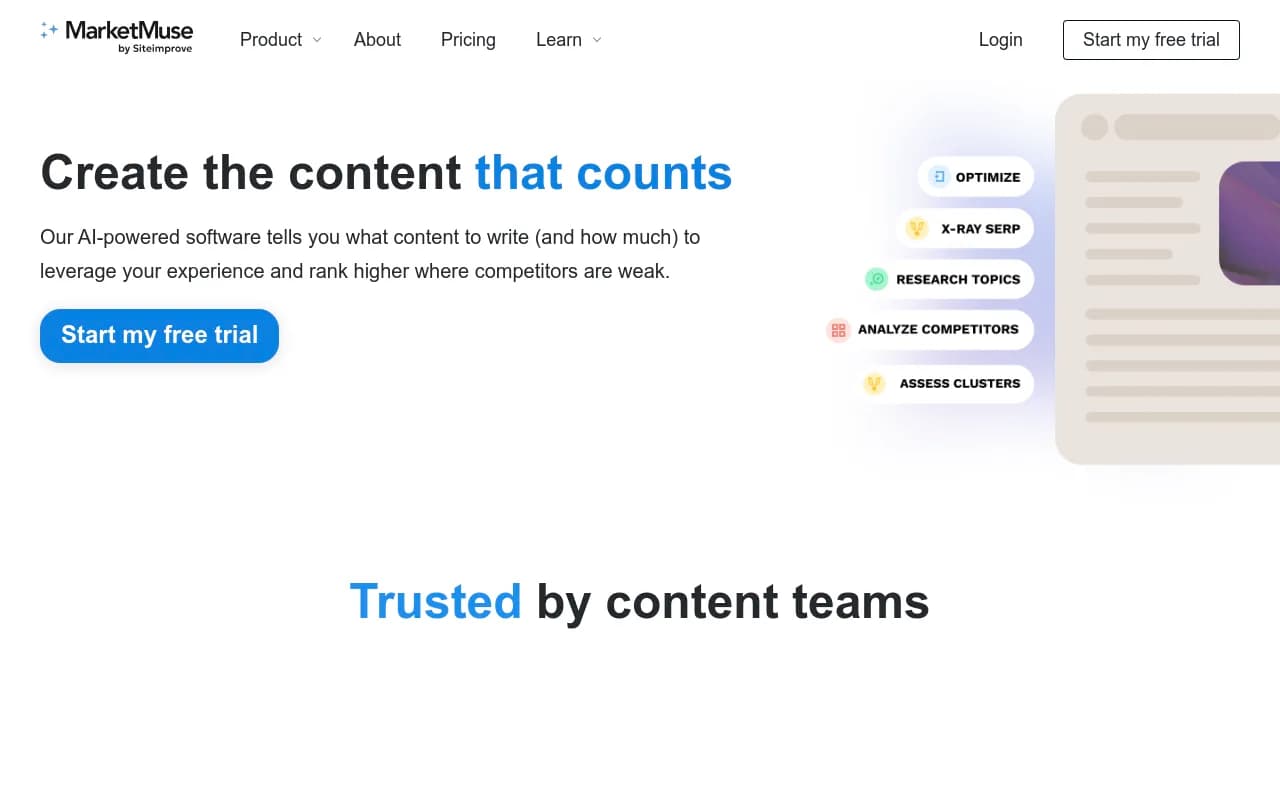
MarketMuse is strong for content strategy -- it helps you understand topical authority gaps and prioritize what to write.
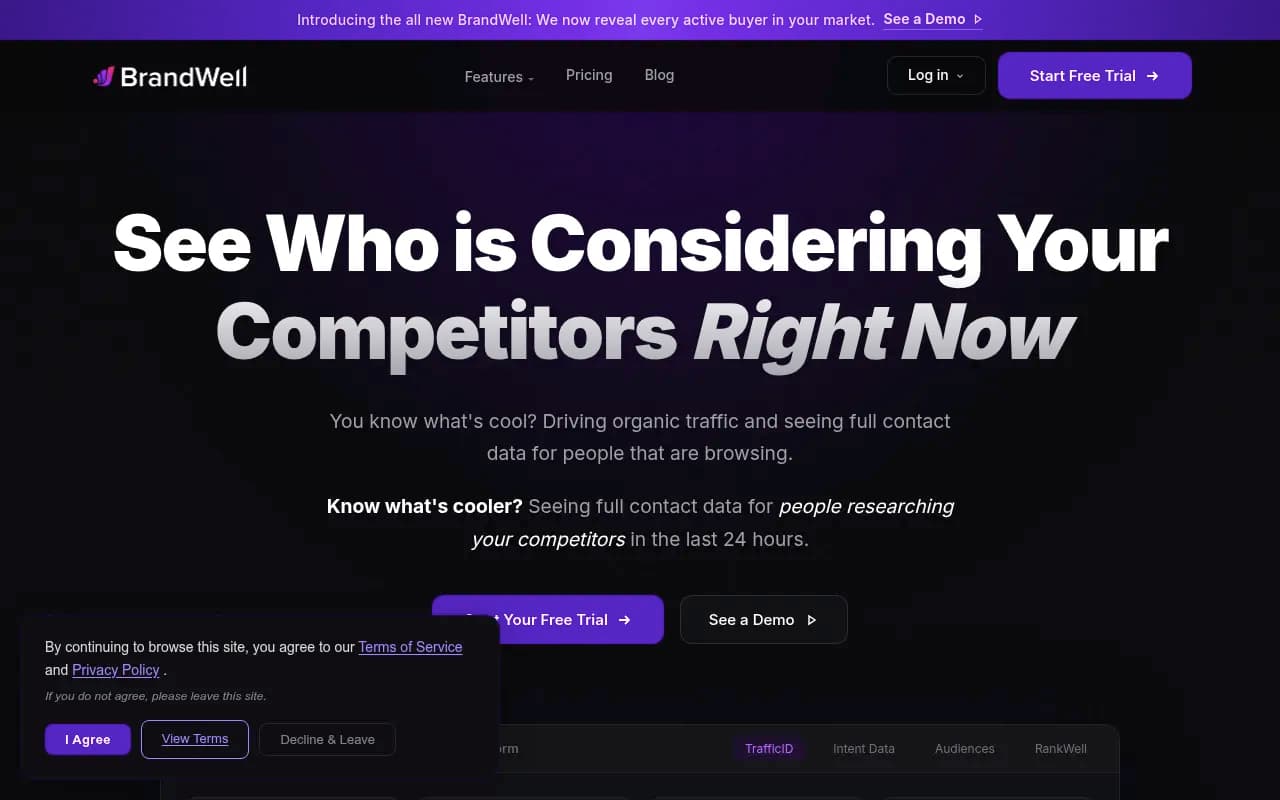
Content at Scale is useful if you need volume, with some B2B intent data layered in.
The honest caveat here: none of these general content tools are specifically optimized for AI citation. They'll help you produce content, but they won't tell you whether that content is likely to get cited by Perplexity or ChatGPT. For that, you need a tool that connects content creation to citation data.
Layer 4: Traffic attribution (proving it's working)
This is the layer that most brands skip entirely, and it's the one that gets your GEO program funded.
If you can't connect AI visibility improvements to actual traffic and revenue, you're running a vanity metrics program. Leadership will eventually ask "so what?" and you won't have a good answer.
Traffic attribution for AI search is genuinely hard. AI models don't always pass referrer data. Users who get a recommendation from ChatGPT might Google the brand name before visiting your site, which means the traffic looks like organic search in your analytics. The attribution chain is messy.
A few approaches work:
Promptwatch handles this through a code snippet, Google Search Console integration, or server log analysis -- each of which can surface AI-driven traffic patterns that standard analytics miss. Page-level tracking shows which specific pages are getting cited and how often, so you can correlate citation increases with traffic changes.
Google Search Console is still worth having regardless of what else you use -- it's the baseline for understanding how your content is performing across all search surfaces.
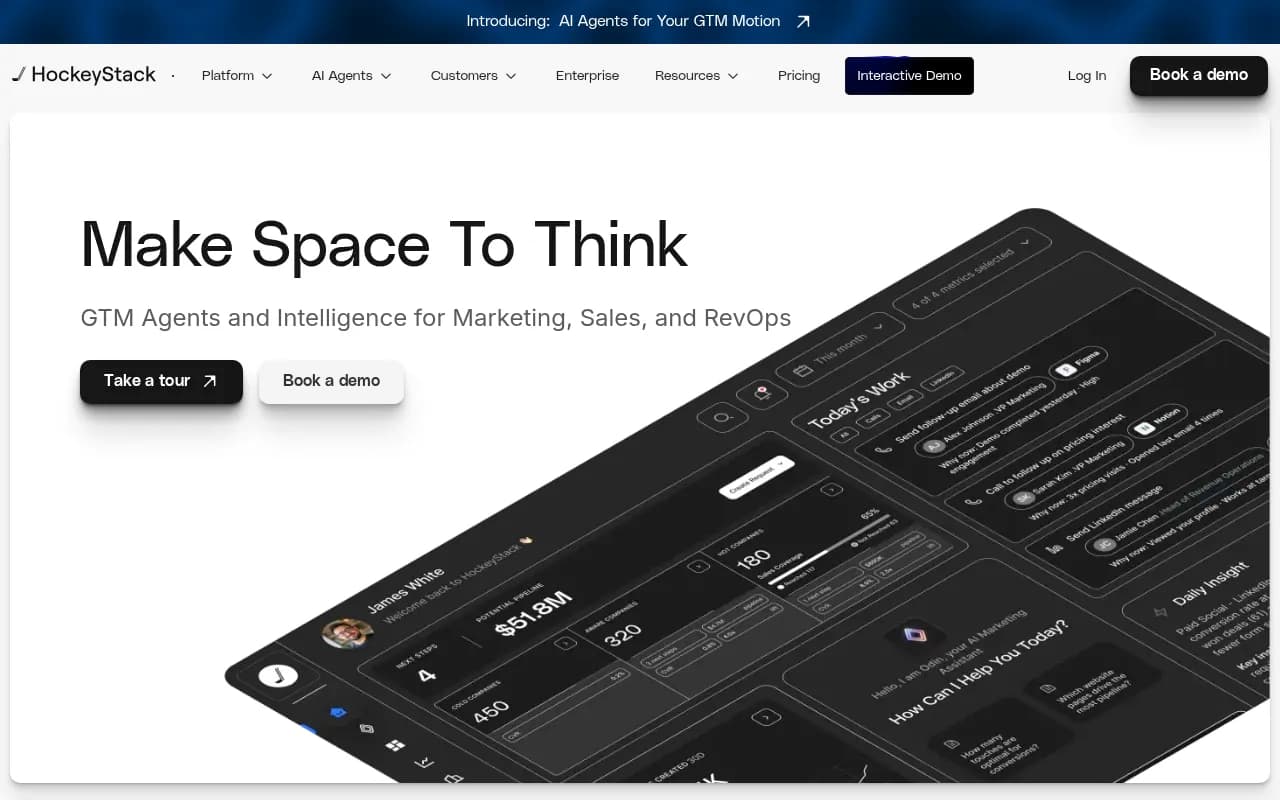
HockeyStack is worth mentioning for teams that need sophisticated multi-touch attribution across channels, including AI-influenced journeys.
A note on AI crawler logs
One capability that most brands haven't thought about yet: knowing when AI crawlers are actually visiting your site.
ChatGPT, Claude, Perplexity, and other AI engines all send crawlers to index web content. If those crawlers are hitting your site and encountering errors, or if they're not visiting your most important pages, that's a problem you can fix -- but only if you know it's happening.
Promptwatch's AI Crawler Logs feature shows real-time logs of which AI crawlers are hitting your site, which pages they're reading, what errors they encounter, and how often they return. This is a layer of technical GEO that almost no other tool covers, and it can explain why some pages aren't getting cited even when the content looks good.
How the major tools compare
Here's a quick comparison of the main platforms across the four layers:
| Tool | Visibility tracking | Gap analysis | Content generation | Traffic attribution | AI crawler logs |
|---|---|---|---|---|---|
| Promptwatch | 10 AI models | Yes (prompt-level) | Yes (citation-grounded) | Yes (3 methods) | Yes |
| Profound | Strong | Limited | No | Limited | No |
| Otterly.AI | Basic | No | No | No | No |
| Peec AI | Basic | No | No | No | No |
| Athena HQ | Good | Limited | No | No | No |
| Evertune | Strong | Limited | No | No | No |
| Writesonic | Basic | Limited | Yes (generic) | No | No |
| Scrunch AI | Good | Limited | No | No | No |
The pattern is clear: most tools cover layer 1 well. Layers 2, 3, and 4 are where the field thins out significantly.
What actually gets you cited: the content signals that matter
Tools aside, it's worth being concrete about what AI models actually look for when deciding what to cite. Based on how these systems work and what the citation data shows:
Direct, specific answers win. AI models are trying to answer a user's question. Pages that directly answer the question in the first few sentences get cited more often than pages that bury the answer in a wall of context. This sounds obvious but most brand content is written for humans skimming a page, not for AI models extracting an answer.
Third-party validation matters a lot. Reddit discussions, YouTube reviews, industry publications, and review sites all influence what AI models treat as credible. A brand that's only visible on its own website is at a structural disadvantage versus one that's discussed across multiple authoritative sources. This is why Promptwatch tracks Reddit and YouTube signals -- they're not just social media noise, they're citation inputs.
Consistency across sources helps. If your brand is described differently on your website versus in press coverage versus on review sites, AI models have a harder time forming a coherent picture. Consistent positioning across sources tends to produce more confident citations.
Freshness matters for some query types. For queries about current tools, recent events, or fast-moving categories, AI models with web access (like Perplexity) will favor recently updated content. Static pages from 2022 won't cut it.
Building your stack: practical recommendations
If you're starting from scratch and want to get cited across ChatGPT, Claude, and Perplexity, here's how I'd approach it:
Start with a single platform that covers all four layers. Stitching together four separate tools is expensive, slow, and creates data consistency problems. Promptwatch is the only platform I'm aware of that genuinely covers visibility tracking, gap analysis, content generation, and traffic attribution in one place. Start there, get your baseline, and identify your highest-priority gaps before adding anything else.
Add a content distribution layer if you need scale. If you're generating a lot of content and need to get it published, distributed, and linked to quickly, tools like Content at Scale or Jasper can help with volume. Just make sure the content strategy is driven by your citation gap data, not by generic keyword research.
Don't ignore technical GEO. If AI crawlers are hitting your site and encountering errors, no amount of great content will fix your citation problem. Check your crawler logs, fix crawl errors, and make sure your most important pages are actually being indexed by AI engines.
Track Reddit and YouTube proactively. These platforms disproportionately influence AI citations, especially for product recommendations and tool comparisons. Know what's being said about your brand in these channels and address gaps or negative narratives directly.
The bottom line
Getting cited by AI models isn't magic, and it's not just about publishing more content. It's a system: find the specific prompts where competitors are visible and you're not, create content that directly answers those prompts, make sure AI crawlers can find and index it, and track whether citations and traffic improve.
Most tools on the market help you see the problem. Fewer help you fix it. Build your stack around the ones that do both.