Key takeaways
- Searchable launched in late 2025 with impressive momentum but its Starter plan (1 domain, 50 prompts, $50/mo) is the most restrictive entry tier among non-enterprise AEO platforms
- Most Searchable alternatives cost less and offer more prompts, more AI models, or actual content optimization features
- The biggest gap in this category: most tools only monitor AI visibility. Small teams need platforms that also help them fix what's broken
- Promptwatch is the only platform in this comparison rated as a "Leader" across all GEO categories, and it's the one that closes the loop from gap analysis to content creation to traffic attribution
- Budget-conscious teams should look at Otterly.AI ($29/mo) or Airefs ($24/mo) for basic tracking, and Promptwatch ($99/mo) if they want to actually move the needle
Searchable had a genuinely impressive launch. Six figures in ARR within 24 hours of a soft launch is not something you see every day. The founding team has real credentials, the integrations (GA4, GSC, HubSpot, Salesforce) are rare at this price point, and the product is clearly built by people who understand the AEO space.
But "impressive launch" and "right tool for your team" are different things. If you're running a small marketing team in 2026 and you're trying to figure out where your brand shows up in ChatGPT, Perplexity, Claude, and Google AI Overviews, Searchable's Starter plan gives you 1 domain and 50 prompts for $50/month. That's a tight constraint. Competitors offer more at the same or lower price, and some go much further by actually helping you create content that gets cited.
This guide covers the best alternatives, what each one is actually good at, and which one makes the most sense depending on your team's budget and goals.
Why small teams need more than monitoring
Here's the honest problem with most AI visibility tools in 2026: they show you a dashboard. You see that your brand appears in 12% of relevant AI responses while your top competitor appears in 34%. That's useful information. But then what?
Most platforms stop there. They've built excellent monitoring dashboards, and that's genuinely valuable, but for a small team with limited bandwidth, knowing you have a visibility gap is only half the job. You need to know which specific content to create, and ideally have some help creating it.
That's the distinction worth keeping in mind as you evaluate these alternatives. Some are monitoring tools. Some are optimization platforms. The difference matters a lot when you're a team of two or three people.
The best Searchable alternatives in 2026
Promptwatch — best for teams that want to actually fix their AI visibility
Promptwatch sits in a different category from most tools here. It's used by 6,700+ brands including Booking.com and Center Parcs, and in a 2026 comparison of 12 GEO platforms it was the only one rated as a "Leader" across all categories. The reason is pretty simple: it doesn't just show you where you're invisible, it helps you do something about it.
The Answer Gap Analysis shows exactly which prompts competitors rank for that you don't. The built-in AI writing agent then generates articles, listicles, and comparisons grounded in 880M+ citations analyzed across real AI responses. Page-level tracking shows which pages are being cited, by which models, and how often. And traffic attribution (via a code snippet, GSC integration, or server log analysis) connects AI visibility to actual revenue.
For small teams, the Essential plan at $99/mo covers 1 site, 50 prompts, and 5 articles per month. That's the same prompt count as Searchable's Starter but with content generation included. The Professional plan at $249/mo adds crawler logs, which show you exactly which AI crawlers are hitting your site and which pages they're reading.

Promptwatch monitors 10 AI models: ChatGPT, Perplexity, Google AI Overviews, Google AI Mode, Claude, Gemini, Meta/Llama, DeepSeek, Grok, and Mistral. It also tracks Reddit and YouTube discussions that influence AI recommendations, which most competitors ignore entirely.
The honest caveat: if you genuinely only need to monitor one brand across a handful of prompts and have no interest in content creation, there are cheaper options below. But for teams that want to move from "we know we have a problem" to "we fixed the problem," Promptwatch is the clearest path.
Otterly.AI — best budget entry point with real credentials
Otterly.AI at $29/mo is one of the most-cited alternatives in this space, and for good reason. It earned Gartner Cool Vendor 2025 recognition and holds a G2 High Performer badge, which matters when you're evaluating a relatively new category where many tools have no third-party validation at all.
The GEO Audit feature is a genuine differentiator at this price point. It gives you a structured view of where your content is falling short for AI search, which is more actionable than a raw visibility score.
The limitation is that Otterly.AI is primarily a monitoring and audit tool. It doesn't generate content or help you execute on what the audit finds. For teams that already have a content workflow and just need better intelligence to feed it, that's fine. For teams that need end-to-end help, it's a starting point rather than a complete solution.

Airefs — best for teams on a tight budget
Airefs at $24/mo is the cheapest credible option in this category. It undercuts Searchable's $50/mo Starter by more than half and adds Reddit monitoring, which surfaces discussions that directly influence AI recommendations. That's a channel most platforms at any price point don't cover.
The trade-off is depth. Airefs is a lean tool built for teams that want basic AI visibility tracking without complexity or cost. If you're just starting to understand how your brand appears in AI responses and you're not ready to invest in a full optimization platform, Airefs is a reasonable place to start.
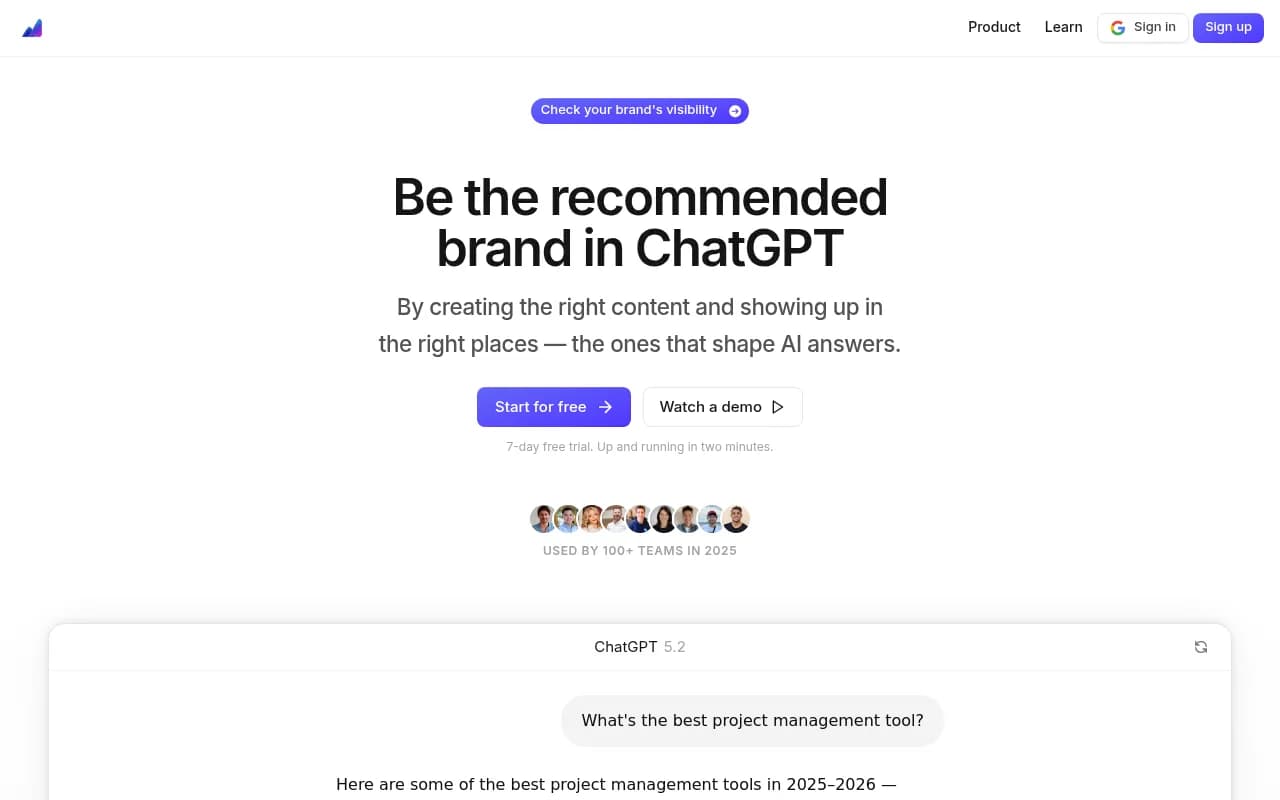
Profound — best for teams that need enterprise-grade data
Profound at $99/mo is the G2 Winter 2026 Leader in this category and covers 10 AI platforms with prompt volume data. For teams that need to prioritize which prompts to target, having volume estimates is genuinely useful. You can focus effort on high-traffic queries rather than optimizing for prompts nobody is actually asking.
The platform is more enterprise-oriented than the others here, which shows in both the feature depth and the interface. Small teams may find it more than they need, but if your brand is in a competitive category and you need serious data to make the case for AI visibility investment internally, Profound's reporting is strong.
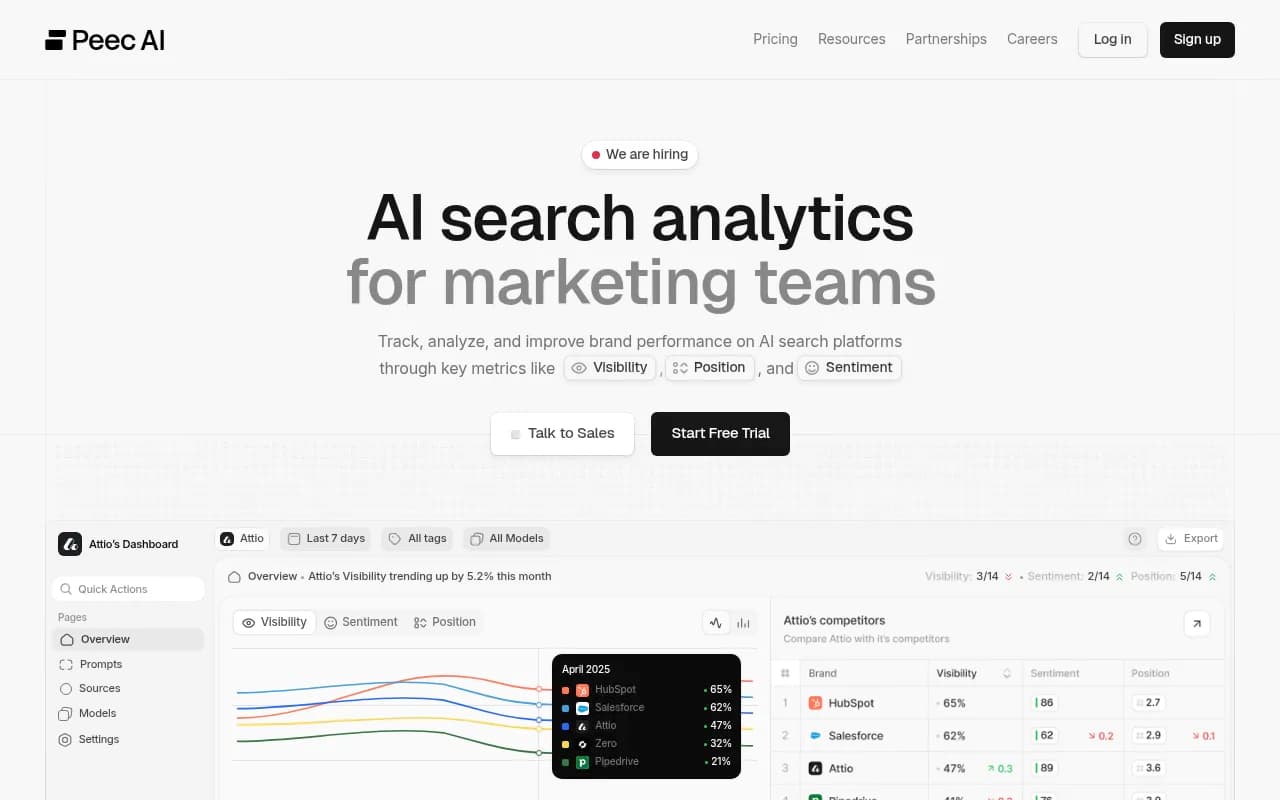
Peec AI — best for brands with international audiences
Peec AI at $85/mo supports 115+ languages, which is a meaningful differentiator if your audience isn't primarily English-speaking. Most tools in this category are built around English-language AI responses, and the gap shows when you try to track visibility in French, German, Spanish, or Japanese markets.
For a small team managing a global brand, Peec AI's language depth is worth the slight premium over Otterly.AI or Airefs. The documented enterprise outcomes for global brands also give it more credibility than some of the newer entrants in this space.
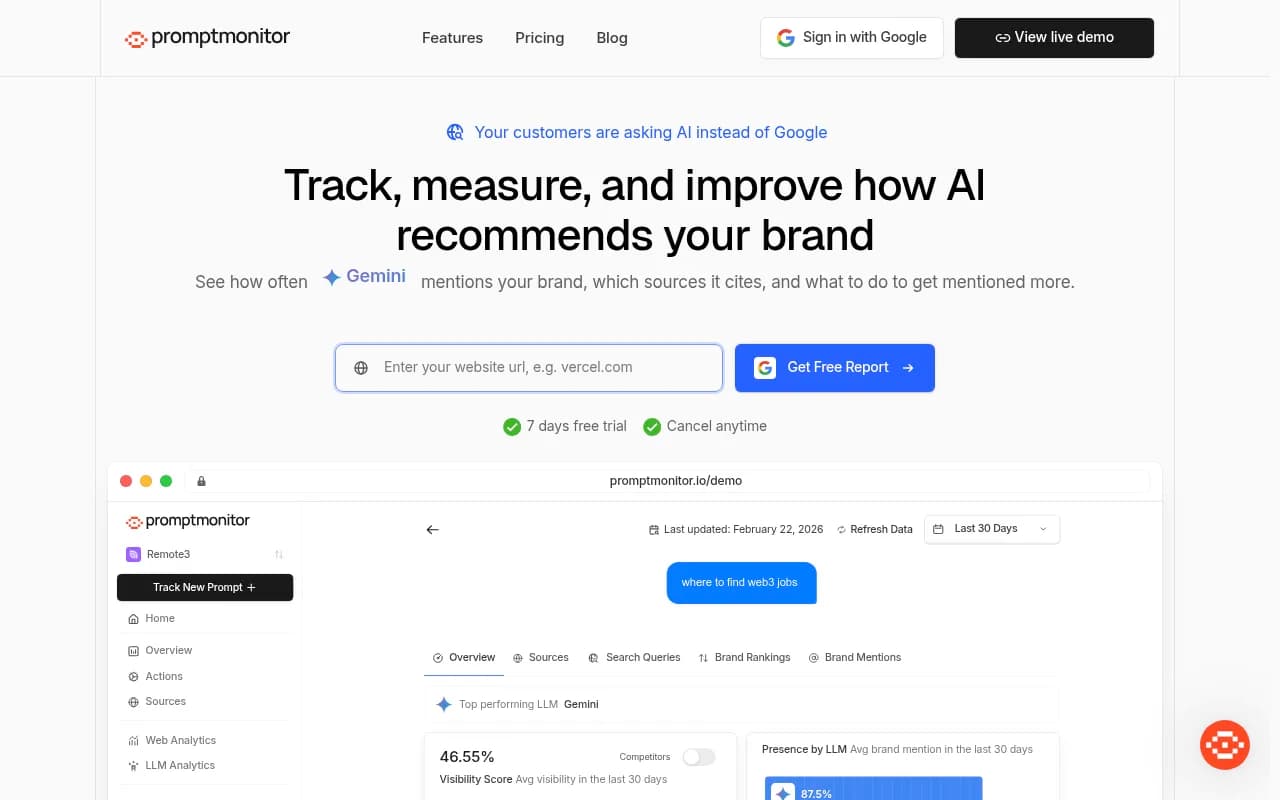
Promptmonitor — best for coverage across AI models
Promptmonitor at $29/mo covers 8 AI platforms including Claude, Grok, DeepSeek, and Meta AI. That's more model coverage than Searchable's 7 platforms, for significantly less money. If your concern is breadth, specifically making sure you're not missing visibility gaps on newer or less-mainstream AI models, Promptmonitor is worth a look.
How these tools compare
| Tool | Starting price | AI models covered | Content generation | Reddit/YouTube tracking | Best for |
|---|---|---|---|---|---|
| Promptwatch | $99/mo | 10 | Yes (AI writing agent) | Yes | End-to-end optimization |
| Otterly.AI | $29/mo | ~6 | No | No | Budget monitoring + GEO audit |
| Airefs | $24/mo | ~5 | No | Yes (Reddit) | Cheapest credible option |
| Profound | $99/mo | 10 | No | No | Enterprise data and reporting |
| Peec AI | $85/mo | ~8 | No | No | Multi-language brands |
| Promptmonitor | $29/mo | 8 | No | No | Broad model coverage |
| Searchable | $50/mo | 7 | No | No | Baseline (what you're replacing) |
The pattern here is pretty clear. If you want monitoring only, you can spend $24-$29/mo and get solid coverage. If you want to actually optimize, the only platform in this group that generates content grounded in real citation data is Promptwatch.
What to look for beyond AI visibility tracking
Small teams often make the mistake of evaluating these tools purely on prompt count and price. Those matter, but there are a few other things worth checking before you commit.
Crawler logs
AI crawler logs show you which AI engines are actually visiting your website, which pages they're reading, and how often they return. This is different from visibility tracking. A tool can show you that you're not being cited without telling you whether the problem is that AI crawlers aren't finding your content or that they're finding it and choosing not to cite it. Those are different problems with different fixes.
Most tools in this category don't offer crawler logs at all. Promptwatch includes them in the Professional plan ($249/mo).
Traffic attribution
Knowing your AI visibility score is useful. Knowing whether that visibility is driving actual traffic and revenue is more useful. Look for tools that can connect AI citations to site visits, either through a tracking snippet, Google Search Console integration, or server log analysis.
Prompt intelligence
Not all prompts are equal. A tool that tells you your brand appears in 15% of responses to "best project management software" is more useful if it also tells you how many people are actually asking that question each month and how hard it is to rank for. Prompt volume estimates and difficulty scores help small teams prioritize where to spend limited time.
The content gap problem that most teams miss
Here's something worth saying directly: the reason most small teams struggle with AI visibility isn't that they lack monitoring data. It's that they don't have content that answers the questions AI models are trying to answer.
ChatGPT and Perplexity don't cite brands because those brands paid for placement. They cite sources because those sources have content that directly addresses what the user asked. If your website doesn't have a page that clearly explains why your product is better for a specific use case, no amount of monitoring will change that.
This is why the distinction between monitoring tools and optimization platforms matters so much for small teams. A monitoring tool tells you the score. An optimization platform tells you what to write and helps you write it.
For teams that are serious about improving their AI visibility rather than just measuring it, the workflow looks something like this: identify which prompts competitors are winning that you're not, understand what content those competitors have that you don't, create content that fills those gaps, and then track whether AI models start citing it.
Tools like Promptwatch are built around that cycle. Most of the cheaper alternatives in this list cover step four (tracking) but leave you to figure out steps one through three on your own.
Supporting tools for small marketing teams
AI visibility tracking is one piece of the puzzle. Small teams also need to create, optimize, and distribute content efficiently. A few tools worth knowing about:
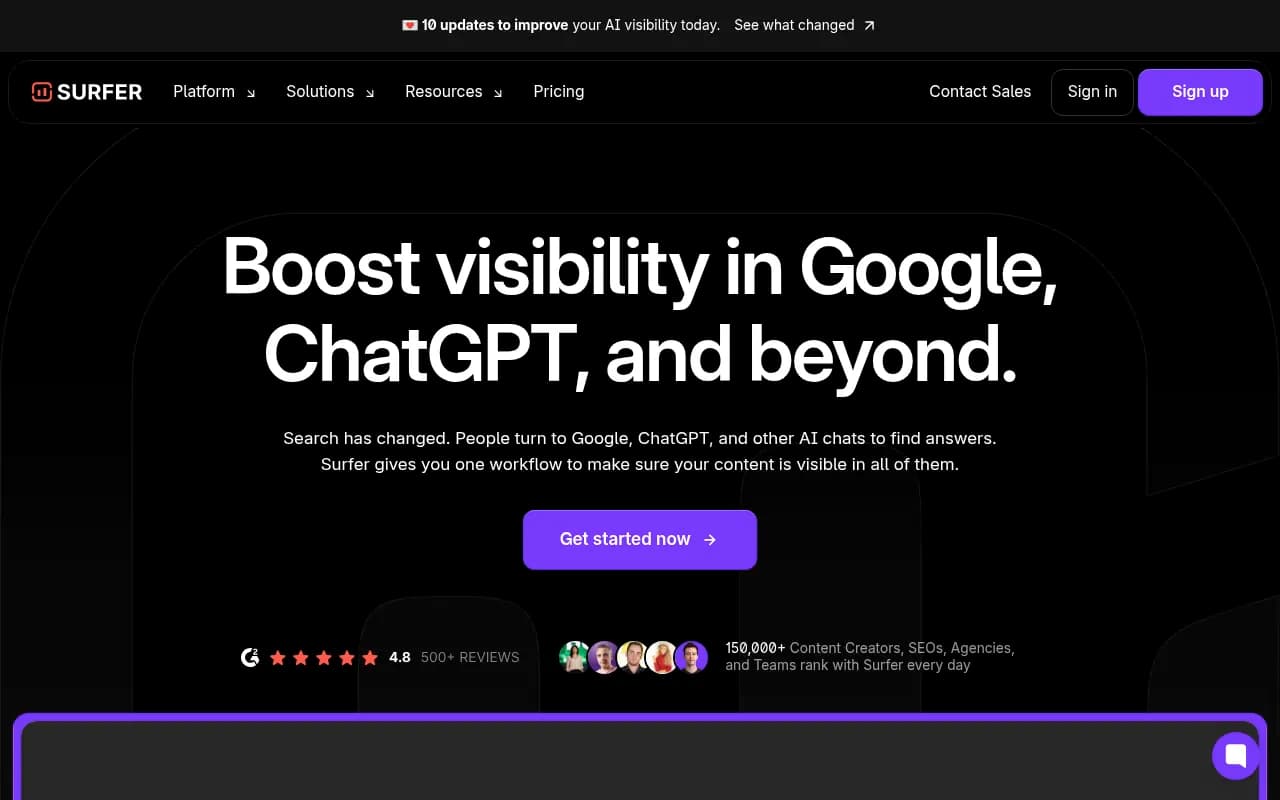
For SEO content optimization, Surfer SEO ($79/mo) gives you data-driven guidance on content structure and keyword usage. It's one of the more reliable tools in this space for teams that are writing content and want to know if it's optimized before publishing.
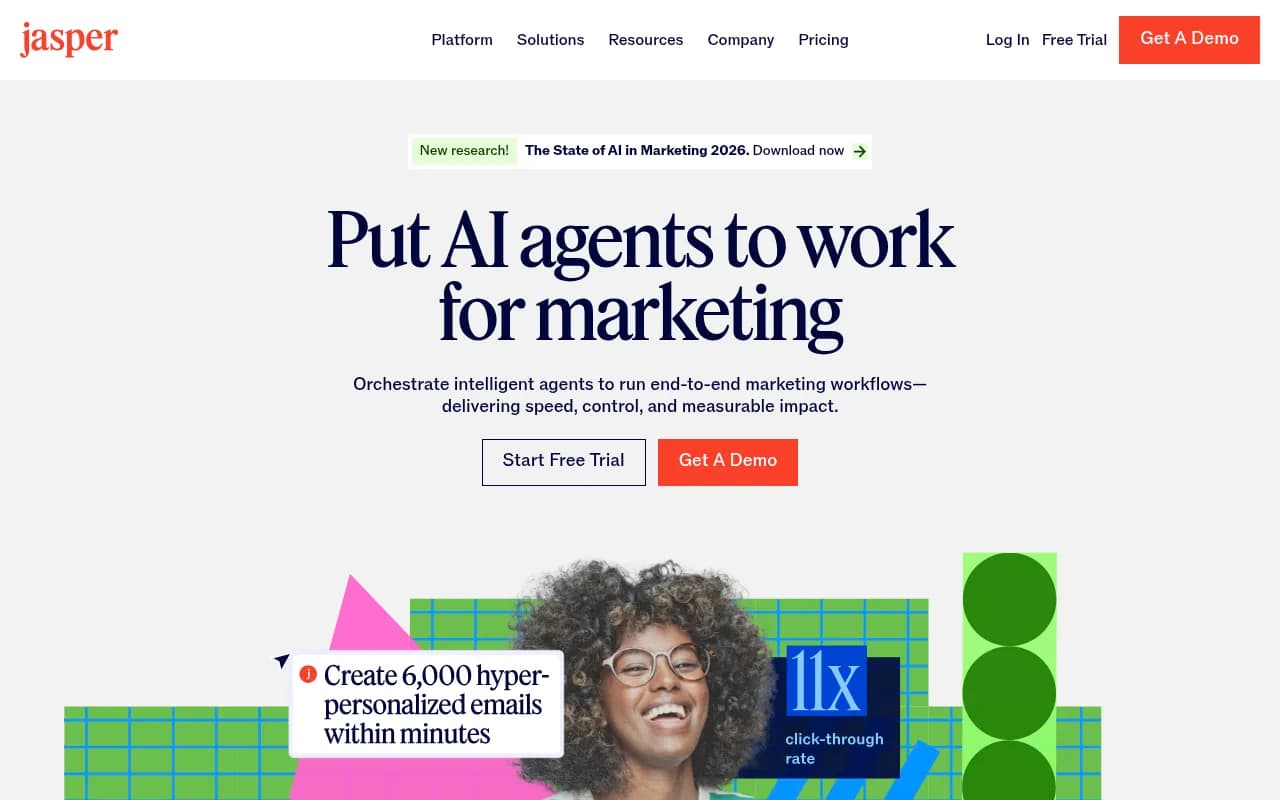
For AI-assisted writing at scale, Jasper is worth considering if your team needs to produce a lot of content quickly. It's not cheap, but it's one of the more mature AI writing tools with marketing-specific templates.
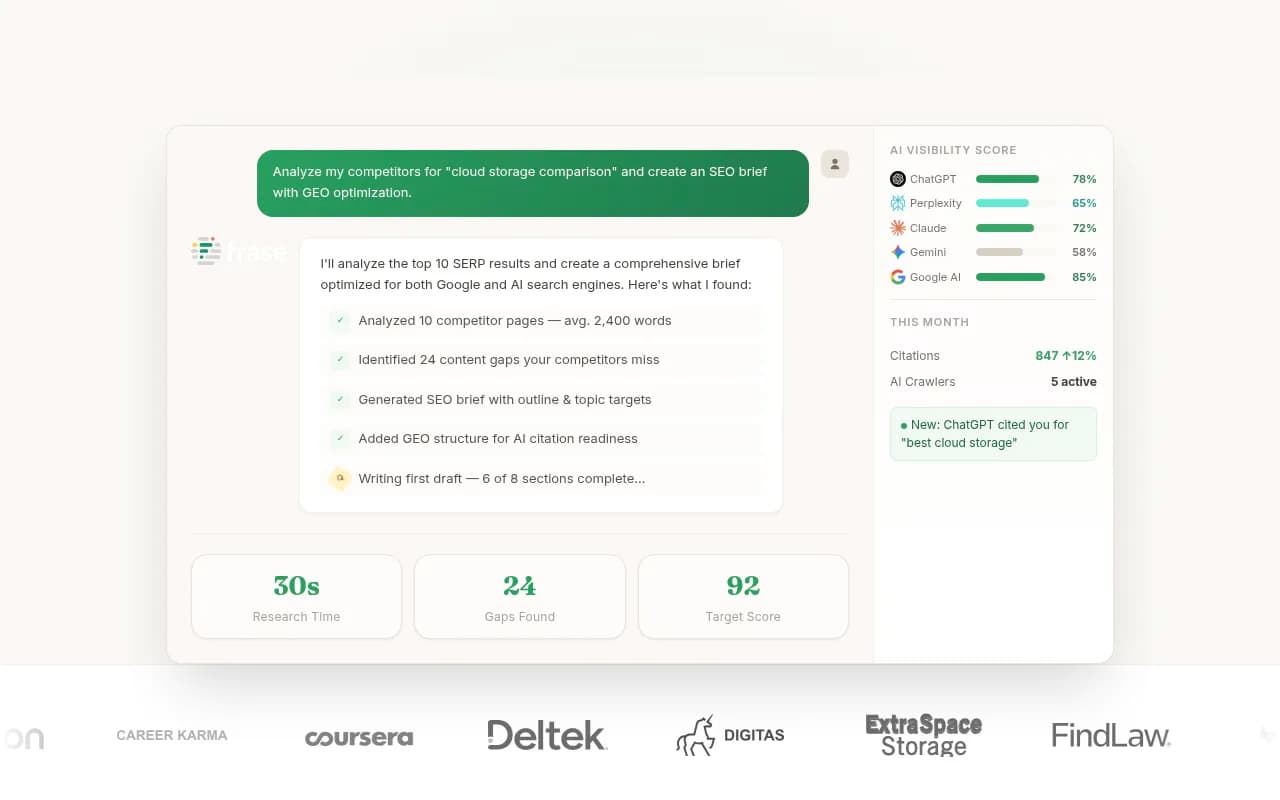
For content research and brief creation, Frase is a solid mid-market option that helps you understand what competitors are covering and what your content should include.
For social scheduling without complexity, Buffer's free tier handles most of what small teams need, and the paid plans are reasonable.
Which tool should you actually use?
The honest answer depends on where you are right now.
If you've never tracked your AI visibility before and want to understand the basics without spending much, start with Airefs ($24/mo) or Otterly.AI ($29/mo). Both give you enough to understand where you stand.
If you're in a competitive category and need to move beyond monitoring into actual optimization, Promptwatch at $99/mo is the clearest choice. The content gap analysis and AI writing agent mean you're not just collecting data, you're acting on it. That matters when you're a small team and every hour counts.
If you have a global audience and need multi-language coverage, Peec AI at $85/mo is worth the premium over the budget options.
If you're evaluating Searchable specifically, the main issue isn't that it's a bad product. It's that the Starter plan's constraints (1 domain, 50 prompts) are tight relative to what competitors offer at the same or lower price, and the platform is still early enough that the case study library and third-party validation are thin. That may change as the product matures, but in mid-2026, the alternatives here are better-validated options.
The AI search landscape is moving fast. Brands that figure out how to get cited by ChatGPT and Perplexity now are building an advantage that will compound. The tools that help you act on that, not just measure it, are the ones worth investing in.