Key takeaways
- Searchable starts at $50/month and covers up to 7 AI models, but lacks content generation, crawler logs, and traffic attribution -- capabilities that matter more as the category matures.
- Most alternatives fall into two camps: monitoring-only tools (cheaper, simpler) and full optimization platforms (pricier, but they help you act on the data).
- If you just need basic brand mention tracking, Otterly.AI at $29/month or Airefs at $24/month are hard to beat on price.
- If you need to actually improve your AI visibility -- not just watch it -- platforms like Promptwatch, Profound, or Scrunch AI are worth the higher price tag.
- AI model coverage varies wildly: some tools track 4 models, others track 10+. Make sure the tool covers the models your customers actually use.
Searchable has built a decent product. It monitors brand mentions across AI engines, gives you share-of-voice data, and has a reasonably clean interface. But "decent" is a tough place to be in a category that's moving this fast.
The problems people run into with Searchable tend to cluster around a few things: the entry-level plan is restrictive, there's no way to act on what you find (no content generation, no gap analysis), and the AI model coverage caps out at 7. For a lot of teams, that's enough to start shopping around.
This guide ranks 10 alternatives by features, pricing, and AI model coverage. I've tried to be honest about who each tool is actually for, rather than just listing features.
What to look for in a Searchable alternative
Before getting into the list, it's worth being clear about what separates a good AI visibility tool from a mediocre one in 2026.
AI model coverage is the obvious one. ChatGPT and Perplexity get most of the attention, but Claude, Gemini, Grok, DeepSeek, and Copilot are all sending meaningful traffic in certain industries. A tool that only tracks 4 models is going to give you an incomplete picture.
Prompt volume and difficulty data matters more than people realize. Knowing you're invisible for a prompt is useful. Knowing that prompt gets 50,000 queries a month and you have a realistic chance of ranking for it -- that's actionable.
Content gap analysis is where most tools fall short. Monitoring tools tell you where you're missing. Optimization platforms tell you why and help you fix it. The gap between those two things is significant.
Traffic attribution closes the loop. If you can't connect AI visibility to actual website visits and revenue, you're flying blind on ROI.
Crawler logs are underrated. Knowing which pages AI bots are reading (and which they're ignoring) tells you a lot about why your visibility looks the way it does.
With that framing in mind, here's how the alternatives stack up.
The 10 best Searchable alternatives in 2026
1. Promptwatch
Promptwatch is the most complete AI visibility platform on this list. Where most tools stop at monitoring, Promptwatch runs a full optimization loop: find gaps, create content, track results.
The Answer Gap Analysis shows you exactly which prompts competitors rank for that you don't -- not just "you're missing here" but the specific topics and questions AI models want to answer that your site doesn't address. The built-in AI writing agent then generates content grounded in citation data from 880M+ analyzed citations. And page-level tracking shows which pages are getting cited, by which models, and how often.
It also has features most competitors don't bother with: real-time AI crawler logs (so you can see when ChatGPT or Claude bots visit your site and what they read), Reddit and YouTube citation tracking, ChatGPT Shopping monitoring, and query fan-outs that show how a single prompt branches into sub-queries.
Coverage spans 10 AI models: ChatGPT, Perplexity, Claude, Gemini, Grok, DeepSeek, Copilot, Meta AI, Mistral, and Google AI Overviews. Pricing starts at $99/month for the Essential plan (1 site, 50 prompts, 5 articles), $249/month for Professional (2 sites, 150 prompts, crawler logs), and $579/month for Business (5 sites, 350 prompts).
Used by Booking.com, Center Parcs, and 6,700+ other brands and agencies.

2. Profound
Profound is the enterprise-grade option. It's built for large organizations that need SOC 2 compliance, deep reporting, and multi-engine coverage. The Starter plan at $99/month is comparable to Promptwatch's entry tier, but the Growth plan at $399/month is where it starts to differentiate with multiple AI engines and 100+ prompts.
The reporting is genuinely good -- detailed, exportable, and designed for stakeholders who want to see trends over time. The tradeoff is that Profound is primarily a monitoring and research tool. It doesn't generate content or help you act on what you find.
3. Otterly.AI
Otterly.AI is the go-to option if budget is the primary constraint. At $29/month for the Lite plan, it's the cheapest validated AI monitoring tool on this list. It covers 4 AI models at the base tier and adds a GEO optimization layer that most tools at this price point skip entirely.
It's not going to replace a full platform for a serious marketing team, but for a startup or a solo marketer who just wants to know if they're showing up in ChatGPT and Perplexity, it does the job without the overhead.

4. Peec AI
Peec AI's main selling point is flexibility. You can select which AI models you want to track (up to 10), monitor unlimited countries, and add unlimited seats -- all from €85/month. For global brands running multilingual campaigns, that's a genuinely useful combination.
The prompt coverage is solid at 25 prompts on the base plan, and the interface is clean. Like most tools in this range, it's monitoring-focused rather than optimization-focused, but the multi-language and multi-region capabilities are stronger than most competitors.

5. Scrunch AI
Scrunch AI sits in the mid-market between basic monitoring tools and full enterprise platforms. It covers the major AI engines and gives you share-of-voice data, sentiment analysis, and citation tracking. The reporting is more polished than Otterly.AI and the feature set is more complete than Peec AI.
Where it falls short is content generation -- Scrunch doesn't help you create content to improve your visibility, it just shows you where you stand. For teams that have a content operation already and just need better data to feed it, that's fine. For teams that need end-to-end execution, it's a gap.
6. SE Visible (by SE Ranking)
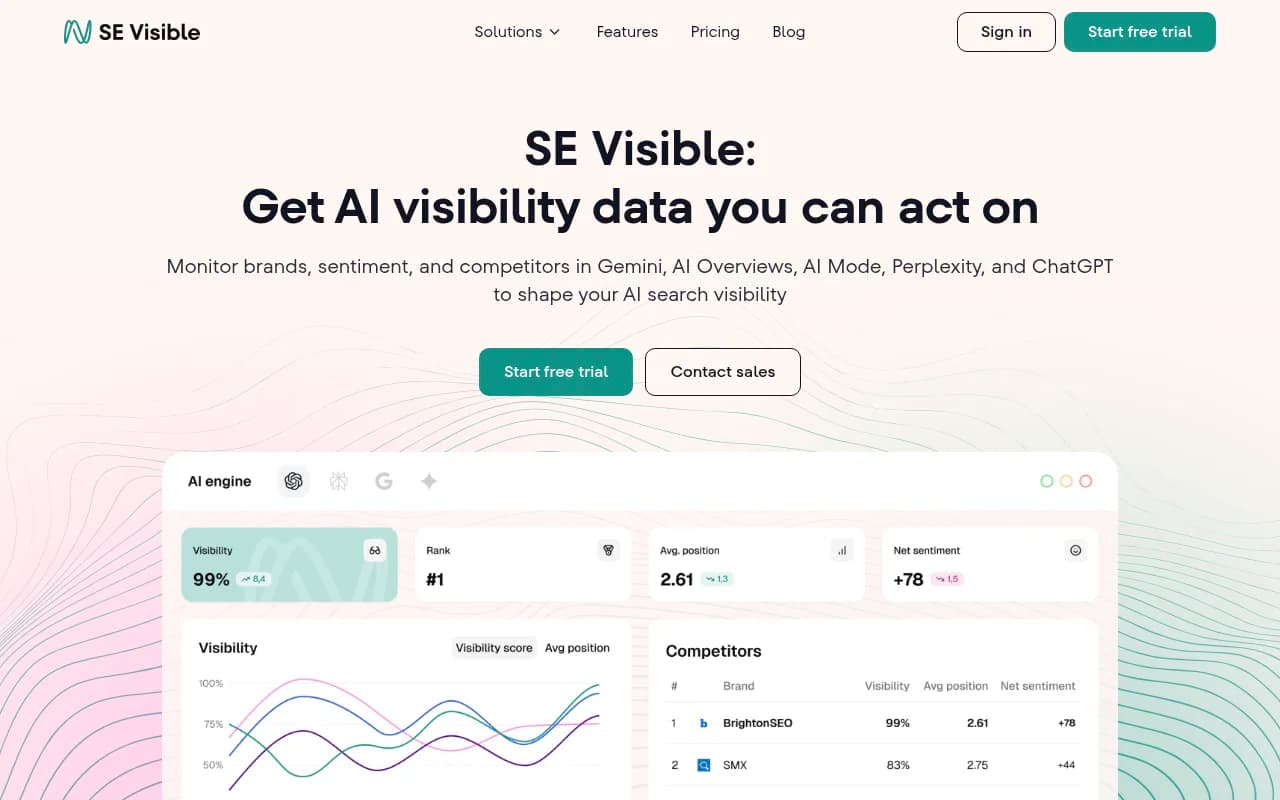
SE Visible is SE Ranking's AI visibility add-on, and it's worth considering if you're already in the SE Ranking ecosystem. It tracks 5 AI models across multiple brands and countries, and the integration with SE Ranking's traditional SEO data means you can see your AI and organic visibility in the same dashboard.
The $99/month starting price is reasonable for what you get, and the multi-brand, multi-country setup is cleaner than most tools at this tier. The limitation is that it's still fundamentally a monitoring product -- there's no content generation or gap analysis built in.
7. Airefs
Airefs is the budget pick for teams that want Reddit-aware opportunity discovery. At $24/month, it's even cheaper than Otterly.AI, and it surfaces Reddit discussions that influence AI recommendations -- a channel most tools ignore entirely.
The feature set is basic compared to anything higher on this list, but for startups and SMBs that want to understand which conversations are shaping AI responses in their category, Airefs offers something genuinely different at a price that's hard to argue with.
8. Athena HQ
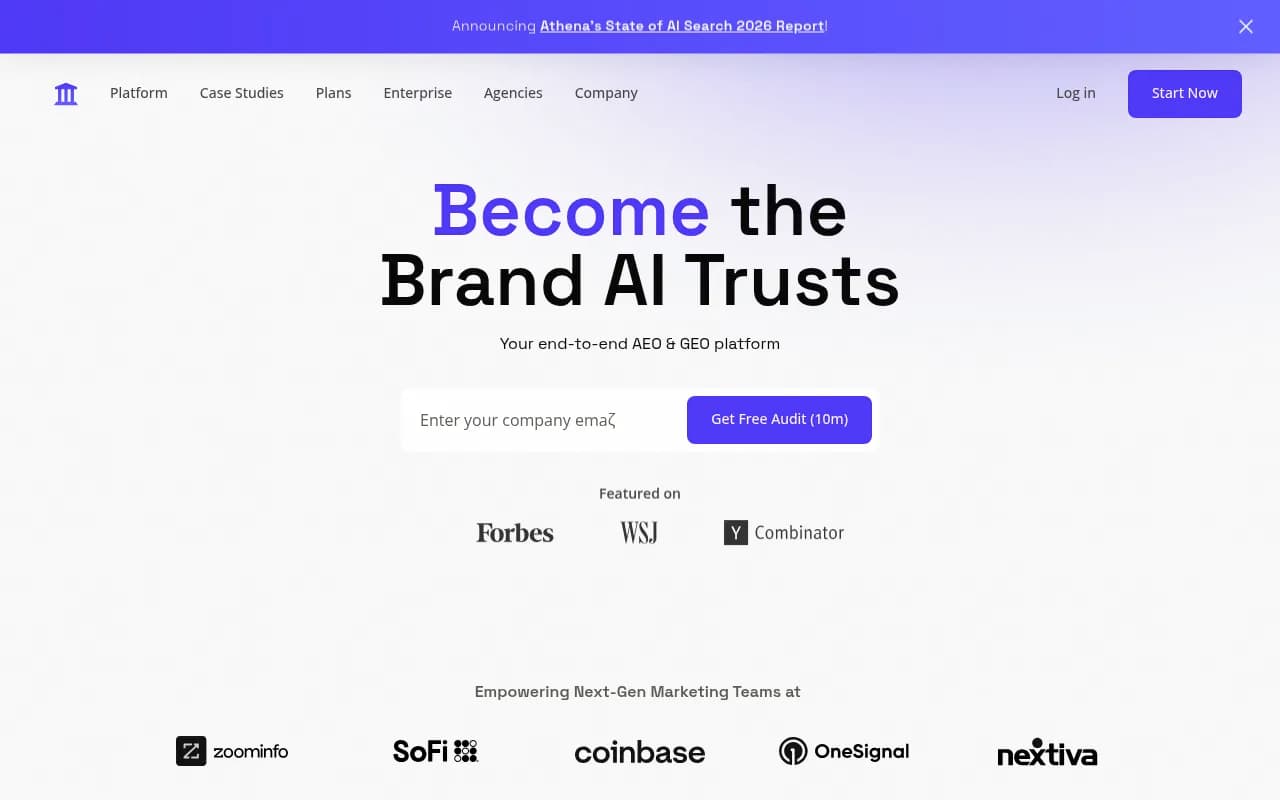
Athena HQ tracks 8+ AI search engines and gives you brand visibility data, sentiment analysis, and competitor comparisons. It's a monitoring-focused platform with a clean interface and solid coverage.
The main limitation is the same one that affects most mid-tier tools: it shows you the data but doesn't help you do much with it. There's no content generation, no crawler logs, and no traffic attribution. For teams that have a clear workflow for acting on visibility data, that's workable. For teams that need the platform to guide them, it's frustrating.
9. Ahrefs Brand Radar
Ahrefs Brand Radar is worth mentioning because a lot of teams already use Ahrefs for traditional SEO and want to add AI visibility tracking without switching tools. Brand Radar monitors your brand mentions across AI search engines and integrates with the rest of the Ahrefs suite.
The honest limitation: it uses fixed prompts, which means you can't customize what you're tracking, and there's no AI traffic attribution. If you're an Ahrefs power user who wants a basic AI visibility layer, it's convenient. If AI visibility is a strategic priority, you'll outgrow it quickly.
10. Semrush AI Toolkit
Semrush's AI Toolkit is bundled with existing Semrush plans, which makes it essentially free if you're already paying for Semrush. It tracks 5 AI models and gives you brand mention data alongside your traditional SEO metrics.
The same caveat applies as with Ahrefs: it uses fixed prompts, which limits how useful the data is for anything beyond basic brand monitoring. But if you're a Semrush customer and you haven't activated the AI Toolkit yet, there's no reason not to.
Feature and pricing comparison
| Tool | AI models | Starting price | Content generation | Crawler logs | Traffic attribution | Best for |
|---|---|---|---|---|---|---|
| Promptwatch | 10 | $99/mo | Yes | Yes | Yes | Full optimization loop |
| Profound | Up to 10 | $99/mo | No | No | No | Enterprise reporting |
| Otterly.AI | 4 (base) | $29/mo | No | No | No | Budget monitoring |
| Peec AI | Up to 10 | €85/mo | No | No | No | Multilingual/global brands |
| Scrunch AI | 6+ | Custom | No | No | No | Mid-market monitoring |
| SE Visible | 5 | $99/mo | No | No | No | SE Ranking users |
| Airefs | 4 | $24/mo | No | No | No | Budget + Reddit insights |
| Athena HQ | 8+ | Custom | No | No | No | Multi-model monitoring |
| Ahrefs Brand Radar | 5 | Bundled | No | No | No | Existing Ahrefs users |
| Semrush AI Toolkit | 5 | Bundled | No | No | No | Existing Semrush users |
| Searchable (original) | Up to 7 | $50/mo | No | No | No | Basic monitoring |
How to choose the right tool
The decision mostly comes down to where you are in your AI visibility journey and what you need to do next.
If you're just starting out and need to understand your baseline, Otterly.AI or Airefs will get you there without a significant budget commitment. They're monitoring tools, but that's fine when you're still figuring out which prompts matter for your business.
If you're a global brand tracking multiple markets and languages, Peec AI's unlimited countries and seats model makes more sense than paying per-seat or per-region fees elsewhere.
If you're already monitoring and need to start improving, that's where the gap between monitoring tools and optimization platforms becomes real. Promptwatch's Answer Gap Analysis and content generation capabilities are specifically built for this transition -- it shows you what's missing and helps you create the content to fix it.
If you're an enterprise with compliance requirements, Profound's SOC 2 certification and enterprise reporting are worth the premium.
If you're already deep in the Semrush or Ahrefs ecosystem, activating their AI visibility features costs nothing extra and gives you a starting point, even if you'll eventually want something more capable.
One thing worth saying plainly: the tools that only monitor are fine for awareness, but AI search is now a meaningful acquisition channel for most B2B and many B2C businesses. At some point, watching your visibility score without being able to improve it stops being useful. That's the moment to move to a platform that closes the loop.
What Searchable does well (and where it falls short)
To be fair to Searchable: it's a clean product with decent model coverage and a reasonable interface. The $50/month entry point is competitive, and for teams that just need basic AI visibility monitoring, it does what it says.
The gaps are real, though. No content generation means you're on your own when it comes to acting on the data. No crawler logs means you can't see how AI bots are interacting with your site. No traffic attribution means you can't connect visibility to revenue. And the entry-level plan restrictions frustrate a lot of users who want to track more than a handful of prompts.
None of that makes Searchable a bad tool. It makes it a tool that works well for a specific, limited use case -- and one that you'll likely outgrow if AI visibility becomes a serious priority.
Final thoughts
The AI visibility category has split into two distinct tiers: monitoring tools and optimization platforms. Most of the alternatives on this list are monitoring tools. They're useful, some are very affordable, and they're a reasonable starting point.
But the teams that are actually winning in AI search right now aren't just watching their visibility scores. They're identifying gaps, creating content that gets cited, and tracking the revenue impact. That requires a platform built around the full loop, not just the first step.
Whichever tool you choose, make sure it covers the AI models your customers actually use, gives you prompt-level data you can act on, and has a clear path to showing you ROI -- not just visibility scores.