Key takeaways
- All three tools track brand visibility across AI engines like ChatGPT, Perplexity, and Google AI Overviews -- but their depth varies significantly
- Peec AI is the most accessible entry point: easy to set up, multi-language support, good for agencies managing multiple clients
- AthenaHQ covers more AI engines (8+) and offers stronger competitive intelligence, but stays mostly in monitoring territory
- Searchable is the most niche of the three, with limited public documentation and a narrower feature set
- None of the three close the loop from monitoring to content creation -- if you need that, you'll want to look at platforms like Promptwatch that go beyond tracking
The AI search visibility space has exploded. Eighteen months ago, there were maybe a handful of tools tracking brand mentions in ChatGPT or Perplexity. Now there are dozens, and they all look similar on a landing page: dashboards, share-of-voice charts, competitor comparisons.
Searchable, AthenaHQ, and Peec AI are three tools that come up regularly in this category. They're not the biggest names (that's Profound or Semrush), and they're not the cheapest (that's Otterly.AI). They sit in an interesting middle ground -- more capable than basic trackers, less expensive than enterprise platforms.
But "AI visibility tracking" covers a lot of ground. Tracking that you're mentioned is very different from knowing why you're mentioned, what you're missing, and what to do about it. This comparison digs into exactly that.
What each tool actually does
Before getting into the comparison, it's worth being clear about what each of these tools is trying to solve.
Peec AI
Peec AI positions itself as a multi-language AI visibility platform built for agencies and teams managing multiple clients. Its core value proposition is breadth: track brand mentions across several AI engines, compare against competitors, and do it across different languages and regions.
The interface is notably clean. Setup is fast. You pick your brand, add competitors, define prompts, and start seeing data within minutes. For agencies that need to onboard clients quickly and show them something tangible, that matters.
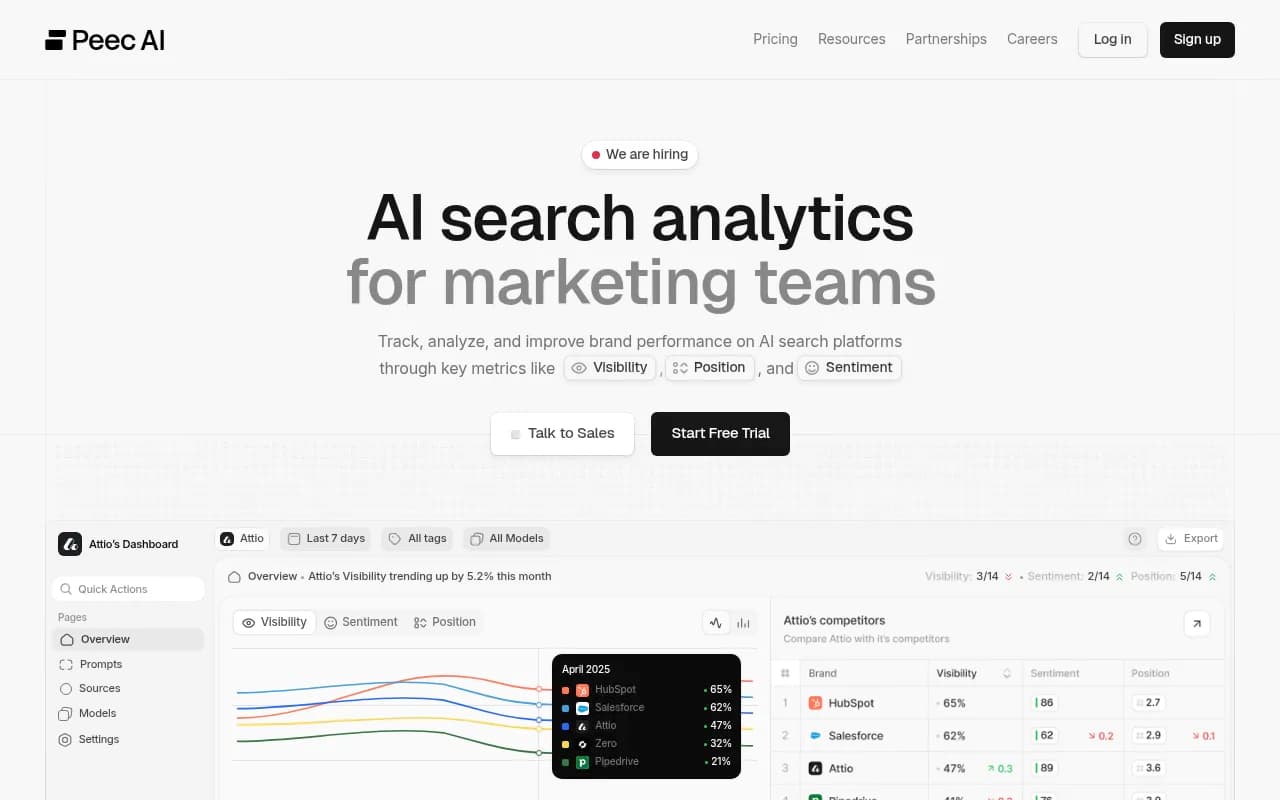
Where Peec AI runs into limits: Zapier's 2026 review of AI visibility tools noted that it's "notably lacking actionable insights, trend data, and AI crawler visibility insights." It also only tracks a subset of AI engines compared to some competitors. So you get a clear picture of where you stand, but not much guidance on what to do with that information.
AthenaHQ
AthenaHQ covers 8+ AI search engines from day one, which is one of its clearest differentiators. Most tools in this price range track 3-5 engines. Getting ChatGPT, Perplexity, Claude, Gemini, Google AI Overviews, and others in one dashboard is genuinely useful -- especially as AI search fragments across platforms.
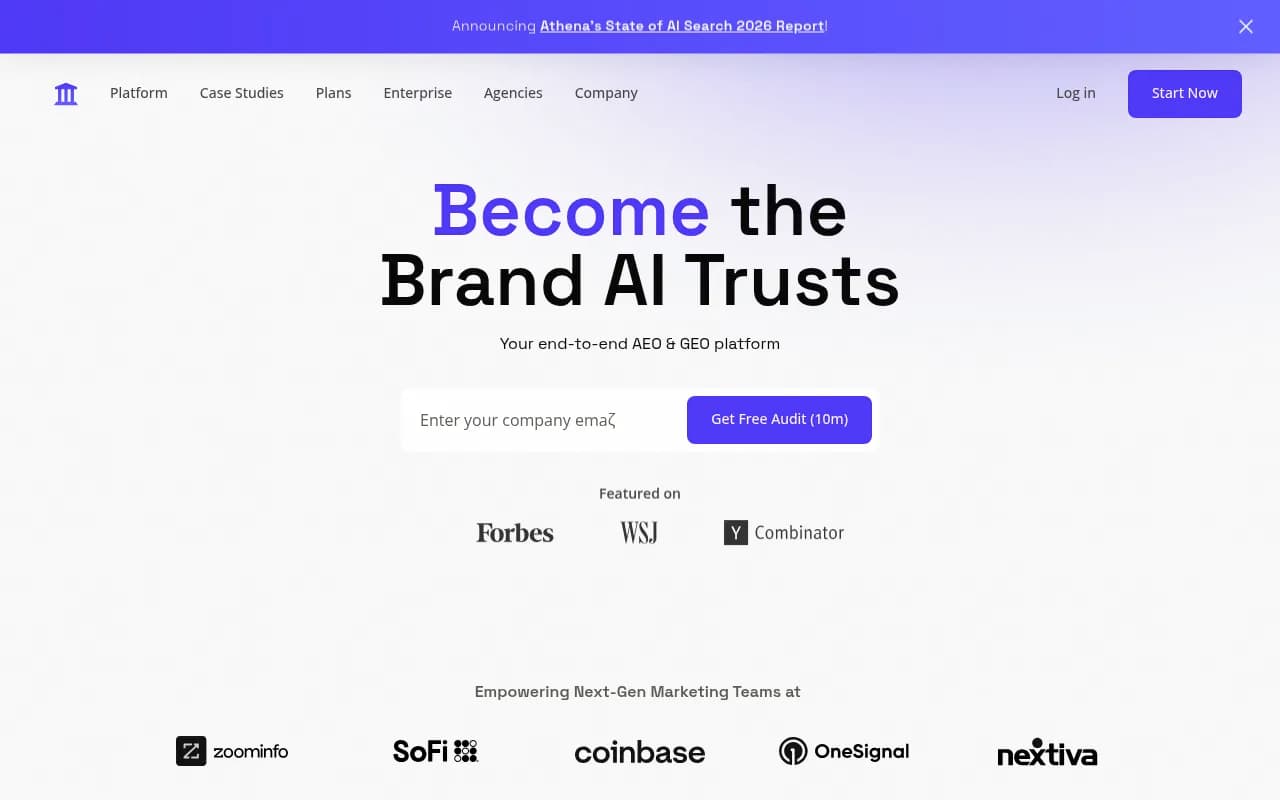
The platform focuses on competitive intelligence: who's winning for which prompts, how your share of voice compares to competitors, which AI engines favor which brands. That's solid monitoring. What it doesn't do well is tell you what content to create or help you create it. AthenaHQ is monitoring-focused, and the optimization layer is thin.
Searchable
Searchable is the least documented of the three. Public information about its feature set is sparse, and it doesn't appear in most major roundups with the same depth as Peec AI or AthenaHQ. Based on available information, it's a niche player with a narrower feature set -- useful for specific use cases but harder to evaluate against the others.
For that reason, most of this comparison will focus on the Peec AI vs AthenaHQ axis, with Searchable noted where relevant.
Feature comparison
Here's how the three tools stack up across the dimensions that actually matter for AI search visibility work:
| Feature | Searchable | AthenaHQ | Peec AI |
|---|---|---|---|
| AI engines tracked | Limited | 8+ | 4-6 |
| Multi-language support | Unknown | Limited | Yes |
| Multi-client / agency support | Unknown | Yes | Yes (core use case) |
| Competitor tracking | Basic | Strong | Yes |
| Share of voice metrics | Unknown | Yes | Yes |
| Prompt customization | Unknown | Yes | Yes |
| AI crawler logs | No | No | No |
| Content gap analysis | No | No | No |
| Built-in content generation | No | No | No |
| Traffic attribution | No | No | No |
| Reddit/YouTube source tracking | No | No | No |
| Pricing transparency | Low | Medium | Medium |
The pattern is clear: all three are monitoring tools. None of them help you act on what you find.
Depth of data: who goes further
Engine coverage
AthenaHQ wins this one. Tracking 8+ engines -- including some that competitors skip, like Grok or Mistral -- means you're not flying blind on emerging platforms. As AI search fragments, this matters more over time.
Peec AI covers the major players but not the full picture. Searchable's coverage is unclear, which is itself a problem when you're evaluating a tool.
Prompt intelligence
This is where things get interesting. Peec AI lets you define custom prompts and track your visibility for each one. AthenaHQ does the same, with slightly more structure around competitive comparisons per prompt.
Neither tool tells you the volume of a prompt (how many people are actually asking it), the difficulty of ranking for it, or how a single prompt fans out into related sub-queries. That kind of prompt intelligence requires more sophisticated data infrastructure than either platform has built.
Competitive analysis
AthenaHQ has the stronger competitive layer. You can see which competitors are winning for specific prompts across specific engines, and track how that changes over time. Peec AI offers competitor tracking too, but the depth of analysis is lighter.
Actionability: the real gap
Here's the honest assessment: all three tools will show you a dashboard. What they won't do is tell you what to write, help you write it, or show you whether publishing new content actually moved your visibility scores.
That's the monitoring-only problem. You see the data, you feel the urgency, and then you're on your own to figure out what to do about it.
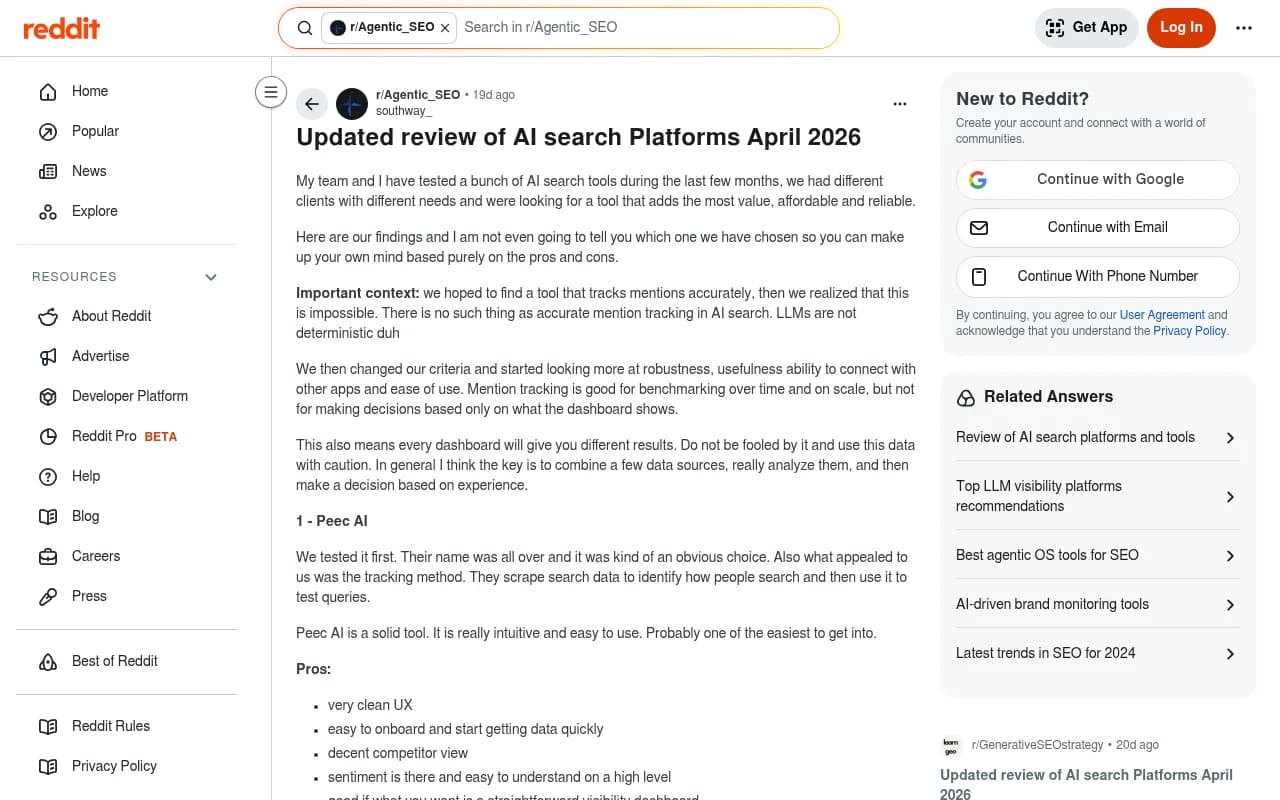
The research community has noticed this. A Reddit thread in r/Agentic_SEO from April 2026 described Peec AI as "solid and intuitive" but noted that the platform leaves users to draw their own conclusions from the data. AthenaHQ gets similar feedback -- good for understanding the competitive landscape, less useful for knowing what action to take next.
This isn't a knock on these tools specifically -- it's a category-wide problem. Most AI visibility platforms were built by people who came from analytics backgrounds, not content strategy backgrounds. They're good at showing you numbers. They're not built to help you move them.
The tools that do close this loop -- showing you gaps, generating content to fill them, then tracking whether that content gets cited -- are a different breed. Promptwatch is one example: it's built around a find-gaps → create-content → track-results cycle rather than just monitoring. But that's a different price point and a different scope than what Peec AI or AthenaHQ are targeting.

Who each tool is actually for
Peec AI is best for:
- Agencies managing multiple clients who need fast onboarding and clean reporting
- Teams operating in multiple languages or regions
- Anyone who wants a simple, intuitive dashboard without a steep learning curve
- Brands that are just starting to track AI visibility and want to understand the basics before investing in a more complex platform
AthenaHQ is best for:
- Teams that care about broad engine coverage and don't want to miss emerging AI platforms
- Competitive intelligence use cases -- understanding the AI search landscape in your category
- Mid-market brands that want more depth than Peec AI without going to enterprise pricing
Searchable is best for:
- Honestly, it's hard to recommend Searchable without more public documentation and independent reviews. If you're evaluating it, request a demo and ask specifically about engine coverage, prompt customization, and whether they have any content optimization features on the roadmap.
Pricing
None of the three tools publish fully transparent pricing, which is a minor frustration. Here's what's publicly known:
- Peec AI has a free tier for basic monitoring, with paid plans that scale with the number of clients and prompts tracked. It's generally considered one of the more affordable options in the mid-market.
- AthenaHQ is priced higher, reflecting its broader engine coverage and competitive intelligence features. Expect to pay more than Peec AI for comparable prompt volumes.
- Searchable's pricing is not publicly documented in most sources reviewed for this guide.
For context, the broader market ranges from around $50/month for basic trackers to $500+/month for platforms with content generation and attribution features. Peec AI sits in the lower-to-mid range; AthenaHQ is mid-to-upper.
What's missing across all three
It's worth naming the gaps that none of these tools address, because they matter for anyone trying to actually improve their AI search visibility (not just measure it):
AI crawler logs. None of the three show you which AI crawlers are visiting your site, which pages they're reading, and whether they're encountering errors. This is foundational for understanding how AI engines discover your content -- and it's absent from most monitoring-only tools.
Content gap analysis. None of them show you the specific prompts your competitors rank for that you don't. That gap analysis is the starting point for any real optimization effort.
Built-in content generation. Even if you identify the gaps, none of these tools help you fill them. You're back to your existing content workflow, which may or may not produce content that AI engines want to cite.
Traffic attribution. None of them connect AI visibility to actual website traffic or revenue. You can see your share of voice go up, but you can't tell if it's translating into clicks or conversions.
These aren't niche features -- they're the difference between knowing you have a problem and being able to fix it.
How they compare to the broader market
The AI visibility tool market in 2026 has stratified into roughly three tiers:
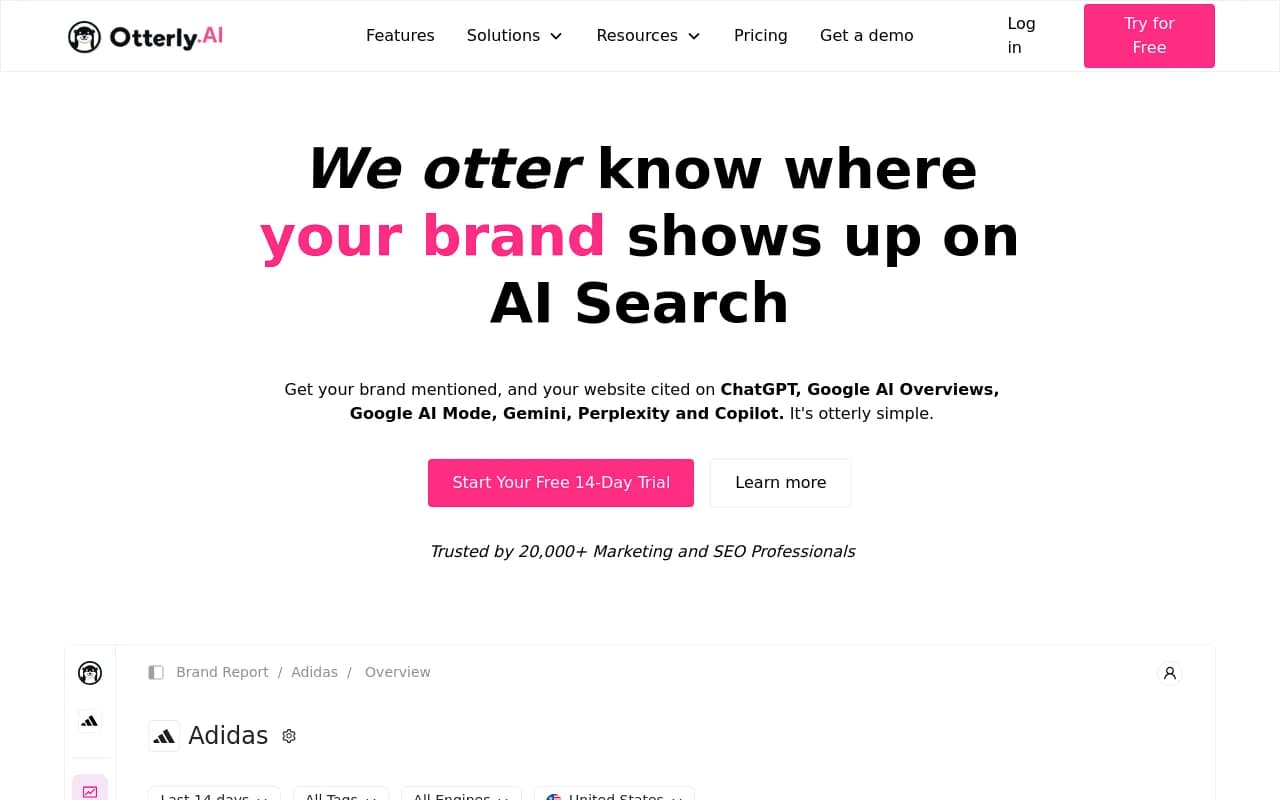
- Basic trackers (Otterly.AI, LLMrefs, Airefs) -- affordable, limited engine coverage, minimal competitive features
- Mid-market monitors (Peec AI, AthenaHQ, Scrunch) -- broader coverage, competitive intelligence, still monitoring-only
- Optimization platforms (Promptwatch, Profound, Conductor) -- monitoring plus content strategy, gap analysis, and in some cases content generation
Peec AI and AthenaHQ sit firmly in tier two. They're meaningfully better than basic trackers, but they don't cross into optimization territory. That's not necessarily a problem -- if you have a content team that can act on monitoring data, these tools give you solid inputs. If you need the platform to help you act, you'll need to look further up the stack.
The bottom line
If you're choosing between these three specifically:
- Pick Peec AI if you're an agency, need multi-language support, and want something you can set up and show clients quickly.
- Pick AthenaHQ if engine coverage breadth matters and you want stronger competitive intelligence.
- Skip Searchable until there's more independent documentation and review data available.
If you're choosing between these three and the broader market, be honest about what you actually need. Monitoring is useful. But if your goal is to improve your AI search visibility -- not just measure it -- you'll eventually hit the ceiling of what monitoring-only tools can do. At that point, the question isn't which tracker is best. It's whether you need a tracker or an optimization platform.