Key takeaways
- Most AI visibility tools are good at the first job (tracking mentions) and weak at the other two (acting on gaps and proving revenue). Score them on all three.
- Engines behave differently. ChatGPT cites about 5 sources per web-search answer, while Google AI Overviews and Perplexity cite about 10 (Promptwatch Data). A single blended "visibility score" hides that.
- Attribution is the least mature category. Ask any vendor how they connect AI visibility to sessions and conversions, and ask to see it.
- Many top-ten listicles are written by vendors who rank themselves first. Treat them as input, then run your own trial with your own prompts.
- For an end-to-end stack that tracks, fixes and measures, Promptwatch is the one I would start with. Lighter trackers make sense when you only need monitoring.
Why a scorecard instead of another ranked list
Search for the best AI visibility tools and you will find a dozen listicles. The KIME guide ranks KIME first. The Evertune guide ranks Evertune well. The Leapd roundup puts Leapd's own product on top. That is not a scandal, it is just how vendor content works, but it means the rankings tell you little about which tool fits your situation.
So this guide does something different. It defines three jobs a platform has to do, gives you a way to score each one, and then places 22 tools from our catalog on that grid. You can reuse the method with your own shortlist.
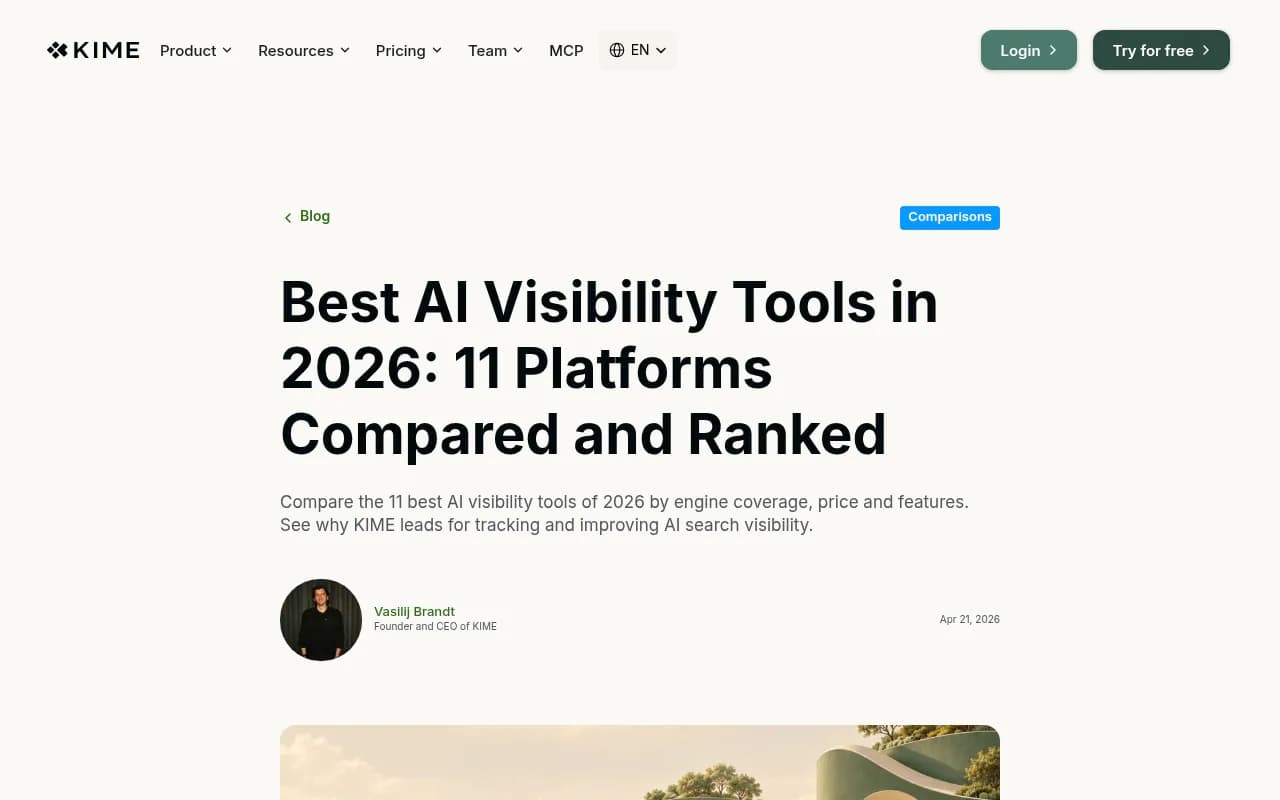
The screenshot above is a good illustration. It is a useful comparison of engine coverage and pricing, and it is also written by one of the products in the comparison. Read it with that in mind.
The three-axis scorecard
I grade each platform on three axes, each from 0 to 3.
Axis 1: tracking
Can the tool tell you what AI engines say about you, accurately, per engine?
- 0: no real tracking, or one engine only
- 1: mentions and share of voice across a few engines
- 2: adds citations, sentiment, position, and multiple countries or languages
- 3: adds prompt volumes, query fan-outs, source analysis by type, and data collected from real user interfaces rather than only APIs
The per-engine point matters more than it sounds. Promptwatch Data shows Copilot's average source count swinging from under 2 to nearly 17 within a few weeks, while Perplexity stays almost exactly at 10 per answer, day after day. A tool that averages those into one number is hiding the signal. Citation behaviour on one engine does not predict another.
Source mix differs sharply too. In Promptwatch's social media citation data for Sep 28 to Oct 4, 2026, social platforms made up 0.46% of ChatGPT citations but 12.2% of Google AI Overviews citations. Reddit's share of ChatGPT citations fell from roughly 4% to about 0.5% on August 14, 2026 (Reddit citations report). If your tool cannot show you source types per engine, you would not have noticed.
Axis 2: action
Does the tool help you change the outcome, or only watch it?
- 0: dashboard only
- 1: generic recommendations or a content brief
- 2: content gap analysis tied to the prompts AI actually answers, plus a prioritized to-do list
- 3: drafts and publishes content to your CMS, then checks whether the fix worked
This is where the field splits. Plenty of products stop at monitoring. A smaller group generates content. Very few close the loop by publishing and then re-measuring.
Axis 3: attribution
Can you prove AI visibility turned into visits and conversions?
- 0: nothing beyond mentions
- 1: manual GA4 segments you build yourself
- 2: a tracking script or GA4 integration that isolates AI-referred sessions and conversions
- 3: adds server-side evidence, such as AI crawler logs, so you can see which pages bots read, which they cite, and what traffic follows
If you want to understand why a page is or is not cited, crawler data is the missing piece. Without it you are guessing whether a bot even reached the page. Promptwatch's AI crawler traffic report shows how much verified crawler activity differs by provider, and Meta-WebIndexer alone went from about 2% to nearly 38% of tracked AI crawler requests between mid-July and August 9, 2026 (Meta-WebIndexer data). That kind of shift is invisible if you only track answers.
The scorecard
A note on method. Scores below come from each vendor's own positioning in our catalog and the feature claims in the sources reviewed. I did not run a hands-on trial of every product, and I did not verify current pricing for most of them, so treat the grades as a starting point for your shortlist, not a verdict. Confirm features on each vendor's site before you buy.
| Tool | Tracking | Action | Attribution | Notes |
|---|---|---|---|---|
| Promptwatch | 3 | 3 | 3 | Real-UI tracking, crawler logs, visitor analytics, Content Agent, Action Board |
| Profound | 3 | 1 | 1 | Enterprise monitoring depth, higher price point |
| Scrunch | 2 | 2 | 1 | Monitoring plus optimization focus |
| Peec AI | 2 | 0 | 1 | Clean monitoring, no optimization |
| Otterly.AI | 2 | 0 | 0 | Budget tracker |
| AthenaHQ | 2 | 1 | 1 | Monitoring-led |
| Qwairy | 2 | 1 | 1 | GEO tracking and some optimization |
| Evertune | 3 | 1 | 0 | Enterprise, model-level perception analysis |
| KIME | 2 | 2 | 1 | Nine engines, agentic fixes, vendor-ranked first in its own guide |
| Semrush | 1 | 1 | 2 | Suite add-on, strong existing GA-style reporting |
| Ahrefs Brand Radar | 1 | 0 | 0 | Brand monitoring bolted onto an SEO suite |
| Bluefish AI | 2 | 1 | 0 | Enterprise GEO |
| Brandlight | 2 | 1 | 0 | Enterprise brand visibility |
| LLM Pulse | 2 | 0 | 0 | Tracking only |
| Rankscale | 1 | 0 | 0 | Lightweight tracking |
| Searchable | 1 | 2 | 1 | Action-oriented analytics |
| AirOps | 0 | 2 | 0 | Content workflows, no visibility data |
| Writesonic | 1 | 2 | 0 | Content platform with tracking |
| SE Visible | 2 | 0 | 0 | SE Ranking's AI tracker |
| XFunnel | 1 | 1 | 2 | Funnel attribution angle |
| Gradial GEO | 1 | 3 | 0 | Agentic detection and publishing |
| Leapd (Alex) | 2 | 2 | 0 | Tracking, audits and content generation |
Two caveats. First, a lower action or attribution score does not make a tool bad. Otterly.AI is cheap and does tracking cleanly, and for a team that only needs a weekly mention report, that is enough. Second, enterprise buyers often care about governance and security more than any of these axes, which this scorecard does not grade.
Tier by tier: where each group fits
The end-to-end platform
Promptwatch is the only one in this set where I can defend a 3 on every axis, and the reason is the stack rather than any single feature. It collects answers from the real interfaces of ChatGPT, Google AI Overviews, AI Mode, Gemini, Perplexity, Copilot and others, which matters because user-facing answers and citations can differ from API outputs. It adds IP-verified crawler logs, visitor analytics for AI-referred sessions, a weekly site audit, and content gap analysis. Then the Content Agent drafts and publishes to WordPress, Webflow or Framer, and published pages are tracked through crawls, citations and traffic.

The case-study numbers are the useful part. Crisp reported 2x higher conversion rates from AI traffic than from traditional channels. TreeHouse, behind Pararius, grew AI search to roughly 25% of organic conversions after fixing crawler access and publishing proprietary rental data. Those results came from the fix-and-measure loop, not from a prettier dashboard. Pricing starts with a free Explore plan, then $95/month for Essential; confirm current plans at promptwatch.com/pricing.
It is not a classic SERP rank tracker, and it is not an LLM observability tool for developers. It brings in Search Console and Bing data, but the focus is AI answers.
Enterprise monitoring specialists
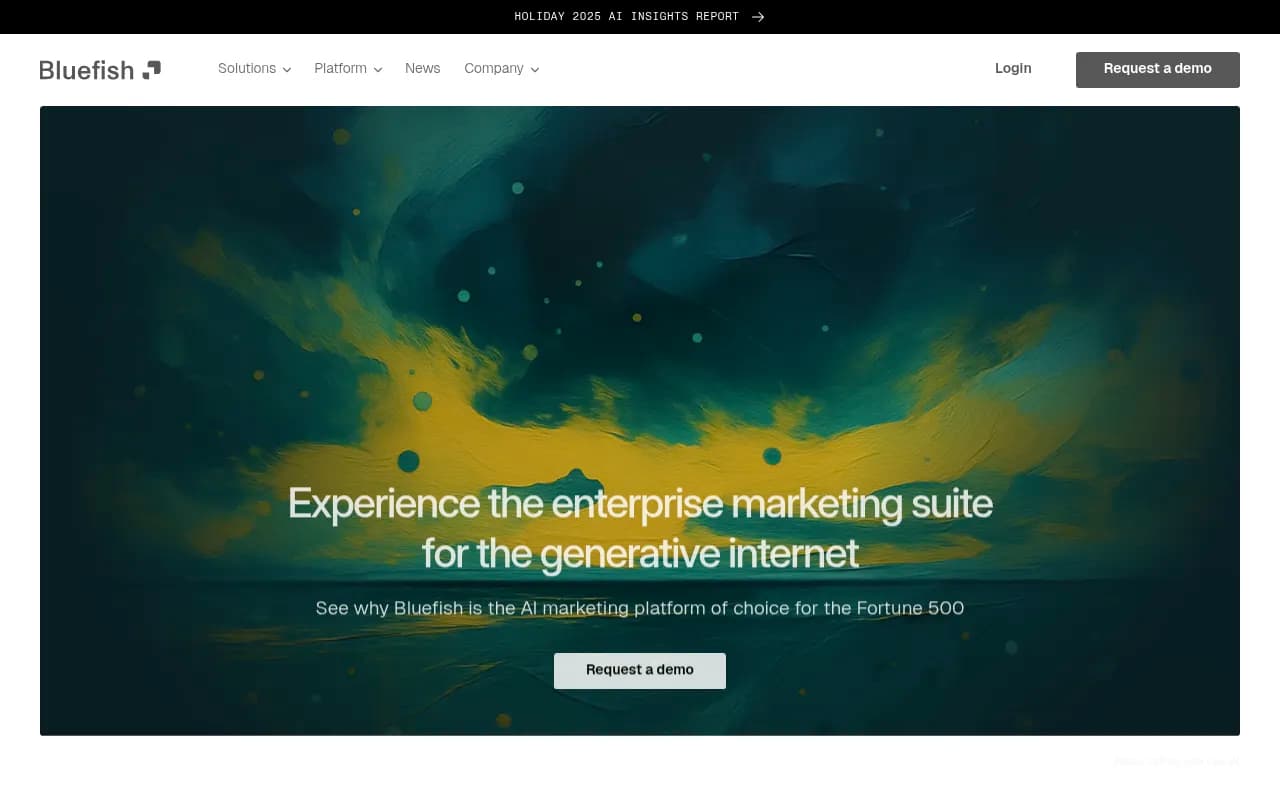
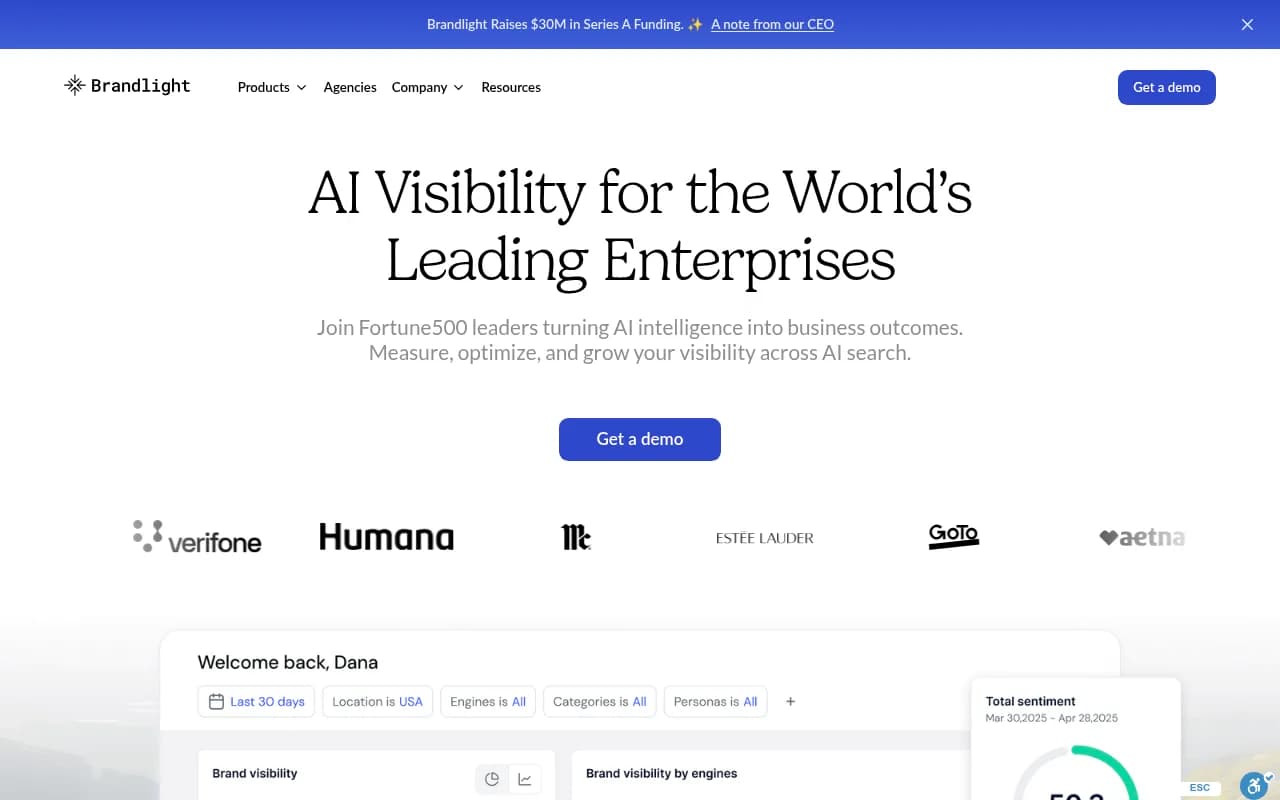
Profound, Scrunch, Evertune, Bluefish and Brandlight sit here. They tend to have deep monitoring and executive reporting, and they tend to cost more.


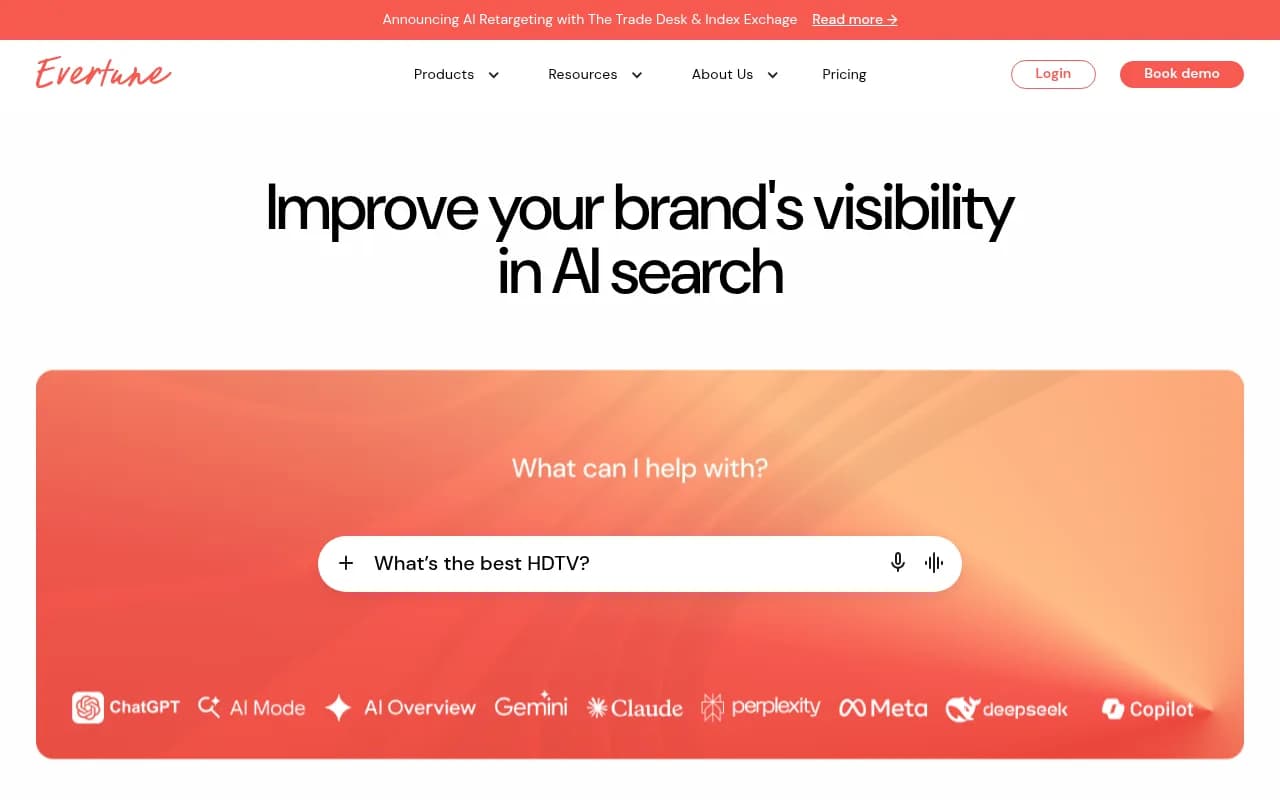
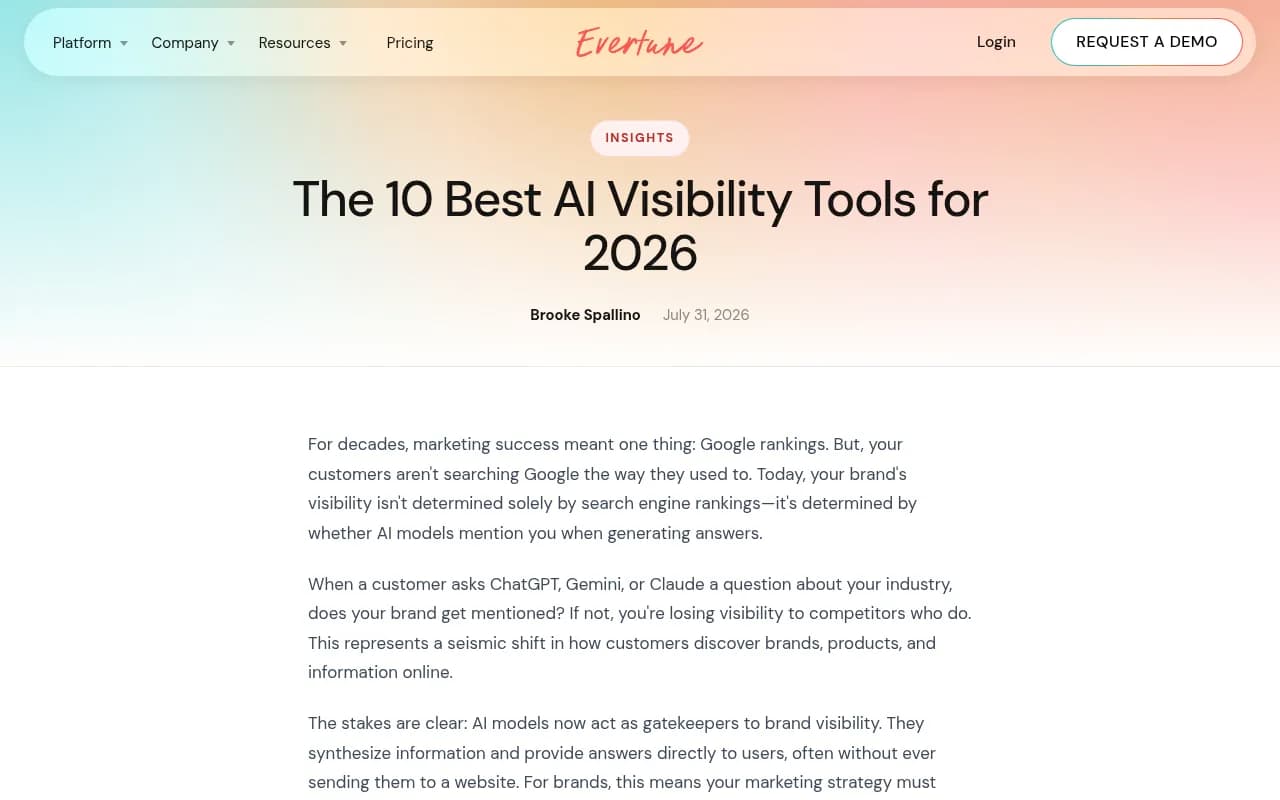
Evertune's own guide frames the job well: is my brand mentioned, how do I compare to competitors, which content drives mentions, what is the playbook, and how am I portrayed. That is a good question list. Where I would push every vendor in this tier is on the fourth one, the playbook. Ask whether the tool executes it or just describes it.
Monitoring-first tools
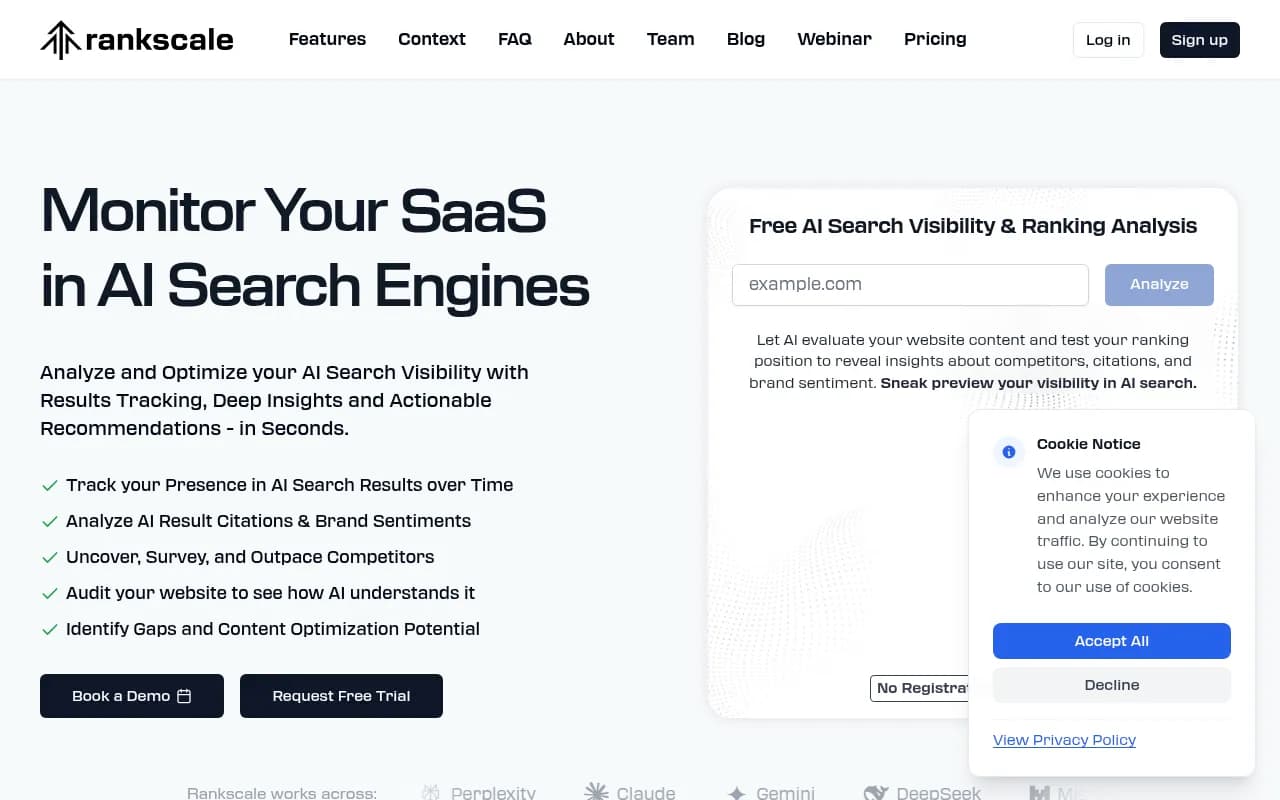
Peec AI, Otterly.AI, AthenaHQ, Qwairy, LLM Pulse and Rankscale answer one question well: was I mentioned, and where? Their catalog descriptions say as much; Peec AI is literally listed as "AI search monitoring without the optimization."


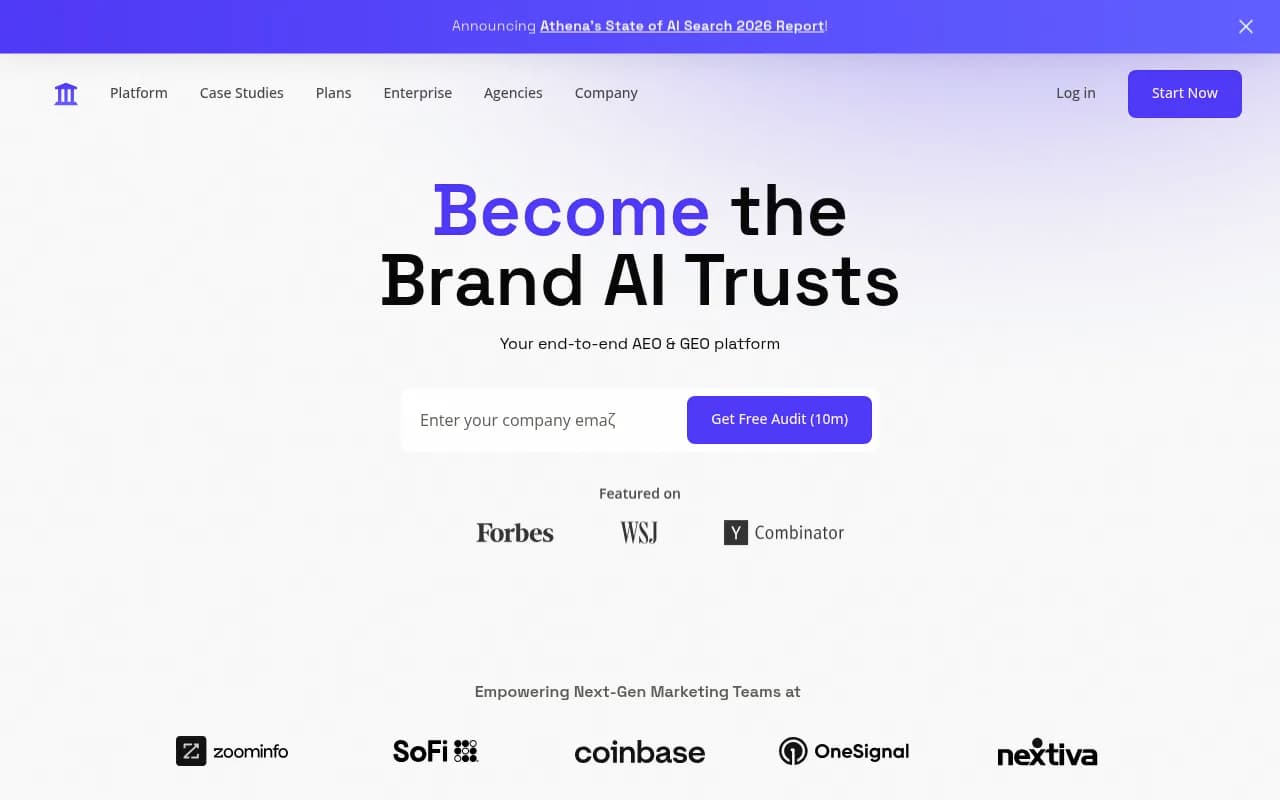
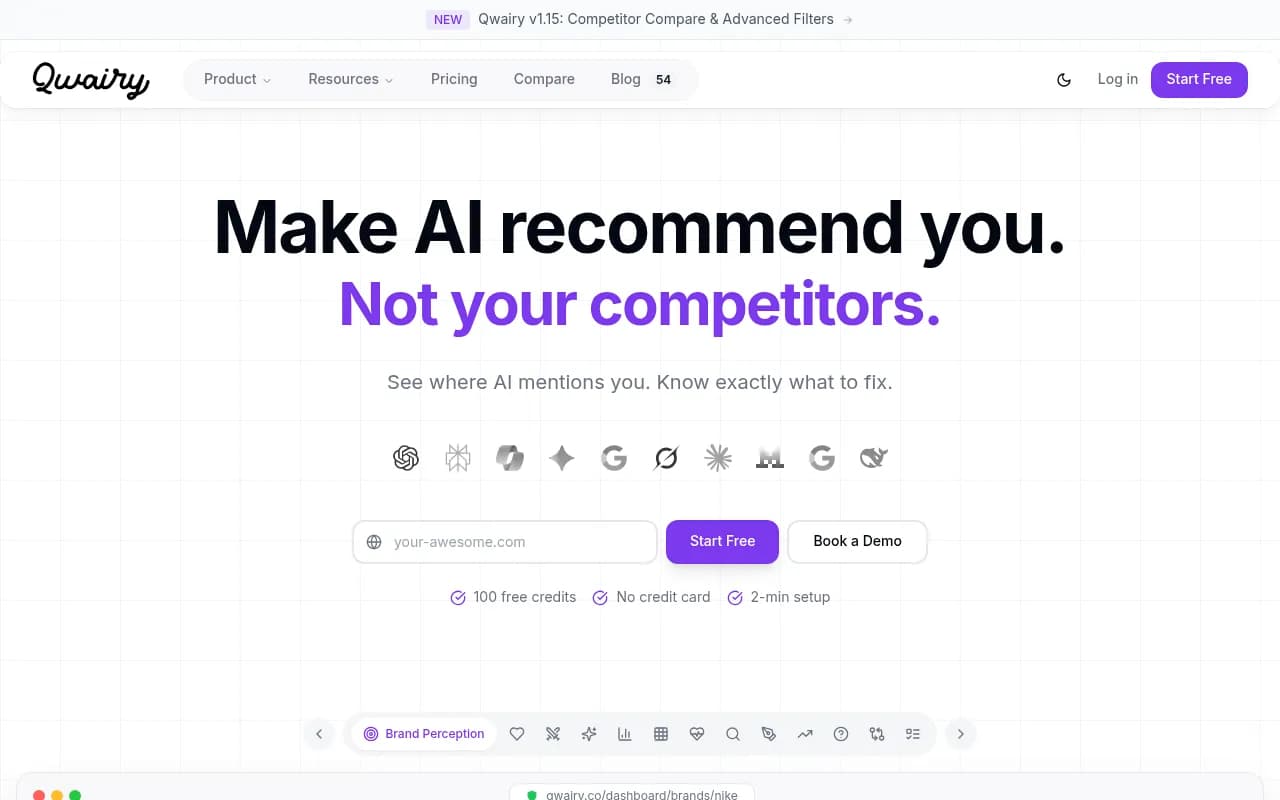
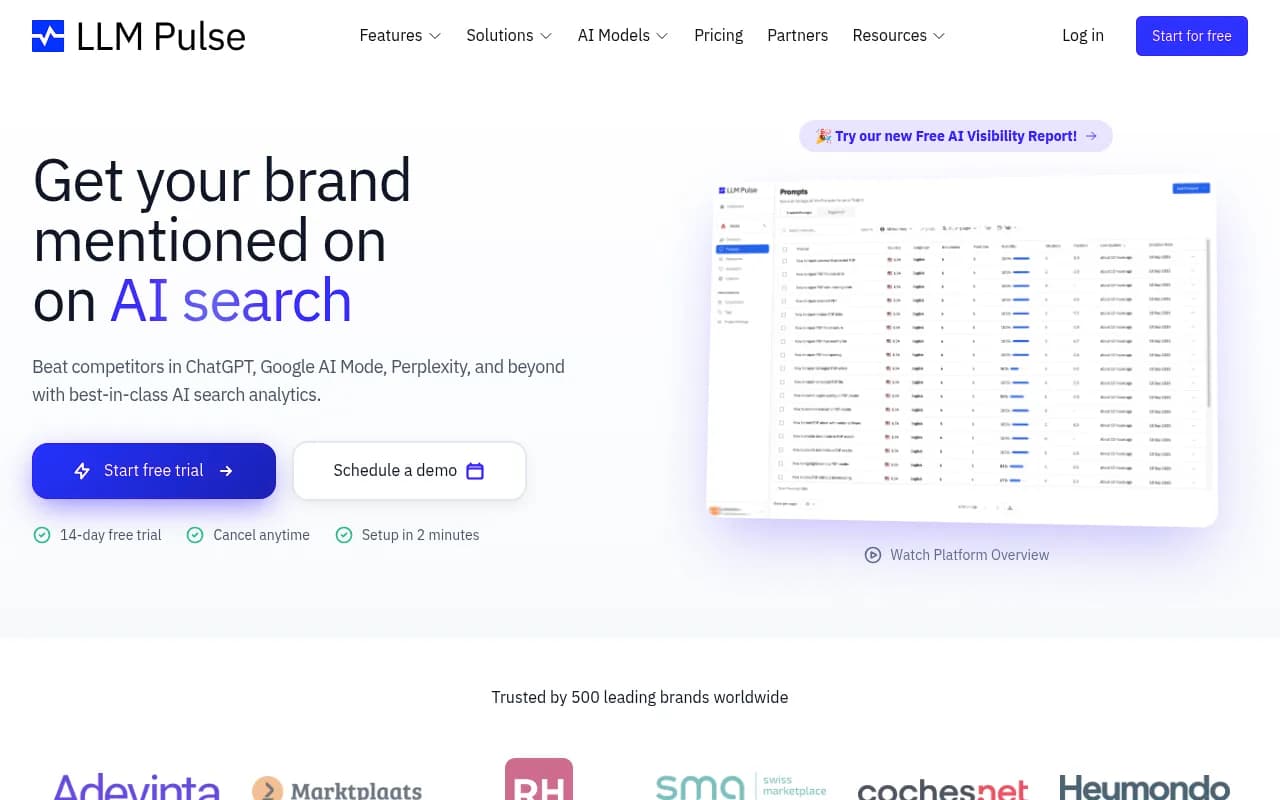
They are the right pick when you are proving the channel exists before committing budget. They stop being the right pick the day someone asks "what do we do about it?"
Suites with AI add-ons
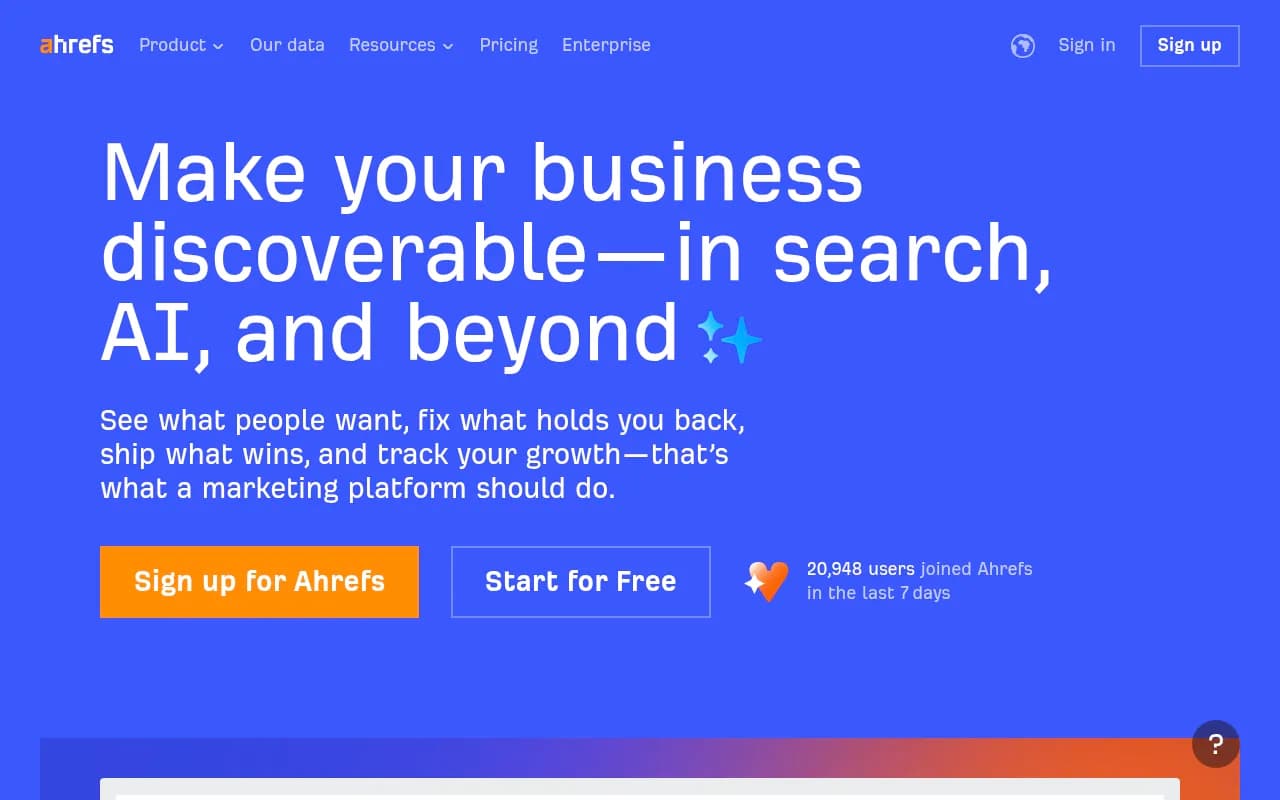
Semrush and Ahrefs Brand Radar bring familiar interfaces and existing data. The tradeoff is depth: fixed or limited prompt sets and thinner AI-specific analysis. Semrush gets a better attribution score here mainly because of its mature reporting, not because it isolates AI traffic natively.
Action-first and content tools
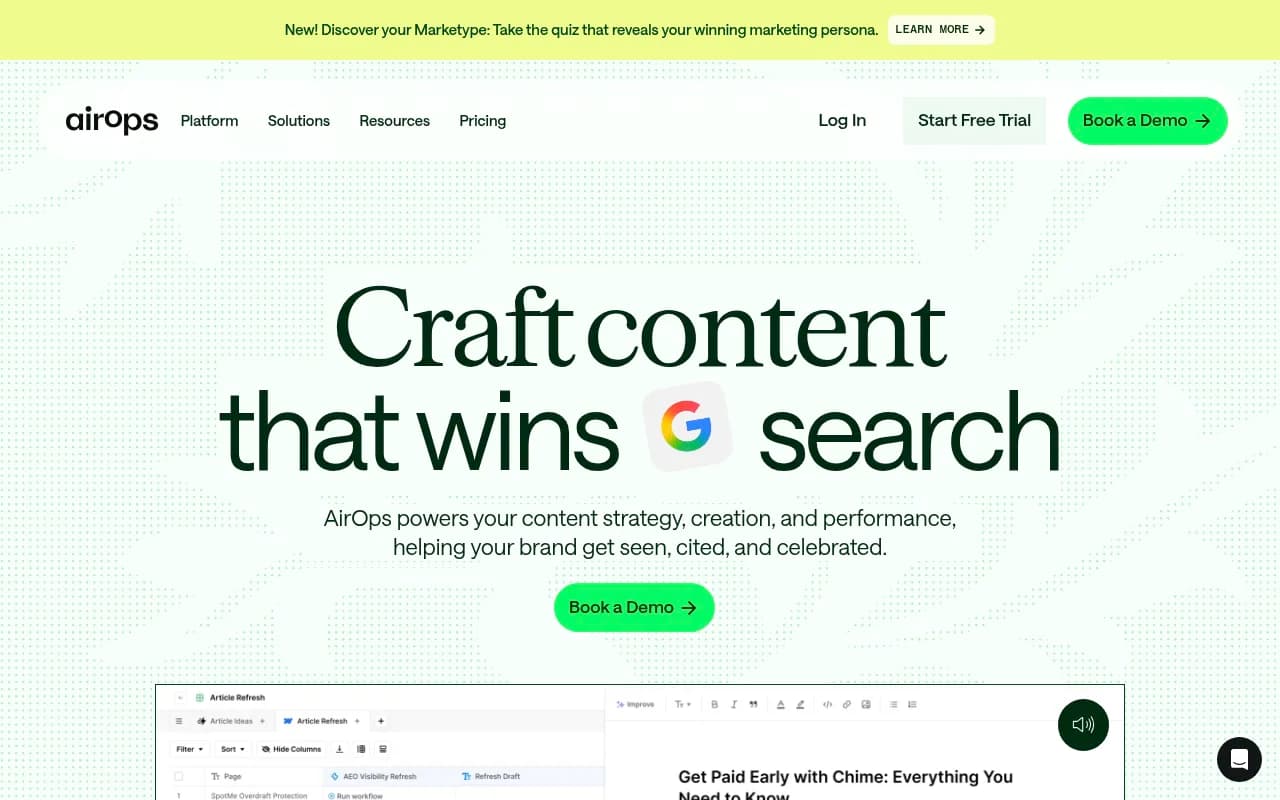
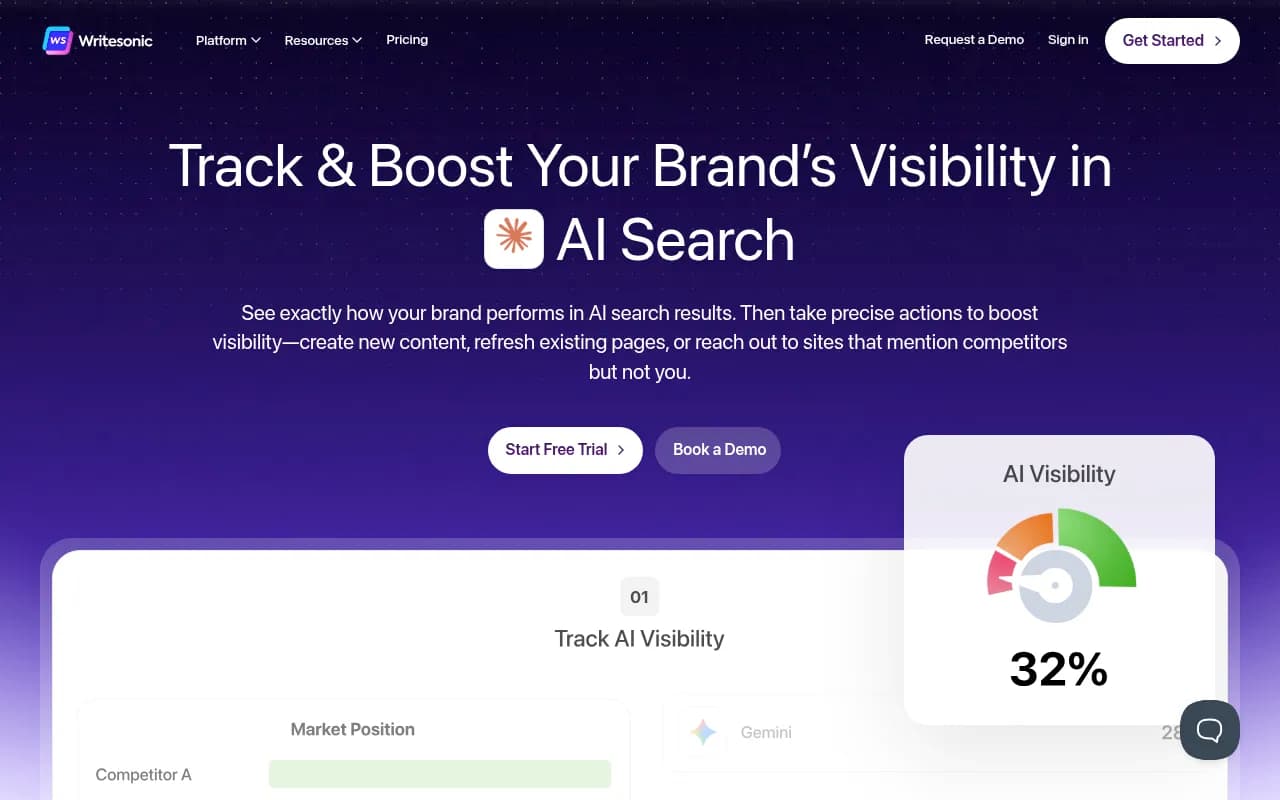
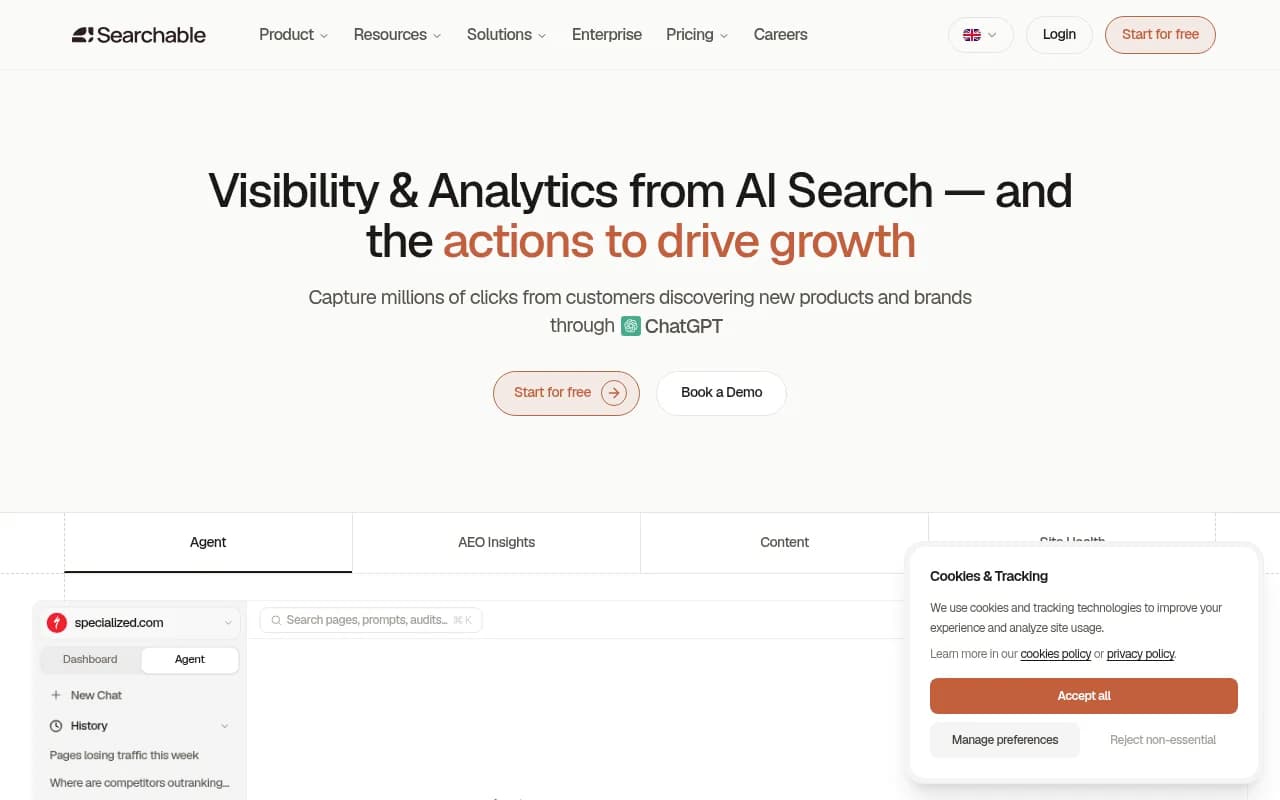
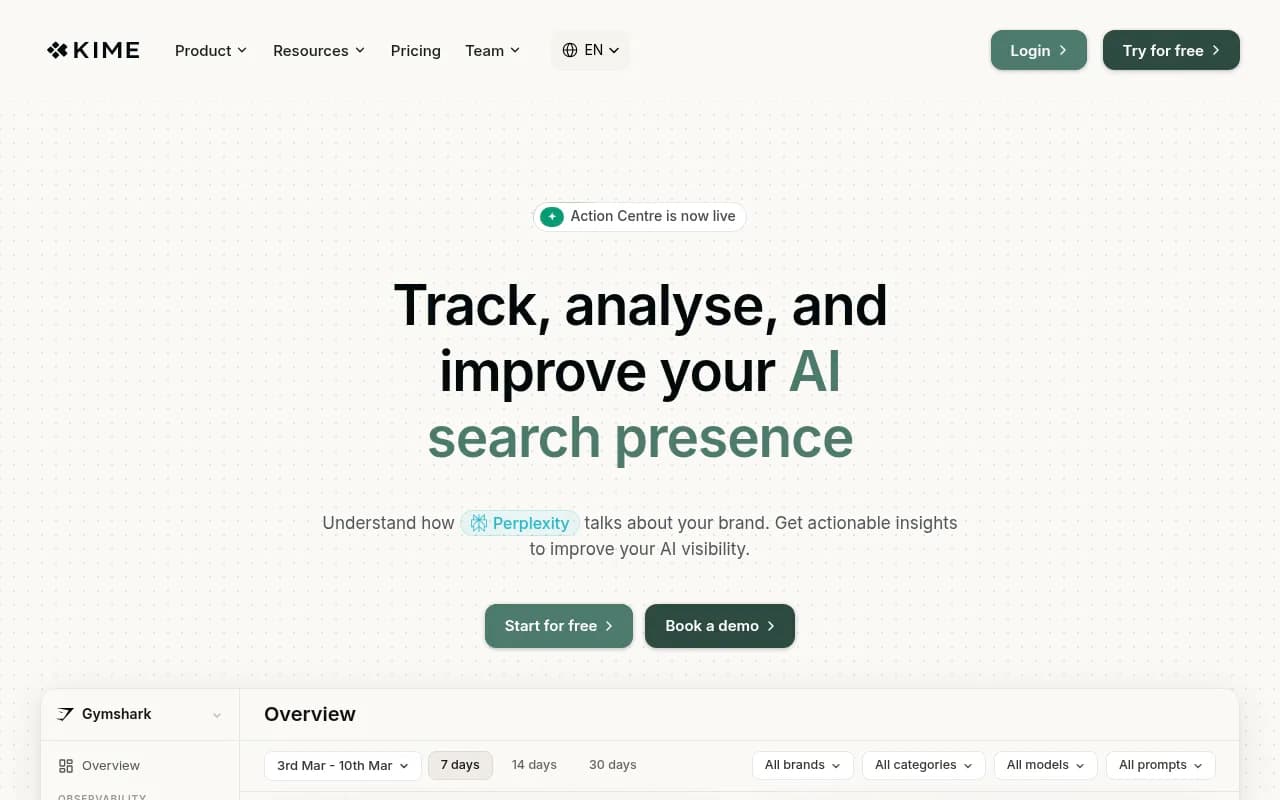
AirOps, Writesonic, Searchable, Gradial GEO, KIME and Leapd lean toward doing something. Content generators without visibility data have a structural problem: they write without knowing which prompts or sources matter. The reverse is also true, and tools in this group vary in how much measurement sits behind the content.


Attribution-minded options
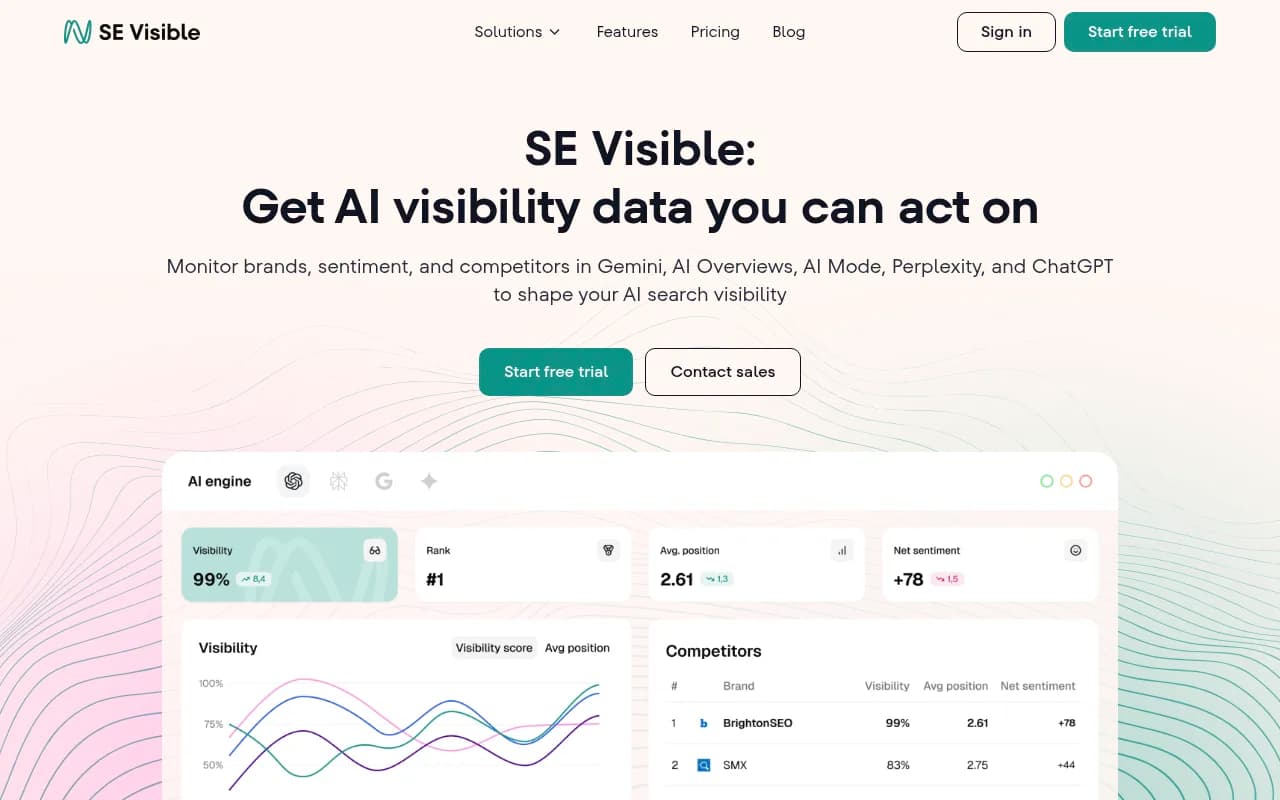
XFunnel markets funnel attribution, and SE Visible rides on the SE Ranking ecosystem. If revenue proof is your main blocker, shortlist these alongside Promptwatch.

How to test any platform in a week
A demo shows the best day. A trial with your own prompts shows the real one.
- Write 25 prompts: 10 category questions, 8 brand-specific, 7 competitor comparisons. Include a few in a second language or country if you sell there.
- Run the same prompts manually in ChatGPT, AI Overviews and Perplexity, and save the answers. Compare with what the tool reports. If they disagree often, ask whether the tool uses real interfaces or APIs.
- Check source analysis. Can you filter citations by engine and by source type? Does it separate Reddit, YouTube and LinkedIn?
- Ask for the action. Pick one gap the tool surfaces and see what it gives you: a vague tip, a brief, or a drafted page.
- Test attribution. Install the script or connect GA4 and see whether you can isolate AI-referred sessions within a few days.
- Look for crawler data. If the tool cannot tell you whether GPTBot or ChatGPT-User reached a page, you cannot separate a content problem from an access problem.
Reading the metrics together
A scorecard is only useful if you know what a bad number means. A rough diagnostic:
| Symptom | Likely problem | Where to look |
|---|---|---|
| Low share of voice | Coverage: you are missing from prompts | Content gap analysis |
| Mentioned but late in the answer | Prominence | Comparison pages, third-party mentions |
| Mentioned, rarely cited | Content or crawlability | Crawler logs, site audit |
| Weak sentiment | Reputation | Source analysis, reviews, forums |
| Strong visibility, no traffic | Attribution or intent | Visitor analytics, GA4 |
Content type matters too. In Promptwatch's content type data, product pages were the most cited type in ChatGPT at 22.4% of citations (Sep 28 to Oct 4, 2026). Its half-life study found landing pages and docs stayed cited longest, while news lost half its cited pages within 36 days. If your tool only tells you "publish more content," it is not telling you much.
Picking by situation
| Your situation | Start with |
|---|---|
| Need tracking, fixing and proof of revenue in one place | Promptwatch |
| Large enterprise, monitoring and executive reporting first | Profound, Scrunch or Evertune |
| Small budget, proving the channel | Otterly.AI or Peec AI |
| Already deep in an SEO suite | Semrush or Ahrefs Brand Radar as a first look |
| Agency managing many clients | A platform with white-label reporting and multi-project support; check Promptwatch's Agency plans |
| Mostly need content production | AirOps or Writesonic, paired with a tracker |
If you want to browse beyond these 22, the GEO software directory at bestgeosoftware.com lists many more, and ai-rank-tools.com focuses on rank trackers.
What I would do
If the budget is tight, run a free baseline first. Promptwatch has a no-login AI visibility report and a free Explore tier, and a few catalog tools like Amplitude AI Visibility and HubSpot AI Search Grader offer one-off diagnostics. Then shortlist two platforms, run the 25-prompt test above, and pick the one that gets you from "we are invisible on these prompts" to a published page and a visible traffic line fastest.
And if you would rather have a team run the program, agencies such as 1001 SEO Media combine technical SEO, content and GEO work, and use Promptwatch as their AI visibility platform. That is also who publishes this site, so weigh that as you see fit.
The scorecard comes down to one question per axis. Can it show me what each engine says, can it help me change it, and can it prove the change paid off? A tool that answers all three is worth the money. One that answers only the first is a report you will stop opening in about two months.