Key takeaways
- Omnia monitors brand visibility across ChatGPT, Perplexity, Google AI Overviews, and Google AI Mode -- four major AI engines, but not the full spectrum
- Its standout feature is a personalized GEO action plan that goes beyond raw data to tell you what to fix
- Pricing starts at €79/month, which may be steep for small teams or solo marketers
- Users on G2 and Reddit report measurable visibility improvements within a week of implementing recommendations
- If you need broader AI engine coverage, deeper content generation capabilities, or crawler-level diagnostics, alternatives like Promptwatch cover more ground
The AI search gold rush is real. Every brand wants to know: when someone asks ChatGPT to recommend a product, a service, or a solution -- do we show up? And if not, why not?
Omnia is one of the tools that tries to answer that question. It's been around long enough to have real user reviews, a defined pricing structure, and a clear positioning: not just a monitoring dashboard, but a platform that tells you what to actually do about your AI visibility gaps.
So is it worth the money? Let's get into it.
What Omnia actually does
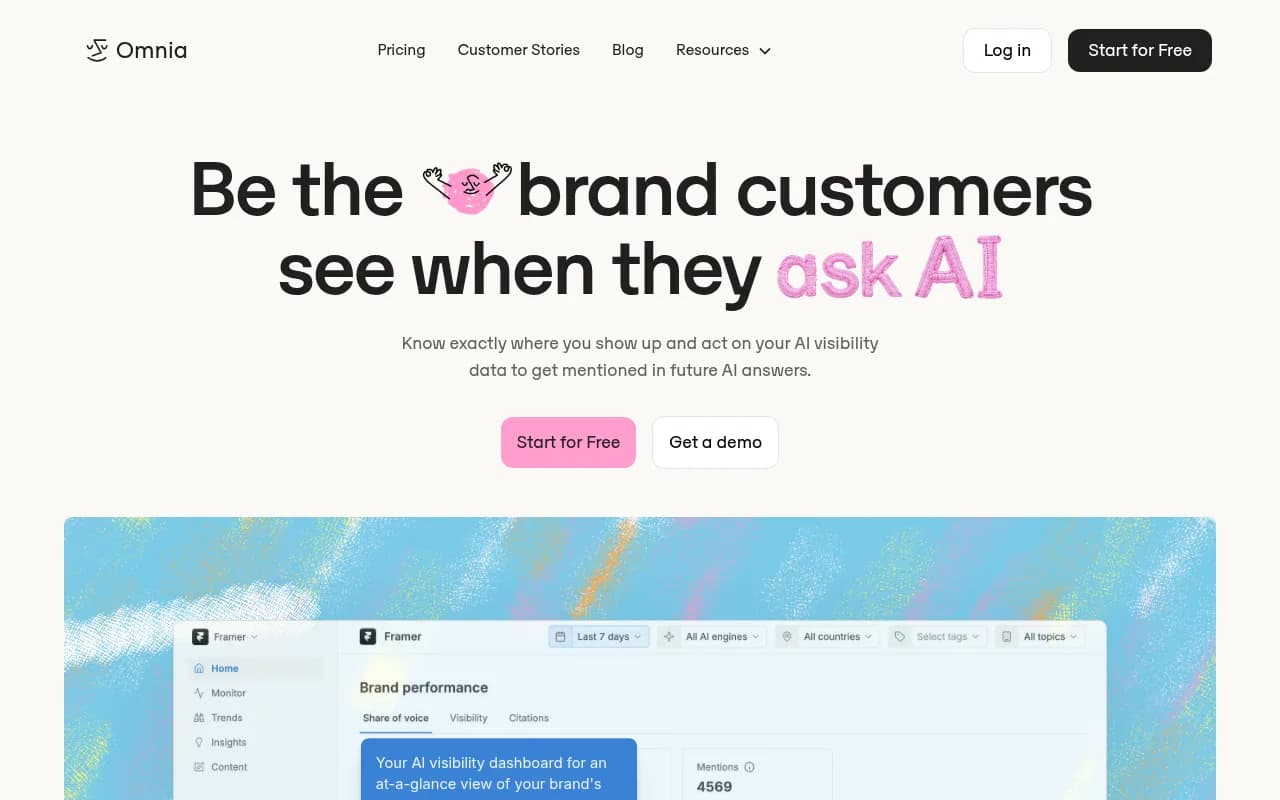
Omnia tracks how your brand appears in AI-generated answers across four platforms: ChatGPT, Perplexity, Google AI Overviews, and Google AI Mode. It runs daily checks against a set of prompts you define, then surfaces where you're mentioned, how you're described, and which sources AI engines are citing when they talk about your category.
That last part -- citation analysis -- is genuinely useful. Knowing that Perplexity keeps pulling from a specific Reddit thread or a competitor's blog post tells you where to focus your editorial energy. It's not just "you're not showing up"; it's "here's the content gap and here's the type of source that would fill it."
The other piece that separates Omnia from basic monitoring tools is the GEO action plan. After analyzing your visibility data, it generates prioritized recommendations: content to create, technical SEO fixes, and editorial placement suggestions. Users on G2 describe this as making AI visibility "easy to understand and act on" -- which is a fair summary of what the action plan tries to do.
Competitive benchmarking is also baked in. You can see how your brand compares to competitors across the same prompts, which is often more motivating than looking at your own numbers in isolation.
Who it's built for
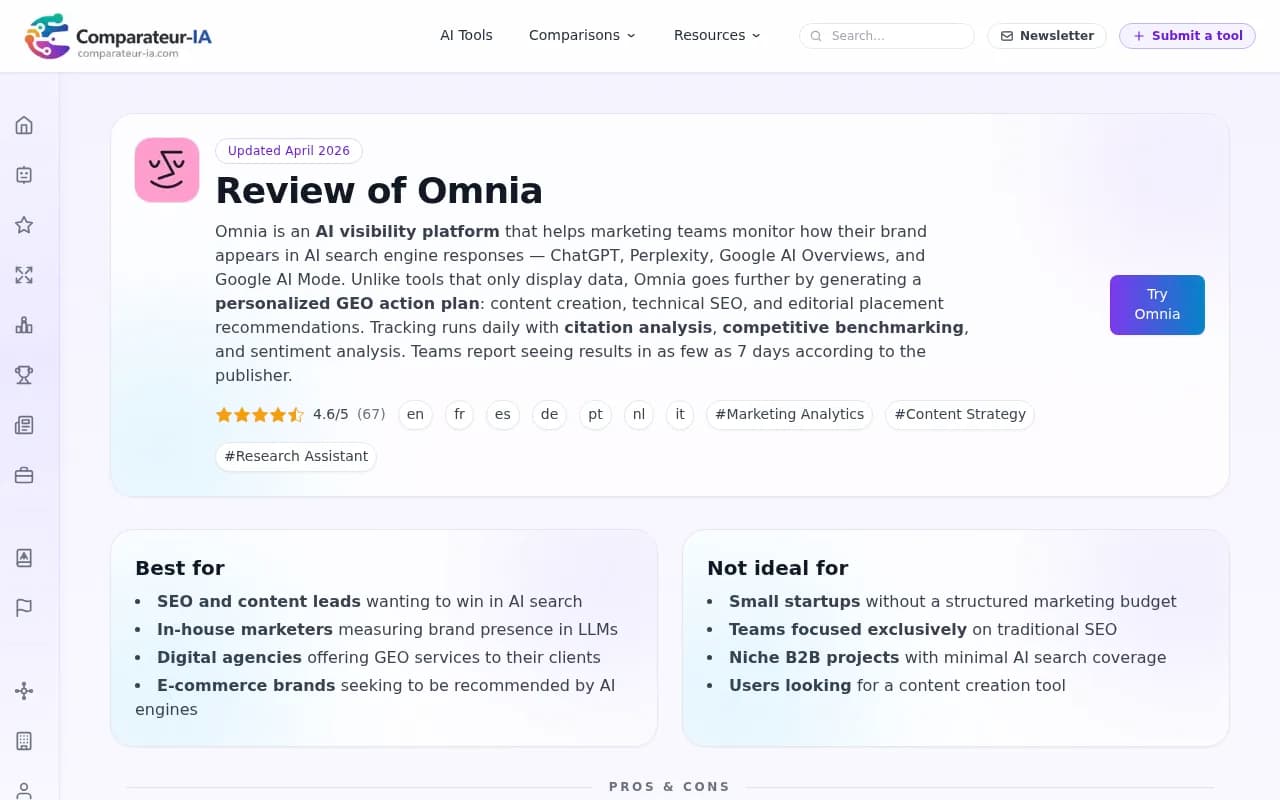
Omnia's sweet spot is mid-sized marketing teams and digital agencies that are already thinking about GEO (Generative Engine Optimization) and want a structured workflow for it. The platform is designed for:
- SEO leads who want to extend their practice into AI search
- In-house brand teams tracking share of voice in LLM responses
- Agencies offering GEO as a service to clients
- E-commerce brands trying to get recommended in AI shopping queries
It's less suited to small startups with tight budgets, teams that are purely focused on traditional SEO, or anyone looking for a content creation tool in the traditional sense. The action plan recommends content; it doesn't write it for you.
What users are actually saying
The G2 reviews are mostly positive, with users highlighting the prompt tracking and competitor benchmarking as the most immediately useful features. The sentiment analysis -- how AI engines describe your brand, not just whether they mention you -- gets called out as a differentiator.
On Reddit, the picture is a bit more nuanced. In a thread on r/DigitalMarketing where several teams compared AI visibility platforms they'd tested, Omnia came up as one of the stronger options for teams that wanted actionable output rather than just dashboards. The recurring complaint was that the prompt limit on lower plans feels restrictive once you start mapping out a real keyword universe.
One honest take from r/webmarketing: the platform does prompt-level monitoring well and the recommendations are more concrete than most competitors, but teams with large content operations may find themselves wanting more automation in the execution layer.
The "results in 7 days" claim from the publisher is worth addressing directly. This is possible if you implement the action plan recommendations quickly and your site has decent existing authority. It's not a guarantee, and the GEO space is volatile enough that what works this month may need adjusting next month.
Pricing breakdown
Omnia's pricing starts at €79/month, which puts it in the mid-range for AI visibility tools. Here's how the tiers generally stack up based on available information:
| Plan | Prompts | Best for |
|---|---|---|
| Starter | ~25 prompts | Small brands testing GEO |
| Growth | ~100 prompts | Growing marketing teams |
| Pro/Agency | 200+ prompts | Agencies and larger brands |
The prompt limit is the main constraint to watch. If you're tracking a competitive category with dozens of relevant queries, you'll hit the ceiling on lower plans faster than you expect. Daily tracking is included across plans, which is a genuine advantage over tools that only run weekly checks.
There's a free trial available, which is worth using before committing -- the action plan quality is something you need to experience with your own brand data to evaluate properly.
Where Omnia falls short
A few honest limitations worth knowing before you sign up:
AI engine coverage is limited. Four platforms (ChatGPT, Perplexity, Google AI Overviews, Google AI Mode) covers the biggest names, but misses Claude, Gemini, Grok, DeepSeek, Copilot, and Meta AI. If your audience is distributed across multiple AI tools -- which is increasingly the case -- that's a real gap.
No content generation. The action plan tells you what to create, but you're on your own for actually writing it. For teams that want a tighter loop between insight and execution, this means adding another tool to the stack.
No crawler logs. You can't see which AI crawlers are visiting your site, how often, or which pages they're reading. This makes it harder to diagnose technical indexing issues that might be suppressing your visibility.
No Reddit or YouTube tracking. AI engines frequently cite Reddit threads, YouTube videos, and forum discussions. If you don't know which of those are influencing recommendations in your category, you're missing a meaningful part of the picture.
GEO is still young. This isn't Omnia's fault, but it's worth saying: citation mechanisms in LLMs change frequently. What gets you cited today may not work in six months. Any platform in this space is partly a moving target.
How Omnia compares to alternatives
The AI visibility tool market has gotten crowded fast. Here's a quick comparison of Omnia against some of the other platforms worth considering:
| Tool | AI engines covered | Action plan / content | Crawler logs | Reddit/YouTube tracking | Starting price |
|---|---|---|---|---|---|
| Omnia | 4 | Action plan (no writing) | No | No | €79/mo |
| Promptwatch | 10+ | Full content generation | Yes | Yes | $99/mo |
| Otterly.AI | 4-5 | Monitoring only | No | No | Lower |
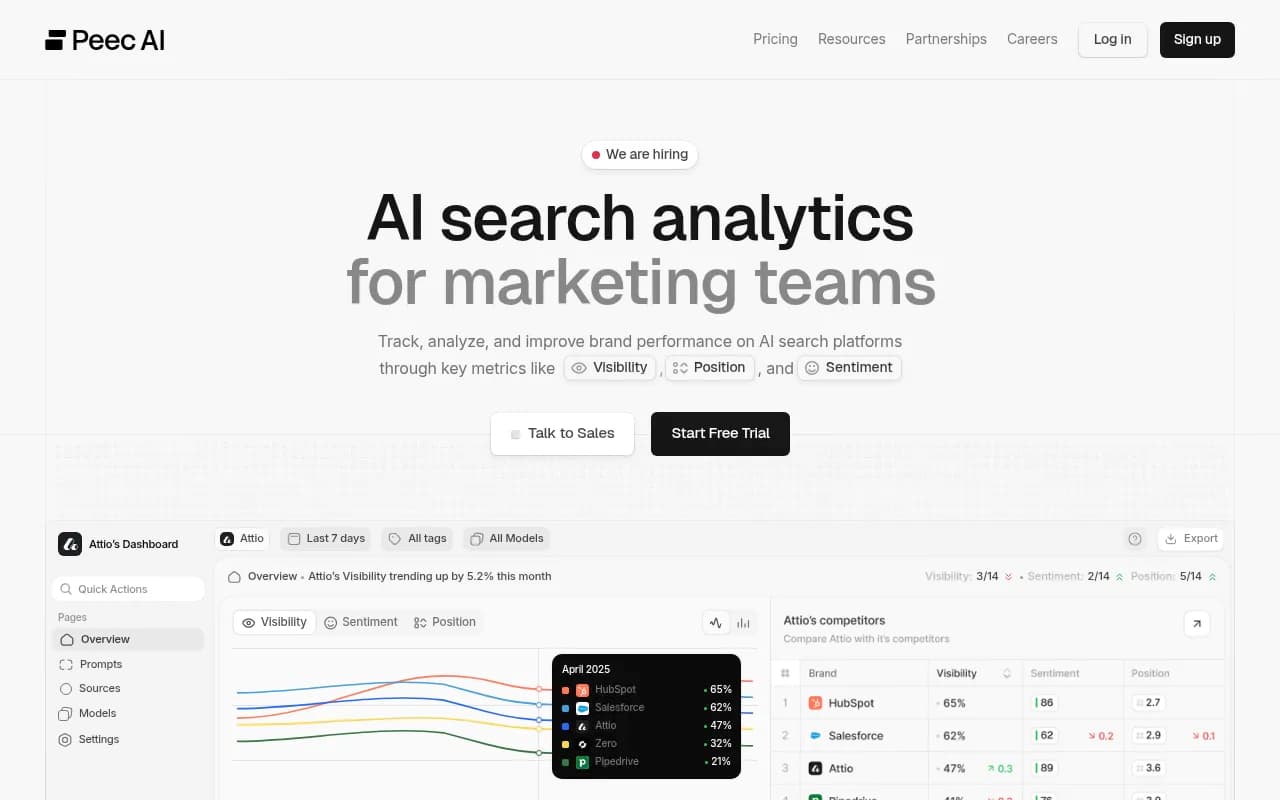
| Peec AI | 4-5 | Monitoring only | No | No | Lower |
| Profound | 6+ | Some recommendations | No | No | Higher |
| Scrunch | 5+ | Monitoring + some guidance | No | No | Mid-range |
Omnia sits in a reasonable middle ground: more actionable than pure monitoring tools like Otterly.AI or Peec AI, but less comprehensive than platforms that cover more AI engines and offer built-in content generation.

If the four-engine limitation is a dealbreaker, or if you want the content creation step handled inside the same platform, Promptwatch is worth a look. It monitors 10+ AI models, includes an AI writing agent that generates content grounded in citation data, and adds crawler logs so you can see exactly how AI bots are interacting with your site.

The verdict
Omnia does what it promises. Daily tracking, citation analysis, competitive benchmarking, and a prioritized action plan -- that's a real workflow, not just a dashboard. For teams that are just getting started with GEO and want a structured way to understand and improve their AI visibility, it's a solid choice.
The limitations are real too. Four AI engines, no content generation, no crawler diagnostics. If your needs are more advanced -- broader coverage, tighter execution loop, or technical indexing visibility -- you'll likely outgrow it or need to supplement it.
The €79/month starting price is fair for what you get, but do the math on prompt volume before committing. A serious GEO program typically needs more prompts than the entry tier allows, and the cost climbs from there.
Bottom line: Omnia is a good tool for teams that want to move from "we should probably care about AI search" to "here's our plan." It's not the most powerful option in the market, but it's more actionable than most of what's out there at this price point.
Alternatives worth exploring
If Omnia doesn't quite fit, here are a few other tools covering different parts of the AI visibility problem:

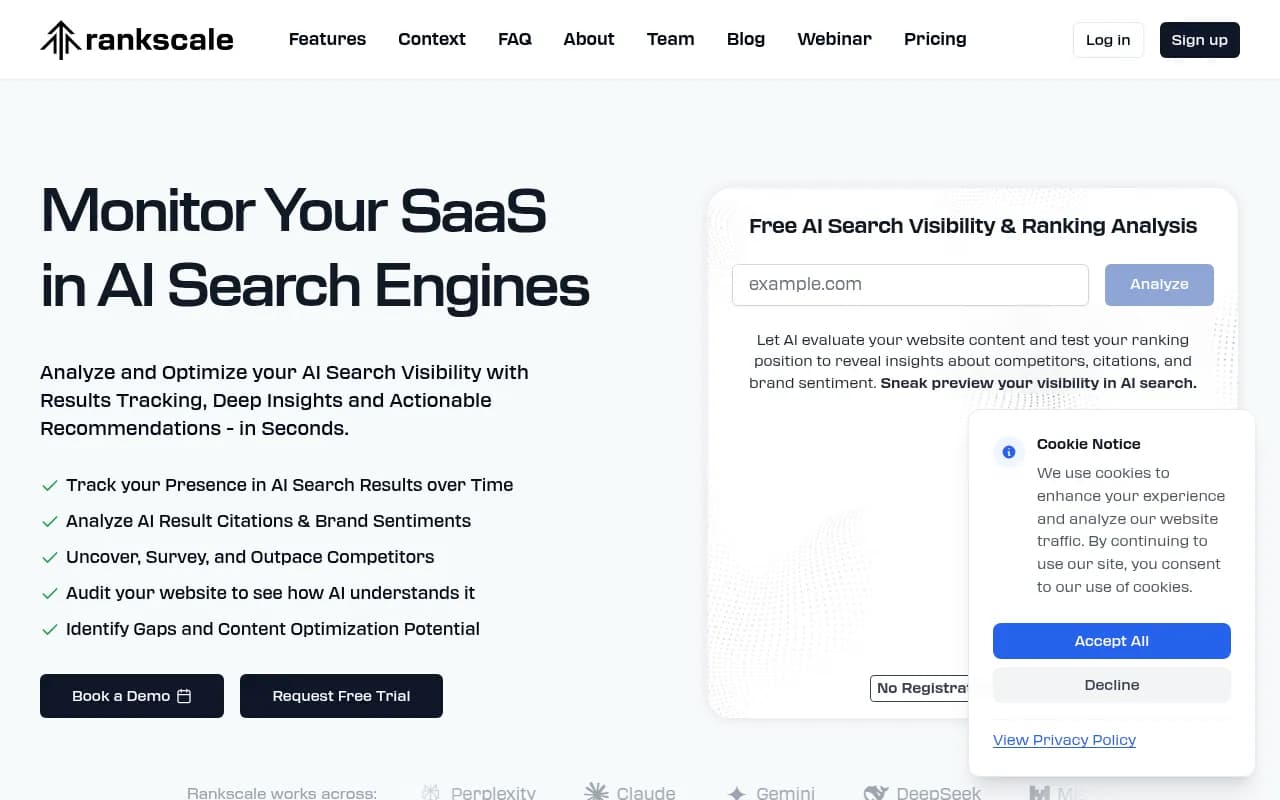
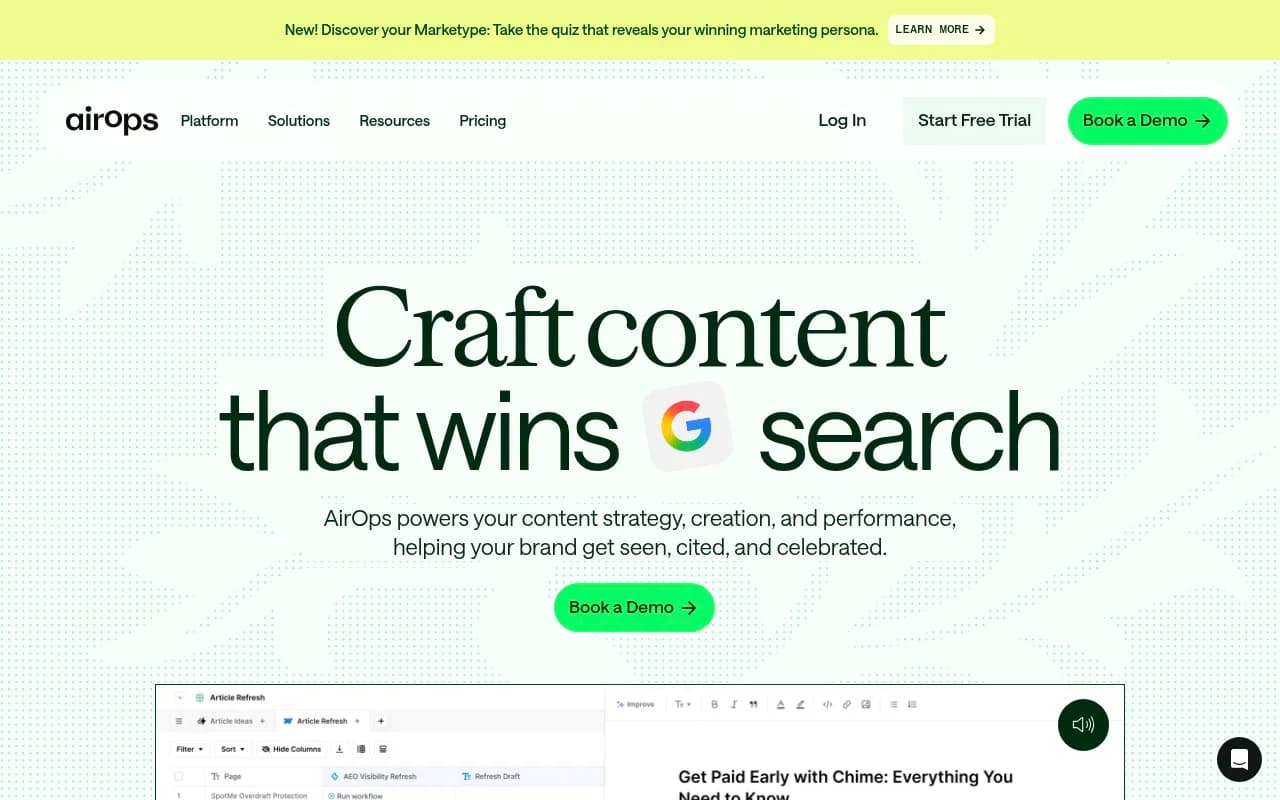
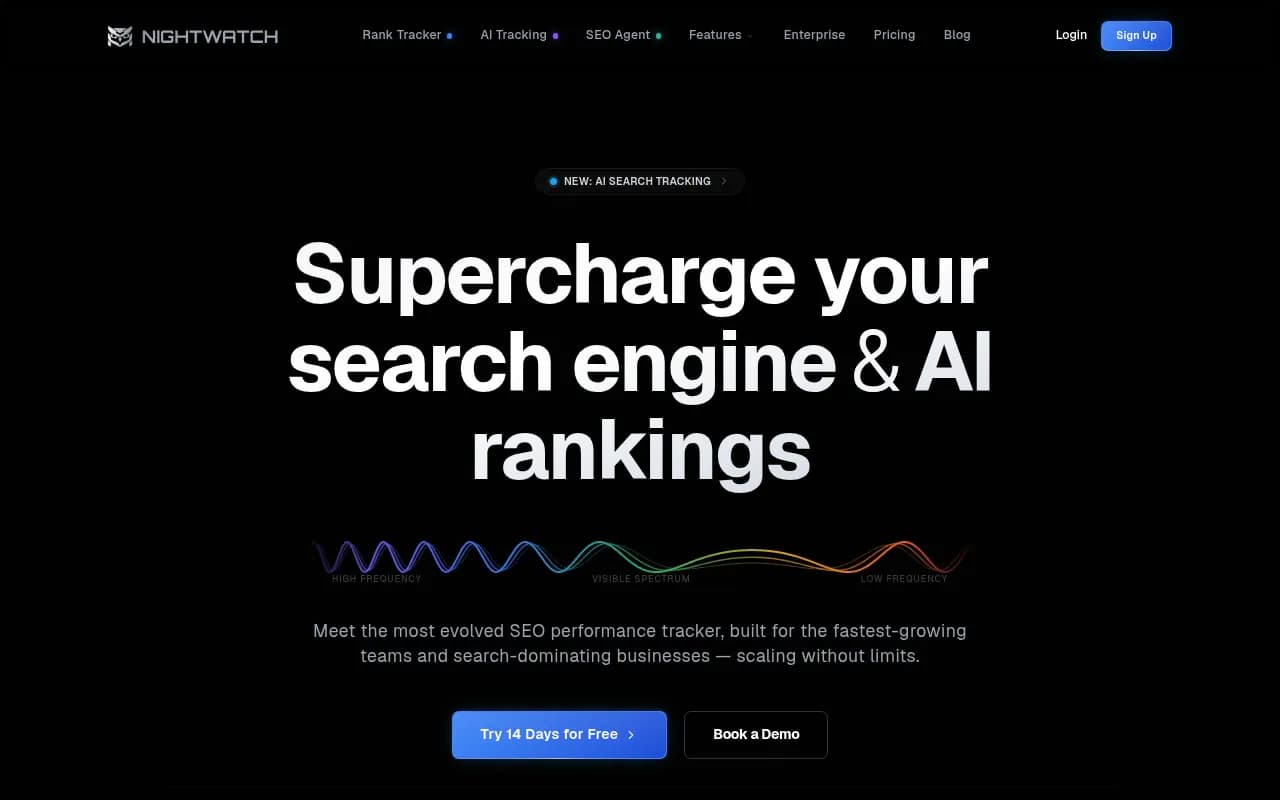

Each of these takes a different angle -- some focus on monitoring depth, others on content optimization or agency reporting. The right choice depends on whether you need more AI engine coverage, tighter content workflows, or better attribution between AI visibility and actual traffic.
The space is moving fast. Whatever tool you pick, make sure it's actively updated -- platforms that haven't shipped meaningful features in the last six months are probably already falling behind.