Key takeaways
- Jasper, Copy.ai, and Rytr are built for different jobs -- Jasper for enterprise content teams, Copy.ai for GTM workflows, Rytr for budget-conscious writers who need fast drafts
- None of the three were designed specifically to rank in AI search (GEO), but Jasper comes closest with its SEO integrations
- Content that gets cited by ChatGPT, Perplexity, and Google AI Overviews requires more than good writing -- it needs topical authority, citation-worthy structure, and prompt-level optimization
- For teams serious about AI search visibility, pairing any writing tool with a dedicated GEO platform is the more reliable path
The question sounds simple: which AI writing tool is best? But it's actually two different questions depending on what you mean by "best."
Best for writing fast? Best for SEO? Or best for showing up when someone asks ChatGPT to recommend a product in your category?
That last one is the question most marketers are now asking, and the answer is genuinely different from the other two. This guide focuses on all three dimensions -- but pays special attention to AI search visibility, because that's where the stakes are highest in 2026.
What these three tools actually are
Before comparing them, it helps to be clear about what each tool was built to do.
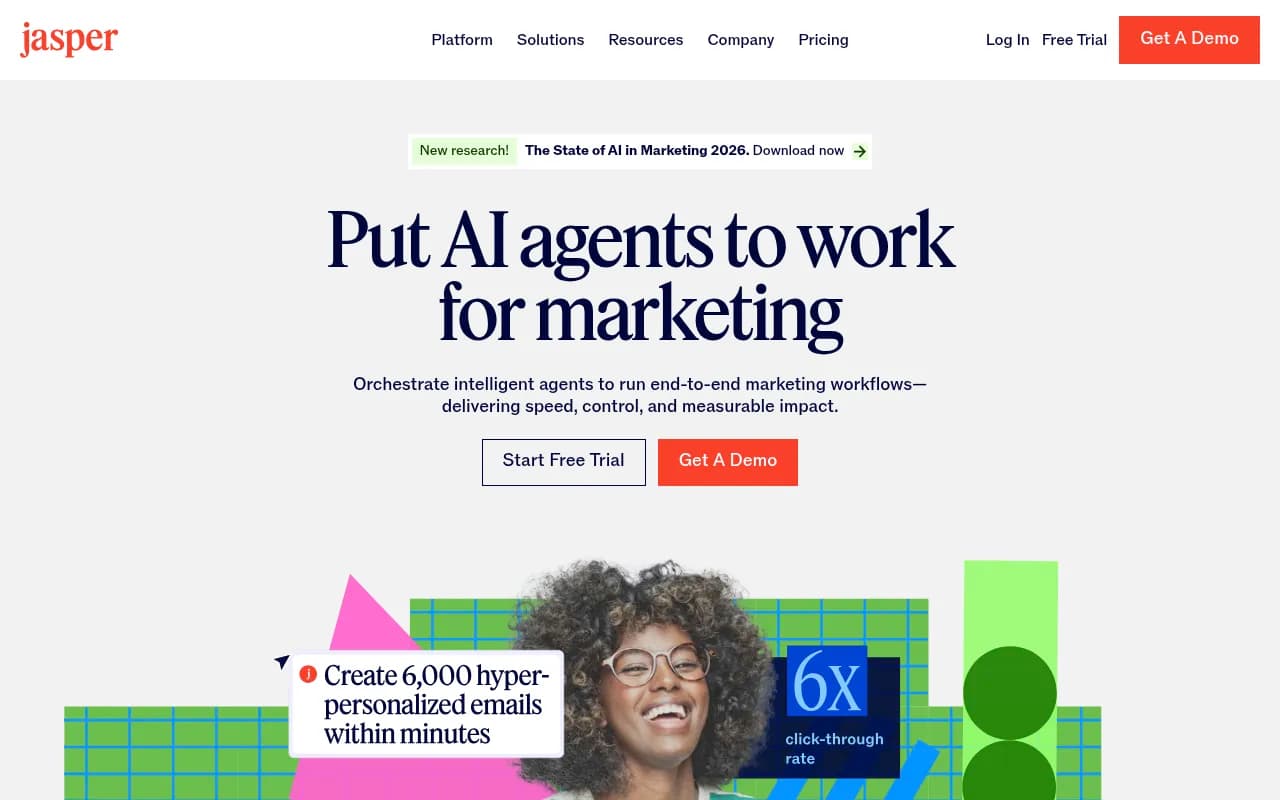
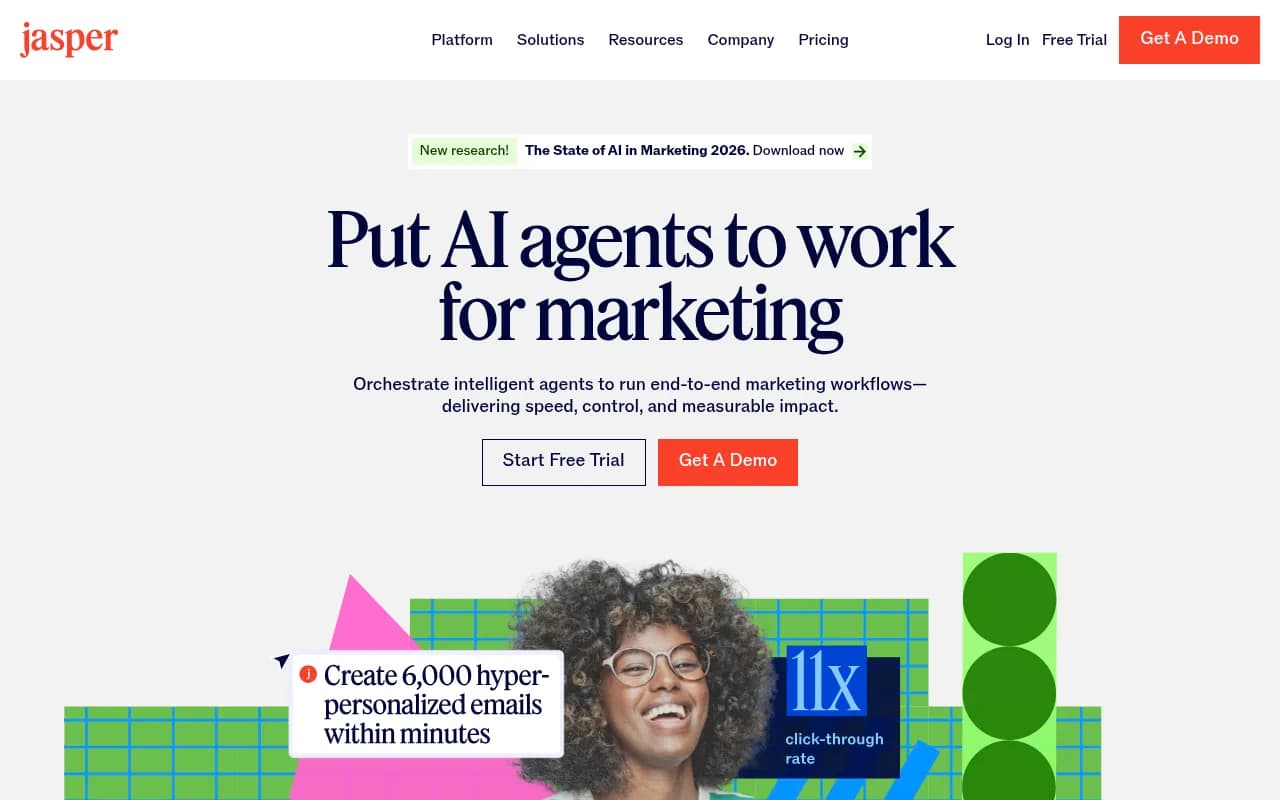
Jasper started as an AI writing assistant for long-form content and has grown into a full content marketing platform. It integrates with Surfer SEO and supports brand voice customization, making it the most "enterprise-ready" of the three. Pricing starts at $59/month for a single seat.
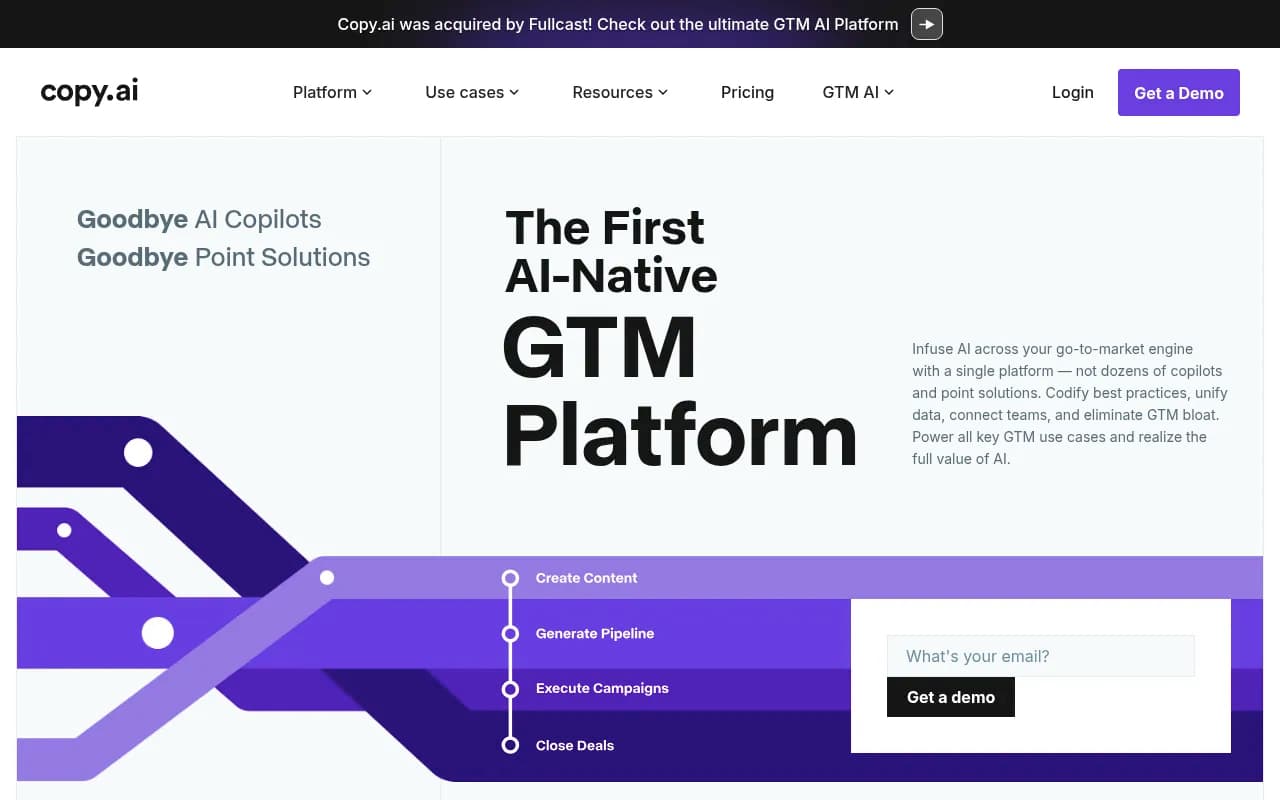
Copy.ai has repositioned itself as a GTM (go-to-market) AI platform. It's less about writing individual blog posts and more about automating content workflows -- think sales sequences, product descriptions, and campaign copy at scale. There's a free tier, with paid plans starting around $49/month.
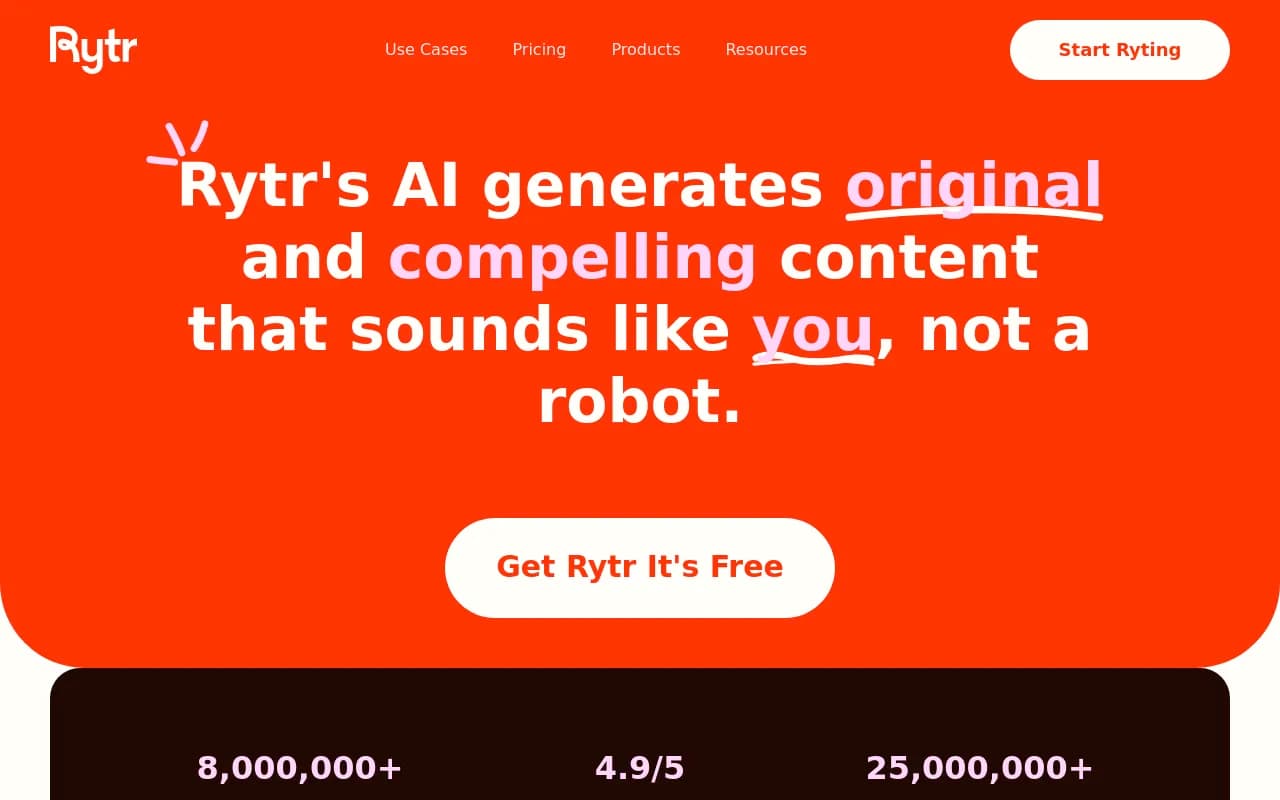
Rytr is the budget option. At $9/month (or free with limits), it handles short-form copy well -- social posts, email subject lines, product descriptions. It's not trying to compete with Jasper on depth; it's competing on price and simplicity.
These tools occupy genuinely different niches. Comparing them head-to-head is a bit like comparing a Swiss Army knife to a chef's knife to a bread knife. The right one depends on what you're cutting.
Head-to-head comparison
| Feature | Jasper | Copy.ai | Rytr |
|---|---|---|---|
| Starting price | $59/mo | $49/mo (free tier available) | $9/mo (free tier available) |
| Long-form content | Strong | Moderate | Basic |
| Short-form / ad copy | Good | Strong | Strong |
| SEO integration | Surfer SEO built-in | Limited | None |
| Brand voice | Yes (advanced) | Yes (basic) | Limited |
| Workflow automation | Moderate | Strong (GTM focus) | None |
| Team collaboration | Yes | Yes | No |
| AI search optimization | No native support | No native support | No native support |
| Best for | Content teams, enterprise | GTM teams, sales content | Solo writers, budget users |
Output quality: what the content actually looks like
Here's the honest reality from testing these tools: all three produce serviceable first drafts. None of them produce publish-ready content without editing.
Jasper's output tends to be the most structured -- it follows outlines well, maintains consistent tone across long articles, and its Surfer SEO integration means you can hit keyword density targets while writing. The tradeoff is that the prose can feel formulaic. It's competent but not distinctive.
Copy.ai shines on shorter, punchier content. Its GTM workflow templates are genuinely useful if you're running content operations across a sales team. For long-form blog content, it's weaker than Jasper -- the articles tend to be shallower and require more editing to feel complete.
Rytr is fast and cheap, and the output reflects that. For a $9/month tool, the quality is impressive. But it's not a tool you'd use to write a 2,000-word authoritative guide on a competitive topic. It's better suited to filling in the gaps -- social captions, email intros, product blurbs.
One finding from Zemith's testing of 12 AI writing tools is worth noting here: specialized tools like Jasper "mostly wrap ChatGPT/Claude with templates and SEO features," and for many writers, Claude Pro or ChatGPT Plus at $20/month beats specialized tools at a third of the price. That's a fair point for individual writers. For teams that need workflow structure and brand consistency, the specialized tools still earn their cost.
The real question: does any of this content rank in AI search?
This is where the comparison gets more interesting -- and more complicated.
Traditional SEO and AI search visibility (GEO) are related but not the same. A piece of content can rank on page one of Google and still never get cited by ChatGPT or Perplexity. The signals that make AI models trust and cite a source are different from the signals that drive Google rankings.
What AI models tend to cite:
- Content that directly and specifically answers a question (not content that dances around it)
- Pages with clear topical authority -- not one article on a topic, but a cluster of related, well-linked content
- Sources that appear in multiple places AI models have indexed: your site, Reddit discussions, YouTube, third-party reviews
- Structured, scannable content that's easy for a model to parse and excerpt
None of Jasper, Copy.ai, or Rytr were built with these signals in mind. They optimize for human readers and traditional SEO. That's not a criticism -- it's just what they are.
Jasper comes closest to AI-search-aware content creation because of its Surfer SEO integration, which at least ensures topical coverage and semantic completeness. But Surfer SEO is a traditional SEO tool, not a GEO tool. It doesn't tell you which prompts people are asking AI models, which competitors are getting cited, or what content gaps are costing you AI visibility.
Where these tools fit in an AI search strategy
The most useful way to think about Jasper, Copy.ai, and Rytr is as content production engines -- they help you write faster. But writing faster doesn't automatically mean writing content that AI models will cite.
To actually improve your AI search visibility, you need to know:
- Which prompts your target audience is asking AI models
- Which of those prompts your competitors are visible for (and you're not)
- What specific content gaps are causing AI models to skip your site
- Which pages are currently being cited, and by which models
That's a different layer of intelligence -- and it's where dedicated GEO platforms come in. Tools like Promptwatch are built specifically for this: they track your visibility across ChatGPT, Perplexity, Claude, Gemini, and others, identify the prompt-level gaps your content isn't covering, and help you create content engineered to get cited rather than just content that reads well.

The workflow that makes sense for most teams in 2026: use a GEO platform to identify what to write and why, then use a writing tool like Jasper to produce it efficiently.
Jasper vs Copy.ai vs Rytr: who should use what
If you're a content marketing team focused on SEO
Jasper is the most defensible choice. The Surfer SEO integration, brand voice controls, and long-form quality make it the best tool for producing the kind of comprehensive, well-structured articles that have a chance of ranking. You'll still need to layer in GEO thinking separately.
If you're running GTM content at scale
Copy.ai's workflow automation is genuinely useful here. If you're producing sequences, sales enablement content, and campaign copy across multiple channels, Copy.ai's template library and automation features save real time. It's not the right tool for deep editorial content, but it's not trying to be.
If you're a solo writer or small business on a budget
Rytr does the job for short-form content at a price that's hard to argue with. For longer content, you're better off using ChatGPT or Claude directly -- they're cheaper than Jasper and produce comparable or better output for most writing tasks.
If AI search visibility is a priority
None of the three tools address this natively. You'll want to pair your writing tool with something purpose-built for GEO. Promptwatch's Answer Gap Analysis shows exactly which prompts competitors are visible for that you're not -- that's the starting point for content that actually moves the needle in AI search.
What about SEO optimization tools?
It's worth mentioning that the writing tool is only one piece of the puzzle. Tools like Surfer SEO (which integrates with Jasper), Clearscope, and Frase help optimize content for traditional search. For AI search, the optimization layer is different.
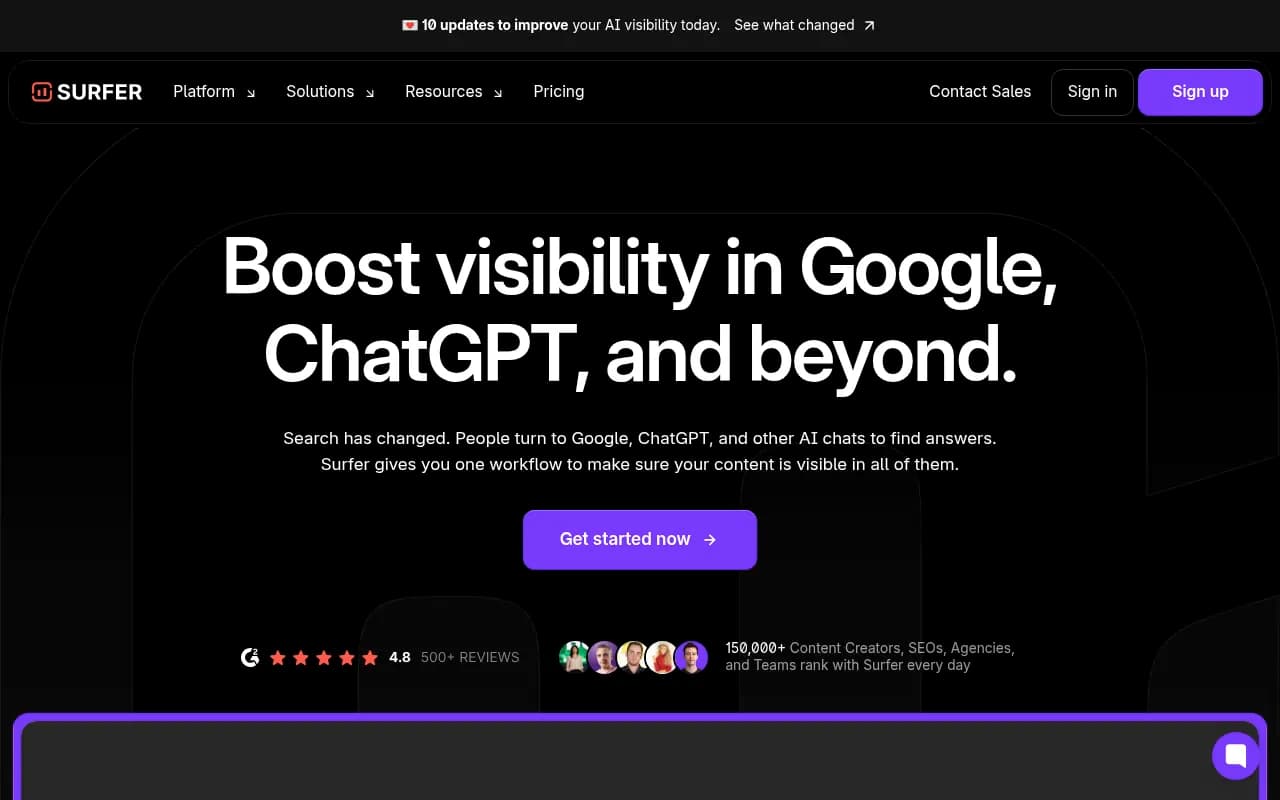
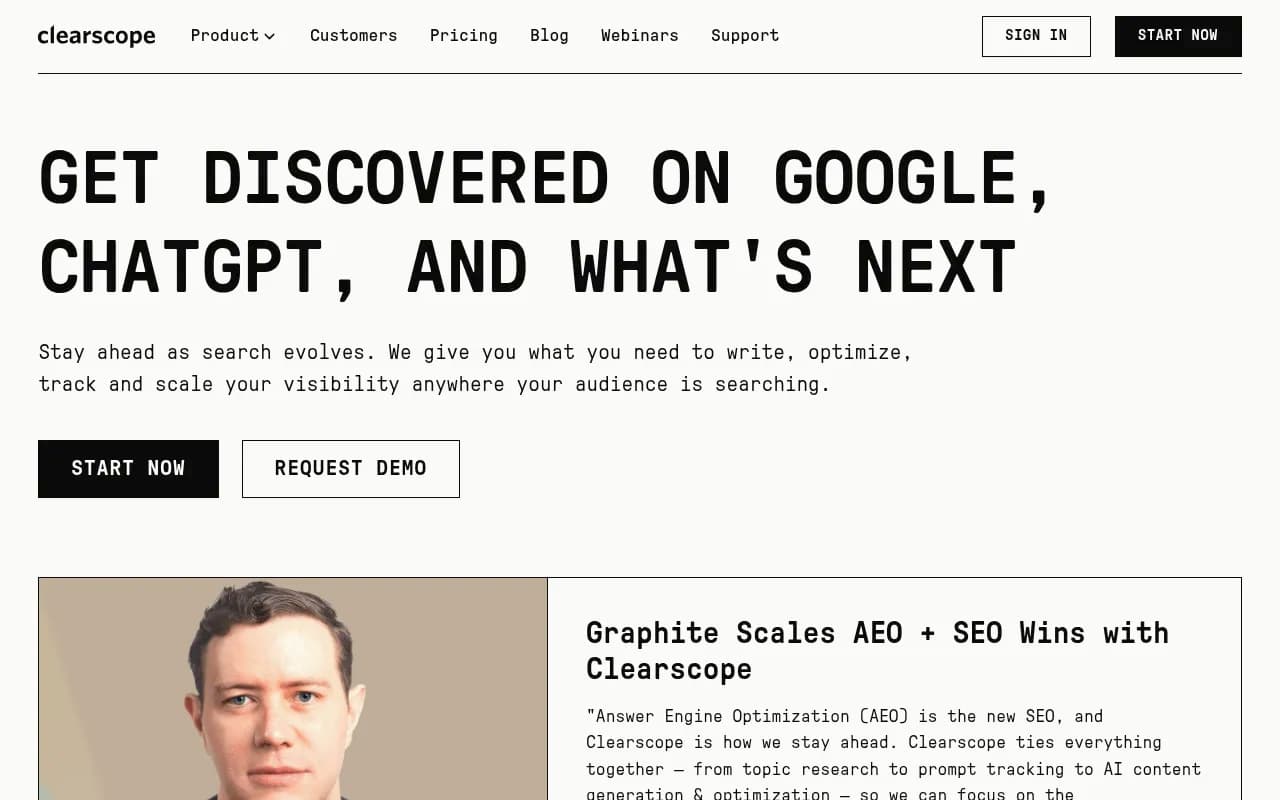
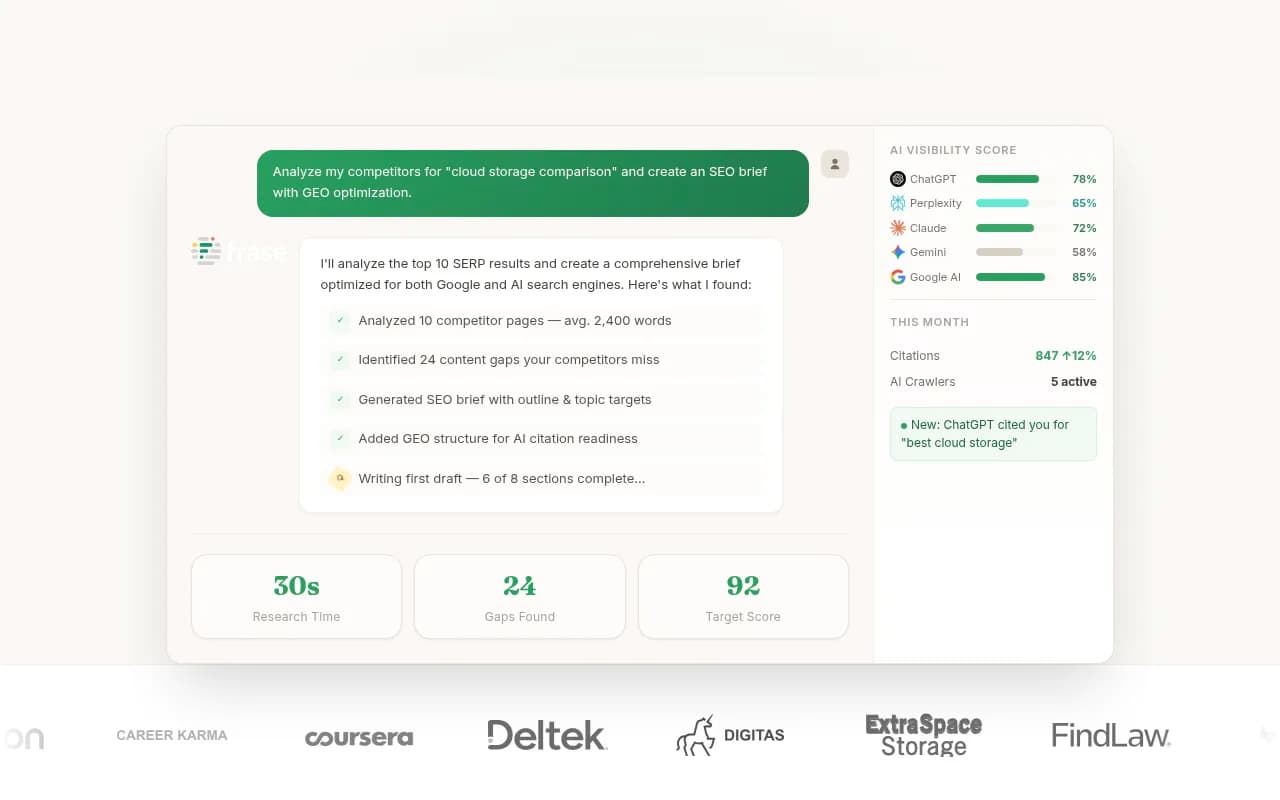
These tools are useful for ensuring your content covers a topic thoroughly -- which does help with AI citations indirectly. But they don't tell you which AI prompts to target or track whether your content is actually being cited.
The bottom line
Jasper is the strongest of the three for teams that need structured, SEO-aware long-form content. Copy.ai is better for GTM and sales content workflows. Rytr is the right call if budget is the primary constraint and you're mostly writing short-form copy.
But the more important point: none of these tools were built for the era of AI search. They were built for the era of Google search, and they're good at that. If you want your content to show up when someone asks ChatGPT or Perplexity for a recommendation in your category, writing quality is necessary but not sufficient. You need to understand what prompts are being asked, where your gaps are, and which pages AI models are actually reading.
That's a separate problem -- and it needs a separate tool.