Key takeaways
- Agency needs differ from in-house needs: white-label exports, client portals, multi-brand limits and a per-client cost you can predict matter more than raw model coverage.
- Entry pricing for agency-friendly AI visibility tools ranges from roughly $149/mo to $499/mo, but the unit differs (per project, per brand, per client, per plan), so compare cost at your actual client count.
- Some tools gate white-labeling behind a higher tier or a separate add-on, so a cheap headline price can turn into a $500+ bill at 10 clients.
- ChatGPT numbers move for reasons that have nothing to do with your client's work. Build a note about model changes into every report.
- Cheapest route for many agencies: one AI-native tracker for prompts and citations, plus a reporting layer you already use for the branded PDF.
Why agency rank tracking is a different problem
An in-house team tracks one brand. An agency tracks twenty, each with its own competitors, its own prompts, its own report cadence and a client who wants to see their logo on the dashboard, not yours. Most AI visibility tools were built for the single-brand case and bolted on a "team seat" afterward. That works until client number six.
So the checklist changes. When I evaluate a tracker for agency use, these are the questions that decide it:
- Can you export or schedule reports under your own branding?
- Can a client log into a branded view, or are you stuck emailing PDFs?
- How many brands or projects fit in one account, and what does the next one cost?
- Is there a way to pull a prospect audit before a sales call?
- Is there an API, Looker Studio connector or CSV export to feed your own reporting stack?
Model coverage still matters, but nearly every credible tool now covers ChatGPT, Gemini, Perplexity and Google AI Overviews. It rarely separates the field anymore.
What "ChatGPT rank tracking" actually means
There is no rank 1 to 10 in ChatGPT the way there is on a SERP. What you can track is whether the client is mentioned, where in the answer, whether the client's domain is cited, which competitors show up, and how sentiment reads. Good tools express that as visibility, share of voice, position and citation metrics over a fixed set of prompts, run repeatedly.
Two data points from Promptwatch Data are worth putting in your onboarding deck, because they change how you explain the numbers to clients:
- ChatGPT cites roughly 5 sources per web-search answer, while Google AI Overviews and Perplexity cite about 10 (Average Sources Per Response). With so few slots, each citation in ChatGPT is more contested than in the other engines.
- The queries ChatGPT actually runs differ from what users type. Promptwatch's ChatGPT Query Fanouts report shows the average number of fanout queries per response and their length shifting over time, so a tracked prompt is only a proxy for what gets searched.
That second point is why tools that expose fan-out or query-level data are more useful for diagnosing a client than tools that only show a mention count.
White-label levels: what you are actually buying
"White-label" covers a wide range, and vendor pages are often vague about it. Here are the levels I'd separate:
- Branded PDF or DOCX exports with your logo and colors.
- Scheduled reports emailed to the client automatically under your name.
- A branded live dashboard the client logs into, with your logo and accent color.
- A custom domain for that dashboard, sometimes only on enterprise tiers.
Most agencies are fine with levels 1 to 3. Level 4 is rarely worth the price jump unless you resell the dashboard as your own product. When vendors' own pages disagree about which level a plan includes (one comparison found AgencyAnalytics listed at different levels on different pages), ask for it in writing or test it on a trial.
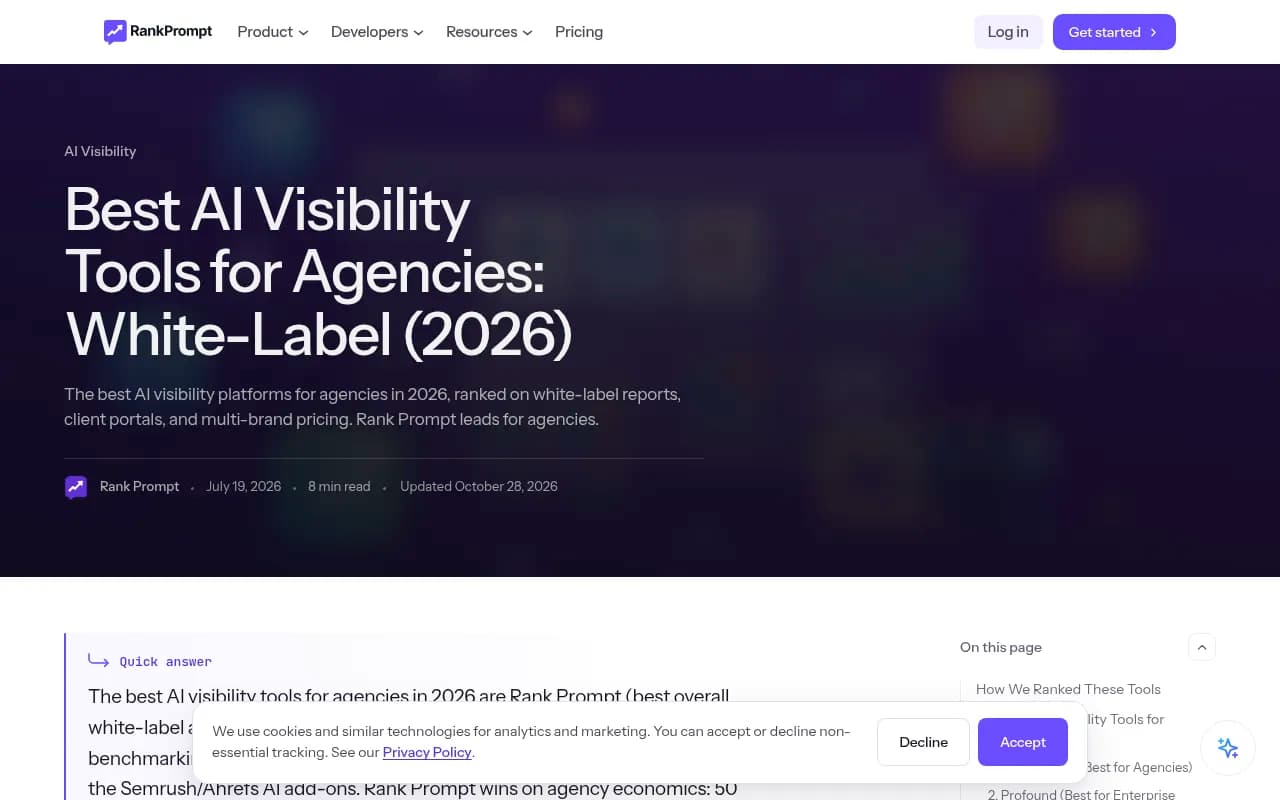
The scoring criteria above come straight from vendor-side guides like this one. Keep in mind these are written by tools that sell the product, so use them as a checklist, not as a verdict.
Pricing compared at agency scale
The numbers below come from vendor pages and comparison articles gathered in October 2026. Units differ, so read the "priced by" column before comparing headline figures. Always confirm on the vendor's pricing page before you commit.
| Tool | White-label | Client access | Priced by | Starting point for agencies |
|---|---|---|---|---|
| Rank Prompt | Reports on Agency plan | Portal on Agency, client logins on Agency Plus | Plan, with brand caps (50 or 500) | $149/mo (50 brands), $299/mo (500 brands) |
| Ayzeo | PDF/DOCX on Pro, dashboard branding included | Project-specific client access, unlimited seats | Project | $149/mo with 3 projects, +$49 per extra project |
| Peec AI | CSV, Looker Studio connector and API for your own reports | Via your BI layer | Plan | From about EUR 89/mo (Starter) |
| Nightwatch | White label from Professional | Reports | Plan, by keywords and prompts | White label from EUR 199/mo; Agency EUR 499/mo monthly |
| GEO Toolbox | Growth and Scale only | Branded reports | Plan | $499/mo for 15 brands, $999/mo for 25 |
| AgencyAnalytics | Branded reports and dashboards | Included per client | Client | $25/client/mo monthly, $20 annually; AI tracking is a beta add-on |
| SE Ranking | Agency Pack add-on | 30 client seats in the pack | Plan plus add-on | Core EUR 109/mo plus EUR 59/mo Agency Pack |
| Search Atlas | Portals on Agency plan | Client portals | Plan | Agency from $999/mo monthly |
Two things jump out. First, the spread is enormous: $149 versus $999 for the same nominal feature. Second, tools priced per client or per project scale linearly with your book, while flat plans with brand caps are cheaper right up to the cap and then jump.
The margin math at 3 and 10 clients
Ayzeo published a useful example of the per-project model. With Pro at $149/mo including 3 projects and $49 per extra project, the platform cost looks like this:
| 3-client agency | 10-client agency | |
|---|---|---|
| Platform cost | $149/mo | $492/mo |
| Typical GEO retainer per client | $500 to $1,500/mo | $500 to $1,500/mo |
| Agency revenue | $1,500 to $4,500/mo | $5,000 to $15,000/mo |
That is the vendor's own illustration and the retainer range is their assumption, not an industry benchmark. But the method is sound: divide software cost by client count and compare it to what you charge. At 10 clients that works out to about $49 per client, before optional extras like extra AI engines at $29/mo per model per project.
GEO Toolbox's own comparison is a good counterexample. It states that its white-label tier, $499/mo for 15 brands, is the highest figure in its cost table at 10 clients, and that for most agencies it would be a second line item next to a classic suite rather than a replacement. I appreciate the honesty, and it is a reminder to check the unit before the price.
Hidden costs to watch for
- White-label sold separately. Databox lists white labeling as an add-on at $200/mo on annual billing or $250 monthly. Semrush meters its add-on per report, so 25 client reports at $20 each add $500/mo on top of the plan.
- Add-on packs. SE Ranking's AI Search is an $89/mo add-on in one buyer's guide, and the Agency Pack is another EUR 59/mo billed annually only.
- Per-model fees. Some tools charge extra for Claude, Perplexity or Gemini tracking per project.
- Currency and billing term. Euro and dollar prices, monthly versus annual, make quick comparisons misleading.
Tool-by-tool notes for agencies
AI-native trackers
These tools track prompts and citations across assistants and then differ on how well they package results for clients.
Peec AI is popular for competitor benchmarking. It does not ship a heavy white-label portal; the agency route is CSV export, the Looker Studio connector and API, so you build the branded dashboard yourself. That suits agencies that already live in Looker Studio.

Otterly.AI is a lightweight monitor with report exports and a Looker Studio connector on higher tiers. It is a reasonable pick when clients mainly want a simple visibility trend.

Profound is the enterprise end of the market, with deeper reporting and a price to match. Worth a look for large brand clients, less so for a book of small accounts.

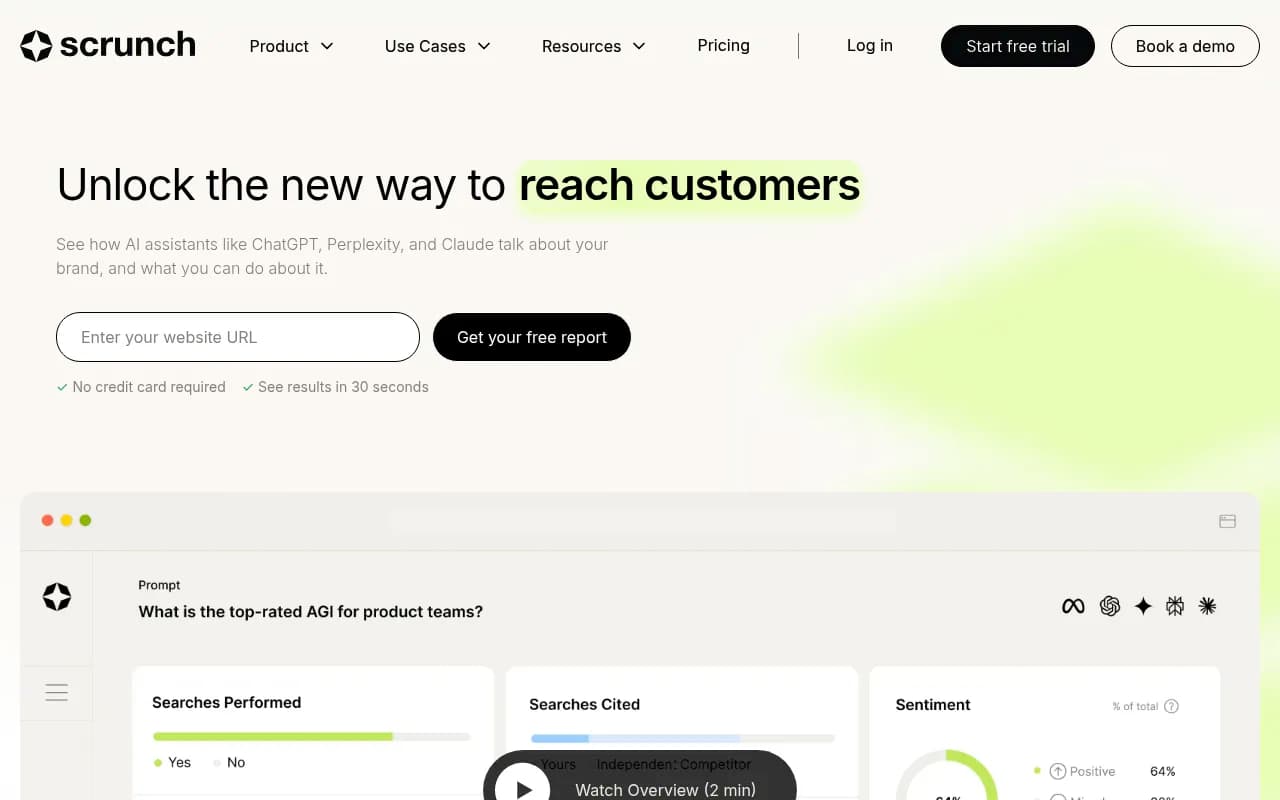
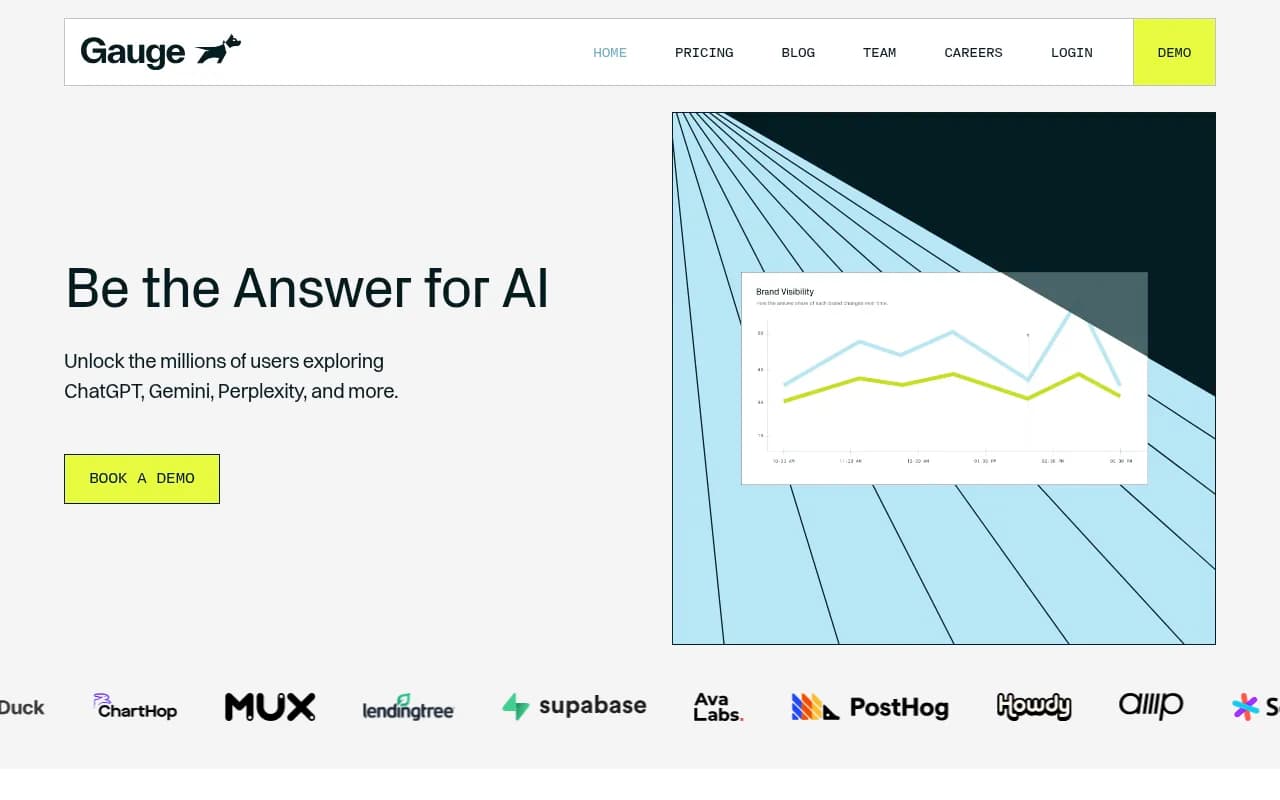
Scrunch and Gauge also appear on agency shortlists. Check their current agency tiers directly, since limits change often.
Slate and Cairrot are positioned specifically around agency use, which is worth testing if per-brand cost is your main constraint.
SEO suites with AI tracking
Nightwatch puts AI prompt tracking (ChatGPT, Claude, Gemini, Perplexity, AI Mode and AI Overviews) in the base price next to classic rank tracking, with white label from its Professional plan. Handy if you want one tool for both.
SE Ranking bundles rank tracking, audits and white-label reports, with AI visibility available through add-ons. Total cost depends on the plan your project count requires.
Semrush and Ahrefs Brand Radar bolt AI tracking onto large SEO suites. Convenient if you already pay for them, but check prompt limits and whether the white-label add-on is metered per report.
Reporting layers
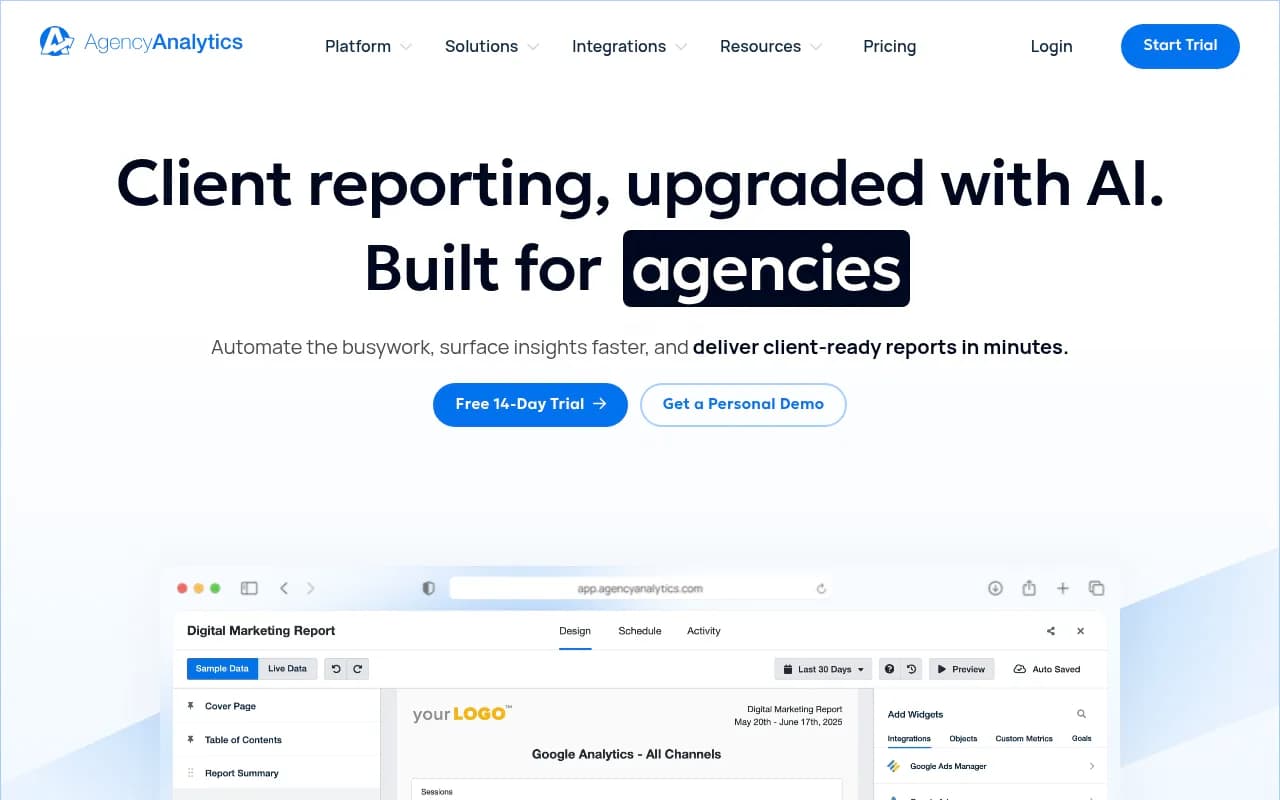
AgencyAnalytics is built around per-client pricing with unlimited users, sources and automated reports. Its AI visibility tracking was a beta add-on in the research I reviewed, so many agencies pair it with a dedicated AI tracker and use it as the branded wrapper.
The Ranklytics walkthrough above is a long onboarding-and-automation guide for white-label rank trackers. Its step-by-step workflow section is useful for setting up recurring reporting even if you choose a different tool.
Tools that also help you act on the data
Tracking tells a client where they are invisible. Many retainers also need to fix it. Promptwatch covers real-UI tracking of ChatGPT and other assistants, then goes further with AI crawler logs, visitor analytics and a Content Agent that plans and publishes content against visibility gaps. Its agency plans (Kick-off $199/mo, Growth $399/mo, Scale $799/mo) include unlimited projects and prompts with 10 seats, white-label branding on PDF exports and scheduled reports, and branded read-only client access. Agency plans do not include the Content Agent or AEO articles, so check the tier against the work you plan to do. Confirm current figures at promptwatch.com/pricing.

For a broader browse of options, the GEO software directory lists many more trackers, and ai-rank-tools.com focuses on AI rank trackers specifically.
Features to test before you sign
- Run a real client through it. Set up a client, schedule a report to your own inbox and check whether any vendor branding remains in the PDF, footer or email sender.
- Check prompt limits per brand. A local services client needs maybe 40 prompts; a competitive B2B SaaS account may need 60 to 70. Per-brand caps bite harder than brand counts.
- Look for a prospecting feature. A branded audit you can run live on a sales call is a cheap way to win retainers.
- Test exports. CSV, API and Looker Studio connectors keep you from being locked in.
- Verify the data source. User-facing answers in ChatGPT can differ from API outputs. Ask whether a tool scrapes the real interface or queries an API.
Reporting pitfalls that cost agencies clients
The worst client call is explaining a drop that was not your fault. Promptwatch Data's ChatGPT Citation Drop After GPT-5.3 report shows average citations per response falling across GPT-5.3, GPT-5.4 and GPT-5-Mini around the March 4, 2026 rollout. A client's citation count can fall in that window with no change to their content. The same logic applies to Copilot, where the average sources per response swung from under 2 to nearly 17 within a few weeks, then settled low.
Practical habits:
- Keep a changelog of model and retrieval updates and annotate the charts.
- Report share of voice against competitors, not only raw mentions, because market-wide shifts hit everyone.
- Run each prompt multiple times and report ranges, since AI answers vary run to run.
- Pair tracked prompts with fan-out or query data where the tool offers it.
- Don't promise a position. Promise a trend and a plan.
How to choose
| Your situation | Likely fit |
|---|---|
| Many small clients, tight margins | Flat plan with a high brand cap, or per-project pricing under $50 per client |
| Already in Looker Studio | Peec AI or Otterly.AI with export and connector |
| Need branded PDFs plus classic SEO reporting | Nightwatch, SE Ranking or AgencyAnalytics as the wrapper |
| Retainer includes content and fixes | A platform with content tooling and crawler data, such as Promptwatch |
| Enterprise brand clients | Profound or a custom-priced platform |
If you would rather hand the whole thing to a team, an AI search agency can run tracking, content and reporting for you. 1001 SEO Media does this for brands that want GEO work without building the practice in-house.
The short version
Pick the unit of pricing that matches how you bill. Per-client or per-project tools cost the same at 3 clients and diverge at 30. Flat plans with brand caps look cheap until the cap. Test white-labeling on a trial with a real client, annotate every chart with model changes, and make sure the export path is open so you can switch later without rebuilding every report.