Key takeaways
- A brand book tells an AI how to sound. A knowledge base tells it what is true. Mixing the two is the most common setup mistake.
- Put in short, explicit, testable rules: voice, banned phrases, audience, positioning, product facts, approved claims. Leave out vague adjectives, outdated material and anything you would not want published.
- Retrieval systems pick passages, not whole documents. Write each entry so it makes sense on its own.
- Internal material (escalation notes, competitive intel, pricing negotiations) should live in a separate, private layer or not at all.
- A good setup reduces editing but does not remove it. Plan for a review step and a quarterly audit.
Why AI content sounds generic in the first place
Most AI drafts read like everyone else's because the model has nothing specific to work from. You give it a topic and it fills the gap with the statistical average of the internet. The fix is not a cleverer prompt. It is a foundation the model can consult every time it writes.
That foundation has two parts, and they do different jobs.
The brand book is the style layer. It covers tone, vocabulary, audience, what you never say, and how you structure a piece. The knowledge base is the facts layer. It covers what your product does, what it costs, who it is for, what you can legitimately claim, and where you stand on topics. If you only build the first, you get drafts that sound right and say wrong things. If you only build the second, you get accurate drafts that sound like a manual.
A useful test: could a freelancer who has never met your team write a usable first draft using only these two documents? If not, something is missing.
How AI tools actually use this material
It helps to know what happens behind the scenes, because it changes how you write the documents.
Some tools inject your brand voice into every generation as standing instructions. Others store documents and retrieve relevant passages when a prompt comes in, which is retrieval-augmented generation (RAG). Fin AI's knowledge base guide makes the point clearly for support agents: an AI can only resolve what it can retrieve, and an article that works for a human browsing a help center may fail for a retrieval system. Content needs to be explicit, unambiguous and structured so the right passage can be found for a given question.
That guide is written for customer support, but the principle carries over to content marketing. Your writer-AI is a retrieval system too. A 40-page PDF brand book with the key rule buried on page 27 is the content equivalent of a help center nobody can search.
Two practical consequences follow.
- Style rules work best as short standing instructions that are always applied. Keep them near the top of whatever document or field you use.
- Facts work best as self-contained entries. Each one should survive being pulled out of context.
What goes in the brand book
Think of the brand book as a briefing for a very literal new hire. Literal is the key word. Adjectives like "friendly but professional" mean almost nothing to a model. Examples and constraints mean a lot.
Voice and tone, with examples
Write three to five voice traits, and for each one give a pair of sentences: one that sounds like you, one that does not. "Direct" is vague. "We say 'the export fails on files over 2 GB.' We do not say 'users may occasionally experience limitations'" is something a model can imitate.
Add a short section on how tone shifts by format. A pricing page, a changelog and a thought-leadership post should not sound identical.
Audience and their vocabulary
Name who you write for, what they already know, and what words they use. A CFO and a developer describe the same product differently. If you have several audiences, define each one separately instead of averaging them into mush. Jasper, for example, supports multiple brand voices for different audiences, sub-brands or regions, and the same logic applies if you are building this by hand.
Banned words and phrases
This is the highest-value section per word written. List the filler your team hates: the openers, the buzzwords, the transitions that make a draft sound machine-made. Models repeat their favorite tics unless told not to. Keep the list under about 30 items, otherwise it becomes noise.
Structural conventions
How long are intros? Do you use H2s in sentence case? Are numbers spelled out? Do you write in first person plural? Do you link to sources and how? These are boring to document and save the most editing time.
Positioning in two or three sentences
One tight paragraph on what you are, who you are for and what you are not. The "what you are not" half stops the model from drifting into adjacent claims.
Visual guidelines, only if images are generated
If your tool generates images, add palette, style and subject rules. If it only writes text, skip this. Jasper extends its visual guidelines to image output, which is the sort of tool where this section earns its place.
What goes in the knowledge base
The knowledge base holds the things the model must not invent.
Product and service facts
Features, limits, integrations, supported platforms, plan names. Write each as a plain statement with a date or version where it can change. "The Pro plan includes 5 seats" is a good entry. "Our flexible plans scale with you" is not.
Approved claims and proof
List statistics, customer results and awards you are allowed to cite, with the source and the date. Include the exact wording legal has approved. This is also where you list claims you are not allowed to make, such as "guaranteed rankings" or "HIPAA compliant" if you are not.
Customer language
Transcripts, review snippets and sales call notes show how people actually describe their problems. Fin AI points out that historical support conversations are a rich source of how questions are really asked. Marketing teams can use the same trick: sales objections, support tickets and community threads give the model real phrasing to draw on.
Source documents
Whitepapers, product docs, case studies and original research. These give the model material to pull from instead of generating plausible filler. Keep each document focused and clearly titled.
Competitor and category context, carefully
A short, factual note on how you differ from named competitors is useful for comparison content. Keep it factual and sourced, not a rant. More on this in the next section.
What to leave out
The quality of a knowledge base often depends more on deletions than additions.
Anything outdated
Fin AI's advice is to audit first and retire anything outdated, then identify topics with no coverage at all. An old pricing page in the knowledge base will resurface in a draft at the worst moment. Put an owner and a review date on every document, and delete what nobody owns.
Internal-only material you would not publish
Escalation procedures, negotiation tactics, unreleased roadmap, candid competitor teardowns and anything under NDA. Fin AI recommends keeping internal guidance separate from customer-facing content so the AI can use it without surfacing it to customers. For content writing, the safest default is stronger: if the tool will draft public copy, leave sensitive material out entirely. A model that has seen it can echo it.
Vague aspirations
"We are innovative, bold and customer-obsessed" adds nothing. Models cannot act on it and it dilutes the rules that matter.
Conflicting guidance
If your 2023 brand book says to be playful and the 2026 deck says to be authoritative, pick one. Models do not resolve contradictions gracefully, they average them.
Duplicated and bloated documents
One source of truth per fact. A common recommendation, including in a LinkedIn guide on structuring AI knowledge bases, is to keep the total under roughly 5,000 words and put hard rules near the top. I could not verify that source's full text, but the advice matches what works in practice: short beats exhaustive.
Sample copy that is mediocre
If you upload ten blog posts as voice samples and three of them are weak, the model learns the weak voice. Curate samples. Fewer, better examples win.
A simple structure you can copy
Here is a layout that works in most tools, whether you paste it into custom instructions or upload it as documents.
| Section | Belongs in | Length | Review cadence |
|---|---|---|---|
| Voice traits with do and don't examples | Brand book | 300 to 500 words | Twice a year |
| Banned phrases and formatting rules | Brand book | 150 to 300 words | Quarterly |
| Audience profiles | Brand book | 100 to 200 words each | Twice a year |
| Positioning statement | Brand book | 50 to 100 words | Yearly |
| Product facts and limits | Knowledge base | One entry per fact | Every release |
| Approved and prohibited claims | Knowledge base | List with sources and dates | Quarterly |
| Customer language snippets | Knowledge base | 20 to 50 short quotes | Quarterly |
| Source documents (research, case studies) | Knowledge base | Focused files | When published or retired |
Write entries in this shape for facts:
Topic: Seat limits
Fact: The Professional plan includes 2 seats.
Source: pricing page
Last verified: 2026-10-15
Owner: Product marketing
It looks bureaucratic, and it is. It also makes drift visible, which is the whole point.
Tools that have these layers built in
You can do all of this in a doc and a custom instruction. Dedicated tools save the copy-pasting.
Jasper organizes this as a context layer: Brand Voice, Style Guide, Visual Guidelines, Product and Marketing IQ, and a Knowledge Base feed every output. Per Unite.ai's review, agencies can keep each client's assets separate, and unlimited IQ assets need the Business plan. Its Pro plan was listed at $59 per seat per month billed annually in mid-2026 pricing, but check the current page.
Copy.ai trains Brand Voice from content you upload and has a knowledge base called Infobase for guidelines, value propositions and positioning docs. Unite.ai notes it gives less control than Jasper and has moved toward go-to-market workflow automation.
Writer is the governance-heavy option, with a style guide and compliance rules aimed at regulated industries. Pricing is custom and enterprise-focused.
ChatGPT is the lightweight route. Brand control comes through custom instructions and uploaded files rather than a dedicated governance layer, so your documents have to do the work. Paid plans start at around $20 a month.
If your goal is content that gets picked up by AI search, Promptwatch pairs a Brand Book (facts, positioning, tone of voice) and Knowledge Base with its content tools, so articles are written against your actual visibility gaps instead of a blank prompt. It is a reasonable fit when the writing step needs to connect back to what AI engines currently say about you.

| Tool | Voice setup | Knowledge layer | Governance | Best for |
|---|---|---|---|---|
| Jasper | Multiple brand voices, style guide | Knowledge Base, Marketing and Product IQ | Admin-set rules | Marketing teams and agencies |
| Copy.ai | Train from uploaded content | Infobase | Lighter | Sales and GTM content |
| Writer | Style guide | Enterprise knowledge sources | Compliance rule enforcement | Regulated industries |
| ChatGPT | Custom instructions | Uploaded files | None built in | Solo writers and small teams |
| Promptwatch | Brand Book | Knowledge Base | Review inbox for the Content Agent | Content tied to AI search visibility |
For a wider look at tools in this space, the GEO software directory at bestgeosoftware.com is a decent starting point.
Setup process, step by step
1. Audit what you already have
Collect brand guidelines, style guides, top-performing articles, product docs and sales decks. Mark each as keep, rewrite or delete. Most teams discover they have three conflicting versions of the tone guide.
2. Write the brand book in rules, not adjectives
Start with banned phrases and structural conventions, since those are quick and high-impact. Then voice examples, then audience.
3. Build facts as atomic entries
One fact per entry, with a source and a date. Resist the urge to paste entire web pages. Retrieval works better on focused passages.
4. Run a calibration test
Generate the same three pieces: a product page intro, a blog opener, and a short email. Compare against your best human-written versions. Note every deviation and trace it to a missing or unclear rule. Add that rule. Repeat.
5. Add a review step anyway
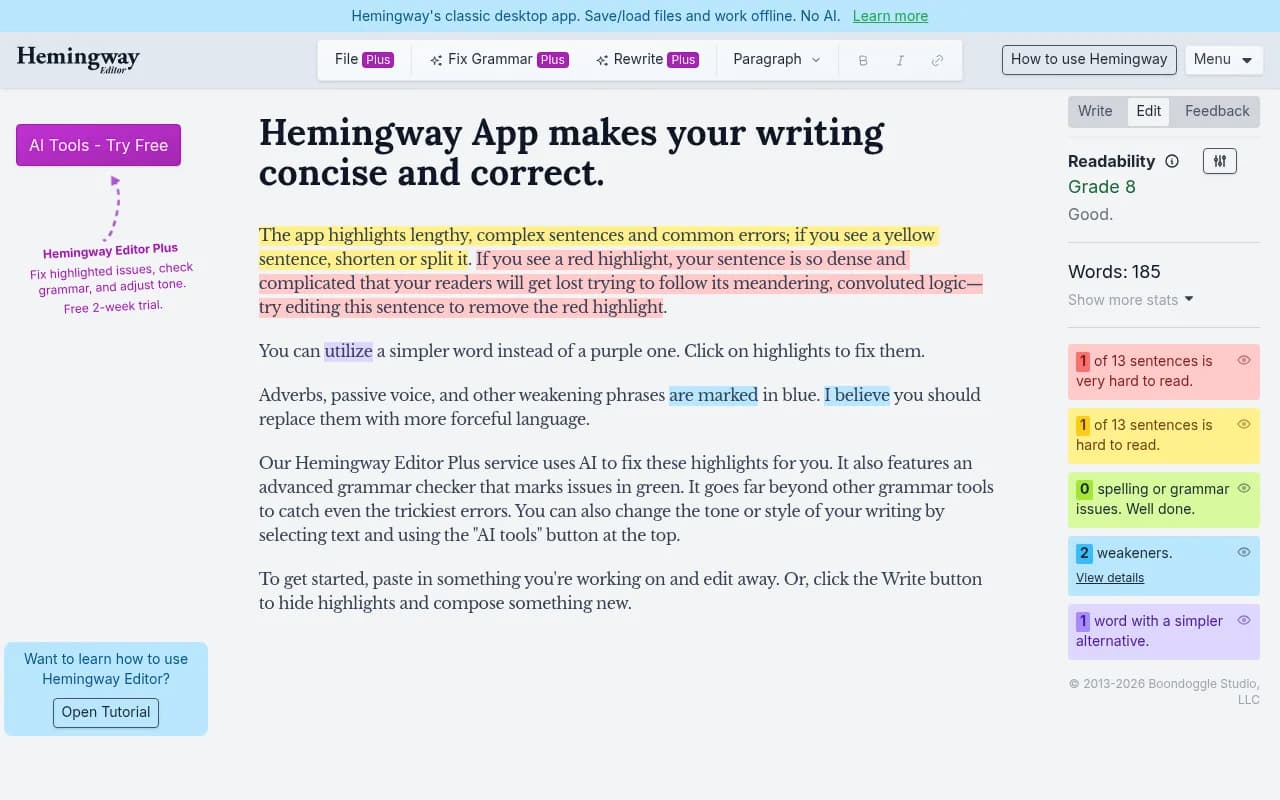
In Unite.ai's hands-on test of Jasper, the auto-generated Brand Voice and Audience were accurate, yet the copy still needed a decent amount of editing before publishing. Expect that. A brand setup moves you from heavy rewriting to light editing, not to zero. A grammar and clarity pass with something like Grammarly or Hemingway App helps catch what the model repeats.
6. Treat it as infrastructure
Fin AI's maintenance advice applies directly: teams that treat content as a one-time setup see their AI plateau, so build updates into product launches and treat content readiness as a launch requirement. Add a line to your release checklist: update the knowledge base. Add a quarterly calendar reminder: re-test the three calibration pieces.
Common mistakes
- Uploading everything. More material means more contradictions and weaker retrieval.
- Treating the brand book as a PDF for humans. Models need plain text, short sections and explicit rules.
- No owner. A knowledge base without a named owner is out of date within a quarter.
- Skipping the "never claim" list. Models are happy to promise things your lawyers would not.
- Using the model's own output as voice samples. You end up training it on its averages.
- Putting sensitive internal notes in because the tool is "private." Private tools still produce drafts that people copy and publish.
A quick pre-launch checklist
- Hard rules are in the first screen of the brand book.
- Every voice trait has a do and a don't example.
- The banned phrase list is under 30 items and current.
- Every fact has a source, a date and an owner.
- Prohibited claims are written down.
- Nothing internal-only sits in a document the writing tool can read.
- Three calibration pieces have been generated and compared to human versions.
- Someone has a recurring calendar slot to review all of it.
If you do only two things, make them these: write the banned phrase list today, and delete the oldest document in your knowledge base. Both improve the next draft immediately.