Key takeaways
- A citation tells you three things a keyword never will: which prompt triggered the answer, which page won the slot, and what format that page used.
- An AI-search brief needs the prompts and sub-queries buyers ask, the pages currently being cited, and instructions that make the new page easy to extract from.
- Match the brief to the prompt intent. Commercial prompts reward comparisons and listicles, informational prompts reward how-tos and docs, branded prompts reward FAQ and review content.
- Content type affects lifespan. News citations decay fast, while landing pages, docs and comparisons stay cited much longer, so plan refreshable evergreen pieces.
- You can do this by hand in about an hour per brief, or let a platform assemble the data. Either way, the process is the same.
Why a citation makes a better starting point than a keyword
The standard content brief has a primary keyword, a search intent note, a list of ranking pages, a word count and some internal links. It is a good template. It was built to win a ranked position on Google, and that target has gotten blurrier as more buyers ask ChatGPT or Google's AI Overviews and get a synthesized answer naming a few sources.
A citation flips the starting point. Instead of guessing which phrase to target, you begin with a page that an AI engine already chose for a specific prompt. That page is the incumbent. Your job is to understand why it won and to plan something that answers the same question more directly, or answers a neighboring question nobody covers well.
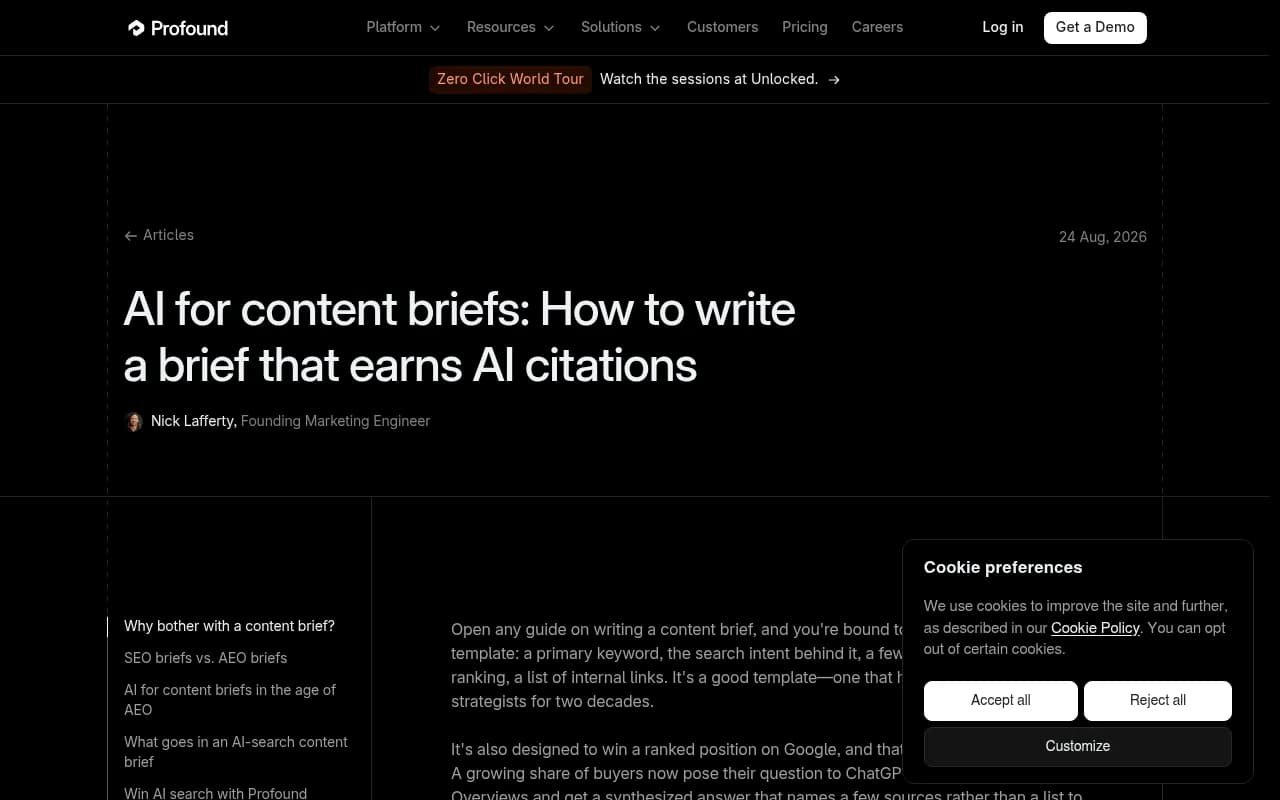
Profound makes a similar point in its article on AI content briefs (August 2026): a brief built around "accounts payable software" points a writer to a phrase, but the citation is decided by questions like "best accounts payable software for a 50-person company already running QuickBooks" and the sub-queries underneath it. That is vendor material, so read it with that in mind, but the framing matches what the citation data shows.
What changes in an AI-search brief
Most of the old brief survives. The audience, the angle, the outline and the in-house expert to quote all carry over. Three components change.
1. Prompts and sub-queries instead of one keyword
An answer engine takes a prompt and runs several narrower searches behind it, then cites whichever page best answers each one. Those are query fan-outs. The writer needs to see them because the page has to answer each one.
How many searches does ChatGPT actually run? It varies. Promptwatch's ChatGPT query fanout data shows an average of about 2.15 distinct searches per response in early December, easing to about 1.84 by early March, and returning at 1.0 per response in April after a data gap. Average query length fell from about 117 characters to roughly 53, which is six to eight words. So the fan-out queries you plan for are short and look like search queries, not conversational questions.
The practical takeaway: write headings that read like those short queries. "Best CRM for small agencies 2026" will match better than "What should you look for when choosing a CRM?"
There is a wrinkle too. On August 8, 2026, ChatGPT began using the site: operator at scale, going from about 0.4% to about 17% of fan-out queries, per Promptwatch's site: operator report. That means some retrievals are now aimed at specific domains, which makes your own site's structure and naming more important than it used to be.
2. The pages already earning citations
The engine builds each answer from a short list of pages it already pulls for a given prompt. Those are the pages yours has to displace. The brief should name them and describe how they are built: content type, heading structure, which facts they state outright, how fresh they are.
It also helps to know how crowded the field is. Promptwatch's unique domains report found that almost half of ChatGPT responses cite 10 or more unique domains (Sep 28 to Oct 4, 2026). So you are rarely fighting for one slot. You are trying to get into a list of ten, which is a more forgiving target than it sounds.
3. Extractability
AI engines lift short, self-contained statements out of pages. They do not read a page in full and paraphrase it. A statement can only be pulled cleanly if the answer is stated plainly and early. So in place of a word count, or alongside it, the brief should list the questions to answer directly, the specific facts to state outright, and the elements to add, such as a comparison table or a short definition block.
One tutorial in the research notes puts the rule at roughly the first 20 words: turn headings into clear questions, answer in one or two sentences, then expand. I would not treat "20 words" as a hard threshold, since it comes from a YouTube video rather than measured data. The principle is sound though. Do not bury the answer under backstory.
The citation-to-brief workflow
Here is the process, step by step. You can run it in a spreadsheet or a doc.
Step 1: Pick the citation and record the prompt
Start with a citation that matters to you. It might be a competitor page cited for a commercial prompt you want to win, or a third-party article that names you but ranks below a rival. Write down:
- The exact prompt (or prompts) that triggered it
- The AI engine and country
- The position of the page in the source list
- The cited URL and its content type
If you do this manually, run the prompt in the real interface and note the sources. A tool like ChatGPT or Perplexity works for spot checks.
Perplexity
Spot checks do not scale. Citations shift between runs, and what you see logged in once is not the pattern. For repeatable data, a visibility platform that records responses daily is a better source. Promptwatch can turn any citation's prompts into a content brief, with the prompts, fan-outs and cited pages attached, which skips the copy-paste stage.

Step 2: Map the fan-out queries
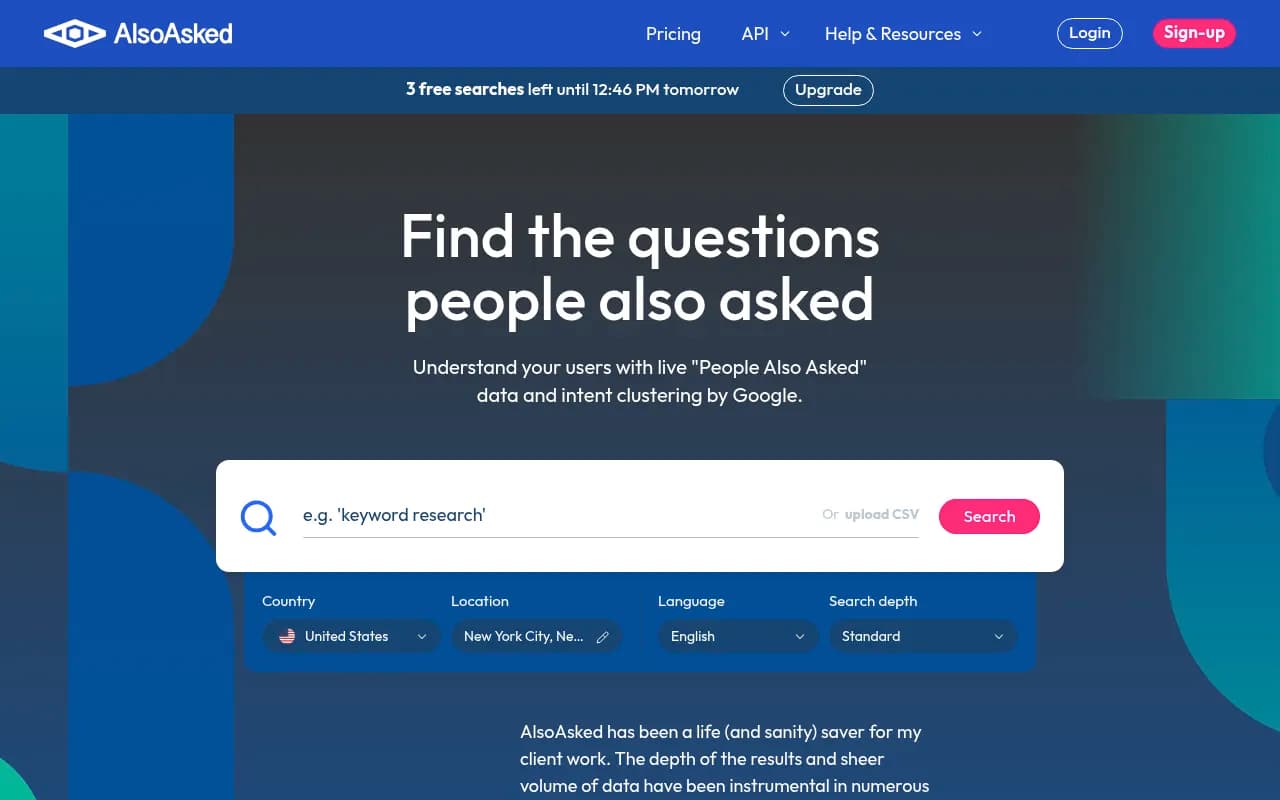
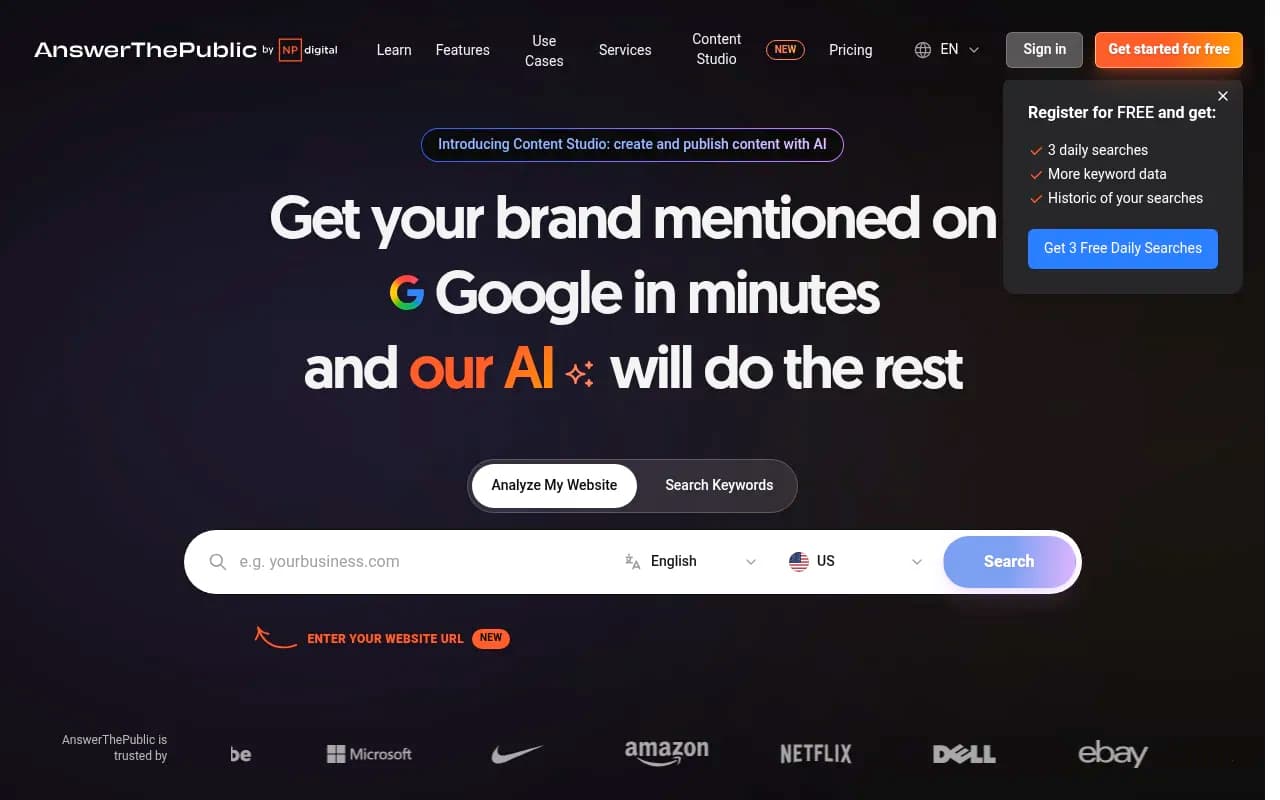
List the sub-searches the engine ran behind that prompt. If your tool shows fan-outs, copy them. If not, approximate with People Also Ask results and related questions. AlsoAsked and AnswerThePublic help here.
Group them into a handful of sub-questions: X vs Y, pricing, alternatives, how-to, who it is for. Each one is a separate retrieval your page can win. Promptwatch's own advice on this is to build focused pages per intent instead of one mega-page, and I agree. A brief that tries to cover six intents in one article usually produces something that wins none of them.
Step 3: Classify the intent and choose the format
This is where the citation data does real work. Each prompt intent rewards a different content mix. From Promptwatch's content type report (Sep 28 to Oct 4, 2026):
| Prompt intent | Leading cited formats | Notable numbers |
|---|---|---|
| All prompts | Product pages, landing pages, listicles | Product pages 22.4%, landing pages 16.8%, listicles 13.6% |
| Commercial | Product pages, landing pages, listicles, comparisons | Those four are almost 70% of commercial citations; comparisons 7.9% |
| Informational | Product pages, landing pages, listicles, how-tos, docs | How-tos 10.7%, docs 8.5% |
| Branded | Product pages, landing pages, plus FAQ and reviews | Reviews 5.6%, FAQ 4.8% |
The brief implication: if the cited source is a listicle for a commercial prompt, you probably need a listicle or a comparison, not a thought-leadership essay. If it is a how-to for an informational prompt, write a step-by-step. If the prompt is branded, plan FAQ and review-style content on your own domain.
Notice also that product and landing pages together make up 39% of citations. Not every brief should be a blog post. Sometimes the brief says "improve this landing page."
Step 4: Study the incumbent page
Open the cited page and extract the following into the brief:
- Heading structure, and whether headings read like queries
- The first sentence under each heading, and whether it states the answer
- Specific facts, numbers, prices or definitions it states outright
- Tables, lists, FAQ blocks or schema
- Publication and last-updated date
- Author, and whether first-hand experience is shown
Then write one line on what the page does not do. Maybe it ignores a segment, skips pricing, or has stale data. That gap is your angle.
Step 5: Set the freshness plan
Content type affects how long a citation lasts. Promptwatch's content half-life report tracked every page ChatGPT cited on July 6, 2026 for 90 days:
| Content type | Still cited after 30 days | Still cited after 60 days | Half-life |
|---|---|---|---|
| Landing pages | 78% | 69% | Longest-lived |
| Docs | 76% | 67% | Long |
| Comparisons | 72% | 63% | Long |
| Listicles | n/a | 60% | Long |
| Product pages, reviews, how-tos | n/a | about 55% | 74 to 77 days |
| News | n/a | 41% | About 36 days |
Almost a quarter of news pages are never cited again. So if the citation you are studying is a news article, do not write a news piece in reply. Plan a refreshable evergreen comparison or listicle and add a review date to the brief. Pricing pages are counted as landing or product pages, so a pricing explainer built on a stable page ages better than a news reaction.
Step 6: Write the extractability spec
This is the section most briefs skip. List:
- The 3 to 5 questions the page must answer directly, each in the first one or two sentences under its heading
- The specific facts to state outright (prices, limits, dates, named comparisons)
- Required elements: a comparison table, a definition block, an FAQ
- Entity and category to front-load in the title and H2s
- Internal links to related pages on your site
- A named expert or data source to quote
Treat this like acceptance criteria. A writer can read it and know when the draft is done.
A brief template you can copy
Title (query-style, entity + category up front):
Target prompts (3-5, with intent: commercial / informational / branded):
Fan-out sub-queries to answer (each gets its own H2 or H3):
Engine + country tracked:
Cited pages to beat (URL, type, position, date):
What they do well:
What they miss (our angle):
Format to publish (comparison, listicle, how-to, FAQ):
Direct-answer questions (answer in first 1-2 sentences):
Facts to state outright:
Elements to include (table, FAQ, schema):
Expert / first-party data to include:
Internal links:
Refresh date and owner:
Success check (cited for which prompts within 30/60 days):
Tools that can speed this up
You can build the brief from scratch in a doc. Several kinds of tools save time at different steps.
| Job | Example tools | Note |
|---|---|---|
| Citation and prompt data, brief generation, publishing | Promptwatch, Profound, Gauge | Pull live answer-engine data and produce the brief |
| Traditional SEO briefs and term coverage | Frase, Surfer SEO, Clearscope, MarketMuse, Content Harmony | Strong on SERP and term analysis, weaker on citation data |
| Question research | AlsoAsked, AnswerThePublic | Free or cheap way to approximate fan-outs |
| Search performance on your own pages | Google Search Console | Shows which pages and queries already get impressions |
Profound has a Content Brief Creation agent that reads what engines are citing for a set of prompts and produces the brief spec. Gauge describes briefs generated from AI citation gaps and a loop from brief to publish to measurement. Verify current pricing and features for both before committing, since I have not checked them.
The classic brief tools still have a place. Frase, Clearscope and Content Harmony are good at SERP analysis and term coverage, which still feeds into Google rankings and, indirectly, into what AI engines retrieve. They just do not show you which pages are being cited in AI answers.
If you only need to check how your own pages perform in classic search before writing, Google Search Console is free.
For more options, the GEO software directory lists tools built around AI visibility and content planning.
Where manual briefs break down
Search Atlas makes a fair point in its guide to briefing for AI writing: if you hand a model a vague brief, you get generic output. AI drafting tools cannot infer intent or apply brand judgment, so the brief has to say it. That matters if you plan to generate drafts with Jasper or similar tools. The more specific your extractability spec and your list of facts, the less editing you do afterward.
Take the percentage claims in that guide (like traffic gains of 50 to 100%) with a grain of salt. They come from a vendor blog without a named study behind them.
Checking whether the brief worked
A brief is a hypothesis. After publishing, check:
- Is the page crawled by AI bots? Crawler logs tell you whether the engines are even reading it.
- Is it cited for the target prompts, and at what position in the source list?
- Does it earn clicks or conversions from AI referrals?
- Are the sub-queries covered, or did a competitor keep the slot for one of them?
If you track this in a platform like Promptwatch, underperforming pages come back as actions, so the loop from brief to page to measurement stays closed. If you do not, set a calendar reminder at 30 and 60 days and re-run your prompt list by hand. The half-life data suggests that 60 days is a reasonable point to judge evergreen formats.
Common mistakes
- Writing a brief around the cited page's topic instead of the prompt. The citation is a clue to the question, not a model to clone.
- Building one mega-page to cover every fan-out query. Split by intent.
- Ignoring format. A beautifully written essay will not displace a comparison table for a comparison prompt.
- Briefing a news piece for a topic where news citations fade in about five weeks.
- Skipping the freshness owner. A brief with no refresh date turns into a stale page within a quarter.
A short example
Say ChatGPT answers "best project management software for a 20-person agency" and cites a competitor listicle in position two. Your brief might say: target prompt is commercial; fan-outs are "best project management software agencies", "project management software pricing", "asana alternatives agencies"; the incumbent listicle has 12 tools, no pricing, last updated eight months ago; we will publish a comparison with a pricing table and a recommendation by team size; each H2 opens with a one-sentence answer; refresh every 60 days. That is a page a writer can start on today, and it can be checked against a specific prompt a month later.
It takes more effort than choosing a keyword and a word count. It also removes most of the guessing, which is the reason to write a brief in the first place.