Key takeaways
- Profound is a strong enterprise tool, but it reports at the brand level, not the location level. For a business with 40 clinics or 400 stores, that is the main gap.
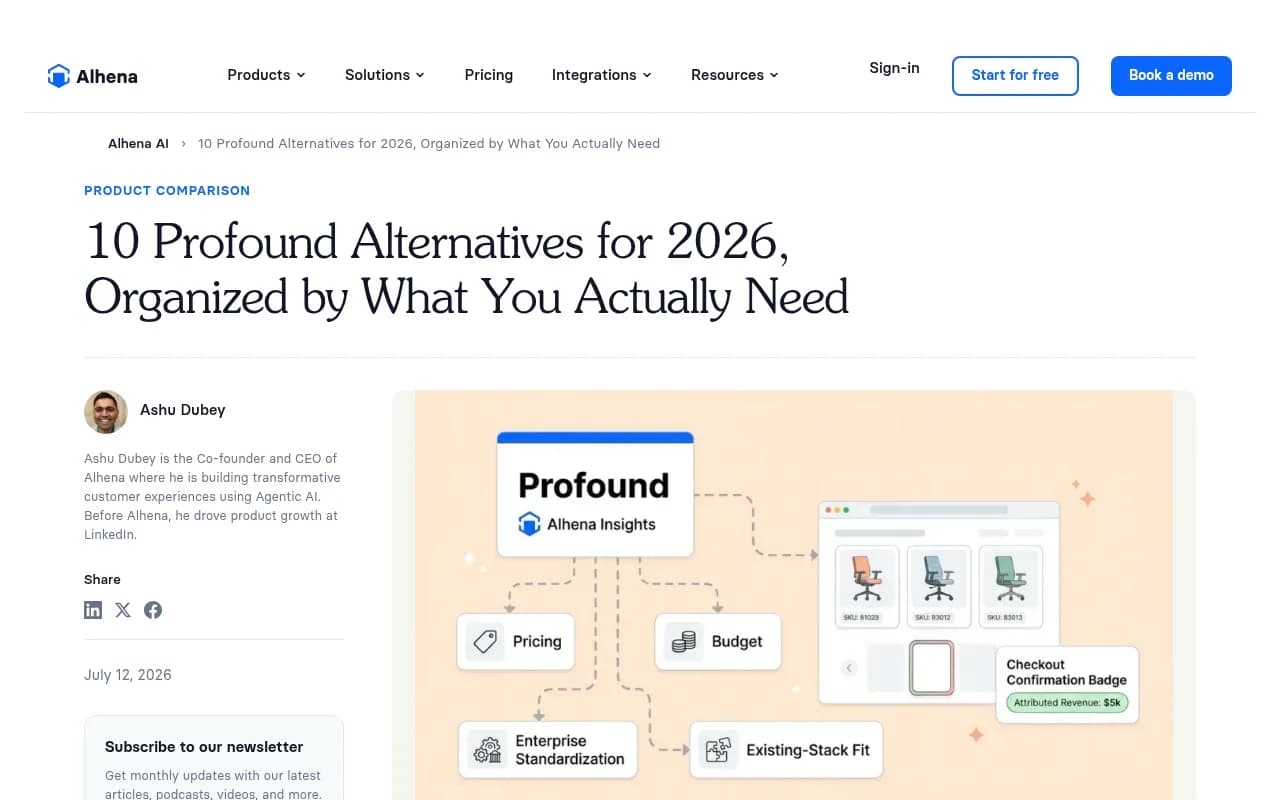
- Profound's pricing page now lists a free 7-day trial and a custom-priced Enterprise plan, according to Alhena's July 2026 roundup. Older roundups still quote $99 and $399 plans, so treat those as stale.
- Local brands need three things: prompts pinned to a place, segmentation by location or region, and a way to fix listings and reviews, not just report on them.
- No single tool does all of it. The practical setup is one AI visibility platform plus one local listings or reputation tool.
- Confirm every price on the vendor's own site before you shortlist. Several figures below come from third-party roundups.
Why local and multi-location brands outgrow Profound
Profound is the enterprise name in AI visibility. In September 2026 it raised a $180M Series D at a $1.8B valuation and says it serves more than 1,000 enterprise brands. That is a lot of credibility. It is also a product built around the question "how does my brand show up in AI answers?"
A franchise operator asks a different question. "Does the Denver location show up when someone asks ChatGPT for the best urgent care near them?" And then: "Why does the Tampa store show up and the Orlando one doesn't?"
Birdeye, which sells a competing product and so has a stake in the argument, says Profound reports at the brand level, not the location level, and that its agents focus on content and answer-engine tasks rather than reviews, listings or NAP (name, address, phone) consistency. Take the source's bias into account, but the point matches how the product is positioned.
There is also the pricing shift. Alhena's roundup, verified in July 2026, says the $99 and $399 self-serve plans are gone. Tim Soulo's roundup still cites Profound at $399 a month. Birdeye describes an older Starter plan limited to ChatGPT. Those sources disagree, so ask Profound for a current quote rather than trusting any article, including this one. One practical consequence: "cheaper Profound alternative" now mostly means "a tool that publishes its price."

What local and multi-location brands should look for
Before comparing tools, decide what you actually need. Birdeye's advice here is sound: scope your AI visibility first. If AI discovery drives walk-ins, calls or bookings, choose tools that segment by location, region and service line.
Location-aware prompts
AI answers change with the asker's location. A generic tracker that queries from one data center tells you little about a store in a mid-sized city. Look for tools that can run prompts as if asked from a specific place, down to a city or an exact coordinate.
Location-level reporting
You need to roll results up by region, franchisee or service line, and also drill down to one address. Ask vendors how many locations are supported per plan and whether pricing scales per location.
The fix layer
AI models lean heavily on third-party sources. Promptwatch's data on ChatGPT travel prompts (Sep 28 to Oct 4, 2026) shows booking and search sites earning 2.42% of travel citations, with reviews and advice sites at 0.86%, while Skyscanner, Going and Tripadvisor lead. You can read it in Promptwatch's ChatGPT travel citation report. The takeaway for hospitality and other local categories is plain: your listings and review profiles on third-party sites matter as much as your own pages.
Page structure for local intent
Promptwatch's ChatGPT query fan-out data found the average fan-out query length fell from about 117 characters in December to the high 80s in February and March, and was about 53 characters once fan-outs returned in April. Short queries favor pages with a clear entity and category up front. For local brands that means "[service] in [city]" phrasing and one focused page per intent, not a single sprawling locations page.
The best Profound alternatives for local brands
Promptwatch
If you want one platform that covers monitoring and the work of improving visibility, Promptwatch is the strongest fit for local brands I know of. The reason is specific: its local GEO/SEO targeting lets you pin a monitor to exact coordinates (a searched place or a dropped pin, with an accuracy radius from 20 m to 5 km), so ChatGPT, Google AI Overviews and Google AI Mode answer as if asked from that spot. That is exactly the "near me" scenario a store or clinic cares about.

State and city tracking starts on the Business plan ($579/mo), and local targeting at exact coordinates is included on Business, Agency Scale and Enterprise. Country tracking is on every paid plan. Monitors run against the real interfaces of ChatGPT, AI Overviews, AI Mode, Gemini, Perplexity, Copilot, Meta AI and Alexa, which matters because user-facing answers can differ from API output.
Beyond tracking, it has IP-verified AI crawler logs (so you can see whether bots can read your location pages), weekly site audits, content gap analysis, and the Content Agent, which plans, writes and publishes to WordPress, Webflow or Framer. The Action Board turns findings into a prioritized to-do list. Promptwatch is not a listings manager, so you would still pair it with something for NAP and reviews. Agencies running many local clients can look at the Kick-off ($199/mo), Growth ($399/mo) and Scale ($799/mo) plans, which include unlimited projects and city-level tracking.
It is also rated 4.7/5 on G2 and is ISO/IEC 27001 certified, which helps when a franchise parent has to pass procurement.
Birdeye
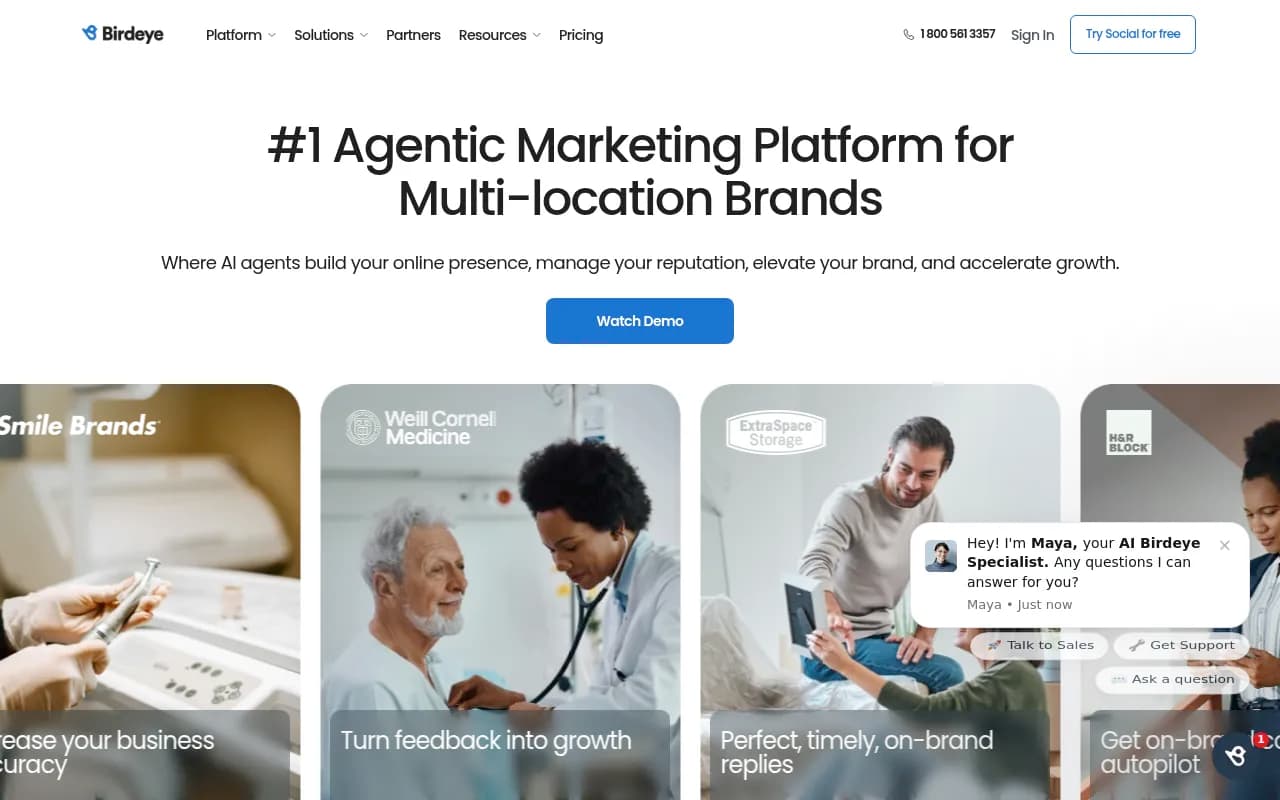
Birdeye is the most direct answer to "Profound, but for locations." It is built for multi-location and enterprise brands, which it says run from 10 to 10,000 locations. Its Search AI product shows location-level AI visibility and ties it to reviews, listings, NAP, messaging and social. It claims 3,000+ CRM integrations and tracks ChatGPT, Gemini and Perplexity.
The trade-off: pricing is custom, based on locations and modules, so there is no quick way to price it. And the comparison page I drew most of this from ranks Birdeye first, so I would verify the claims in a demo. Engine coverage is also narrower than the broadest AI visibility platforms.
Local Falcon
Local Falcon is a geo-grid tool. It shows heatmaps of how a business ranks across points around a location, with Share of Local Voice and Share of AI Voice metrics. Birdeye's roundup says it covers Google Maps, AI Overviews, AI Mode, Gemini, Grok and ChatGPT, with credit-based pricing from roughly the mid-$20s a month. That figure comes from Birdeye, not Local Falcon, so check it. This is the cheapest way I can see to get a visual, map-based view of local AI visibility. It does not write content or manage listings.
Yext, Uberall and Chatmeter
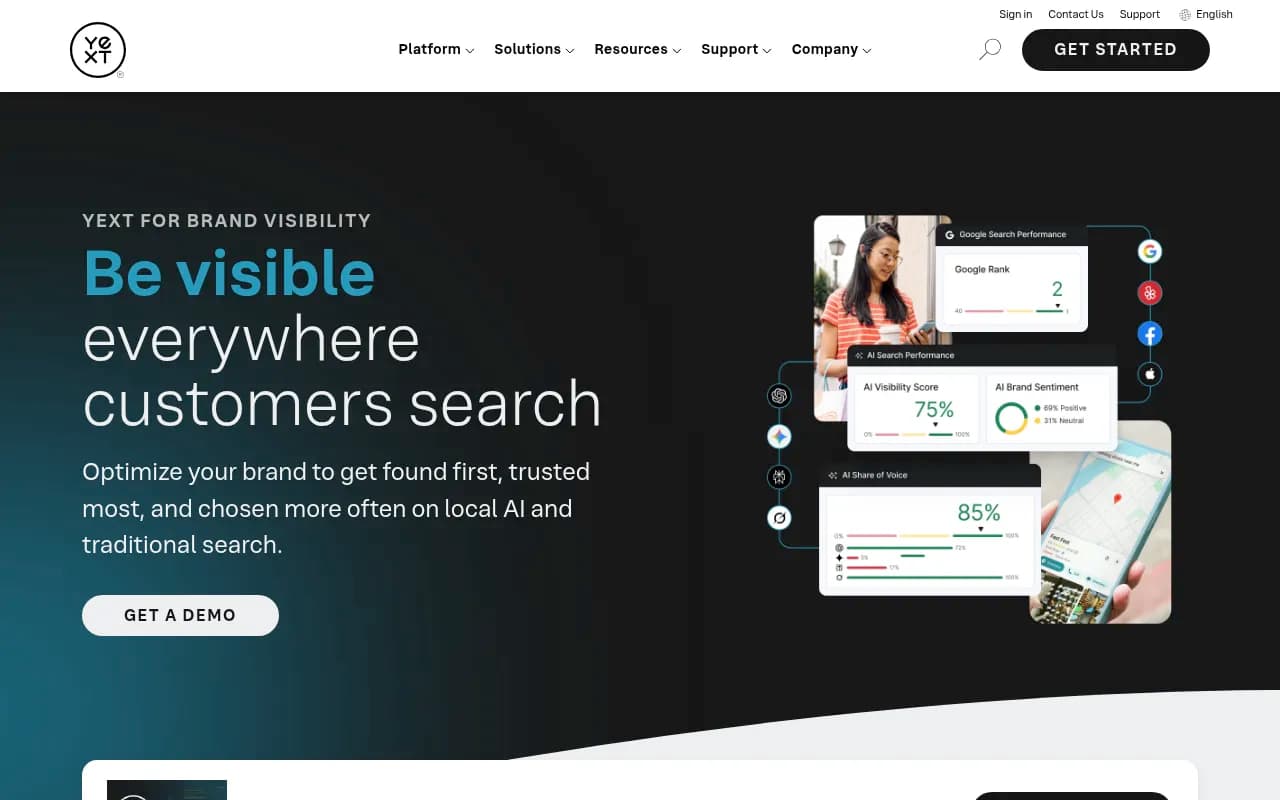
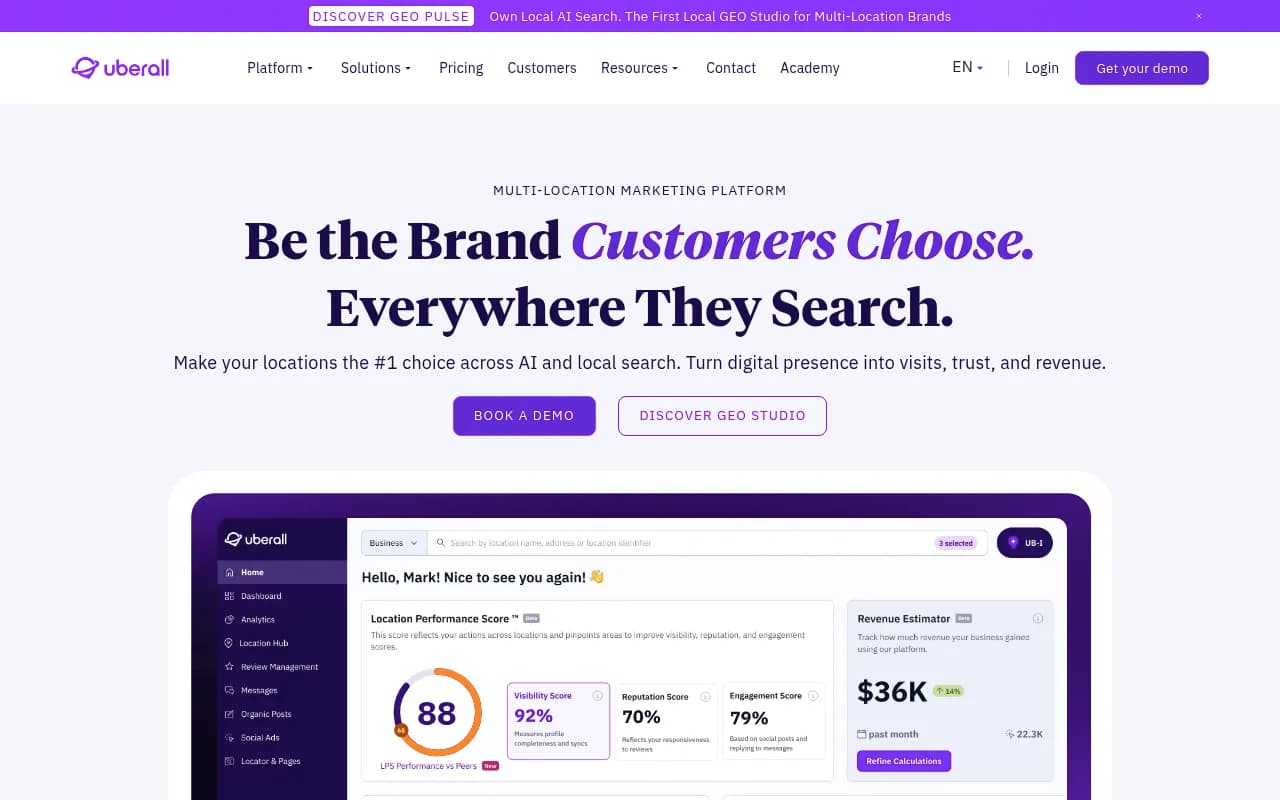
These are listings and presence platforms. They keep your name, address, hours and attributes consistent across directories and the data sources AI systems draw on. If your AI visibility problem is wrong hours or missing listings, this is where the fix lives.
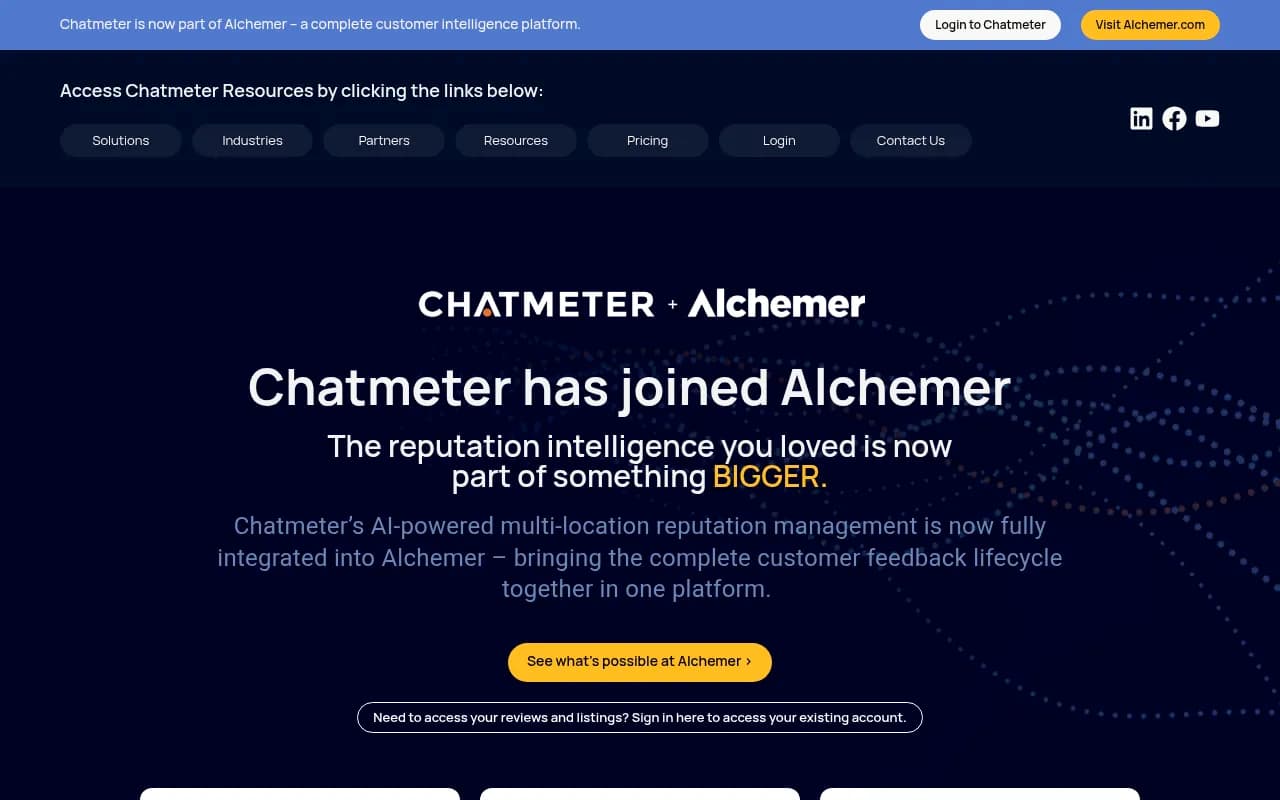
Chatmeter is worth a look because it combines multi-location reputation and listings management with AI visibility features. None of the three replaces a dedicated AI tracker if you need deep prompt-level data across many models.
Synup, BrightLocal and Moz Local
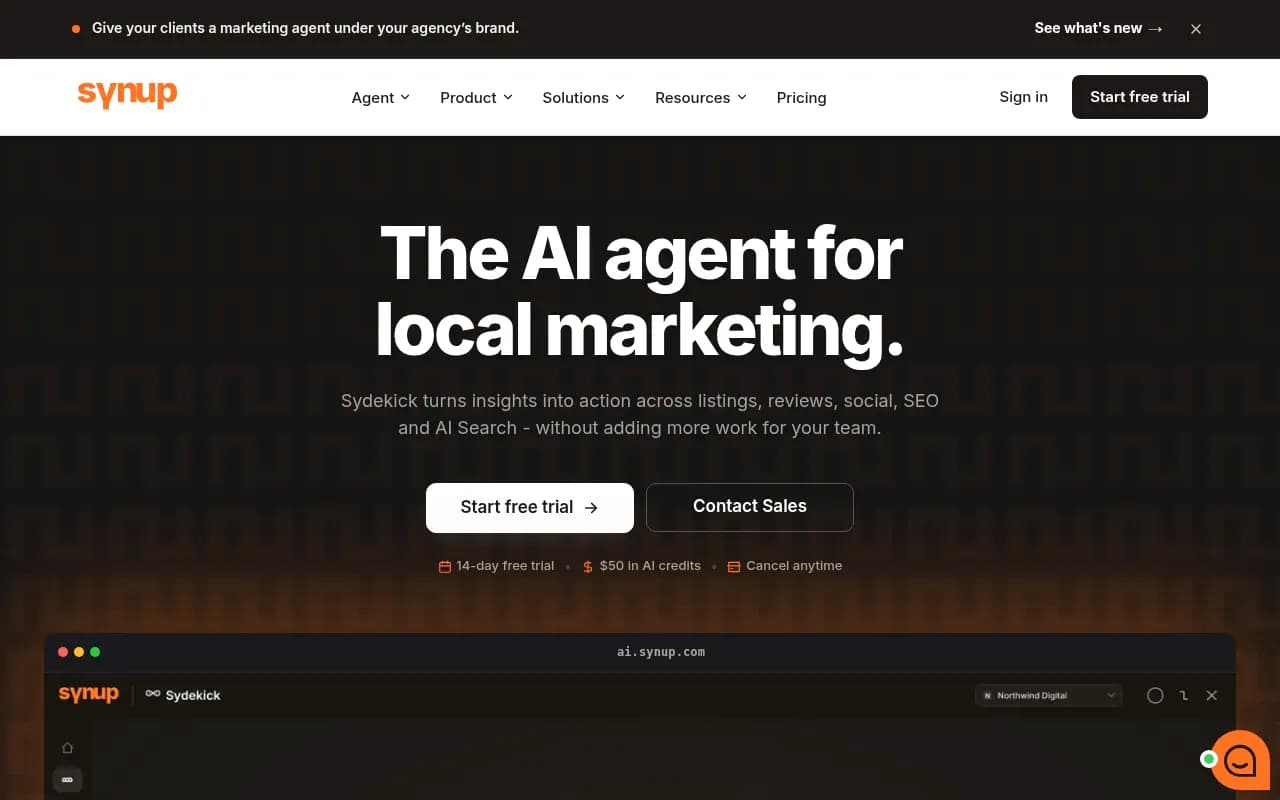
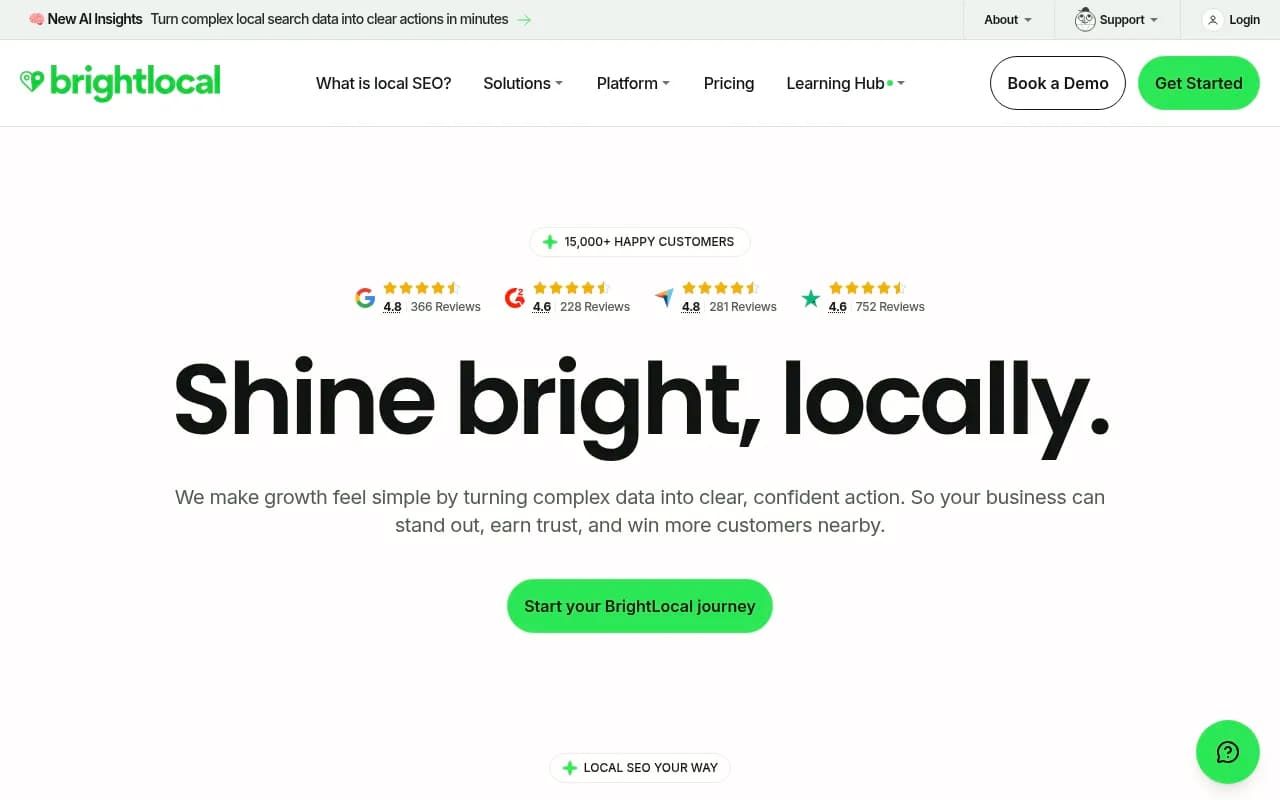
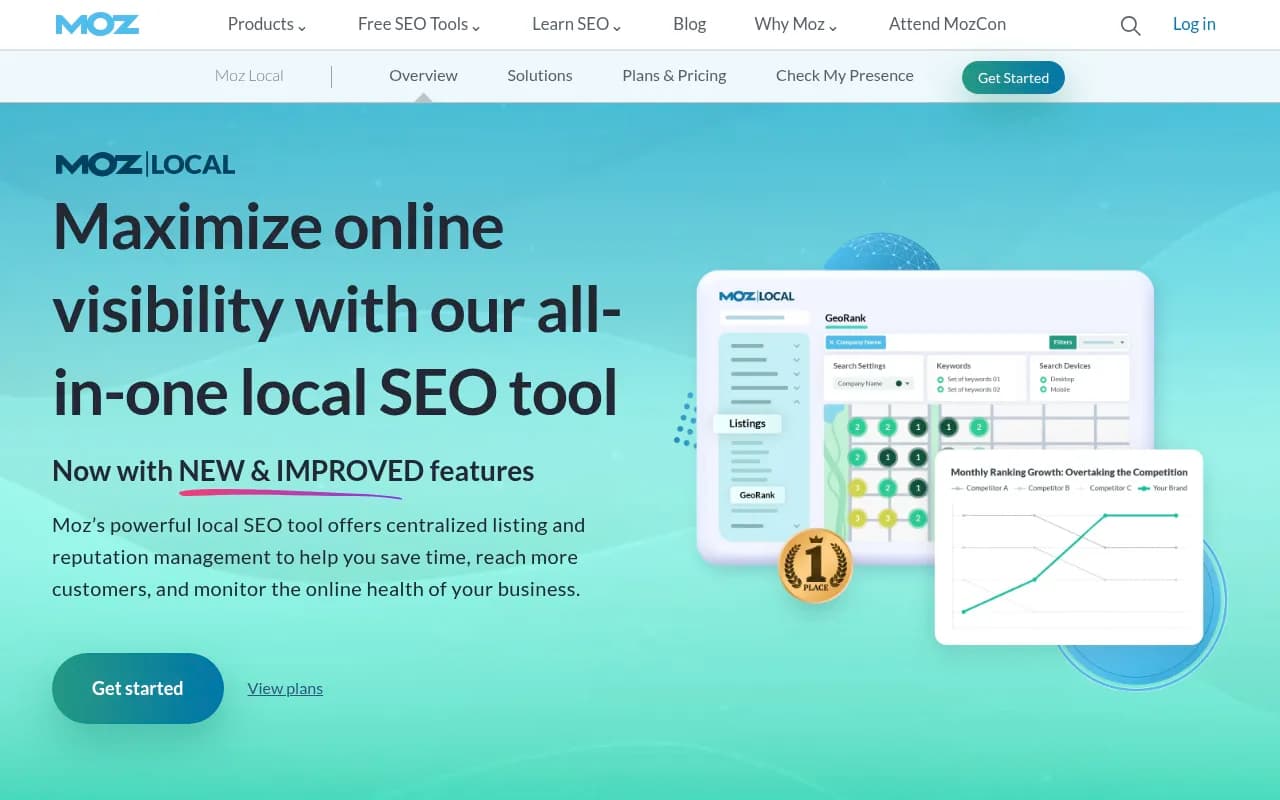
Synup describes itself as an AI agent that runs listings, reviews and local visibility. BrightLocal is a long-standing local SEO platform popular with agencies, and Moz Local syncs listings everywhere. They suit smaller multi-location operators and agencies who want local SEO fundamentals and are only starting on AI search.
Reputation and review platforms
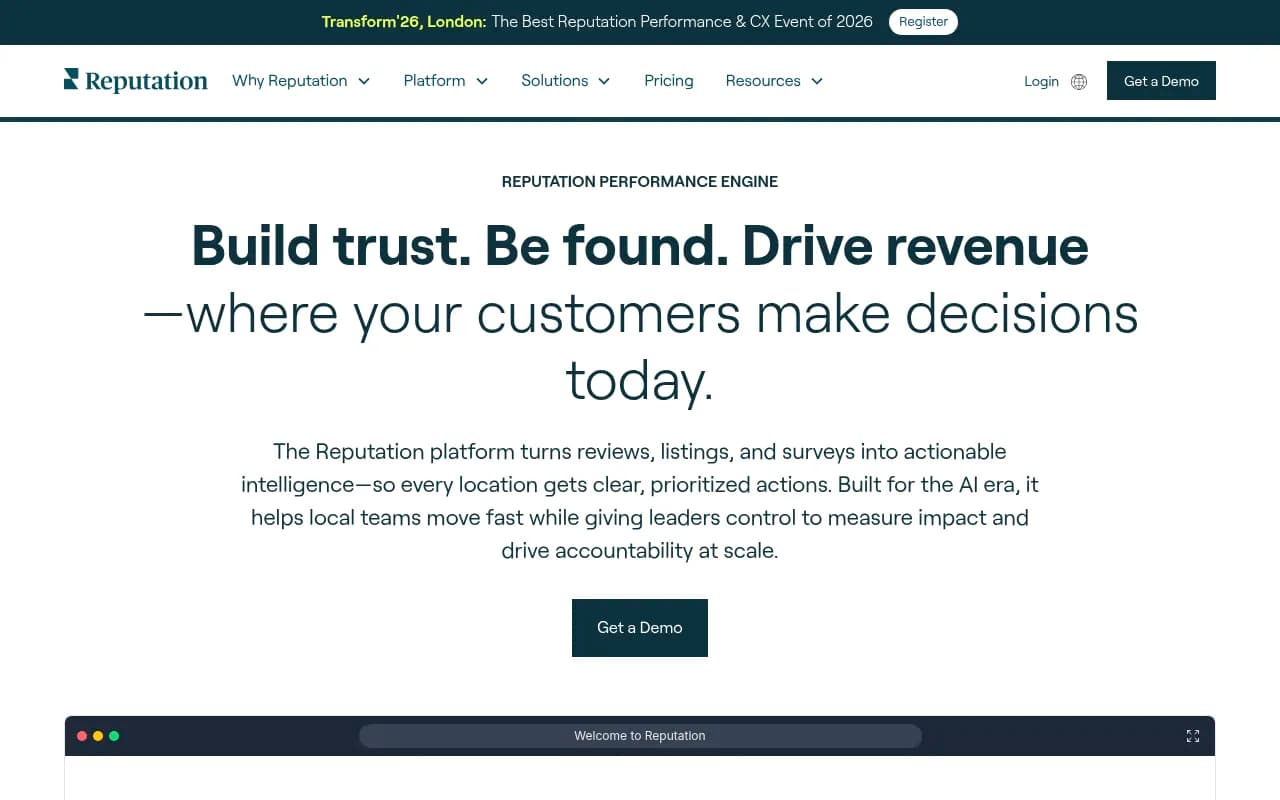
Reputation.com, ReviewTrackers and NiceJob focus on collecting and managing reviews. That matters because review sites are a source AI engines cite for local recommendations. They do not measure AI visibility themselves.

Peec AI
Peec AI is an agency favorite: unlimited seats on every plan and published pricing, about EUR 85 to 89 a month for Starter and EUR 199 for Pro according to the roundups. Omnia's comparison says Peec covers 115+ languages with IP-based geo filtering, which is a vendor claim worth testing. It is a monitoring tool without an optimization layer, so expect to do the fixing elsewhere.

Omnia
Omnia says it offers unlimited countries on all plans, from EUR 79 a month, plus an agent that researches, drafts and publishes content. That helps if you expand across regions like the UK and DACH, which is the exact pain Omnia says Profound's old single-country Growth plan caused. Country-level is not city-level, though, so it suits regional brands more than a store-by-store operation.
Otterly.AI, Semrush and Ahrefs Brand Radar
Otterly.AI has the cheapest published plan in Alhena's roundup, at $29 a month. Semrush's AI toolkit is $99 a month per domain, and Ahrefs Brand Radar is $199 a month on top of a base plan. Omnia says Brand Radar offers unlimited geographic research, but I found no independent evidence that any of these handle location-specific prompts well. They are sensible if you already pay for the suite.


Tibly
Tibly positions itself as AI visibility for local businesses. It is worth a trial if you run a single-location or very small operation and find enterprise platforms oversized. I have not verified its depth, so test it against your own prompts.

Comparison table
| Tool | Location-level AI tracking | Fixes listings and reviews | Content creation | Pricing signal |
|---|---|---|---|---|
| Promptwatch | Yes, exact-coordinate monitors, city/state on Business | No (pair with a listings tool) | Yes, Content Agent and CMS publishing | From $95/mo, Business $579/mo |
| Birdeye | Yes, per location | Yes | Limited | Custom, per location and module |
| Local Falcon | Geo-grid scans | No | No | Credits, roughly mid-$20s/mo (unverified) |
| Yext / Uberall / Chatmeter | Varies | Yes | No | Custom |
| Peec AI | Country and IP-based geo filtering | No | No | About EUR 85-199/mo |
| Omnia | Country level | No | Yes, via agent | From EUR 79/mo |
| Otterly.AI | Basic | No | No | From $29/mo |
| Profound | Brand level | No | Content and AEO tasks | Trial or custom Enterprise |
How to choose
If you run a franchise or chain with dozens of locations
Pair a visibility platform with a local presence platform. Promptwatch or Birdeye for AI answers, Yext, Uberall or Chatmeter for listings. If you want one vendor and your main pain is reviews and listings, start with Birdeye. If your main pain is understanding and improving what AI says, start with Promptwatch.
If you are an agency with local clients
Look for unlimited projects and white-label reporting. Promptwatch's agency plans include city-level tracking, and Peec AI is a cheaper monitoring-only route. For a wider list, the directory at bestgeosoftware.com lets you compare more GEO platforms side by side.
If you have a tight budget
Local Falcon for the map view, plus Otterly.AI or PromptRush-style low-cost trackers for prompt monitoring. You give up content tools, but you will learn where you stand.
If you already have a local SEO stack
Keep it. Add an AI tracker with location targeting on top, and use your listings platform for the fixes. Replacing everything is rarely worth it.
A 30-day evaluation plan
Demand-Genius suggests a four-week migration playbook, and it adapts well to local brands:
- Week 1: audit what you have. List your locations, the prompts customers actually use ("best [service] near me", "[brand] in [city]"), and the sources currently cited.
- Week 2: run two tools in parallel on the same 20 to 30 prompts across three or four representative locations, including your best and worst performers.
- Week 3: check usability. Can a regional manager read the report without help? Can you segment by location?
- Week 4: decide, and plan the fixes. Most local wins come from cleaner listings, reviews and a focused page per location, not from the dashboard itself.
One gap I could not fill: I found no independent testing of how any tool handles "near me" prompts. Run your own test and compare results against what you see when you ask the AI directly from a phone in that location.
Final recommendation
Profound is still the enterprise leader, but its brand-level view and move to custom pricing leave local operators underserved. For most multi-location brands, I would shortlist Promptwatch for exact-location AI tracking and the ability to act on what it finds, Birdeye if reviews and listings are the bigger problem, and a listings platform such as Yext or Uberall behind either one. Check current pricing on each vendor's site. For Promptwatch, that is promptwatch.com/pricing, and its 7-day free trial on monthly plans is a low-risk way to test location monitors on your own prompts.