Key takeaways
- Most Hall AI alternatives only monitor AI visibility -- they show you where you're invisible but don't help you fix it
- The most useful platforms for content teams combine tracking with content gap analysis and actual content generation
- Monitoring 10+ AI models (ChatGPT, Perplexity, Gemini, Claude, Grok, etc.) matters because citation behavior varies significantly between them
- Prompt volume data and difficulty scoring help content teams prioritize what to write, not just what they're missing
- A few platforms now close the full loop: find gaps, generate content grounded in real prompt data, then track whether citations improve
Here's the problem with most AI visibility tools: they're dashboards. You log in, see that ChatGPT mentioned three competitors and not you, feel vaguely anxious, and then... close the tab. Because the tool told you what happened but gave you nothing to do about it.
Hall AI falls into this category. It tracks brand mentions across AI search engines, which is genuinely useful. But for a content team that needs to act on that data -- write the articles, fill the gaps, show up in the next round of AI responses -- it's only half the job.
This guide covers the best Hall AI alternatives in 2026, with a specific focus on platforms that help content teams do something with the data they collect.
Why "monitoring only" isn't enough anymore
When AI search was new, just knowing whether ChatGPT mentioned your brand felt like a win. That phase is over. By 2026, most marketing teams already know they have an AI visibility problem. What they need now is a way to fix it.
The gap between monitoring and optimization is where most tools fall short. A tool that shows you a visibility score is useful. A tool that shows you the exact prompts your competitors rank for that you don't, generates a content brief to close that gap, and then tracks whether the new article gets cited -- that's a different category entirely.
When evaluating Hall AI alternatives, I'd split them into two buckets:
- Monitoring tools: track visibility, show dashboards, maybe compare you to competitors
- Optimization platforms: do all of the above, plus identify specific content gaps and help you create content that fills them
Most tools in this space are still in the first bucket. A few are genuinely in the second.
The best Hall AI alternatives for content teams in 2026
Promptwatch -- best overall for content teams that want to act on data
Promptwatch is the most complete option for content teams that need to close the loop between "we're invisible" and "we published something that fixed it."
The core workflow is built around three steps: find the gaps, create content to fill them, and track whether citations improve. The Answer Gap Analysis shows you exactly which prompts competitors appear in that you don't -- not just that a gap exists, but the specific questions AI models are answering with competitor content instead of yours.
From there, Content Agents generate articles, listicles, comparisons, and briefs grounded in real prompt data. This isn't generic AI writing -- it's content built around the specific gaps the platform identified, with prompt volume estimates, difficulty scores, and competitor citation data baked in.
The crawler log feature is worth calling out specifically. Most tools don't tell you whether AI crawlers have even visited your pages. Promptwatch shows you in real time which pages ChatGPT, Claude, and Perplexity are reading, how often they return, and when a crawled page moves to an actual citation. That's the kind of data that helps a content team understand whether their work is getting through.
It monitors 10 AI models including ChatGPT, Perplexity, Google AI Overviews, Google AI Mode, Claude, Gemini, DeepSeek, Grok, Mistral, and Copilot. Pricing starts at $99/month for the Essential plan (1 site, 50 prompts, 5 articles) up to $579/month for Business (5 sites, 350 prompts, 30 articles).

Writesonic -- for teams that want AI visibility and writing in one tool
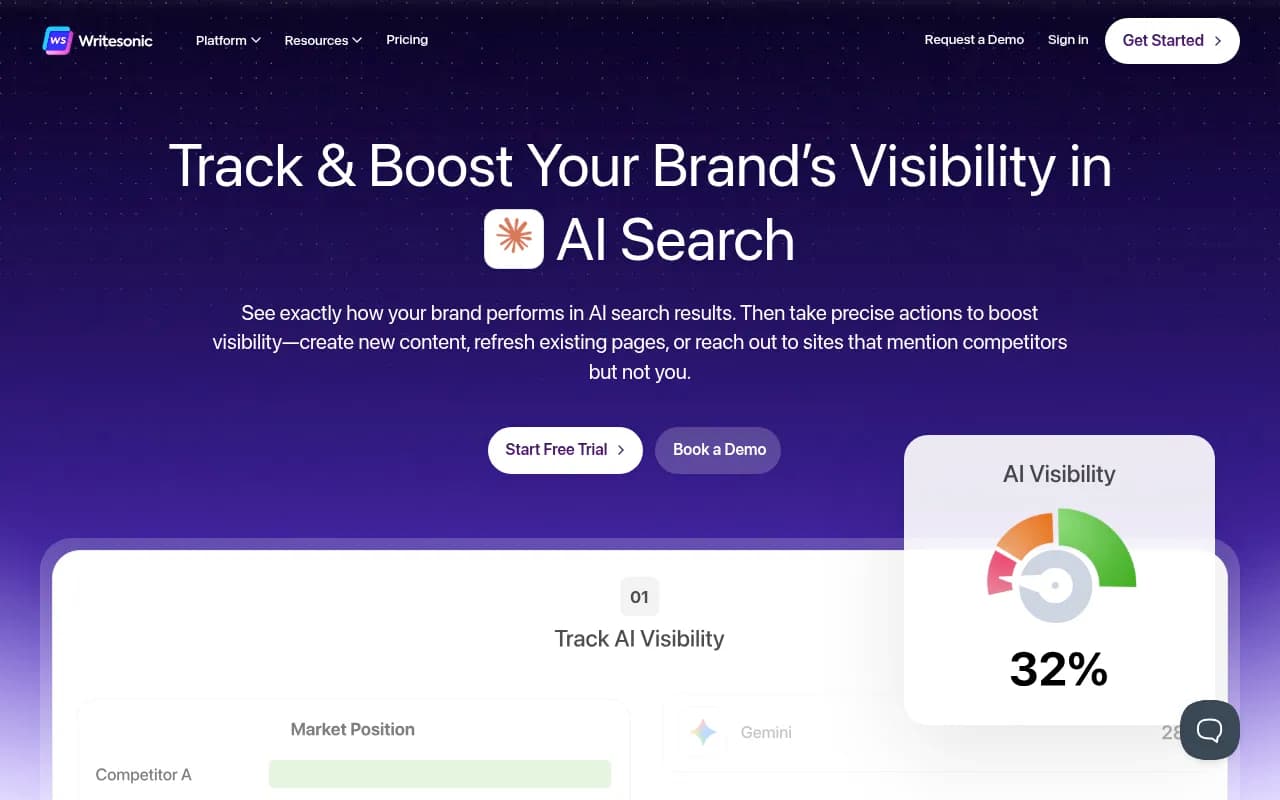
Writesonic has expanded well beyond its origins as a copywriting tool. It now includes AI search visibility tracking alongside content generation, which makes it a reasonable option for smaller teams that don't want to manage two separate platforms.
The visibility tracking isn't as deep as dedicated GEO platforms -- you won't get crawler logs or prompt difficulty scoring -- but for teams that are just starting to think about AI search, the combination of writing tools and basic monitoring is a practical starting point.
Relixir -- for teams that want an all-in-one GEO platform with content generation
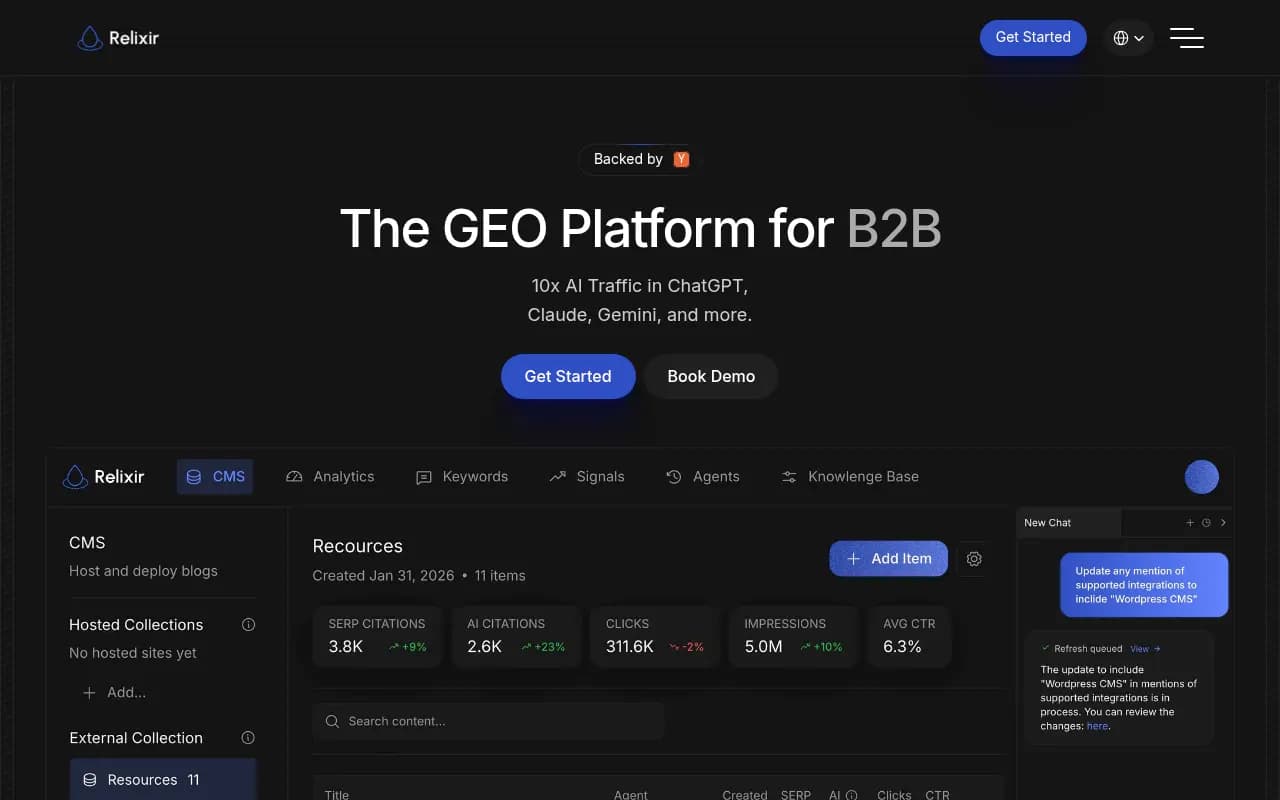
Relixir positions itself as an all-in-one GEO platform with AI content generation built in. It's worth considering if you want something purpose-built for generative engine optimization rather than a traditional SEO tool that's added AI tracking as a feature.
Orchly.ai -- for content ops teams that want automated publishing workflows
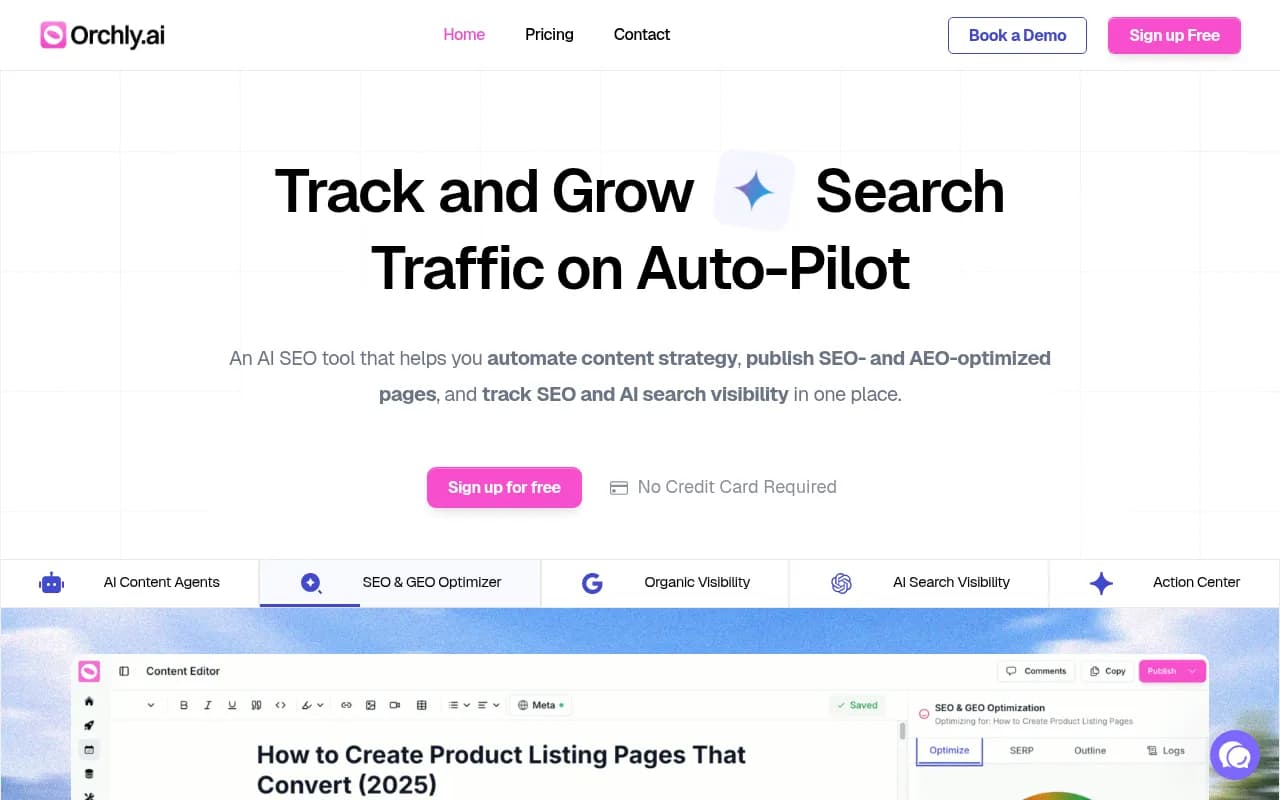
Orchly.ai focuses on content operations: it writes, optimizes, and publishes content with AI visibility in mind. If your team's bottleneck is production volume rather than strategy, it's worth a look.
Profound -- for enterprise teams with serious budget
Profound is a strong enterprise option with a deep feature set for AI visibility. It's more expensive than most alternatives and doesn't include the same content generation capabilities as Promptwatch, but for large brands that need robust monitoring across multiple markets, it's one of the more capable platforms.
Otterly.AI -- for teams on a tight budget that just need basic tracking
If you genuinely only need monitoring and your budget is limited, Otterly.AI is one of the more affordable options. It doesn't do content generation or crawler logs, but it covers the basics of tracking brand mentions across AI search engines without a significant financial commitment.

AthenaHQ -- for enterprise teams that want guided optimization
AthenaHQ is monitoring-focused but includes some guidance on what to optimize. It's better suited to enterprise teams that have in-house content resources and just need direction on where to focus, rather than teams that need the platform to generate content for them.
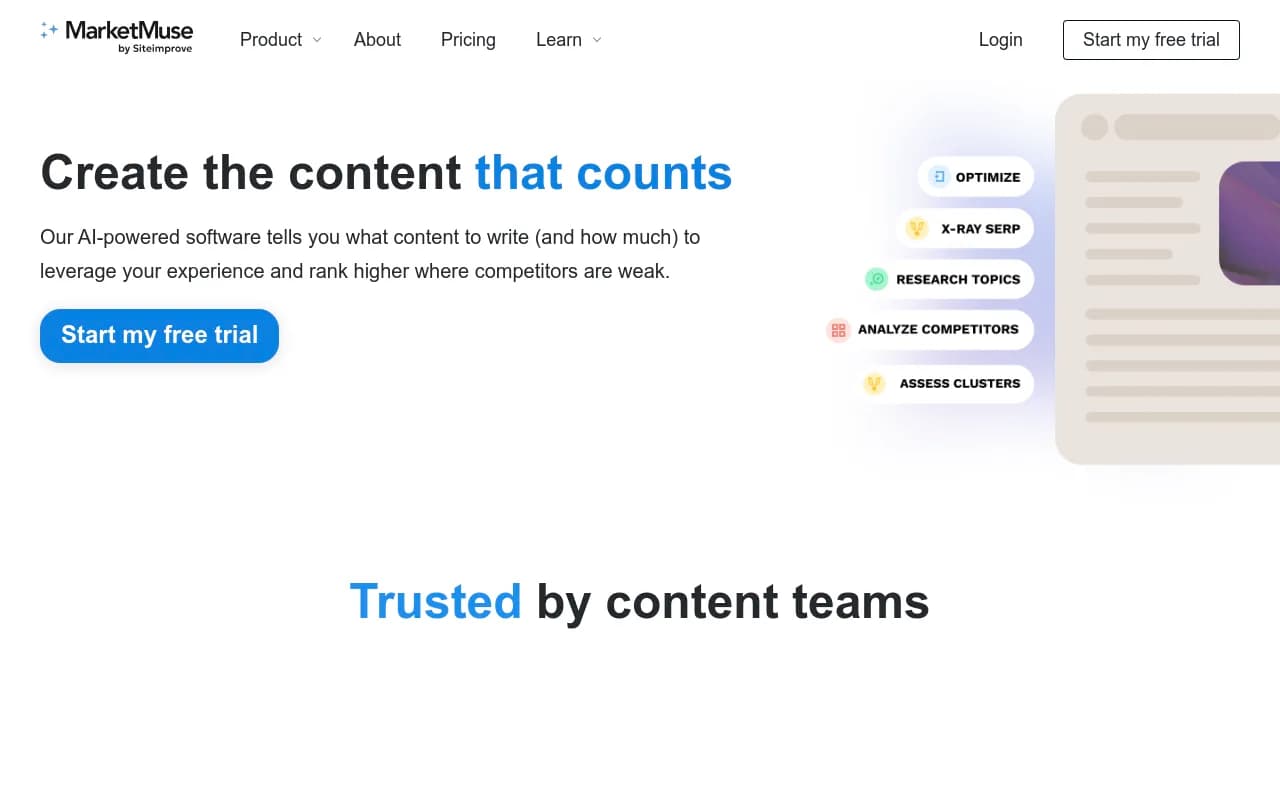
MarketMuse -- for content strategy teams that want deep topic modeling
MarketMuse has been doing AI-assisted content strategy for years. It's not a GEO platform in the traditional sense -- it doesn't track AI search citations -- but its topic modeling and content brief generation are genuinely strong. For teams that want to build topical authority (which does feed into AI visibility), it's a useful complement to a dedicated tracking tool.
Surfer SEO -- for teams that want real-time content optimization feedback
Surfer SEO is a content optimization tool rather than an AI visibility platform, but it's worth including here because many content teams use it alongside a GEO tracker. It gives real-time feedback on content as you write, which helps ensure articles are thorough enough to be citation-worthy.
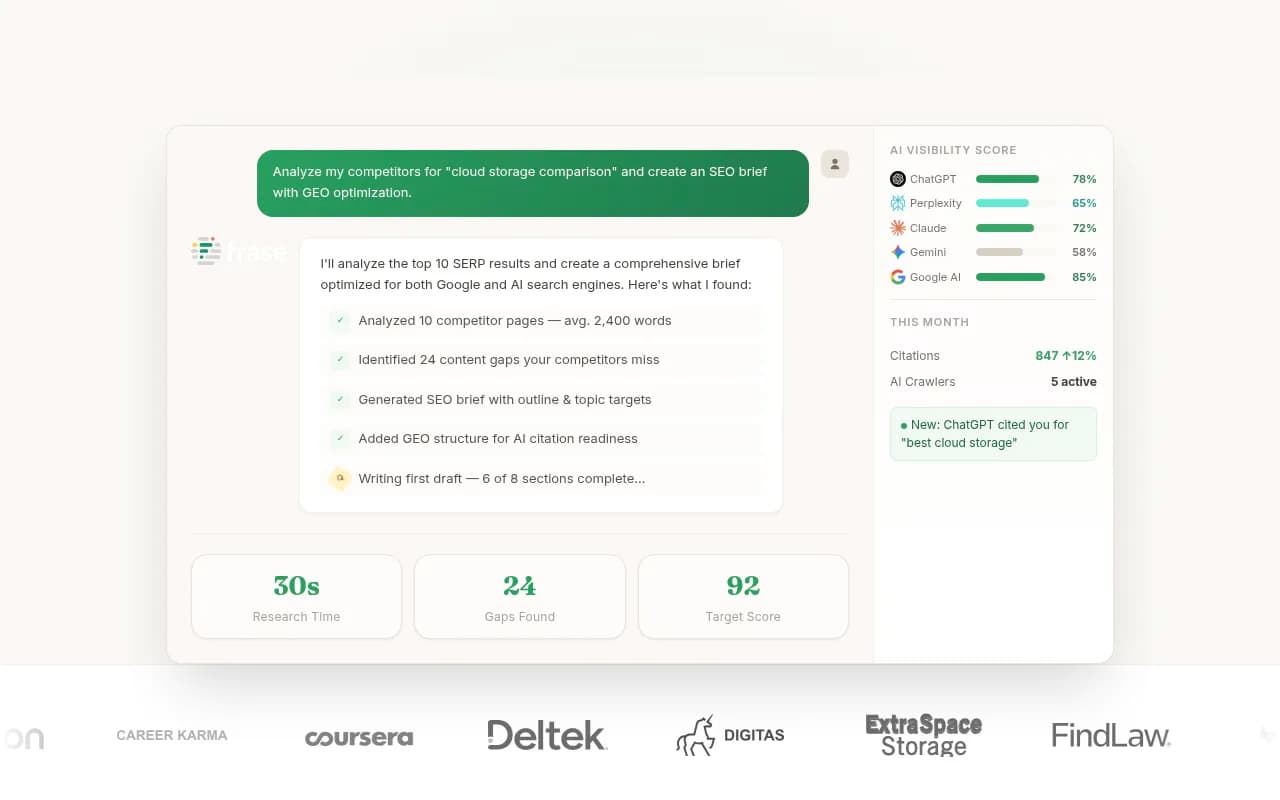
Frase -- for teams that want research-driven content briefs
Frase combines content research with brief generation. Like Surfer, it's not tracking AI citations, but it helps content teams produce the kind of comprehensive, well-researched articles that AI models tend to cite. Pair it with a dedicated GEO tracker for the full picture.
Feature comparison: Hall AI vs the best alternatives
| Platform | AI model tracking | Content gap analysis | Content generation | Crawler logs | Prompt volume data | Pricing (starting) |
|---|---|---|---|---|---|---|
| Hall AI | Yes | Limited | No | No | No | ~$49/mo |
| Promptwatch | 10 models | Yes (Answer Gap Analysis) | Yes (Content Agents) | Yes | Yes | $99/mo |
| Writesonic | Basic | No | Yes | No | No | ~$20/mo |
| Relixir | Yes | Yes | Yes | No | Limited | Custom |
| Orchly.ai | Yes | Yes | Yes | No | No | Custom |
| Profound | Yes | Limited | No | No | Limited | Custom |
| Otterly.AI | Basic | No | No | No | No | ~$29/mo |
| AthenaHQ | Yes | Yes | No | No | Limited | Custom |
| MarketMuse | No | Yes | Yes (briefs) | No | No | $149/mo |
| Surfer SEO | No | No | Yes | No | No | $89/mo |
| Frase | No | Yes | Yes (briefs) | No | No | $45/mo |
What to actually look for when choosing a Hall AI alternative
Tracking depth matters more than model count
Every tool now claims to track "10+ AI models." What matters more is how they track. Tools that query AI models through APIs get different results than tools that simulate real user interactions in actual browser interfaces. The user-facing answer in ChatGPT can differ from what the API returns -- especially for shopping recommendations and local queries. Ask vendors specifically how they collect data.
Prompt volume and difficulty scoring
Knowing you're invisible for a prompt is one thing. Knowing whether that prompt gets 50 queries a month or 50,000 -- and whether it's a realistic target for your domain authority -- is what lets you prioritize. Most monitoring-only tools skip this entirely.
The content generation question
This is the biggest differentiator in 2026. Some platforms generate content that's grounded in real citation data and prompt analysis. Others bolt on a generic AI writer that produces filler. The difference is significant. Content generated from actual gap analysis, with competitor citation data and prompt context, performs very differently from content produced by a standard LLM with a basic SEO prompt.
Crawler log access
This is still a rare feature. Knowing that Perplexity crawled your pricing page three times last week but has never touched your new comparison article tells you something actionable. Without crawler logs, you're guessing whether your content is even being considered.
Reddit and YouTube tracking
AI models don't only cite brand websites. They cite Reddit threads, YouTube videos, and third-party review sites heavily. A platform that shows you which Reddit discussions are influencing AI recommendations in your category gives you a channel most competitors aren't watching.
The honest reality of AI visibility in 2026
There's a Reddit thread from a digital marketer asking which tool is best for improving AI citations. The top answer: "There's no magic tool yet, most just track visibility. Real results come from strong content."
That's partially true and partially outdated. Strong content is still the foundation -- no tool changes that. But the gap between "strong content" and "content that AI models actually cite" is narrower when you know exactly which questions AI models are trying to answer and which sources they're currently trusting. That's what the better platforms in this list provide.
The teams getting real results from GEO in 2026 aren't just publishing more content. They're publishing content that's specifically engineered to answer the gaps AI models have already identified. That requires data that most monitoring-only tools don't provide.
Which alternative is right for your team?
A few honest recommendations based on team type:
If you're a content team at a mid-size brand and you need to show results: Promptwatch is the most complete option. The combination of gap analysis, content generation grounded in real prompt data, and crawler logs gives you everything you need to run the full cycle -- find gaps, publish, track improvement.
If you're a solo marketer or small team with limited budget: Otterly.AI or Writesonic get you started without a significant investment. You'll outgrow the monitoring-only approach quickly, but it's a reasonable starting point.
If you're at an enterprise with in-house content resources: Profound or AthenaHQ give you the monitoring depth you need. You'll want to pair either with a content generation workflow, since neither does that natively.
If your primary bottleneck is content production volume: Orchly.ai or Relixir are worth evaluating. Both are built around the idea that content ops and AI visibility belong in the same platform.
The common thread across all of these: the teams winning at AI search right now are the ones treating it as a content problem, not a tracking problem. The tracking is just how you know which content to write.