Key takeaways
- Qwairy covers 10+ AI providers and includes a content studio, but several alternatives offer more actionable optimization workflows at comparable or lower price points.
- The biggest split in this category is between monitoring-only tools (which show you data) and optimization platforms (which help you fix what's wrong). Most alternatives fall into one camp or the other.
- Promptwatch is the only platform rated a "Leader" across all GEO categories in 2026 comparisons, and it's the strongest pick if you want to close the loop from gap analysis to content creation to citation tracking.
- Budget-conscious teams have real options: several tools in this list start under $100/month and still cover 5+ AI engines.
- If you're evaluating Qwairy alternatives, the questions to ask are: Does it track the AI models my audience uses? Does it tell me why I'm missing citations? Can it help me fix the problem?
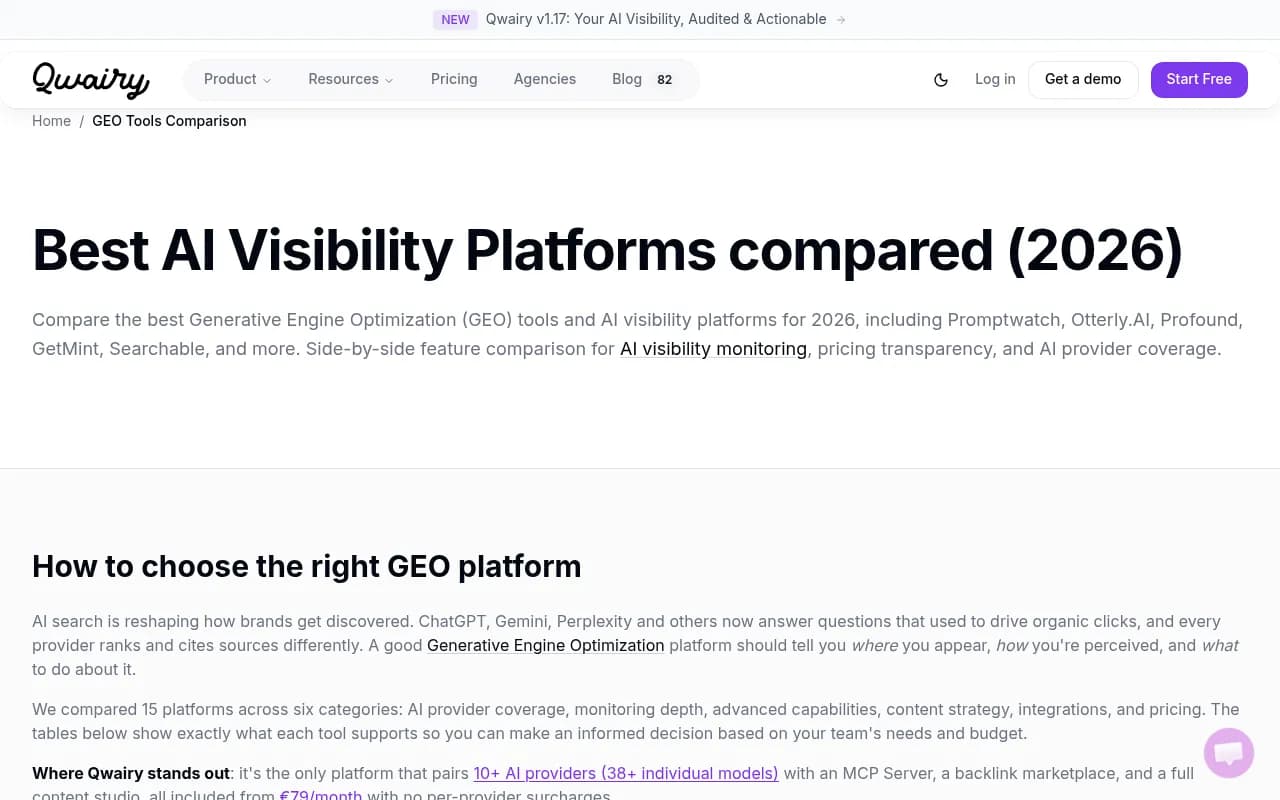
Qwairy has built a genuinely interesting product. The feature list is long -- 38+ AI models, a backlink marketplace, an MCP server, a content studio -- and the €79/month entry price is competitive for what's included. If you're already using it and happy, there's no urgent reason to switch.
But "interesting product" and "right tool for your team" aren't the same thing. Some teams need deeper content optimization. Others need better agency reporting. Some want crawler logs and traffic attribution. A few just want something simpler and cheaper.
This guide covers 10 alternatives worth considering in 2026, with honest notes on who each one actually suits.
What Qwairy does well (and where it falls short)
Before jumping to alternatives, it's worth being clear about what you'd be giving up.
Qwairy's strengths are real. Broad AI model coverage (ChatGPT, Claude, Gemini, Perplexity, Grok, Copilot, DeepSeek, Mistral, Google AI Overviews, Google AI Mode) with no per-provider surcharges is genuinely useful. The content studio and backlink marketplace in one platform is a differentiator. And €79/month is a reasonable entry point.
The gaps that push teams to look elsewhere:
- No AI crawler logs or agent analytics (you can't see which pages AI bots are actually reading)
- Limited prompt intelligence -- no volume estimates or difficulty scoring for individual prompts
- No Reddit or YouTube citation tracking
- No ChatGPT Shopping monitoring
- Reporting depth can feel thin for agencies that need to show ROI to clients
- The content generation workflow is less mature than dedicated optimization platforms
None of these are dealbreakers for every team. But if any of them matter to you, read on.
The 10 best Qwairy alternatives in 2026
1. Promptwatch -- best overall for teams that want to act, not just monitor
Promptwatch is the platform I'd point most teams to first. The core difference from Qwairy (and most other tools in this space) is that Promptwatch is built around a closed loop: find the gaps, create content to fill them, track the results.

The Answer Gap Analysis shows exactly which prompts competitors are visible for that you're not -- not just "you're missing from 7 out of 10 responses" but the specific content angles and question formats AI models are looking for. Content Agents then generate articles, listicles, and briefs grounded in that prompt data. And page-level tracking shows when new content starts getting cited, by which model, and how often.
On top of that: AI crawler logs (real-time logs of ChatGPT, Claude, Perplexity bots hitting your pages), Reddit and YouTube citation tracking, ChatGPT Shopping monitoring, prompt volume estimates, and traffic attribution that connects AI visibility to actual revenue.
It covers 10 AI models, processes data from real user interfaces rather than just APIs (which matters because the answers differ), and has been used by 1,480+ brands including Booking.com and Center Parcs.
Pricing starts at $99/month for the Essential plan (1 site, 50 prompts, 5 articles). Professional is $249/month with crawler logs and city-level tracking. Business is $579/month for 5 sites.
The main reason to look elsewhere: if you only need basic monitoring and the content generation workflow is overkill, you're paying for features you won't use.
2. Profound -- best for enterprise teams with budget to match
Profound is the other serious contender at the high end of this market. It captures real user-facing data from front-end interactions across 10+ AI engines, which is the right methodology -- API outputs and actual user-facing answers can differ significantly.
Enterprise-grade in both features and price. Strong on analytics depth, competitive benchmarking, and multi-stakeholder reporting. The platform is genuinely well-built for large organizations with complex tracking needs.
The tradeoff: it's expensive, and it skews toward monitoring over optimization. If you need content generation and gap-filling workflows, you'll be doing that work elsewhere.
3. Otterly.AI -- best for teams on a tight budget who just need the basics
Otterly.AI is the most affordable serious option in this space. It tracks brand mentions across ChatGPT, Perplexity, and a handful of other models, and the interface is clean enough that you can get set up in an afternoon.

The honest limitation: it's a monitoring tool. You'll see where you appear and where you don't, but as one Reddit user put it, "it tracks the source, but gives zero actionable strategy on how to restructure content to get cited." If you're just starting out with GEO and want to understand your baseline before investing in optimization, Otterly makes sense. If you want to actually improve your visibility, you'll outgrow it quickly.
4. Peec AI -- best for teams that want smart suggestions without complexity
Peec AI sits a step above pure monitoring tools -- it surfaces suggestions alongside tracking data, which is more useful than a dashboard that just shows you numbers.

Zapier's 2026 roundup called it out specifically for "smart suggestions," which is accurate. The interface is approachable, and the onboarding is faster than most enterprise-grade tools. Coverage spans the major AI engines.
The ceiling is lower than Promptwatch or Profound. If your team grows and needs crawler logs, content generation, or deep attribution, you'll be looking for an upgrade. But as a mid-tier option that gives you something to act on, it's worth a look.
5. ZipTie -- best for deep analysis and detailed reporting
ZipTie has carved out a niche around analysis depth. Where many tools give you a visibility score and a list of mentions, ZipTie goes further into why you're appearing or not, and what structural content changes would help.
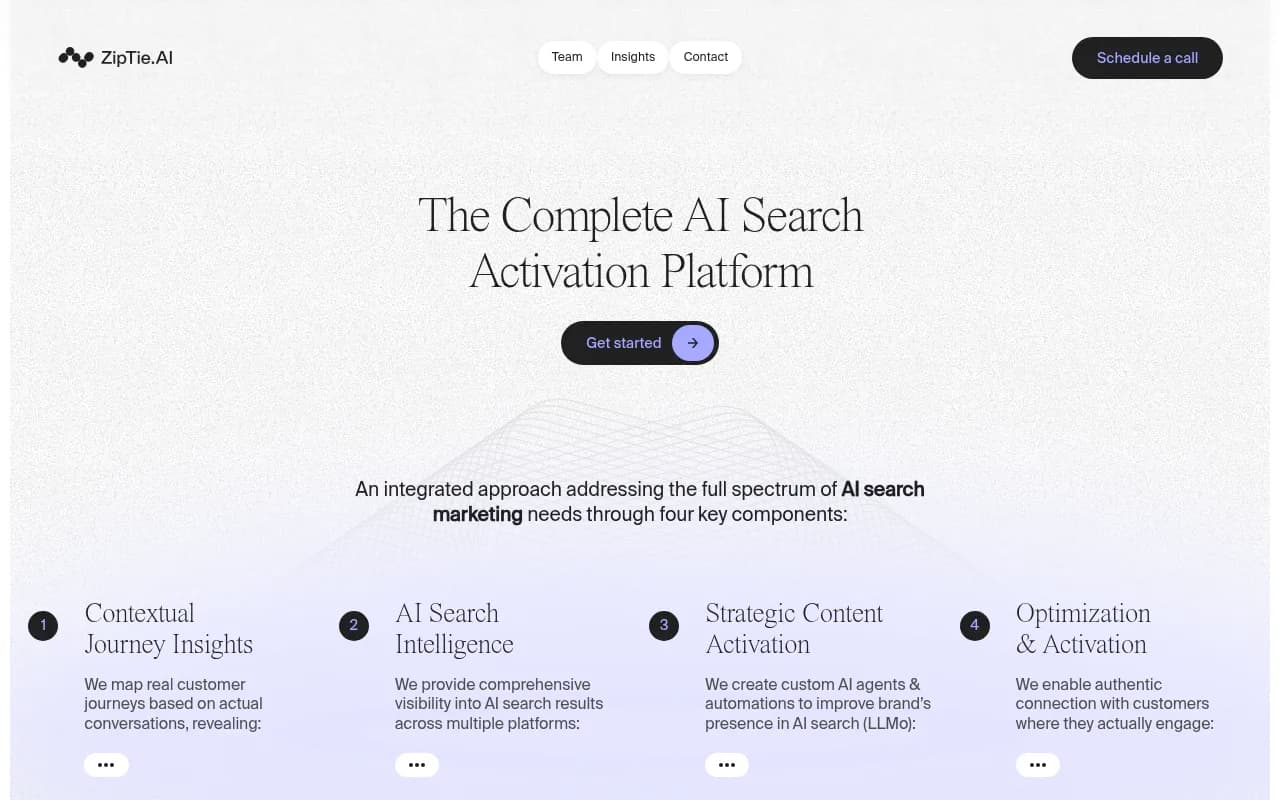
Zapier listed it for "deep analysis and reporting," and that tracks with what users describe. The reporting is strong enough to use in client presentations or executive briefings, which matters for agencies and in-house teams that need to justify GEO investment.
Pricing starts around $69/month, which makes it one of the more affordable options that still offers content optimization guidance. Not as full-featured as Promptwatch on the content generation side, but a solid mid-market choice.
6. Scrunch AI -- best for mid-market brands wanting monitoring plus optimization hints
Scrunch covers monitoring across ChatGPT, Claude, and other major models, and it layers in some optimization guidance on top of the tracking data.
It's positioned between the monitoring-only tools and the full optimization platforms. The feature set is solid without being overwhelming, and the pricing is more accessible than Profound. Teams that find Qwairy's content studio undercooked but don't need the full Promptwatch stack might find Scrunch hits the right balance.
7. SE Ranking (AI Visibility) -- best for teams already using SE Ranking for traditional SEO
SE Ranking has expanded its platform to include AI search visibility tracking alongside its traditional rank tracking and SEO tools. If you're already paying for SE Ranking, the AI visibility module is a natural add-on rather than a separate tool purchase.
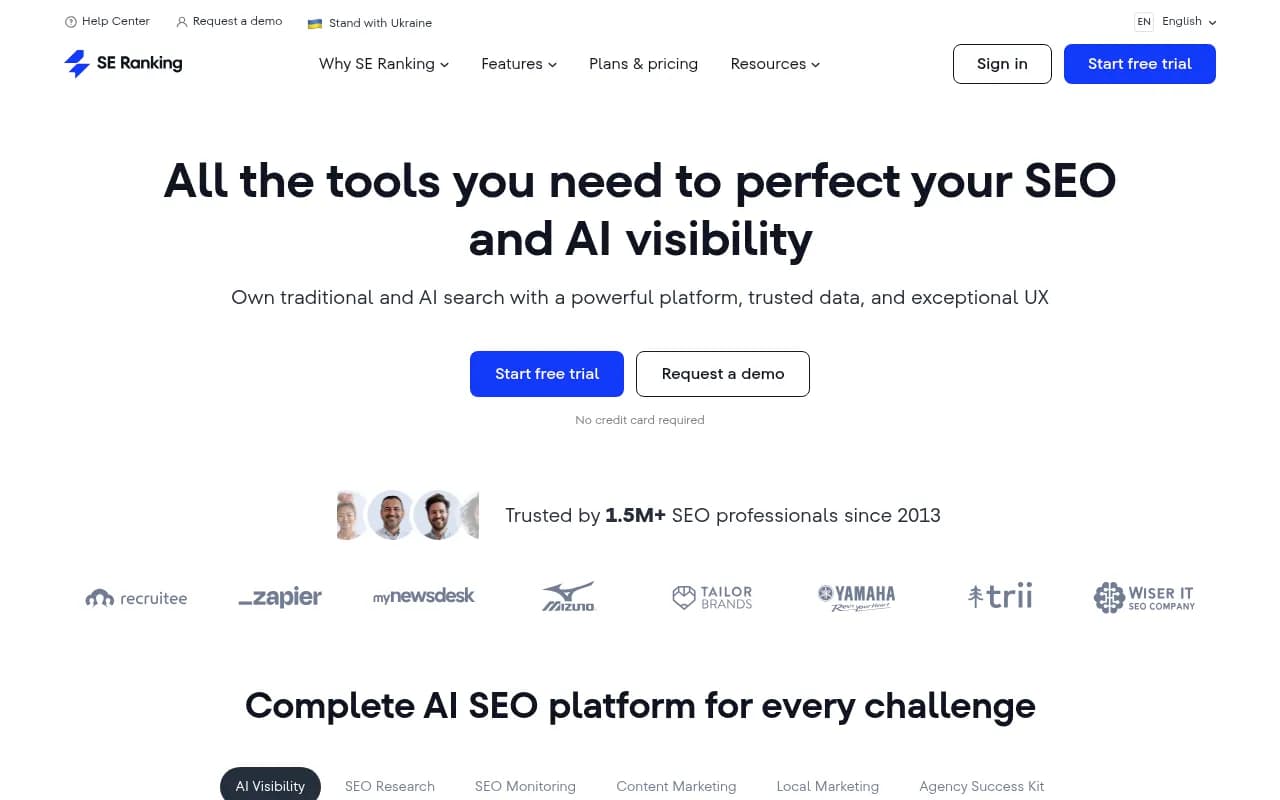
The strategic view it offers -- comparing AI visibility alongside traditional search performance -- is genuinely useful for teams that don't want to manage two separate dashboards. Coverage is solid across the major AI engines.
The limitation is that it's still primarily an SEO tool that added AI tracking, not a purpose-built GEO platform. The depth of AI-specific features (crawler logs, prompt intelligence, content generation) doesn't match dedicated platforms.
8. AthenaHQ -- best for teams focused on brand monitoring across 8+ AI engines
AthenaHQ tracks brand visibility and sentiment across a wide range of AI search engines, with a clean interface that makes it easy to see how your brand is perceived across different models.

The monitoring side is strong. Where it falls short is the same place most monitoring tools fall short: it shows you the problem without helping you fix it. No content generation, no crawler logs, no gap analysis that tells you what to create. For a brand monitoring use case where you just need to know what AI engines are saying about you, AthenaHQ works well. For active optimization, you'll need something else alongside it.
9. Writesonic (AI Visibility) -- best for content teams that want writing and tracking in one place
Writesonic has evolved beyond its AI writing roots to include AI search visibility tracking. If your team is already using Writesonic for content creation, the visibility features are a meaningful addition.
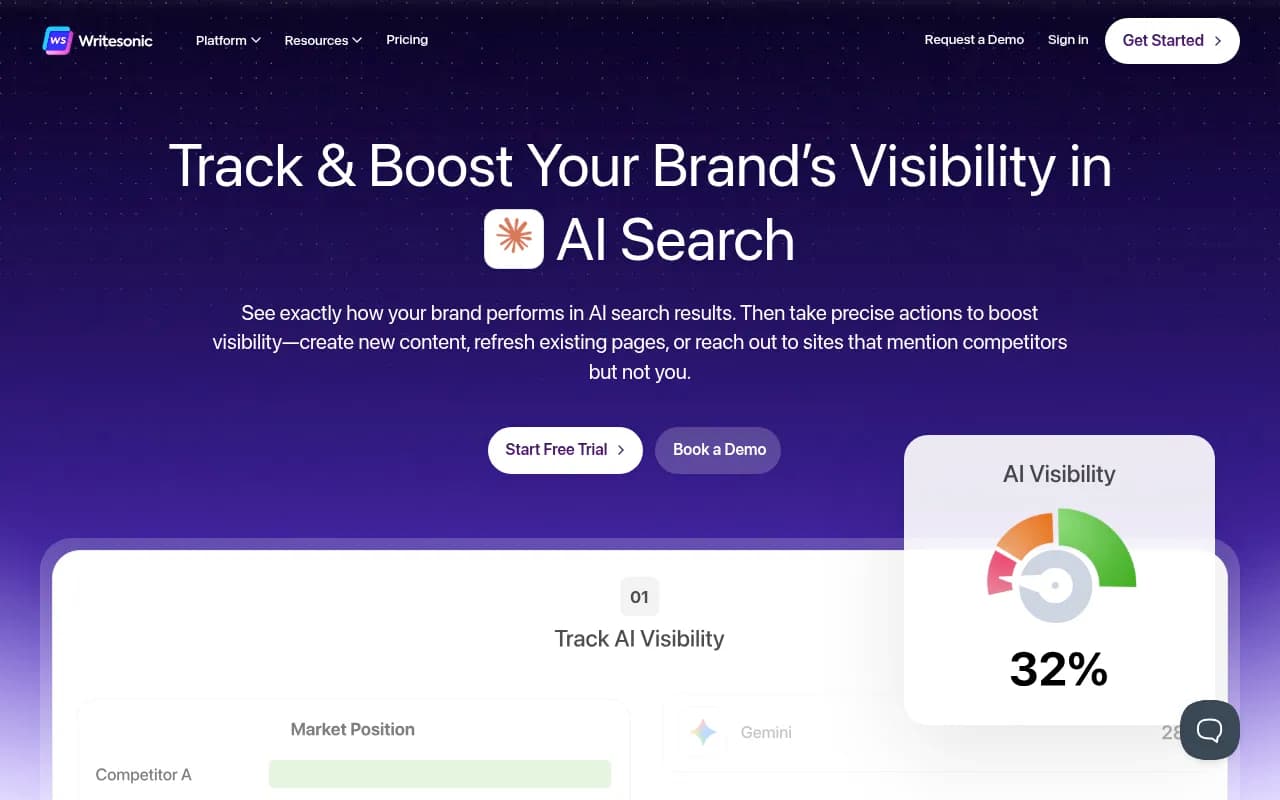
The appeal is consolidation: one tool for writing and tracking, rather than separate subscriptions. The AI visibility features cover the major engines and include some optimization guidance.
The tradeoff is depth. Writesonic's visibility tracking isn't as sophisticated as purpose-built GEO platforms, and the content generation isn't as specifically engineered for AI citation as Promptwatch's Content Agents (which are built around actual prompt and citation data). But for smaller teams that want to simplify their stack, it's a reasonable option.
10. Relixir -- best for teams wanting an all-in-one GEO platform with content generation
Relixir is one of the newer entrants in this space, and it's worth watching. It combines AI visibility monitoring with content generation in a way that's more integrated than most tools at its price point.
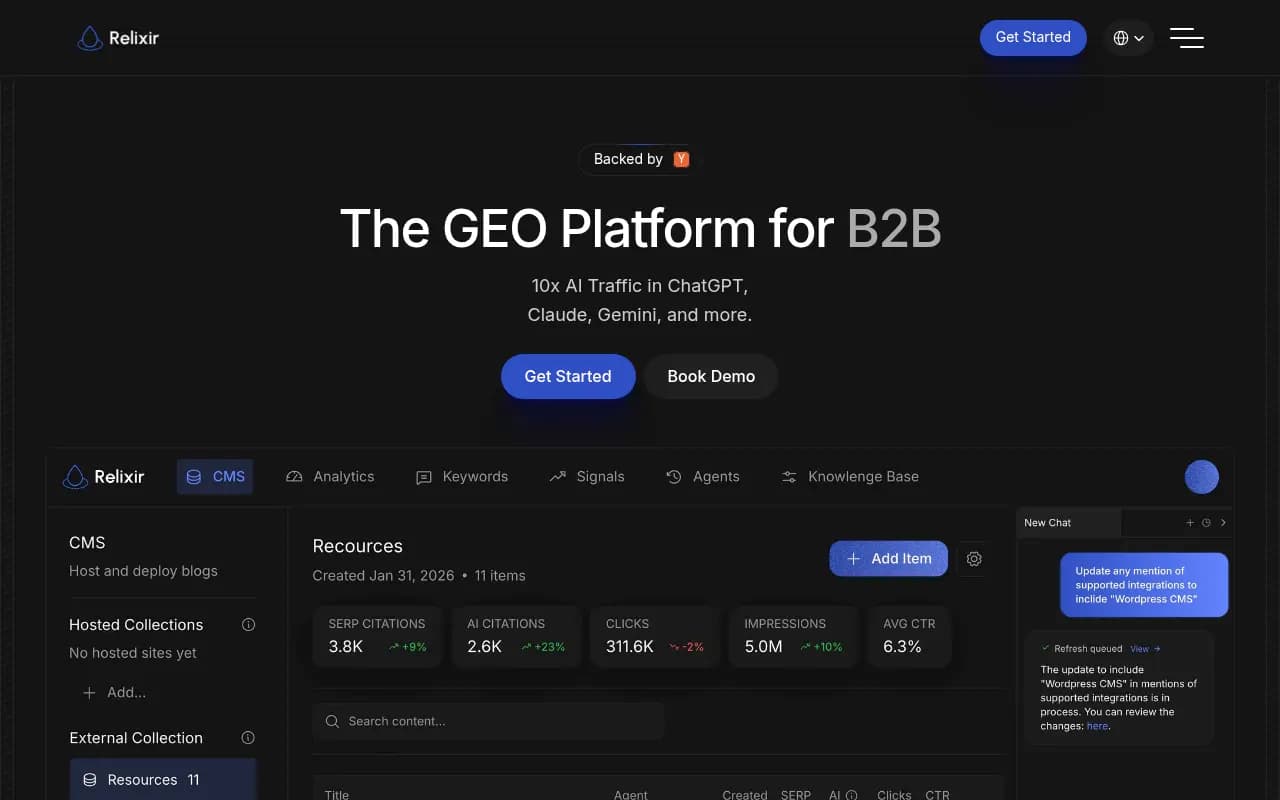
The platform tracks citations across major AI engines and uses that data to inform content creation, which is the right approach. It's less mature than Promptwatch in terms of data depth (fewer citations processed, less established crawler infrastructure), but the workflow is solid and the pricing is accessible.
Good option for teams that want the monitoring-plus-optimization combination but find Promptwatch's pricing out of reach.
Side-by-side comparison
| Platform | AI models covered | Content generation | Crawler logs | Prompt intelligence | Reddit/YouTube tracking | Starting price |
|---|---|---|---|---|---|---|
| Promptwatch | 10 | Yes (AI Content Agents) | Yes | Yes (volume + difficulty) | Yes | $99/mo |
| Qwairy | 10+ (38 models) | Yes (content studio) | No | Limited | No | €79/mo |
| Profound | 10+ | No | No | Limited | No | Enterprise |
| Otterly.AI | 5-6 | No | No | No | No | ~$49/mo |
| Peec AI | 6+ | Suggestions only | No | No | No | ~$79/mo |
| ZipTie | 5+ | Guidance only | No | No | No | ~$69/mo |
| Scrunch AI | 6+ | Hints | No | No | No | Mid-market |
| SE Ranking | 5+ | No | No | No | No | Add-on |
| AthenaHQ | 8+ | No | No | No | No | Mid-market |
| Writesonic | 5+ | Yes (general) | No | No | No | Bundled |
| Relixir | 5+ | Yes | No | No | No | Mid-market |
How to choose the right alternative
The question isn't which tool has the longest feature list. It's which one matches how your team actually works.
A few ways to think about it:
If you're a small team or solo marketer just getting started with GEO, Otterly.AI or Peec AI give you visibility data without overwhelming complexity or cost. You can always upgrade later.
If you're a mid-market brand that needs both monitoring and optimization, Promptwatch or ZipTie are the strongest options. Promptwatch goes further on content generation and crawler intelligence; ZipTie is strong on analysis depth and reporting.
If you're an enterprise team with a serious budget and complex multi-brand tracking needs, Profound is the other serious contender. But Promptwatch's Business and Agency plans cover most enterprise use cases at a lower price.
If you're an agency managing multiple clients, Promptwatch's agency pricing and white-label reporting capabilities are worth looking at specifically. The crawler logs and traffic attribution data are also much easier to use in client reporting than raw visibility scores.
If you already use SE Ranking for traditional SEO, the AI visibility module is the path of least resistance -- it won't replace a dedicated GEO platform, but it reduces the number of tools you're managing.
The one thing I'd push back on: the Reddit comment in the research data that says "unless a tool gives clear recommendations or ties to revenue, it's hard to justify $100-$400/month just to know if ChatGPT mentioned your brand today" is exactly right. Monitoring-only tools are hard to justify at scale. The platforms worth paying for are the ones that close the loop from "you're invisible here" to "here's what to create" to "here's how your visibility improved." That's a short list.
Bottom line
Qwairy is a legitimate platform with broad AI model coverage and an ambitious feature set. But it's not the right fit for every team, and the alternatives in this list cover most of the gaps.
For teams that want the most complete optimization workflow -- not just tracking, but gap analysis, content generation, crawler logs, and revenue attribution -- Promptwatch is the strongest option in 2026. For teams with tighter budgets or simpler needs, Otterly.AI, Peec AI, and ZipTie are all worth evaluating. And if you're at the enterprise end, Profound is the other serious contender.
Whatever you pick, make sure it does more than show you a number. The tools that matter are the ones that tell you what to do next.