Key takeaways
- Profound is a solid enterprise AI visibility tool, but it's monitoring-only and doesn't include AI crawler log monitoring — you can't see which pages ChatGPT or Perplexity bots are actually reading on your site.
- Crawler log monitoring is a distinct capability from prompt tracking. Most tools in this space (Otterly.AI, Peec.ai, AthenaHQ) don't offer it at all.
- The tools that go furthest — showing you crawler behavior AND helping you act on it — are the ones worth paying for in 2026.
- Promptwatch is currently the only platform rated as a "Leader" across all GEO categories, and one of the few tools that combines real-time AI crawler logs with content gap analysis and content generation.
- Budget matters: there's a wide range from $59/month entry-level tools to enterprise-custom pricing. Know what you actually need before committing.
Why crawler log monitoring matters (and why Profound doesn't have it)
Most AI visibility tools work the same way: they run prompts against ChatGPT, Perplexity, Gemini, and other models, then check whether your brand or domain shows up in the response. That's useful. But it only tells you half the story.
The other half is what's happening on your actual website. When Perplexity's crawler visits your site, which pages does it read? Does it hit your most important product pages, or does it keep landing on a blog post from 2021? Does it encounter errors? How often does it return? Does a crawl actually lead to a citation, or does the bot visit and never reference you?
These questions can only be answered with crawler log data — the raw server-side logs that record every bot visit to your site. Traditional SEO tools like Screaming Frog have done this for years with Googlebot. The same concept now applies to AI crawlers: GPTBot (OpenAI), ClaudeBot (Anthropic), PerplexityBot, and others.
Profound doesn't offer this. It's an excellent monitoring dashboard for understanding your AI search visibility at the prompt level, but it has no visibility into what AI crawlers are doing on your actual pages. That's a meaningful gap, especially if you're trying to understand why certain pages get cited and others don't.
What to look for in a Profound alternative
Before jumping to the tool list, it's worth being clear about what "better than Profound" actually means for your situation. The alternatives split into a few different categories:
- Tools that do everything Profound does, but cheaper
- Tools that add crawler log monitoring on top of standard visibility tracking
- Full-stack platforms that connect monitoring to content creation and optimization
- Lightweight tools that just track mentions without much depth
Crawler log monitoring specifically requires a technical integration — usually via Cloudflare, Fastly, Vercel, a server log upload, or a tracking snippet. Not every tool supports this, and it's worth checking before you sign up.
The best Profound alternatives with crawler log monitoring in 2026
Promptwatch — best overall for crawler logs + full optimization loop
Promptwatch is the most complete platform in this space right now. It's the only tool that combines real-time AI crawler logs with prompt tracking, content gap analysis, and AI content generation in a single workflow.

The crawler log feature is genuinely useful. You connect via Cloudflare, Fastly, Vercel, server logs, Google Search Console, or a tracking snippet, and Promptwatch starts logging every visit from GPTBot, ClaudeBot, PerplexityBot, and other AI crawlers. You can see which pages they read, how often they return, what errors they encounter, and — critically — whether a crawl actually leads to a citation. That last part is something almost no other tool tracks.
The "Agent Analytics" view shows you the timeline from publish to crawl to citation. If you publish a new article and want to know when Perplexity first crawled it and when it started appearing in responses, that's visible in one place.
Beyond crawler logs, Promptwatch tracks 10 AI models (ChatGPT, Perplexity, Google AI Overviews, Claude, Gemini, Meta/Llama, DeepSeek, Grok, Mistral, Copilot), runs Answer Gap Analysis to show which prompts competitors rank for but you don't, and uses Content Agents to generate articles and briefs grounded in real prompt data.
Pricing starts at $99/month for the Essential plan (1 site, 50 prompts, 5 articles). Crawler logs and city/state-level tracking are available on the Professional plan at $249/month.
Botify — best for enterprise technical SEO + AI crawler visibility
If your team already has a technical SEO infrastructure and you want AI crawler monitoring layered on top of it, Botify is worth a look. It's primarily an enterprise SEO platform, but it has added AI search visibility tracking and handles log file analysis at scale.
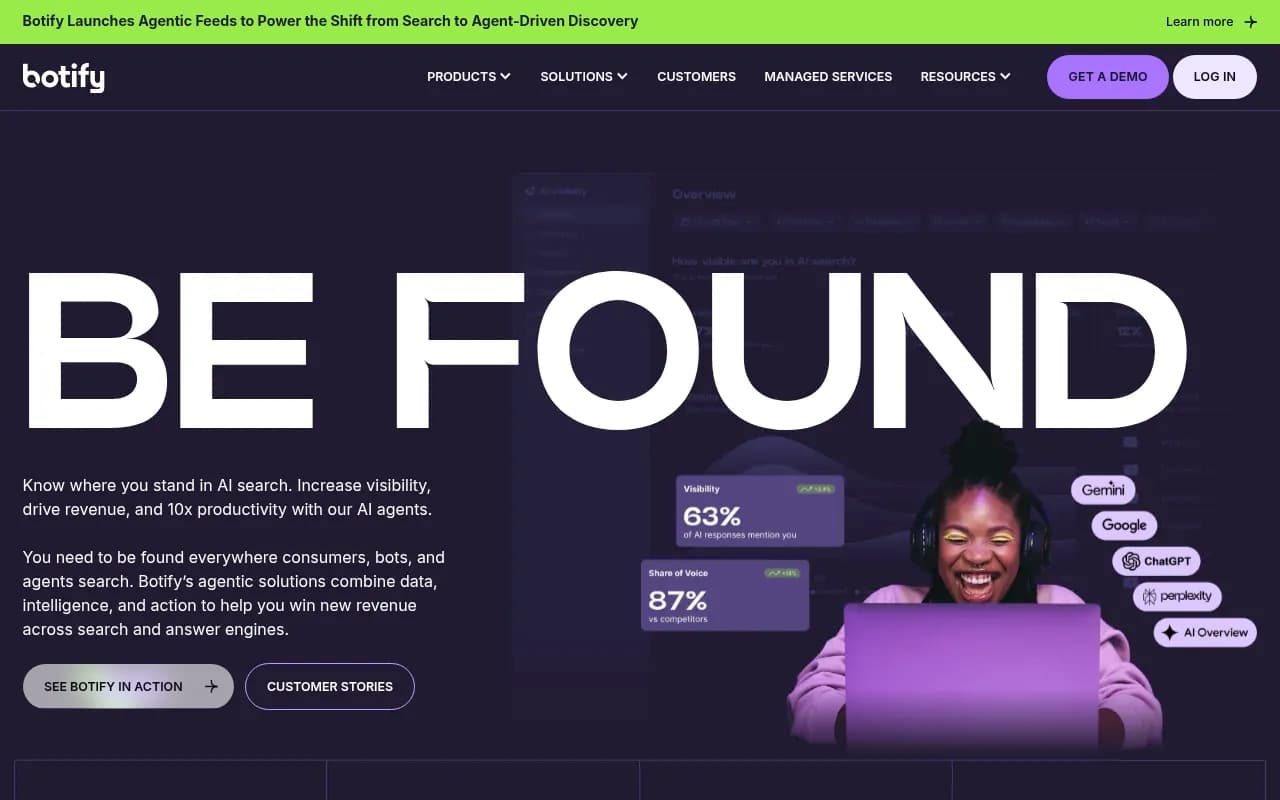
Botify's log analysis is mature — it's been doing this for traditional search crawlers for years, and the same infrastructure now captures AI bot traffic. For large sites with complex architectures (e-commerce, publishing, enterprise), this is genuinely powerful. You can cross-reference AI crawler behavior with your existing crawl data, page performance, and indexing status.
The tradeoff: Botify is expensive and built for enterprise teams. It's not the right fit if you're a mid-market brand or agency looking for a straightforward Profound replacement.
Lumar (formerly Deepcrawl) — technical SEO with growing AI visibility features
Lumar sits in a similar space to Botify — enterprise technical SEO with AI search visibility features being added to the platform. Its crawler analysis is strong, and it's expanding into GEO territory.
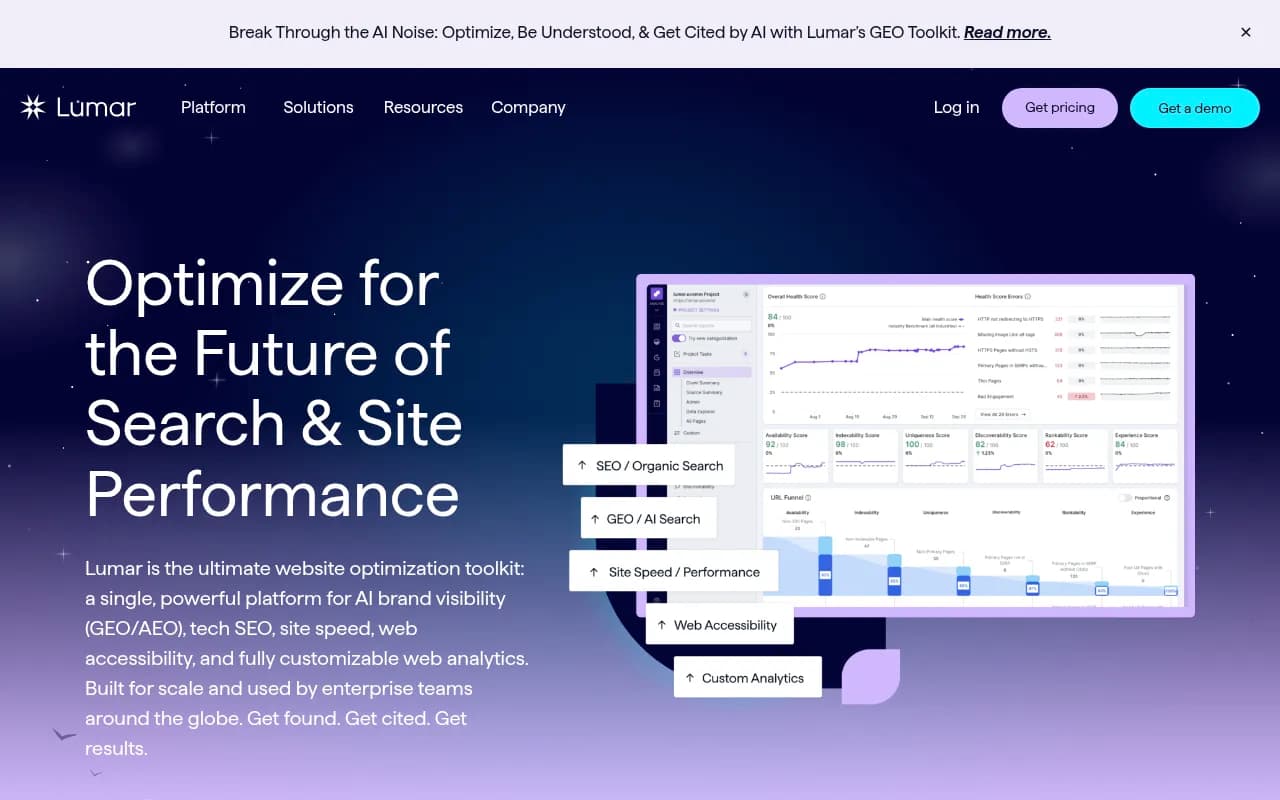
It's a reasonable option if you're already in the Lumar ecosystem and want to extend your technical SEO work into AI visibility. But like Botify, it's not a pure-play GEO tool, and the AI visibility features aren't as deep as dedicated platforms.
Scrunch AI — mid-market option with solid monitoring
Scrunch AI sits closer to the mid-market. It tracks AI visibility across major models and has a cleaner interface than some of the enterprise tools. It doesn't have the same depth of crawler log monitoring as Promptwatch, but it covers the core prompt tracking and brand visibility use cases well.
Worth considering if Profound's pricing is the main issue and you don't specifically need crawler log data.
Otterly.AI — affordable entry-level monitoring
Otterly.AI is the most affordable option in this space and is fine for teams that just need basic AI visibility monitoring. It tracks mentions across ChatGPT, Perplexity, and a handful of other models.
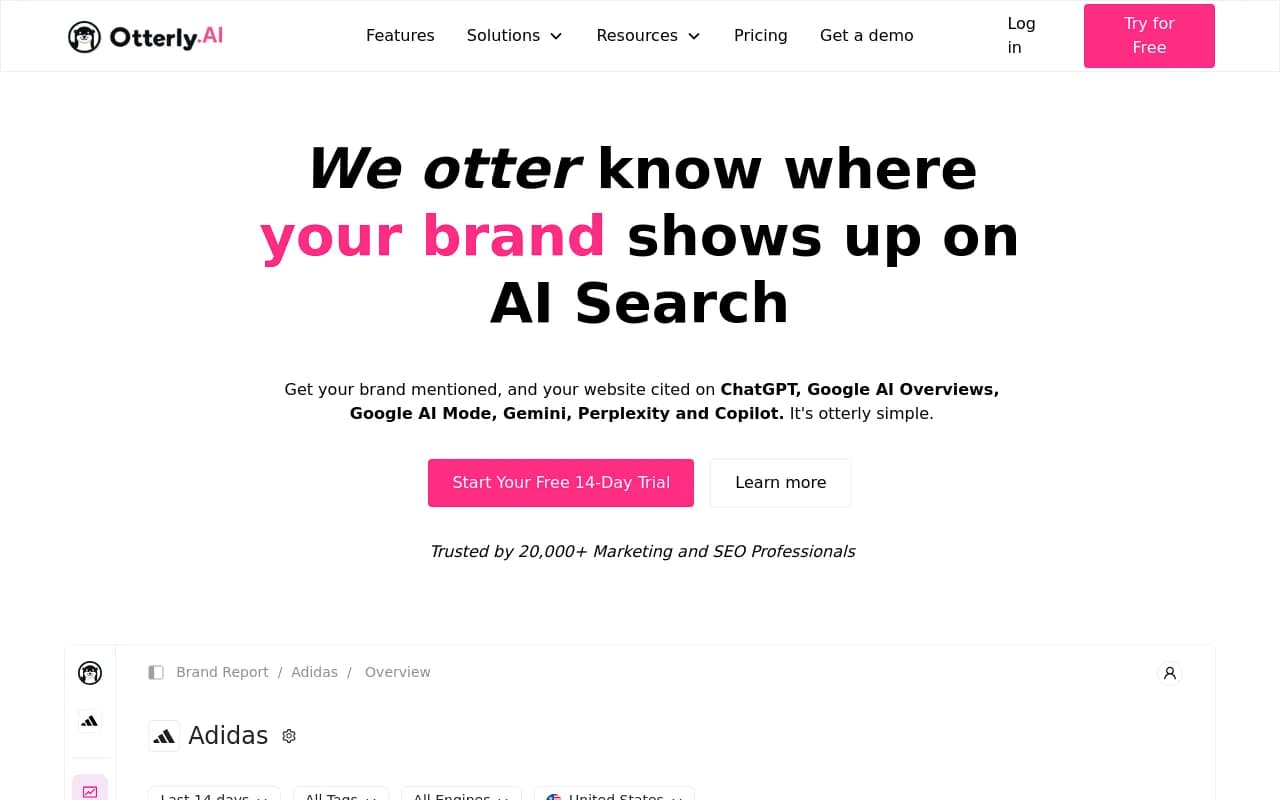
The honest limitation: Otterly.AI is monitoring-only. No crawler logs, no content generation, no gap analysis. If you outgrow "I want to see if my brand appears in AI responses" and start asking "why isn't my content being cited and how do I fix it," Otterly.AI won't help you get there.
Peec AI — clean analytics, limited depth
Peec AI has a clean interface and decent prompt-level analytics. It's often recommended as a Profound alternative for smaller teams because it's easier to use and cheaper.
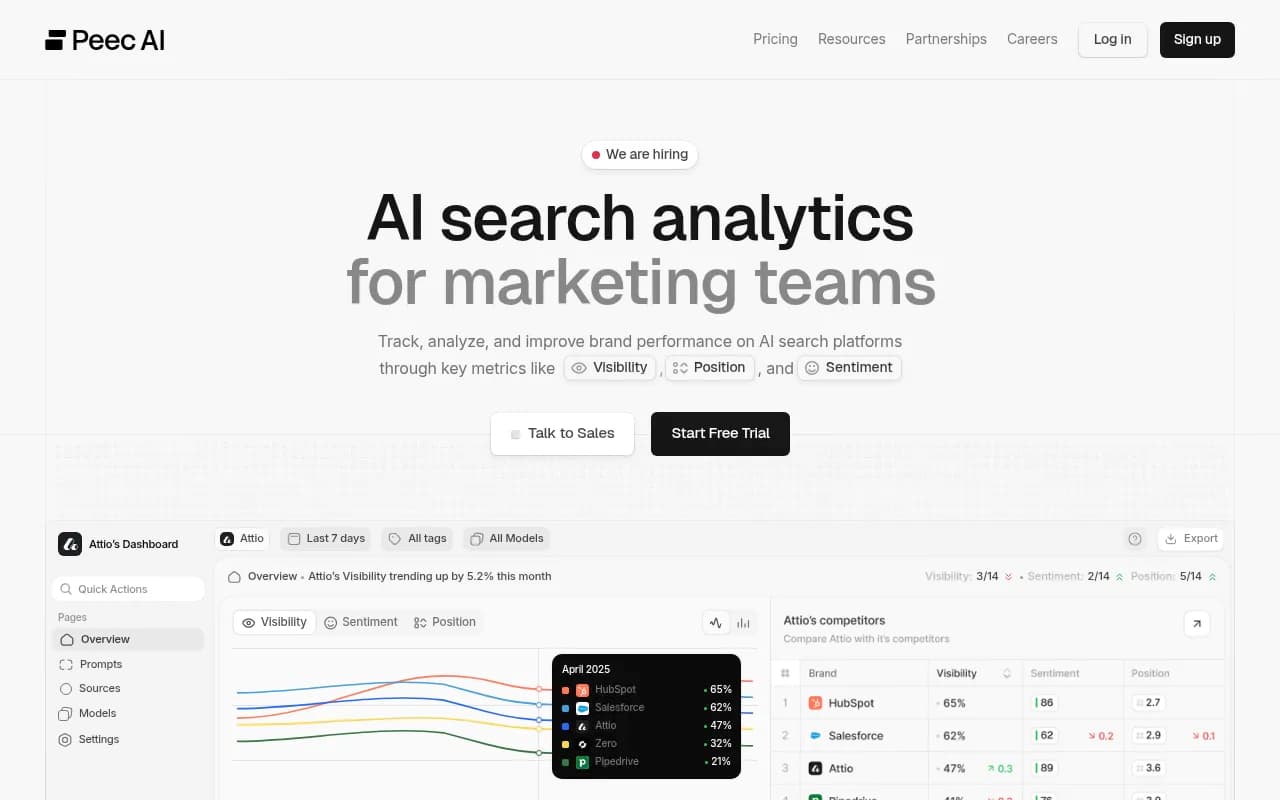
No crawler log monitoring. No content generation. It's a monitoring tool, and a decent one, but it's not solving the same problem as Promptwatch or Botify.
AIclicks — tracking 10+ AI platforms with a recommendations engine
AIclicks is worth mentioning because it queries real user-facing interfaces rather than just APIs, which matters because AI responses in the actual product can differ from API outputs. It tracks 10+ AI platforms and has a built-in recommendations engine. Pricing starts at $59/month.
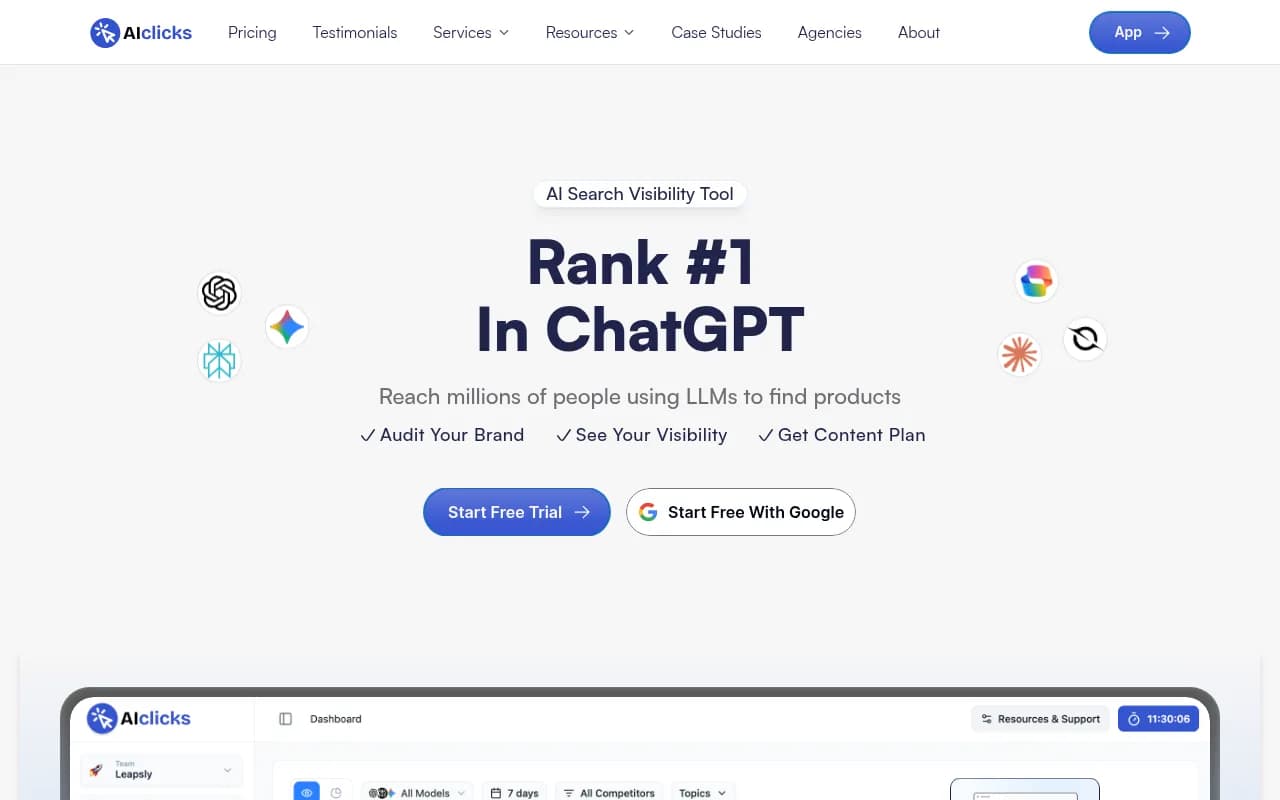
It doesn't have crawler log monitoring, but it's a strong option if you want broader AI model coverage at a lower price point than Profound.
Athena HQ — monitoring-focused, no crawler logs
AthenaHQ is a solid monitoring platform that tracks brand visibility across 8+ AI search engines. It's frequently compared to Profound and is a reasonable alternative for teams that want clean dashboards and prompt tracking.
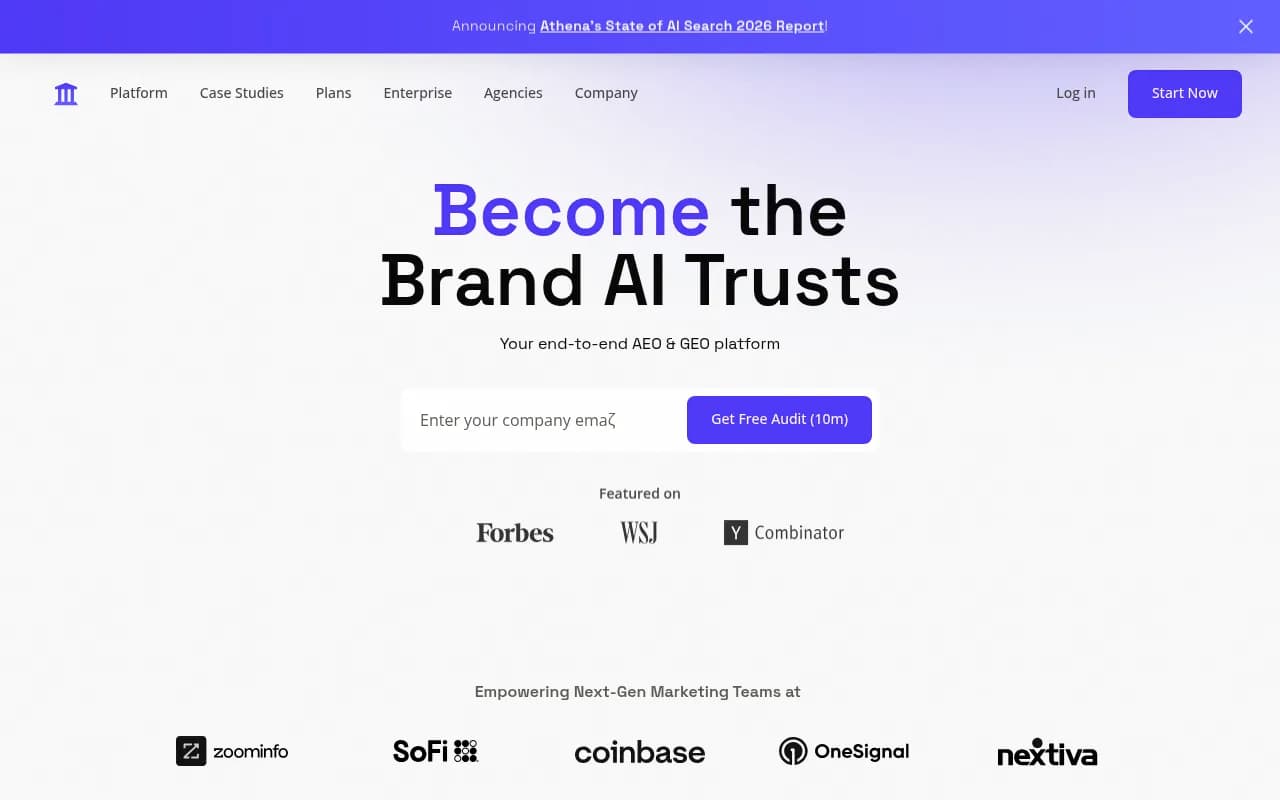
Like most tools in this space, it doesn't offer crawler log monitoring. It's a good fit if monitoring is genuinely all you need.
Comparison table: Profound alternatives with crawler log monitoring
| Tool | Crawler log monitoring | AI models tracked | Content generation | Starting price |
|---|---|---|---|---|
| Promptwatch | Yes (Cloudflare, Fastly, Vercel, server logs, snippet) | 10+ | Yes (Content Agents) | $99/mo |
| Botify | Yes (enterprise log analysis) | Growing | No | Enterprise custom |
| Lumar | Yes (technical SEO focus) | Growing | No | Enterprise custom |
| Profound | No | 5+ | No | $99/mo (ChatGPT only) |
| Scrunch AI | No | 6+ | No | ~$99/mo |
| Otterly.AI | No | 4-5 | No | ~$29/mo |
| Peec AI | No | 4-5 | No | ~$49/mo |
| AIclicks | No | 10+ | Recommendations | $59/mo |
| AthenaHQ | No | 8+ | No | ~$99/mo |
What crawler log data actually tells you
It's worth being concrete about what you can learn from AI crawler logs, because the value isn't always obvious until you see it.
When you connect your site to a crawler log monitoring tool, you start seeing things like:
- GPTBot visited your homepage 47 times last month but only visited your pricing page twice
- ClaudeBot hit a 404 error on your most important comparison page three times in a row
- PerplexityBot crawled your new article within 6 hours of publication, but it took 3 weeks before the article appeared in a Perplexity response
- Your competitor's domain is being crawled 4x more frequently than yours by GPTBot
Each of these is actionable. The 404 error is a quick fix. The crawl-to-citation lag tells you something about content quality or authority. The crawl frequency gap suggests you might need more inbound links or fresher content to signal relevance to AI crawlers.
Without log data, you're guessing. You might notice you're not being cited for a particular topic and assume it's a content gap — but the real issue might be that GPTBot can't even access the page because of a robots.txt misconfiguration.
The gap most tools leave open
Here's the honest picture of this market in 2026: most AI visibility tools are monitoring dashboards. They show you data. They don't help you do anything with it.
Profound is a good example of this. It's well-built and the data is trustworthy, but the workflow stops at "here's where you're invisible." The next step — figuring out what content to create, writing it, publishing it, and tracking whether it actually improved your citations — is entirely on you.
The tools that close this loop are more valuable, even if they cost more. Promptwatch's approach of connecting Answer Gap Analysis to Content Agents to page-level citation tracking is the right architecture for a team that wants to actually move the needle, not just measure it.
How to choose the right tool for your situation
A few practical decision points:
If you need crawler log monitoring specifically, your real options are Promptwatch (best for GEO-focused teams) or Botify/Lumar (best if you're already in an enterprise technical SEO stack). Everything else in this list doesn't offer it.
If Profound's price is the main issue and you just need basic monitoring, Otterly.AI or Peec AI will cover the fundamentals at a fraction of the cost. Just know you're trading depth for affordability.
If you want to go from monitoring to actually improving your AI visibility, you need a platform that connects the data to action. Promptwatch is the most complete option here. AIclicks is worth considering if budget is tight and you want broader model coverage.
If you're an agency managing multiple clients, look at tools with multi-site support and white-label reporting. Promptwatch's agency/enterprise tier covers this. Search Party is another option, though it's more focused on implementation than monitoring.
Search Party
A note on Profound's actual pricing
One thing that comes up repeatedly in reviews: Profound's headline pricing is misleading. The $99/month Starter plan only tracks ChatGPT. Multi-engine tracking starts at the $399/month Growth tier. Full coverage is enterprise-custom.
For a team that wants to track visibility across ChatGPT, Perplexity, Gemini, Claude, and others — which is the minimum useful setup in 2026 — the effective entry price at Profound is $399/month, not $99/month. That changes the comparison significantly.
At $249/month, Promptwatch's Professional plan covers 10 AI models, includes crawler logs, and adds content generation. That's a meaningfully different value proposition.
Bottom line
Crawler log monitoring is still a niche capability in the AI visibility space. Most tools don't offer it, and the ones that do are either enterprise-priced (Botify, Lumar) or part of a broader GEO platform (Promptwatch).
If you're evaluating Profound alternatives specifically because you want to understand what AI bots are doing on your site, Promptwatch is the most practical choice for most teams. It's the only platform that connects crawler log data to prompt tracking, content gap analysis, and content generation in a single workflow — and it's priced accessibly enough that you don't need an enterprise budget to use it.
If crawler logs aren't your priority and you just want better value than Profound for standard AI visibility monitoring, AIclicks, Scrunch AI, or Otterly.AI are all worth a look depending on your budget and the depth of data you need.
The market is moving fast. Tools that were monitoring-only six months ago are adding optimization features. But right now, in mid-2026, the gap between "we show you data" and "we help you act on it" is still wide — and that gap is where the real value lives.