Key takeaways
- Peec AI is a solid monitoring tool for tracking brand visibility across ChatGPT, Perplexity, and Google AI Overviews, with transparent pricing starting around $100/month.
- Its core limitation is that it stops at diagnosis. It shows you where you're invisible but doesn't help you fix it.
- Missing capabilities include content generation, crawler log analysis, Reddit/YouTube tracking, ChatGPT Shopping monitoring, and traffic attribution.
- For teams that just want a dashboard to answer "are we showing up?", Peec AI is reasonable. For teams that want to improve their numbers, it's not enough on its own.
- Platforms like Promptwatch close the loop between monitoring and optimization, which is where most real marketing value lives.
Most Peec AI reviews read like they were written by someone who spent 20 minutes on the pricing page. They list the features, note the price, and call it a day. What they skip is the harder question: does this tool actually help marketing teams improve their AI search visibility, or does it just show you a number and leave you stuck?
I've spent time comparing Peec AI against the broader landscape of GEO platforms, and the honest answer is more nuanced than most reviews admit. Peec AI does some things well. But there are real gaps that will frustrate teams trying to move beyond dashboards and actually fix their citation rates.
Here are nine limitations worth knowing before you commit.
1. It monitors but doesn't optimize
This is the big one, and it shapes everything else on this list.
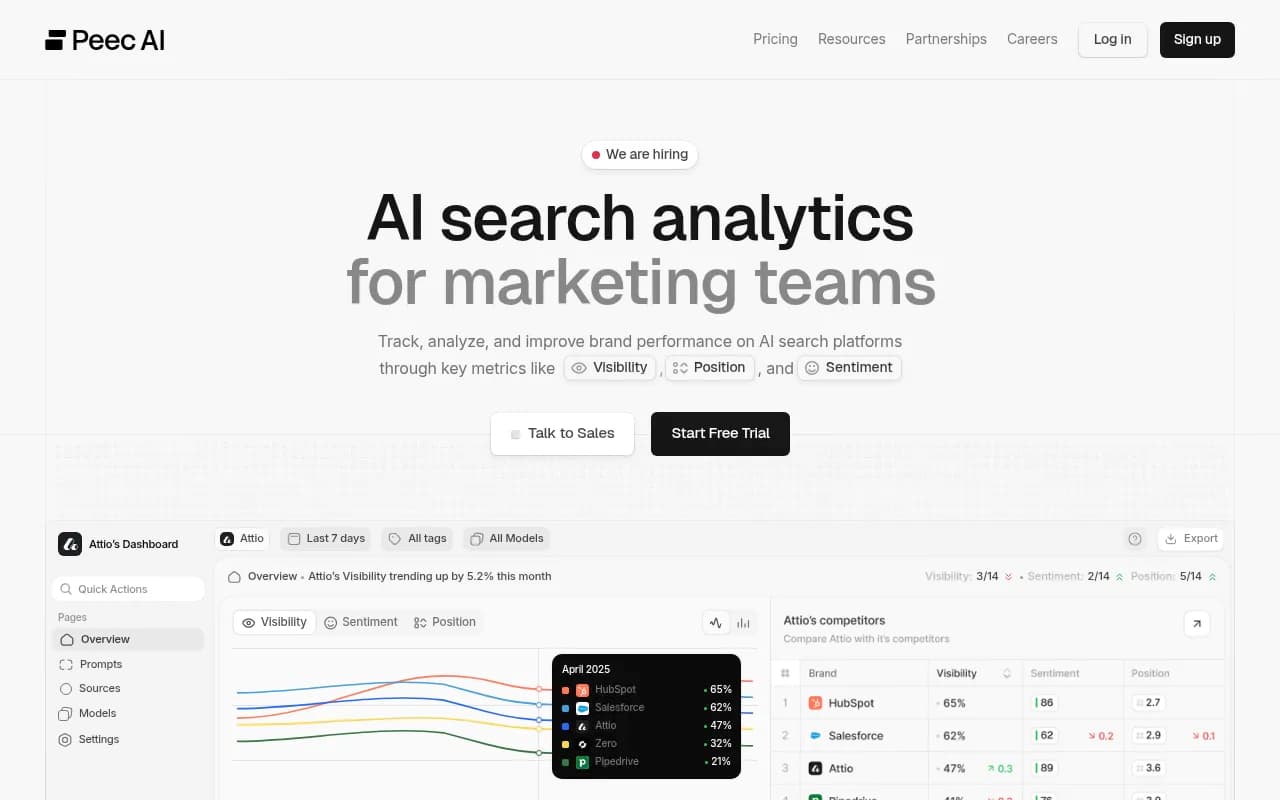
Peec AI tracks how often your brand appears in AI-generated responses. It shows citation frequency, share of voice, and which competitors are getting mentioned when you're not. That's genuinely useful data.
What it doesn't do is help you act on it. There's no content generation, no gap analysis that tells you which specific topics to write about, no briefs, no optimization workflow. You get the "what" without the "so what."
For a marketing team that already has a strong content operation and just needs visibility data to feed into it, that might be fine. But most teams don't have that. They need the monitoring and the execution path in the same place.
2. No answer gap analysis
Related to the above, but specific enough to deserve its own section.
Answer gap analysis is the process of identifying which prompts your competitors are getting cited for that you're not. It's arguably the most valuable thing a GEO platform can do, because it turns abstract "you're not visible enough" data into a concrete content to-do list.
Peec AI doesn't have this. You can see that a competitor has higher share of voice, but you can't drill into exactly which questions they're answering that you're missing. That gap between "we're behind" and "here's what to write to catch up" is where a lot of marketing time gets wasted.
3. No AI content generation
Even if you know what content to write, writing it is still work. Several GEO platforms now include content agents that generate articles, listicles, and comparison pages grounded in actual prompt data and citation analysis. Peec AI has none of this.
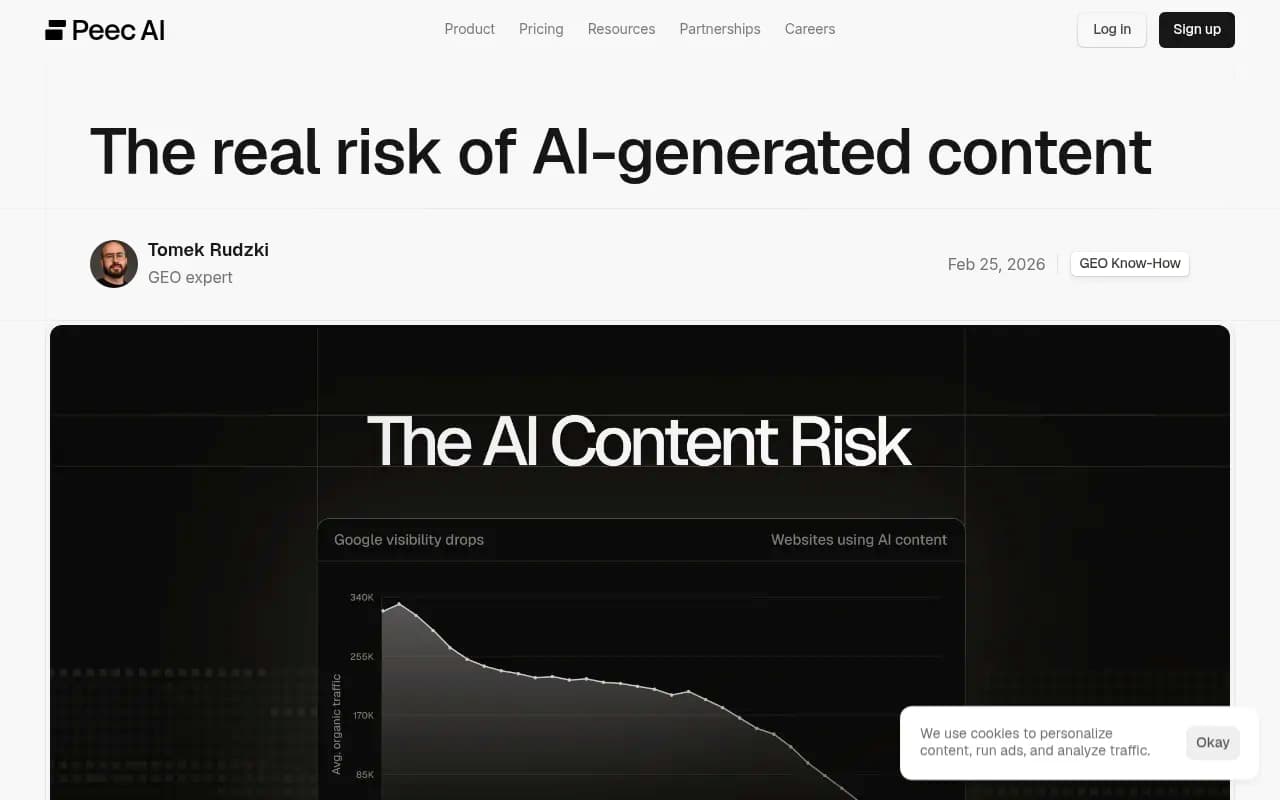
Their own blog has a thoughtful piece on the risks of low-quality AI content, which is a fair point. But there's a difference between warning against generic AI filler and offering no content tooling at all. The better platforms generate content that's specifically engineered to close citation gaps, not just generic SEO articles.
4. No crawler log analysis
This one is underappreciated. When AI models like ChatGPT or Perplexity crawl your website, they leave traces in your server logs. Knowing which pages they read, how often they return, what errors they hit, and when a crawled page actually turns into a citation is enormously useful for diagnosing why your visibility isn't improving.
Peec AI doesn't surface this data. You're essentially flying blind on the technical side of AI discoverability. If your pages are being crawled but not cited, you won't know why.
5. No Reddit or YouTube tracking
This surprises people when they first hear it, but Reddit and YouTube are significant sources for AI citation. When ChatGPT or Perplexity answers a question, they frequently pull from Reddit threads and YouTube videos, not just brand websites. If a Reddit thread is actively hurting your brand's narrative, or if a YouTube video is driving citations to a competitor, you'd want to know.
Peec AI doesn't track either. It's focused on your own domain's visibility, which misses a meaningful slice of how AI models actually form their answers.
6. No ChatGPT Shopping or entity tracking
ChatGPT's shopping recommendations and entity mentions are a growing visibility channel, especially for consumer brands and B2B software companies. When someone asks ChatGPT for the best tool in your category, the product carousel that appears is increasingly influential.
Peec AI doesn't monitor this. If your brand is being recommended (or excluded) from ChatGPT's shopping results, you won't see it in the platform.
7. Limited prompt intelligence
Peec AI lets you set up prompts to monitor, but the depth of prompt-level data is limited. There's no volume estimation to tell you how many people are actually asking a given question, no difficulty scoring to help you prioritize winnable prompts, and no query fan-out analysis that shows how one prompt branches into related sub-queries.
This matters because not all prompts are equal. A team with 50 prompts to monitor needs to know which ones to focus on first. Without volume and difficulty data, you're essentially guessing at priority.
8. No traffic attribution
Knowing you're cited in an AI response is one thing. Knowing that citation drove a visit, a lead, or a conversion is another. Traffic attribution connects your AI visibility to actual business outcomes.
Peec AI doesn't have this. You can track your citation rate going up, but you can't connect that to pipeline or revenue. For marketing teams that need to justify budget, that's a real problem. "We're getting cited more" is a harder sell to leadership than "our AI visibility drove 340 qualified visits last month."
9. The pricing model doesn't scale well for agencies
Peec AI has updated its pricing a few times, and to their credit, they've been transparent about the reasoning. But the structure still creates friction for agencies managing multiple client accounts. The per-seat and per-site constraints add up quickly, and there's no native multi-client reporting workflow.
Agencies need to be able to compare AI visibility across clients, generate client-facing reports, and manage prompts at scale. Peec AI's pricing and architecture weren't really built for that use case.
How Peec AI compares to the broader market
To be fair to Peec AI, it's not alone in these limitations. Most of the monitoring-only tools in this space share similar gaps.
| Capability | Peec AI | Otterly.AI | Profound | Promptwatch |
|---|---|---|---|---|
| AI visibility monitoring | Yes | Yes | Yes | Yes |
| Answer gap analysis | No | No | Partial | Yes |
| AI content generation | No | No | No | Yes |
| Crawler log analysis | No | No | No | Yes |
| Reddit/YouTube tracking | No | No | No | Yes |
| ChatGPT Shopping tracking | No | No | No | Yes |
| Traffic attribution | No | No | Partial | Yes |
| Prompt volume/difficulty | No | No | Partial | Yes |
| Multi-language/region | Partial | No | Yes | Yes |
| Agency multi-client support | Limited | Limited | Yes | Yes |
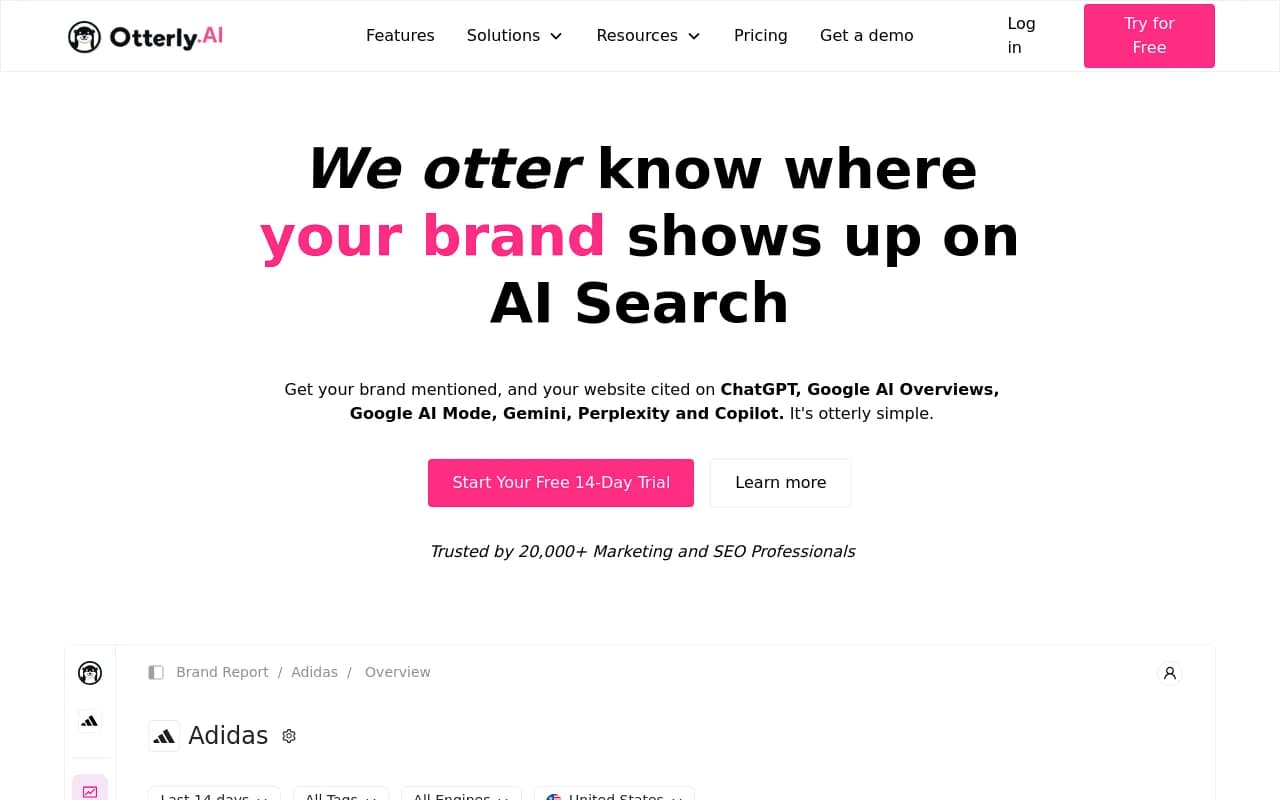
The pattern is pretty clear. Monitoring-only tools like Peec AI and Otterly.AI give you data. Platforms built around optimization give you data plus a path to act on it.
Who Peec AI actually works for
None of this means Peec AI is a bad tool. It's a reasonable choice for a specific type of user.
If you're a smaller brand or early-stage startup that just wants to answer "are we showing up in AI search at all?", Peec AI's entry-level pricing and clean interface make it accessible. If you already have a strong content team and a clear optimization workflow, the monitoring data can feed into that process.
Where it falls short is for marketing teams that need to move the needle, not just measure it. If your goal is to actually improve citation rates, close competitive gaps, and connect AI visibility to revenue, you'll hit the ceiling of what Peec AI can do fairly quickly.
What to look for in a Peec AI alternative
If you've read this far and you're reconsidering, here's what to actually evaluate:
Can it tell you what content to create? Not just that you're invisible, but which specific prompts and topics to target. This is the difference between a dashboard and a strategy.
Does it generate content, or just brief it? Some platforms stop at briefs. The better ones generate full articles grounded in real citation data, then track whether those articles actually get cited.
Can you see the full crawl-to-citation journey? Crawler logs tell you whether AI models are even reading your pages, which is often the first thing to fix.
Does it track offsite signals? Reddit, YouTube, third-party listicles, and brand mentions outside your own domain all influence AI citations. A tool that only looks at your website is missing part of the picture.
Can you connect visibility to revenue? If you can't show that your AI search work is driving pipeline, it's hard to justify the investment.
Promptwatch is the platform that checks all of these boxes. It's built around a full optimization loop: find the gaps, generate content to fill them, track the results. The crawler log analysis and traffic attribution features in particular address the two biggest blind spots that tools like Peec AI leave open.

There are also other tools worth evaluating depending on your specific needs:
The bottom line
Peec AI is a monitoring tool. It does monitoring reasonably well. But in 2026, monitoring alone isn't a GEO strategy. It's a starting point.
The teams that are actually winning in AI search aren't just tracking their citation rates. They're running a continuous loop: identify gaps, create content to fill them, watch the citations come in, find the next gap. That loop requires more than a dashboard.
If you're evaluating Peec AI, be honest with yourself about which phase you're in. If you need a quick, affordable way to get a baseline read on your AI visibility, it's a reasonable place to start. If you need to actually improve that visibility and connect it to business outcomes, you'll want a platform built for optimization, not just observation.