Key takeaways
- ChatGPT's Shopping Research feature, launched in late 2025, now influences product decisions across hundreds of millions of users -- and most brands have no idea whether they're appearing in those recommendations or not.
- Tracking ChatGPT shopping visibility is a different problem than traditional SEO rank tracking. You need tools built specifically for AI-generated responses, not keyword positions.
- Most monitoring tools show you data but stop there. A smaller number go further and help you act on what they find.
- Promptwatch is the only platform in this list with dedicated ChatGPT Shopping tracking, crawler logs, and content generation in one place.
- The right tool depends on your use case: enterprise brands need depth and action; smaller teams may be fine with lighter monitoring.
Why ChatGPT shopping recommendations matter now
OpenAI launched Shopping Research in November 2025, and it changed the game faster than most marketing teams noticed. Instead of searching Google and clicking through product pages, users now type things like "find me the quietest cordless vacuum for a small apartment" and get a curated buyer's guide back -- complete with product comparisons, tradeoffs, and specific recommendations.
According to Profound's analysis of 260 million prompt-level results across 13,000 product categories (September 2025 through January 2026), shopping-related prompts showed some of the highest consistency scores in ChatGPT's output -- meaning the same brands tend to get recommended repeatedly. That's good news if you're one of them. It's a problem if you're not.
G2's 2025 Buyer Behavior Report found that generative AI chatbots are now the #1 influence over vendor shortlists, ahead of review sites. That's a significant shift. And unlike Google, where you can at least check your ranking for a keyword, ChatGPT shopping recommendations are conversational, contextual, and largely invisible to brands that aren't actively tracking them.
So which tools actually help? Here's an honest look at five of them.
What to look for in a ChatGPT shopping tracker
Before getting into the tools, it's worth being clear about what "tracking ChatGPT shopping recommendations" actually requires:
- The tool needs to send real shopping-style prompts to ChatGPT (not just generic brand queries) and capture the full response, including product carousels and recommendation lists.
- It should track your brand's presence across multiple prompt variations -- because ChatGPT's answers vary based on phrasing.
- Ideally, it surfaces competitor visibility too, so you know who's winning the recommendations you're missing.
- The best tools go a step further and help you understand why you're not appearing and what to do about it.
Most tools in the GEO/AI visibility space were built before ChatGPT Shopping existed. Some have added basic tracking. A few have built it properly.
The 5 tools
1. Promptwatch
Promptwatch is the most complete option for brands that take ChatGPT Shopping visibility seriously. It has dedicated ChatGPT Shopping tracking built in -- not bolted on -- which means it captures product recommendation carousels, entity mentions, and shopping-specific prompt responses separately from general brand monitoring.

What sets it apart is what happens after the tracking. Most tools show you a dashboard and leave you to figure out the rest. Promptwatch's Answer Gap Analysis shows you the specific prompts where competitors are getting recommended and you're not. Then Content Agents generate articles, product comparisons, and briefs grounded in that gap data -- content designed to close the visibility gap, not just describe it.
The crawler logs are also genuinely useful here. You can see when ChatGPT's crawlers are hitting your product pages, which pages they're reading, and when those pages start generating citations. For e-commerce and product-heavy brands, that feedback loop is hard to replicate elsewhere.
Pricing starts at $99/month for the Essential plan (1 site, 50 prompts). The Professional plan at $249/month adds crawler logs and multi-location tracking, which is where the shopping tracking really gets useful.
Best for: Brands and agencies that want to track ChatGPT Shopping visibility and actually do something about it.
2. Profound AI
Profound has done serious research on ChatGPT shopping behavior -- their 260 million prompt analysis is one of the most cited data sets in the GEO space right now. The platform itself is built for enterprise brands and has strong prompt tracking capabilities across multiple AI models.
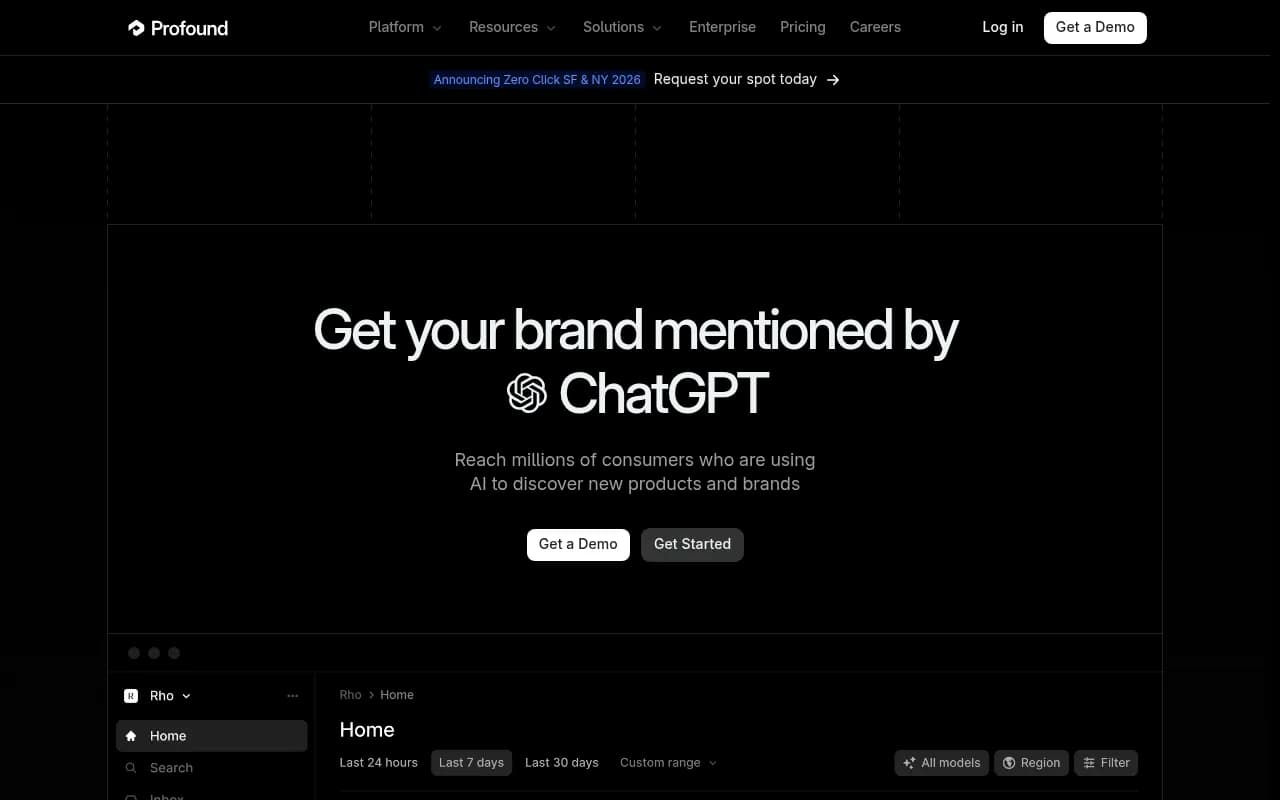
Where Profound is strong: prompt volume data, category-level visibility analysis, and competitive benchmarking. Their shopping-specific data is genuinely impressive in depth. Where it's weaker: content generation and optimization are not core to the product. You get excellent visibility into the problem; the solution is largely left to your team.
Pricing is enterprise-tier and not publicly listed, which tells you something about the target customer.
Best for: Enterprise brands with dedicated content teams who need deep shopping visibility data and can act on it independently.
3. Otterly.AI
Otterly is one of the more accessible entry points into AI visibility monitoring. It tracks brand mentions across ChatGPT, Perplexity, and other models, and the interface is clean enough that non-technical marketers can use it without much friction.

For ChatGPT Shopping specifically, Otterly covers the basics: you can set up shopping-related prompts and track whether your brand appears. What it doesn't do is give you the depth of prompt variation, competitor heatmaps, or the action layer that more complete platforms offer. It's a monitoring tool, and it's honest about that.
If you're a smaller brand or agency just getting started with AI visibility tracking and want to understand your baseline before committing to a larger platform, Otterly is a reasonable starting point.
Best for: Small teams and agencies that want affordable, straightforward ChatGPT monitoring without complex setup.
4. Scrunch AI
Scrunch AI positions itself as an AI search optimization platform with coverage across ChatGPT, Claude, Perplexity, and others. It has content optimization features alongside its monitoring capabilities, which puts it in a more complete category than pure trackers.
For shopping recommendations specifically, Scrunch tracks brand visibility in AI responses and provides some competitor comparison. The content optimization side is more developed than most monitoring-only tools, though it doesn't reach the depth of Promptwatch's Content Agents or Answer Gap Analysis.
It's a reasonable mid-tier option for brands that want more than basic monitoring but aren't ready for enterprise pricing.
Best for: Mid-market brands that want monitoring plus basic content optimization in one tool.
5. LLM Pulse
LLM Pulse takes a more analytics-focused approach. It tracks brand visibility across ChatGPT and other models, with a particular emphasis on citation analysis -- which sources AI models are pulling from when they make recommendations.
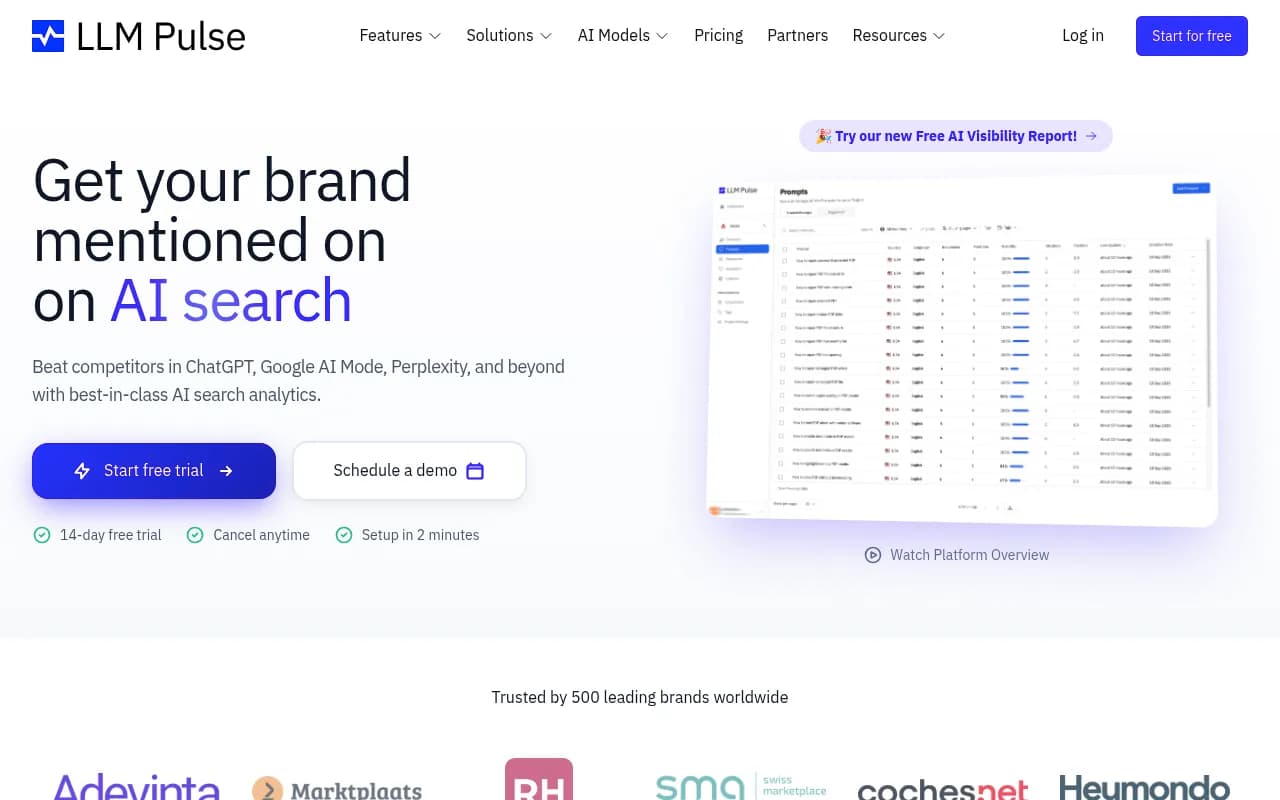
For ChatGPT Shopping, understanding citation sources is actually quite useful. If ChatGPT is recommending a competitor based on a specific review site or Reddit thread, knowing that tells you where to focus your offsite presence. LLM Pulse surfaces some of that source-level data, which is a different angle than most tools take.
The platform is more analytics-heavy than action-oriented, so it works best alongside a content strategy rather than as a standalone solution.
Best for: Brands and SEOs who want citation-level intelligence to inform their offsite content strategy.
Side-by-side comparison
| Tool | ChatGPT Shopping tracking | Competitor visibility | Content generation | Crawler logs | Pricing |
|---|---|---|---|---|---|
| Promptwatch | Dedicated feature | Yes, with heatmaps | Yes (Content Agents) | Yes | From $99/mo |
| Profound AI | Strong (enterprise) | Yes | No | No | Enterprise (custom) |
| Otterly.AI | Basic | Limited | No | No | Affordable |
| Scrunch AI | Yes | Yes | Basic | No | Mid-tier |
| LLM Pulse | Yes | Yes | No | No | Mid-tier |
How ChatGPT shopping recommendations actually work
It's worth understanding the mechanics before you start tracking. When a user asks ChatGPT a shopping question, the model doesn't just pull from its training data. It runs web searches, pulls from product databases, reviews third-party sources, and synthesizes a recommendation based on relevance to the user's query.
A few things influence whether your brand appears:
- Whether your product pages are crawlable and structured clearly enough for AI crawlers to understand
- Whether third-party sources (review sites, Reddit threads, YouTube videos, comparison articles) mention your brand in relevant contexts
- Whether your content answers the specific questions users are asking in shopping prompts
The HubSpot article on ChatGPT product recommendations makes a useful point: ChatGPT ranks items by relevance, not by paid placement. That means the path to visibility is content and authority, not ad spend.
This is why tools that only monitor visibility are only half the solution. Knowing you're not appearing in shopping recommendations for "best noise-cancelling headphones under $200" is useful. Knowing which content gaps are causing that absence, and having a way to fill them, is the actual fix.
What most brands are getting wrong
The most common mistake is treating ChatGPT Shopping like a Google ranking problem. It's not. You can't just optimize a product page title and expect to appear. The AI is synthesizing information from across the web, so your visibility depends on your entire content footprint -- including offsite mentions, review coverage, and how well your content answers conversational shopping queries.
A few practical things that actually move the needle:
- Create content that answers specific shopping questions, not just product descriptions. "Best X for Y use case" articles, honest comparisons, and FAQ-style content tend to get cited.
- Monitor which third-party sources ChatGPT is pulling from for your category. If it's consistently citing a specific review site or subreddit, that's where you need a presence.
- Track prompt variations, not just one query. ChatGPT's recommendations can differ significantly based on how a question is phrased. A tool that only tracks one version of a prompt will miss a lot.
- Pay attention to your crawler logs. If ChatGPT's crawlers aren't hitting your product pages, no amount of content optimization will help.
Which tool should you actually use?
If you're a brand or agency that wants to take ChatGPT Shopping visibility seriously in 2026, the honest answer is that most tools will show you the problem but not help you solve it. Promptwatch is the exception -- it's the only platform here that connects shopping prompt tracking to content gap analysis to actual content generation, with crawler logs to close the loop.
For brands with large internal content teams and enterprise budgets, Profound AI's depth of shopping data is worth considering alongside a separate content workflow. For smaller teams just getting started, Otterly.AI is a low-friction way to understand your baseline before committing to a larger platform.
The category is moving fast. ChatGPT Shopping launched less than a year ago and is already influencing purchase decisions at scale. The brands that build tracking and optimization workflows now will have a meaningful head start over those that wait until it's obvious.