Key takeaways
- Most GEO platforms stop at monitoring -- they show you where you're invisible but don't help you fix it.
- Promptwatch is the only platform in this comparison that covers the full loop: gap analysis, AI content generation, crawler logs, and traffic attribution in one place.
- Profound is the strongest choice for enterprise teams that need deep prompt research and autonomous agents, but it comes at a higher price.
- Relixir combines monitoring with content generation and is worth a look for mid-market teams that want an all-in-one workflow without Promptwatch's price.
- Qwairy is the newest entrant and the most limited in scope -- useful for basic visibility checks, not serious optimization.
AI search is no longer a side channel. ChatGPT alone now handles roughly 20% of global search traffic, and AI-referred visitors convert at three to nine times the rate of traditional organic traffic according to multiple third-party studies. If your brand isn't being cited in AI answers, you're losing buyers before they ever land on your site.
That's why the GEO (Generative Engine Optimization) platform market has exploded. There are now more than 20 tools claiming to help you "win in AI search." But most of them are dashboards that show you data and leave you to figure out what to do with it. A handful actually help you act on what they find.
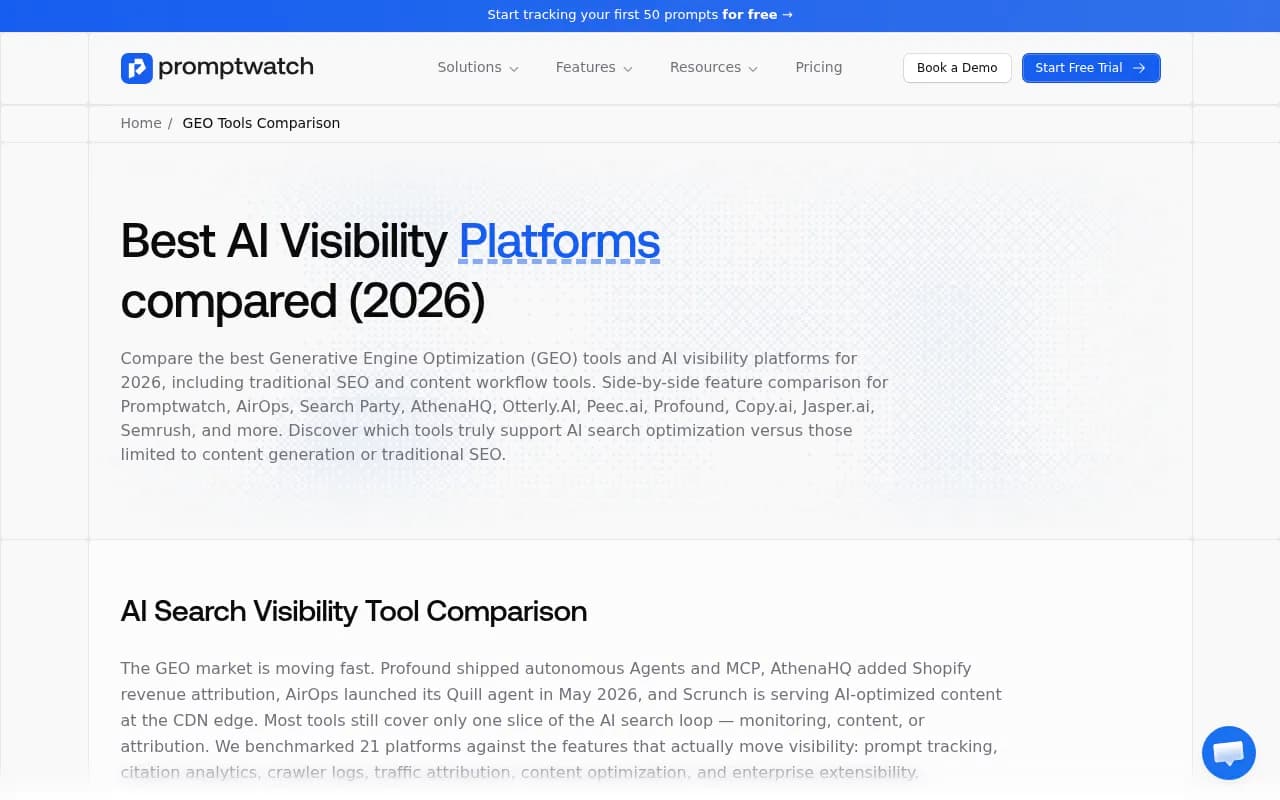
This guide focuses on four platforms that come up most often in 2026 buying conversations: Qwairy, Promptwatch, Profound, and Relixir. They're not all the same. Some are built for monitoring, some for content, some for both. Here's what each one actually does -- and which one is worth your money.
What separates a monitoring tool from an optimization platform
Before comparing features, it's worth being clear about what "GEO platform" actually means, because vendors use the term loosely.
A monitoring tool tracks how often your brand appears in AI responses. It gives you share-of-voice metrics, citation counts, and sentiment scores. That's useful data. But it doesn't tell you what to do next, and it definitely doesn't do anything for you.
An optimization platform does the monitoring AND helps you close the gaps. It identifies which prompts your competitors are winning that you're not, generates content designed to fill those gaps, and then tracks whether that content starts getting cited. The loop is: find the gap, create the content, measure the result.
Most tools in this market are still monitoring-only. That's the honest truth. The ones that have moved into optimization are more expensive, but they're the ones that actually move your rankings.
The four platforms at a glance
Qwairy
Qwairy is a newer GEO platform focused on AI search visibility tracking. It monitors how your brand appears across major LLMs and provides share-of-voice reporting. The interface is clean and approachable, which makes it a reasonable starting point for teams new to AI visibility.

What Qwairy does well: it's accessible and doesn't require a steep learning curve. For a small team that just wants to start tracking brand mentions in ChatGPT and Perplexity, it gets the job done.
What it doesn't do: there's no content generation, no crawler logs, no answer gap analysis, and no traffic attribution. You can see that you're invisible for a prompt, but you're on your own to figure out why and what to do about it. For teams that want to actually improve their AI rankings rather than just measure them, Qwairy runs out of road quickly.
Promptwatch
Promptwatch is the most complete platform in this comparison. It covers monitoring, gap analysis, content generation, crawler logs, and traffic attribution -- all in one place. More than 1,480 brands and agencies use it, including Booking.com and Center Parcs.

The core value is what Promptwatch calls the action loop: find the gaps (Answer Gap Analysis shows exactly which prompts competitors rank for that you don't), create content to fill them (Content Agents generate articles and briefs grounded in real prompt data), and track the results (page-level visibility tracking shows which pages are being cited, by which models, and how often).
A few capabilities that stand out versus the rest of this field:
- AI Crawler Logs show you in real time which pages ChatGPT, Claude, Perplexity, and other crawlers are reading, what errors they hit, and when a page moves from "crawled" to "cited." Most competitors don't have this at all.
- Prompt Intelligence gives you volume estimates and difficulty scores for each prompt, so you can prioritize the ones worth chasing.
- Reddit and YouTube Insights surface discussions that directly influence AI recommendations -- a channel most tools ignore.
- ChatGPT Shopping Tracking monitors when your brand appears in product recommendations and shopping carousels.
Pricing starts at $99/month for one site and 50 prompts. The Professional plan at $249/month adds crawler logs, state/city tracking, and 150 prompts. There's a free trial.
Profound
Profound (also listed as Profound AI in some catalogs) is an enterprise-grade AI visibility platform with a strong focus on prompt research and, more recently, autonomous agents. It's one of the more mature players in the space and has shipped meaningful features in 2026, including MCP integration and autonomous optimization agents.
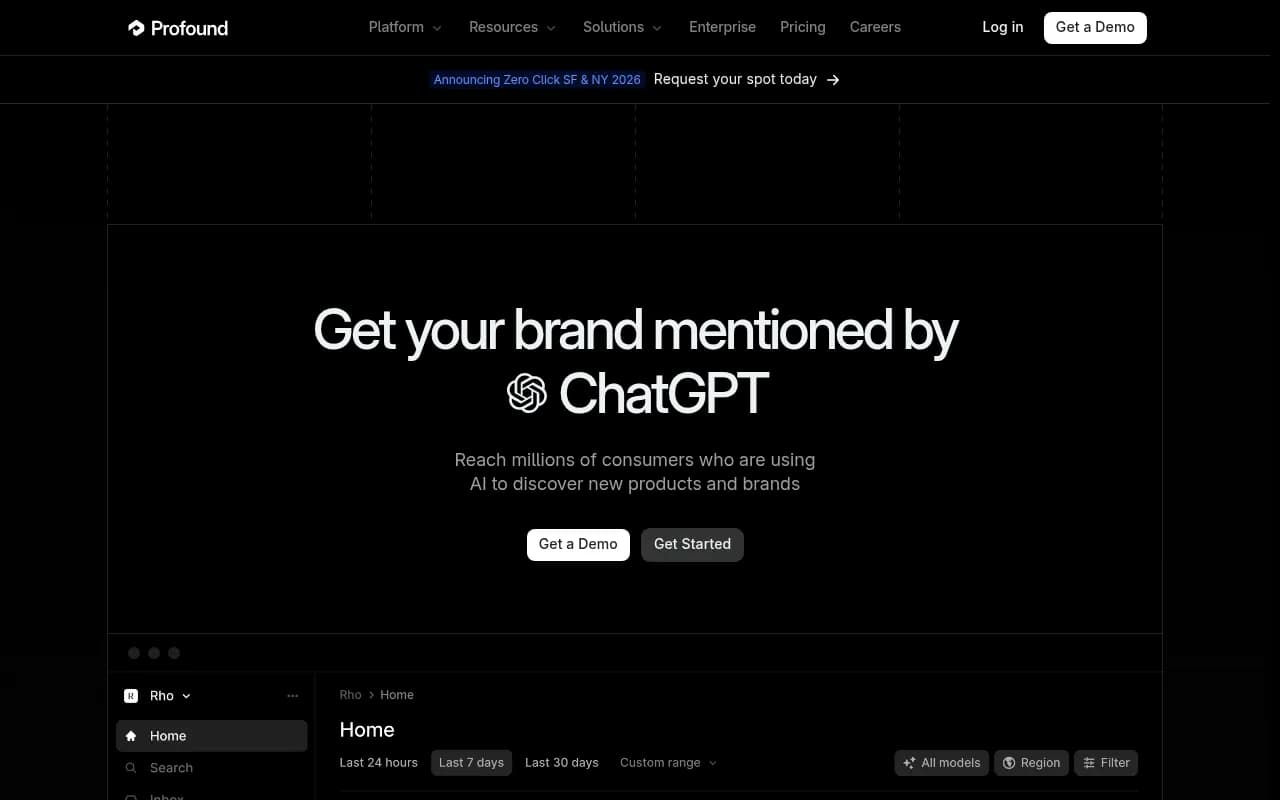
Profound's strength is depth. For enterprise teams that need to understand the full landscape of prompts in their category -- what's being asked, how competitors are positioned, which sources AI models are drawing from -- Profound's research capabilities are hard to beat. The autonomous agents can take some optimization actions without manual intervention, which is genuinely useful at scale.
The tradeoffs: Profound is more expensive than most alternatives, and it doesn't have Reddit or YouTube tracking. ChatGPT Shopping monitoring is also absent. For a Fortune 500 brand with a dedicated AI search team, those gaps might not matter. For a mid-market marketing team trying to get more from a limited budget, they do.
Relixir
Relixir positions itself as an all-in-one GEO platform with both monitoring and content generation. It's a legitimate competitor to Promptwatch in the mid-market, particularly for teams that want a single tool to track visibility and produce AI-optimized content.
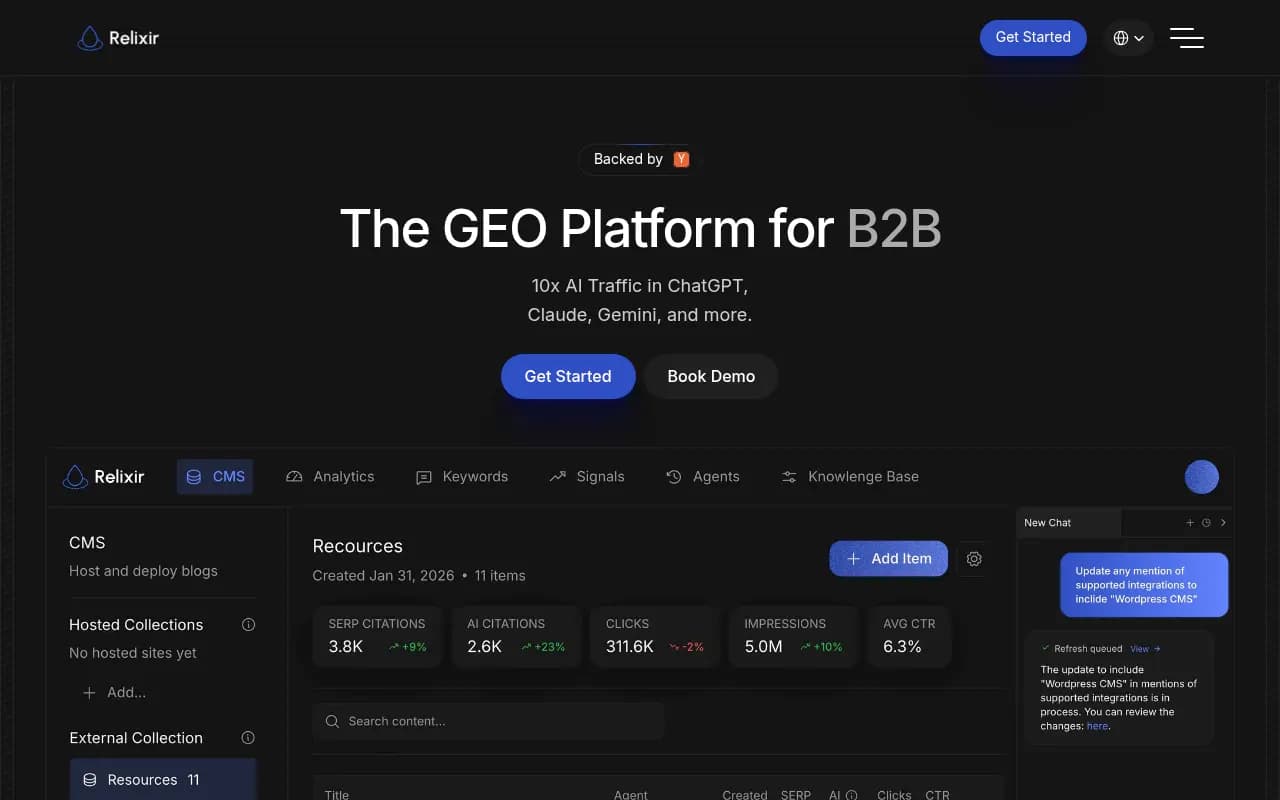
Relixir's content generation is solid. It can produce articles and briefs informed by visibility data, which is more than most monitoring-only tools offer. The analytics layer covers the main LLMs and gives you share-of-voice and citation tracking.
Where it falls short compared to Promptwatch: no AI crawler logs, less granular page-level tracking, and no Reddit/YouTube insights. The traffic attribution layer is also thinner. It's a capable tool, but it covers fewer parts of the optimization loop.
Side-by-side feature comparison
| Feature | Qwairy | Promptwatch | Profound | Relixir |
|---|---|---|---|---|
| AI models tracked | 4-5 | 10+ | Up to 10 | 5-7 |
| Brand mention monitoring | Yes | Yes | Yes | Yes |
| Share-of-voice reporting | Yes | Yes | Yes | Yes |
| Answer gap analysis | No | Yes | Partial | Partial |
| Content generation | No | Yes | No | Yes |
| AI crawler logs | No | Yes | No | No |
| Page-level citation tracking | No | Yes | Partial | Partial |
| Traffic attribution | No | Yes | Partial | No |
| Reddit/YouTube insights | No | Yes | No | No |
| ChatGPT Shopping tracking | No | Yes | No | No |
| Prompt volume/difficulty scores | No | Yes | Partial | No |
| Autonomous optimization agents | No | No | Yes | No |
| Multi-language/region | Limited | Yes | Yes | Limited |
| Starting price | Low | $99/mo | $99/mo | Mid-range |
| Free trial | Yes | Yes | Yes | Yes |
How to think about which one is right for you
The honest answer is that the right tool depends on what stage you're at and what you're trying to accomplish.
If you're just starting out and want to understand whether AI models are mentioning your brand at all, Qwairy or a similarly lightweight tool is a reasonable first step. You'll get basic visibility data without committing to a serious budget.
If you're past the "are we visible?" question and into "how do we improve?", you need a platform that closes the loop. That's where Promptwatch and Profound separate themselves from the pack.
Profound makes sense if you're an enterprise team with a dedicated AI search function, a large budget, and a need for deep prompt research and autonomous agents. The MCP integration and agent capabilities are genuinely ahead of the market for that use case.
Promptwatch makes sense for most other teams: marketing departments, SEO teams, and agencies that need the full optimization loop without enterprise pricing. The combination of gap analysis, content generation, crawler logs, and traffic attribution in one platform is hard to replicate by stitching together cheaper tools. The fact that it tracks 10+ AI models -- including Google AI Overviews, Google AI Mode, ChatGPT, Claude, Perplexity, Gemini, Grok, DeepSeek, Copilot, and Mistral -- means you're not flying blind on any major channel.
Relixir is worth evaluating if you want monitoring plus content generation but find Promptwatch's pricing a stretch. It won't give you crawler logs or Reddit insights, but it covers the basics of the optimization loop at a lower entry point.
The part most platforms don't talk about: crawler logs
One capability that genuinely separates Promptwatch from every other tool in this comparison is AI crawler logs.
When ChatGPT or Perplexity crawls your site, they leave traces. Promptwatch captures those traces in real time: which pages were read, what errors were encountered, how often crawlers return, and -- critically -- when a page moves from "crawled" to "cited." This is the missing link between publishing content and seeing it appear in AI answers.
Without this data, you're guessing. You publish a new article, wait a few weeks, and check whether your visibility score improved. With crawler logs, you can see exactly when an AI crawler read the page, whether it had any issues, and track the timeline from publish to citation.
No other platform in this comparison offers this. It's the kind of feature that sounds technical but has very practical implications: you stop wondering why a page isn't being cited and start fixing the actual problem.
What the research says about the broader market
The GEO platform market has more than 20 serious players in 2026, and the feature gap between leaders and the rest is widening. A comparison of 12+ platforms published on Promptwatch's site rated it as the only "Leader" across all categories -- monitoring, content, attribution, and enterprise extensibility.

The broader market research from multiple third-party sources consistently shows the same pattern: most tools cover monitoring well, fewer cover content optimization, and almost none cover the full loop from gap identification to traffic attribution. That gap is exactly what separates a tool that tells you about your problem from one that helps you solve it.
A note on the tools this comparison doesn't cover
This guide focuses on four platforms, but the GEO space has several other tools worth knowing about depending on your needs.
For agencies managing multiple clients, Search Party and Slate are worth evaluating alongside Promptwatch.
Search Party
For teams already deep in the Semrush ecosystem, the Semrush AI Toolkit is a natural starting point, though it uses fixed prompts and lacks traffic attribution.
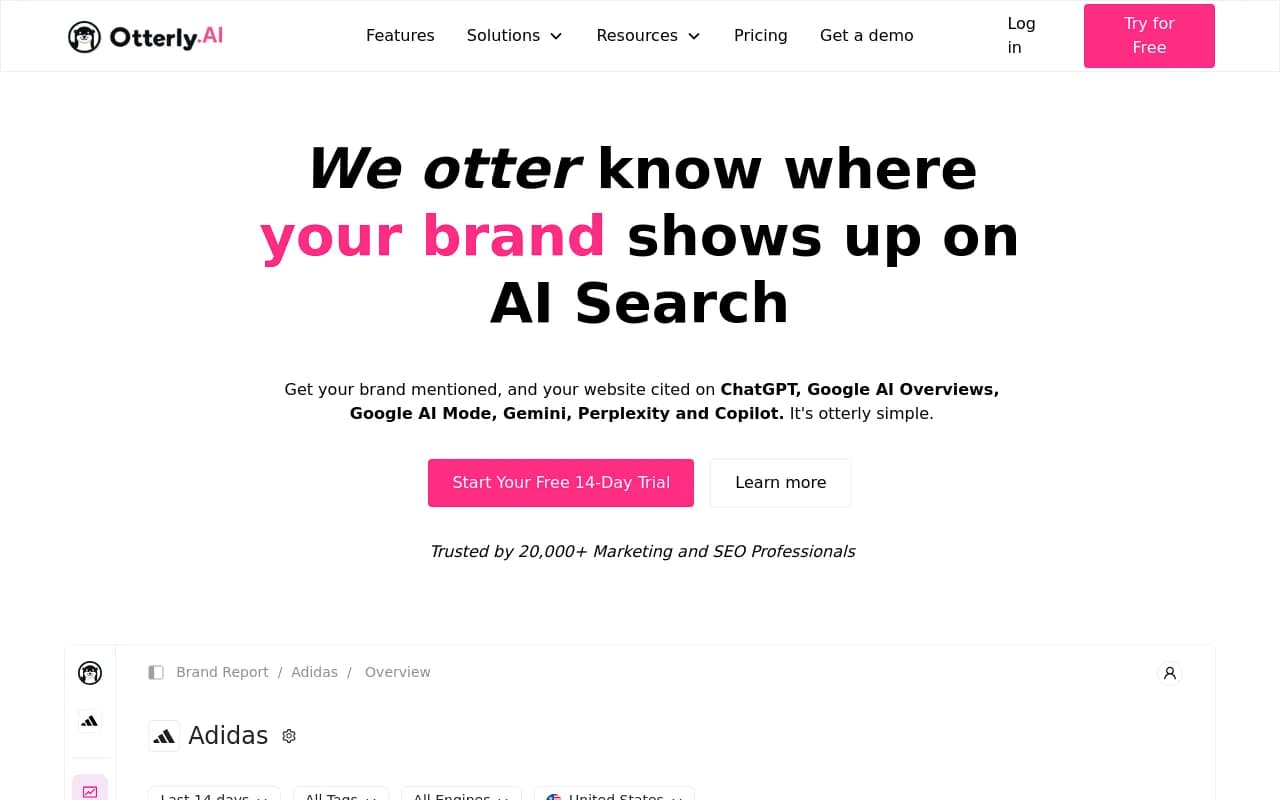
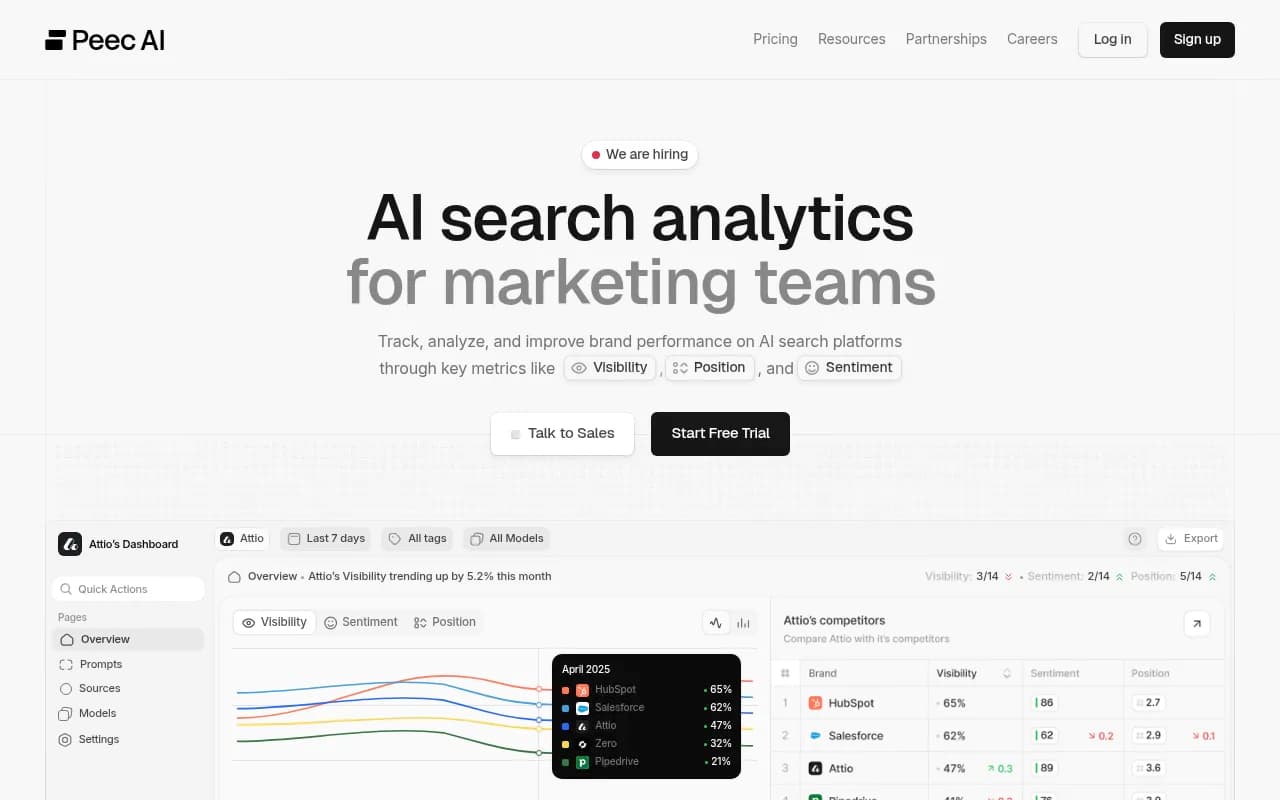
For teams that want monitoring without content generation at a lower price point, Otterly.AI and Peec AI are the most commonly recommended entry-level options.
Bottom line
The GEO platform market in 2026 has a clear split: tools that show you data and tools that help you act on it.
Qwairy is in the first category. It's fine for basic visibility checks but won't move your rankings on its own.
Profound is in a category of its own for enterprise teams -- deep research, autonomous agents, and serious scale, at a price that reflects it.
Relixir sits in the middle: more capable than a pure monitoring tool, less complete than the top tier.
Promptwatch covers the most ground for the most teams. The combination of Answer Gap Analysis, Content Agents, AI Crawler Logs, and traffic attribution means you can run the full optimization loop without switching tools or stitching together a stack. For a marketing team that wants to actually improve its AI search visibility rather than just measure it, that's the difference that matters.