Key takeaways
- Peec AI is a solid monitoring tool -- it shows you where your brand appears (or doesn't) across AI search engines, with clean dashboards and unlimited seats on all plans.
- Promptwatch does everything Peec AI does, and then keeps going: content gap analysis, AI-powered content generation, crawler logs, and page-level tracking close the loop from "we're invisible" to "here's why, and here's the fix."
- If your job is to report on AI visibility, Peec AI is a reasonable choice. If your job is to improve it, you'll quickly hit a wall with Peec AI and need something more.
- The price difference is small ($95/mo vs $99/mo at entry level), but the capability gap is large.
- Teams that have tried both consistently describe Peec AI as a "dashboard" and Promptwatch as a "workflow."
Here's the honest version of this comparison: both tools track your brand in AI answers. That's genuinely useful. But they stop in very different places, and which one you need depends entirely on what you're actually trying to do.
If your goal is to pull a weekly report showing your brand's share of voice in ChatGPT and Perplexity, Peec AI does that well. The dashboards are clean, the data is clear, and your CMO can understand it without a 20-minute briefing.
If your goal is to actually get cited more often -- to close the gap between where you are and where your competitors are -- Peec AI will show you the problem and then leave you alone with it. That's not a criticism exactly. It's just what the tool is built for.
Promptwatch is built for the second job.

What Peec AI actually does well
Peec AI is a monitoring platform, and it does monitoring competently. You set up prompts, it queries AI models on a schedule, and you get back data on how often your brand appears, which competitors show up, and which sources are being cited.
A few things it genuinely gets right:
- Clean, presentable dashboards that work for executive reporting
- Citation URL tracking, so you can see exactly which pages AI models are pulling from
- Competitor gap analysis that shows sources mentioning rivals but not you
- Unlimited seats on all plans, which matters for larger teams
- A 7-day free trial, which is rarer in this space than it should be
The UI is simple enough that a marketing manager can set it up and start getting data within a day. That's not nothing.
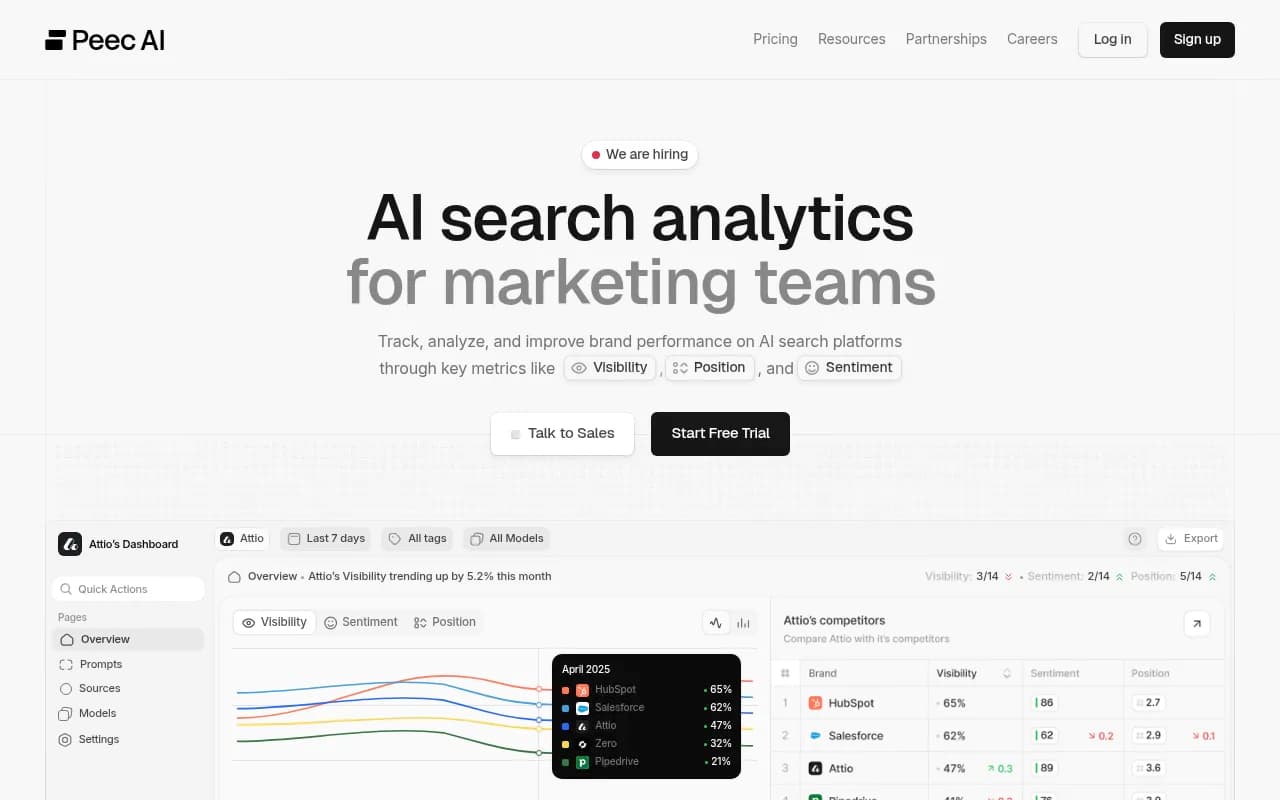
Where it gets complicated: the base plans (Starter and Pro) only include three LLMs. Claude, DeepSeek, and Grok are paid add-ons. If you want full coverage across the AI search landscape, you're on Enterprise pricing. That's a meaningful constraint for teams trying to understand their full AI visibility picture.
More fundamentally, Peec AI stops at diagnosis. It shows you the gap. It doesn't help you close it.
What Promptwatch does differently
The core difference isn't about data quality or dashboard design. It's about what happens after you see the data.
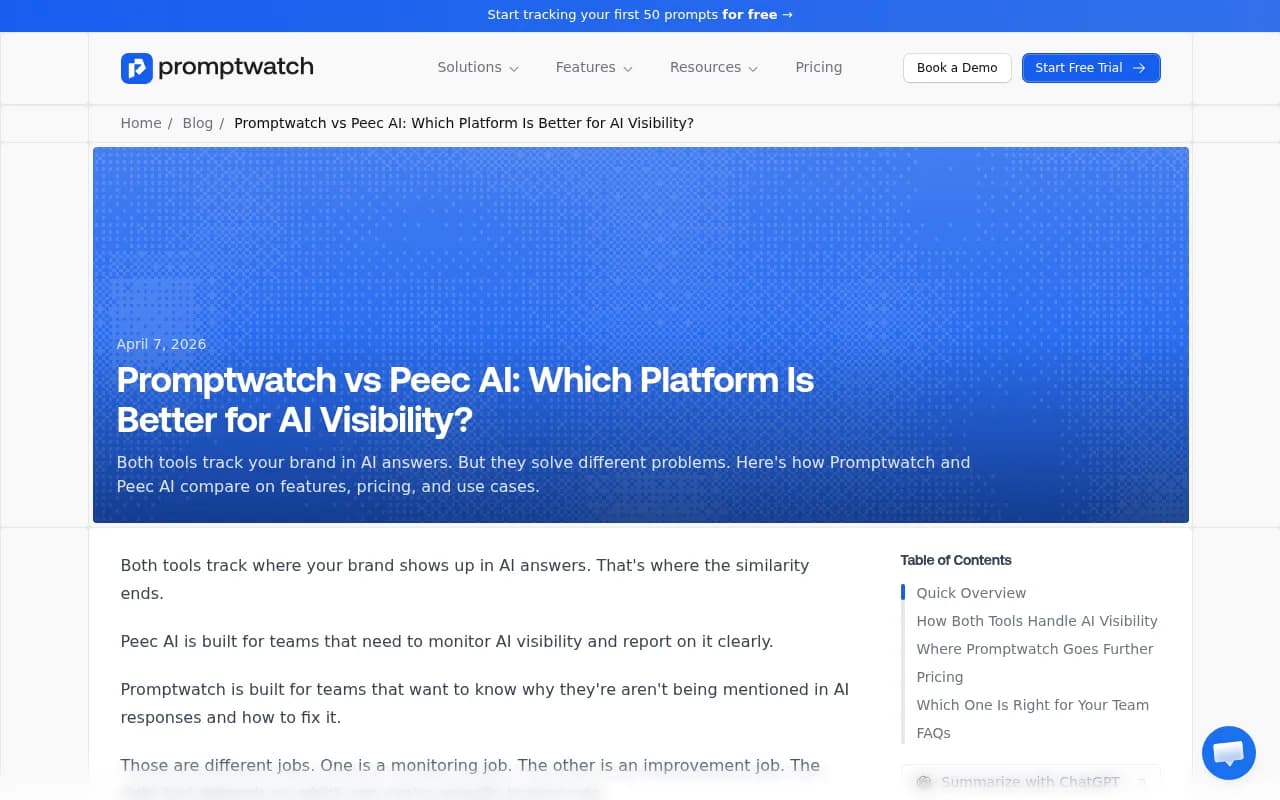
Promptwatch is built around a loop: find the gaps, create content to fill them, track whether it worked. Most competitors -- Peec AI included -- only do step one.
Finding the gaps
Promptwatch's Answer Gap Analysis shows you exactly which prompts competitors are visible for that you're not. Not just "you're missing from this prompt" but "here are the specific topics, angles, and questions AI models want answers to that your site doesn't address."
For each prompt, you see your visibility score broken down by platform. So you might discover you're at 40% visibility on ChatGPT but only 12% on Perplexity, and that two specific competitors consistently appear on Google AI Overviews where you don't. That's three separate problems, visible in one view, with enough detail to actually act on them.
Prompt Intelligence adds volume estimates and difficulty scores, so you can prioritize which gaps are worth closing first instead of guessing.
Creating content that fills them
This is where Promptwatch separates from every monitoring-only tool. Content Agents generate articles, listicles, comparisons, and briefs grounded in real prompt data -- not generic SEO filler, but content built around the exact questions AI models are already exposing as gaps.
The briefs include brand guidance, competitor analysis, search results, news context, and screenshots. You can upload knowledge-base files. The output is engineered to answer the specific prompts where you're invisible, not just to rank for keywords.
Tracking whether it worked
Page-level tracking shows which pages are being cited, how often, and by which models. Agent Analytics shows the timeline from publish to crawl to citation. Traffic attribution connects visibility to actual revenue.
That last part matters more than it sounds. Most AI visibility tools show you impressions and mentions. Promptwatch shows you whether those mentions are driving traffic and pipeline.
Feature comparison
| Feature | Promptwatch | Peec AI |
|---|---|---|
| AI platforms tracked | 10 (all plans) | 3 on Starter/Pro; all on Enterprise |
| Prompt tracking | Yes, with volume + difficulty scores | Yes, core metrics |
| Citation analysis | In-depth, page-level | Yes, core metrics |
| Competitor visibility | Yes, with heatmaps | Yes |
| Sentiment tracking | Yes, by platform and prompt type | Yes, overall score |
| Answer gap analysis | Yes | Partial (competitor gap only) |
| Content gap analysis | Yes (higher tiers) | No |
| Content generation | Yes (higher tiers) | No |
| AI crawler logs | Yes (Professional+) | No |
| Page-level AI analysis | Yes | No |
| Reddit/YouTube tracking | Yes | No |
| ChatGPT Shopping tracking | Yes | No |
| Multi-language/region | Yes | Limited |
| Unlimited users | No (by plan tier) | Yes (all plans) |
| Free trial | Yes | Yes (7 days) |
| Entry price | $99/mo | $95/mo |
The pricing is nearly identical at the entry level. The capability gap is not.
Pricing breakdown
Peec AI
Peec AI's pricing is straightforward. The Starter plan runs around $95/month and covers three LLMs with 50 prompts. Pro adds more prompts and some additional features. Enterprise unlocks full LLM coverage. Unlimited seats across all plans is a genuine advantage for teams where multiple people need access to the data.
The constraint: if you want Claude, DeepSeek, or Grok coverage, you're paying extra. For a tool that's supposed to give you a complete picture of AI visibility, gating major models behind add-ons is a real limitation.
Promptwatch
Promptwatch's plans are:
- Essential: $99/mo -- 1 site, 50 prompts, 5 articles
- Professional: $249/mo -- 2 sites, 150 prompts, 15 articles, crawler logs, state/city tracking
- Business: $579/mo -- 5 sites, 350 prompts, 30 articles
- Agency/Enterprise: custom pricing
Annual billing brings discounts across all tiers. A free trial is available.
The Essential plan is competitive with Peec AI's Starter on price. But even at that tier, you're getting 10 AI models tracked (not 3), plus the content generation workflow that Peec AI doesn't offer at any price point.
Who each tool is actually for
Peec AI makes sense if:
- Your primary need is reporting -- you want clean dashboards to show stakeholders where you stand
- You have a separate content team or agency handling optimization, and you just need the data layer
- Unlimited seats is a hard requirement and budget is tight
- You're early in your AI visibility journey and just need to understand the landscape before investing in optimization
Promptwatch makes sense if:
- You need to actually improve your AI visibility, not just track it
- You want to understand why competitors are outranking you and what content would close that gap
- You need crawler logs to diagnose why AI models aren't indexing your pages correctly
- You're tracking multiple sites, brands, or clients
- You want to connect AI visibility to traffic and revenue, not just mention counts
The monitoring-only problem
This is worth saying plainly: most AI visibility tools are monitoring dashboards. They show you data. They don't help you act on it.
That's not inherently wrong -- data is valuable. But if your goal is to improve your AI visibility, a monitoring-only tool creates a workflow problem. You see the gap. Now what? You need to figure out what content to create, brief a writer or agency, publish it, and then manually check weeks later whether it moved anything.
Promptwatch compresses that loop. The gap analysis tells you what's missing. The content agents help you create it. The tracking tells you whether it worked. That's a meaningfully different product, even if the entry price is nearly the same.
A note on the broader landscape
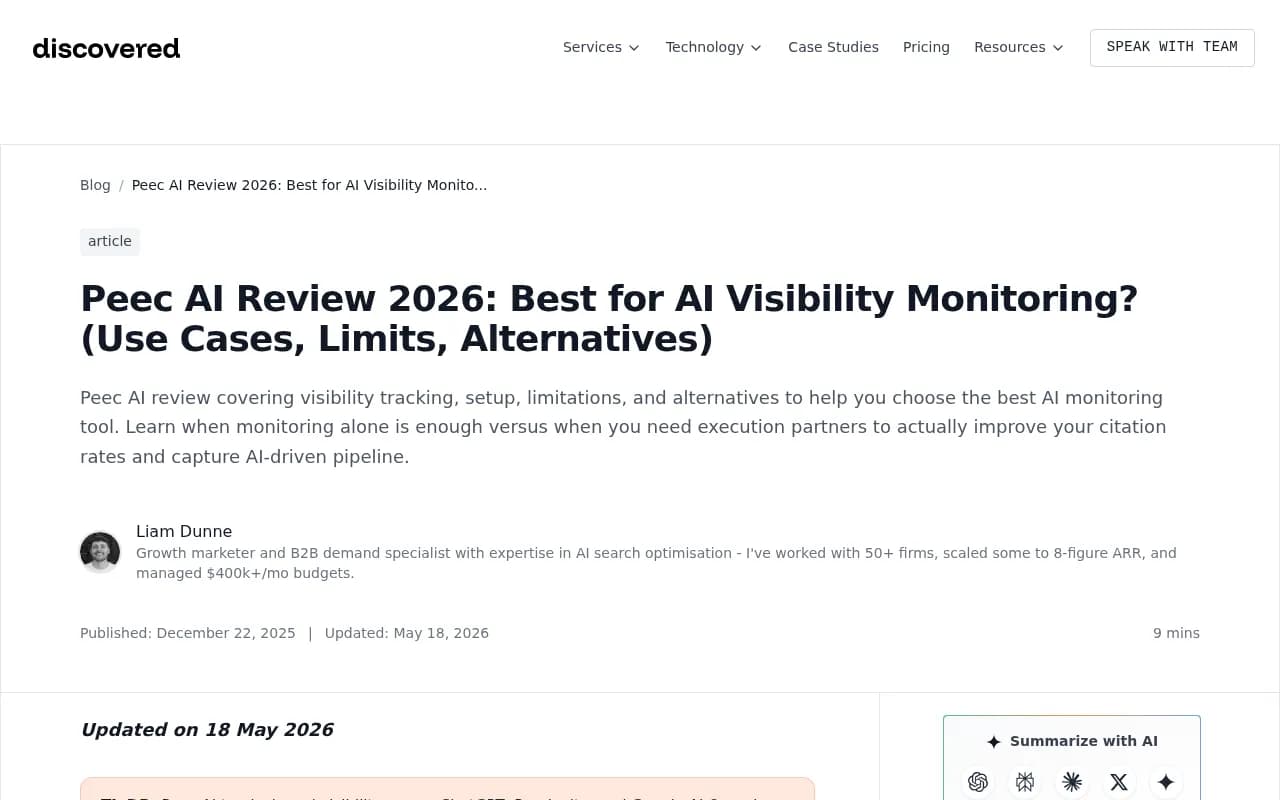
Peec AI and Promptwatch aren't the only options in this space. If you're evaluating broadly, a few others worth knowing about:
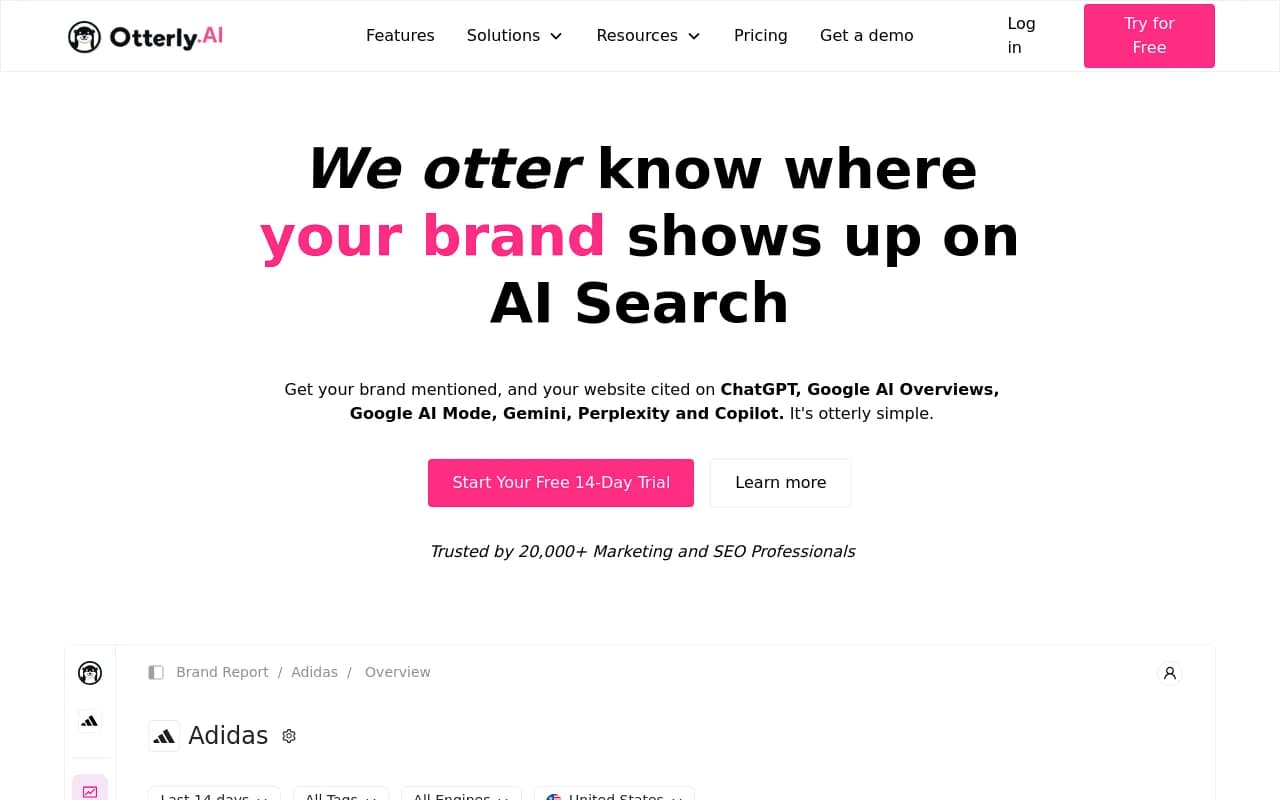
Otterly.AI is another monitoring-focused tool at a lower price point -- good for small teams that just need basic tracking.
Profound is a strong enterprise option with deep analytics, though it comes at a higher price and lacks content generation.
AthenaHQ positions itself as an optimization platform, though its content capabilities are more limited than Promptwatch's.

For teams that want monitoring without the full optimization workflow, Peec AI sits in reasonable company. For teams that want the full loop, Promptwatch is the only platform in this comparison that covers it end to end.
The bottom line
The question in the title of this guide -- "which platform is better for teams that need to improve AI visibility?" -- has a fairly clear answer.
If "improve" means "understand and report on," Peec AI works. The dashboards are clean, the data is solid, and the unlimited seats model is genuinely useful for larger teams.
If "improve" means "actually get cited more often in AI answers," Peec AI will show you the problem and stop there. Promptwatch shows you the problem, helps you create the content to fix it, and tracks whether the fix worked.
For most marketing and SEO teams in 2026, the job is the second one. AI search is eating traditional search traffic, and showing up in a dashboard as "invisible" isn't a strategy -- it's a starting point. The tools that help you move from that starting point to actual citations are the ones worth paying for.
Promptwatch is one of those tools. Peec AI, for all its strengths, is not.