Key takeaways
- AI traffic to U.S. retail sites grew 393% year-over-year in Q1 2026, and AI-referred shoppers now convert 42% better than non-AI visitors -- making this channel impossible to ignore.
- ChatGPT shopping placements are triggered by conversational intent, not keyword matches, which means standard UTM tracking breaks down and requires a dedicated measurement approach.
- Attribution across AI channels is not a single problem -- ChatGPT, Google AI Mode, and Perplexity (now citation-only) each pass traffic data differently, requiring separate configurations in GA4.
- Tracking the full journey means monitoring three distinct stages: organic AI mentions, shopping placement appearances, and downstream conversion events.
- Tools like Promptwatch can surface which pages are being cited in ChatGPT responses and connect AI crawler activity to actual traffic and revenue.
Why ChatGPT shopping is a real channel now
On January 16, 2026, OpenAI confirmed it is testing ads inside ChatGPT for U.S. users on the Free and Go tiers. That's the official announcement. The more interesting signal is what's happening in the data underneath it.
According to Elogic's ChatGPT Commerce & Agentic Shopping Statistics report, AI traffic to U.S. retail sites grew 393% year-over-year in Q1 2026. For the first time, AI-referred shoppers are converting at a 42% higher rate than non-AI visitors. That's not a rounding error -- that's a structural difference in buyer quality. People who arrive at your product page from a ChatGPT recommendation have already had a conversation about what they need. They've described their use case, their budget, their constraints. By the time they click through, they're not browsing. They're deciding.
This changes the measurement problem significantly. Traditional e-commerce attribution was built around clicks, sessions, and last-touch events. ChatGPT shopping introduces a new layer: the AI mention that happens before any click occurs. A user asks ChatGPT for "the best waterproof hiking backpack under $150," gets a recommendation that includes your brand, and then opens a new tab to search your name directly. That branded search conversion? Your current attribution model probably credits Google Search, not ChatGPT.
Getting this right matters more than most teams realize.
The three stages of ChatGPT shopping tracking
Before getting into tools and configurations, it helps to think about the tracking problem in three stages. Each stage requires different data and different measurement approaches.
Stage 1: Organic AI mentions (pre-click)
This is where your brand either appears or doesn't in ChatGPT's conversational responses. When someone asks a product question, ChatGPT may recommend your brand, cite your website, or include you in a comparison. None of this generates a click -- but it shapes purchase intent.
Tracking this stage means monitoring which prompts surface your brand, how often you appear versus competitors, and what context surrounds your mentions. This is the AI visibility layer, and it's distinct from anything in GA4 or your ad platform.
Stage 2: Shopping placement appearances (the ad layer)
With ChatGPT's paid shopping placements now in testing, your products can appear directly inside conversations as structured product cards -- with image, price, and a link. These are triggered by buyer intent signals in the conversation, not by keyword bids in the traditional sense.
Product feed integration is the entry point here. ChatGPT's shopping placements pull from product data in a similar way to Google Shopping -- structured feeds with accurate titles, descriptions, pricing, availability, and images. Brands that have clean, well-structured feeds are better positioned for placement matching.
Tracking at this stage means capturing impressions, click-through rates, and which product queries triggered your placements.
Stage 3: Conversion attribution (post-click)
This is where things get complicated. ChatGPT uses an impression-based CPM model with inconsistent UTM passthrough. Unlike Google Ads, where click data flows reliably into GA4, ChatGPT traffic can arrive without clean UTM parameters -- or with parameters that get stripped by redirect chains.
The result: if you're not specifically configuring GA4 to capture AI traffic, a meaningful portion of your ChatGPT-driven conversions will be misattributed to direct, organic, or branded search.
Setting up ChatGPT attribution in GA4
The core problem with ChatGPT attribution is that it behaves differently from every other paid channel. Here's what actually works.
Custom channel grouping
GA4's default channel groupings don't include ChatGPT as a distinct source. Traffic from ChatGPT that does carry UTM parameters will often land in "Unassigned" or get lumped into "Referral." You need to create a custom channel group that explicitly captures chat.openai.com and chatgpt.com as referral sources.
Set up a custom channel definition:
- Channel name: ChatGPT / AI Shopping
- Condition: Source contains
openai.comORchatgpt.com
This alone will surface traffic that was previously invisible in your reports.
UTM parameter strategy
Because ChatGPT's UTM passthrough is inconsistent by design, you need to be deliberate about the URLs in your product feed. Every product URL submitted to ChatGPT's shopping system should include UTM parameters baked into the feed itself -- not appended dynamically.
A basic structure:
https://yourstore.com/product/hiking-backpack?utm_source=chatgpt&utm_medium=ai-shopping&utm_campaign=product-feed-2026
This ensures that even when ChatGPT's redirect chain strips dynamic parameters, the static UTMs in your feed survive.
Conversion window adjustment
AI ads drive delayed conversions. A user who sees your product in a ChatGPT conversation might not convert for several days -- they'll research, compare, and return via branded search or direct. The standard 7-day click attribution window misses a significant portion of these conversions.
Set a minimum 14-day conversion window for any AI channel. Some brands running higher-consideration products (furniture, electronics, outdoor gear) are using 30-day windows.
Baseline measurement before campaigns
Before launching any ChatGPT shopping campaign, export 30 days of branded search volume, direct sessions, and GA4 referral data. AI ad campaigns frequently drive downstream branded search lift that attribution models miss entirely. Without a pre-campaign baseline, you can't separate the AI-driven branded search spike from organic growth.

Tracking organic ChatGPT mentions (not just paid placements)
Paid placements are only part of the picture. ChatGPT also recommends products and brands organically -- without any ad spend involved. These organic mentions are arguably more valuable because they carry the implicit endorsement of the AI's "recommendation" rather than a labeled ad.
Tracking organic mentions requires a different approach entirely. You're not looking at GA4 referral data -- you're looking at what ChatGPT says when users ask product questions in your category.
This means:
- Monitoring which prompts your brand appears in across ChatGPT and other AI models
- Tracking which pages on your site are being cited in AI responses
- Identifying competitor brands that appear in prompts where you don't
For this layer, Promptwatch is purpose-built. It tracks real ChatGPT responses (in the actual user interface, not just via API), shows you which pages are being cited, and surfaces the specific prompts where competitors are visible but you're not.

The crawler log feature is particularly useful for e-commerce brands: it shows when ChatGPT's crawlers are hitting your product pages, which pages they're reading, and when those pages move from "crawled" to "cited." If your product pages aren't being crawled, they can't be cited -- and you'd never know that without this data.
Product feed optimization for ChatGPT shopping
If you're already running Google Shopping, your product feed is the starting point -- but it needs adjustments for ChatGPT's matching logic.
ChatGPT's shopping placements respond to conversational intent, not keyword queries. A user saying "I need something waterproof for hiking that won't break the bank" is different from typing "waterproof hiking backpack cheap." Your product titles and descriptions need to speak to use cases and contexts, not just feature lists.
Practical adjustments to make:
Product titles: Include the use case, not just the product name. "Osprey Daylite 13L Hiking Daypack" is less likely to match "what should I carry on a day hike" than "Osprey Daylite 13L Hiking Daypack -- Lightweight Day Hiking Pack."
Product descriptions: Write in complete sentences that answer common questions. "Fits a 15-inch laptop, 2L hydration bladder, and a day's worth of snacks" is more useful to an AI matching conversational queries than a spec table.
Structured data on product pages: Make sure your product pages have proper schema markup (Product, Offer, Review). ChatGPT's crawlers use structured data to understand product attributes, pricing, and availability.
Pricing and availability accuracy: Stale pricing in your feed creates mismatches between what ChatGPT shows and what users find on your site. This damages trust and conversion rates. Keep feeds updated at least daily.
The attribution model problem for AI-influenced journeys
Here's the honest version of the attribution problem: most e-commerce attribution models were designed for a world where the customer journey starts with a click. ChatGPT shopping introduces a pre-click influence layer that existing models can't see.
Consider this journey:
- User asks ChatGPT for product recommendations
- ChatGPT mentions your brand organically (no click)
- User searches your brand name on Google two days later
- User clicks a Google Shopping ad and converts
Under last-click attribution, Google Shopping gets 100% of the credit. Under first-click, Google Shopping still gets credit because it's the first tracked click. Your ChatGPT mention -- which arguably started the whole thing -- is invisible.
This is why multi-touch attribution matters more for AI-influenced e-commerce than it ever did for traditional channels. But even multi-touch models only work with data that's actually captured. If you're not tracking AI mentions at all, no attribution model can account for them.
The practical approach most brands are taking in 2026:
- Use GA4 with custom channel groupings for direct ChatGPT click attribution
- Use a platform like Promptwatch to track organic AI mentions and citation frequency
- Use branded search volume as a proxy metric for AI influence (spikes in branded search often follow AI recommendation increases)
- Run incrementality tests: pause AI channel activity for a period and measure the downstream impact on branded search and direct traffic
| Attribution approach | What it captures | What it misses |
|---|---|---|
| Last-click (GA4 default) | Final click before conversion | All AI influence before the click |
| First-click | First tracked click | Pre-click AI mentions |
| Multi-touch (linear/time decay) | All tracked touchpoints | Untracked AI organic mentions |
| AI mention tracking (Promptwatch) | Organic AI citations and crawler activity | Downstream conversion events |
| Branded search lift analysis | AI-influenced branded demand | Specific product-level attribution |
| Incrementality testing | True causal impact of AI channel | Granular per-product data |
No single approach gives you the full picture. The brands getting this right are combining at least three of these methods.
ChatGPT Shopping vs. other AI channels: what's different
It's worth being specific about how ChatGPT differs from the other AI channels that e-commerce brands are tracking.
Google AI Mode runs on the same auction infrastructure as Google Search but stamps conversions with a distinct parameter (adview_query_id). This means it's more trackable than ChatGPT out of the box, but you still need to configure GA4 to capture that parameter correctly.
Perplexity abandoned advertising entirely in February 2026 and is now citation-only. If your brand appears in Perplexity responses, it's because your content earned that citation -- there's no paid placement option. Traffic from Perplexity is trackable via referral source (perplexity.ai) and tends to be high-intent research traffic.
ChatGPT is the most complex to track because of the CPM impression model, inconsistent UTM passthrough, and the mix of organic mentions and paid placements. It also has the highest volume and the highest-converting traffic of the three.
| AI channel | Ad model | UTM reliability | Conversion window | Trackability |
|---|---|---|---|---|
| ChatGPT Shopping | CPM impressions | Inconsistent | 14-30 days recommended | Requires custom setup |
| Google AI Mode | CPC auction | Reliable (adview_query_id) | Standard 7-day works | Moderate setup |
| Perplexity | No ads (citation-only) | Good via referral | Standard | Easy via referral tracking |
| Organic AI mentions | N/A | No click data | N/A | Requires AI visibility tools |
Tools worth knowing about
Beyond Promptwatch for AI visibility tracking, a few other tools are relevant to different parts of this problem.
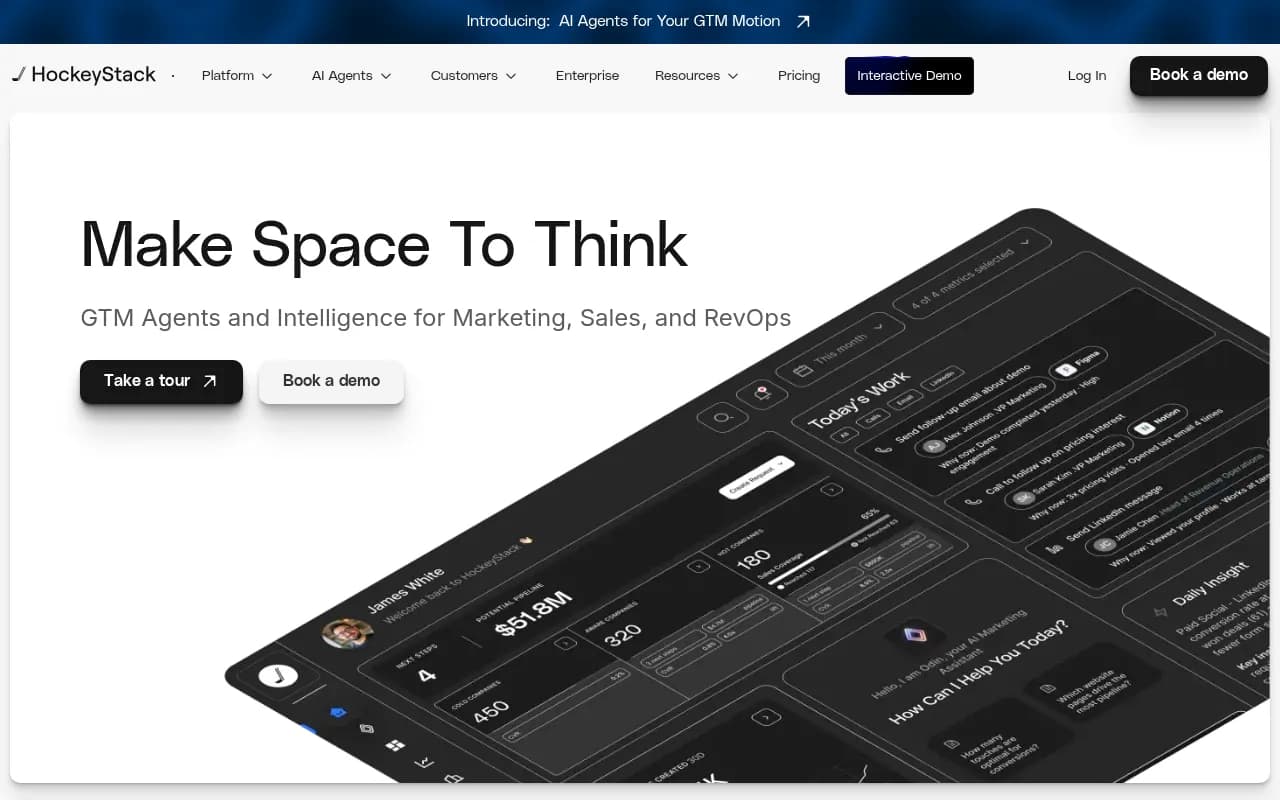
For marketing attribution that spans multiple channels and can handle the complexity of AI-influenced journeys, HockeyStack has built out multi-touch attribution that works across paid and organic touchpoints.
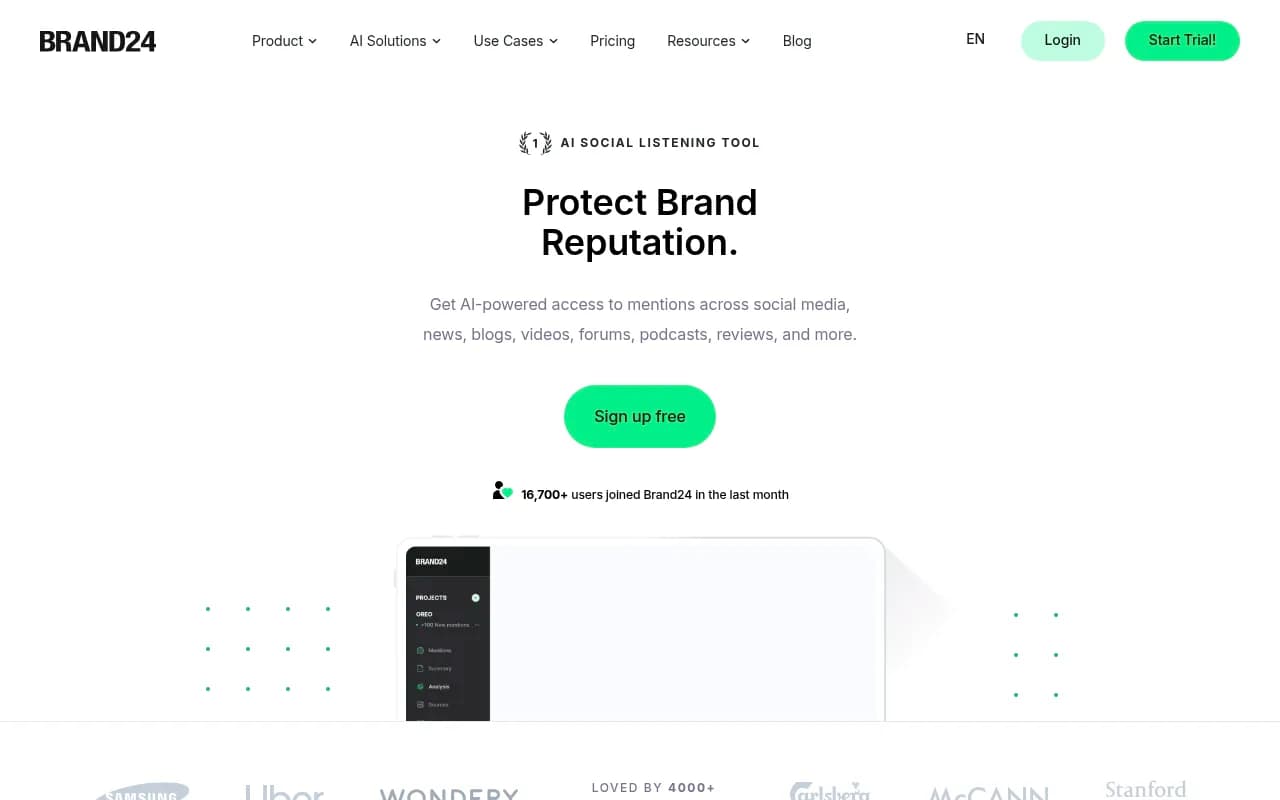
For tracking brand mentions across the broader web -- including the third-party sites, Reddit threads, and review pages that ChatGPT frequently cites in its responses -- Brand24 gives you a signal on where your brand is appearing in the content that AI models are trained on and crawling.
For e-commerce brands that want to go beyond tracking and actually create content that earns AI citations, the content gap analysis and content generation features in Promptwatch are the most direct path from "we're not being mentioned" to "we are." It identifies the specific prompts where competitors appear but you don't, then helps generate content designed to fill those gaps.
What good looks like in practice
A brand doing this well in 2026 has a few things in place:
They know their AI citation rate -- how often their brand appears when users ask relevant product questions across ChatGPT, Gemini, Perplexity, and others. They track this weekly, not monthly.
They have clean UTM parameters baked into their product feed URLs, custom channel groupings in GA4 that capture ChatGPT traffic separately, and a 14-day minimum conversion window for AI channels.
They monitor branded search volume as a leading indicator of AI influence -- when their AI citation rate goes up, branded search typically follows within a few days.
They run quarterly incrementality tests to validate that the AI channel is actually driving incremental revenue, not just taking credit for conversions that would have happened anyway.
And they have someone watching the crawler logs. When ChatGPT's crawlers stop hitting a product category page, that's an early warning sign that citations in that category are about to drop. Catching it early means fixing the technical issue before the visibility impact shows up in revenue data.
The brands that treat ChatGPT shopping as just another ad channel to plug into their existing stack will get mediocre results and confusing attribution data. The ones that build a dedicated measurement layer for AI -- separate from their paid search and social infrastructure -- are the ones seeing the 42% conversion lift that the aggregate data is showing.
That gap between the two groups is going to widen significantly over the next 12 months.