Key takeaways
- Most content optimization tools were built to chase Google rankings. Few measure whether an AI engine cites the page after you publish it.
- Editor scores from different tools are not comparable. A 90 in one tool and an 85 in another say nothing about which draft is better, so test with the same drafts and judge outcomes.
- Promptwatch Data (Sep 28 to Oct 4, 2026) shows product pages (22.4%) and landing pages (16.8%) take the biggest share of ChatGPT citations. Optimizing only blog posts misses the main citation surface.
- Tools split into three groups: live editors (Surfer, Clearscope, NeuronWriter), brief and research tools (Frase, MarketMuse, Dashword), and systems that publish and measure (Promptwatch, Ryze AI, AirOps).
- Vendor roundups, including several we read for this guide, rank their own product first. Check prices on official pricing pages before you buy.
What we mean by content optimization for AI search
The phrase covers two different jobs now. One is the old job: make a draft cover the entities, subtopics and terms that top-ranking pages cover. The other is newer: make a page easy for an AI engine to retrieve, trust, quote and cite.
The first job has mature tooling. The second is where tools differ, and where a lot of marketing copy gets vague. A content score tells you a draft resembles the pages that already rank. It does not tell you whether ChatGPT will cite it. For that you need citation data and crawler data after publishing.
That gap shaped how we tested.
The 8-draft protocol
A single draft tells you very little, because one article can score well in a tool by luck of topic. Eight drafts per tool gives you enough spread to see patterns. Here is the protocol, which you can copy.
- Pick 8 drafts across intent: two commercial ("best X for Y"), two informational how-tos, two product or landing pages, and two comparison or FAQ-style pieces.
- Run each draft through the tool's editor before any edits and record the starting score.
- Apply only the changes the tool recommends. No extra rewriting.
- Record the final score, minutes spent, and how many recommendations you rejected as wrong or irrelevant.
- Publish, then track crawls, citations and traffic for 30 to 60 days.
I would not publish a leaderboard of raw scores from step 3, and you shouldn't either. Each tool grades against its own model of the SERP, so the numbers are not on one scale. The more useful measures are the rejection rate (how often the advice was noise), the time spent, and what step 5 shows.
What we scored on
The rubric borrows from criteria that vendor roundups also use, such as brand voice, structured data output and whether the tool publishes or stops at a draft.
| Criterion | What we looked for |
|---|---|
| Recommendation quality | Are the missing entities and subtopics real gaps, or keyword stuffing? |
| Intent awareness | Does the advice change between a how-to and a product page? |
| AI-specific signals | FAQ blocks, direct answer structure, schema, citation tracking |
| Workflow | Brief to draft to publish, CMS connections |
| Measurement after publishing | Citations, crawler visits, AI referral traffic |
| Cost per usable recommendation | Price against how much advice you actually accepted |
What your drafts should look like first
Before comparing tools, know the target. Promptwatch Data's report on ChatGPT citations by content type (Sep 28 to Oct 4, 2026) breaks down what ChatGPT actually cites:
| Content type | Share of ChatGPT citations |
|---|---|
| Product pages | 22.4% |
| Landing pages | 16.8% |
| Listicles | 13.6% |
| How-to guides | 8.7% |
| Documentation | 7.5% |
| General articles | 6.1% |
| Comparisons | 5.9% |
| News | 5.7% |
| FAQ pages | 3.3% |
| Reviews | 1.7% |
Product and landing pages together make up about 39% of citations. For commercial prompts like "best CRM for small businesses", product pages, landing pages, listicles and comparisons cover almost 70%. For branded prompts, reviews reach 5.6%, more than three times their overall share.
Two things follow for tool choice. Most content editors are tuned for blog articles, so you will need to test whether they give useful advice on a pricing page or a comparison page. And the right optimization depends on the prompt intent, not only on the keyword.
Freshness matters too, but unevenly. In Promptwatch's content half-life study, pages ChatGPT cited on July 6, 2026 were tracked for 90 days. Landing pages (78% still cited after 30 days) and docs (76%) held up best. Product pages, reviews and how-tos reached their half-life after roughly 74 to 77 days. News lost half its pages within 36 days. So refresh alerts are worth paying for on product pages, how-tos and news, and matter less for landing pages and docs.
The live editors
These tools score a draft while you write. They are the closest thing to a standard workflow, and the ones most teams already know.
Surfer SEO
Surfer SEO is the default answer for a reason. Its Content Editor scores drafts in real time and flags missing entities, subtopics, terms and headings before you finish. It also generates long-form drafts, and has added an AI tracker so you can watch AI answers next to SERP data in one place.
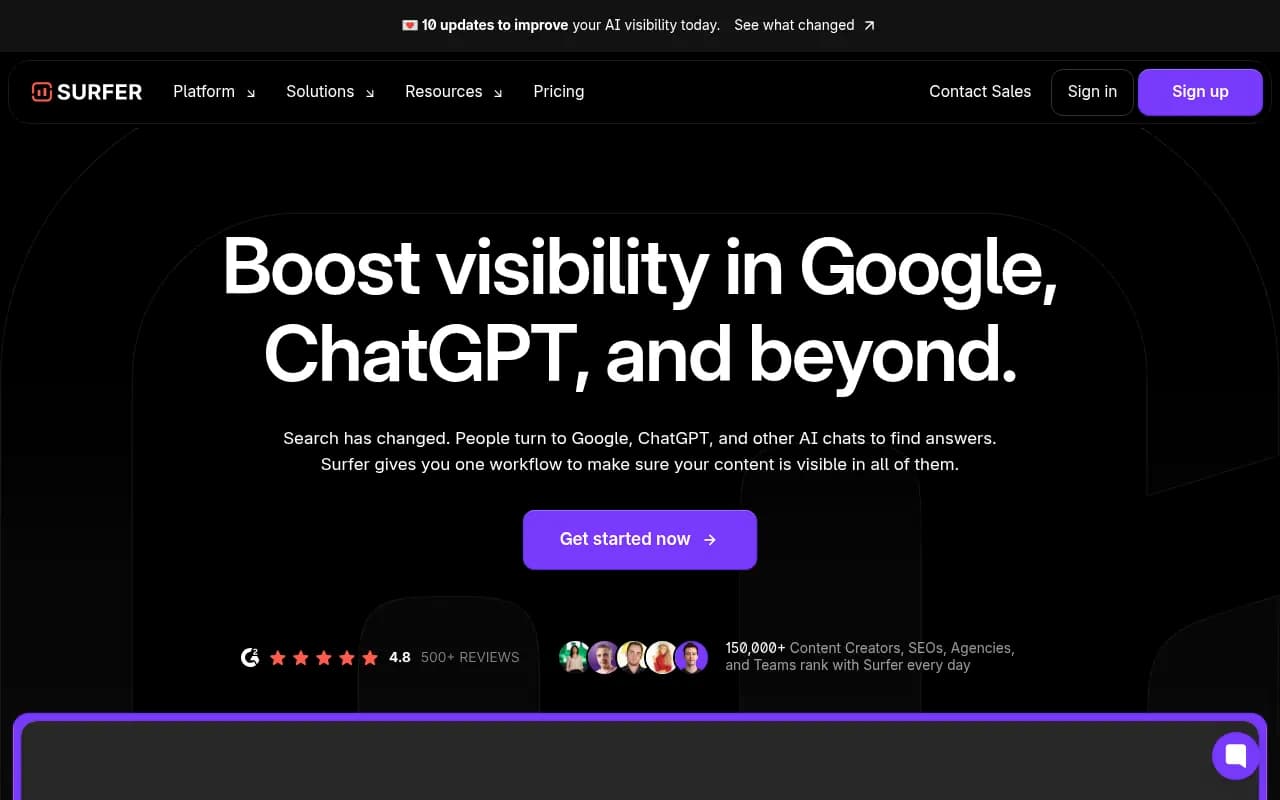
Pricing differs by source. One roundup lists plans from $99 a month, another from $49 yearly, so look at the vendor's pricing page. My caution: Surfer's score rewards resembling the current top results. That is useful for commercial listicles. It is less useful when the thing AI engines cite is a clean docs page or a landing page with complete specs.
Clearscope
Clearscope is cleaner and more editorial. Its grade and term suggestions suit teams where writers are the bottleneck and the advice needs to be readable. Content decay alerts are a practical fit for the product pages and how-tos that the half-life data says age faster. One roundup lists a free tier and plans around $129 and $399, but again, confirm on the vendor site.

NeuronWriter
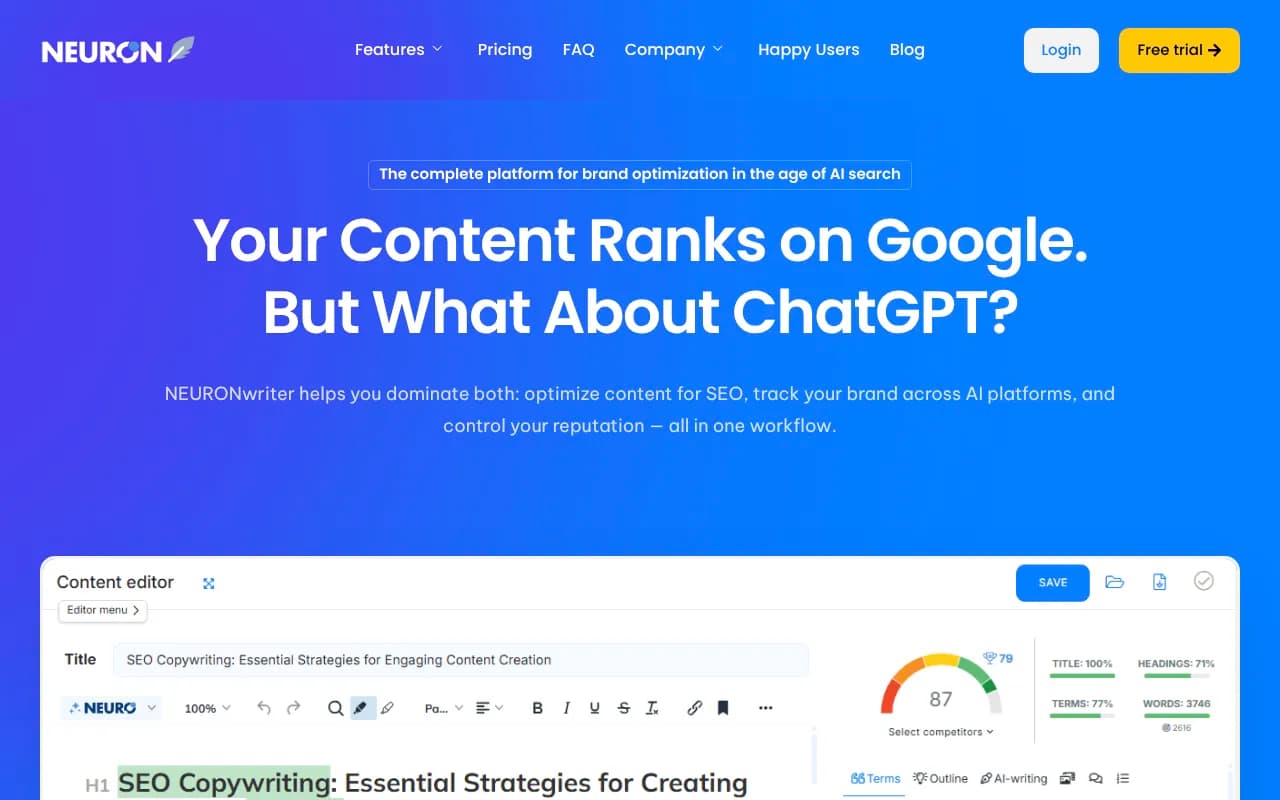
NeuronWriter is the budget-minded semantic editor. It covers the same ground as Surfer with an NLP-term approach, and it is where I would start if you are testing on a small budget before committing.
Page Optimizer Pro
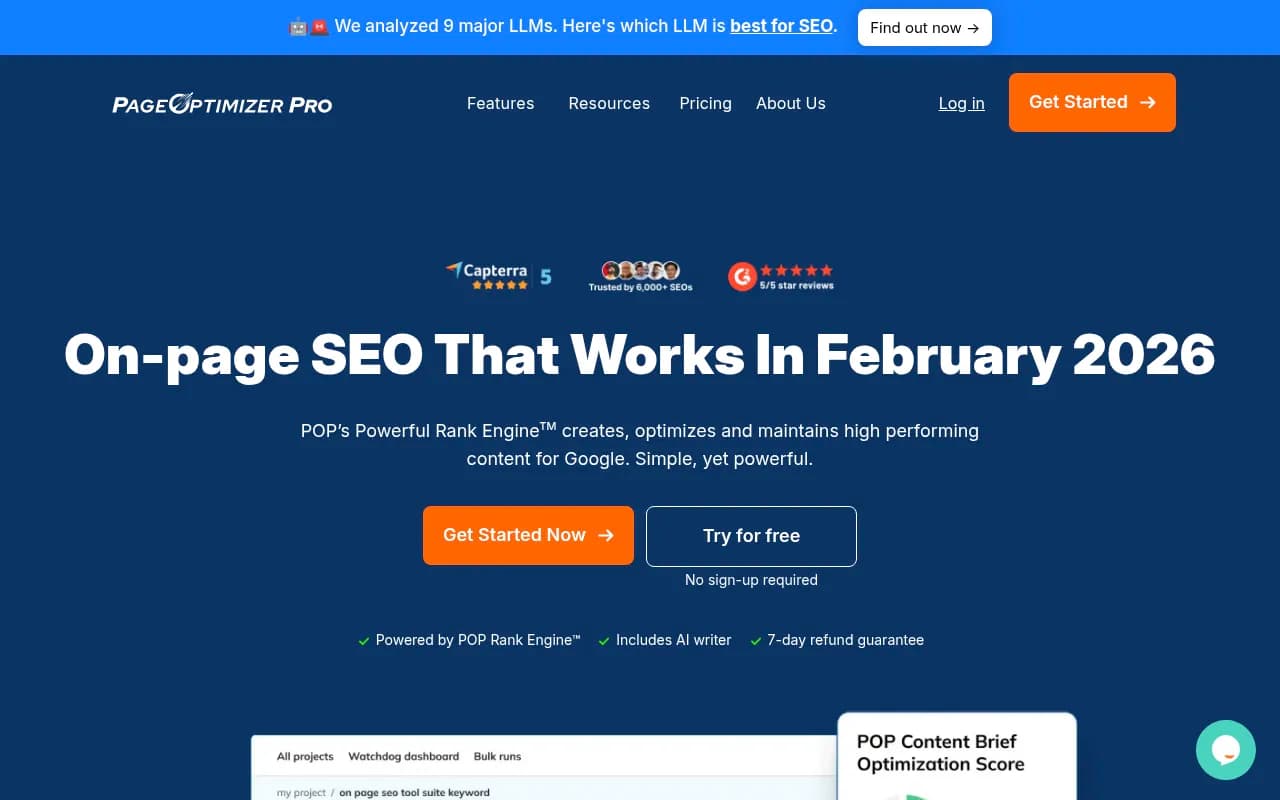
Page Optimizer Pro is more granular about on-page factors and fits people who like to tune pages measure by measure. It is the least writer-friendly of the group.
Brief and research tools
Frase
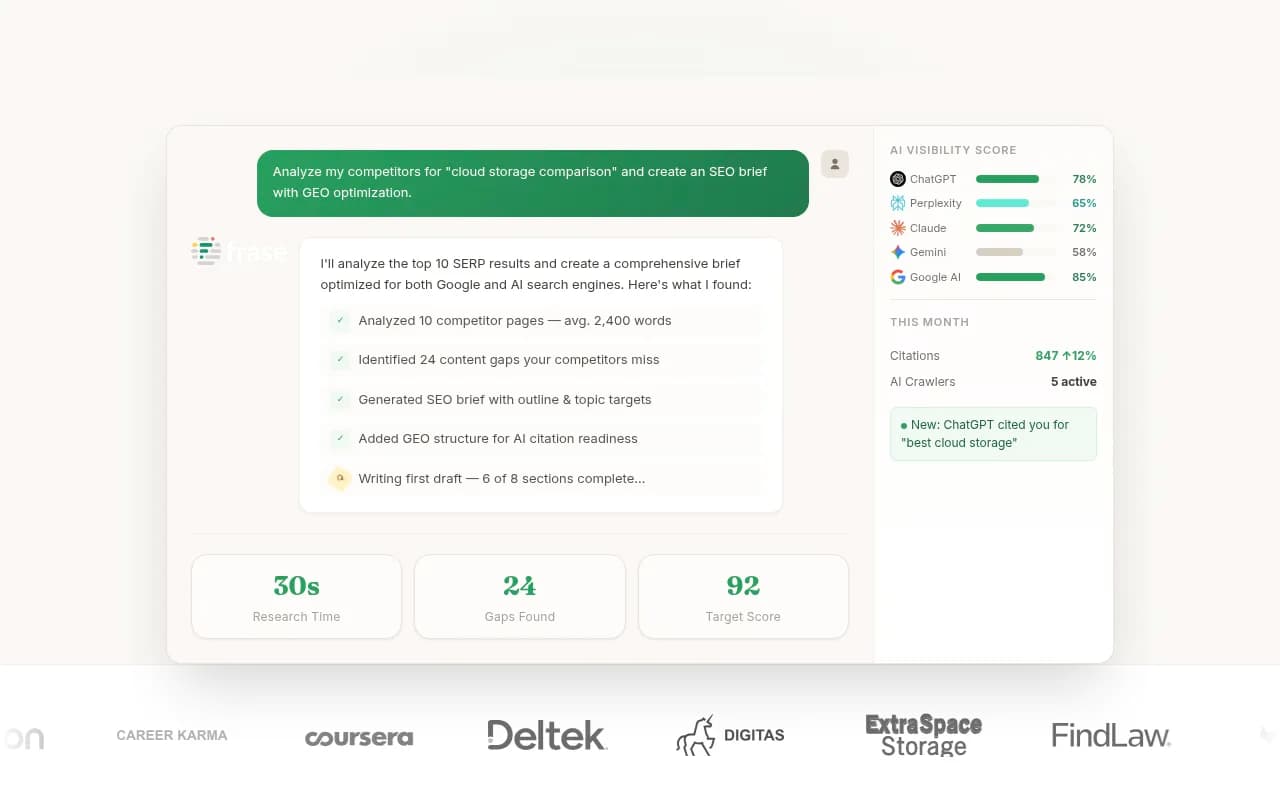
Frase combines briefs, a content score and, in newer plans, AI citation checks. It is strongest at the research step: pulling questions and subtopics from the SERP into an outline before writing. Good for teams that write briefs for freelancers.
MarketMuse
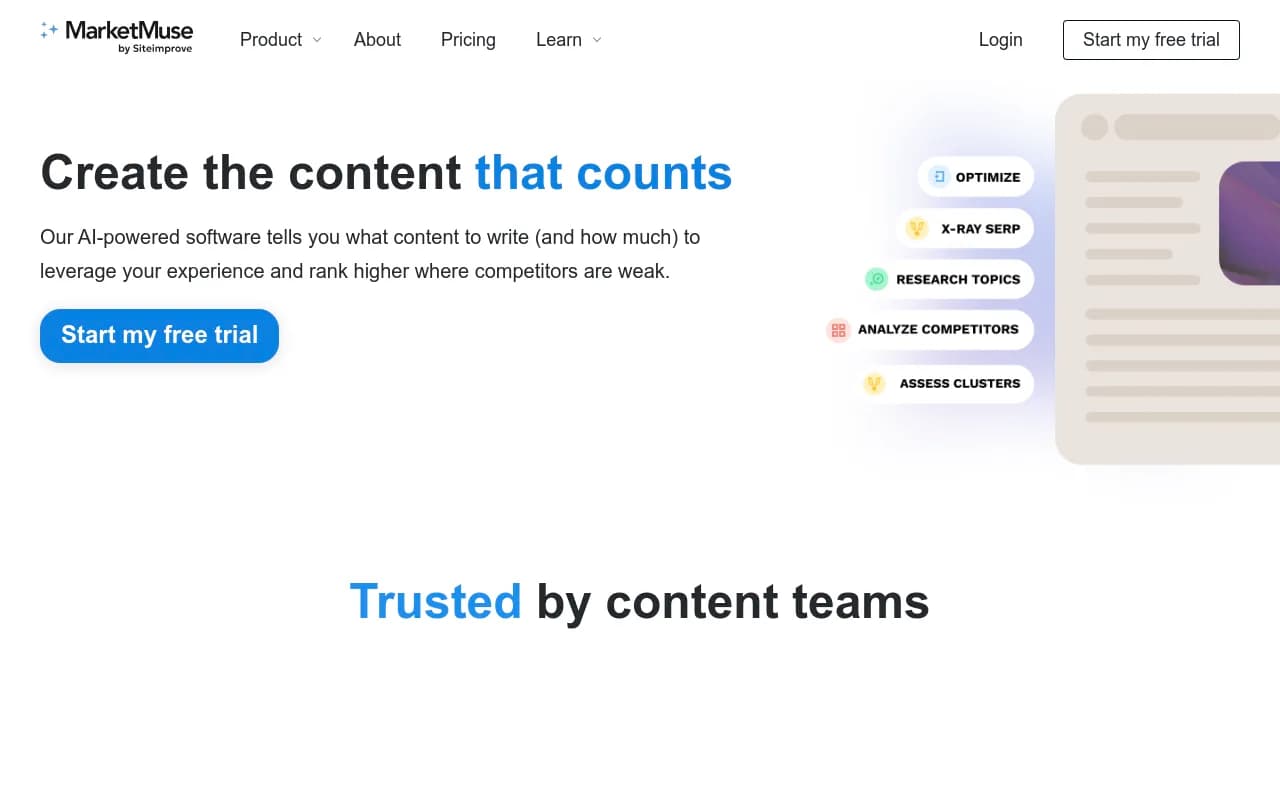
MarketMuse leans toward strategy: what to write across a topic cluster and how much authority you already have. It is heavier than an editor and pays off when you manage hundreds of pages.
Dashword and Semrush Writing Assistant
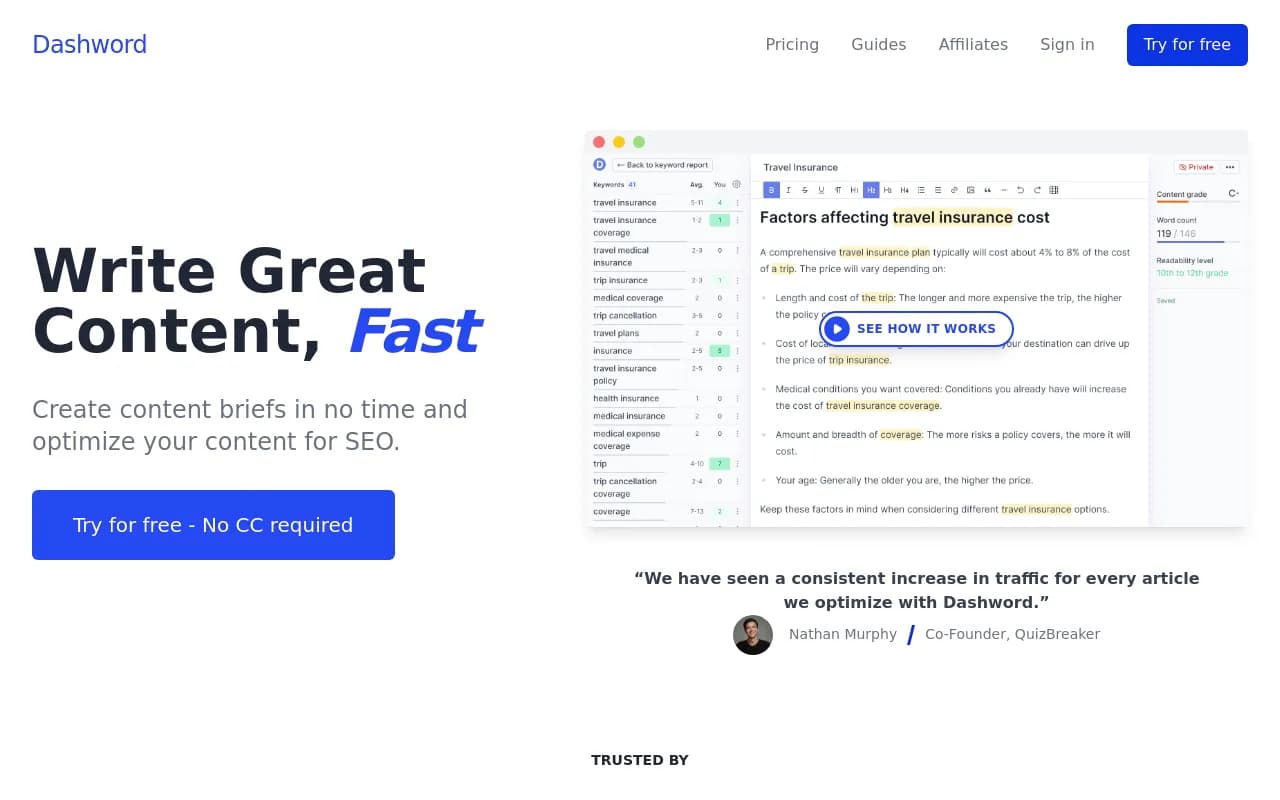
Dashword is a simple brief-and-optimize tool with a gentle learning curve. The Semrush Writing Assistant is worth a look if your team already pays for Semrush and wants checks without a new login.
Tools that publish and measure
This is the group that matters most for AI search, because it closes the loop the editors leave open.
Promptwatch
Promptwatch is an AI visibility platform rather than an editor. It tracks how ChatGPT, Gemini, Claude, Perplexity and Google AI Overviews mention and cite your brand, and then works on the gaps. Content gap analysis maps your pages against the prompts AI answers. The Content Agent writes and publishes pieces to WordPress, Webflow or Framer, with a review inbox if you want to approve first. Content Refresh gives diff-style updates to existing pages.

What separates it from the editors above is the measurement. IP-verified AI crawler logs show whether bots read a page, Page Tracker shows whether AI cites it, and visitor analytics show whether it sends traffic. That tells you if a high editor score turned into a citation, which no content score can. The Content Agent starts on the Business plan at $579 a month, and Essential starts at $95 a month. Check promptwatch.com/pricing for current numbers, or try the 7-day free trial or the free AI visibility report first.
Ryze AI and AirOps
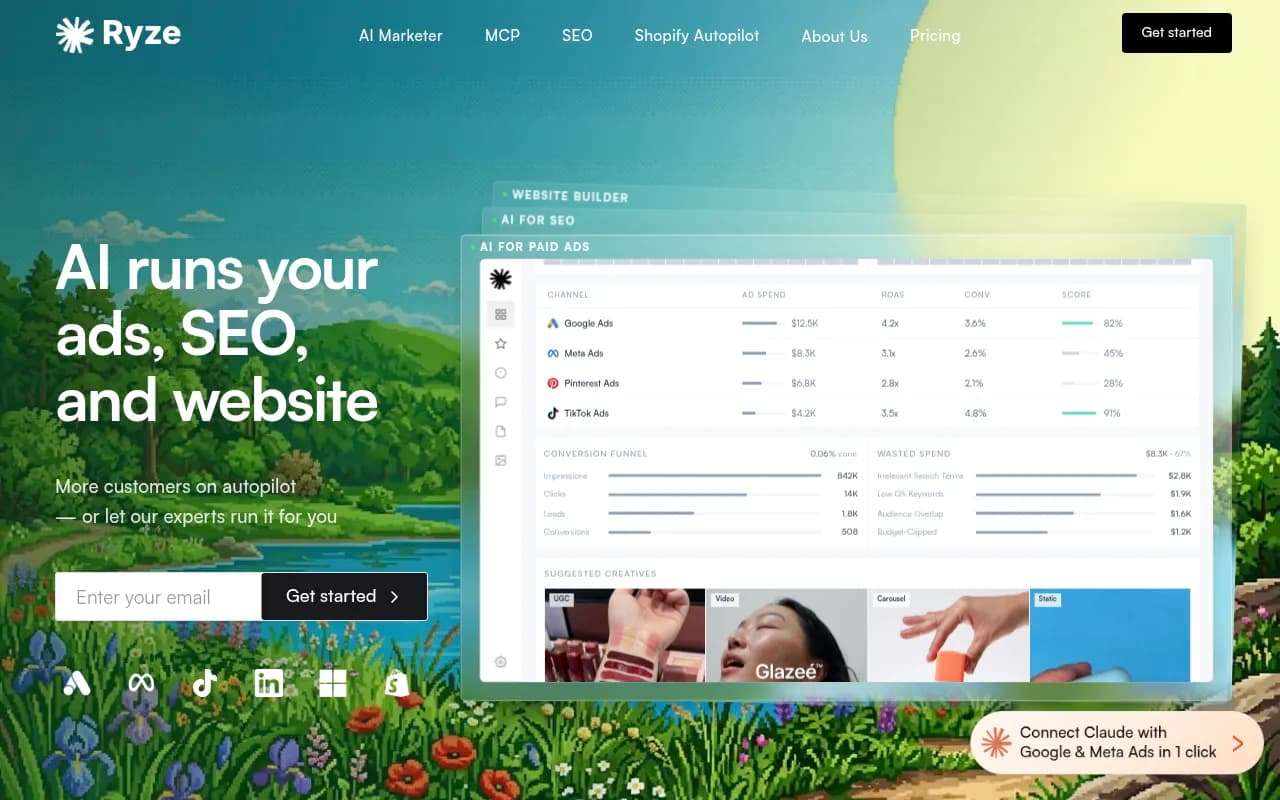
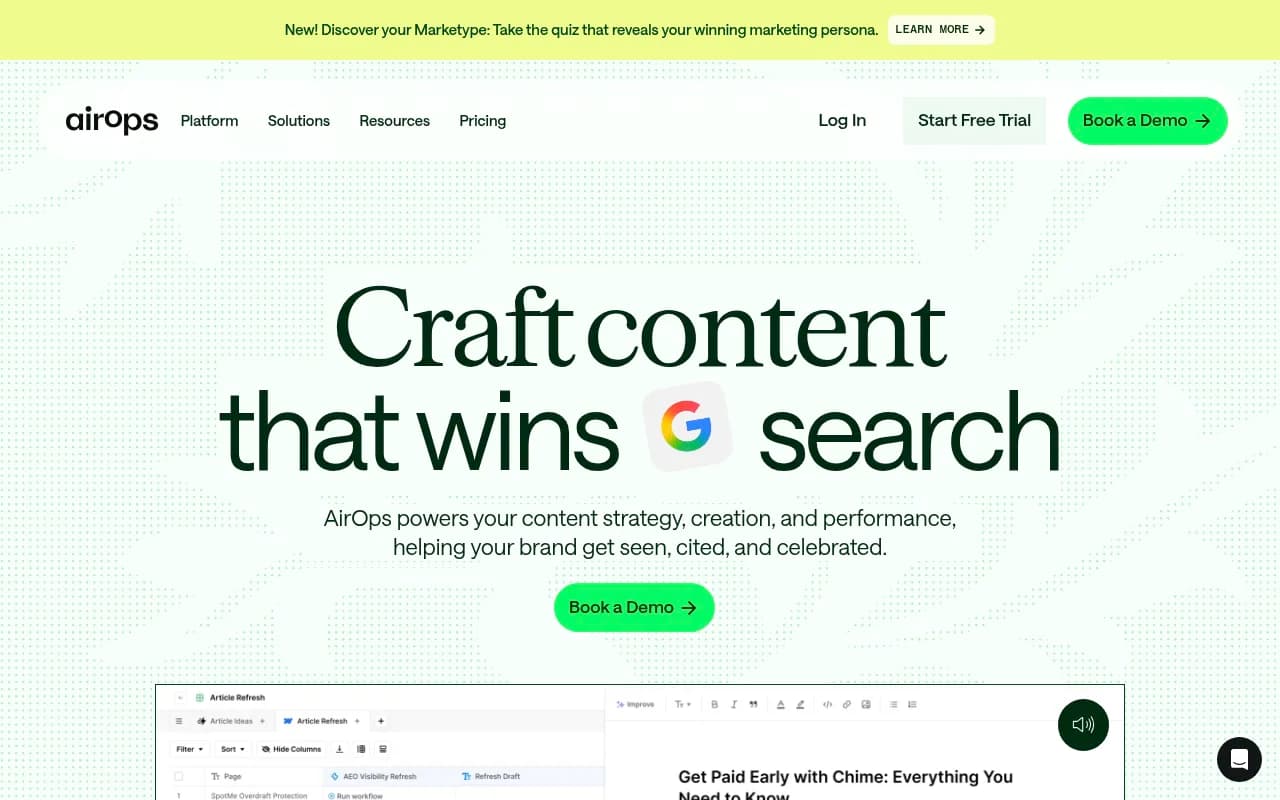
Ryze AI rewrites and ships existing pages and tracks AI citations. Its own roundup ranks it first at 9.1 out of 10, which is a vendor scoring itself, so treat that number with a pinch of salt. AirOps is a workflow tool for building repeatable content pipelines. It is strong on generation and automation, but you need separate data to ground it.
Side-by-side comparison
| Tool | Type | Strength | Weakness for AI search | Best for |
|---|---|---|---|---|
| Surfer SEO | Live editor | Real-time score, entity and term gaps | Score mirrors current SERP, not AI citations | Teams mixing Google and AI goals |
| Clearscope | Live editor | Readable advice, decay alerts | Less AI-specific tooling | Editorial teams |
| NeuronWriter | Live editor | Low cost semantic editor | Lighter AI features | Small budgets |
| Page Optimizer Pro | On-page tuner | Granular factors | Steeper learning curve | Technical SEOs |
| Frase | Brief and score | Research and briefs, citation checks | Editor depth varies | Brief-driven workflows |
| MarketMuse | Strategy | Topic clusters and authority | Heavy for small sites | Large content libraries |
| Promptwatch | AI visibility and content agents | Gap analysis, publishing, crawler logs, citation tracking | Not a line-by-line editor | Teams that need to prove AI results |
| Ryze AI | Optimizer | Rewrites and ships pages | Vendor-reported scores | Hands-off optimization |
| AirOps | Workflow | Automated content pipelines | Needs outside visibility data | Ops-heavy content teams |
How to run your own test
A workable setup for a small team:
- Use one editor (Surfer, Clearscope or NeuronWriter) for the writing pass. Pick on price and how readable the advice is to your writers.
- Add a measurement layer. This can be a platform like Promptwatch, or a lower-cost AI tracker from the directories at bestgeosoftware.com if you only need monitoring.
- Treat product and landing pages as first-class citizens. Fill in specs, prices and positioning completely and factually.
- Add FAQ sections where they genuinely answer questions. FAQ pages earn 3.3% of citations, and they are cheap to add.
- Keep documentation public and crawlable, since docs are among the longest-lived cited pages.
- Check after 30 and 60 days. If a page scored well and still is not cited, look at crawler access before rewriting the copy. Often the bot never read it.
Where the scores mislead
A few honest warnings from reading both the tools and the vendor roundups.
First, the biggest roundups are written by vendors. Ryze, Surfer, Bunzy, VisibilityStack and MaxAEO all place themselves at or near the top of their own lists. That does not make them wrong, but a ranking and a price from the seller deserve a second source.
Second, price data ages quickly. One article in our research was dated February 2026 and lists figures that will already have moved. Always use the vendor's current page.
Third, a content score is a proxy. It measures similarity to pages that already rank. AI engines also weigh whether a source is a primary one, whether the page is crawlable, and what format it takes. A strong score on a thin how-to will lose to a complete product page for a commercial prompt.
Which should you pick
If you write mostly blog content and need writers to improve drafts, start with Surfer or Clearscope. If budget is tight, NeuronWriter. If you manage a big library and need to prioritize, MarketMuse. If the question your boss asks is "are we getting cited and is it sending traffic", you need a platform that measures it, and that is the case for Promptwatch next to whichever editor you like. For a wider list of GEO options, the directory at bestgeosoftware.com is a good starting point.
Run the 8-draft test on your own content before paying for annual plans. The result that matters is not the score on screen. It is whether the page you published gets crawled, cited and clicked.