Key takeaways
- Agency pricing is a division problem. Divide the AI answers a plan collects per month by the number of clients it holds. Across published plans that number runs from roughly 300 answers per client to 12,000, according to Qvery's October 2026 comparison.
- White-label depth varies a lot. Some tools give you a branded PDF, others give you a custom domain, client logins and a portal. Check the trial, not the pricing page.
- Engine coverage is a trap. Several tools list Claude only on enterprise tiers, so a cheap plan may silently skip an engine your client asks about.
- Most vendor comparison posts rank their own product first. That includes the ones this guide drew from, so treat every number as something to verify on the vendor's pricing page.
- If you need the tracker to also help fix visibility gaps, not just report them, Promptwatch is the one I would put on the shortlist first.
Why agencies need a different kind of AI rank tracker
An in-house team tracks one brand. You track twenty or fifty, each with its own competitors, its own prompts, its own reporting rhythm, and a client who wants to see their logo on the dashboard rather than yours.
Most AI visibility tools started as single-brand products with a team seat bolted on. That works until you try to run a portfolio. Switching between brands is clumsy, every new client triggers a plan upgrade, and the monthly report is still something you assemble by hand.
There is also a measurement problem that no tool fully solves. Citation counts differ by engine and drift with model updates. Promptwatch's data on average sources per response found ChatGPT cites about 5 sources per web-search answer while Google AI Overviews cites about 10 and Perplexity sits near 10 every day (see the average sources per response report, published September 2025). Copilot swung from under 2 to nearly 17 sources within a few weeks. So report each engine separately, and don't let a Copilot swing show up in a client deck as a performance change. Model updates move things too: Promptwatch's ChatGPT citation drop data shows average citations per response fell around the GPT-5.3 rollout on March 4, 2026, which had nothing to do with anyone's content work.
A good agency tracker has to help you explain this to clients, not just produce a chart.
What to evaluate before you buy
The criteria that matter when the account belongs to a client:
- White-label reports: your logo, colors, ideally a custom domain, scheduled delivery from your own email.
- Client access: a portal or read-only login, versus emailing PDFs forever.
- Multi-brand management: how many projects one account holds and how painful it is to move between them.
- Per-client cost: flat and predictable, or a step-up every time you sign someone.
- Prospecting: can you run a visibility audit on a lead before the pitch call.
- Data exit: API, Looker Studio, CSV. You will eventually want the data in your own reporting stack.
- Engine coverage on the plan you are actually buying.
One more point from the Reddit threads Qvery quoted: clients mostly want a sentence they can repeat to their boss, and they want to know where the lead came from. A tracker that only produces mention counts leaves you without that sentence. Traffic attribution from AI platforms matters more than most feature grids admit.
Comparison table
Prices come from vendor pages and third-party comparisons gathered in October 2026. Confirm each on the vendor's own pricing page before you commit.
| Tool | Agency angle | Reported entry pricing | White-label | Best for |
|---|---|---|---|---|
| Promptwatch | Agency plans, unlimited projects, client access, crawler logs, content tools | Agency Kick-off $199/mo, Growth $399, Scale $799 | White-label reports and branded client access | Agencies that want to fix visibility, not only report it |
| Peec AI | Agency track, unlimited client seats | From $245/mo for 10,000 credits | Lighter than the others, check in trial | Competitor benchmarking |
| Nightwatch | Rankings plus AI prompts in one tool | Professional at EUR 159/mo (25 sites) | From Professional, unlimited seats | Agencies that need classic rankings too |
| SE Ranking | Full SEO suite with agency add-on | Agency Pack $69/mo annual | Agency Pack | Agencies already on SE Ranking |
| Rankscale | Per-dashboard pricing | Pro $99/mo (10 dashboards), Growth $385 | White-labeled share links on Growth | Cheap per-client math |
| Otterly.AI | Lightweight monitoring | Lite from about $25-29/mo | Branded Looker Studio reports for partners | Small client books |
| Profound | Enterprise reporting | Starter $99/mo yearly, Growth $399 | Check plan | Larger enterprise clients |
| Rank Prompt | Built around multi-client use | Agency $149/mo (500 brands) | Yes, on Agency | Many small clients |
The tools, one by one
Promptwatch
The reason I put Promptwatch first for agencies is that most tools on this list stop at monitoring. You show the client a chart of where they are invisible, and then the client asks what you are going to do about it. Promptwatch is built to answer that question as well.

The agency plans (Kick-off, Growth, Scale) include unlimited projects and prompts, 10 seats, all AI models, Agent Chat, country, state and city tracking, crawler logs, visitor analytics, site audits, content gap analysis, custom reports, and MCP and API access. Reports can be exported as PDFs with white-label branding, including scheduled ones, and clients can get branded read-only access. Customers on its agency page include Monks, WPP, iO Digital, Adwise and Seeders.
What separates it from a pure tracker is the evidence layer. IP-verified AI crawler logs show whether GPTBot, ClaudeBot or PerplexityBot are actually reading a client's pages and hitting errors. Visitor analytics tie AI platforms to real traffic and conversions, which gives you the "where did the lead come from" sentence. It tracks the real interfaces of ChatGPT, Google AI Overviews, AI Mode, Gemini, Perplexity, Copilot, Meta AI and Alexa rather than only API outputs, which matter because user-facing answers can differ from API answers.
The tradeoffs to know about. Agency plans don't include the Content Agent, AEO articles, the Knowledge Base or 360 Insights. Those sit in the self-serve Business tier and Enterprise. If your agency wants automated content publishing for a client, that client may need a Business-level project. Also note the response budgets: Kick-off includes 10,000 responses a month, Growth 25,000, Scale 65,000. Divide by your client count before you sign. Confirm everything at promptwatch.com/pricing.
Peec AI
Peec is a clean, popular monitoring tool. Its agency track starts around $245/mo for 10,000 credits (about 111 prompts and 3 projects by one third-party estimate), meters usage in credits, and offers unlimited client seats. Credits suit agencies whose research volume swings month to month. Fixed prompt tiers suit agencies that budget per client.

Good benchmarking data. Lighter on portfolio tooling and, by Rank Prompt's account, on white-label depth, though that claim is vendor-authored and unverified. Claude is reported as an Enterprise-only engine, which is a real gap if clients ask about it.
Nightwatch
Nightwatch pairs classic keyword rank tracking with AI prompt tracking, so you don't need a second tool for traditional rankings. White-label reports start at the Professional plan at EUR 159/mo, which covers 25 websites, unlimited seats, Looker Studio and API access. Nightwatch counts websites rather than clients, which matters if a client has several domains.
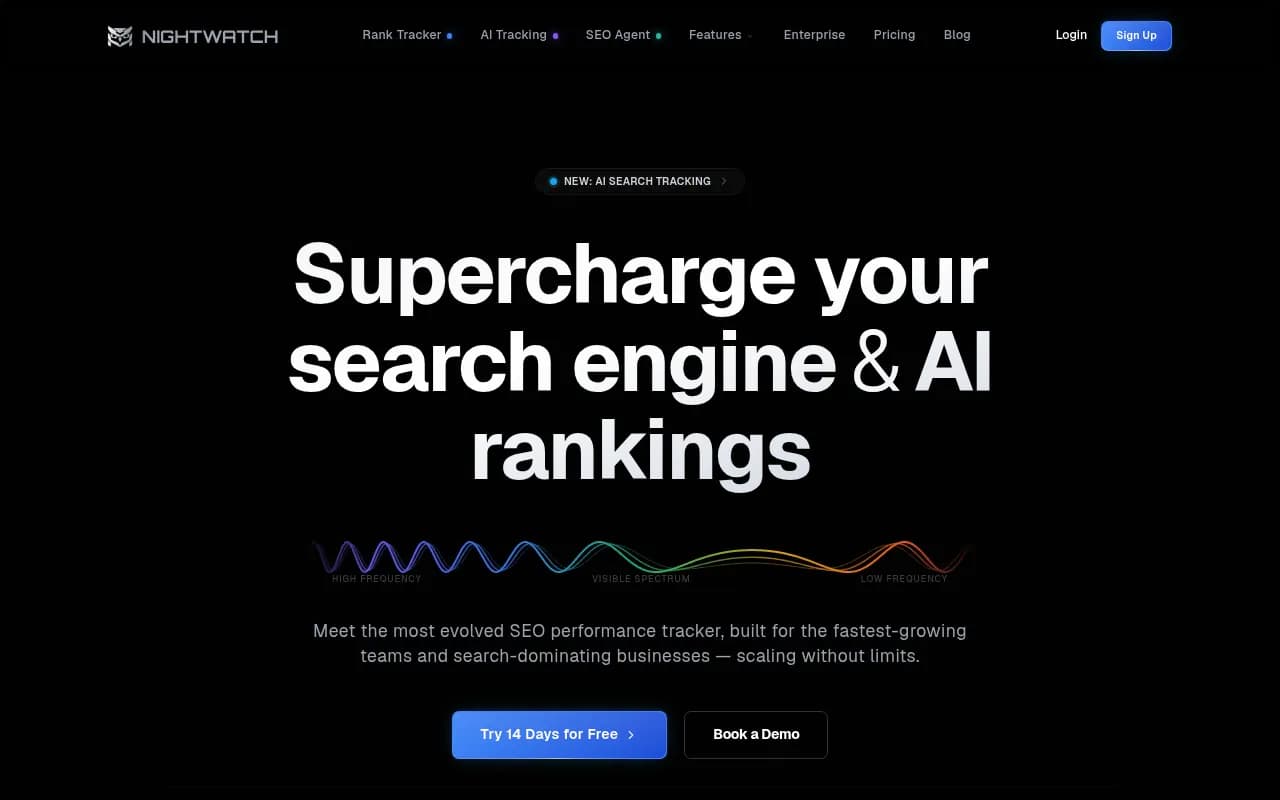
The tradeoff: you get fewer AI answers per client than a dedicated AI tracker provides.
SE Ranking and SE Visible
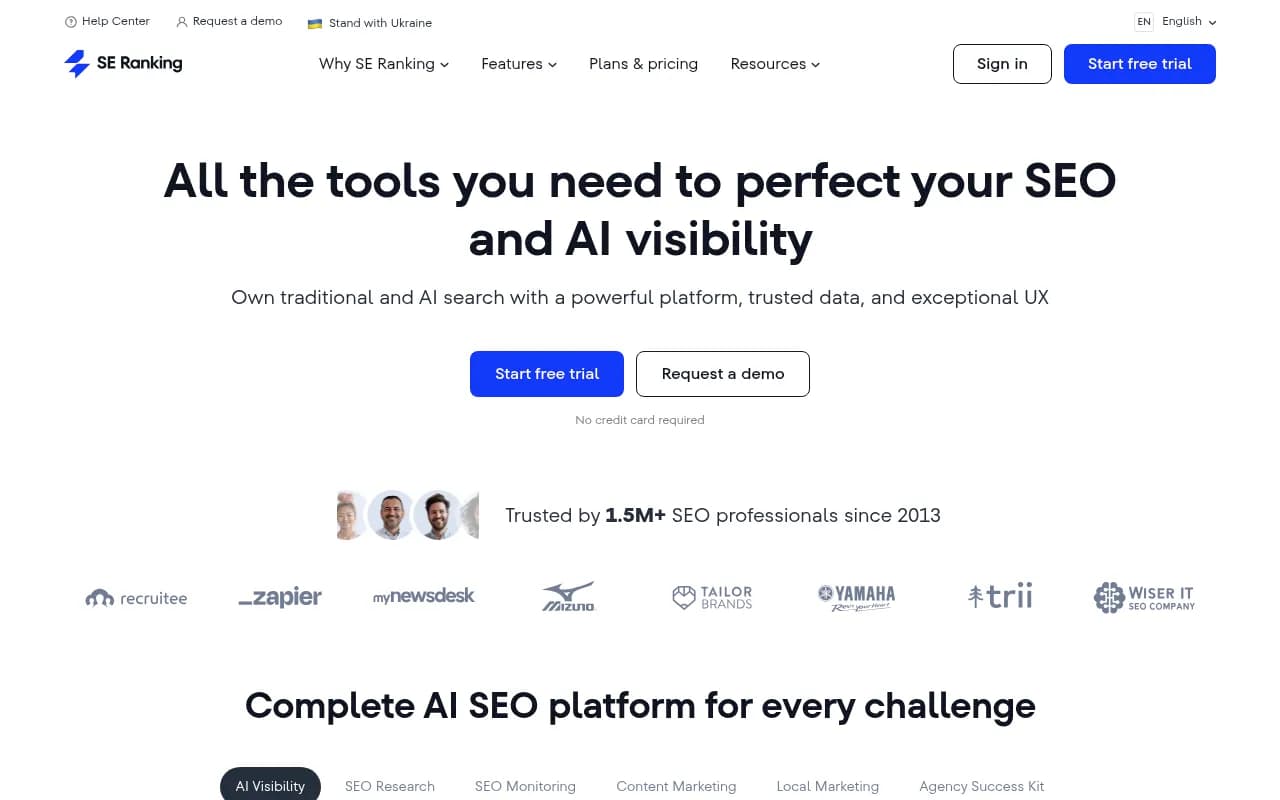
SE Ranking's Agency Pack adds white label for the platform and reports, client seats and scheduled reports with AI summaries for $69/mo on annual billing. One caution from my research: its own pages disagreed on whether the pack includes 10 or 30 client seats, and on 4 or 5 AI engines. Ask support before buying. White labeling is not in the base plans.
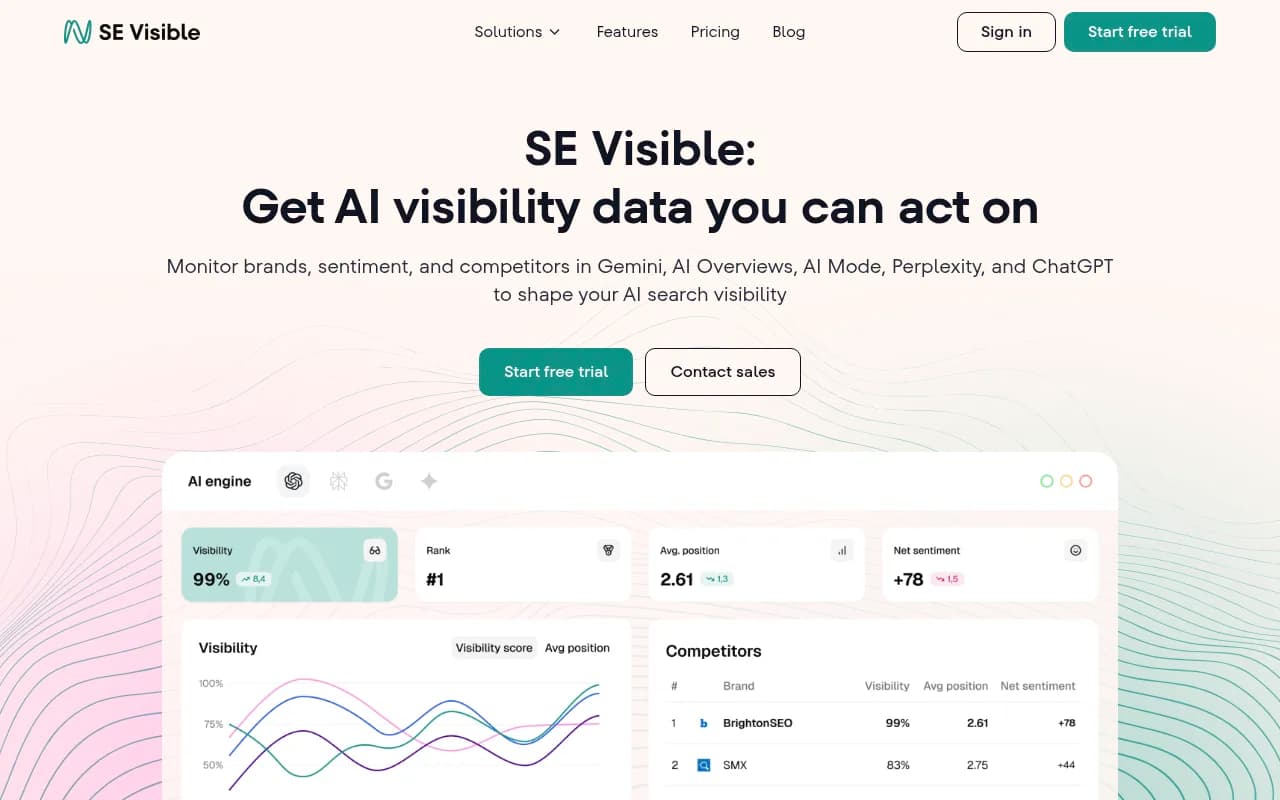
SE Visible is the separate AI-only product, pitched at multi-client agencies with fixed prompt tiers (Basic is $99/mo for 200 prompts and 3 projects) and four engines on every plan.
Rankscale
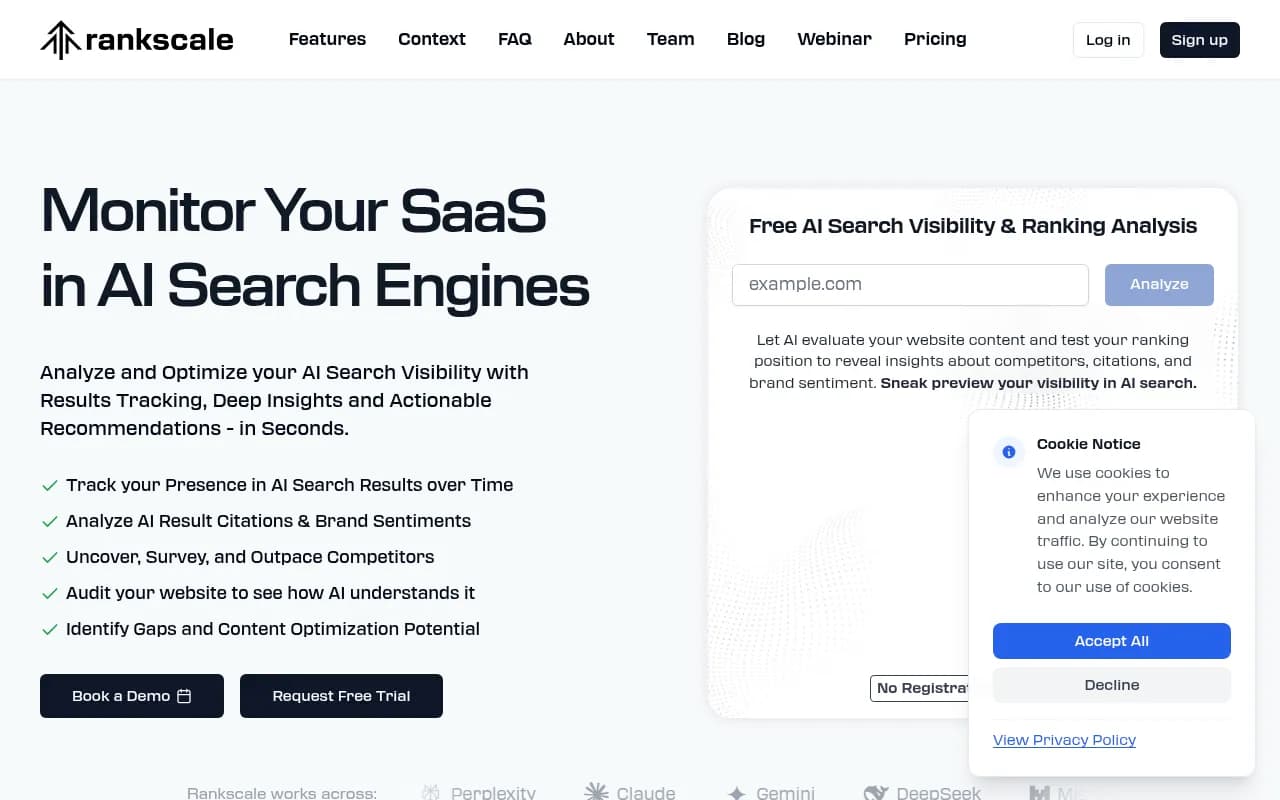
Rankscale has the cheapest per-client math I found. Pro at $99/mo holds 10 dashboards and up to 4,800 answers, so 480 answers a client for ten clients. Growth at $385 gives 50 dashboards, up to 22,000 answers, white-labeled share links and the REST API. It also tracks Claude on all plans.
Otterly.AI
Otterly is the lightweight option. Lite starts around $29/mo monthly for 15 prompts and one workspace, which is too small for a real client book, but it works for a quick audit or a very small retainer. Four engines are included by default, three more are paid add-ons, and Claude is among those add-ons. Branded Looker Studio reports are available through its agency partner program.

Profound
Profound is the enterprise name. Published plans are Starter at $99/mo yearly and Growth at $399/mo yearly, with custom Enterprise covering up to 9 engines, and a self-serve agency growth plan was reported by SE Ranking. One vendor post claimed Profound pricing starts in the four figures, which contradicts those published numbers. Check directly.

Rank Prompt, Trakkr, Scrunch and others
Rank Prompt's Agency plan at $149/mo lists 500 brands, white-label reports and a client portal, with Agency Plus at $299/mo adding client logins, prospecting and 1,000 brands. Its own comparison ratings of competitors as "limited" on white-label are not backed by evidence, so don't repeat them. Trakkr offers a white-label client portal on its Scale plan, the most expensive per client at about $50 for ten clients but with up to 12,000 answers per client.
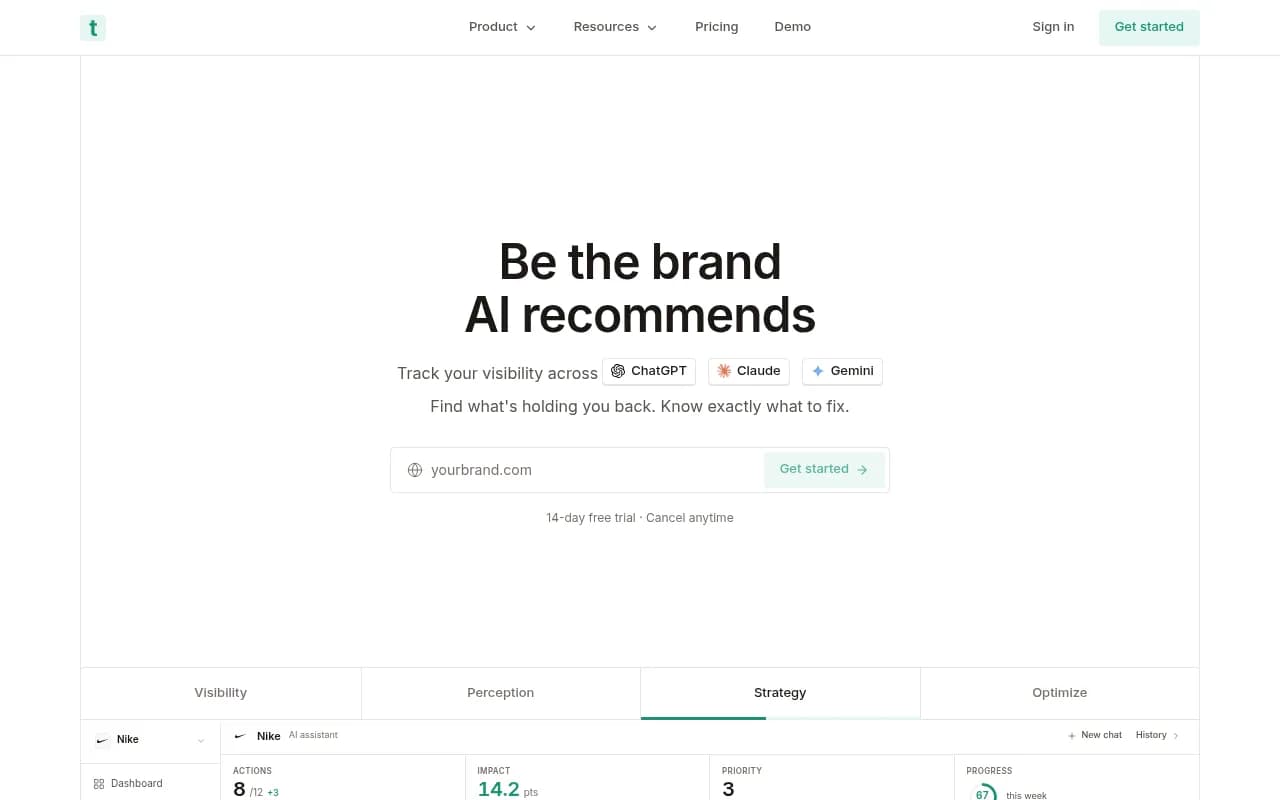
Scrunch is oriented more toward a brand's own team than an agency running many accounts, so test its multi-brand pricing in a trial.
The per-client math
Qvery's October 2026 analysis divides answers per month by clients. For a roster of ten, the plans it compared ranged from about $9.90 a client (Rankscale Pro) to $50 (Trakkr Scale), and from 300 answers a client (SE Ranking Core) to 12,000 (Trakkr Scale).
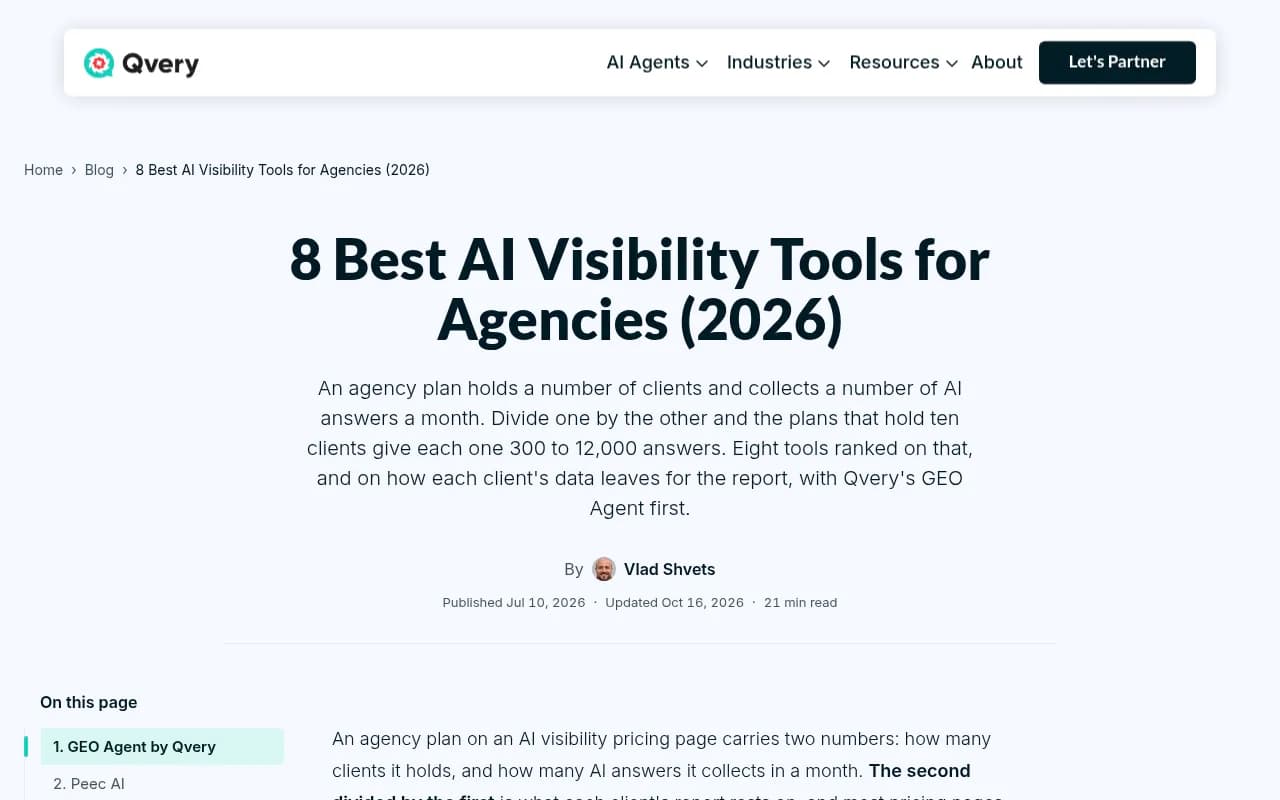
Run your own version. Take the monthly response allowance, divide by clients, then divide by how many prompts and engines you want to run daily. A plan that looks generous for ten clients can be thin for thirty. Per-project step-ups also bite: Promptwatch's self-serve plans jump from 2 projects at $245 to 5 projects at $579, which is why agencies are usually better off on the dedicated agency tiers.
White-label: what to test in a trial
I found no independent review that verifies white-label depth, so test it yourself:
- Export a report and read the footer, metadata and file name for vendor branding.
- Check whether the link goes to a custom domain or a vendor subdomain.
- Send a scheduled report to a test inbox and check the sender address.
- Create a read-only client login and see what they can and cannot click.
- Confirm it works on the plan you will actually pay for, not a higher tier.
For related options in the same category, the directory at bestgeosoftware.com lists more GEO platforms, and ai-rank-tools.com covers rank trackers specifically.
Pair it with a reporting layer
If your tracker's white-label output is weak, a general reporting tool can sit on top. AgencyAnalytics offers white-labeled client portals, custom domain and email, and per-client pricing with unlimited data sources, which makes it a reasonable shell for multi-channel retainers.
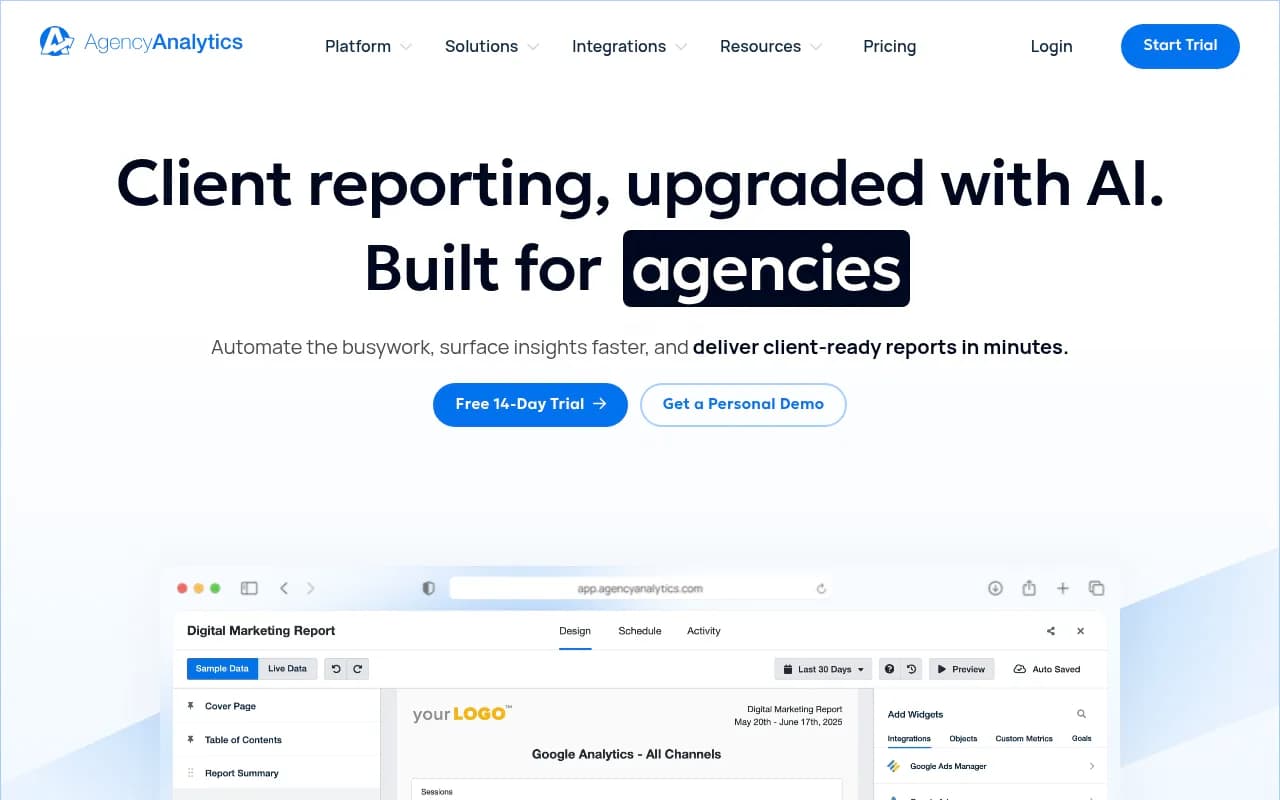
Push AI visibility data into it via Looker Studio or API where supported.
Which one should you pick
- You want to report and also fix: Promptwatch agency plans.
- You need classic rankings and AI in one login: Nightwatch or SE Ranking.
- You have many small clients and a tight budget: Rankscale or Rank Prompt, after verifying white-label output.
- You want competitor benchmarking: Peec AI.
- You are pitching a lead tomorrow: any free scan or small plan, then upgrade after you win.
And one honest warning. Pricing pages move, engines get added and dropped, and nearly every comparison post (including the ones behind this guide) was written by a vendor with a product in the list. Run two trials with a real client's prompts, and judge the output the client will actually see.
If you are also deciding whether to run this work in-house or hand it off, 1001 SEO Media is an agency that does technical SEO and AI search work for clients.