Key takeaways
- Classic local rank trackers (Local Falcon, BrightLocal, Nightwatch, GeoRanker) measure Google Maps and the local pack from specific coordinates. They do not all measure what ChatGPT or Google AI Overviews say.
- City-level tracking averages a whole metro area into one number. Coordinate targeting, down to a pin and a radius, shows how you rank from the street where your customers actually are.
- For AI answers, location targeting is newer and less common. Promptwatch's local GEO/SEO targeting pins a monitor to exact coordinates so ChatGPT, AI Overviews and AI Mode answer as if asked from that spot.
- Most local businesses need two layers: a map-pack or geo-grid tracker, plus an AI visibility tracker that supports location.
- Check pricing on each vendor's site before buying. Credit-based models like Local Falcon's can get expensive fast with dense grids.
Why local tracking is a different problem
A national rank tracker asks one question: where does this page rank for this keyword? A local tracker has to ask where, as in from which spot. A plumber can be first in the map pack from the downtown office and invisible three miles out. Several of the vendor guides I read make the same point with Chicago as the example: a search from the Loop, from Wicker Park and from O'Hare can return three different local packs for the same keyword.
That is why a tracker that only lets you type "Chicago" gives a blurry picture. It averages dozens of competitive zones into a single position.
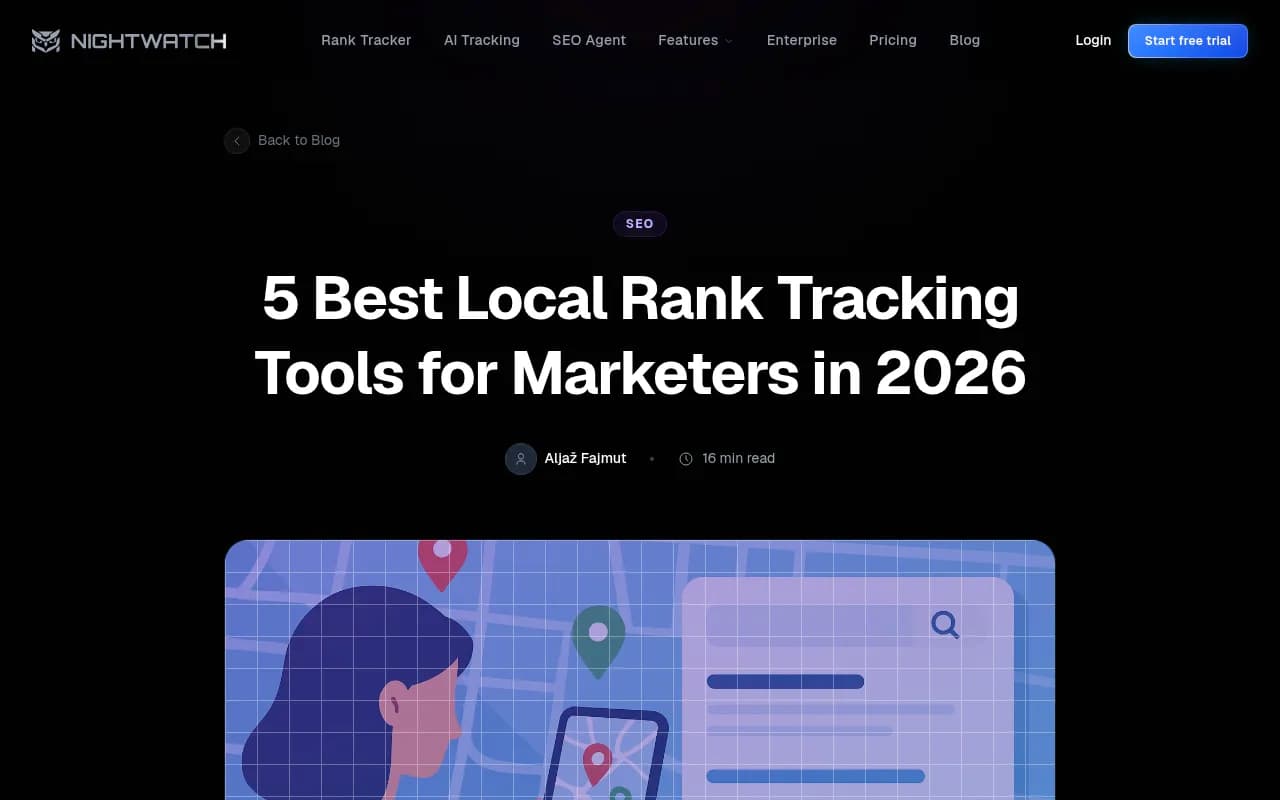
Nightwatch's guide cites a figure that the local pack captures 44% of clicks in local results. That number comes from a third-party blog (oneupweb) and I could not verify it, so treat it as directional. The practical point stands regardless: if you are not in the pack, you lose most of the nearby demand.
Now add AI answers. Someone asking ChatGPT "best emergency plumber near me" gets a short list of recommendations, not ten blue links. If you are not in that list, there is no page two to fall back on.
City-level vs coordinate targeting
The two methods answer different questions.
City, ZIP and postcode targeting
You pick a named area and the tool simulates a search from it. This is fine for tracking dozens or hundreds of locations at scale, and it is what most multi-location brands start with. Tools like AccuRanker and Advanced Web Ranking offer city, ZIP and postcode targeting, and AccuRanker also accepts custom coordinates according to one third-party roundup.
The weakness is averaging. Your ranking in a named city is really one sample point, usually near the center.
Coordinate and geo-grid targeting
Here you give the tool GPS coordinates, or a grid of them. A 5x5 grid checks 25 points around your business and shows a heatmap of where you rank and where you vanish. This is what makes neighborhood-level problems visible. If you are strong near your shop and gone two miles north, a grid shows it and a city check hides it.
The tradeoff is cost and volume. Every grid point is a separate check.
| Approach | Best for | Weakness |
|---|---|---|
| City or ZIP targeting | Many locations, reporting at scale | One sample point per area |
| Coordinate targeting | Specific storefronts, service areas | Needs you to choose points well |
| Geo-grid scans | Neighborhood-level diagnosis, dense cities | Credits or cost scale with grid size |
Map-pack and geo-grid trackers
These tools track Google Maps and the local pack. Several now bolt on AI visibility features, but their core strength is still the map.
Local Falcon
Local Falcon is the grid specialist. It sells credits rather than flat plans, and one credit equals one map pin in a scan. A 5x5 grid costs 25 credits and a 9x9 grid costs 81. From its pricing page, monthly plans run from Starter at $24.99 (7,500 credits) up to Premium at $199.99 (roughly 63,000 credits), with enterprise packages from $499 a month. Extra credits are $0.05 each and never expire, and new accounts get 100 free credits with no card. The page is slightly inconsistent about Premium credit counts, so confirm on the pricing page.
It tracks Google and Apple Maps, lets you adjust scan radius, supports service-area businesses, schedules scans, offers white-label reports, and has an AI visibility tracking feature. I did not verify exactly what that AI feature measures, so look at a demo before relying on it. Local Falcon suggests weekly or bi-weekly scans, and says the average user starts with about 10 keywords.
Budget note: ten keywords on a 9x9 grid is 810 credits per round. Weekly, that is a few thousand credits a month, so the grid size you pick decides which plan you need.
BrightLocal
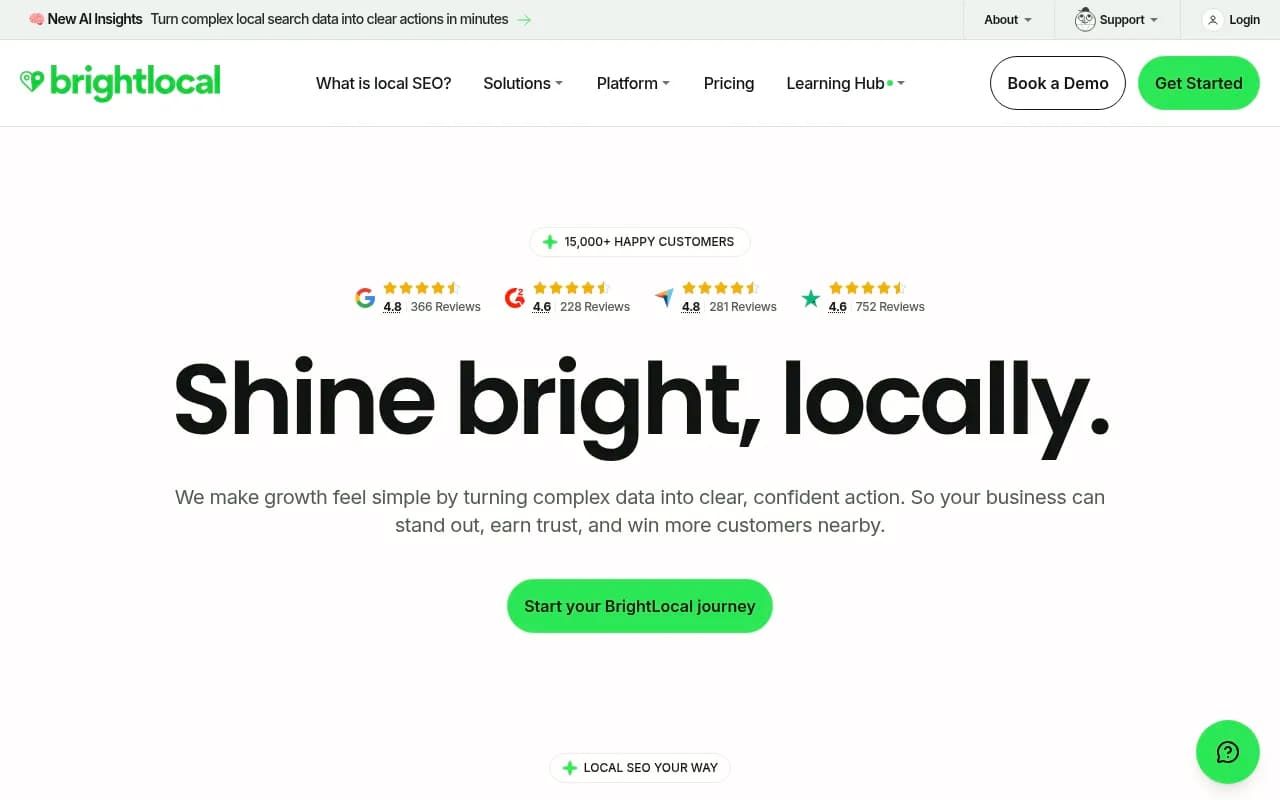
BrightLocal is the agency favorite. Its Track plan starts at $41 a month for one location billed monthly, or $369 a year. It includes local ranking for up to 100 keywords and 4 competitors, geo-grid visualisation for up to 5 keywords, citation monitoring, a Google Business Profile audit, and a Local AI Visibility Tracker marked as new. Multi-location pricing drops per location, for example $47 a month per location for 2 to 5 locations on annual billing. There is a 14-day trial with no card.
Targeting reaches zip, city and custom coordinates, per a third-party roundup. Manage and Grow plans add listing sync, post scheduling and review tools.
Nightwatch
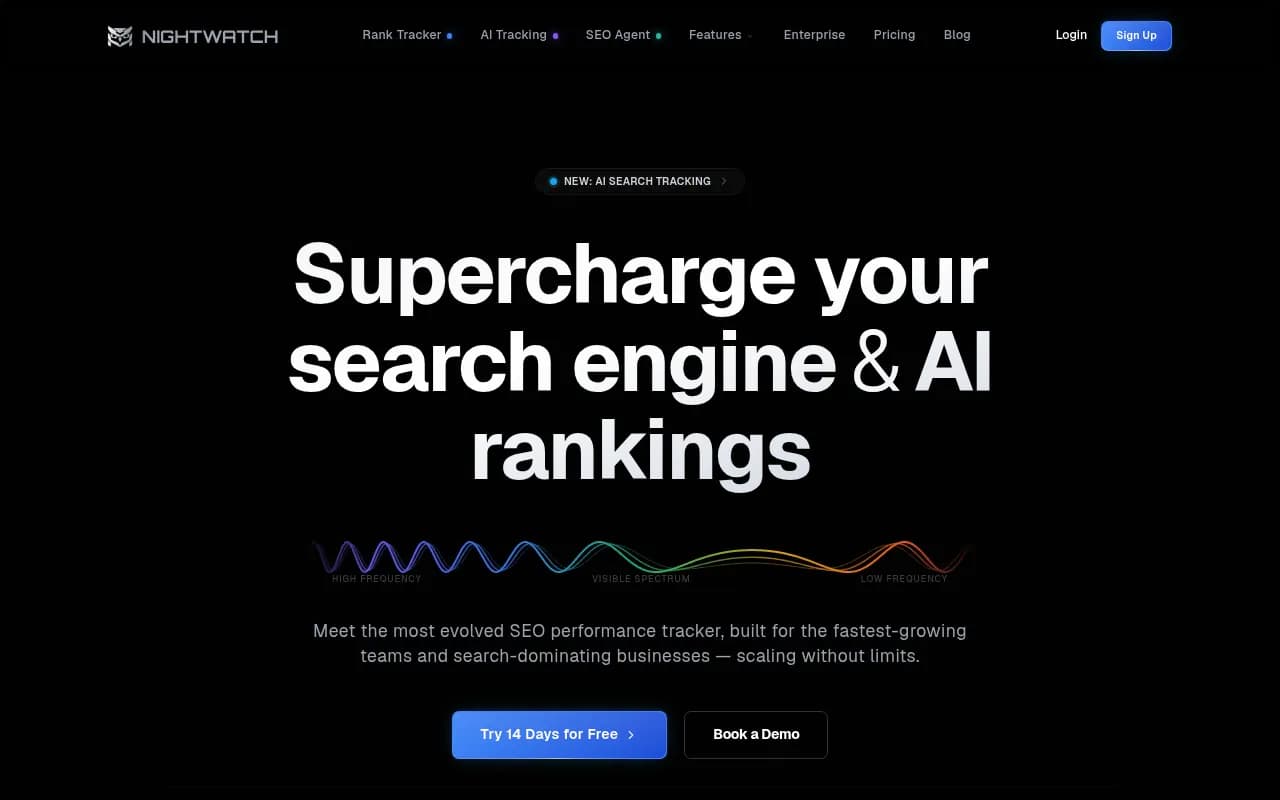
Nightwatch pitches visual geo-grid heatmaps across organic results, the local pack and Google Maps, plus Google Business Profile monitoring and white-label reports. Its own article puts pricing from $32 a month. It also sells an AI tracking product, so it straddles both layers. Note that the article ranking Nightwatch first is published by Nightwatch itself, so weigh that accordingly.
Other trackers worth a look
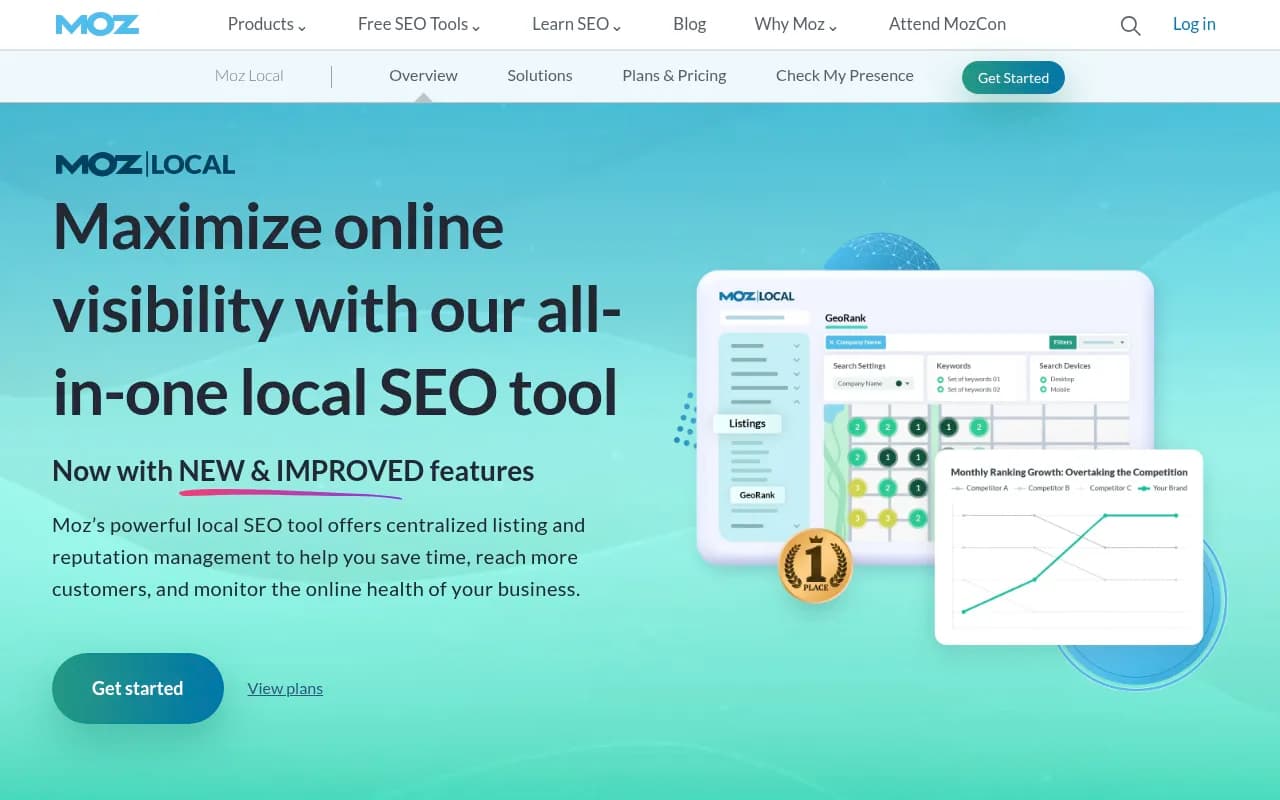
GeoRanker lets you specify exact GPS coordinates, cities or zip codes and is aimed at franchises and agencies, though pricing quoted by one roundup ($99 a month) is unverified. Whitespark combines citations and rank tracking and suits a pay-as-you-go style. Moz Local and Semrush add local features to broader suites.
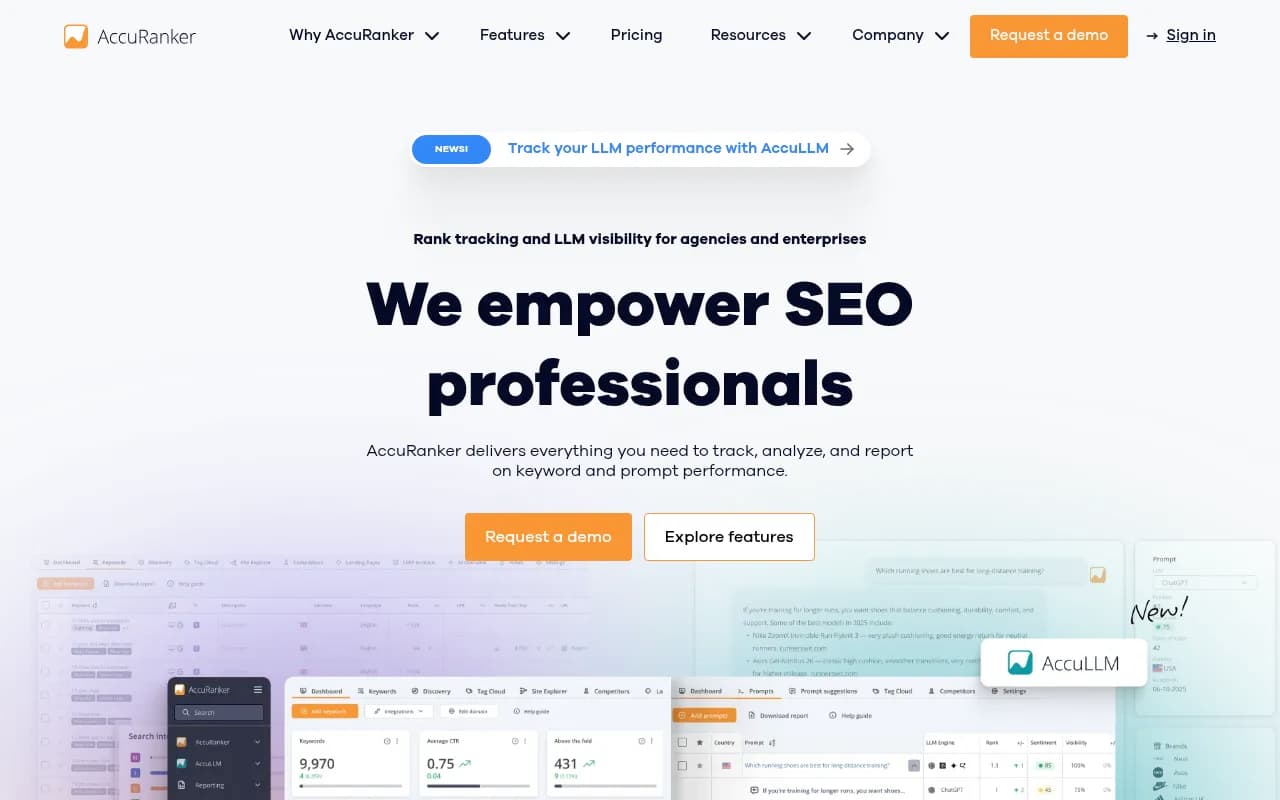
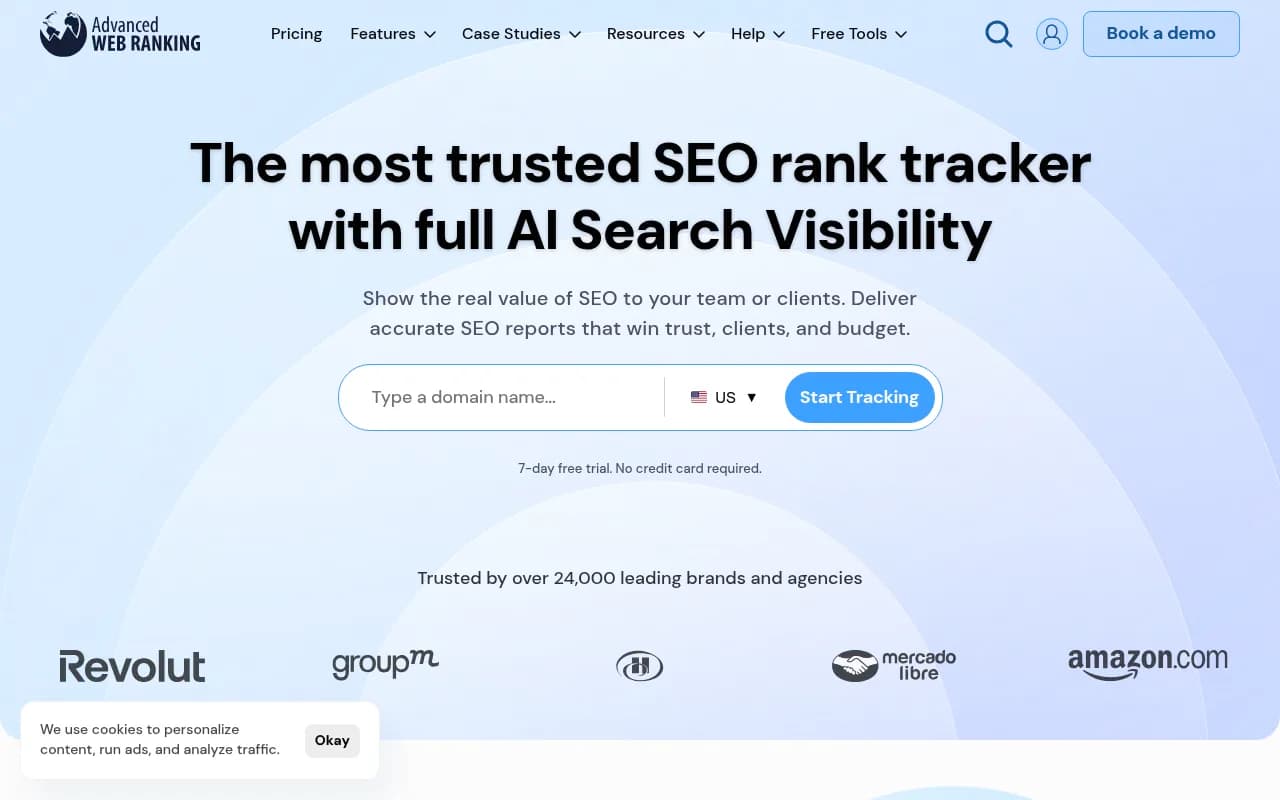
I did not verify the current features or pricing of Whitespark, GeoRanker, AccuRanker or Advanced Web Ranking directly, so check each vendor before committing. For a wider view of the category, the directory at ai-rank-tools.com lists rank trackers, including AI-focused ones.
Tracking local AI answers
Map trackers tell you about Google Maps. They do not tell you whether ChatGPT recommends you. That is a separate measurement, and it depends on location in a way many AI visibility tools ignore.
Two things from Promptwatch's research are useful here. First, ChatGPT cites roughly 5 sources per web-search answer, while Google AI Overviews and Perplexity cite about 10 (Promptwatch's average sources per response data). Few slots means being in the answer is competitive. Second, ChatGPT's fanout searches have gotten short. Average fanout query length fell from about 117 characters in December to about 53 from April, closer to keyword-style searches (Promptwatch's ChatGPT query fanout data). The report does not discuss local queries directly, but I read it as a nudge toward plain "service + city" phrasing in your headings and page titles. That is my interpretation, not a finding from the report.
For industries with local intent, the citation mix is worth studying too. In Promptwatch's travel report, booking and search sites earn more than half of ChatGPT citations, and in automotive, marketplaces like Autotrader and Cars.com outrank every car brand (travel data, automotive data). The lesson for a local business is that AI often cites aggregators and directories rather than your own site, so your listings on those platforms matter as much as your pages.
Promptwatch
Promptwatch is the option here built for coordinate-level AI tracking. Its local GEO/SEO targeting lets you pin a monitor to exact coordinates (search a place or drop a pin, with an accuracy radius from 20 m to 5 km), so ChatGPT, Google AI Overviews and Google AI Mode answer as if asked from that spot. That fits "near me" queries from stores, offices and franchises. It is available on the Business, Agency Scale and Enterprise plans, and also through the REST API and MCP. State and city tracking starts on Business, while country tracking is on every paid plan.

Beyond location, it tracks the real interfaces of ChatGPT, AI Overviews, AI Mode, Gemini, Perplexity and others rather than only API output, which can differ from what users see. Its Action Board and Content Agent then help fix gaps, and crawler logs show whether AI bots can read your site. Business is $579 a month, so it is priced for multi-location brands and agencies more than a single-shop owner. Confirm plans at promptwatch.com/pricing. The free AI Visibility Report is a no-login way to see how ChatGPT, Gemini and Perplexity describe you before paying for anything.
Tibly and other lighter options
Some tools in the catalog aim at smaller budgets. Tibly positions itself as AI visibility for local businesses, and Otterly.AI is a cheaper general tracker. I did not verify whether either supports city or coordinate targeting, so ask before you buy. A tracker with no location control will give you one national answer, which is not what a dentist in one town needs.


For a longer shortlist of AI-specific tools, see the GEO software directory at bestgeosoftware.com.
Comparison table
| Tool | Tracks | Location targeting | Starting price (verify) |
|---|---|---|---|
| Local Falcon | Google and Apple Maps, AI visibility | Geo-grid, adjustable radius | $24.99/mo (credits) |
| BrightLocal | Local rank, citations, GBP, AI tracker | ZIP, city, custom coordinates | $41/mo monthly, 1 location |
| Nightwatch | Organic, local pack, Maps, AI | GPS geo-grid | From $32/mo |
| GeoRanker | Local rank | GPS, city, zip | Unverified |
| Promptwatch | AI answers (ChatGPT, AI Overviews, AI Mode and more) | Exact coordinates, 20 m to 5 km radius | Business $579/mo |
Which setup fits your business
One location, tight budget
Start with Local Falcon or BrightLocal for the map pack. Run a 5x5 grid on your five most valuable keywords weekly. Then spot-check AI answers yourself by asking ChatGPT and Perplexity your money queries from your phone while physically in the service area. It is crude, but it tells you whether the problem exists.
Several locations
Use BrightLocal's multi-location pricing for rankings and citations, since the per-location cost falls as you add sites. Add an AI visibility tool with city targeting so each location is measured separately. One national score hides the weak branch.
Agency with local clients
You need white-label reporting on both layers. Local Falcon, BrightLocal and Nightwatch all advertise white-label reports. Promptwatch's agency plans cover unlimited projects with branded client access, and are worth comparing if AI visibility is becoming a line item in your retainers. If you want a team to run local SEO and GEO for you instead, 1001 SEO Media offers local SEO and AI search services.
Practical tips before you buy
- Choose three or four points for coordinate tracking: your storefront, the edge of your service area, and a neighborhood where a competitor is strong.
- Match grid size to budget. Going from 5x5 to 9x9 more than triples the cost of every scan.
- Track mobile and desktop separately where the tool allows. Local packs often differ.
- Pair rankings with outcomes. Rank without calls, direction requests or AI-referred visits is a scorecard, not a result.
- Re-test AI answers monthly. The Promptwatch data shows citation behavior can shift sharply in a single day, as when Reddit's share of ChatGPT citations dropped from about 4% to 0.5% on August 14, 2026 (Promptwatch's Reddit citation data).
Bottom line
Track the map and track the AI answer, from the same coordinates. For maps, Local Falcon and BrightLocal cover most needs. For AI answers, pick a tool that actually lets you set location, and test that claim in a trial. Promptwatch is the one I would shortlist if you need exact-coordinate targeting across ChatGPT and Google's AI surfaces.