Key takeaways
- A citation in an AI Overview is not a click. Organic CTR often drops 34% to 61% when an AI Overview appears, according to the SlateHQ 2026 statistics roundup, and being cited only softens that loss.
- Your tracker might be counting citations of your YouTube, Facebook or Reddit assets, not your own domain. Those rarely send traffic to your site.
- Citations rotate fast. Omnia's database found only 18.5% of AI Overview answers keep the same top-cited domain week over week, so a point-in-time "cited" check goes stale quickly.
- Google Search Console and GA4 don't separate AI Overview clicks from standard organic, so you have to build the diagnosis yourself.
- Work through the seven checks below in order. Most traffic drops with a "cited" status trace back to the first three.
The situation: green dashboard, red analytics
You open your AI Overview tracker. It says you're cited on a good share of your target queries. Then you open GA4 and organic sessions are down 20% quarter over quarter. Both views are accurate. They're just measuring different things.
The Omnia guide on tracking AI Overview rankings puts it well: manual spot-checks, GSC position data and traditional rank trackers all measure something adjacent to AI Overview visibility, not the thing itself. A tracker can say "cited" while a separate mechanism quietly takes your clicks.
Here is a diagnosis sequence. Run it top to bottom.
Check 1: Is the citation actually pointing at your domain?
This is the most overlooked cause. Many trackers report a brand as "cited" or "mentioned" without distinguishing which asset got the citation.
Promptwatch Data for Sep 28 to Oct 4, 2026 shows Google AI Overviews gets 12.2% of its citations from social platforms, about 26 times ChatGPT's share. YouTube is 4.28%, Facebook 2.38%, Reddit 2.15%, Instagram 1.61%, LinkedIn 1.55%, and TikTok 0.22%.
So if your tracker rolls up everything into "brand cited," you may be winning on a YouTube video or a Reddit thread. Those citations are real, but the click goes to YouTube or Reddit, not to your site.
How to test: export the cited URLs from your tracker and split them into three buckets: your domain, your owned social/video channels, and third-party pages that mention you. If the first bucket is thin, you've found your answer.
Check 2: Is Google routing citations to its own properties?
Promptwatch's June 2026 AI Overview citation share data (month-to-date, May 31 to Jun 26) shows YouTube at 4.16%, Reddit at 2.72% and google.com at 2.30%, all 2026 highs. google.com's share rose from 0.37% in January to 1.15% in May to 2.30% in June. YouTube and google.com together are about 6.5% of sources. These are partial-month figures, so treat the momentum with some caution.
The practical read: on some of your queries, Google answers with Maps, Shopping, Business Profile or other surfaces, and the AI Overview itself keeps the user on Google. Audit which of your target queries now cite google.com surfaces. Where that's the case, being present inside those properties (Business Profile, Merchant Center, Shopping data) matters more than another blog post.
Check 3: Did the AI Overview itself eat the click?
Even a perfect citation sits inside a box designed to answer the question. The SlateHQ roundup says organic CTR often drops 34% to 61% when an AI Overview appears, and that informational CTR is down by half. It also reports that citation overlap with the organic top 10 has fallen below 54%. Ahrefs' December 2025 update put the click reduction at roughly 58%. I'd treat these as directional, since studies use different query sets, and verify them against the primary sources before quoting them to a board.
The point is simple. If an AI Overview now appears on queries where it didn't last year, your traffic can fall while your citation count rises. Both can be true at once.
How to test: take your top 50 landing pages by clicks a year ago. For each, list the main queries and check whether an AI Overview now shows. Compare click and CTR trends in GSC for queries with and without one. If the drop concentrates in queries that gained an Overview, this is surface compression, not a content failure.
Check 4: Are you cited, but for queries that never sent traffic?
Trackers usually run a fixed prompt set. You choose it, often from keywords you wanted to win, not the ones that fed your revenue. A page can be cited for ten long-tail variants that nobody searches while losing citations on the one head query that drove 40% of its clicks.
Compare your tracked query list against your top GSC queries by clicks. Any head term missing from the tracker is a blind spot. Add it, and weight your reporting by actual click value, not raw citation count.
Check 5: Did your citation position or format change?
A citation buried in an expandable source list behaves very differently from an inline link next to the answer text. Many trackers store only a binary "cited: yes/no." Look for tools that record position within the source list, and spot-check manually for your top 10 queries.
Content type matters too. Promptwatch's July 2026 data on AI Overviews citation types shows the mix was listicles 18.0%, product pages 16.3%, how-tos 15.1%, news articles 13.5%, video 5.9%, social posts 5.1%, landing pages 4.7% and comparisons 3.6%. Product pages overtook listicles as the most cited format from July 28, ending the month at 17.9% against 16.2%. Listicles averaged about 26% in Q1, and video rose from about 2.7% in January to over 6% by late July.
If your cited page is a listicle and Google is shifting toward product pages and video for those queries, your slot is at risk even while your tracker still shows green.
Check 6: Is the citation unstable?
Omnia's figure of 18.5% week-over-week stability for the top-cited domain means that for more than 80% of queries, the citation landscape shifts every week. A weekly or monthly snapshot can easily catch you on a good day.
Signs this is your problem:
- Your tracker's "cited" rate swings by 10 points or more between runs.
- Traffic dips arrive in waves, not a single step.
- Competitors appear and disappear in the source list.
The fix is cadence. Track a fixed query set daily or at least weekly, store history, and judge by rolling averages. Citation rate over four weeks is a better KPI than any single reading.
Freshness plays into this as well. The Frase analysis argues AI engines weight recency more aggressively than Google does, so a page that holds its organic rank for years can quietly drop out of AI answers as newer content appears. Check the publish and update dates on pages that lost citations.
Check 7: Is your measurement hiding the real drop?
Google Search Console doesn't isolate AI Overview clicks. GA4 reports them as ordinary organic search with no distinguishing parameter. So a page can lose its citation and GSC shows nothing until the traffic decline is weeks old, with no hint of why.
Two workarounds help:
- Annotate. Log every date your tracker shows a citation gain or loss, then overlay it on GSC clicks for the same page. Lag of one to three weeks is typical.
- Segment by query type. Use GSC regex filters for question-style queries (who, what, how, why, best) and compare their CTR trend to navigational and branded queries. A CTR collapse on informational queries with stable impressions is the classic AI Overview fingerprint.
Also confirm the basics aren't the culprit: a technical issue such as a robots rule, a slow template or a canonical change can drop traffic at the same time and get blamed on AI.
Diagnosis table
| Symptom | Likely cause | Test | First fix |
|---|---|---|---|
| Cited rate up, clicks down, social assets in source list | Citation goes to YouTube/Reddit/Facebook, not your domain | Split cited URLs by owner | Link your owned channels back to key pages |
| Drop concentrated on informational queries | AI Overview now answers the query | Compare CTR with and without Overview | Target queries with deeper intent or products |
| Clicks fall on queries where google.com is cited | Google routing to its own properties | Audit cited URLs for google.com | Optimize Business Profile, Merchant Center |
| Tracker green, head term missing | Prompt set doesn't match revenue queries | Compare tracker list to top GSC queries | Add head terms, weight by clicks |
| Citation swings week to week | Normal AI Overview volatility | Check history, not snapshots | Daily or weekly tracking, rolling average |
| Citation lost on older pages | Freshness decay | Check last updated date | Refresh stats and examples |
| GSC shows no explanation | Measurement gap | Annotate and segment by query type | Build a manual overlay report |
Which tools help with this diagnosis
No single tool answers every check above. You need citation tracking, search data and some form of traffic attribution. Here is how the options in our catalog map to the job.
Citation tracking and attribution
Promptwatch is the one I'd start with if you need to go beyond "are we cited." It tracks the actual interfaces of Google AI Overviews and AI Mode, ChatGPT and other engines, and it pairs that with visitor analytics for AI-referred traffic, Google Search Console and Bing data per page, and citation analytics that show which of your pages get cited and which Reddit, YouTube or LinkedIn posts do. That combination speaks directly to checks 1, 4 and 7.

Omnia, whose research appears throughout this guide, focuses on weekly citation tracking and competitive shifts over time.
SE Ranking and Ahrefs Brand Radar are options if you already live in those suites and want AI Overview data next to your classic rank tracking.
Profound targets enterprise teams with larger budgets and more complex reporting needs.

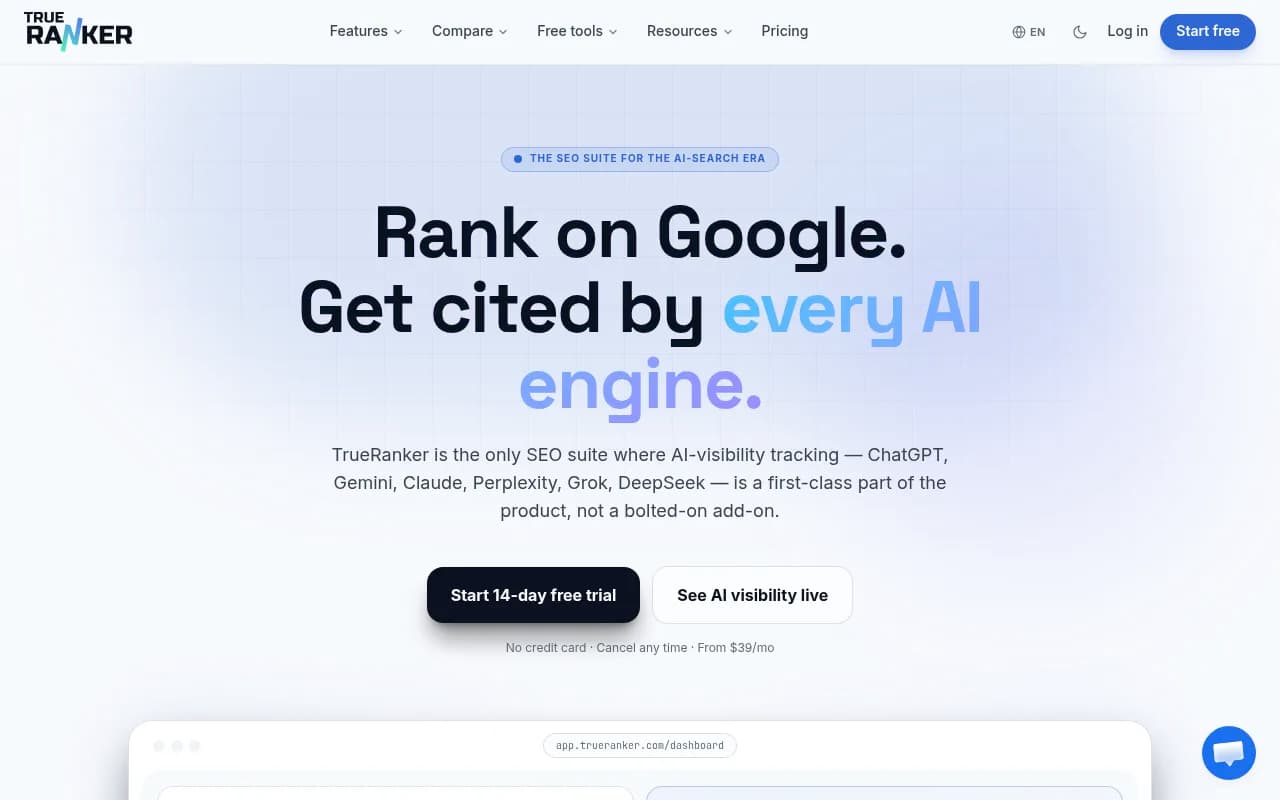
For a lighter-weight combined view of Google rank and AI citation, TrueRanker is a simple option.
Search data you already have
Google Search Console remains the source of truth for impressions, clicks and CTR. It can't isolate AI Overview clicks, but it is where you'll see the CTR collapse on informational queries.
Content refresh
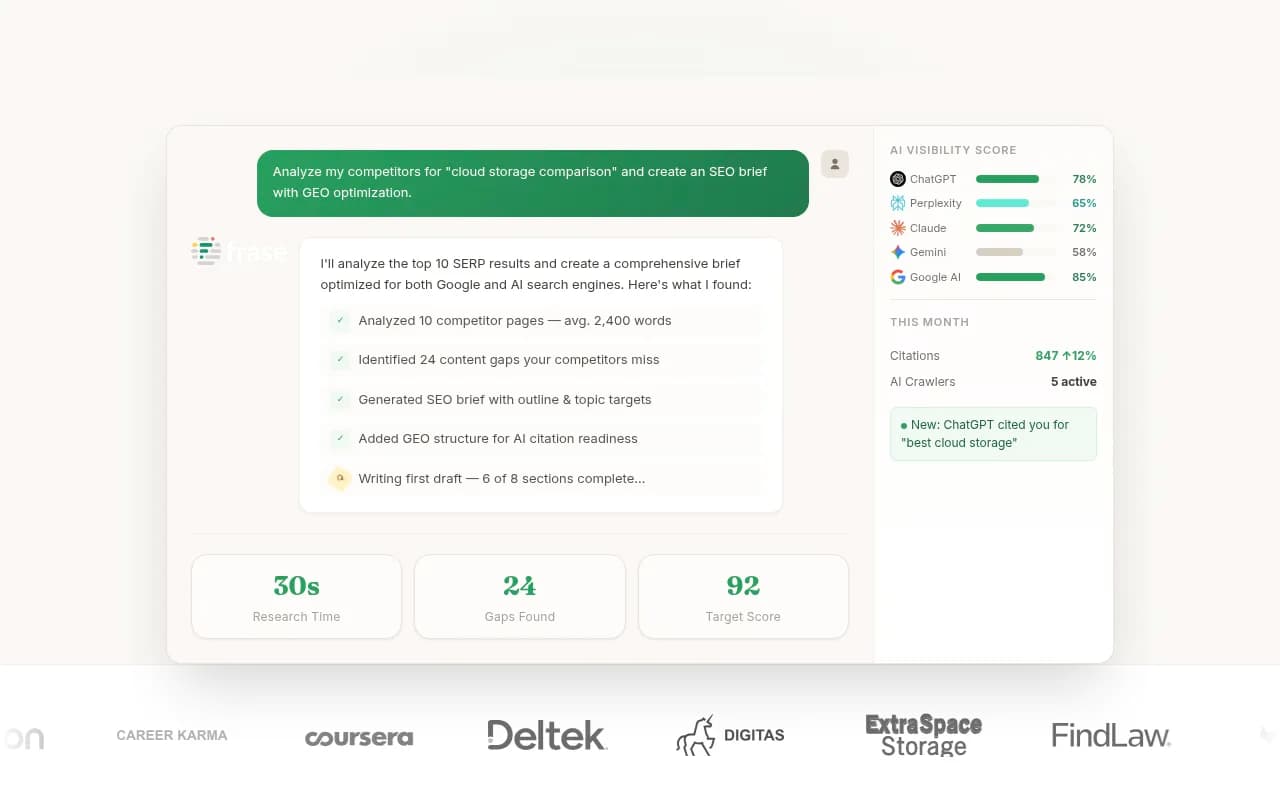
If Check 6 points to freshness decay, a content optimization tool such as Frase can help you find stale pages and update them.
| Need | Tools to look at | Notes |
|---|---|---|
| Citation tracking plus traffic attribution | Promptwatch | Visitor analytics, citation breakdown, GSC overlay |
| Weekly citation history | Omnia | Competitive shift tracking |
| Add-on to existing SEO suite | SE Ranking, Ahrefs Brand Radar | Convenient if you already pay for the suite |
| Enterprise reporting | Profound | Higher price tier |
| Click and CTR baseline | Google Search Console | Free, no AI Overview segment |
If you're still shopping, the directories at ai-rank-tools.com and bestgeosoftware.com list more AI rank trackers and GEO platforms.
A weekly routine that catches this early
Here is a simple cadence that costs about an hour a week once it's set up.
- Monday: pull tracker data for your fixed query set. Note citation changes since last week, and which asset (domain, YouTube, Reddit) got each citation.
- Monday: pull GSC clicks and CTR for the same queries. Flag any with a CTR drop of 20% or more.
- Tuesday: for each flagged query, search it manually in a clean browser, in your target country, and screenshot the AI Overview. Record whether you're cited, in what position, and whether google.com or YouTube appears.
- Wednesday: classify each flagged query using the diagnosis table. Move pages that need a refresh into your content queue.
- Monthly: recheck your tracked prompt list against your top GSC queries and add missing head terms.
What to tell your boss or client
The honest message is that citation share and traffic have decoupled. Being cited is necessary on a growing share of queries, but it isn't sufficient to protect clicks. Report three numbers side by side: citation rate on your own domain, CTR on queries with an AI Overview, and AI-referred sessions or conversions where you can measure them. Leave out the single "visibility score" that hides all this.
And resist the urge to blame content quality first. In my experience the cause is far more often one of the first three checks: the citation points somewhere else, Google keeps the user on its own surfaces, or the Overview simply answers the question without a click.
Bottom line
If your tracker says cited and traffic is down, start with who owns the cited URL, then check whether Google answered the query on its own surfaces, then compare CTR on queries with and without an Overview. Those three checks explain the majority of cases. Verify the third-party statistics against primary sources before you put them in a deck, and use first-party data such as Promptwatch Data and your own GSC exports wherever you can.