Key takeaways
- Automated SEO runs a fixed task on a trigger or schedule. Agentic SEO plans, acts, and checks the result inside a scope you define.
- A useful test: does the tool have a trigger, a scope, permission to change things, and a review step? Most tools marketed as agentic meet two of the four.
- Automation is still the right answer for rule-based, high-volume jobs like status code checks. Agents earn their keep on recurring work that needs judgment.
- Agents that edit live sites create real risk. Giving one write access to robots.txt or a WAF could cut you off from AI engines.
- The distinction matters most for AI search, where citations shift quickly and a quarterly audit goes stale fast.
Why this question keeps coming up
Every SEO tool now says it is "AI agent powered." Keyword research, content briefs, internal linking, programmatic pages, content updates: all of it gets the same label. A thread on r/AI_Agents asked the obvious question, whether agentic SEO will replace traditional workflows, and the honest answer in the replies was mostly a shrug, because nobody agrees on what the word means.
So here is a working definition, and I will say up front that it is an opinionated one. The vendors writing about this (Siteimprove, Search Atlas, Stridec, Fimo, Semrush) each define "agentic" in a way that happens to fit what they sell. Treat all of it as framing, mine included.
Automated SEO: fixed tasks, no judgment
Automated SEO is software doing a predefined thing without you clicking the button. A weekly rank report. A crawler that emails you broken links. A script that regenerates your sitemap. A rule that adds alt text from a template.
Fimo's write-up puts it well: automation runs a fixed task on a schedule, like a weekly rank report. It reports. It does not decide anything.
Automation covers a lot of the job, and it works. Fimo splits it into roughly four areas:
- Research, monitoring and reporting: pulling rankings, traffic and backlink data into dashboards. Mature, close to solved.
- Content generation: briefs, meta descriptions, drafts. This is where the 2025 hype and the quality problems both piled up.
- Technical maintenance: schema, redirects, internal links, sitemaps. Unglamorous, and it protects the most traffic.
- Content maintenance: refreshing older pages, which matters more now that AI systems favor fresh sources.
If a task is the same every time, automate it and move on. Semrush makes the same point in its agentic SEO guide: to check 50,000 URLs for a status code, a script beats an agent. An agent adds overhead and variance to a job that needs neither.
Agentic SEO: goals, not just rules
An agentic system gets a goal and a boundary, then works out the steps. It pulls its own data, picks an action, makes the change or proposes it, and checks whether the change worked. Search Atlas calls this a continuous loop connecting data, decisions and deployment. Semrush frames it more carefully: handing a defined workflow to an AI that retrieves its own data and follows a documented method, returning the same analysis every time.
That last bit matters. An agent that produces a brilliant competitor analysis once and an unrecognizable one next month has not automated anything.
The four-part test
The most practical filter I found comes from Fimo. A tool is genuinely agentic only if it has:
- A trigger, so it knows when to act.
- A scope, so it knows what it may touch.
- Permission to make changes rather than just flag them.
- A review step, so a human can approve before changes go live.
Most tools hit two of those. They detect the problem and send an email. That is automation with a nicer name, and it just moves the alert from your head to your inbox.
A three-way comparison
Semrush draws a useful line between workflow automation, AI-assisted SEO and agentic SEO. The axis is who decides what happens next.
| Workflow automation | AI-assisted SEO | Agentic SEO | |
|---|---|---|---|
| Who chooses the steps | You, in advance | You, per conversation | You define the method once |
| Data source | Wired-in integrations | Whatever you paste in | The system retrieves it |
| Unexpected input | Breaks or produces nonsense | Depends on your phrasing | Follows a rule or escalates |
| Consistency | Perfect but rigid | Low | High and adaptable |
| Best for | High-volume, unchanging tasks | Exploration, one-off questions | Recurring work needing judgment |
| Fails on | Anything the rules missed | Anything you need twice | Tasks with no repeatable method |
Side by side: what actually changes
| Dimension | Automated SEO | Agentic SEO |
|---|---|---|
| Trigger | Schedule or fixed rule | Signal or goal, evaluated each run |
| Output | Report, alert, templated change | Decision plus action plus verification |
| Handles novelty | Poorly | Within its scope, reasonably |
| Human role | Interprets and implements | Sets direction, approves, audits |
| Main risk | Missed issues | Wrong actions at scale |
| Typical examples | Rank reports, sitemap sync | Fix-and-PR workflows, content agents |
Does the difference matter in 2026?
Yes, but not for the reason vendors give. The pitch is usually "traditional SEO can't keep up." The better reason is that the things you are optimizing for now move faster than a human audit cycle.
AI search punishes stale work
Take ChatGPT's query fanouts. Promptwatch's fanout data shows the average number of searches per response eased from about 2.15 in early December 2025 to roughly 1.84 by early March 2026, then returned in April at exactly 1.0 per response. Average fanout query length dropped from about 117 characters to the high 80s, then to around 53. Separately, on August 8, 2026 ChatGPT started using the site: operator at scale, jumping from about 0.4% to about 17% of fanout queries overnight (Promptwatch Data on the site: operator, query fanout trends).
Headings written to match last quarter's query behavior may already be off. A one-off audit won't catch that. Continuous monitoring will, and an agent that re-checks the keyword-to-heading mapping after each ChatGPT update is a legitimate agentic use case.
Content also ages. In Promptwatch's content half-life study, landing pages and docs stayed cited longest among pages ChatGPT cited on July 6, 2026, while news lost half its pages within 36 days. Different content types need different refresh rhythms, and tracking that by hand across a big site is tedious.
Crawler access is a monitoring job and a risk
Promptwatch's AI crawler traffic report covers IP-verified requests from June 8 to September 6, 2026. OpenAI made up 79.8% of verified AI crawler requests in the week of August 31 to September 6, down from 94.8% in early June. The report's advice is plain: check robots.txt, CDN and WAF rules for every major AI crawler, and compare your logs with that mix. A provider that is large in the chart but near zero in your logs suggests you are blocked.
That is a perfect agent task. It is also the clearest example of why scope matters. An agent with permission to edit robots.txt or WAF rules can fix a block, or create one. Same capability, opposite outcome.
What agents are good at, and what they are not
Fimo's list of things tools can't do is the most honest part of any vendor content I read. Paraphrasing and adding my own view:
- Intent judgment. No tool reliably knows the SERP for a term shifted from listicle to tutorial, or that a Reddit thread now owns the top slot.
- Editorial positioning. How you frame yourself against a competitor, which claims you drop. An agent lacks the stakes.
- Deciding what deserves to exist. Whether a page is written, merged or killed is a business call. Automate page generation without it and you get index bloat and a cleanup job longer than the mess took to make.
- Volume moderation. The thing people most want to automate and the one that backfires hardest, because Google's guidance rewards original first-hand content.
One vendor claims agentic tools hit 82-90% accuracy on routine optimizations like meta descriptions versus 95%+ for specialists. Those numbers come from a vendor blog with no method shown, so I would not plan around them. The qualitative point stands: routine work is fine to delegate, strategy is not.
The Siteimprove piece adds three adoption challenges that I think are real: trust in automation over search-critical elements like metadata and schema, platform fragmentation across Google, Copilot, ChatGPT and Perplexity, and deciding when agents act alone versus when humans step in. Too much automation costs brand control. Too little kills the speed benefit.
Tools by where they sit on the spectrum
The catalog is crowded, and the labels blur. Here is a rough sorting by what the tool does rather than what its homepage says.
| Tool | Mainly does | Closer to |
|---|---|---|
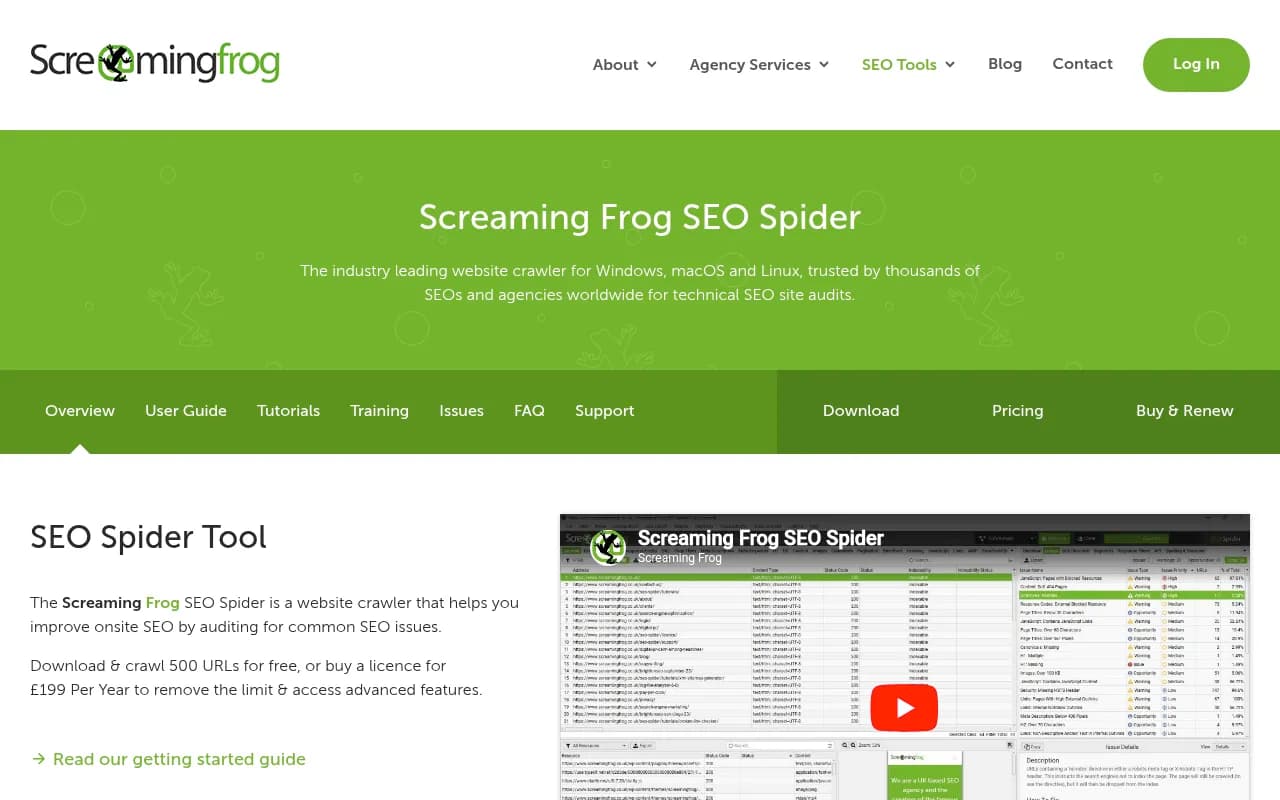
| Screaming Frog SEO Spider | Crawls and reports technical issues | Automation |
| Google Search Console | Free performance and indexing data | Data source |
| Nightwatch | Rank and AI search monitoring | Automation |
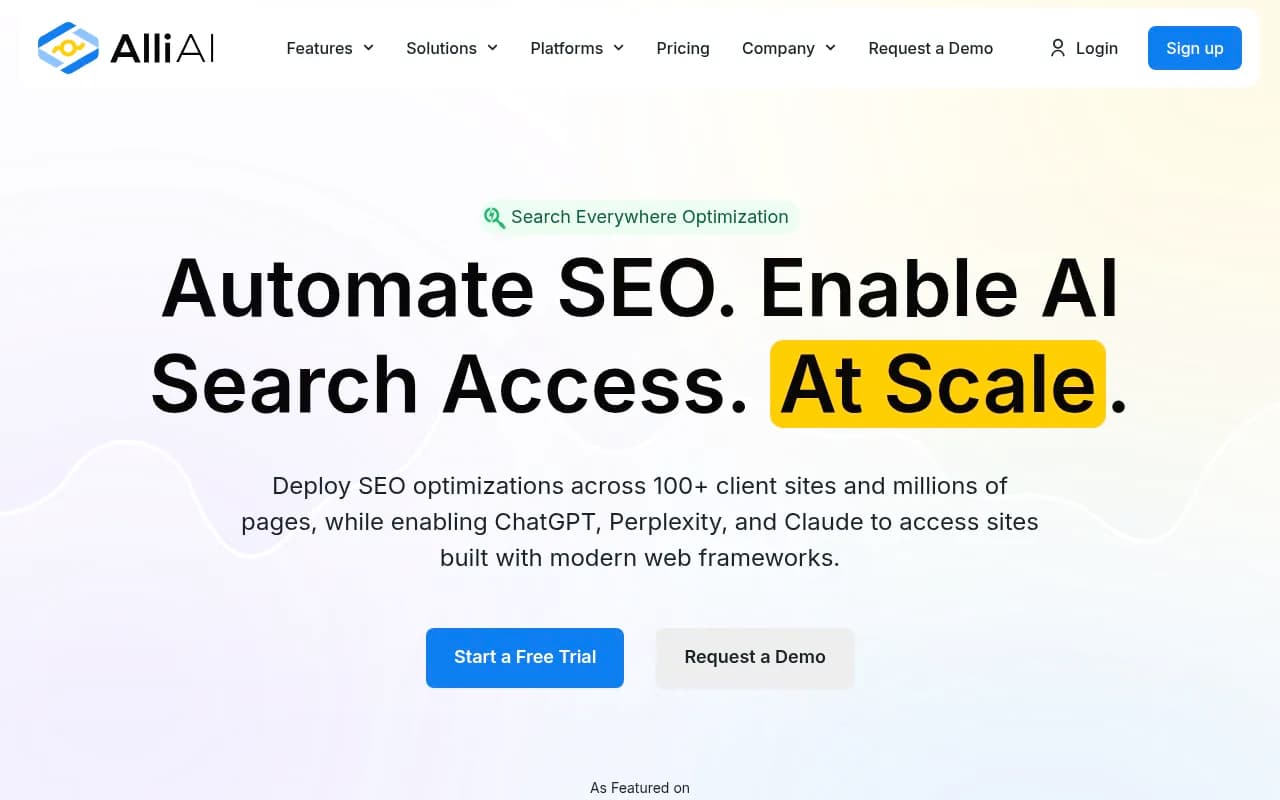
| Alli AI | Deploys on-page changes across many pages | Automation with deployment |
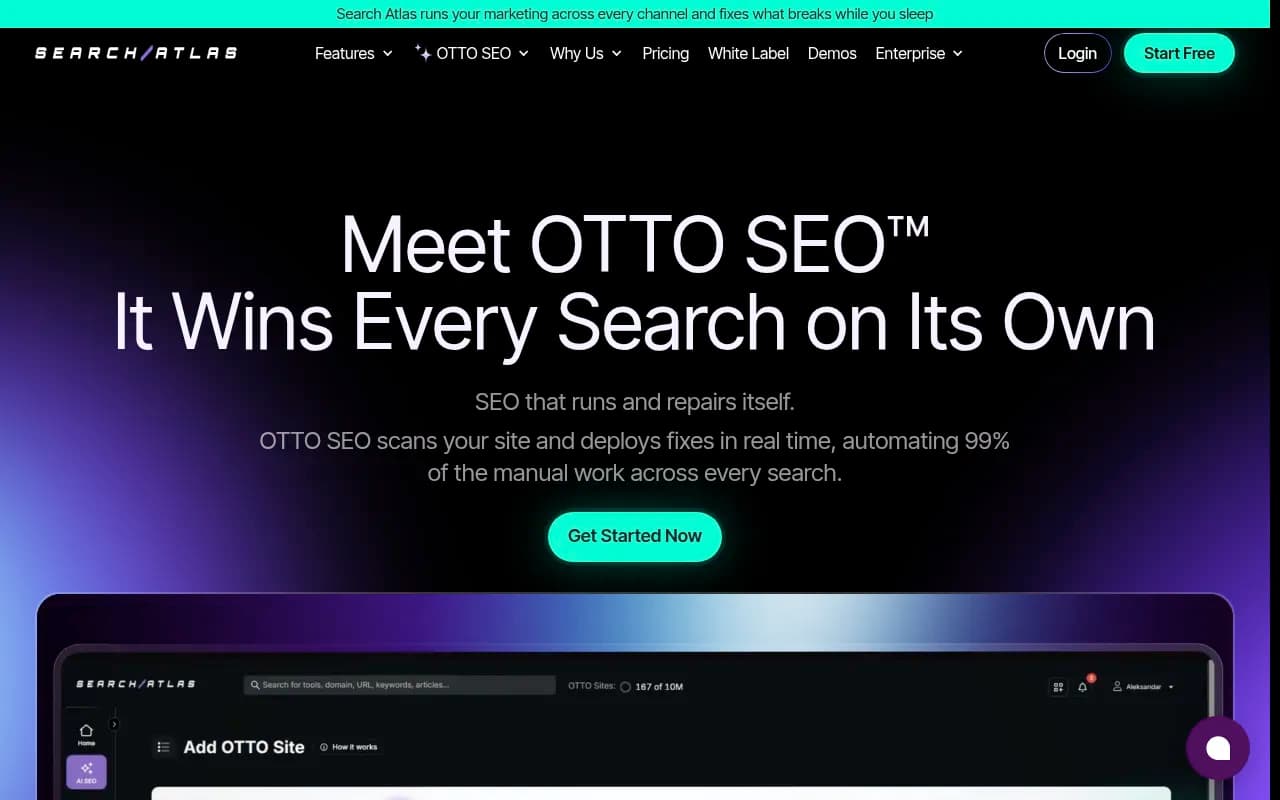
| OTTO SEO | Deploys SEO fixes in real time | Agentic |
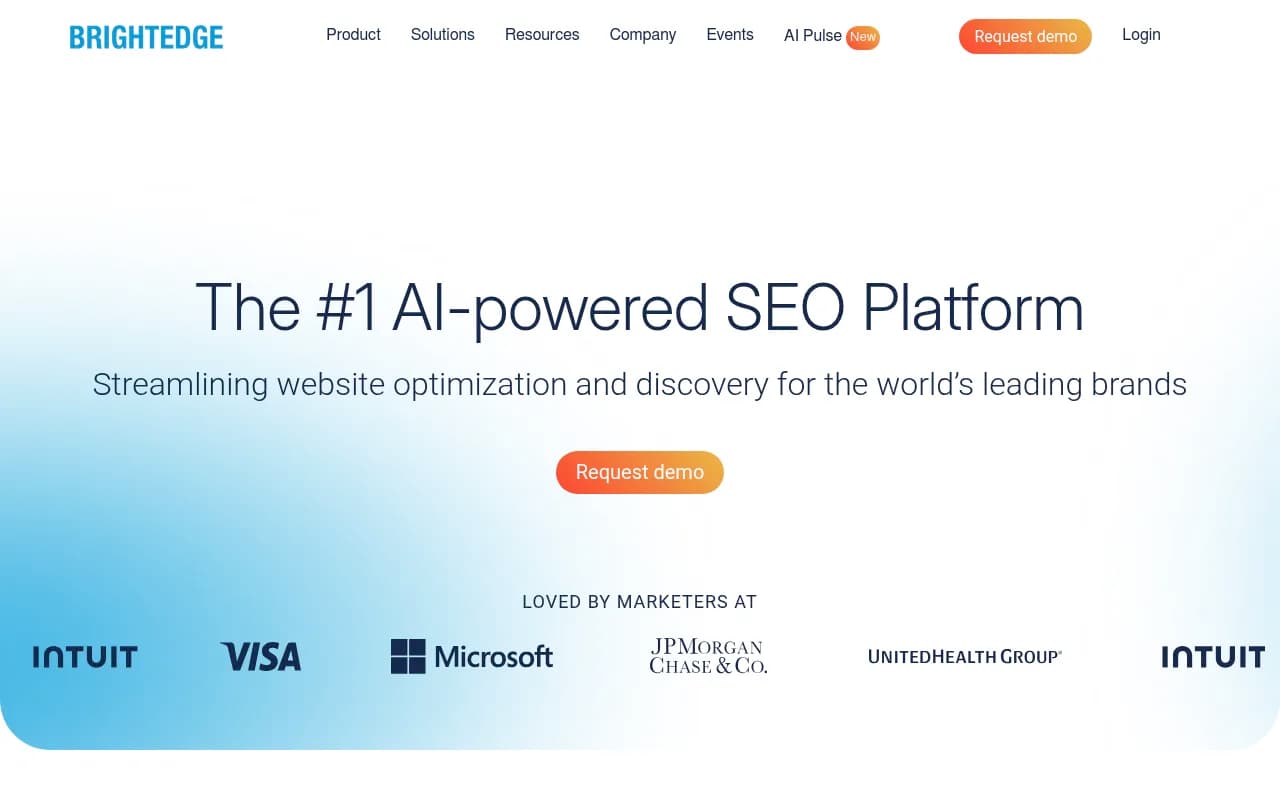
| BrightEdge | Enterprise optimization at scale | Mixed |
| Promptwatch | Finds visibility gaps, writes and publishes content, tracks results | Agentic |
Monitoring and crawling
For the dependable, rule-based layer, Screaming Frog is still the standard crawler, and Search Console is the free source of truth for impressions and indexing.
Deployment tools
Alli AI pushes on-page changes like titles, meta descriptions, schema and internal links across a site without per-page manual work, and rolls back what underperforms. That is automation with a deployment step. OTTO SEO from Search Atlas positions itself as an agent that deploys fixes in real time.
Enterprise suites like BrightEdge sit in the same neighborhood, with heavier governance and a higher price.
AI search, where agentic actually earns its keep
This is where I think the agent model fits best, because the loop is naturally closed: see a visibility gap, produce content, publish, measure whether AI engines cite it, repeat. Most trackers stop at the first step. Promptwatch is built around the whole loop. It tracks how you show up across ChatGPT, Google AI Overviews, Perplexity and others, shows which prompts you are missing, and its Content Agent writes and publishes to Webflow, Framer or WordPress with a review inbox, so you choose between approving each piece or running hands-off. Published pages are then tracked through crawler logs, citations and AI traffic, and underperformers return as actions. The review inbox is the human-approval step from the four-part test.

Trackers that mostly monitor, like Otterly.AI or Peec AI, are fine if you only want to know whether you were mentioned. They are on the automation side of the line.


For more options by category, the GEO software directory at bestgeosoftware.com and agenticseotools.com list far more than I can cover here.
How to decide what to automate and what to delegate
A simple filter works better than a feature checklist.
- List where your SEO hours go. Fimo's advice is to look at that first, then pick the tool that removes that specific job.
- Mark each task: same every time, or needs judgment? Same every time means a script or scheduled automation.
- For judgment tasks with a repeatable method (content decay review, competitor gap analysis, crawler access checks), write the method down and consider an agent.
- For anything touching live metadata, schema, robots.txt or redirects, require a review step and an audit trail. Fimo ships changes as reviewed commits for this reason.
- Start with one workflow. Semrush's own closing advice is to begin with one, not an autonomous SEO department.
A decent first agentic candidate is content decay. Pull period-over-period performance from Search Console, drop pages under a traffic floor, check indexation first, then look at rankings, demand, links and cannibalization. It is repetitive, method-driven and low risk because the output is a prioritized list, not a live change.
A note on rendering
One unglamorous prerequisite comes up in the research: if your pages depend on JavaScript to show content, crawlers and language models have to work harder, and some don't bother. Server-side rendering with clean structured output comes before any clever agent. No agent fixes a page that bots cannot read.
Where this leaves you
The label matters less than the four questions: what triggers it, what can it touch, can it change things, and who approves? If a tool answers all four, call it agentic. If it answers two, it is good automation, and that is fine, because plenty of SEO work should be boring and rule-based.
In 2026 the gap that hurts is between insight and action in AI search, where fanout behavior, crawler access and citations shift week to week. Close that loop with approvals in place, keep strategy and what-deserves-to-exist decisions with a person, and ignore anyone selling a fully autonomous SEO department.
If you would rather hand some of this to specialists than assemble tools, an agency like 1001 SEO Media combines technical SEO and generative engine optimization with senior people reviewing the output. Either route works, as long as someone owns the review step.