Key takeaways
- AI visibility monitoring tracks how your brand appears in AI-generated answers. It tells you what's happening.
- AI visibility optimization uses that data to improve your presence. It changes what's happening.
- Most tools on the market today are monitoring-only. They show you a score, then leave you to figure out what to do with it.
- A full-cycle approach combines gap analysis, content creation grounded in real prompt data, and result tracking -- not just a dashboard.
- The distinction matters because knowing you're invisible in ChatGPT is useless without a way to fix it.
Why this distinction matters right now
A few years ago, "AI visibility" wasn't a category. Now it's one of the fastest-growing areas in digital marketing, and the tools market has exploded to match. There are dozens of platforms promising to help you "track your brand in AI search" -- and most of them do exactly that. Track. Report. Stop.
That's fine if you just want to know where you stand. But if you want to actually appear more often when someone asks ChatGPT or Perplexity a question in your category, tracking alone won't get you there.
The difference between monitoring and optimization sounds obvious when you say it out loud. Monitoring is passive. Optimization is active. But in practice, the line gets blurry because many tools use the word "optimize" in their marketing while delivering a dashboard that shows you numbers and nothing else.
This guide cuts through that. Here's exactly what each category does, where the overlap is, and what a genuinely complete approach looks like.
What AI visibility monitoring actually does
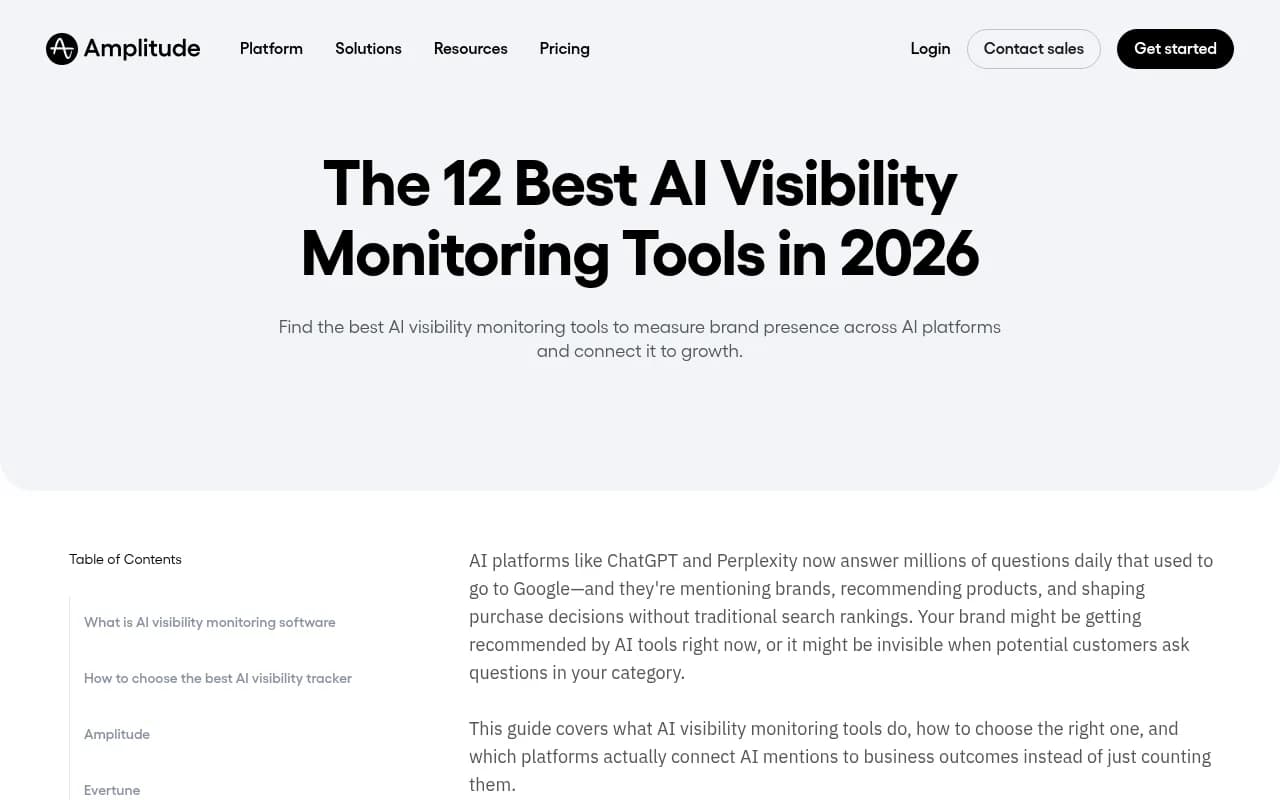
AI visibility monitoring is the practice of running queries across AI platforms -- ChatGPT, Perplexity, Google AI Overviews, Gemini, Claude, and others -- and analyzing the responses for brand mentions, citation patterns, and competitive positioning.
At its core, a monitoring tool answers questions like:
- Is my brand mentioned when someone asks about [topic]?
- Which competitors are being cited instead of me?
- Am I being cited with a link, or just mentioned in passing?
- How has my visibility changed over the past 30 days?
These are genuinely useful questions. Knowing that Perplexity mentions your competitor three times for every one mention of your brand is actionable intelligence -- in theory. The problem is that most monitoring tools hand you that data and consider their job done.
What good monitoring looks like
Not all monitoring is equal. The better platforms go beyond simple mention counts and give you:
- Prompt-level data: which specific queries trigger (or don't trigger) your brand
- Citation context: whether you're cited as a primary source or buried in a list
- Competitor heatmaps: side-by-side visibility scores across multiple AI models
- Historical trends: how visibility shifts over time as AI models update
- Multi-model coverage: separate tracking for ChatGPT, Perplexity, Gemini, Claude, etc., since they behave differently
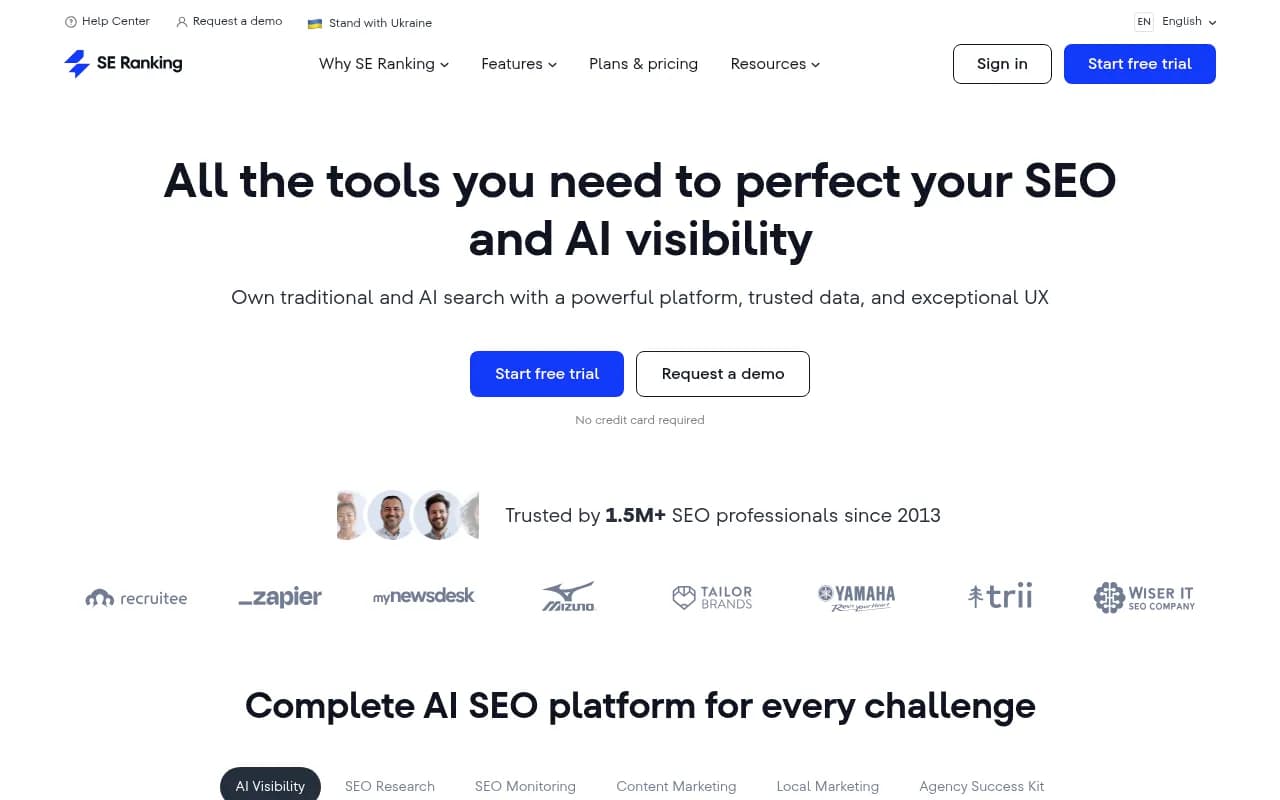
SE Ranking's AI Visibility Tracker is a good example of a monitoring-focused tool that goes reasonably deep on competitive data.
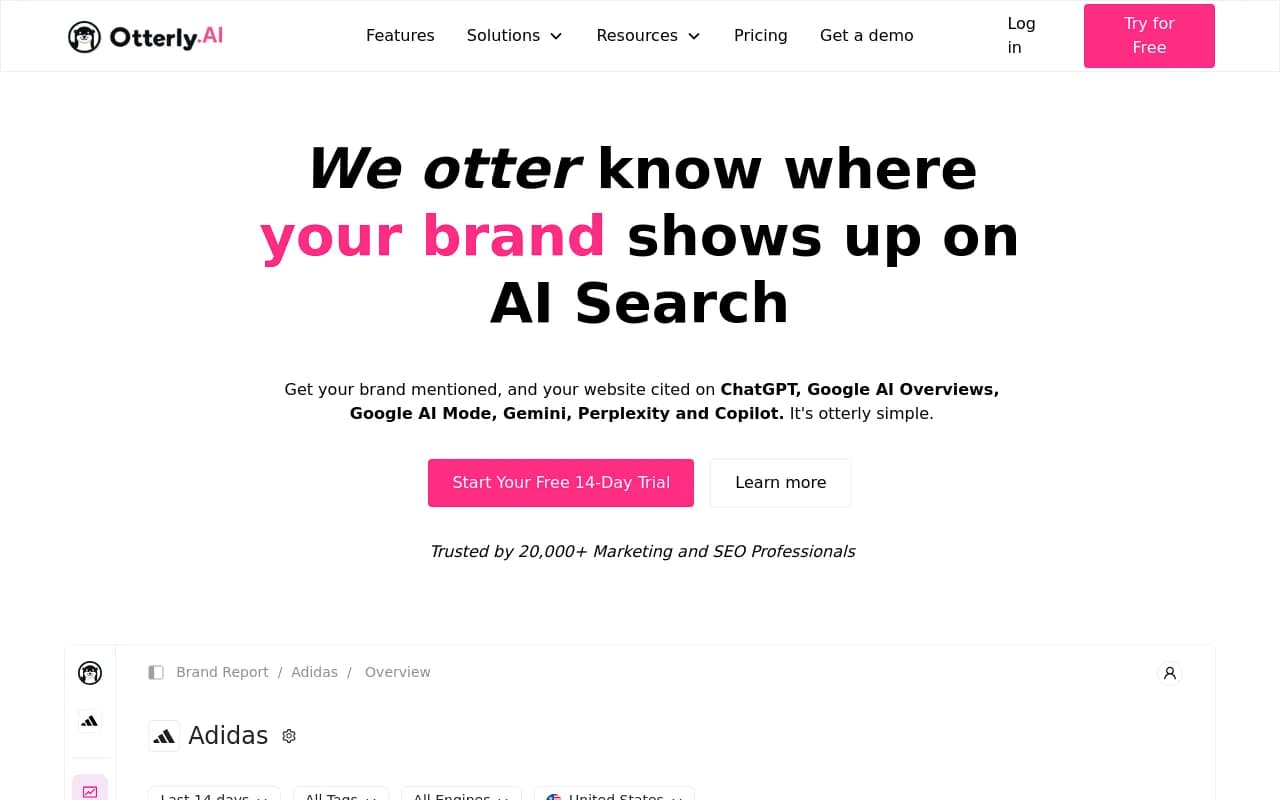
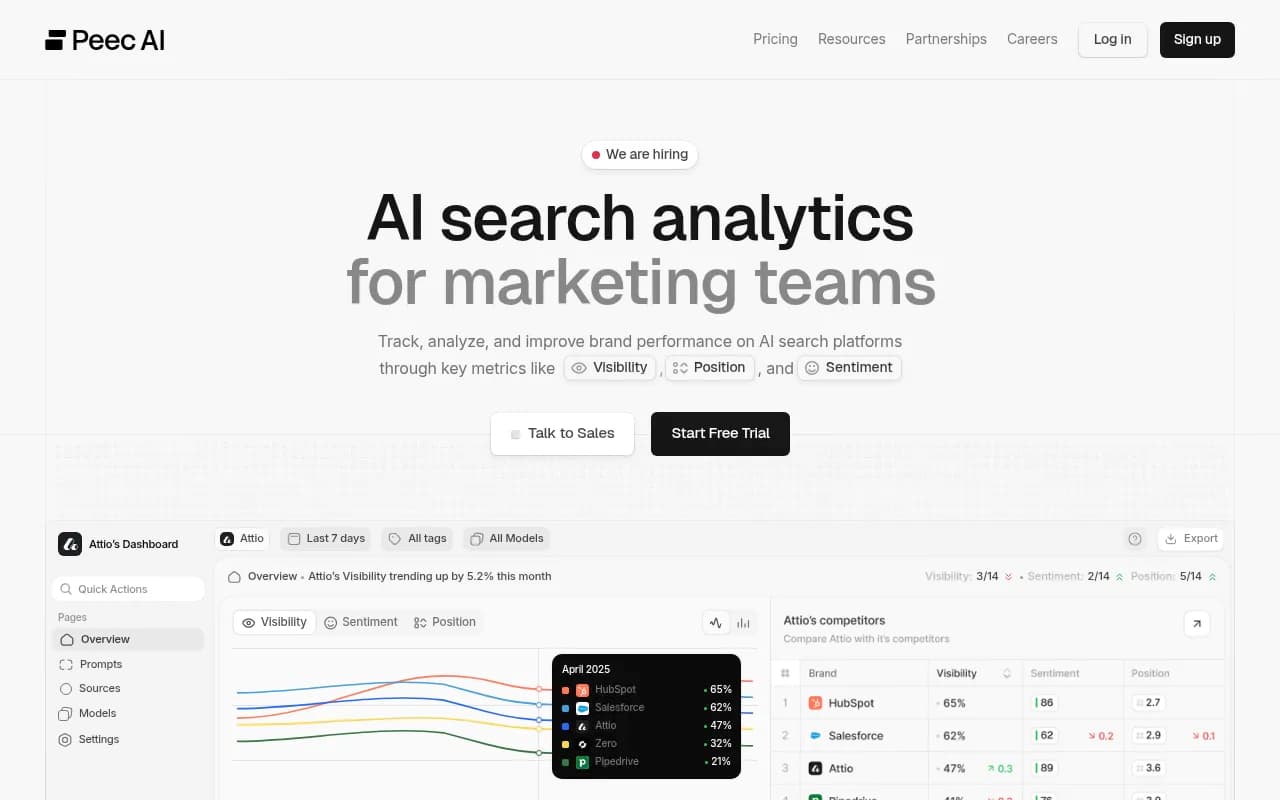
Otterly.AI and Peec AI are lighter-weight options that cover the basics at lower price points.
For enterprise teams, Profound and AthenaHQ offer more sophisticated monitoring with better data granularity.
The ceiling of monitoring-only tools
Here's the honest limitation: monitoring tells you the score at halftime. It doesn't tell you how to play the second half.
You can see that you're invisible for "best project management software for agencies" in ChatGPT. But the monitoring tool won't tell you:
- Which specific content gaps are causing that invisibility
- What topics and angles AI models want to see covered
- What to actually write to fix it
- Whether the content you publish is getting crawled by AI agents
That's where optimization comes in.
What AI visibility optimization actually does
AI visibility optimization (sometimes called GEO, or Generative Engine Optimization) is the active work of improving how often and how favorably AI models cite your brand. It starts with monitoring data but goes much further.
A genuine optimization workflow has three stages:
Stage 1: Finding the gaps
This is where monitoring ends and optimization begins. Gap analysis compares the prompts where your competitors appear against the prompts where you don't. The output isn't just "you're missing visibility here" -- it's a specific list of topics, questions, and content angles that AI models are already answering for your category but can't find on your site.
This is meaningfully different from a visibility score. A score tells you you're at 34%. A gap analysis tells you that AI models are citing your competitor's guide to "API rate limiting best practices" in 47 prompts where you have no relevant content.
Stage 2: Creating content that AI models actually cite
This is the part most tools skip entirely. Once you know the gaps, you need content that fills them -- and not just any content. AI models are selective about what they cite. They favor content that directly answers specific questions, demonstrates authority, uses clear structure, and covers topics with enough depth to be genuinely useful.
Content created for AI visibility looks different from traditional SEO content. It's built around the exact prompts users are asking, not just keyword clusters. It incorporates the specific angles and sub-questions that AI models fan out into when processing a query. It's written to be cited, not just ranked.
Stage 3: Tracking whether it worked
Publishing content and hoping for the best isn't optimization. The third stage is tracking whether AI crawlers actually visit your new pages, whether those pages move from crawled to cited, and whether your visibility scores improve as a result. This requires AI crawler log analysis -- knowing when ChatGPT's crawler or Perplexity's agent hit your site, which pages they read, and whether they encountered errors.
Most monitoring tools don't have this. They track AI responses but not the crawling behavior that precedes them.
The practical gap between the two categories
Here's a table that maps out where different tools and approaches fall:
| Capability | Monitoring-only | Full optimization |
|---|---|---|
| Brand mention tracking | Yes | Yes |
| Competitor visibility comparison | Yes | Yes |
| Prompt-level data | Sometimes | Yes |
| Answer gap analysis | No | Yes |
| Content brief generation | No | Yes |
| AI content creation | No | Yes |
| AI crawler log analysis | No | Yes |
| Page-level citation tracking | No | Yes |
| Traffic attribution from AI | No | Yes |
| Reddit/YouTube citation tracking | No | Sometimes |
The monitoring column is where most tools live. The optimization column is where the actual work happens.
Tools that try to bridge the gap
A handful of platforms are genuinely trying to cover both sides. The quality varies.
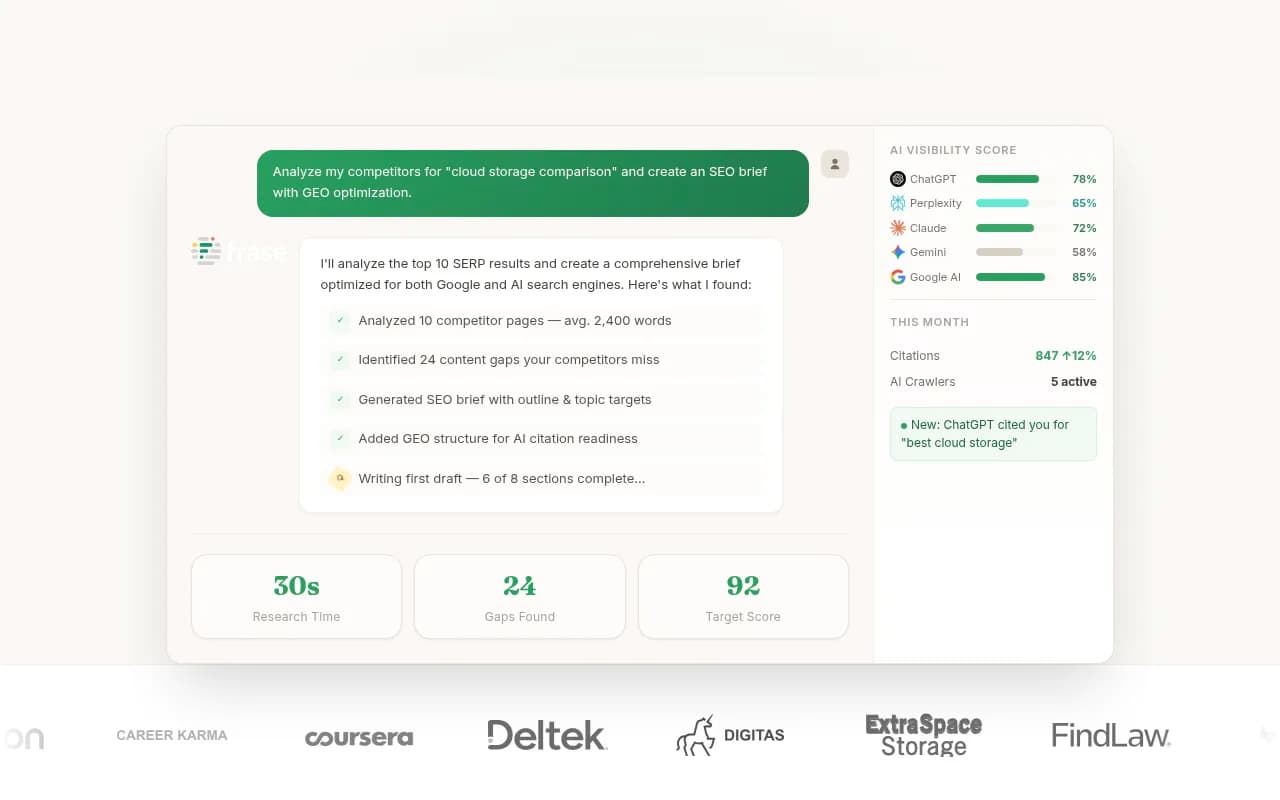
Frase has long been an SEO content optimization tool and has been adding AI visibility features. It's useful for content briefs but wasn't built around the monitoring-to-optimization loop.
Scrunch AI positions itself as both a monitoring and optimization platform, with content recommendations layered on top of visibility data.
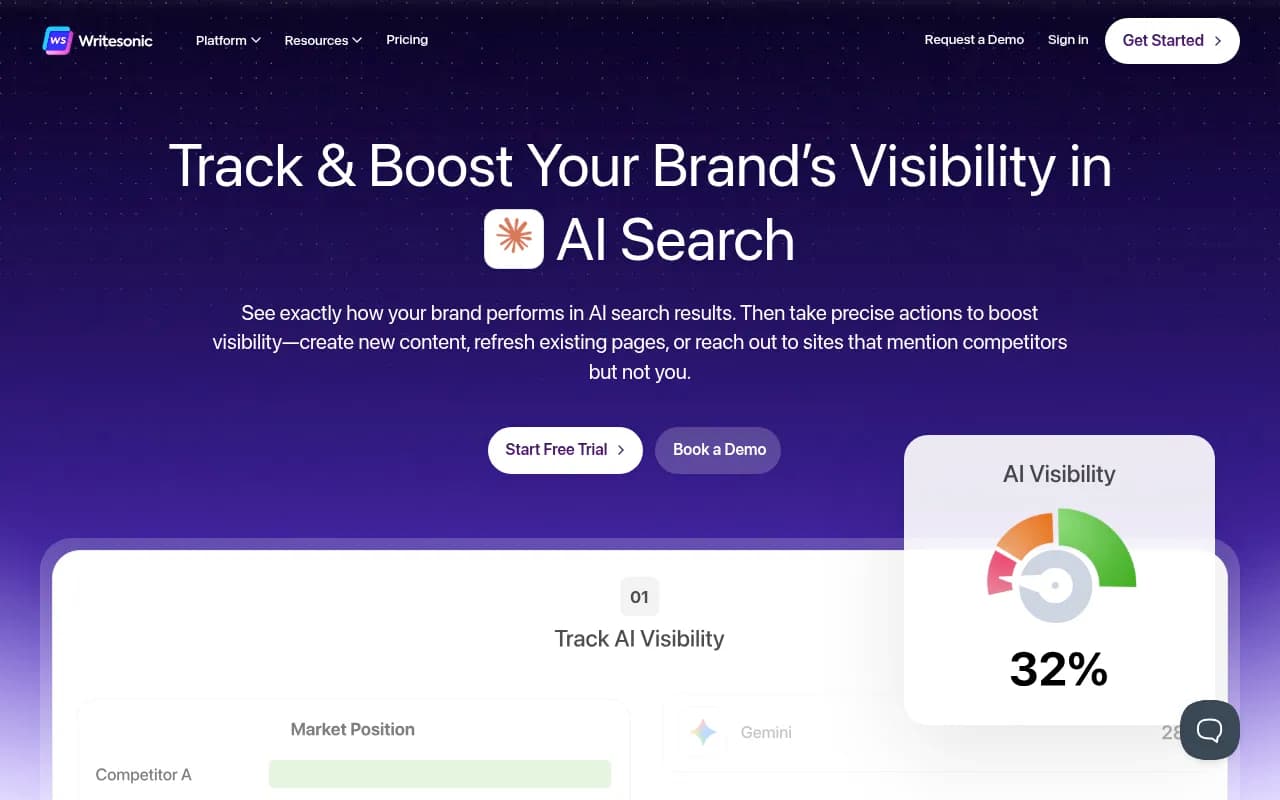
Writesonic has moved into AI search visibility with tracking and content creation in the same platform.
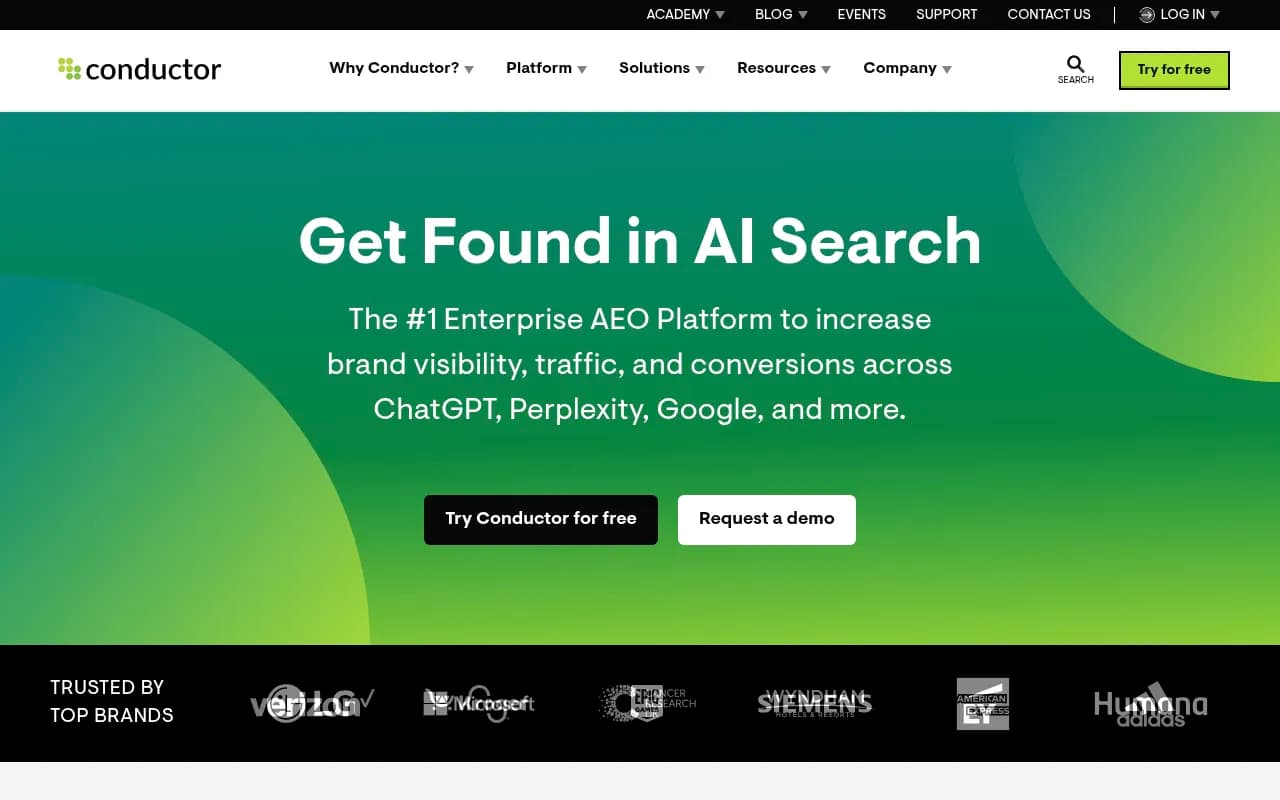
Conductor is an enterprise AEO platform that combines AI search visibility with content optimization workflows.
For teams that want a purpose-built end-to-end platform, Promptwatch is worth looking at. It's built around the full cycle: answer gap analysis shows which prompts competitors are winning that you're not, Content Agents generate articles and briefs grounded in real prompt data, and page-level tracking shows when your new content moves from crawled to cited. It also includes AI crawler logs -- something most competitors don't offer -- so you can see exactly which pages AI agents are reading and whether they're encountering errors.

Why "optimization" is often just a marketing word
It's worth being direct about this: a lot of tools call themselves optimization platforms while delivering monitoring dashboards with a "recommendations" tab bolted on. The recommendations are usually generic ("add more structured data," "improve your E-E-A-T signals") rather than specific to your actual gaps.
Real optimization requires:
- Prompt-level data, not just category-level scores
- Specific content gaps tied to real queries, not general advice
- Content generation tools that use that gap data as input
- Crawler log analysis to confirm AI agents are actually seeing your content
- Citation tracking that closes the loop between publishing and appearing
If a tool can't do all five, it's doing monitoring with an optimization label.
How to decide what you actually need
The right approach depends on where you are in your AI visibility journey.
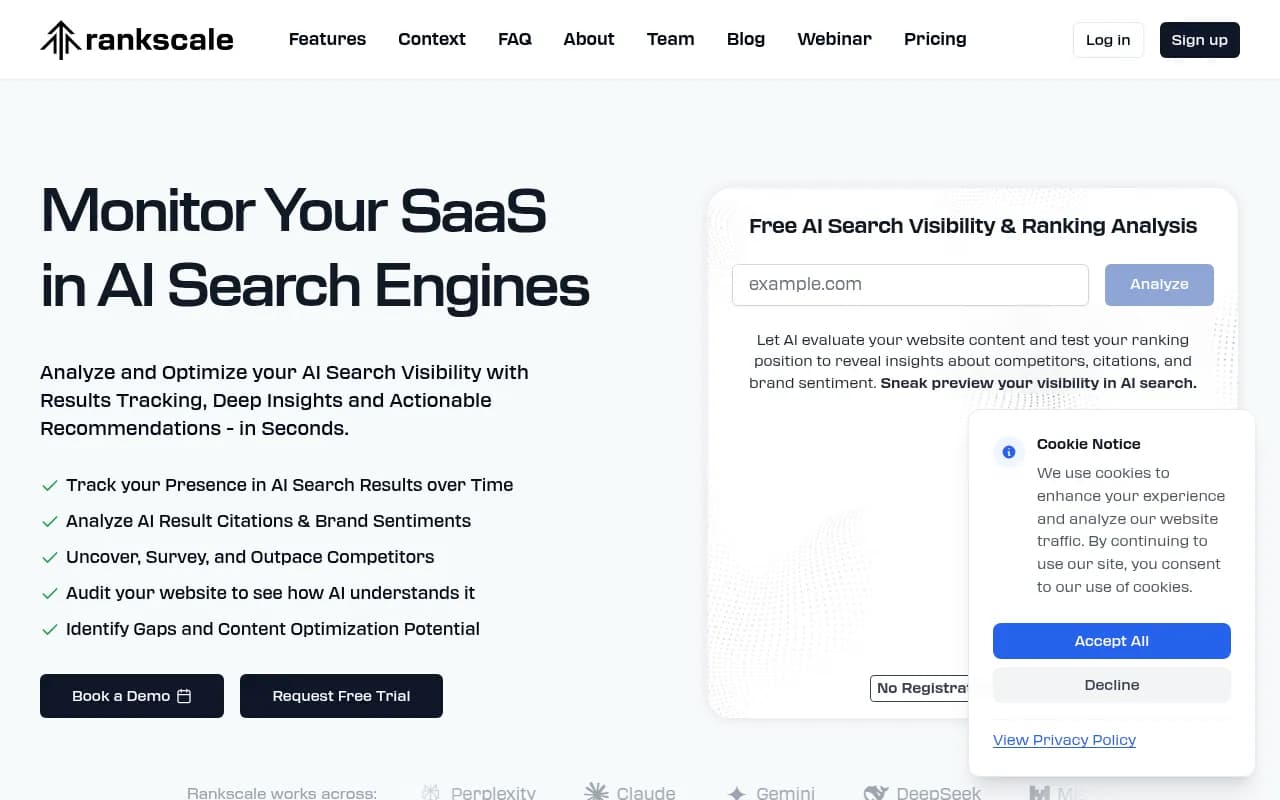
If you're starting from zero and just want to understand your current position, a monitoring tool is the right first step. You need baseline data before you can optimize anything. SE Ranking, Otterly.AI, or Peec AI are reasonable starting points.
If you already have some visibility data and want to know what to do about it, you need gap analysis. This is where the monitoring-only tools hit their ceiling. You'll want a platform that can map your content against AI responses and tell you specifically what's missing.
If you're running a content program and want to scale AI visibility systematically, you need the full loop: gaps, content creation, crawler monitoring, and citation tracking. This is where purpose-built optimization platforms earn their price.
For agencies managing multiple clients, the calculus changes again -- you need multi-site tracking, white-label reporting, and enough prompt volume to cover different industries and personas.
Search Party
The content angle most teams miss
One thing that often gets overlooked in the monitoring vs. optimization debate: AI models don't just cite your website. They cite Reddit threads, YouTube videos, third-party review sites, listicles, and forum discussions. A monitoring tool that only tracks your domain is showing you an incomplete picture.
Optimization means understanding the full citation ecosystem -- which external sources are driving AI recommendations in your category, which Reddit discussions are influencing ChatGPT's answers, and where you need a presence beyond your own site. That's a different kind of work than traditional SEO, and most teams haven't started thinking about it yet.
A realistic 90-day path from monitoring to optimization
If you want to move from passive tracking to active improvement, here's a practical sequence:
Days 1-30: Establish your baseline. Set up monitoring across the AI models that matter for your category. Track 30-50 prompts that represent real customer questions. Identify your top 5 competitors and compare visibility scores.
Days 31-60: Run gap analysis. Map the prompts where competitors appear but you don't. Prioritize by prompt volume and difficulty. Identify the 10-15 content gaps with the highest potential impact.
Days 61-90: Create and publish. Write content specifically designed to fill those gaps. Publish it, then monitor AI crawler logs to confirm the pages are being discovered. Track citation rates over the following weeks.
This isn't a one-time project. AI models update their training data and citation patterns regularly. The teams that build a repeatable monitoring-to-optimization cycle will compound their advantage over time.
The bottom line
Monitoring and optimization are not the same thing, even though many tools blur the line. Monitoring is the foundation -- you can't optimize what you can't measure. But monitoring alone is just watching your competitors get cited while you wait for something to change.
The shift from monitoring to optimization happens when you use visibility data to drive specific content decisions, publish content built around real prompt data, and track whether AI agents are actually picking it up. That's a workflow, not a dashboard. And in 2026, the brands that have that workflow in place are pulling ahead of the ones that are still just watching the numbers.