Key takeaways
- Most AI visibility platforms can be set up in under 30 minutes, but "time to first insight" varies wildly -- some show you data in minutes, others require days of prompt configuration before anything useful appears.
- Monitoring-only tools (Otterly.AI, Peec.ai, AthenaHQ) get you tracking fast but leave you with data and no clear next step.
- Platforms with built-in content generation and gap analysis (like Promptwatch) compress the gap between "I see the problem" and "I fixed it."
- Enterprise tools (Profound, BrightEdge, Conductor) often have longer onboarding cycles -- not because they're hard to use, but because they're built for teams with dedicated setup time.
- If speed to insight is your priority, start with a tool that has pre-built prompt libraries and doesn't require you to configure everything from scratch.
Why setup speed actually matters
There's a version of this conversation that's purely about features. More AI models tracked, more citation data, more integrations. That version is fine, but it misses something practical: most marketing teams evaluating AI visibility tools are doing so because they already feel behind. They've noticed competitors showing up in ChatGPT answers. They've heard about GEO. They want to understand their position now, not after a two-week onboarding call.
That's why setup speed and time to first insight deserve their own ranking. A platform that takes three days to configure properly isn't better than one that shows you your first visibility score in 20 minutes -- at least not for the person who needs to bring something to a Monday standup.
This guide ranks the major AI visibility platforms on two dimensions: how fast you can get started, and how quickly you see something genuinely useful. Not a loading screen. Not a "your data is being processed" message. An actual insight you can act on.
How we defined "time to first insight"
Setup time is easy to measure: how long from account creation to having your brand configured and prompts running? Time to first insight is trickier. We defined it as the point where you can answer at least one of these questions with real data:
- Is my brand being mentioned in AI responses for relevant prompts?
- Which competitors are appearing where I'm not?
- Which specific content gaps are causing me to miss citations?
Some tools answer question one in minutes. Most stop there. The best ones get you to question three -- which is where the actual work begins.
The platforms, ranked
Tier 1: Fast setup, fast insight (under 30 minutes to meaningful data)
Promptwatch
Promptwatch is the clearest example of a platform built to get you to insight fast. You enter your domain, pick from a library of pre-built prompts relevant to your category, and within minutes you're looking at visibility scores across ChatGPT, Perplexity, Claude, Gemini, and several other models. There's no lengthy configuration wizard. The prompt library means you don't have to guess what to track.
What makes Promptwatch stand out beyond speed is what happens after you see the data. The Answer Gap Analysis shows you exactly which prompts competitors rank for that you don't -- and the built-in AI writing agent can generate content designed to close those gaps. Most platforms stop at "here's your score." Promptwatch connects that score to a content action. For teams that want to move fast, that loop -- find gap, generate content, track improvement -- is genuinely useful.

Otterly.AI
Otterly.AI is one of the simpler tools to get running. The interface is clean, prompt setup is straightforward, and you can be tracking mentions across a handful of AI models within 15-20 minutes. It's a good entry point if you just want to know whether your brand is showing up at all. The limitation is that it's monitoring-only -- once you have the data, you're on your own to figure out what to do with it.

Peec.ai
Similar story to Otterly.AI. Fast to set up, clear prompt-based tracking, and you'll see your first visibility data quickly. Multi-language support is a genuine plus for international brands. But like Otterly.AI, it doesn't offer content gap analysis or generation -- it shows you the problem without helping you solve it.

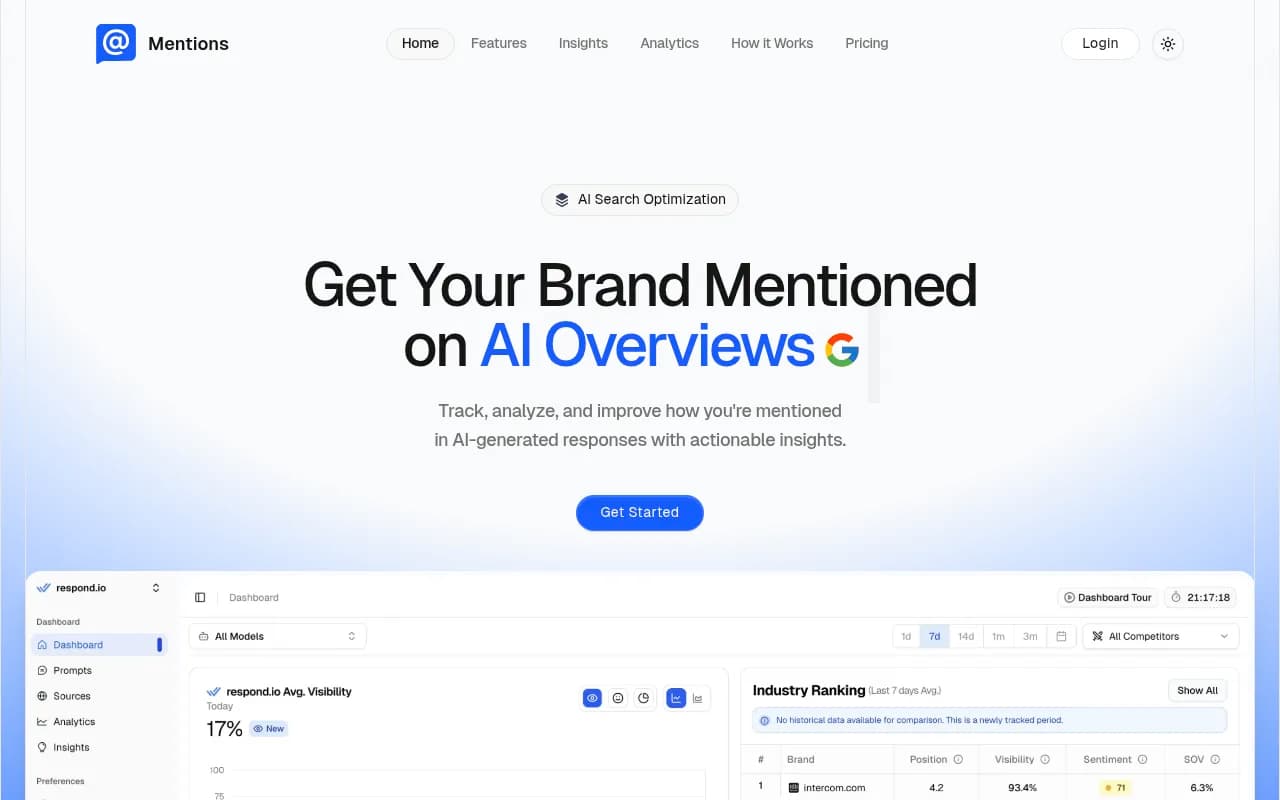
Mentions.so
A lightweight tool focused on brand mention tracking in AI search. Setup is minimal, and it's useful for a quick pulse check on whether your brand name is appearing. Not built for deep competitive analysis or content optimization, but for speed of first insight it's hard to beat.
Ranksmith
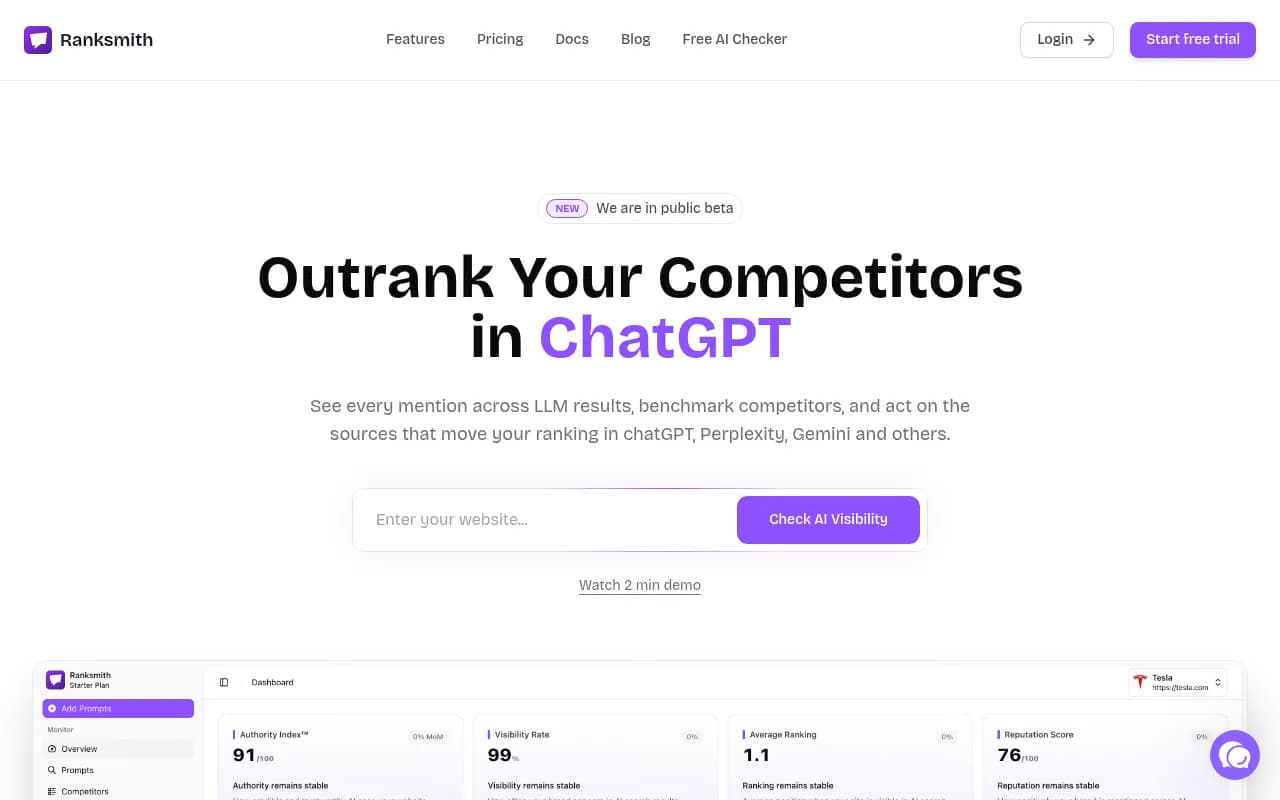
Ranksmith gets you to actionable AI search visibility insights quickly, with a cleaner interface than some of the more feature-heavy platforms. Good for teams that want to understand their position without a steep learning curve.
Tier 2: Moderate setup, solid insight (30 minutes to 2 hours)
AthenaHQ
AthenaHQ tracks visibility across 8+ AI search engines and has a reasonably smooth onboarding process. You'll spend more time configuring prompts than with Tier 1 tools, but the data quality is good once you're set up. It's monitoring-focused, so the insight you get is primarily about where you stand -- not what to do about it.
Scrunch AI
Scrunch has a stronger feature set than the lightweight trackers and is particularly good at competitive benchmarking. Setup takes longer because there's more to configure, but the payoff is richer data. No Reddit tracking or content generation, which limits how far you can take the insights.
SE Visible
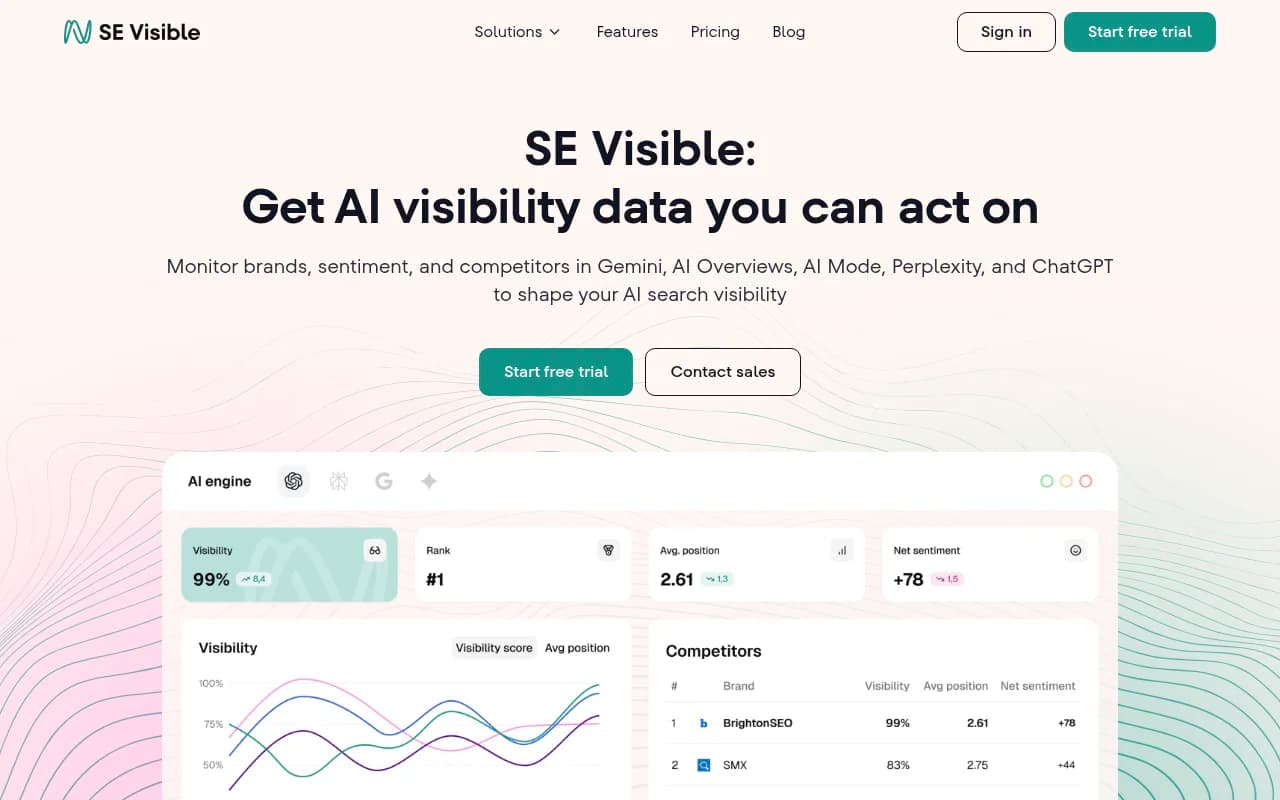
SE Ranking's AI visibility module (SE Visible) benefits from the broader SE Ranking ecosystem. If you're already an SE Ranking user, setup is fast because your domain and competitors are already configured. For new users, there's more onboarding involved. The integration with traditional SEO data is a genuine advantage.
Writesonic
Writesonic has expanded into AI search visibility tracking alongside its content generation roots. The combination means you can go from seeing a visibility gap to drafting content in the same platform, which is useful. Setup is moderate -- the content side is intuitive, but the visibility tracking configuration takes some time.
LLMClicks
LLMClicks offers AI visibility tracking with hallucination detection, which is a useful differentiator -- it flags when AI models are saying inaccurate things about your brand, not just whether you're mentioned. Setup is in the moderate range, and the data is solid once you're running.
Airefs
An affordable option that covers the core tracking use case well. Setup is reasonably fast and the interface is approachable for teams without dedicated SEO resources. Good for smaller brands that want visibility data without enterprise pricing.
Tier 3: Longer setup, deeper insight (2+ hours or sales-assisted onboarding)
Profound
Profound is one of the most data-rich platforms in this space -- 400M+ prompt insights, SOC 2 Type II certified, and strong enterprise credentials. The tradeoff is that getting the most out of it requires proper configuration, and the onboarding process reflects that. For enterprise teams with dedicated resources, the depth is worth it. For a solo marketer who wants data by end of day, it's probably not the right starting point.
BrightEdge
BrightEdge is an enterprise SEO platform that has added AI search visibility tracking. If you're already in the BrightEdge ecosystem, the AI features slot in reasonably well. For new users, the full platform has a significant learning curve and typically involves a sales-assisted setup. The insight quality is high, but you're not getting there in an afternoon.
Conductor
Conductor's evaluation guide specifically calls out ease of setup as a key criterion -- which is a bit ironic, because it's an enterprise platform that typically requires a proper implementation process. The insights are thorough and well-structured, but this is a tool for teams with onboarding bandwidth, not teams in a hurry.
Evertune
Evertune is built for Fortune 500 brands and the setup reflects that. Deep configuration, strong data, but not a "sign up and see results in 20 minutes" experience. If you're at that scale and have the resources, it's worth evaluating seriously.
Goodie AI
Goodie AI positions itself as the gold standard for enterprise GEO. That means thorough onboarding, detailed configuration, and a longer path to first insight. The payoff is enterprise-grade data and support, but it's not a quick-start tool.
Comparison table
| Platform | Setup time | Time to first insight | Content generation | Monitoring models | Best for |
|---|---|---|---|---|---|
| Promptwatch | < 15 min | < 20 min | Yes (built-in AI writer) | 10+ | Teams that want to track AND fix |
| Otterly.AI | < 15 min | < 20 min | No | 5+ | Quick monitoring, small budgets |
| Peec.ai | < 20 min | < 30 min | No | 5+ | Multi-language monitoring |
| Mentions.so | < 10 min | < 15 min | No | 3-5 | Brand name pulse checks |
| AthenaHQ | 30-60 min | 30-60 min | No | 8+ | Competitive benchmarking |
| Scrunch AI | 30-60 min | 45-90 min | No | 6+ | Competitive analysis |
| SE Visible | 30-60 min | 30-60 min | No | 5+ | SE Ranking existing users |
| Writesonic | 45-90 min | 60-90 min | Yes | 5+ | Content + visibility combo |
| LLMClicks | 30-60 min | 45-60 min | No | 5+ | Hallucination detection |
| Profound | 2+ hours | 2+ hours | No | 10+ | Enterprise data depth |
| BrightEdge | Sales-assisted | Days | No | 5+ | Enterprise SEO teams |
| Conductor | Sales-assisted | Days | No | 5+ | Enterprise AEO programs |
| Evertune | Sales-assisted | Days | No | 8+ | Fortune 500 brands |
What actually slows you down
Looking across these platforms, a few patterns explain why some tools get you to insight fast and others don't.
Prompt configuration from scratch. Tools that require you to manually enter every prompt you want to track add significant setup time. Tools with pre-built prompt libraries (organized by industry or use case) cut that time dramatically. This is one of the biggest differentiators between Tier 1 and Tier 3 tools.
Waiting for data to populate. Some platforms run queries in batches -- you set up your prompts and come back the next day to see results. Others run queries immediately on setup. If you need same-day data, check this before committing.
Onboarding calls as a requirement. Enterprise platforms often gate full access behind a sales or onboarding call. That's not necessarily bad -- complex platforms benefit from proper setup -- but it means your "time to first insight" is measured in days, not minutes.
No baseline data. A few tools show you your current visibility score but don't tell you what it means without context. Is 34% visibility good or bad? Without competitor benchmarks or historical data, the number is hard to interpret. Platforms that show competitor comparisons immediately give you context that makes the first insight actually useful.
The setup vs. depth tradeoff
There's a real tension here worth naming. The fastest tools to set up tend to be the shallowest. You can see whether your brand is mentioned in AI responses within minutes, but you can't see why you're missing from certain prompts, which content changes would improve your position, or how AI crawlers are actually reading your site.
The deeper platforms -- the ones that show you crawler logs, prompt volume data, citation source analysis, and content gap breakdowns -- take longer to configure. That's not a flaw, it's a reflection of how much more they're doing.
The question is whether you want speed or depth. For most teams, the answer is: both, in sequence. Start with a tool that gets you to first insight fast, then decide whether you need to go deeper. That's why platforms that combine fast setup with genuine depth (rather than forcing you to choose) are the most practical choice for teams that are serious about AI visibility over the long term.
A note on "insight" vs. "data"
One thing worth saying clearly: seeing a number is not the same as having an insight. A lot of AI visibility tools will show you a visibility score within minutes of setup. That's data. An insight is understanding why that score is what it is and what you can do to change it.
The tools that get you to genuine insight fastest are the ones that combine monitoring with explanation -- showing you not just that you're invisible for a prompt, but which competitors are winning it, what content they have that you don't, and what you'd need to create to compete. That's a much higher bar, and fewer tools clear it.
When you're evaluating platforms, ask yourself: after 30 minutes with this tool, will I know what to do next? If the answer is "I'll have a dashboard full of numbers," that's a start. If the answer is "I'll know exactly which content to create," that's the platform worth paying for.