Key takeaways
- Ranking in ChatGPT, Perplexity, and Gemini requires a different approach than traditional Google SEO -- most legacy tools weren't built for this.
- The 2025 toolkit splits into two layers: content optimization tools (Surfer SEO, Clearscope, MarketMuse) and AI visibility trackers (Promptwatch, Otterly.AI, SE Ranking).
- Answer Engine Optimization (AEO) is now a real discipline, not a buzzword -- and the tools that support it are maturing fast.
- Content generation tools like Jasper and Writesonic have added AI search features, but purpose-built GEO platforms go deeper.
- The biggest gap most SEO teams have isn't tracking -- it's knowing what content to create to get cited by AI models.
Why your 2025 SEO stack needs a rethink
Something shifted in 2024 and it's now impossible to ignore. A growing share of search queries never reach a results page. They get answered directly by ChatGPT, Perplexity, Claude, or Google's AI Overviews. Users ask, the AI answers, and if your brand isn't in that answer, you don't exist for that query.
Traditional SEO tools -- the ones built to track blue links and keyword positions -- weren't designed for this. They can tell you where you rank on page one of Google. They can't tell you whether ChatGPT mentions your product when someone asks "what's the best project management tool for remote teams?"
That's the gap the 2025 SEO toolkit has to fill. And the tools that fill it well are a mix of familiar names that have evolved and newer platforms built specifically for AI search.
This guide breaks down both categories honestly: what each type of tool does, where it fits in your workflow, and which specific tools are worth your time.
The two layers of the 2025 AI SEO stack
Before getting into specific tools, it helps to understand the two distinct jobs your stack needs to do.
The first is content optimization -- making sure the content you publish is structured, comprehensive, and semantically rich enough that AI models can extract useful answers from it. This is where tools like Surfer SEO, Clearscope, and MarketMuse live. They've been around for a few years, but their relevance has actually increased as AI models rely more heavily on well-structured, authoritative content.
The second is AI visibility tracking -- monitoring whether your brand actually appears in AI-generated responses, which prompts trigger your competitors instead of you, and what content gaps are keeping you invisible. This is newer territory, and the tools here range from basic dashboards to full optimization platforms.
Most teams need both layers. The mistake is investing heavily in one and ignoring the other.
Layer 1: Content optimization tools
These tools help you create content that AI models can actually use. The logic is straightforward: LLMs are trained on and retrieve from well-structured, topically comprehensive content. If your page is thin, vague, or poorly organized, it won't get cited regardless of how many backlinks it has.
Surfer SEO
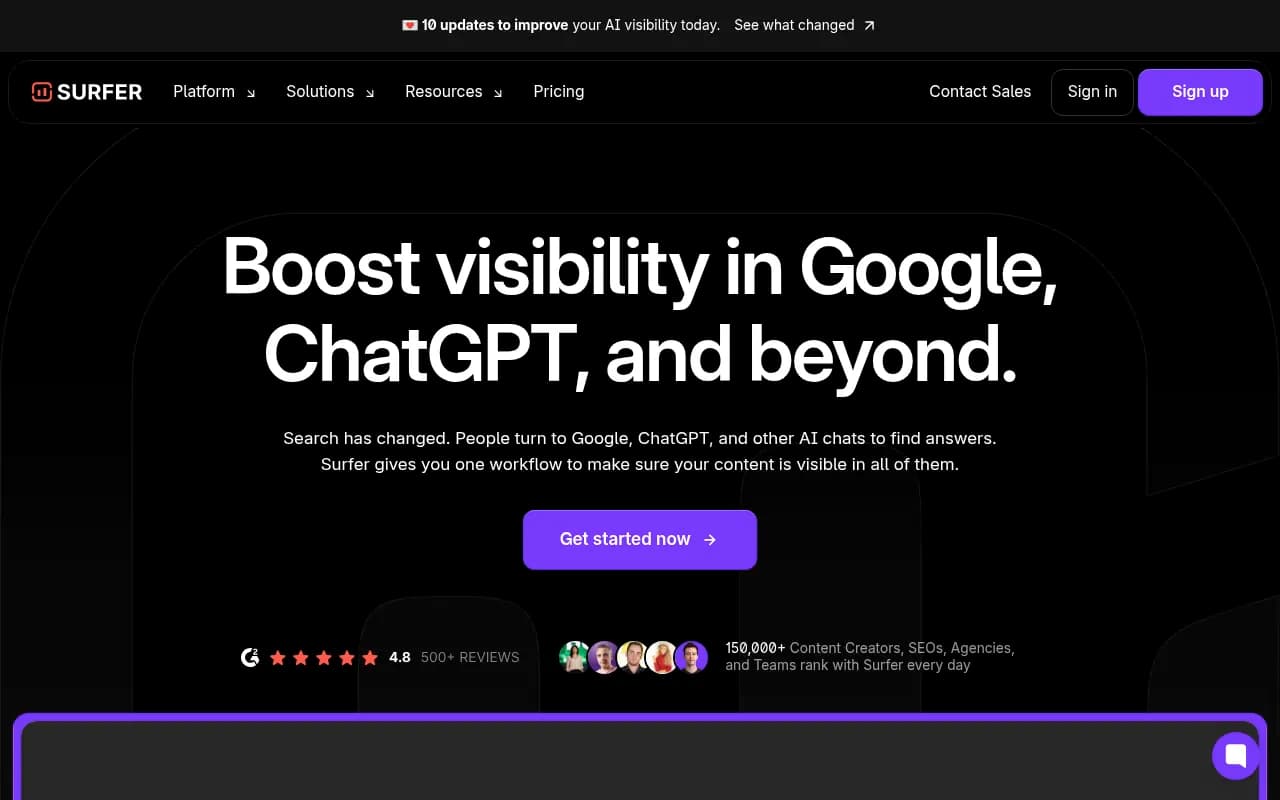
Surfer remains one of the most practical content optimization tools available. Its content editor scores your draft in real time against top-ranking pages, flagging missing topics, term frequency issues, and structural gaps. The AI writing features have improved considerably, but the core value is still the optimization layer -- it tells you what your content is missing, not just how to write faster.
Clearscope
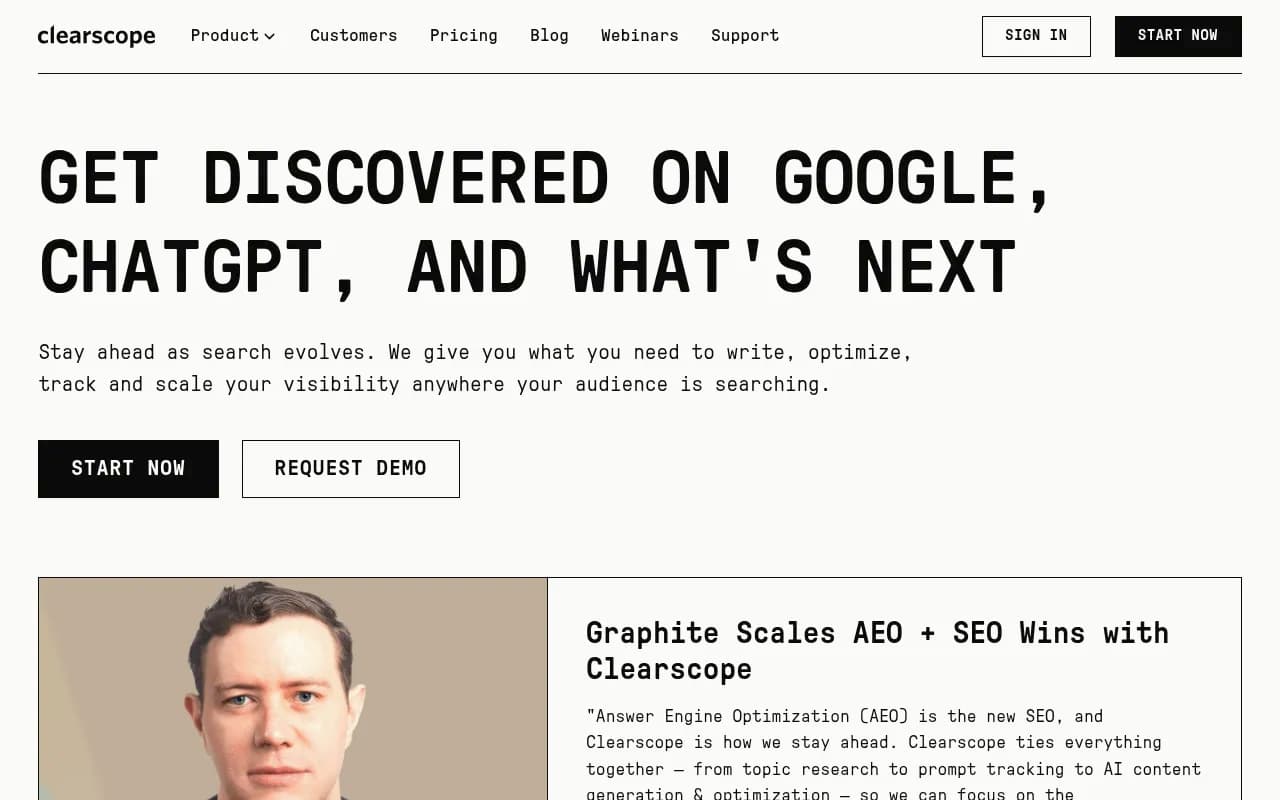
Clearscope takes a cleaner, more focused approach. You get a content grade, a list of relevant terms to include, and a readability score. It's less feature-heavy than Surfer but faster to use, which makes it popular with editorial teams who need to move quickly. The term suggestions are genuinely useful for making content more semantically complete -- which matters a lot for AI retrieval.
MarketMuse
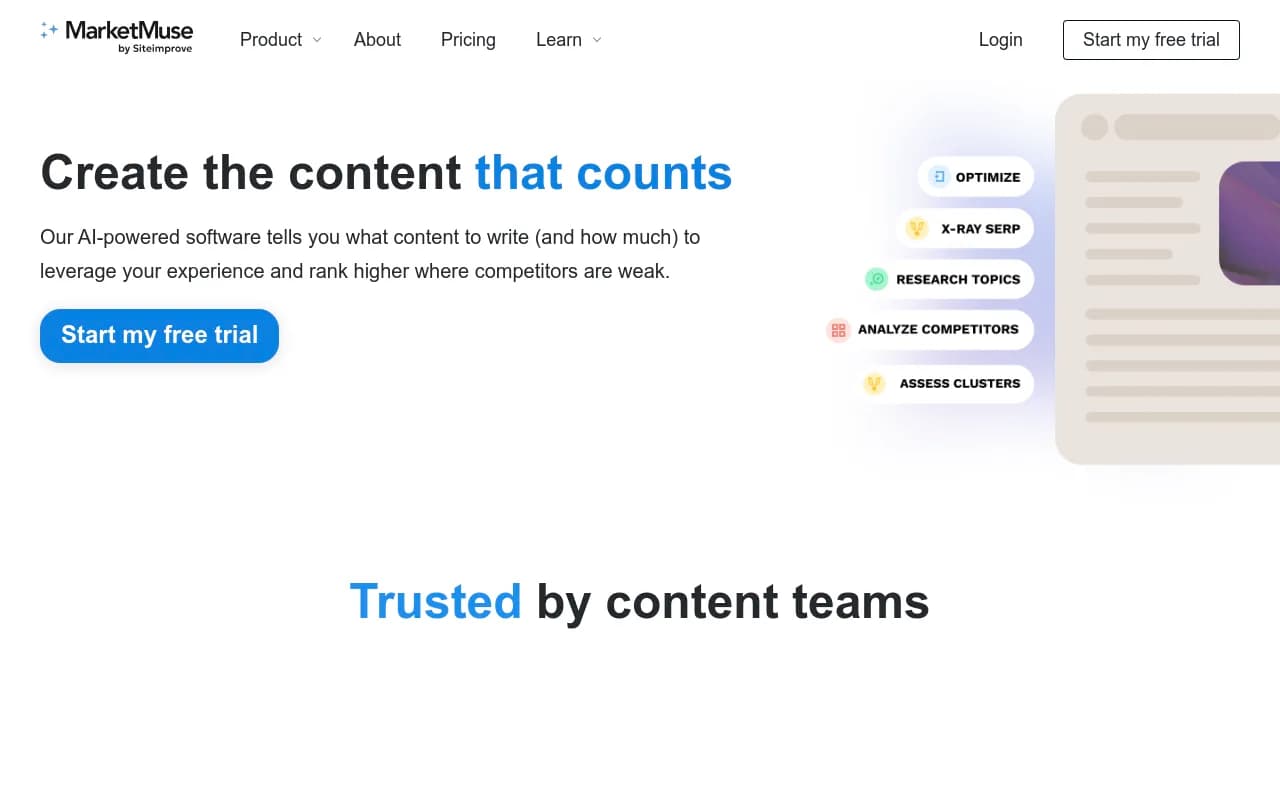
MarketMuse goes deeper on content strategy. It analyzes your entire site to identify topical authority gaps -- areas where you have weak or no coverage compared to competitors. For teams building out content programs designed to get cited by AI models, this kind of site-wide view is valuable. It's more expensive than Surfer or Clearscope, but the strategic layer justifies the cost for larger teams.
NeuronWriter
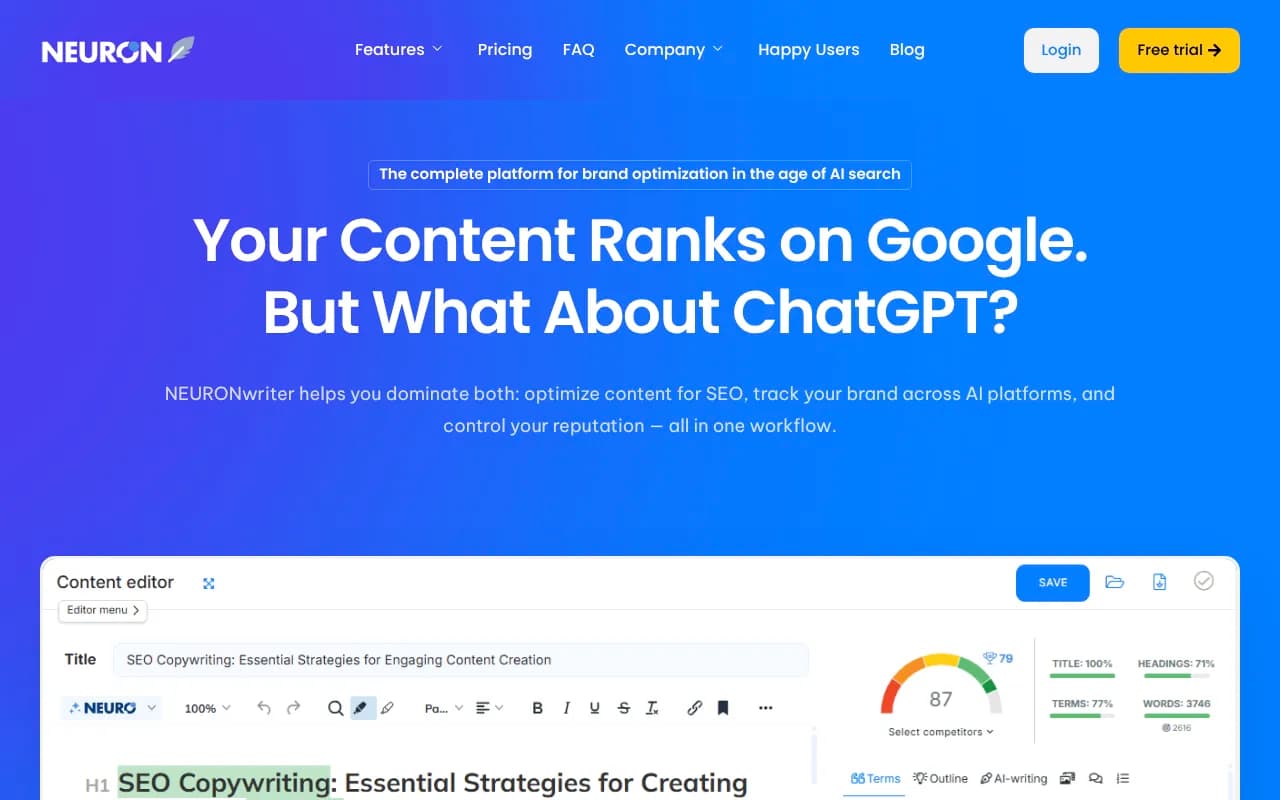
NeuronWriter is worth mentioning as a more affordable alternative that's gotten serious traction. It combines NLP-based content optimization with a built-in editor and competitor analysis. For smaller teams or agencies working across multiple clients, the price-to-feature ratio is strong.
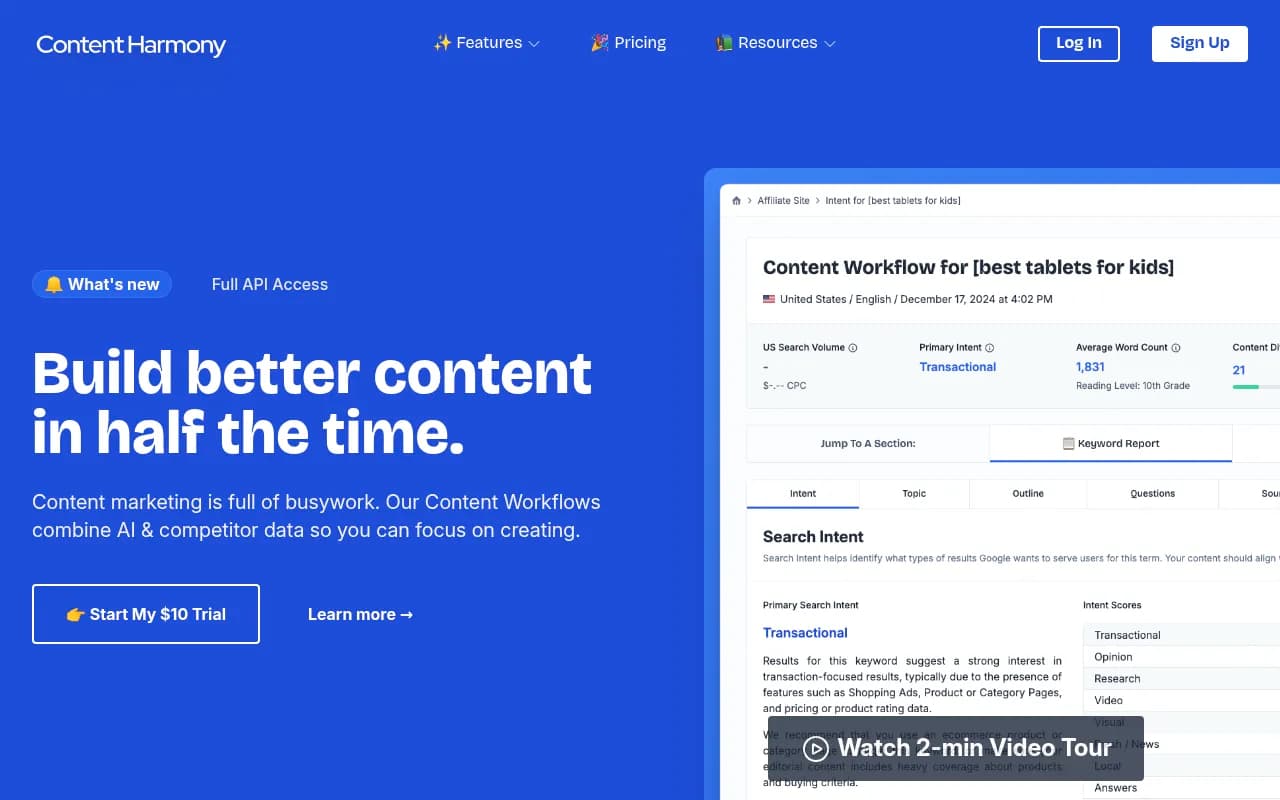
Content Harmony
Content Harmony focuses specifically on content briefs -- the research and planning phase before writing. It pulls together search intent analysis, topic clusters, and competitor content in a format that's actually usable by writers. If your bottleneck is brief quality rather than writing speed, this is worth a look.
Layer 2: AI visibility tracking and GEO tools
This is where things get interesting -- and where the market is moving fastest. These tools monitor how your brand appears (or doesn't appear) in AI-generated responses across ChatGPT, Perplexity, Claude, Gemini, and others.
The range in capability here is significant. Some tools are essentially dashboards that show you mention counts. Others go much further, helping you understand why you're not appearing and what to do about it.
Promptwatch
Promptwatch is the most complete platform in this category. It monitors your brand across 10 AI models -- including ChatGPT, Perplexity, Claude, Gemini, Grok, DeepSeek, and Google AI Overviews -- and goes well beyond tracking. The Answer Gap Analysis shows you exactly which prompts your competitors are appearing for that you're not. The built-in AI writing agent then generates content specifically designed to close those gaps, drawing on citation data from over 880 million analyzed citations to understand what AI models actually cite.
What separates Promptwatch from most competitors is the action loop: find the gap, generate the content, track the improvement. Most tools stop at step one. Promptwatch also includes AI crawler logs (so you can see which pages ChatGPT and Perplexity are actually crawling), Reddit and YouTube insights, and ChatGPT Shopping tracking -- features that are genuinely rare in this space.

Otterly.AI
Otterly.AI is a solid entry point for teams that want AI visibility monitoring without a large budget. It tracks brand mentions across several AI models and gives you a clear view of share of voice. It doesn't have content generation or deep gap analysis, but for teams just getting started with GEO monitoring, it's a reasonable first step.

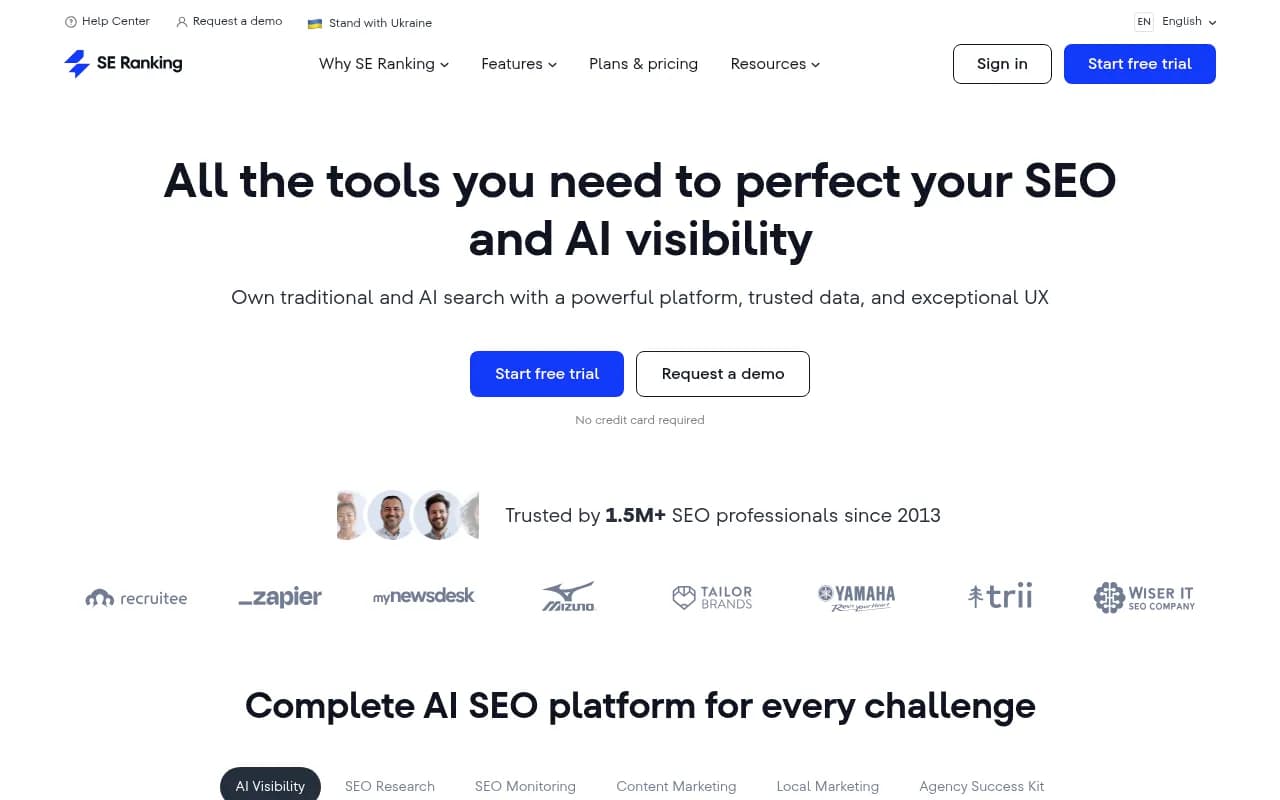
SE Ranking
SE Ranking has evolved into a hybrid platform that covers traditional SEO (rank tracking, site audits, keyword research) alongside AI visibility monitoring. If you're consolidating tools and want one platform that handles both traditional and AI search, SE Ranking is worth evaluating. The AI visibility features aren't as deep as dedicated GEO platforms, but the breadth is useful.
Scrunch AI
Scrunch AI focuses on how AI assistants like ChatGPT and Claude describe your brand -- the sentiment, accuracy, and positioning of AI-generated mentions. It's particularly useful for brand teams that care about narrative control, not just visibility counts.
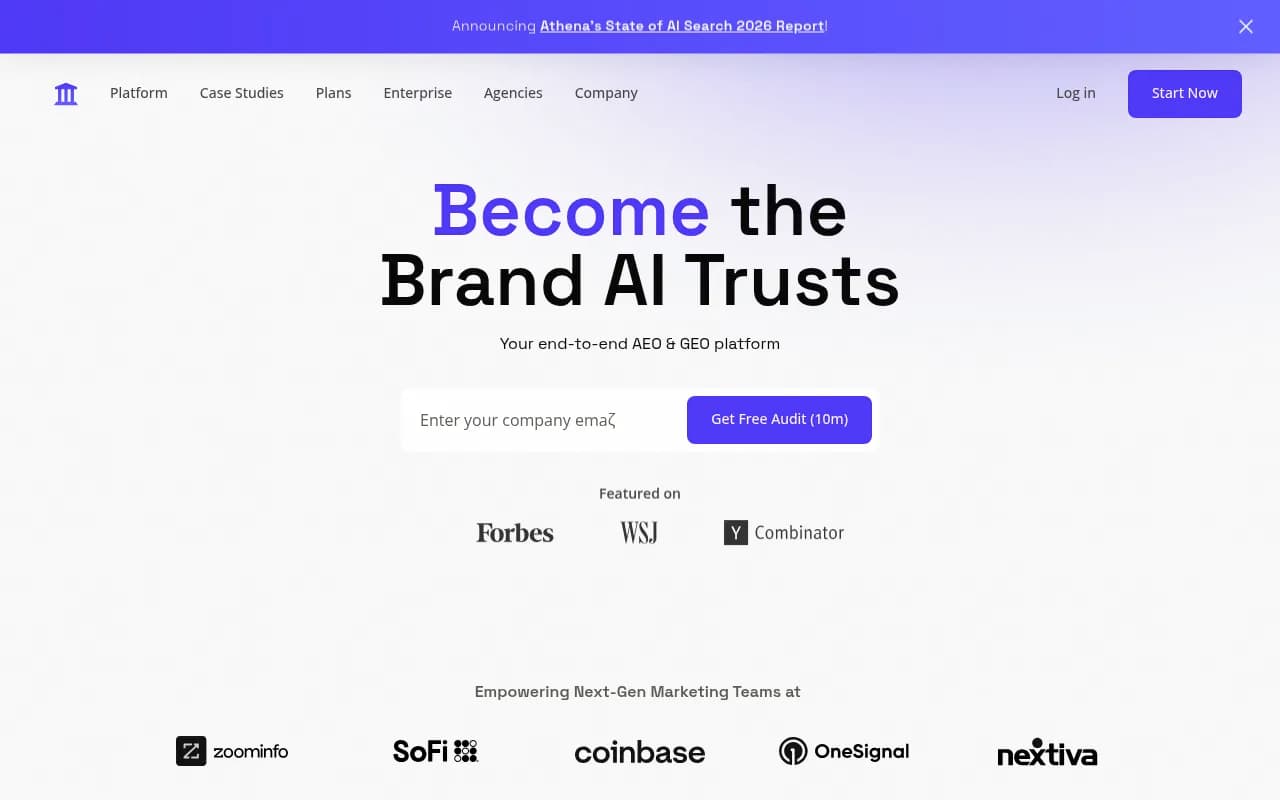
Athena HQ
Athena HQ covers monitoring across 8+ AI search engines and has a clean interface. It's monitoring-focused, which means it's good at showing you where you stand but less helpful for figuring out what to do about it. Worth considering if your primary need is tracking and you have a separate content workflow.
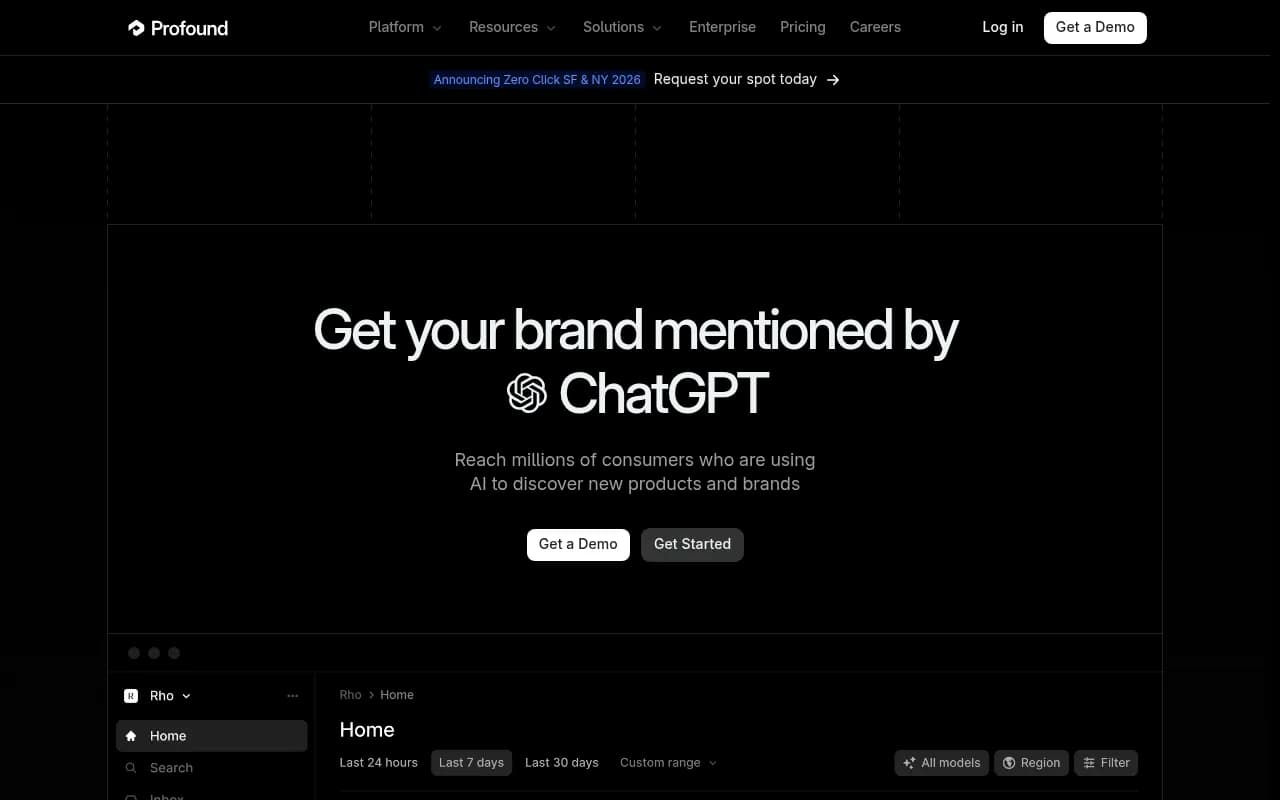
Profound AI
Profound AI is positioned at the enterprise end of the market. It has strong analytics and is used by larger brands that need detailed reporting across multiple markets. The price point reflects that positioning.
The traditional tools that still matter
It would be a mistake to throw out your existing SEO stack entirely. Traditional tools still do things that AI visibility platforms don't.
Semrush
Semrush remains the most comprehensive all-in-one SEO platform. Keyword research, competitor analysis, backlink auditing, site health monitoring -- it's all there. The ContentShake AI feature adds AI writing capabilities, and the platform has added some AI overview tracking. It's not a replacement for a dedicated GEO tool, but it's still the backbone of most professional SEO workflows.
Ahrefs Brand Radar
Ahrefs added Brand Radar specifically for AI search monitoring. It tracks brand mentions in AI responses, though the prompts are fixed rather than customizable, and there's no AI traffic attribution. Useful as a supplementary data point if you're already an Ahrefs user.
Google Search Console
Still free, still essential. GSC tells you what queries are driving clicks from Google Search, including AI Overviews. The data on which pages are getting impressions from AI-generated results is increasingly valuable as Google's AI Mode expands.
Moz Pro
Moz Pro's domain authority metrics and link analysis remain useful for understanding the authority signals that influence AI model citations. High-authority pages are more likely to be cited by LLMs, so traditional link building still matters -- it just needs to be paired with content that's actually structured for AI retrieval.
Comparison: which tool does what
| Tool | Content optimization | AI visibility tracking | Content generation | Crawler logs | Pricing starts at |
|---|---|---|---|---|---|
| Promptwatch | No | Yes (10 models) | Yes (AI writing agent) | Yes | $99/mo |
| Surfer SEO | Yes | No | Yes (basic) | No | ~$89/mo |
| Clearscope | Yes | No | No | No | ~$170/mo |
| MarketMuse | Yes | No | No | No | ~$149/mo |
| Semrush | Partial | Partial | Yes (ContentShake) | No | $139/mo |
| Otterly.AI | No | Yes (basic) | No | No | ~$49/mo |
| SE Ranking | Partial | Yes (basic) | No | No | ~$65/mo |
| Athena HQ | No | Yes | No | No | Custom |
| Profound AI | No | Yes | No | No | Custom |
| Ahrefs Brand Radar | No | Yes (limited) | No | No | Included w/ Ahrefs |
How to actually build the stack
The right combination depends on where you are in the process.
If you're starting from scratch with AI visibility, the priority is understanding where you stand. A tool like Otterly.AI or SE Ranking gives you that baseline without a large commitment. Once you have a sense of your gaps, you need something that helps you close them -- which is where a platform like Promptwatch becomes worth the investment.
If you're already running a content program and want to make it more AI-search-ready, start with a content optimization tool. Surfer SEO or Clearscope will help you make existing content more semantically complete. Then layer in AI visibility tracking to see whether those improvements are actually moving the needle in LLM responses.
For teams that want to move fast on content creation specifically for AI search, the combination of Promptwatch's Answer Gap Analysis (to identify what to write) and its built-in writing agent (to generate it) is the most direct path. You're not guessing at topics -- you're writing content that fills documented gaps in AI model responses.
One thing worth being direct about: there's no single tool that does everything well yet. The market is moving fast, but the gap between "monitoring what's happening" and "helping you fix it" is still wide for most platforms. The tools that close that gap are the ones worth prioritizing.
What the research actually shows
Testing across multiple AI SEO tools in 2025 consistently surfaces the same finding: most "AI-powered" SEO tools are traditional tools with AI writing features bolted on. They generate content faster, but they don't help you understand what AI models are actually citing or why.
The tools that genuinely move the needle for AI search visibility share a few characteristics. They track actual AI model responses, not just keyword rankings. They identify specific content gaps based on what competitors are appearing for. And they help you create content that's structured for AI retrieval -- not just optimized for keyword density.
The 2025 SEO toolkit isn't about replacing what you have. It's about adding the layer that traditional tools were never built to provide: visibility into how AI models see your brand, and a clear path to improving it.
That's the shift. The tools are there. The question is whether your stack reflects it.