Key Takeaways
- Prompt intelligence is the practice of analyzing which AI search queries matter most to your business -- not all prompts are created equal, and prioritizing high-volume, low-difficulty queries delivers the fastest ROI
- Query fan-outs reveal how one prompt branches into dozens of related sub-queries, helping you map the full landscape of how users search for your category in AI engines like ChatGPT, Perplexity, and Claude
- Volume and difficulty scoring (similar to traditional keyword metrics) let you identify "quick wins" -- prompts where you can rank with minimal content investment
- Citation analysis shows which pages, domains, and content types AI models actually cite, giving you a blueprint for what to create and where to publish
- Tools like Promptwatch close the loop from analysis to action by surfacing content gaps, generating optimized articles, and tracking your visibility improvements over time

What is prompt intelligence and why does it matter?
Prompt intelligence is the process of understanding which AI search queries your target audience is asking, how often they're asking them, and how difficult it is to rank for each one. It's the AI search equivalent of keyword research -- but with a twist.
Traditional SEO keyword research tells you what people type into Google. Prompt intelligence tells you what people ask ChatGPT, Claude, Perplexity, and other AI models. The difference matters because AI search behavior is fundamentally different:
- Users ask full questions instead of typing fragmented keywords
- Queries are conversational and context-heavy ("What's the best CRM for a 20-person sales team that uses Slack?" vs "best CRM")
- AI models synthesize answers from multiple sources instead of returning a list of blue links
- Visibility is binary -- you're either cited in the response or you're invisible
Without prompt intelligence, you're flying blind. You might create great content, but if it doesn't align with how people actually prompt AI engines, you won't get cited. You might optimize for high-volume prompts that are impossibly competitive when easier wins are sitting right there.
Prompt intelligence gives you the data to make smart decisions about where to invest your time and budget.
The three dimensions of prompt prioritization
Not all prompts are worth chasing. Some have massive search volume but are dominated by Wikipedia and government sites. Others are niche and winnable but drive zero business value. The best prompts sit at the intersection of three factors:
1. Search volume
How many people are asking this prompt across AI engines? Volume estimates tell you the size of the opportunity. A prompt with 10,000 monthly queries is worth more attention than one with 50 -- assuming all else is equal.
Volume data for AI search is harder to come by than traditional keyword volume (Google Keyword Planner has been around for decades; AI prompt volume tools are brand new). Platforms like Promptwatch estimate volume by analyzing billions of citations, clicks, and prompts across ChatGPT, Perplexity, Claude, Gemini, and other models.
2. Difficulty score
How hard is it to rank for this prompt? Difficulty scoring looks at factors like:
- Domain authority of currently cited sources (are you competing with Harvard and Mayo Clinic, or smaller blogs?)
- Content depth required (does the AI expect a 500-word answer or a 3,000-word guide?)
- Citation diversity (does the AI cite 1-2 dominant sources or pull from 10+ sites?)
Low-difficulty prompts are your quick wins. These are queries where you can create content, get cited, and start driving traffic within weeks instead of months.
3. Business relevance
Does this prompt align with your business goals? A prompt might have high volume and low difficulty, but if it's not relevant to your product or service, it's a distraction.
For example, if you sell project management software, a prompt like "What is project management?" has huge volume but attracts researchers and students, not buyers. A prompt like "Best project management tools for remote teams" has lower volume but much higher intent.
The best prompts score well on all three dimensions. They're asked frequently, they're winnable, and they attract your ideal customer.
Query fan-outs: mapping the full prompt landscape
One of the most powerful concepts in prompt intelligence is the query fan-out. This is the idea that a single prompt branches into dozens of related sub-queries.
For example, the prompt "Best CRM for small business" might fan out into:
- "Best CRM for small business under $50/month"
- "Best CRM for small business with email marketing"
- "Best CRM for small business vs enterprise"
- "Best free CRM for small business"
- "Best CRM for small business in 2026"
- "Best CRM for small business with Slack integration"
Each of these sub-queries represents a slightly different user intent and a separate opportunity to rank. By mapping the fan-out, you can:
- Identify content gaps (which sub-queries are you missing?)
- Prioritize based on volume and difficulty across the entire cluster
- Create a content hub that covers the full topic comprehensively
Query fan-outs also reveal how users think about your category. If you see a lot of sub-queries about pricing, integrations, or use cases, that tells you what matters most to your audience.
Citation analysis: reverse-engineering what AI models want
AI models don't cite content randomly. They cite sources that match specific patterns:
- Authoritative domains: Government sites (.gov), educational institutions (.edu), and established publishers get cited more often
- Structured content: Articles with clear headings, bullet points, and tables are easier for AI models to parse and cite
- Recency: AI models prefer up-to-date content, especially for time-sensitive topics
- Depth: Comprehensive guides that answer multiple related questions in one place get cited more than shallow content
- Specificity: Content that directly answers the prompt with concrete examples and data points wins over vague generalizations
Citation analysis is the process of studying which pages and domains AI models are currently citing for your target prompts. This gives you a blueprint for what to create.
For example, if you analyze the prompt "How to build a sales pipeline" and see that AI models are citing:
- A 3,000-word guide from HubSpot with step-by-step instructions
- A YouTube video from a sales trainer with 500K views
- A Reddit thread with 200+ comments from sales professionals
You now know that to compete, you need:
- A comprehensive guide (not a 500-word blog post)
- Visual or video content (or at least embedded examples)
- Real-world examples and community validation (case studies, testimonials, or user-generated content)
Citation analysis also reveals where to publish. If AI models are citing Reddit threads, Quora answers, and YouTube videos for your category, you should be active on those platforms -- not just your own blog.
The prompt prioritization framework
Here's a step-by-step framework for identifying and prioritizing high-value AI search queries:
Step 1: Build your prompt list
Start by brainstorming 50-100 prompts your target audience might ask. Think about:
- Product category queries ("Best [category] for [use case]")
- How-to queries ("How to [solve problem]")
- Comparison queries ("[Product A] vs [Product B]")
- Definition queries ("What is [concept]?")
- Buying intent queries ("Should I buy [product]?")
Use tools like Promptwatch to expand this list automatically by analyzing competitor visibility and query fan-outs.
Step 2: Score each prompt
For each prompt, assign scores (1-10) for:
- Volume: How many people are asking this?
- Difficulty: How hard is it to rank?
- Relevance: How aligned is this with your business goals?
Multiply the three scores together to get a priority score. For example:
- Prompt: "Best CRM for small business"
- Volume: 9 (high)
- Difficulty: 7 (medium-high)
- Relevance: 10 (perfect fit)
- Priority score: 9 × 7 × 10 = 630
Vs:
- Prompt: "What is CRM?"
- Volume: 10 (very high)
- Difficulty: 9 (very hard -- Wikipedia, Salesforce, HubSpot dominate)
- Relevance: 3 (informational, not buying intent)
- Priority score: 10 × 9 × 3 = 270
The first prompt is a better investment despite lower volume.
Step 3: Analyze current citations
For your top 20 prompts, analyze which sources AI models are currently citing. Look for patterns:
- What content formats are winning? (Guides, listicles, comparisons, videos)
- What domains are cited most often? (Competitors, publishers, community sites)
- What angles are covered? (Pricing, features, use cases, integrations)
This analysis tells you what content to create and where you have gaps.
Step 4: Identify content gaps
Compare your current content to what AI models are citing. Where are the gaps?
- Prompts where competitors are cited but you're not
- Sub-queries within a fan-out that you haven't covered
- Content formats you're missing (e.g., you have blog posts but no videos)
- Angles or use cases you haven't addressed
These gaps are your roadmap. Each gap is an opportunity to create content that gets cited.
Step 5: Create and optimize content
For each high-priority prompt, create content that matches what AI models want:
- Use the prompt as your H1 or title (AI models look for exact matches)
- Structure content with clear headings and bullet points
- Include specific examples, data points, and case studies
- Aim for 1,500-3,000 words for comprehensive coverage
- Add visuals (screenshots, diagrams, videos) where relevant
- Update regularly to maintain recency
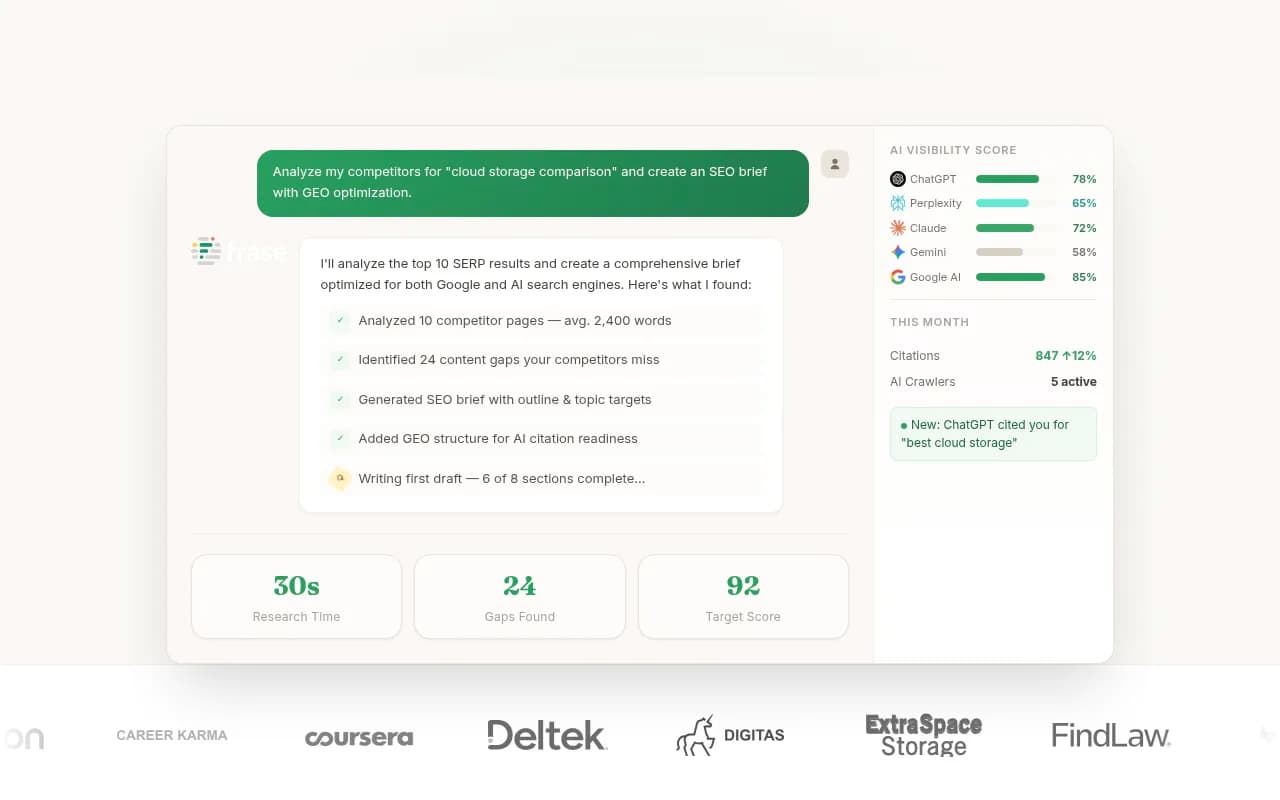
Tools like Jasper AI, Frase, and Surfer SEO can help you generate and optimize content faster.
Step 6: Track visibility and iterate
Once your content is live, track how often it gets cited by AI models. Use a platform like Promptwatch to monitor:
- Which prompts you're now visible for
- Which AI models are citing you (ChatGPT, Perplexity, Claude, etc.)
- How your visibility score changes over time
- Which pages are driving the most citations
If a piece of content isn't getting cited after 2-4 weeks, revisit it. Add more depth, update with recent data, or adjust the angle based on what competitors are doing.
Comparison: traditional keyword research vs prompt intelligence
| Dimension | Traditional keyword research | Prompt intelligence |
|---|---|---|
| Query format | Short keywords ("CRM software") | Full questions ("What's the best CRM for a small sales team?") |
| Volume data | Widely available (Google Keyword Planner, Ahrefs, Semrush) | Emerging (Promptwatch, Peec.ai, Otterly.AI) |
| Difficulty scoring | Based on backlinks, domain authority | Based on citation patterns, content depth, domain authority |
| Result format | List of 10 blue links | Synthesized answer with 3-5 citations |
| Optimization goal | Rank on page 1 | Get cited in the AI response |
| Content format | Blog posts, landing pages | Guides, listicles, comparisons, structured data |
| Timeframe | Months to rank | Weeks to get cited (if low difficulty) |
Tools for prompt intelligence and AI search optimization
Here are the key tools you need to implement a prompt intelligence strategy:
AI visibility tracking
- Promptwatch: End-to-end platform for tracking AI visibility, analyzing content gaps, generating optimized content, and monitoring citations across 10+ AI models. The only platform rated as a "Leader" in all categories vs 12 competitors.
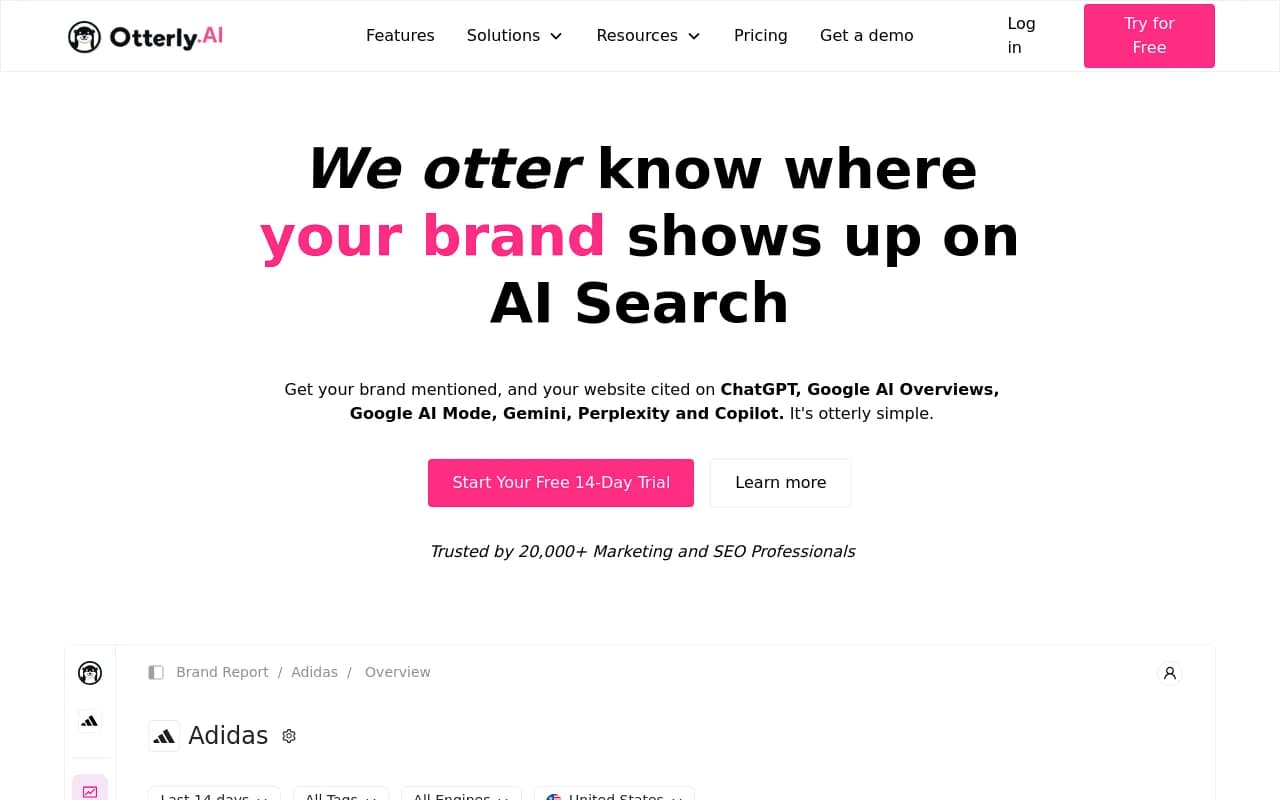
- Otterly.AI: Affordable monitoring tool for tracking brand mentions in AI search results
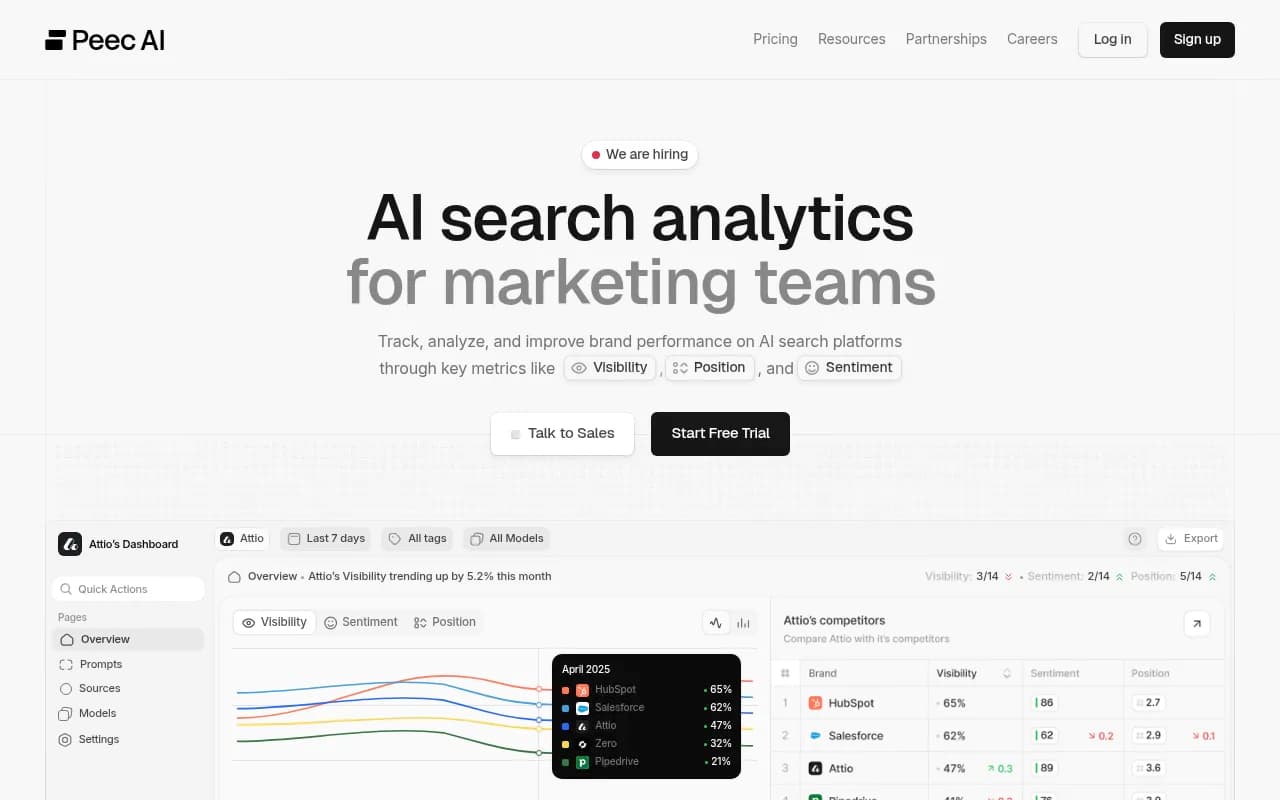
- Peec.ai: Multi-language AI visibility platform
Content optimization
- Clearscope: AI-driven content optimization for better rankings
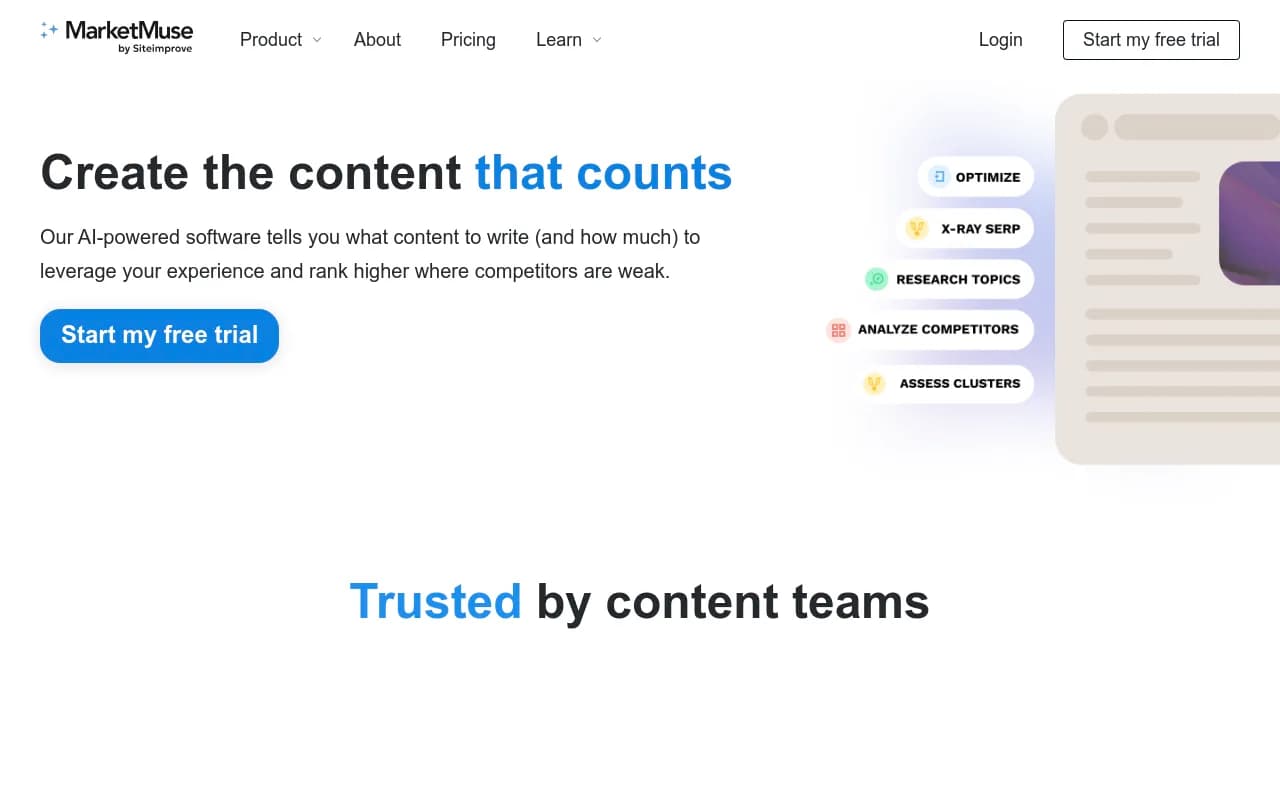
- MarketMuse: AI-powered content strategy that shows what to write and how to optimize
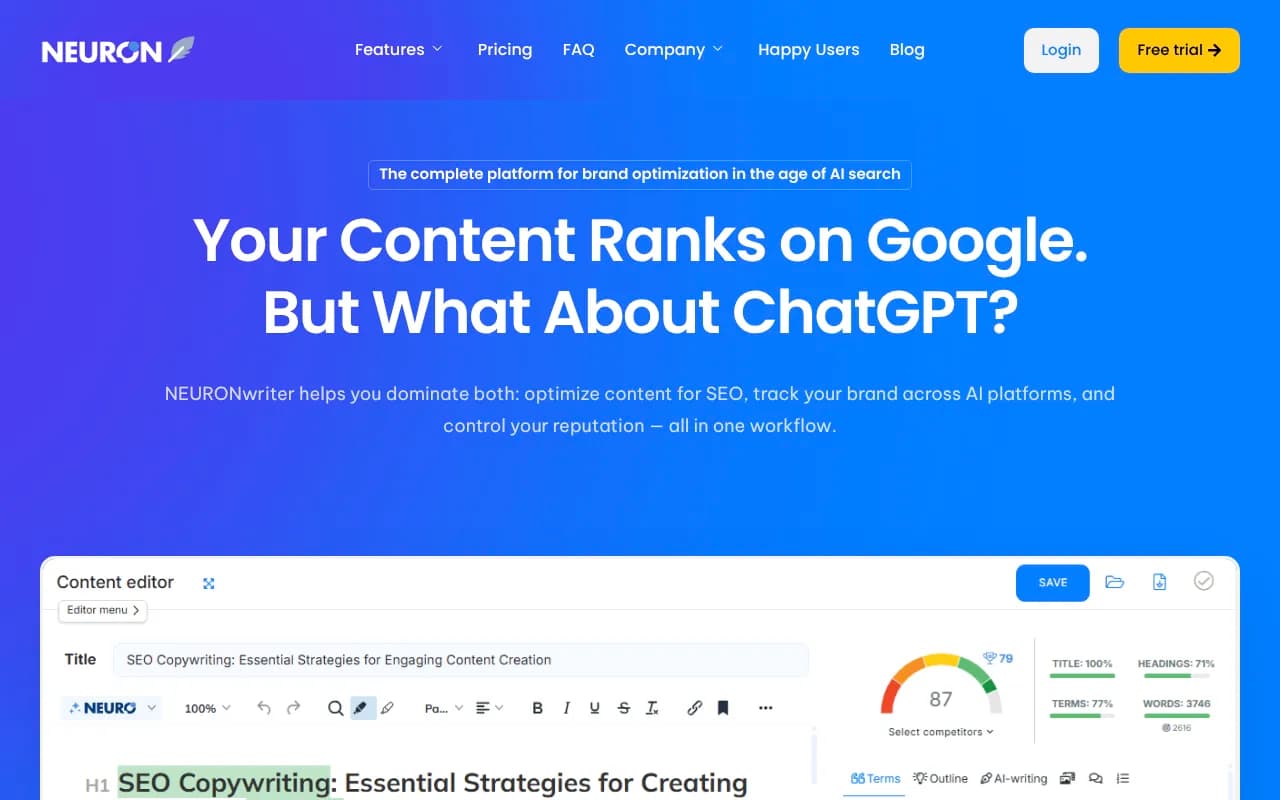
- NeuronWriter: AI-powered content optimization tool for SEO and semantic search

AI content generation
- Jasper AI: AI writing assistant for long-form SEO content
- Copy.ai: AI copywriting tool for marketing content
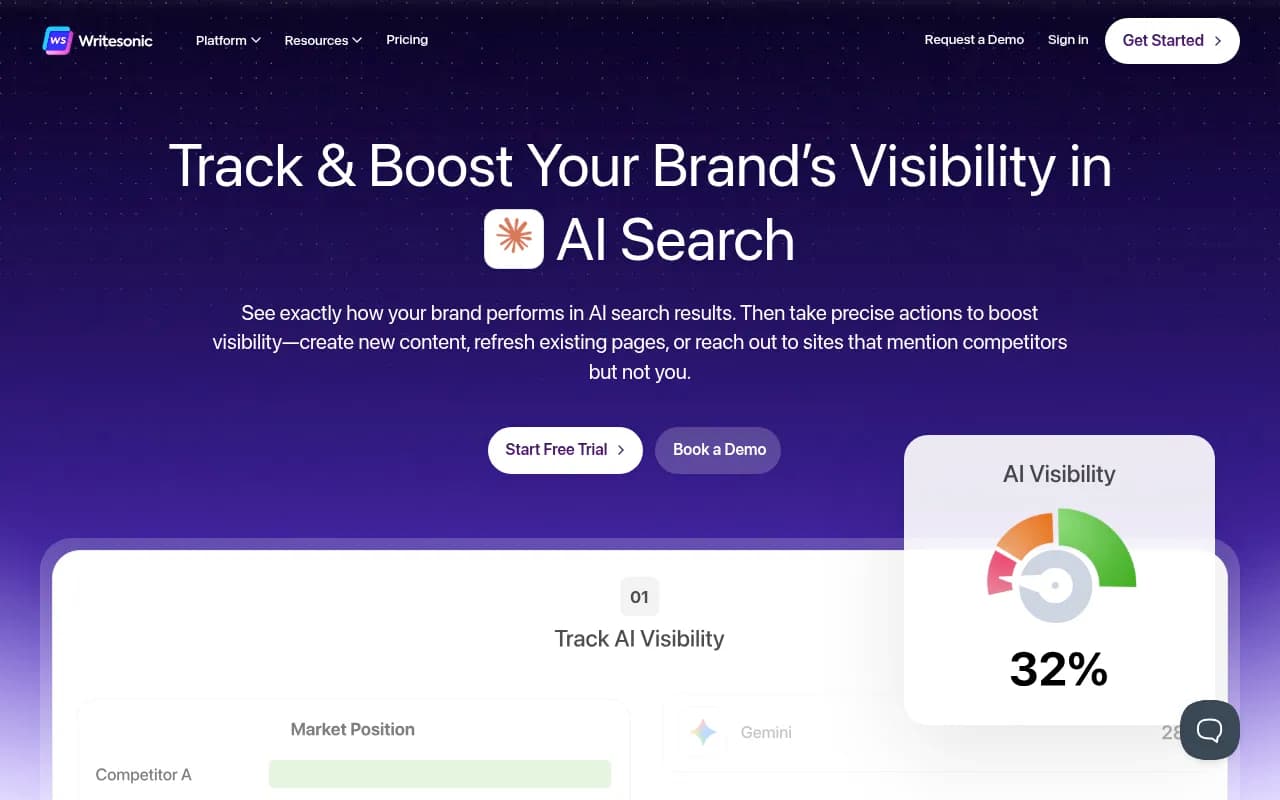
- Writesonic: AI search visibility platform that tracks, optimizes, and ranks content
Traditional SEO tools with AI features
- Semrush: All-in-one digital marketing platform with AI search tracking (fixed prompts)
- Ahrefs Brand Radar: Brand monitoring in AI search (fixed prompts, no traffic attribution)
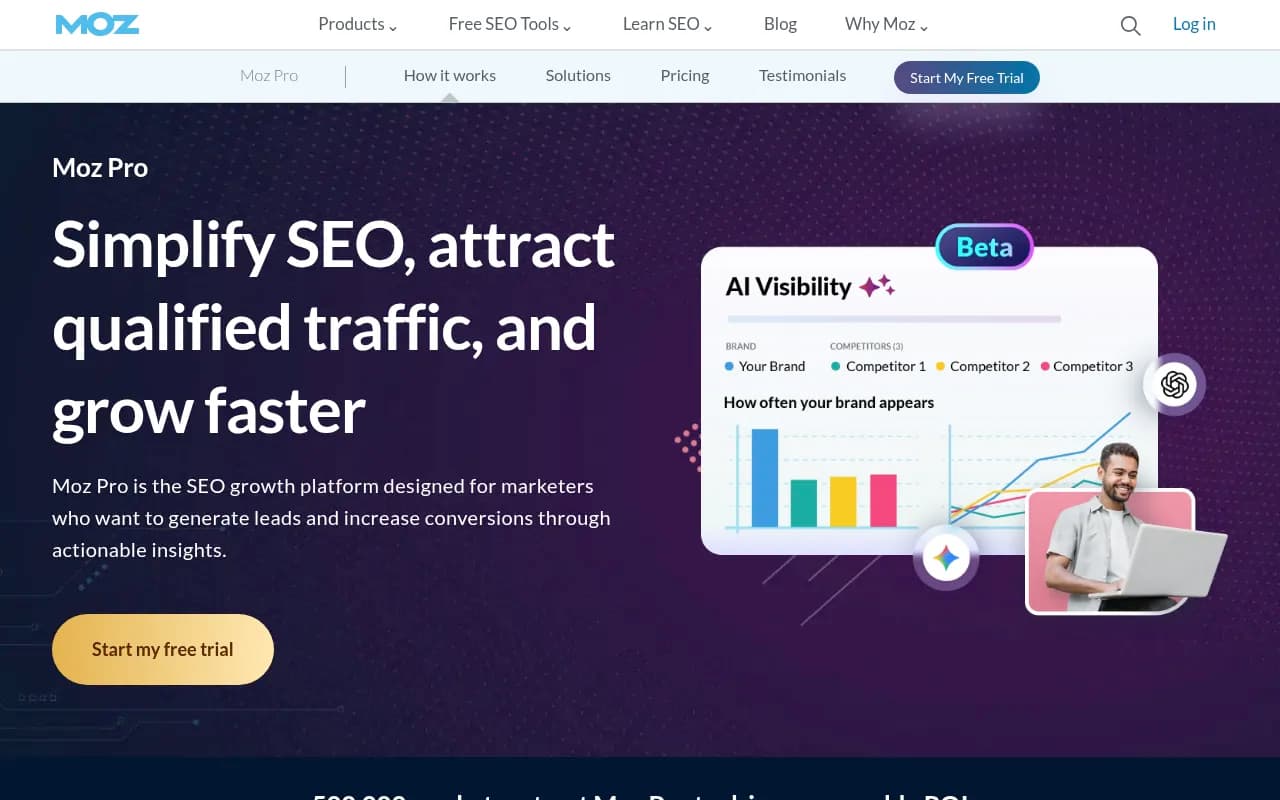
- Moz Pro: All-in-one SEO platform with AI-powered insights
Common mistakes to avoid
Here are the pitfalls most teams fall into when starting with prompt intelligence:
1. Chasing high-volume prompts without checking difficulty
High-volume prompts are tempting, but if they're dominated by Wikipedia, government sites, and massive publishers, you're wasting your time. Focus on prompts where you can actually win.
2. Ignoring query fan-outs
Optimizing for one prompt is fine, but if you ignore the 20 related sub-queries, you're leaving visibility on the table. Map the full fan-out and create content that covers the entire cluster.
3. Creating content without analyzing current citations
If you don't know what AI models are currently citing, you're guessing. Citation analysis tells you exactly what format, depth, and angle to use.
4. Optimizing only for ChatGPT
ChatGPT is the biggest AI search engine, but Perplexity, Claude, Gemini, and Google AI Overviews all have significant user bases. Track visibility across all major models.
5. Treating AI search as a one-time project
AI search is dynamic. New prompts emerge, citation patterns shift, and competitors publish new content. Set up ongoing monitoring and optimization cycles.
6. Forgetting to track traffic and conversions
Visibility is great, but it only matters if it drives business results. Use traffic attribution (code snippet, Google Search Console integration, or server log analysis) to connect AI citations to actual revenue.
Real-world example: prioritizing prompts for a CRM vendor
Let's say you're a CRM vendor competing with HubSpot, Salesforce, and Pipedrive. Here's how you'd apply the prompt prioritization framework:
Step 1: Build your prompt list
You brainstorm 100 prompts, including:
- "Best CRM for small business"
- "Best CRM for real estate agents"
- "HubSpot vs Salesforce"
- "How to build a sales pipeline"
- "What is a CRM?"
- "Best free CRM"
- "CRM with email marketing"
Step 2: Score each prompt
You use Promptwatch to get volume estimates and difficulty scores. You add relevance scores based on your target customer (small business owners).
Top 5 prompts by priority score:
| Prompt | Volume | Difficulty | Relevance | Priority |
|---|---|---|---|---|
| Best CRM for small business | 9 | 7 | 10 | 630 |
| Best CRM for real estate agents | 7 | 5 | 9 | 315 |
| CRM with email marketing | 6 | 4 | 10 | 240 |
| HubSpot vs Salesforce | 8 | 8 | 6 | 384 |
| Best free CRM | 10 | 9 | 5 | 450 |
Step 3: Analyze current citations
For "Best CRM for small business," AI models are citing:
- A 3,500-word guide from HubSpot with feature comparisons and pricing tables
- A YouTube video from a sales consultant with 200K views
- A Reddit thread with 150+ comments
- A listicle from G2 with user reviews
You notice that AI models prefer:
- Comprehensive guides (not short blog posts)
- Content with pricing and feature tables
- User-generated content (Reddit, reviews)
Step 4: Identify content gaps
You realize you have:
- A 1,200-word blog post on "Best CRM for small business" (too short)
- No content on "Best CRM for real estate agents" (gap)
- No comparison page for "HubSpot vs Salesforce" (gap)
- No presence on Reddit or YouTube (gap)
Step 5: Create and optimize content
You prioritize:
- Expand "Best CRM for small business" to 3,000 words with pricing tables, feature comparisons, and case studies
- Create "Best CRM for real estate agents" as a new guide
- Build a comparison page for "HubSpot vs Salesforce"
- Start answering CRM questions on Reddit and Quora
You use Promptwatch's AI writing agent to generate the first drafts, grounded in citation data and competitor analysis.
Step 6: Track visibility and iterate
After 4 weeks, you check Promptwatch and see:
- "Best CRM for small business": Now cited by ChatGPT and Perplexity (up from 0)
- "Best CRM for real estate agents": Cited by Claude and Gemini
- "HubSpot vs Salesforce": Not yet cited (needs more depth)
You iterate on the comparison page, adding more specific feature breakdowns and user testimonials. Two weeks later, it starts getting cited by Perplexity.
The future of prompt intelligence
Prompt intelligence is still in its early days. As AI search adoption grows, we'll see:
- More sophisticated volume and difficulty data: Right now, volume estimates are directional. As more data is collected, accuracy will improve.
- Real-time prompt tracking: Instead of monthly snapshots, you'll see which prompts are trending in real-time.
- Persona-based prompt analysis: Different user personas ask different prompts. Tools will let you filter by persona (e.g., "small business owner" vs "enterprise buyer").
- Integration with traditional SEO tools: Prompt intelligence will merge with keyword research, giving you a unified view of search behavior across Google and AI engines.
- Automated content generation: AI writing agents will use prompt intelligence to generate content that's pre-optimized for AI citations.
The brands that invest in prompt intelligence now will have a massive advantage as AI search becomes the default way people find information.
Getting started with prompt intelligence today
Here's your action plan:
- Audit your current AI visibility: Use Promptwatch to see which prompts you're already visible for and where competitors are beating you.
- Build your priority prompt list: Start with 20-30 high-priority prompts based on volume, difficulty, and relevance.
- Analyze citations: For each prompt, study which sources AI models are citing and what patterns you see.
- Create content for quick wins: Focus on low-difficulty, high-relevance prompts where you can get cited within weeks.
- Set up ongoing tracking: Monitor your visibility weekly and iterate on content that's not performing.
- Close the loop with traffic attribution: Connect AI citations to actual website traffic and conversions so you can prove ROI.
Prompt intelligence isn't a nice-to-have anymore. As AI search grows, the brands that master it will dominate their categories. The ones that ignore it will become invisible.
Start now. The data is available, the tools exist, and your competitors are already moving.