Key takeaways
- Profound now lists a free 7-day Trial (ChatGPT, Gemini, Google AI Overviews) and a custom-priced Enterprise plan. Nine engines, ChatGPT Shopping, history, exports, API and SSO sit behind Enterprise.
- Profound has moved toward agents and credits, so "it only reports" is no longer fully fair. The real question is whether you want to buy that on an enterprise contract and staff it with a specialist.
- Tools that close the loop (find the gap, draft the page, publish, check whether it got crawled and cited) are the ones worth testing if your team is short on time, not data.
- Promptwatch, Omnia, AirOps, Maintouch and a few catalog tools approach this differently. Pick by who does the work on your team.
- Run a 7-day test on the same 25 prompts in every tool before you commit.
Why this guide exists
Most teams pick an AI visibility tool for the wrong reason. They buy the deepest data when what they lack is hours in the week. A dashboard that says "you are missing from 14 prompts" is useful for about a day. Then someone has to write 14 pages.
So this guide is about one specific need: you want something that acts on the gap. Drafts the content, publishes it, and checks whether it worked. We will cover where Profound fits, why people leave, and which alternatives actually execute rather than just chart.
A caveat on sources. Several of the comparison posts out there are written by vendors who rank themselves first (3RD, Alhena, Maintouch, Omnia, Rankin AI all do). I treat their "best for" claims as opinion and lean on vendor pricing pages where I can. Prices below should be confirmed on each vendor's site before you buy.
Where Profound fits, and when to keep it
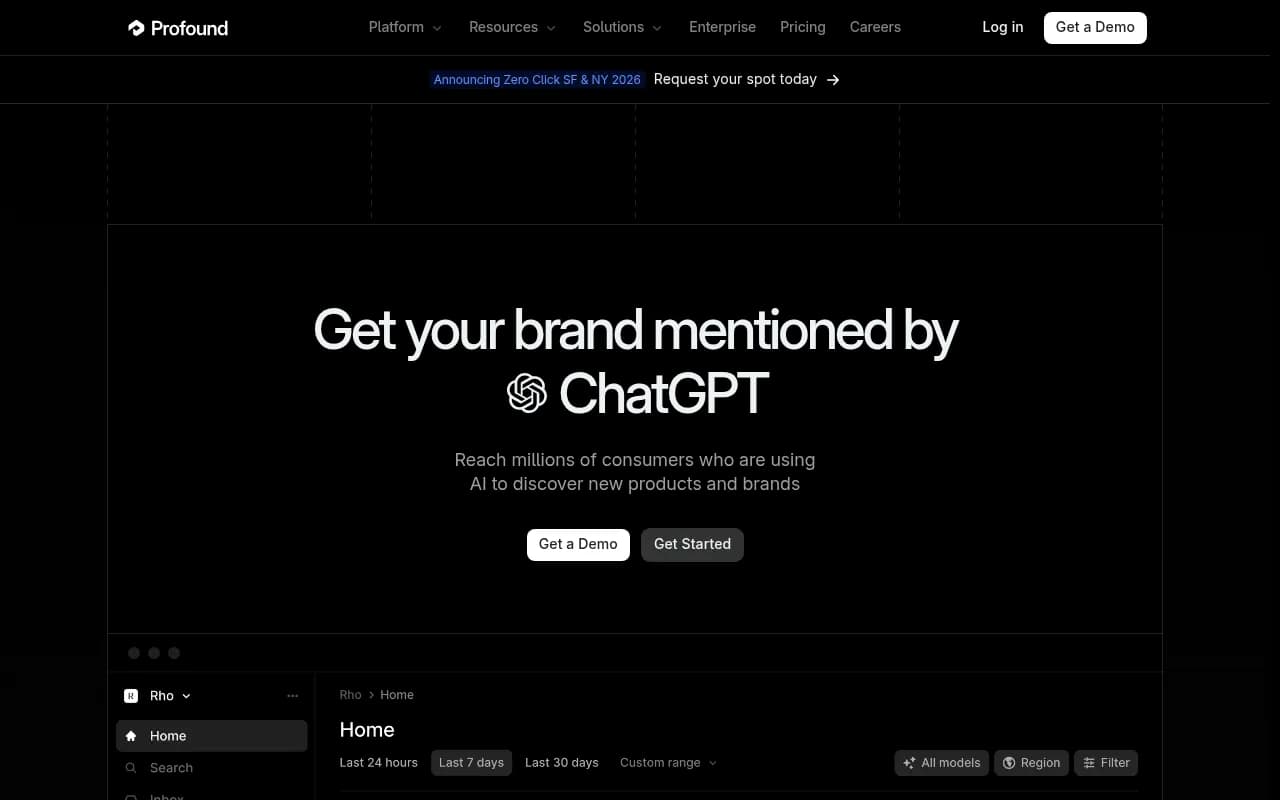
Profound is a serious product. It is built for enterprise teams with, or planning to hire, AI visibility specialists. Per its own pricing page in October 2026:
- Trial (free): 50 prompts a day for 7 days, ChatGPT, Gemini and Google AI Overviews only, one language, one region, no exports or API.
- Enterprise (custom): up to nine answer engines including Perplexity, Claude, Copilot, DeepSeek and Google AI Mode, ChatGPT Shopping, all-time history, CSV/JSON exports, API, SSO/SAML and SOC 2.
It also now calls itself an "AI Marketer" with Agents, Projects, Sheets and Agent Analytics. Agents run on credits, and complex multi-step agents burn more of them. It can publish to a CMS after an approval step.
If you have an analyst, a procurement process and a need for SSO and SOC 2, keep it. Prompt Volumes (panel data on what people actually ask AI tools) is a real differentiator.
Why teams look elsewhere
- No published price. You cannot get a number without a sales call.
- The useful stuff is Enterprise-only. Engines beyond the big three, Shopping, exports and the API all sit there.
- It rewards technical comfort. Reviews describe the Agents builder as having a learning curve, and credit-based pricing makes cost harder to predict.
- Workspace structure. Agencies and multi-brand teams have reported hitting ceilings.
None of that is a quality complaint. It is a fit complaint.
What "an agent that fixes gaps" should actually do
Before comparing tools, define the bar. A monitoring tool with a chat box does not clear it. An agent that closes gaps should do all of these:
- Find the prompts where competitors get cited and you do not.
- Explain why, ideally with crawler data, not guesses.
- Draft content for that gap in your brand voice, using your facts.
- Publish to your CMS, with an approval step you control.
- Track whether the new page was crawled, cited and clicked, and send the underperformers back as new work.
Step 5 is the one most tools skip. Without it you are just generating content faster and hoping.
What to write matters too. Promptwatch's data on ChatGPT citations by content type (Sep 28 to Oct 4, 2026) found product pages are the most cited format at 22.4%, with landing pages at 16.8%. For commercial prompts, product pages, landing pages, listicles and comparisons made up almost 70% of citations. An agent that only churns out blog posts is aiming at the wrong target.
Freshness matters as well. In Promptwatch's content half-life study, pages ChatGPT cited on July 6, 2026 were tracked for 90 days. Product pages, reviews and how-tos fell to about 55% still cited after 60 days, while news lost half its pages within 36 days. A good agent schedules refreshes rather than only publishing new pages.
The alternatives, by how they close the loop
Promptwatch: the full loop in one platform
Promptwatch is the one I would test first if the brief is "fix, don't report." The Content Agent (Business and Enterprise plans) plans, writes and publishes against your visibility gaps. You set a publishing calendar, monthly budget and publish windows, then either approve drafts in a review inbox or run it hands-off. It publishes to WordPress, Webflow or Framer.
What separates it from most agent-flavoured tools is the evidence underneath. IP-verified AI crawler logs show whether GPTBot, ClaudeBot or PerplexityBot actually reached the page. Visitor analytics show AI-referred traffic and conversions. The Action Board turns all of it into a prioritised to-do list, and published pages are tracked through crawls, citations and clicks, so underperformers come back as new actions. Monitoring runs against the real interfaces of ChatGPT, AI Overviews, AI Mode, Gemini, Perplexity, Copilot and others, not only APIs.

Pricing is published at promptwatch.com/pricing. Essential is $95/month, Professional $245, and Business $579, which is where the automated Content Agent and Agentic AI Search Optimization live. Agency plans start at $199 but do not include the Content Agent, so agencies wanting automated publishing should check that carefully. There is a free tier limited to ChatGPT and 10 prompts, and a 7-day trial on the monthly paid plans.
Honest downside: the full agentic stack is a Business-plan feature, so at Essential you get diagnosis and content tools but not the automated publisher.
Omnia: agent with approval gates
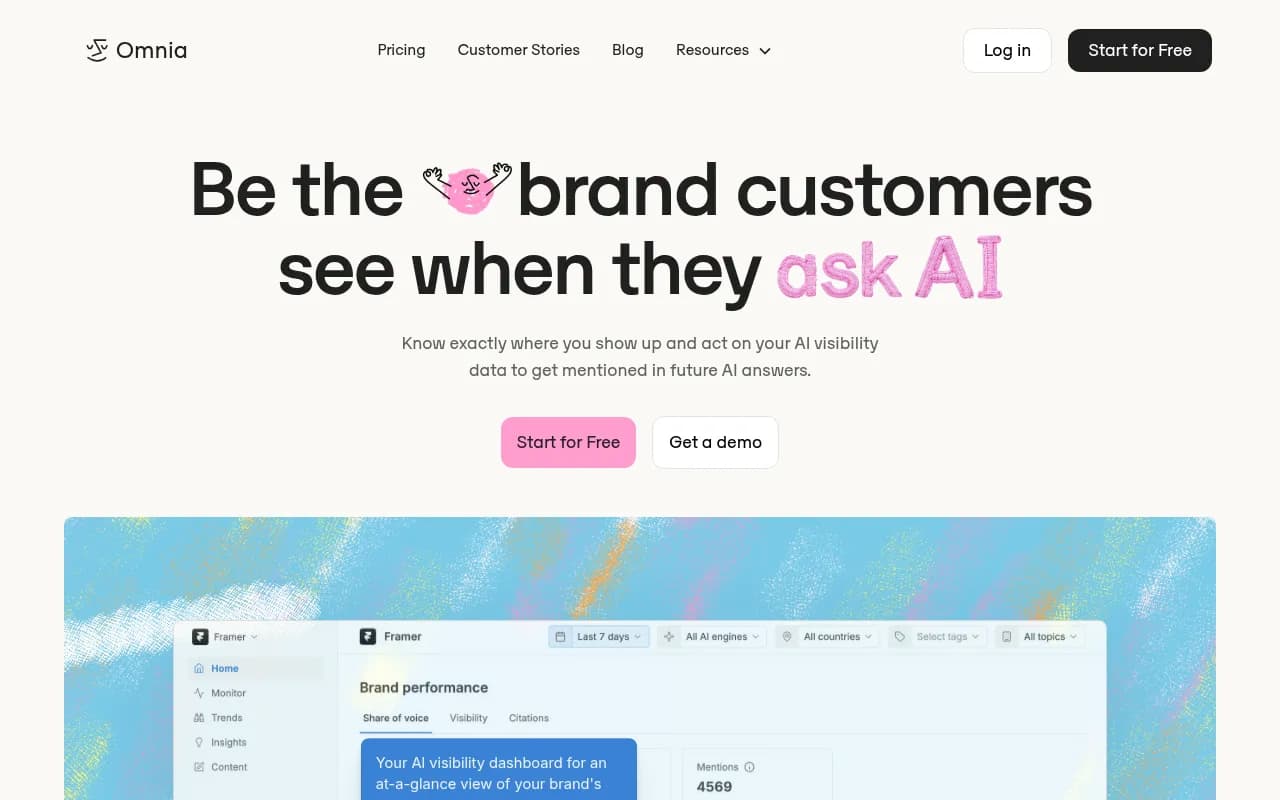
Omnia's built-in agent researches the web, reads your citation data, drafts and publishes content, and runs outreach to earn third-party citations, with approval gates before anything goes live. The outreach piece is unusual. Note that the claims here come from Omnia's own comparison post, so verify them in a trial.
AirOps: workflows if you have builders
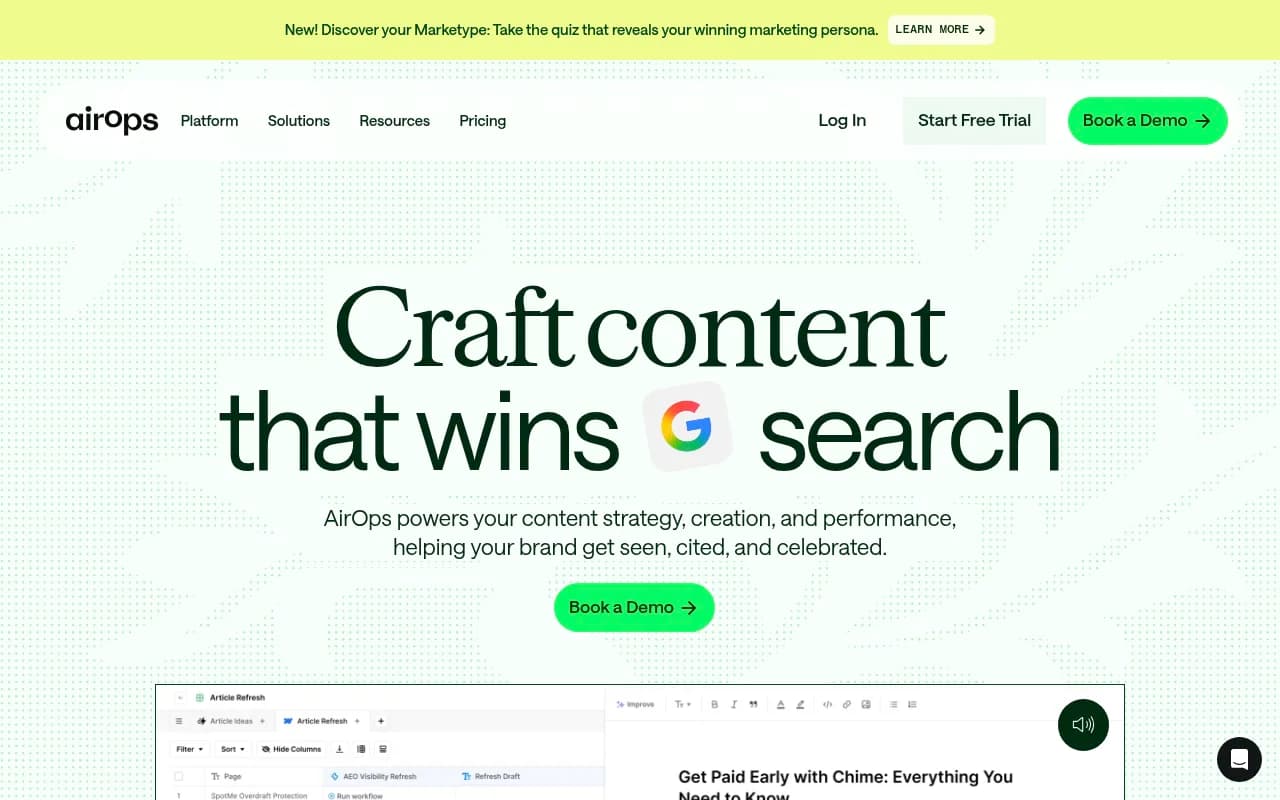
AirOps is a content engineering platform. Workflows research, write, refresh and publish, and its visibility insights track appearance in ChatGPT, Perplexity, Gemini and AI Overviews. It has a free tier and 14-day trial, but paid plans are quoted on task volume. One third-party review put it at roughly $200/month for Solo and $2,000 for Pro earlier in 2026. The catch, repeated in several reviews: someone has to build and maintain the workflows.
Maintouch: managed execution
Maintouch pitches agents that handle content, technical fixes and backlink procurement in the background. It tracks five engines starting at the Hypergrowth tier ($799/month per its own site) with a 5-day free trial on self-serve plans. It is closer to a managed system than a dashboard, which suits a team with no SEO hire and a budget.
Smaller execution-first tools from the catalog
Several lighter tools pair tracking with some form of action. I have not verified their pricing, so treat these as a shortlist to trial rather than a recommendation:
- Gradial GEO detects visibility gaps and publishes the fix.
- ReachLLM wires daily tracking to execution workflows.
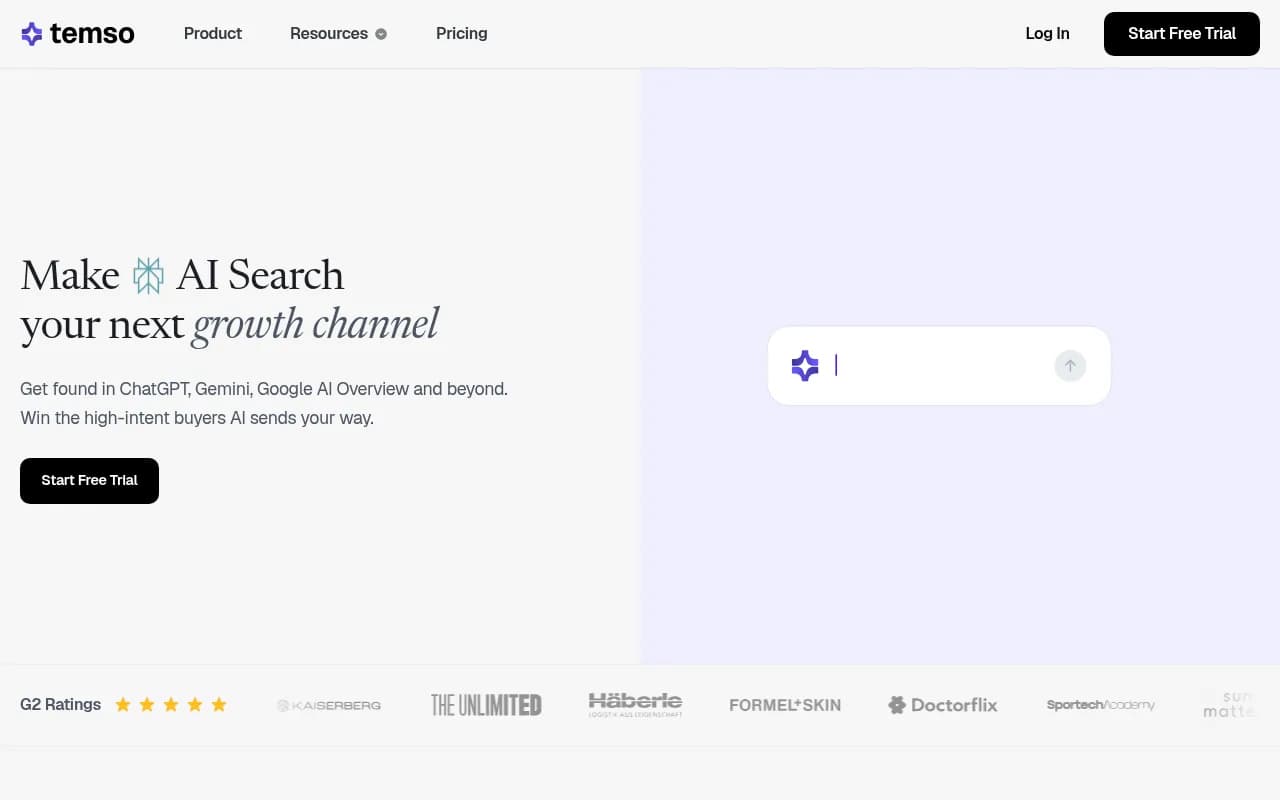
- Temso AI advertises built-in execution.
- Vismore turns insights into strategy and execution.



Monitoring-first tools (cheaper, but you do the work)
If your team does have writers and an SEO lead, a cheaper tracker may be enough. Peec AI starts around $95/month (about EUR 85 in some listings) and is monitoring only. Otterly.AI is often quoted from $29/month. Scrunch and AthenaHQ sit higher, with figures like $250 and $295 a month cited by third parties. Those numbers were not independently verified, so check the vendor pages.




Comparison table
| Tool | Agent that writes and publishes | Published pricing | Closes the loop (crawl, citation, traffic) | Best for |
|---|---|---|---|---|
| Profound | Yes, credit-based Agents, CMS publishing after approval | Custom Enterprise, free 7-day Trial | Agent Analytics for AI traffic | Enterprise teams with specialists |
| Promptwatch | Yes, Content Agent on Business and up | From $95/mo | Crawler logs, citations, visitor analytics, Action Board | Teams that want diagnosis and execution together |
| Omnia | Yes, with outreach and approval gates | Check vendor | Check in trial | Lean teams wanting outreach too |
| AirOps | Workflow-based | Free tier, quoted paid plans | Visibility insights | Content teams with builders |
| Maintouch | Managed agents | From $799/mo | Part of its managed system | Teams with budget and no SEO hire |
| Peec AI | No | About $95/mo | Monitoring only | Teams with their own writers |
| Otterly.AI | No | From about $29/mo | Monitoring only | Tightest budgets |
How to choose
Start with who does the work, not which dashboard looks nicest.
- You have an AI visibility specialist and an enterprise stack. Stay with Profound.
- You have marketers but no specialist, and want fixes shipped weekly. Test Promptwatch and Omnia.
- You have developers who like building workflows. AirOps is reasonable.
- You have money and no time at all. Look at managed options like Maintouch.
- You have writers already and just need numbers. Peec AI or Otterly.AI, and spend the savings on content.
If you would rather browse more options, the GEO software directory at bestgeosoftware.com and the agentic SEO list at agenticseotools.com cover far more tools than fit here.
A 7-day test that exposes weak agents
Demos hide the gaps. Run the same experiment in every tool you shortlist.
- Day 1: load the same 25 prompts, a mix of branded, competitor comparison and commercial. Use the same countries and languages.
- Day 2: ask each tool what to fix first. Good tools name a specific page or content type and give evidence. Weak ones say "create more content."
- Day 3: have it draft one page. Check brand voice, factual accuracy on specs and prices, and internal links.
- Day 4: publish one page to a staging or low-risk URL through the CMS connector. Time how long that takes.
- Day 5: look for crawler data. Can the tool show whether an AI bot visited the new page, and any errors it hit?
- Day 6: check export and reporting. Can you get the data out?
- Day 7: add up the credits or tasks consumed. Credit-based pricing is where surprise bills live.
Two things to watch for. First, whether the tool distinguishes real UI responses from API outputs, because they can differ. Second, whether it tells you when a published page did not work, rather than just counting it as done.
Final take
Profound is not the villain here. It is built for a buyer who has people. If you do not, the better question is which tool ships the work and proves it worked. Of the options above, Promptwatch is the one I would put first in a trial because the crawl, citation and traffic evidence sits next to the agent. Test two or three against the same prompts for a week, and let the drafts and the crawler logs decide.
These pricing details can change fast, so confirm every number on the vendor's pricing page before you sign anything.